 The Impact of the Columbian Exchange on “Old” and “New” Worlds
How did the Columbian Exchange between the “Old” and “New” Worlds affect both societies?
THE COLUMBIAN EXCHANGE
Spain’s seizure of the Americas produced unexpected consequences. The European ships that crossed the Atlantic carried more than human cargo. They also brought plants and animals that set in motion what came to be called the Columbian Exchange, a worldwide transfer of plants, animals, and diseases, which ultimately worked in favor of the Europeans at the expense of the indigenous peoples.
The animals of the two worlds differed more than the peoples and their ways of life. Europeans had never encountered iguanas, buffaloes, cougars, armadillos, opossums, sloths, tapirs, anacondas, rattlesnakes, catfish, condors, or hummingbirds. Nor had Native Americans seen the horses, cattle, pigs, sheep, goats, and chickens that soon flooded the Americas. Sailing ships also brought stowaway creatures: earthworms, mosquitoes, and cockroaches, and honeybees, rats, and mice of every description. The European invasion of the Western Hemisphere thus generated an ecological transformation whose effects are still being felt. In this sense, the Europeans did not so much “discover” a new world as create one.
The exchange of plant life between the Western Hemisphere and Europe/Africa transformed the diets of both regions. Europeans brought plants never seen in the Americas: sugarcane (originally from New Guinea), wheat (from the Middle East), bananas, and coffee (both from Africa).
Before Columbus’s voyage, Europeans did not know about foods such as maize (corn), potatoes (sweet and white), or many kinds of beans (snap, kidney, lima). Other Western Hemisphere food plants included peanuts, squash, peppers, tomatoes, pumpkins, pineapples, avocados, cacao (the source of chocolate), and chicle (for chewing gum).
The lowly white potato, for example, was transformational. Discovered in South America, it has more calories than an ear of corn, can yield more bushels per acre than wheat, can be stored through the winter, and is easy to cultivate. Explorers brought potatoes back to Europe, where they thrived. The “Irish potato” was eventually transported to North America by Scots-Irish immigrants during the early eighteenth century.
The new crops improved the health of Europeans and spurred a dramatic increase in the population. In turn, the surplus population provided the adventurous young people who would colonize the New World.
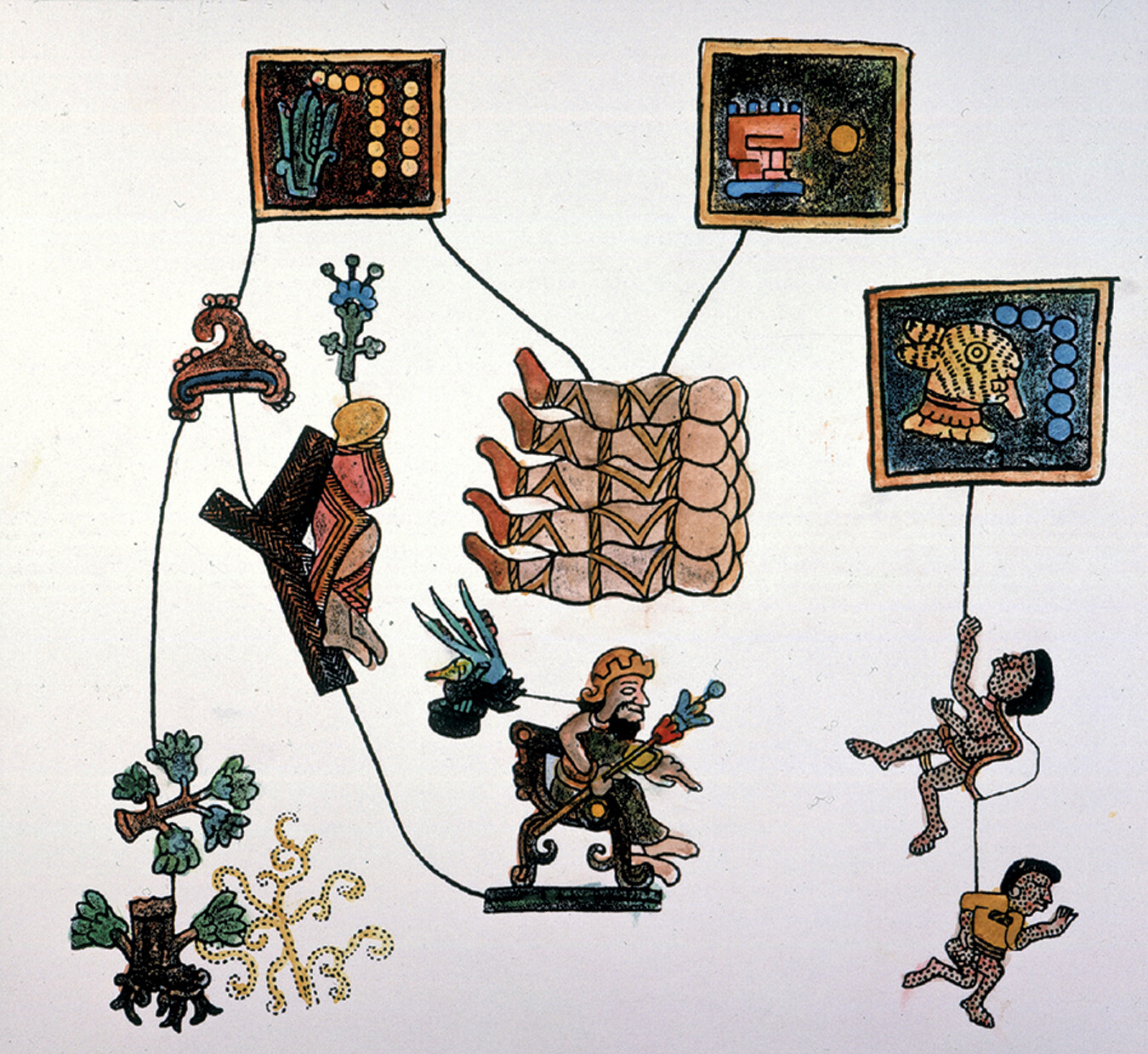
The most significant aspect of the Columbian Exchange was the transmission of infectious diseases. Europeans and enslaved Africans brought to the Western Hemisphere deadly diseases that Native Americans had never encountered: smallpox, typhus, malaria, mumps, chickenpox, and measles. The results were catastrophic. By 1568, just seventy-five years after Columbus’s first voyage, infectious diseases had killed 80 to 90 percent of the Indian population in the Western Hemisphere—the most significant loss of life in history.
Smallpox was an especially ghastly killer; it came to be called the Great Dying. In central Mexico alone, some 8 million people, perhaps a third of the Indian population, died of smallpox within a decade of the arrival of the Spanish. Unable to explain or cure the hideous diseases, Native American chieftains and religious leaders often lost their stature—and their lives—as they were usually the first to meet the Spanish and the first infected. The loss of their leaders made the indigenous peoples more vulnerable to invaders. Many Europeans, however, interpreted such epidemics as diseases sent by God to punish those who resisted conversion to Christianity.
Glossary
- Columbian Exchange
- The transfer of biological and social elements, such as plants, animals, people, diseases, and cultural practices, among Europe, the Americas, and Africa in the wake of Christopher Columbus’s voyages to the New World.
- infectious diseases
- Also called contagious diseases, illnesses that can pass from one person to another by way of invasive biological organisms able to reproduce in the bodily tissues of their hosts. Europeans unwittingly brought many such diseases to the Americas, devastating the Native American peoples.