 Indentured Servants
What role did indentured servants and the development of slavery play in colonial America?
SERVITUDE AND SLAVERY IN THE COLONIES
INDENTURED SERVITUDE During the seventeenth century, the English colonies, especially Virginia and Maryland, grew so fast that they needed many more workers than there were settlers. The colonies needed what a planter called “lusty laboring men . . . capable of hard labor, and that can bear and undergo heat and cold.”

Earl Gregg Swem Library, Special Collections Research Center, William & Mary Libraries
To solve the labor shortage, the planters first recruited indentured servants from England, Ireland, Scotland, and continental Europe. The term derived from the indenture, or contract, which enabled a person to pay for passage to America by promising to work for a fixed number of years (usually between three and seven). As tobacco production soared, indentured servants did most of the work. Of the 500,000 English immigrants to America from 1610 to 1775, some 350,000 came as indentured servants. Not all servants came voluntarily. Many homeless children in London were “kid-napped” and sold into servitude in America. Also, Parliament in 1717 declared that convicts could avoid prison or the hangman by relocating to the colonies.
Once in the colonies, servants were provided food and a bed, but life was harsh, and their rights were limited. As a Pennsylvania judge explained in 1793, indentured servants occupied “a middle rank between slaves and free men.” They could own property but could not engage in trade. Marriage required the master’s permission. Masters could whip servants and extend their length of service as punishment for bad behavior. Once the indenture ended, the servant could claim the “freedom dues” set by custom and law: a little money, a few tools, some clothing and food, and occasionally small tracts of land. Some former servants did very well. In 1629, seven members of the Virginia legislature were former indentured servants.
SLAVERY IN NORTH AMERICA In 1700, there were enslaved Africans in every colony, and they made up 11 percent of the total population (enslaved people would constitute more than 20 percent by 1770). Slavery in English North America differed significantly from region to region, however. Africans were a tiny minority in New England (about 2 percent). Because there were no large plantations there and fewer enslaved people, “family slavery” prevailed, with masters and enslaved people usually living under the same roof.
Slavery was much more common in the Chesapeake colonies and the Carolinas, where large plantations dominated. By 1730, the enslaved black population in Virginia and Maryland had become the first in the Western Hemisphere to achieve a self-sustaining rate of population growth. By 1750, about 80 percent of the slaves in the Chesapeake region, for example, had been born there.
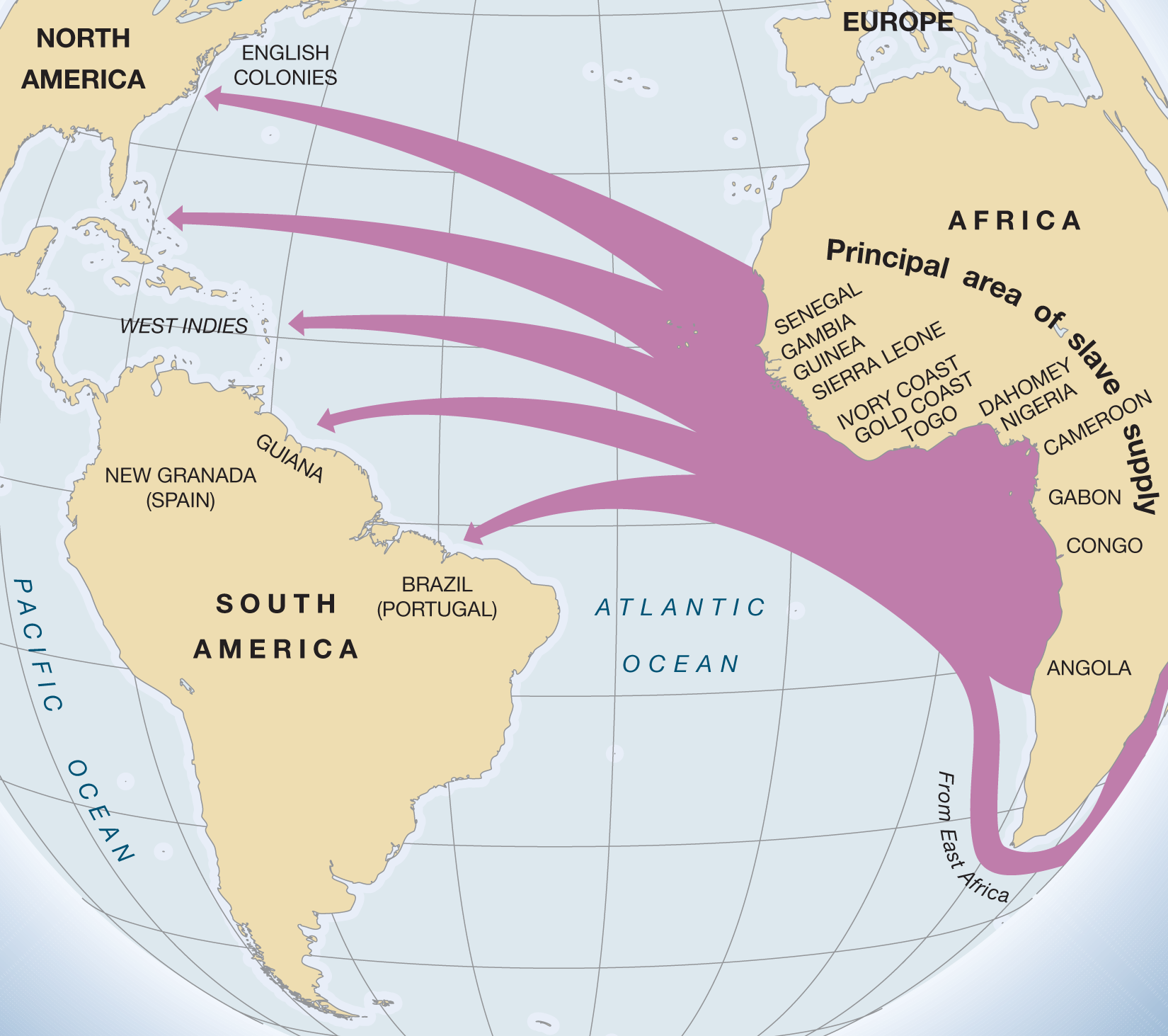
AFRICAN ROOTS The transport of African captives, mostly young, across the Atlantic to the Americas was the most massive forced migration in world history. More than 10 million Africans eventually made the terrifying journey; the vast majority went to Brazil or the Caribbean sugar islands.
THE AFRICAN SLAVE TRADE, 1500–1800
- How were Africans captured and enslaved?
- What were some of the experiences faced by most Africans on the Middle Passage?
- How did enslaved African Americans create a new culture?
Enslaved Africans came from different places in Africa, spoke as many as fifty distinct languages, and worshipped diverse gods. Some had lived in large kingdoms and others in dispersed villages. In their homelands, warfare was as common as in Europe, as rival warriors conquered, kidnapped, enslaved, and sold one another.
During the seventeenth and eighteenth centuries, African slave traders brought captives to dozens of “slave forts” built along the West African coast, where they were sold to Europeans. Few of the captives had ever seen the ocean, a sailing ship, or a White person. Once purchased, the millions destined for slavery in the Western Hemisphere were branded with a company mark, chained, and crowded into slave ships. Forced to stay below deck, they were packed as tightly as livestock in the constant darkness. With no bedding, they slept in their own urine and excrement. Only twice a day were they allowed to go above deck for fresh air and exercise.
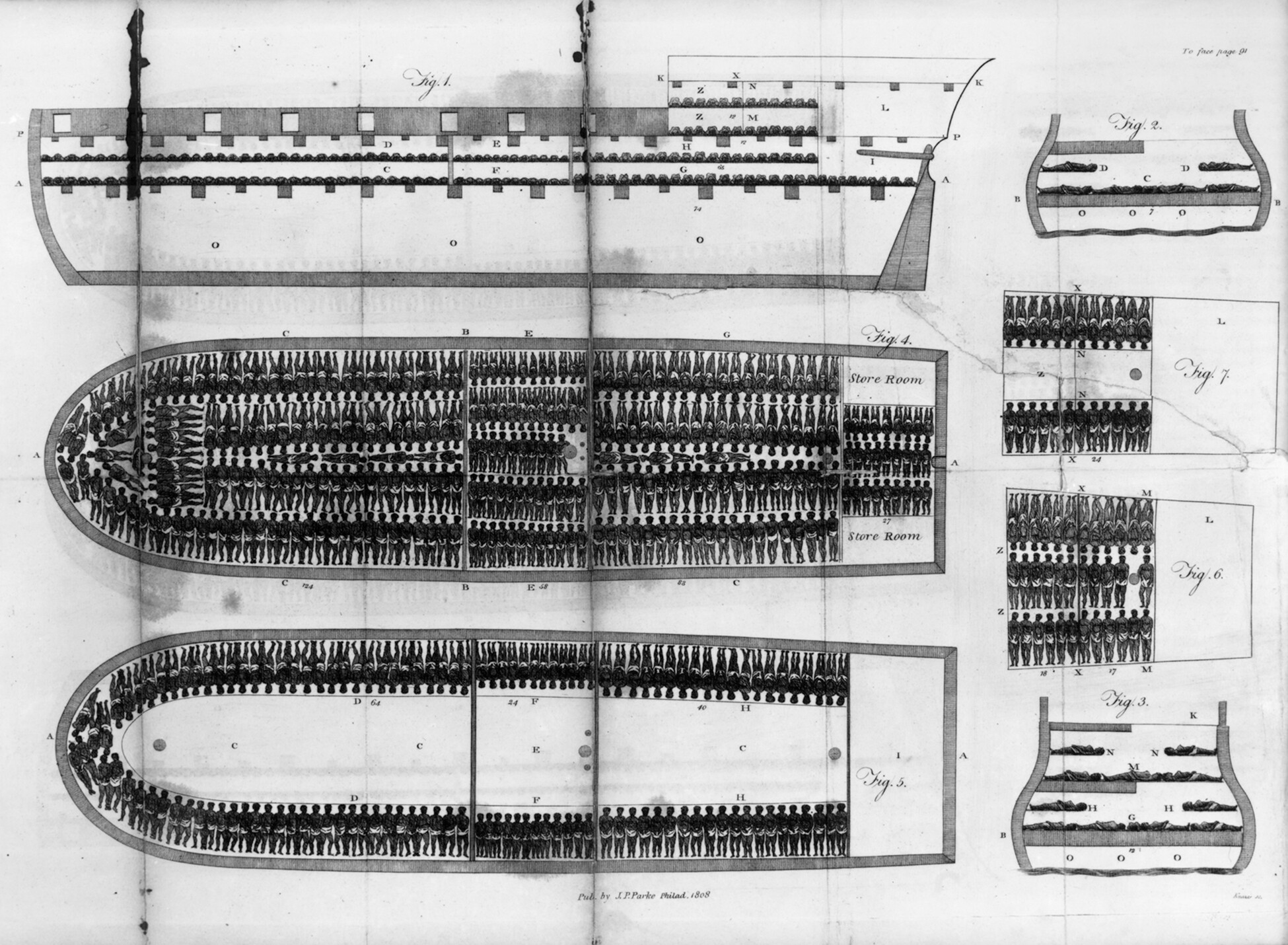
The transatlantic voyage of the slave ships was known as the Middle Passage because it served as the middle leg of the so-called triangular trade. On the first leg, European ships carried rum, clothing, household goods, and guns to Africa, which they exchanged for enslaved Africans. The captives then were taken on the second (or “middle”) leg of the triangular trade to the Americas. Once the human cargo was unloaded, the ships were filled with timber, tobacco, rice, sugar, rum, and other products for the return voyage to English and European ports.
The Middle Passage was horrific. One in six enslaved Africans died along the way. Almost one in ten of these floating prisons experienced a slave revolt. Some captives committed suicide by jumping off the ships. Almost half the 12.5 million enslaved Africans went to Brazil. Jamaica received over a million, almost twice as many as were sent to America.
Those in the business of trading enslaved Africans justified their activities by embracing a widespread racism that viewed Africans as beasts of burden rather than human beings. Once in America, Africans were treated as property (chattel), herded in chains to public slave auctions, and sold to the highest bidder. Their owners required them to cook and clean; care for the owner’s babies and children; dig ditches; drain swamps; clear, plant, and tend fields; and feed livestock.
On large southern plantations that grew tobacco, sugarcane, or rice, the enslaved worked in gangs supervised by Black “drivers” and White overseers. The enslaved people were often housed in crude barracks, fed like livestock, and issued ill-fitting work clothes and shoes so uncomfortable that many slaves preferred to go barefoot. To ensure that they worked hard and did not cause trouble, they were whipped, branded, shackled, castrated, or sold away, often to the Caribbean islands, where few survived the harsh working conditions.
SLAVE CULTURE Enslaved Africans, however, found ingenious ways to resist. Some rebelled by resisting work orders, sabotaging crops, stealing tools, faking illness or injury, or running away. If caught, the freedom seekers faced certain punishment—whipping, branding, and even the severing of an Achilles tendon. Runaways also faced uncertain freedom. Where would they run to in a society ruled by Whites and governed by racism?
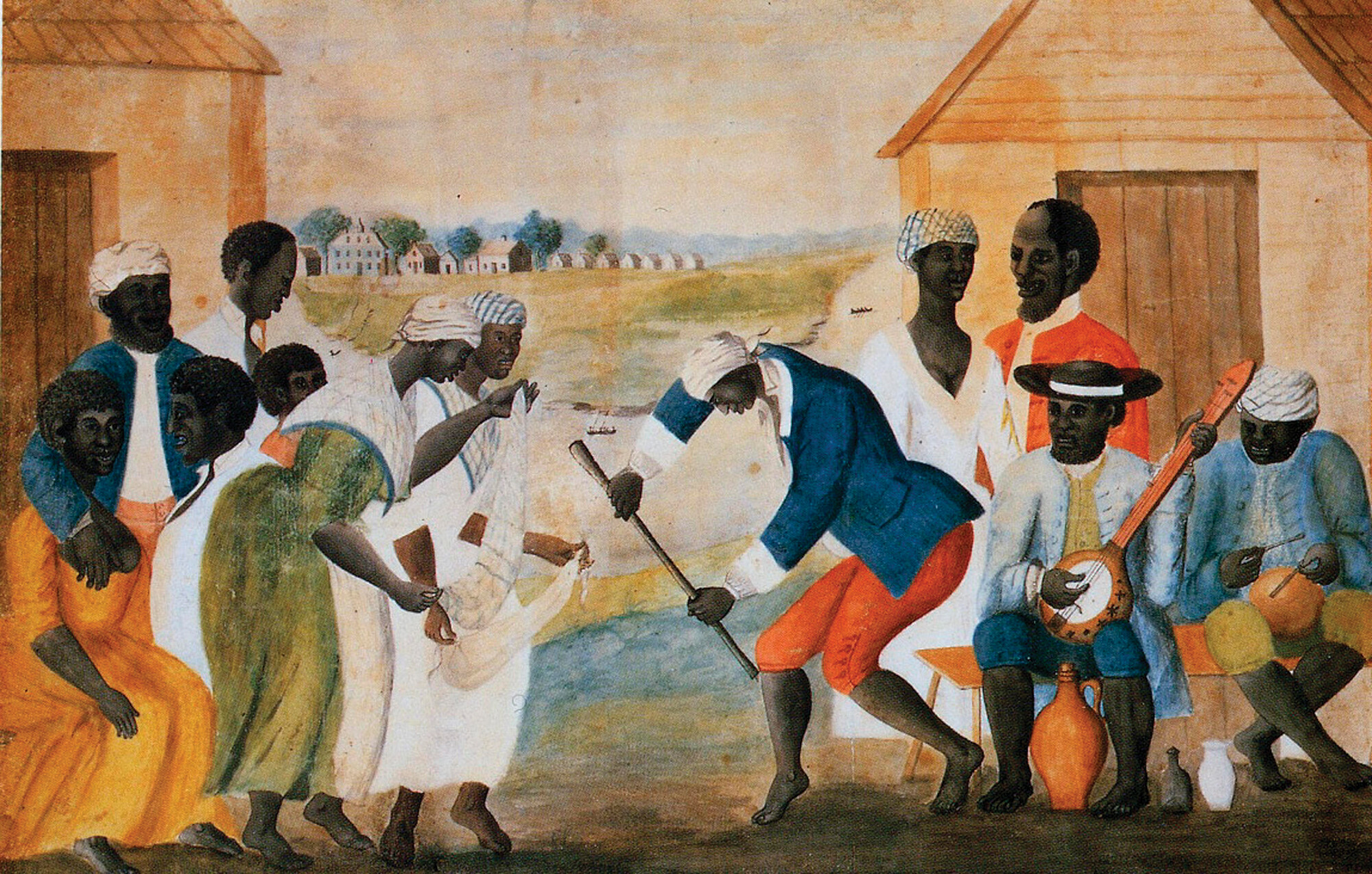
In the process of being forced into lives of bondage in a new world, Africans from diverse homelands forged a new identity as African Americans. At the same time, they wove into American culture many strands of their African heritage including new words that entered the language, such as tabby, tote, goober, yam, and banana, as well as the names of the Coosaw, Pee Dee, and Wando Rivers in South Carolina. More significant are African influences upon American music, folklore, and religious practices. The enslaved people often used songs, stories, and religious preachings to circulate coded messages expressing their distaste for owners or overseers. The fundamental theme of Black religion, adapted from the Christianity they were forced to embrace, was deliverance. God, many of them believed, would eventually open the gates to heaven’s promised land.
Glossary
- indentured servants
- Settlers who signed on for a temporary period of servitude to a master in exchange for passage to the New World.
- Middle Passage
- The hellish and often deadly middle leg of the transatlantic “triangular trade” in which European ships carried manufactured goods to Africa, then transported enslaved Africans to the Americas and the Caribbean, and finally conveyed American agricultural products back to Europe.