 The End of Reconstruction
What were the political and economic factors that helped end Reconstruction in 1877?
THE GRANT ADMINISTRATION
Andrew Johnson’s crippled presidency created an opportunity for Republicans to elect one of their own in 1868. Both parties wooed Ulysses S. Grant, the “Lion of Vicksburg” credited by most with the Union victory in the Civil War. His falling-out with Johnson, however, had pushed him toward the Republicans, who unanimously nominated him as their presidential candidate.
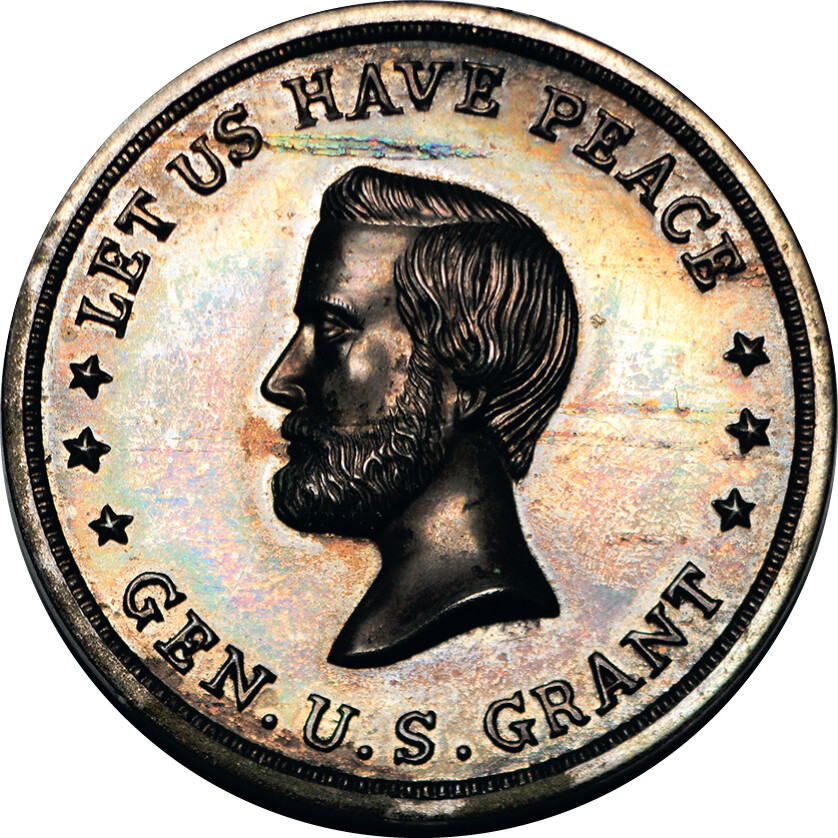
THE ELECTION OF 1868 The Republican party platform endorsed Congressional Reconstruction. More important, however, were the public expectations driving the candidacy of Ulysses S. Grant, whose campaign slogan was “Let us have peace.” Grant promised that, if elected, he would enforce the laws and promote prosperity for all. Democrats shouted defiance, however. “This is a white man’s country,” they claimed, so “let white men rule.” The Radical Republicans, Democrats charged, were subjecting the South “to military despotism and Negro supremacy.” Democratic delegates nominated Horatio Seymour, the wartime governor of New York and a passionate critic of Congressional Reconstruction, who dismissed the Emancipation Proclamation as “a proposal for the butchery of women and children.” His running mate, Francis P. Blair, Jr., a former Union general from Missouri who had served in Congress, was an avowed racist who wanted to “declare the reconstruction acts null and void” and withdraw all federal troops from the South. He attacked Grant for exercising military tyranny “over the eight millions of white people in the South, fixed to the earth with his bayonets.” A Democrat later said that Blair’s “stupid and indefensible” remarks cost Seymour a close election. Grant won all but eight states and swept the Electoral College, 214–80, but his popular majority was only 307,000 out of almost 6 million votes.
More than 500,000 African American voters, mostly in the South, accounted for Grant’s margin of victory. Although Klan violence soared during the campaign, and hundreds of African Americans paid with their lives, the efforts of Radical Republicans to ensure voting rights for southern Blacks had paid off.
Grant, the youngest president (forty-six years old when inaugurated), had said during the Civil War that he was not “a politician, never was and never hope to be.” Now he was the politician in chief. Although a courageous defender of Congressional Reconstruction and civil rights for Blacks, Grant was not a great president. He later admitted that he thought “I could run the government of the United States as I did the staff of my army. It was my mistake, and it led me into other mistakes.”
Grant passively followed the lead of Congress and was often blind to the political forces and self-serving influence peddlers around him. He showed poor judgment in his selection of cabinet members, often favoring friendship, family, loyalty, and military service over integrity and ability.
During Grant’s two presidential terms, his seven cabinet positions changed twenty-four times. His close friend, General William T. Sherman, said he felt sorry for Grant because so many supposedly loyal Republicans used the president for selfish gains.
Yet Grant excelled at bringing diversity to the federal government. During his two presidential terms, he appointed more African Americans, Native Americans, Jews, and women than any of his predecessors, and he fulfilled his campaign pledge to bring the nation “peace and prosperity.”
THE BATTLE TO ENFORCE THE FIFTEENTH AMENDMENT President Grant viewed Reconstruction as the nation’s top priority, and he insisted that African Americans be allowed to exercise their civil rights without fear of violence. On March 30, 1870, Grant delivered a speech to Congress in which he celebrated the ratification of the Fifteenth Amendment, giving voting rights to African American men nationwide. “It was,” he declared, “. . . the most important event that has occurred since the nation came into life . . . the realization of the Declaration of Independence.”
To African American leader Frederick Douglass, the Thirteenth, Fourteenth, and Fifteenth Amendments seemed to ensure that Blacks would at last gain true equality. “Never was revolution more complete,” Douglass announced in 1870. To President Grant, “more than any other man, the Negro owes his enfranchisement.”
But Douglass and others were soon bitterly disappointed. The “revolution” turned out to be incomplete as the Fifteenth Amendment ignited a violent backlash in the South. In Georgia, White officials devised new ways to restrict Black voting, such as poll taxes and onerous registration procedures. Other states followed suit. “What is the use of talking about equality before the law,” a freedman wrote as ex-Confederates took control of southern society. “There is none.”
Four months after the Fifteenth Amendment became the law of the land, Congress passed the Naturalization Act of 1870. For the first time, it extended the process whereby immigrants had gained citizenship to include “aliens of African nativity and to persons of African descent.” Efforts to include Asians and Native Americans in the naturalization law were defeated, however.
THE UNION LEAGUE The Fifteenth Amendment had enormous political consequences. Southern Whites feared nothing more than Black voters, while Republicans were eager to recruit them. To do so, Republicans organized Union Leagues throughout the former Confederacy. Republicans had founded the Union League (also called Lincoln’s Loyal League) in 1862 to rally voters behind Lincoln, the war, and the party. By late 1863, the leagues claimed more than 700,000 members in 4,554 councils across the nation. In the South, the leagues operated like fraternities, with formal initiations and rituals and secret meetings to protect freedpeople from being persecuted. They met in churches, schools, homes, and fields, often hearing from northern speakers who traveled the South extolling the Republican party and encouraging Blacks to register and vote. By the early 1870s, the Union League in the South had become one of the largest Black social movements in history.
With the help of the Union Leagues, some 90 percent of southern freedmen registered to vote, almost all of them as Republicans, and they voted in record numbers (often as high as 80 to 90 percent). In Mississippi and South Carolina, Black registered voters outnumbered Whites.
Voting was not easy for freedmen, however. “All the blacks who vote against my ticket shall walk the plank,” threatened former Georgia governor Howell Cobb, a Democrat who had been a Confederate general. Angry Whites persecuted, evicted, or fired African American workers who “exercised their political rights,” as a Union officer reported from Virginia.
Black Republicans were at times equally coercive. “The Negroes are as intolerant of opposition as the whites,” a White South Carolina Democrat observed. They shunned, expelled, and even killed any “of their own” who “would turn Democrats.” He added that freedwomen were as partisan as men—and as intolerant of opposition: “[The] women are worse than the men, refusing to talk to or marry a renegade [Black Democrat], and aiding [men] in mobbing him.”
Yet the net result of the Union Leagues was the mobilization of African American voters, who enabled African American men to gain elected offices for the first time in the states of the former Confederacy. Francis Cardozo, a Black minister who served as president of the South Carolina Council of Union Leagues, declared in 1870 that the state had “prospered in every respect” as a result of the enfranchisement of Black voters.
INDIAN POLICY President Grant was almost as progressive in his outlook toward Native Americans as he was toward African Americans. In 1869, he appointed General Ely Parker, a Seneca chief trained as an attorney and engineer, as the new commissioner of Indian Affairs, the first Native American to hold the position. Parker had served as Grant’s military secretary during the war. Now, as commissioner, Parker faced formidable challenges in creating policies for the 300,000 Indians across the nation, many of whom continued to be pressured by White settlers, miners, railroads, and telegraph companies to give up their ancestral lands.
Working with Parker, Grant created a “Peace Policy” toward Native Americans. “The Indians,” he observed, “require as much protection from the whites as the white does from the Indians.” He did not want the army “shooting these poor savages; I want to conciliate them and make them peaceful citizens.” His experiences had shown that the “Indian problem” was in fact the result of “bad whites.”
Grant believed that lasting peace could only result from Indians abandoning their nomadic tradition and relocating to government reservations, where federal troops would provide them “absolute protection.” Even Lieutenant General William T. Sherman, no friend of the Indians, acknowledged the injustice of the situation. “The poor Indians are starving,” he reported to his wife in 1868. “We kill them if they attempt to hunt,” yet if they stay “within the reservation, they starve.”
Grant also promised to end the chronic corruption whereby congressmen appointed cronies as licensed government traders with access to Indian reservations. Many traders used their positions to swindle Native Americans out of the federally supplied food, clothing, and other provisions intended solely for the reservations. One of the accused traders was the president’s brother. To clean up the so-called Indian Ring, Grant moved the Bureau of Indian Affairs out of the control of Congress and into the War Department. He also created a ten-man Board of Indian Commissioners, a civilian agency whose mission was to oversee the operations of the Bureau of Indian Affairs. Grant then appointed Quakers as reservation traders, assuming that their honesty, humility, and pacifism would improve the distribution of government resources. “If you can make Quakers out of the Indians,” Grant told them, “it will take the fight out of them. Let us have peace.” Yet Quakers proved no more able to manage Indian policy than government bureaucrats could. Like other presidents, Grant discovered that there was often a gap between the policies he created and their implementation. Many of the officers and soldiers sent to “pacify” Indian peoples in the Great Plains displayed an attitude toward Native Americans quite different from Grant’s. For example, General Philip Sheridan coined the infamous statement, “The only good Indians I know are dead.” He also dismissed Indians as “the enemies of our race and of our civilization.” General William T. Sherman agreed. He stressed to Sheridan that “the more [Indians] we kill this year, the less we would have to kill next year.” Several members of Congress openly called for the “extermination” of the Indians. Such attitudes led the abolitionist Wendell Phillips to ask why Indians were one of the only groups still denied citizenship. “The great poison of the age is race hatred” directed at both African Americans and Native Americans, Phillips charged. Most White Americans, however, did not care. “Wendell Phillips’ new [Negro],” the editors of the New York Herald observed with disdain, “is the ‘noble red man.’” Phillips responded, “We shall never be able to be just to other races . . . until we ‘unlearn’ contempt” for others different from us.
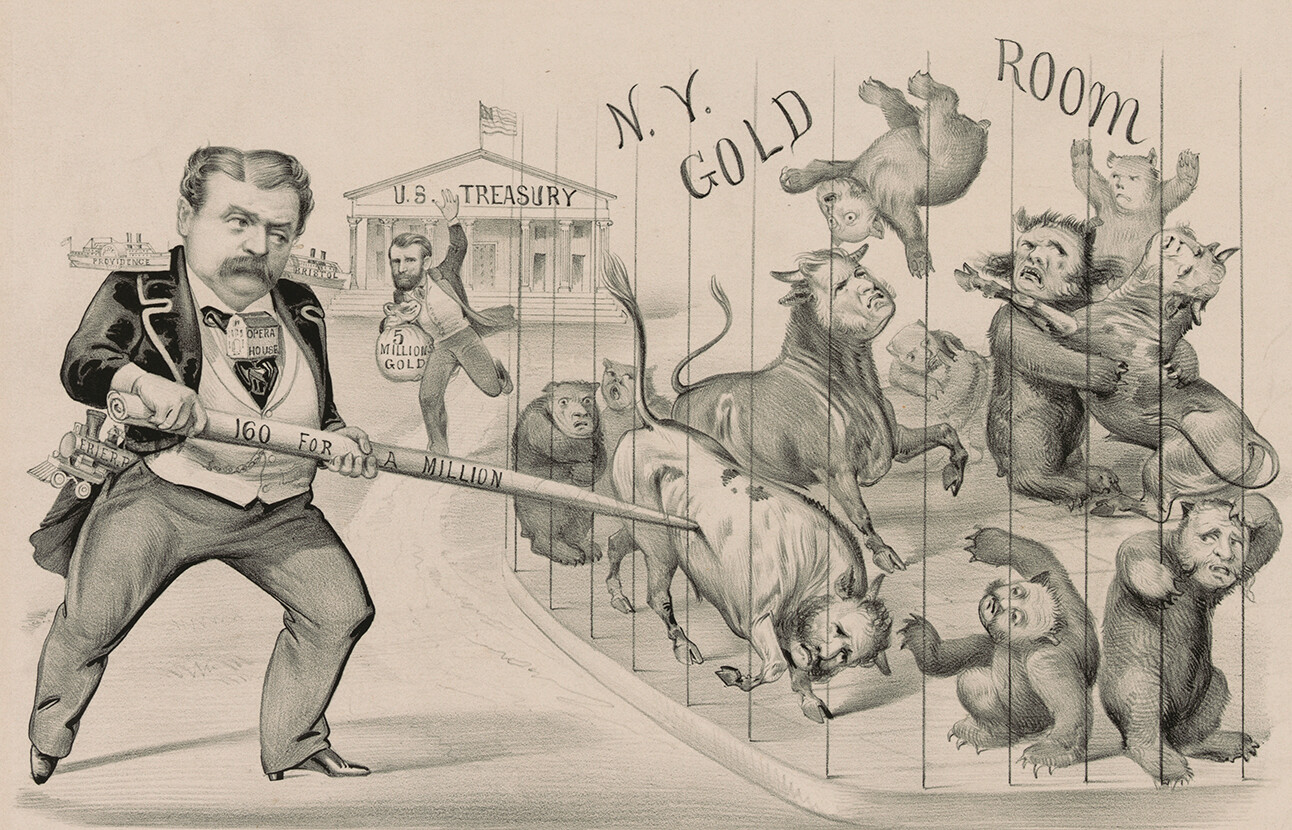
SCANDALS President Grant’s naive trust in people, especially rich people, led his administration into a cesspool of scandal. Perhaps because of his disastrous efforts as a storekeeper and farmer before the Civil War, Grant was awestruck by men of wealth. As they lavished gifts and attention on him, he was lured into their webs of self-serving deception. In the summer of 1869, two unprincipled financial schemers, Jay Gould and James Fisk, Jr., plotted with Abel Corbin, the president’s brother-in-law, to “corner” (manipulate) the nation’s gold market. They intended to create a public craze for gold by purchasing massive quantities of the precious metal to drive up its value.
The only threat to the scheme lay in the possibility that the federal Treasury would burst the bubble by selling large amounts of its gold, which would deflate its market value. When Grant was seen in public with Gould and Fisk, people assumed that he supported their scheme. As the false rumor spread in New York City’s financial district that the president endorsed the run-up in gold, its value soared.
On September 24, 1869—soon to be remembered as Black Friday—the Gould-Fisk scheme worked, at least for a while. Starting at $150 an ounce, the price of gold rose, first to $160, then $165, leading more and more investors to join the stampede.
Then, around noon, Grant and his Treasury secretary realized what was happening and began selling government gold. Within fifteen minutes, the price plummeted to $138. Schemers lost fortunes amid the chaotic trading. Soon the turmoil spread to the entire stock market, claiming thousands of victims. As Fisk noted, each man was left to “drag out his own corpse.”
For weeks after the gold bubble collapsed, financial markets were paralyzed and business confidence was shaken. Congressman James Garfield wrote privately to a friend that Grant had compromised his office by his “indiscreet acceptance” of gifts from Fisk and Gould and that any investigation of Black Friday would lead “into the parlor of the President.” One critic announced that U. S. Grant’s initials actually stood for “uniquely stupid.”
The plot to corner the gold market was the first of several scandals that rocked the Grant administration. The secretary of war’s wife, it turned out, had accepted bribes from merchants who traded with Indians at army posts in the West. And in St. Louis, whiskey distillers bribed federal Treasury agents in an effort to avoid paying excise taxes on alcohol. Grant’s personal secretary participated in the scheme, taking secret payments in exchange for confidential information. Grant urged Congress to investigate. “Let no guilty man escape,” he stressed.
LIBERAL REPUBLICANS Disputes over political corruption and the fate of Reconstruction helped divide Republicans into two factions: Liberals (or Conscience Republicans) and Stalwarts (or Grant Republicans).
Liberal Republicans, led by Senator Carl Schurz, a Union war hero from Missouri, embraced free enterprise capitalism and opposed government regulation of business and industry while championing gold coins as the only reliable currency. They wanted to oust Grant from the presidency and end what Schurz called “Negro supremacy” in the South. The “horror” of Reconstruction, Schurz insisted, must be stopped and federal troops withdrawn. As the Nation magazine stressed, “Everybody is heartily tired of discussing [the Negro’s] rights.”
Schurz and other Liberal Republicans also sought to lower the tariffs lining the pockets of big corporations and promote “civil service reforms” to end the “partisan tyranny” of the “patronage system,” whereby new presidents rewarded the “selfish greed” of political supporters with federal government jobs.
THE 1872 ELECTION In 1872, the Liberal Republicans, many of whom were elitist newspaper editors suspicious of the “working classes,” held their own national convention in Cincinnati, during which they accused the Grant administration of corruption, incompetence, and “despotism.” They then committed political suicide by nominating Horace Greeley, the eccentric editor of the New York Tribune and a longtime champion of causes ranging from abolitionism to socialism, vegetarianism, and spiritualism (communicating with the dead).
Most Northerners were appalled by Greeley’s selection. E. L. Godkin, editor of the Nation and a Liberal Republican sympathizer, dismissed Greeley as “a conceited, ignorant, half-cracked, obstinate old creature.”
Southern Democrats, however, liked Greeley’s criticism of Reconstruction. His newspaper charged that Radical Republicans had given the vote to “ignorant” formerly enslaved people whose “[Negro] Government” exercised “absolute political supremacy” in several states and was transferring wealth from the “most intelligent” and “influential” southern Whites to themselves.
In the 1872 balloting, Greeley carried only six southern states and none in the North. Grant won thirty-one states and a large popular majority, gaining 56 percent of the votes. An exhausted Greeley confessed that he was “the worst beaten man who ever ran for high office.” Greeley died three weeks later.
Grant was delighted that the “soreheads and thieves who had deserted the Republican party” were defeated, and he promised to avoid the “mistakes” he had made in his first term.
THE MONEY SUPPLY Complex financial issues—especially monetary policy—dominated Ulysses S. Grant’s second term. Prior to the Civil War, the economy operated on a gold standard; state banks issued paper money that could be exchanged for an equal value of gold coins. So, both gold coins and state bank notes circulated as currency. Greenbacks (so called because of the dye used on the printed dollars) were issued by the federal Treasury during the Civil War to help pay for the war.
When a nation’s supply of money grows faster than the economy itself, prices for goods and services increase (inflation). This happened when the greenbacks were issued. After the war, the U.S. Treasury assumed that the greenbacks would be recalled from circulation so that consumer prices would decline and the nation could return to a “hard-money” currency—gold, silver, and copper coins—which had always been viewed as more reliable in value than paper currency.
The most vocal supporters of a return to hard money were eastern creditors (mostly bankers and merchants) who did not want their debtors to pay them in paper currency. Critics tended to be farmers and other debtors. These so-called soft-money advocates opposed taking greenbacks out of circulation because shrinking the supply of money would bring lower prices (deflation) for their crops and livestock. In 1868, congressional supporters of such a soft-money policy—mostly Democrats—forced the Treasury to stop withdrawing greenbacks.
President Grant sided with the hard-money camp. On March 18, 1869, he signed the Public Credit Act, which said that investors who purchased government bonds to help finance the war effort must be paid back in gold. The act led to a decline in consumer prices that hurt debtors and helped creditors. It also ignited a ferocious debate over the merits of hard and soft money that would last throughout the nineteenth century—and beyond.
FINANCIAL PANIC President Grant’s effort to withdraw greenbacks from circulation triggered a major economic collapse. During 1873, two dozen railroads stopped paying their bills, forcing Jay Cooke and Company, the nation’s leading business lender, to go bankrupt and close its doors on September 18, 1873.
The shocking news created a snowball effect, as other hard-pressed banks and investment companies began shutting down. A Republican senator sent Grant an urgent telegram from New York City: “Results of today indicate imminent danger of general national bank panic.”
The resulting Panic of 1873 caused a deep depression. Tens of thousands of businesses closed, 3 million workers lost jobs, and those with jobs saw their wages slashed. In major cities, the unemployed and homeless roamed the streets and formed long lines at soup kitchens. A quarter of New Yorkers were jobless.
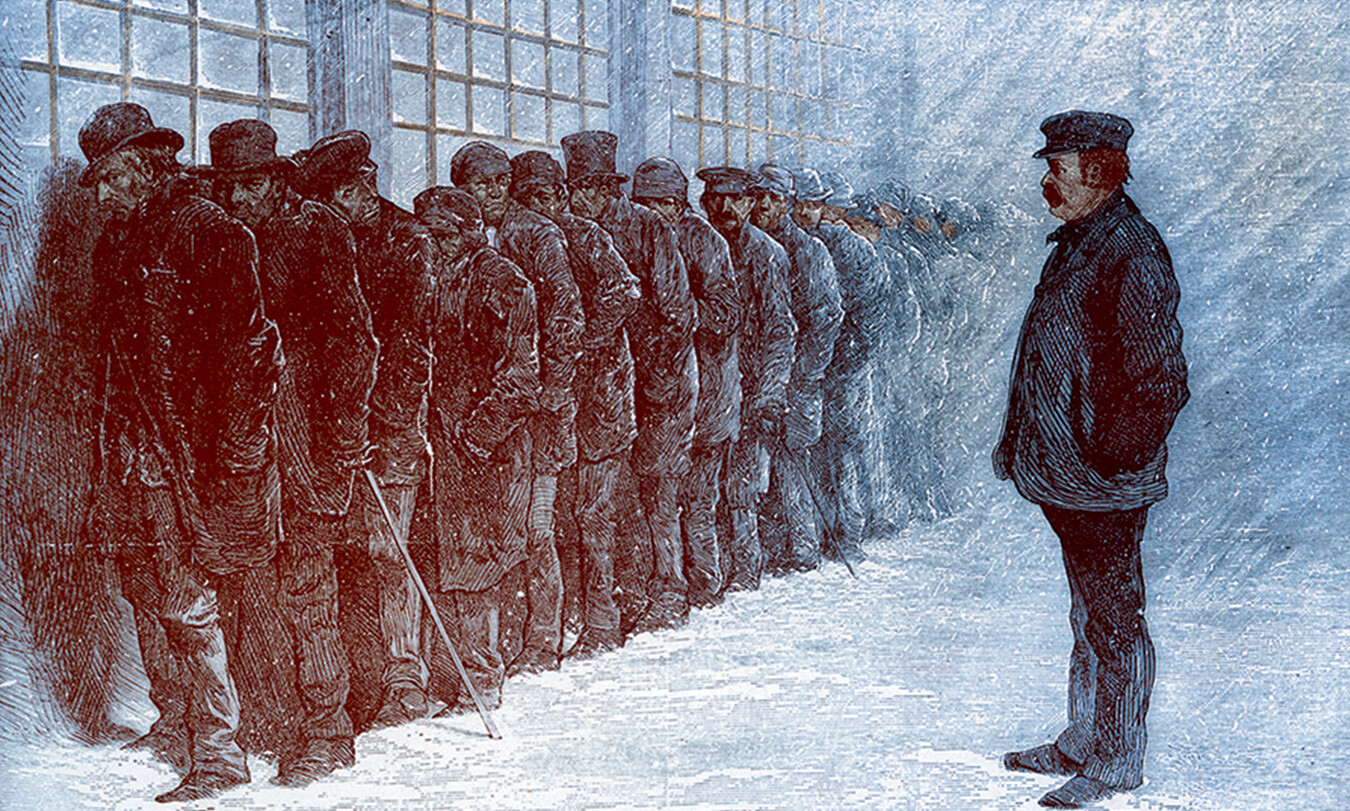
The depression signaled that the maturing industrial economy was entering a long phase of instability punctuated by periods of soaring prosperity followed by desperate panics, bankruptcies, unemployment, recessions, and even prolonged depressions.
The Panic of 1873 led the U.S. Treasury to reverse course and begin printing more greenbacks to increase the nation’s money supply. For a time, the supporters of paper money celebrated, but in 1874, Grant vetoed a bill to issue even more greenbacks. His decision pleased the financial community but ignited a barrage of criticism. A Tennessee Republican congressman called the veto “cold-blooded murder,” and a group of merchants in Indiana charged that Grant had sold his soul to those “whose god is the dollar.”
In the end, Grant’s decision only prolonged what was then the worst depression in the nation’s history. It also brought about a catastrophe for Republicans in the 1874 congressional elections. In the House, Republicans went from a 70 percent majority to a 37 percent minority. As a result, the Republican effort to reconstruct the South ground to a halt.
DOMESTIC TERRORISM President Grant initially fought to enforce federal efforts to reconstruct the postwar South, but southern resistance increased and turned brutally violent. In Grayson County, Texas, a White man and two friends murdered three formerly enslaved people because they wanted to “thin the [Negroes] out and drive them to their holes.”
Klansmen focused on intimidating prominent Republicans, Black and White—elected officials, teachers in Black schools, state militias. In Mississippi, they killed a Black Republican leader in front of his family. Three White Republicans were murdered in Georgia in 1870, and that same year an armed mob of Whites attacked a Republican political rally in Alabama, killing four Blacks and wounding fifty-four. An Alabama Republican pleaded with Grant to intervene. “Give us poor people some guarantee of our lives,” G. T. F. Boulding wrote. “We are hunted and shot down as if we were wild beasts.”
In South Carolina, White supremacists were especially violent. In 1871, some 500 masked men laid siege to the Union County jail and eventually lynched eight Black prisoners. In March 1871, Klansmen killed thirty African Americans in Meridian, Mississippi.
At Grant’s urging, Republicans in Congress responded with three Enforcement Acts (1870–1871). The first imposed penalties on anyone who interfered with a citizen’s right to vote. The second dispatched federal supervisors to monitor elections in southern districts where political terrorism flourished. The third, called the Ku Klux Klan Act (1871), outlawed the main activities of the KKK—forming conspiracies, wearing disguises, resisting officers, and intimidating officials. It also allowed the president to send federal troops to any community where voting rights were being violated.
Once the legislation was approved, Grant sent Attorney General Amos Akerman, a Georgian, to recruit prosecutors and marshals to enforce it. In South Carolina alone, Akerman and federal troops and prosecutors convinced local juries to convict 1,143 Klansmen. By 1872, Grant’s tough actions had effectively killed the Klan. In general, however, the Enforcement Acts were not consistently enforced. As a result, the violent efforts of southern Whites to thwart Reconstruction escalated.
On Easter Sunday 1873 in the small Black township of Colfax, Louisiana, some 140 White vigilantes, most of them well-armed ex-Confederate soldiers led by Klansmen, used a cannon, rifles, and pistols to force a group of Black Republicans holed up in the courthouse to surrender. The Whites then called out the names of the African Americans, told them to step forward, and either shot them, or slit their throats, or hanged them, slaughtering a total of eighty-one people.
When federal troops arrived, an officer reported that they found heaps of Black bodies being picked over by dogs and buzzards. Many of the dead “were shot in the back of the head and neck.” Most had “three to a dozen wounds.”
President Grant told the Senate that the Colfax Massacre was unprecedented in its “barbarity.” He declared parts of Louisiana to be in a state of insurrection and imposed military rule. Federal prosecutors used the Enforcement Acts to indict seventy Whites, but only nine were put on trial and just three were convicted—but of “conspiracy,” not murder, and none were sent to prison.
SOUTHERN “REDEEMERS” The Klan’s impact on southern politics varied from state to state. In the Upper South, it played a modest role in helping Democrats win local elections. In the Lower South, however, Klan violence had more serious effects. In overwhelmingly Black Yazoo County, Mississippi, vengeful Whites used terrorism to reverse the political balance of power.
In the 1873 elections, Republicans cast 2,449 votes and Democrats 638; two years later, Democrats polled 4,049 votes, Republicans 7. Once Democrats regained power, they ousted Black legislators, closed public schools for Black children, and instituted poll taxes to restrict Black voting.
The activities of White supremacists disheartened Black and White Republicans alike. “We are helpless and unable to organize,” wrote a Mississippi Republican. “[We] dare not attempt to canvass [campaign for candidates] or make public speeches.” At the same time, Northerners displayed a growing weariness with using federal troops to reconstruct the South. “The plain truth is,” noted the New York Herald, “the North has got tired of the Negro.”
President Grant, however, desperately wanted to use more federal force to preserve peace. He asked Congress to pass new legislation that would “leave my duties perfectly clear.” Congress responded with the Civil Rights Act of 1875, which said that people of all races must be granted equal access to hotels and restaurants, railroads and stagecoaches, theaters, and other “places of public amusement.”
Unfortunately for Grant, the new anti-segregation law provided little enforcement authority. Those who felt their rights were being violated had to file suit in court, and the penalties for violators were modest. In 1883, the U.S. Supreme Court struck down the Civil Rights Act on the grounds that the Fourteenth Amendment focused only on the actions of state governments; it did not have authority over the policies of private businesses or individuals. Chief Justice Joseph Bradley added that it was time for Blacks to assume “the rank of a mere citizen” and stop being the “special favorite of the laws.” As a result, the Civil Rights Cases (1883) opened the door for a wave of racial segregation that washed over the South during the late nineteenth century.
Republican political control in the South and public interest in protecting civil rights gradually loosened during the 1870s as all-White “conservative” parties mobilized the anti-Reconstruction vote. They called themselves conservatives to distinguish themselves from northern Democrats. Conservatives—the so-called redeemers who supposedly “saved” the South from Republican control and “black rule”—used the race issue to excite the White electorate and threaten Black voters. Where persuasion failed to work, conservatives used trickery to rig the voting. As one conservative boasted, “The white and black Republicans may outvote us, but we can outcount them.”
Republican political control ended in Virginia and Tennessee as early as 1869 and collapsed a year later in Georgia and North Carolina, although North Carolina had a Republican governor until 1876. Reconstruction lasted longest in the Lower South, where Whites abandoned Klan robes for barefaced intimidation in paramilitary groups such as the Mississippi Rifle Club and the South Carolina Red Shirts. The last Radical Republican regimes ended, however, after the elections of 1876, and the return of the old White political elite further undermined the country’s commitment to Congressional Reconstruction.
THE SUPREME COURT Key rulings by the U.S. Supreme Court further eroded Congressional Reconstruction. The Slaughterhouse Cases (1873) limited the “privileges or immunities” of U.S. citizenship as outlined in the Fourteenth Amendment.
In 1869, the Louisiana legislature had granted the New Orleans livestock slaughtering business to a single company as a means of protecting public health. Competing butchers sued the state, arguing that the monopoly violated their “privileges” as U.S. citizens under the Fourteenth Amendment and deprived them of property without due process of law.
In a 5–4 decision, the Court ruled that the monopoly did not violate the Fourteenth Amendment because its “privileges and immunities” clause applied only to U.S. citizenship, not state citizenship. States, in other words, retained legal jurisdiction over their citizens, and federal protection of civil rights did not extend to the property rights of businesses.
Dissenting Justice Stephen J. Field argued that the Court’s ruling rendered the Fourteenth Amendment a “vain and idle enactment” with little scope or authority. By designating the rights of state citizens as being beyond the jurisdiction of federal law, the Slaughterhouse Cases unwittingly opened the door for states to discriminate against African Americans.
Three years later, in United States v. Cruikshank (1876), the Supreme Court further eroded the protections of individuals by overturning the convictions of William Cruikshank and two other White men who had led the Colfax Massacre. In doing so, the Court argued that the equal protection and due process clauses in the Fourteenth Amendment governed only state actions, not the behavior of individuals. Furthermore, the prosecution’s failure to prove racial intent placed the convictions outside the reach of the equal protection clause of the Fourteenth Amendment.
Chief Justice Morrison Waite and the other justices struck down the Enforcement Acts, ruling that the states, not the federal government, were responsible for protecting citizens from attack by other private citizens.
Taken together, the Slaughterhouse and Cruikshank cases so gutted the Fourteenth Amendment that freedpeople were left even more vulnerable to violence and discrimination. The federal government was effectively abandoning its role in enforcing Reconstruction as Northerners shifted their attention to corruption in Washington, D.C.
SEEKING RESTITUTION After the Civil War, a few resolute formerly enslaved people fought to be compensated for their years of forced labor. Henrietta Wood had grown up enslaved on a northern Kentucky plantation before being separated from her mother and sold several times. In 1848, the woman who owned Wood moved across the Ohio River to Cincinnati, where she freed Henrietta. Wood then worked at a boarding house cleaning rooms until one day in 1853 the owner, Rebecca Boyd, took her on a carriage ride to Kentucky. “I have some friends to see, and we can get back in time for supper,” she assured Henrietta. Yet as they left the ferry on the Kentucky side of the river, Wood’s employer handed her over to a slave trader who sold her to a Mississippi planter.
Eventually, Wood ended up enslaved on a Texas plantation so isolated that she did not learn of the Union victory in the Civil War until months after Robert E. Lee’s surrender. Once freed, Wood returned in 1869 to Cincinnati with her young son, Arthur, who was likely the result of her having been raped by her Texas owner.
In 1870, a resilient, determined Henrietta Wood took slave trader Zebulon Ward to federal court in Cincinnati, arguing that she should be reimbursed $20,000 for the wages she had earned but never received after he reenslaved and sold her. Ward had grown wealthy in Arkansas after the war by leasing imprisoned Blacks to area farmers. After numerous delays, a jury of twelve White men ruled in favor of Wood in 1878. The judge, a former slaveowner himself, awarded her $2,500. It was the largest settlement of its kind, enabling her to buy a house and later send her son to college and law school. Wood’s victory in court was the exception, but in part it would plant the idea to formerly enslaved people and their descendants to seek restitution for all their unpaid work when in bondage.
THE CONTESTED ELECTION OF 1876 President Grant wanted to run for an unprecedented third term in 1876, but many Republicans had lost confidence in his leadership. In the summer of 1875, he acknowledged the inevitable and announced that he would retire, confessing that he “never wanted to get out of a place as much as I did to get out of the Presidency.”
James Gillespie Blaine of Maine, former Speaker of the House, initially seemed the likeliest Republican to succeed Grant, but his candidacy crumbled when newspapers revealed that he had secretly promised political favors to railroad executives in exchange for shares of stock in the company. The scandal led the Republican convention to select Ohio’s favorite son, Rutherford B. Hayes. Orphaned at birth and raised by a single mother, he graduated first in his class at Kenyon College, then received a law degree from Harvard before becoming an anti-slavery attorney in Cincinnati. When the Civil War erupted, he joined the Union army and eventually became a major general; he was wounded four times. After the war, Hayes served three terms as governor of Ohio. He was a civil service reformer eager to reduce the number of federal jobs subject to political appointment. But his chief virtue was that, as a journalist put it, he was “obnoxious to no one.”
The Democratic convention was uncharacteristically harmonious. On the second ballot, the nomination went to Samuel J. Tilden, a wealthy corporate lawyer and reform governor of New York.
The 1876 campaign avoided controversial issues. In the absence of strong ideological differences, Democrats highlighted the Republican scandals. Republicans responded by repeatedly waving “the bloody shirt,” linking the Democrats to secession, civil war, and the violence committed against Republicans in the South. As Robert G. Ingersoll, the most celebrated Republican public speaker of the time, insisted: “The man that assassinated Abraham Lincoln was a Democrat. . . . Soldiers, every scar you have on your heroic bodies was given you by a Democrat!”
Early returns pointed to a victory for Tilden. Nationwide, he outpolled Hayes by almost 300,000 votes, and by midnight following Election Day, Tilden had won 184 electoral votes, just 1 short of the total needed for victory. Republican activists realized that the election hinged on 19 disputed electoral votes from Florida, Louisiana, and South Carolina.
The Democrats needed only one of the challenged votes to claim victory; the Republicans needed all nineteen. Republicans in the three states had engaged in election fraud, while Democrats had used violence to keep Black voters at home. All three states, however, were governed by Republicans who appointed the election boards, each of which reported narrow victories for Hayes. The Democrats challenged the results.
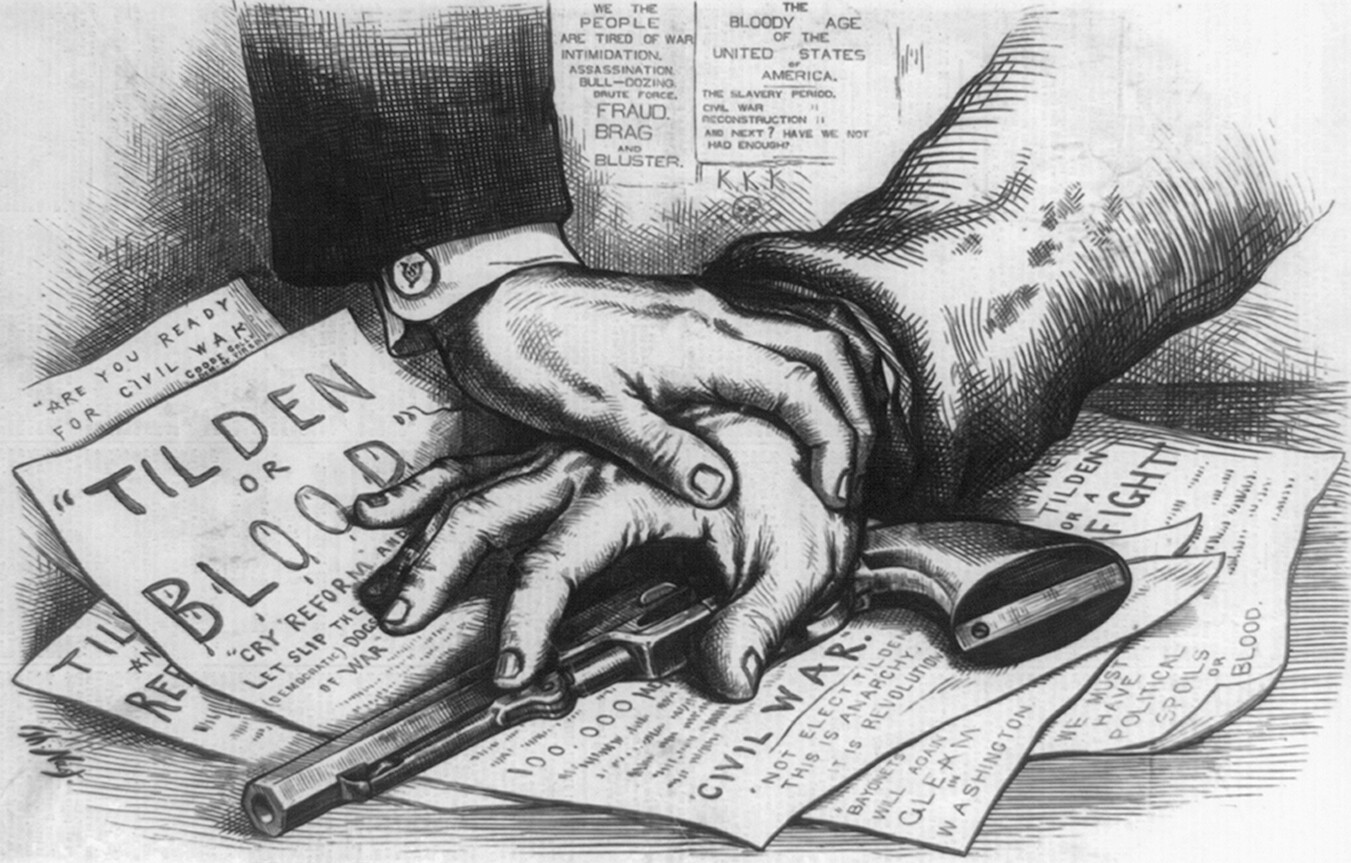
In all three states, rival election boards submitted conflicting vote counts. Weeks passed with no solution. On January 29, 1877, Congress appointed an electoral commission to settle the dispute. On March 1, the commission voted 8–7 in favor of Hayes. The next day, the House of Representatives declared Hayes president by an electoral vote of 185–184.
Tilden decided not to protest the decision. His campaign manager explained that they preferred “four years of Hayes’s administration to four years of civil war.”
Hayes’s victory hinged on the defection of key southern Democrats, who, it turned out, had made secret deals with the Republicans. On February 26, 1877, prominent Ohio Republicans and powerful southern Democrats had struck a private bargain—the Compromise of 1877—at Wormley’s Hotel in Washington, D.C. The Republicans promised that if Hayes were named president, he would remove all federal troops from the South.
THE END OF RECONSTRUCTION By 1877, Americans were no longer willing to pay the price to protect the newly won rights of African Americans. The Democrat-controlled House of Representatives refused to fund federal troops in the South after July, and President Hayes ordered U.S. soldiers in the South Carolina statehouse to return to their barracks. The state’s Republican government collapsed soon thereafter.
In the congressional elections of 1878, Hayes admitted that the balloting in southern states was corrupted by “violence of the most atrocious character,” but he would not send federal troops again. The Democrats controlling the House went a step further and banned the use of federal troops to enforce civil rights in the former Confederacy. The news led a South Carolina African American to dread his future. “I am an unprotected freedman. O God save the Colored People.”
Without the sustained presence of federal troops, African Americans could not retain their newly won civil rights. New White Democratic state governments rewrote their constitutions, ousted the “carpetbaggers, scalawags, and blacks,” and cut spending. As the years passed, White supremacists found various ways to prevent Blacks from voting or holding office or even sharing the same railcar. State colleges and universities that had admitted Blacks now reversed themselves. In short, the North had won the Civil War but lost the peace. “The Yankees helped free us, so they say,” a formerly enslaved North Carolinian named Thomas Hall remembered, “but [in 1877] they let us be put back in slavery again.”
In an 1876 speech to the Republican National Convention, Frederick Douglass recognized that the party had won the Civil War, freed the enslaved, and passed amendments protecting their civil and voting rights, yet “what does it all amount to if the black man, after having been made free by the letter of your law, is unable to exercise that freedom . . . and is [again] to be subject to the slaveholder’s shotgun?”
Glossary
- greenbacks
- Paper money issued during the Civil War, which sparked currency debates after the war.
- Panic of 1873
- Financial collapse triggered by President Grant’s efforts to withdraw greenbacks from circulation and transition the economy back to hard currency.
- redeemers
- Postwar White Democratic leaders in the South who supposedly saved the region from political, economic, and social domination by Northerners and Blacks.
- Compromise of 1877
- Secret deal forged by congressional leaders to resolve the disputed election of 1876; Republican Rutherford B. Hayes, who had lost the popular vote, was declared the winner in exchange for his pledge to remove federal troops from the South, marking the end of Reconstruction.