 America’s Influence in the Pacific
How and why did the United States expand its influence in the Pacific before the Spanish-American War?
EXPANSION IN THE PACIFIC
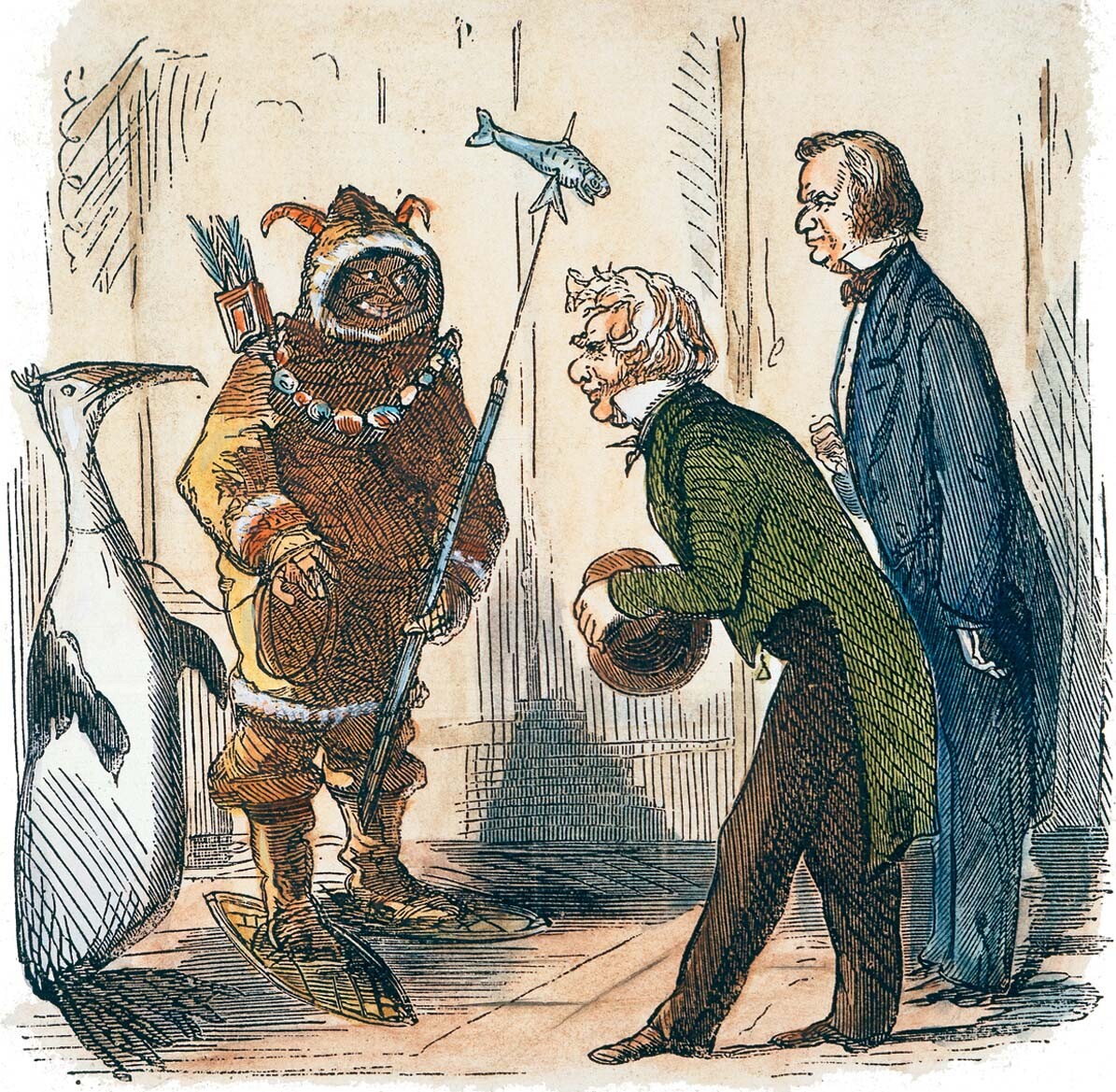
For John Fiske and other imperialists, Asia offered an especially attractive target. In 1866, Secretary of State William H. Seward had predicted that the United States must inevitably impose its economic domination “on the Pacific Ocean, and its islands and continents.” To take advantage of the Asian markets, Seward believed that the United States first had to remove foreign powers from its northern Pacific coast and gain access to the region’s valuable ports. To that end, Seward tried to acquire British Columbia, sandwiched between Russian-owned Alaska and the Washington Territory.
Late in 1866, while encouraging British Columbia to consider becoming a U.S. territory, Seward learned of Russia’s desire to sell Alaska. He leaped at the opportunity, thinking the purchase might influence British Columbia to join the United States. In 1867, the United States bought Alaska for $7.2 million, thus removing the threat of Russian imperialism in North America. Critics scoffed at “Seward’s folly,” but the Alaska Purchase proved to be the best bargain since the Louisiana Purchase, in part because of its vast deposits of gold and oil.
Seward’s successors at the State Department sustained his expansionist vision. Their major focus was acquiring key Pacific Ocean ports. Two island groups occupied especially strategic positions: Samoa and Hawaii (the Sandwich Islands). Both had major harbors, Pago Pago and Pearl Harbor, respectively. In the years after the Civil War, American interest in those islands deepened.
SAMOA
In 1878, the Samoans granted the United States a naval base at Pago Pago and extraterritoriality for Americans (meaning that in Samoa, Americans remained subject only to U.S. law), exchanged trade concessions, and called for the United States to help resolve any disputes with other nations. The following year, the German and British governments worked out similar arrangements with other islands in the Samoan group. There matters rested until civil war broke out in Samoa in 1887. A peace conference in Berlin in 1889 established a protectorate over Samoa, with Germany, Great Britain, and the United States in an uneasy partnership administering the island nation.
HAWAII
The Hawaiian Islands, a unified kingdom since 1795, had a sizable population of American Christian missionaries and a profitable crop, sugarcane. In 1875, Hawaiian officials had signed a trade agreement allowing its sugar to enter the United States duty free in exchange for a promise that none of its territory would be leased or granted to a third power. This agreement led to a boom in sugar production based on cheap immigrant labor, mainly Chinese and Japanese workers, and American sugar planters soon formed an economic elite. By the 1890s, the native Hawaiian population had been reduced to a minority by smallpox and other diseases, and Asian immigrants had become the largest ethnic group.
Beginning in 1891, Queen Liliuokalani, the Hawaiian ruler, tried to restore “Hawaii for the Hawaiians” by restricting the political power exercised by U.S. planters in the islands. Two years later, however, Hawaii’s White population (called Haoles) revolted and overthrew the monarchy when John L. Stevens, the U.S. ambassador, brought in marines to support the coup in January 1893. The queen surrendered “to the superior force of the United States,” leading Stevens to report that the “Hawaiian pear is now fully ripe, and this is the golden hour for the United States to pluck it.” Within a month, a committee representing the haoles asked the U.S. government to annex the islands. President Benjamin Harrison sent an annexation treaty to the Senate just as he was leaving the presidency in early 1893.
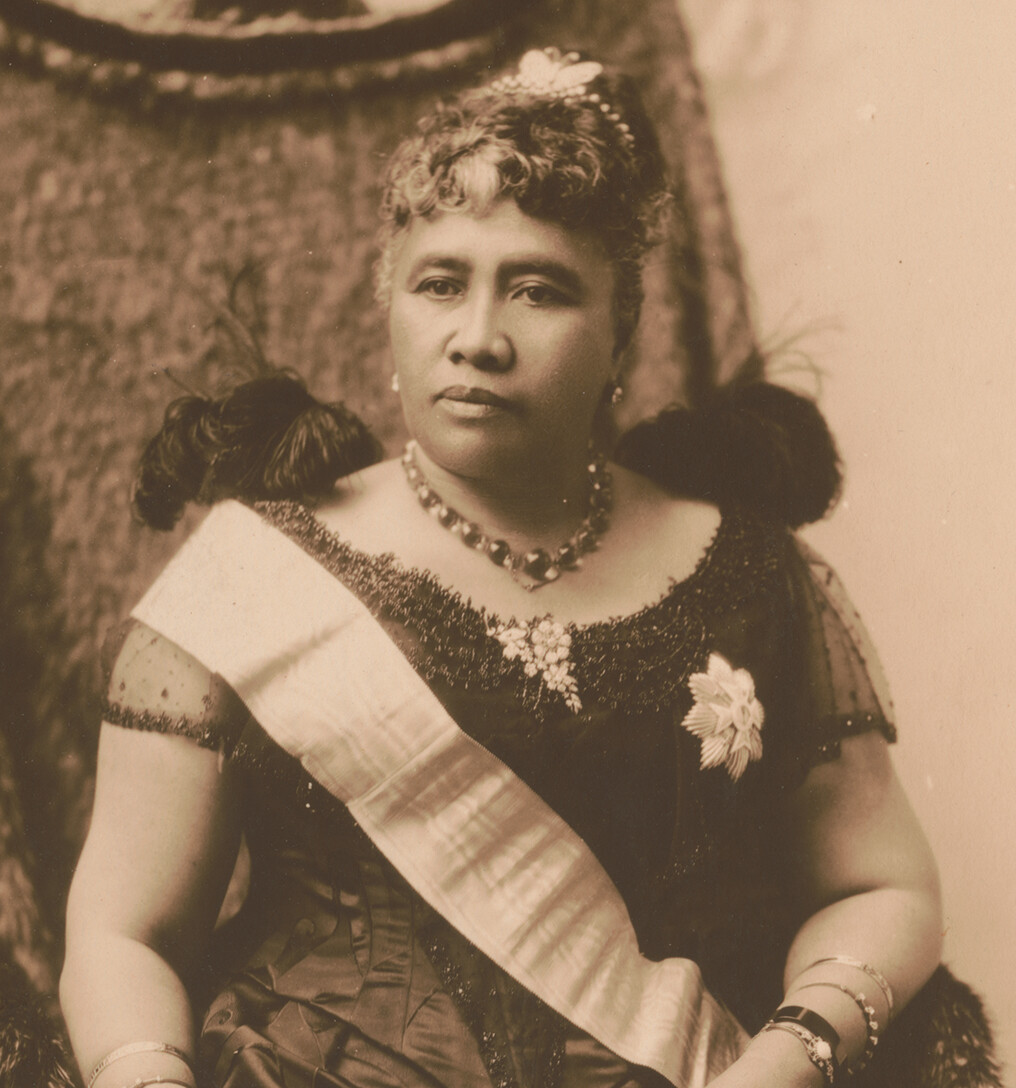
To investigate the situation, the new U.S. president, Grover Cleveland, sent a special commissioner to Hawaii, who reported that the Americans in Hawaii had acted improperly and that most native Hawaiians opposed annexation. Cleveland tried to restore the queen to power but met resistance from the haoles. On July 4, 1894, the government they controlled created the Republic of Hawaii, which included in its constitution a provision for American annexation. In 1897, when Republican William McKinley became president, he sought an excuse to annex the islands. “We need Hawaii,” he claimed, “just as much and a good deal more than we did California. It is [America’s] manifest destiny.” The United States took control of Hawaii in the summer of 1898, over the protests of native Hawaiians who resented their nation being annexed without “the consent of the people of the Hawaiian Islands.”