 The Anti-Imperialist League
What were the consequences of the Spanish-American War for American foreign policy?
CONSEQUENCES OF VICTORY
Victory in the Spanish-American War boosted American self-confidence and reinforced the self-serving belief that the United States had a manifest destiny to reshape the world in its own image. In 1885, the Reverend Josiah Strong had written a best-selling book titled Our Country in which he used a Darwinian argument to strengthen the appeal of manifest destiny. The “wonderful progress of the United States,” he boasted, was itself an illustration of Charles Darwin’s concept of “natural selection.” After all, Americans had demonstrated that they were the world’s “superior” civilization, “a race of unequaled energy” who represented “the largest liberty, the purest Christianity, the highest civilization” in the world, a race of superior people destined to “spread itself over the earth,” to Central and South America, and “out upon the islands” in the Pacific and beyond to Asia.
Strong asserted that the United States had a Christian duty to expand American influence around the world. International trade, he noted, would grow directly out of America’s missionary evangelism and racial superiority. “Can anyone doubt,” he asked, “that this race . . . is destined to dispossess many weaker races, assimilate others, and mold the remainder until . . . it has Anglo-Saxonized mankind?”
Europeans agreed that the United States had now made an impressive entrance onto the world stage. The Times of London announced that the American victory over Spain must “effect a profound change in the whole attitude and policy of the United States. In the future, America will play a part in the general affairs of the world such as she has never played before.” America’s acquisition of its first imperial colonies created a host of long-lasting moral and practical problems, from the ethical dilemmas of imposing U.S. rule by force on native peoples to the challenge of defending far-flung territories around the globe.
TAKING THE PHILIPPINES
The United States soon substituted its own imperialism for Spain’s. If the war had saved many lives by ending the insurrection in Cuba, it had also led the United States to take many lives in suppressing the anti-colonial insurrection in the Philippines.
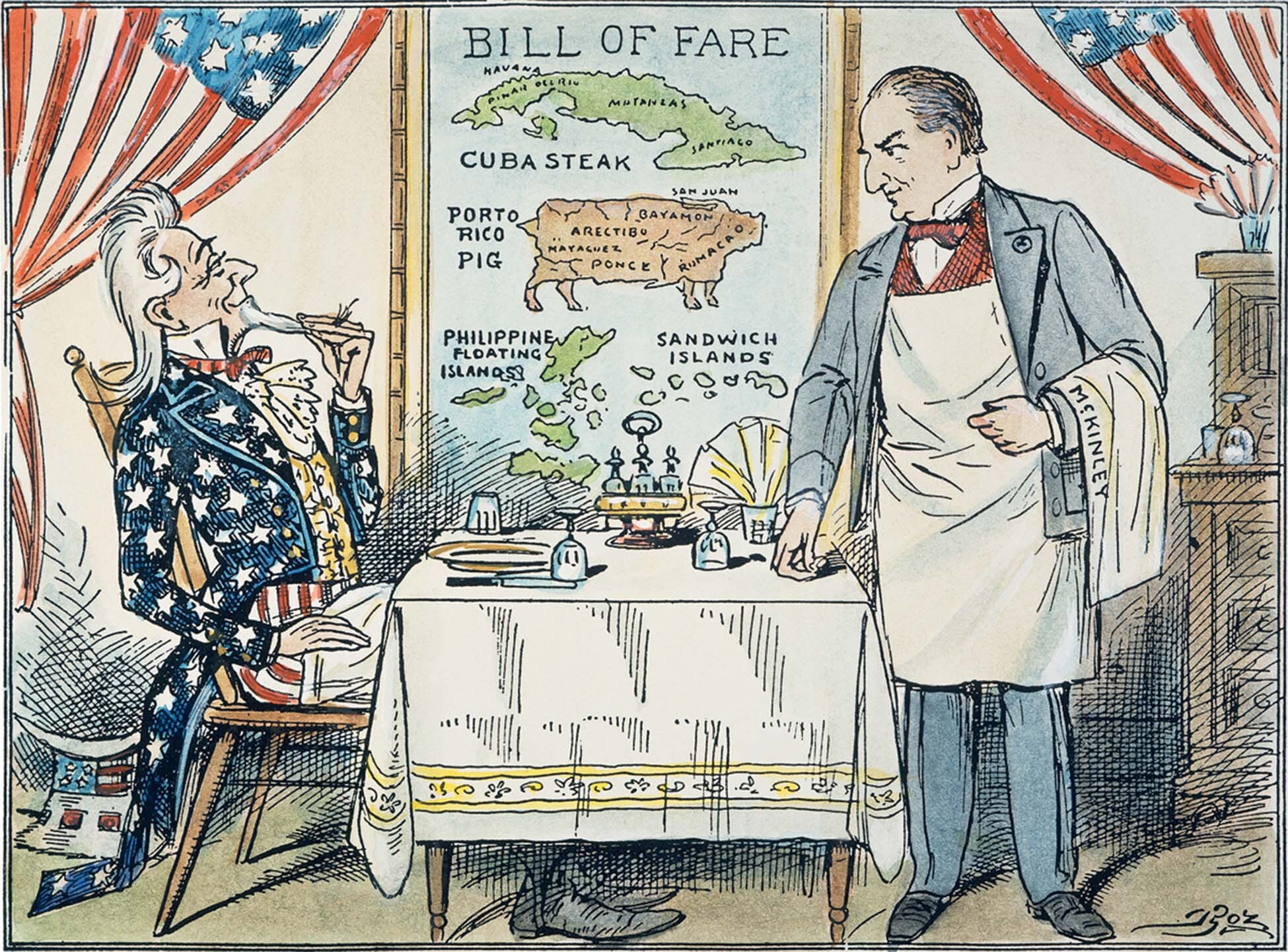
The Treaty of Paris dismantled most of the Spanish Empire but left the political status of the Philippines unresolved. American business leaders wanted the United States to keep the area’s 400 inhabited islands so that they could more easily penetrate the markets of nearby China and reach its huge population. As Mark Hanna, President McKinley’s top adviser, stressed, controlling the Philippines would enable the United States to “take a large slice of the commerce of Asia.”
American missionary organizations, mostly Protestant, also favored annexation; they viewed the Philippines as a base from which to bring Christianity to “the little brown brother.” After the United States took control, American authorities ended the Roman Catholic Church’s status as the Philippines’ official religion and made English the official language, thus opening the door for Protestant missionaries to begin evangelical activities across the region.
These factors helped convince President McKinley of the need to annex the Philippines. He claimed to have agonized over the issue, walking “the floor of the White House night after night” until finally he got down on his knees and prayed “for light and guidance.” Then,
one night late it came to me this way—I don’t know how it was, but it came: (1) that we could not give them back to Spain—that would be cowardly and dishonorable; (2) that we could not turn them over to France or Germany—our commercial rivals in the Orient—that would be bad business and discreditable; (3) that we could not leave them to themselves—they were unfit for self-government—and they would soon have anarchy and misrule over there worse than Spain’s was; and (4) that there was nothing left for us to do but to take them all, and to educate the Filipinos, and uplift and civilize and Christianize them, and by God’s grace do the very best we could by them, as our fellowmen for whom Christ also died. And then I went to bed, and went to sleep and slept soundly.
In this one brief statement, McKinley summarized the motivating ideas of American imperialism: (1) national glory, (2) expanding commerce, (3) racial superiority, and (4) Christian evangelism.
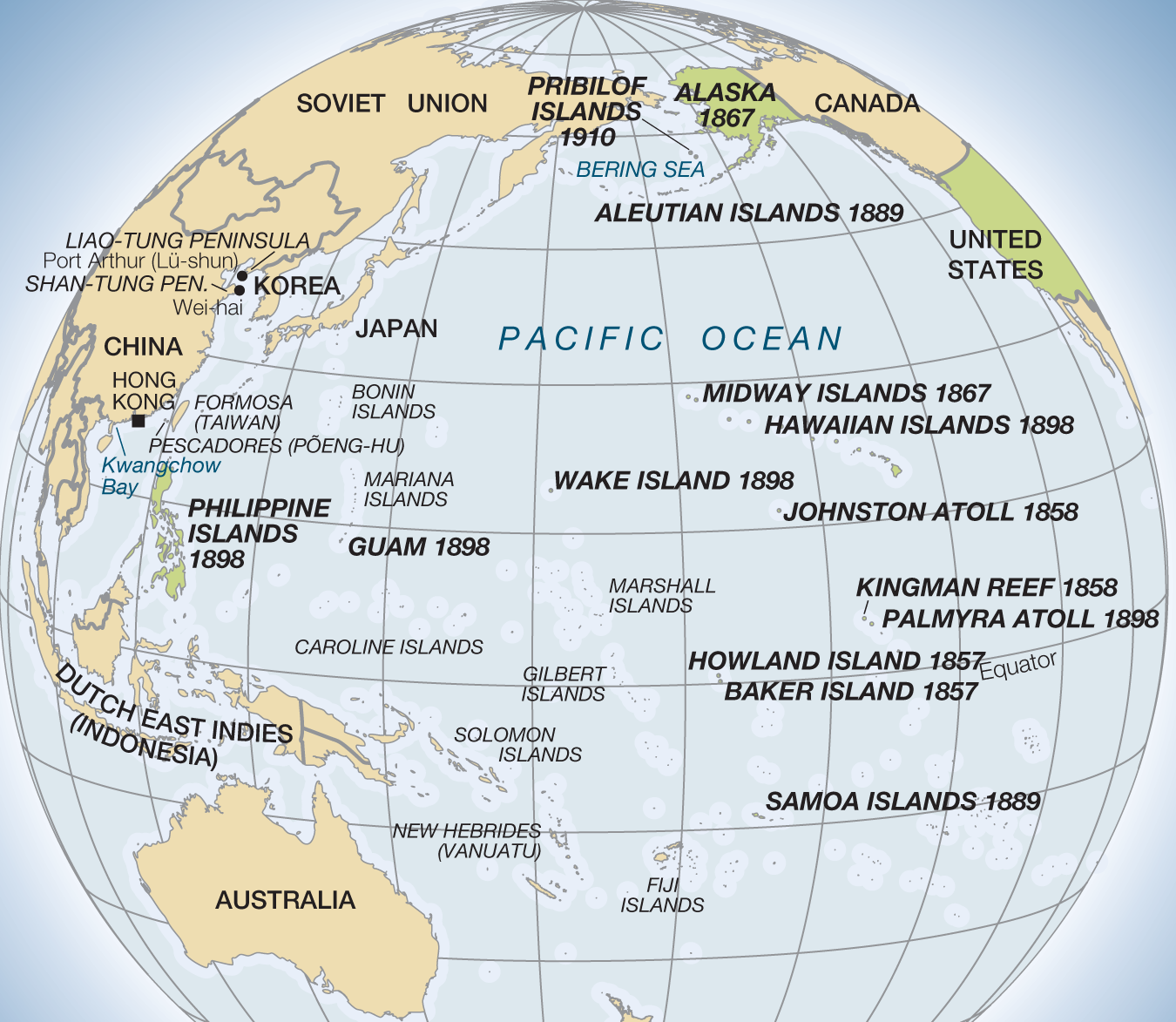
American negotiators in Paris finally offered Spain $20 million for the Philippines, Puerto Rico, and Guam, the last of which would serve as a coaling station for ships headed across the Pacific to Asia.
Meanwhile, in addition to annexing Hawaii in 1898, the United States also claimed Wake Island, between Guam and Hawaii, which would become a vital link in a future transpacific telegraph cable. In 1899, Germany and the United States agreed to divide the Samoa Islands.
DEBATING THE TREATY
By early 1899, the Senate had yet to ratify the Treaty of Paris with Spain because of growing domestic opposition to a global American empire. Anti-imperialists argued that annexing the former Spanish colonies would violate the long-standing American principle embodied in the Constitution that people should be self-governing rather than colonial subjects. Massachusetts senator George Hoar warned that approving the treaty would “make us a vulgar, commonplace empire, controlling subject races . . . in which one class must forever rule and other classes must forever obey.”
Treaty opponents also noted the moral inconsistency of liberating Cuba and annexing the Philippines. Senator Albert Beveridge of Indiana, however, openly championed U.S. imperialism. He argued that the ideal of democracy “applies only to those who are capable of self-government.” In his view as a White supremacist, the Filipinos were incapable of governing themselves. His friend Theodore Roosevelt expressed the widespread racism of the time more bluntly. The Filipinos, he declared, were “wild beasts” who would benefit from American-imposed discipline: “There must be control! There must be mastery!”
The opposition might have killed the treaty had not the most prominent Democratic leader, William Jennings Bryan, argued that endorsing the treaty would open the way for the future independence of the Philippines. His change of position convinced just enough Senate Democrats to support the treaty. On February 6, 1899, it passed by the narrowest of margins: only one vote more than the necessary two-thirds majority.
President McKinley, however, had no intention of granting independence to the Philippines. He insisted that the United States take control of the islands as an act of “benevolent assimilation” of the native population. A California newspaper gave a more candid explanation, however. “Let us be frank,” the editor exclaimed. “WE DO NOT WANT THE FILIPINOS. WE WANT THE PHILIPPINES.”
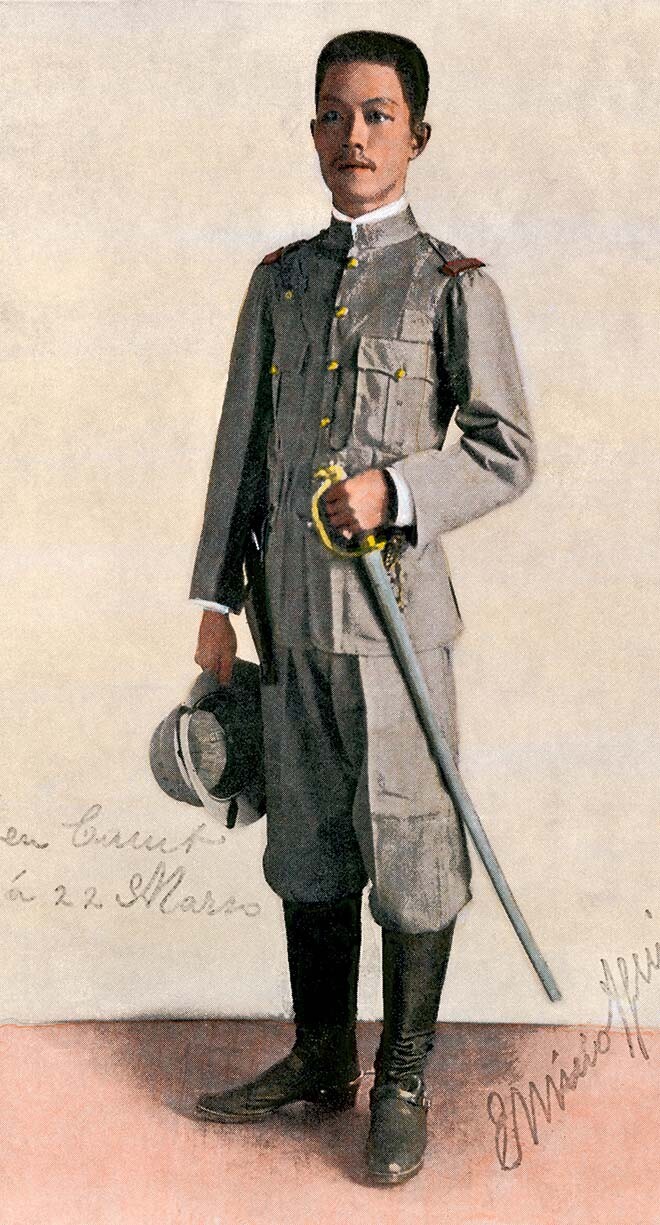
The Filipinos themselves had a different vision. In early 1899, rebels again declared independence and named twenty-nine-year-old Emilio Aguinaldo president. The following month, an American soldier outside Manila fired on Aguinaldo’s nationalist forces, called insurrectos, killing two, who may have been unarmed. The following day, the Filipino rebels acknowledged that the fighting had begun accidentally. They asked for an immediate cease-fire. The U.S. commander, however, rejected the request, replying that the “fighting, having begun, must go on to the grim end.”
On June 2, 1899, the Philippine Republic declared war against the United States. America now found itself in an even more costly conflict than the war with Spain—this one to suppress the Filipino independence movement. Since the insurrectos controlled most of the Philippine islands, what followed was largely a war of conquest at odds with the founding principle of the United States: that people have the right to govern themselves. The war would rob the Filipinos of the chance to be their own masters.
THE PHILIPPINE-AMERICAN WAR (1899–1902)
The grisly American effort to crush Filipino nationalism lasted three years, involved some 126,000 U.S. troops, and took the lives of hundreds of thousands of Filipinos (most of them civilians) and 4,234 American soldiers. It was a brutal conflict in which both sides used torture and committed massacres.
While Whites in southern states were lynching African Americans, a similarly vicious form of racism spurred numerous atrocities by U.S. troops. Soldiers burned villages, tortured and executed prisoners, and imprisoned civilians in overcrowded concentration camps. A reporter for the Philadelphia Ledger noted that U.S. soldiers had “killed to exterminate men, women, children, prisoners and captives, active insurgents and suspected people from lads of ten up, the idea prevailing that the Filipino as such was little better than a dog.” One U.S. soldier from Indiana celebrated the slaughter of an entire village in retaliation for the murder of an American: “I am in my glory when I can sight my gun on some dark skin and pull the trigger.”
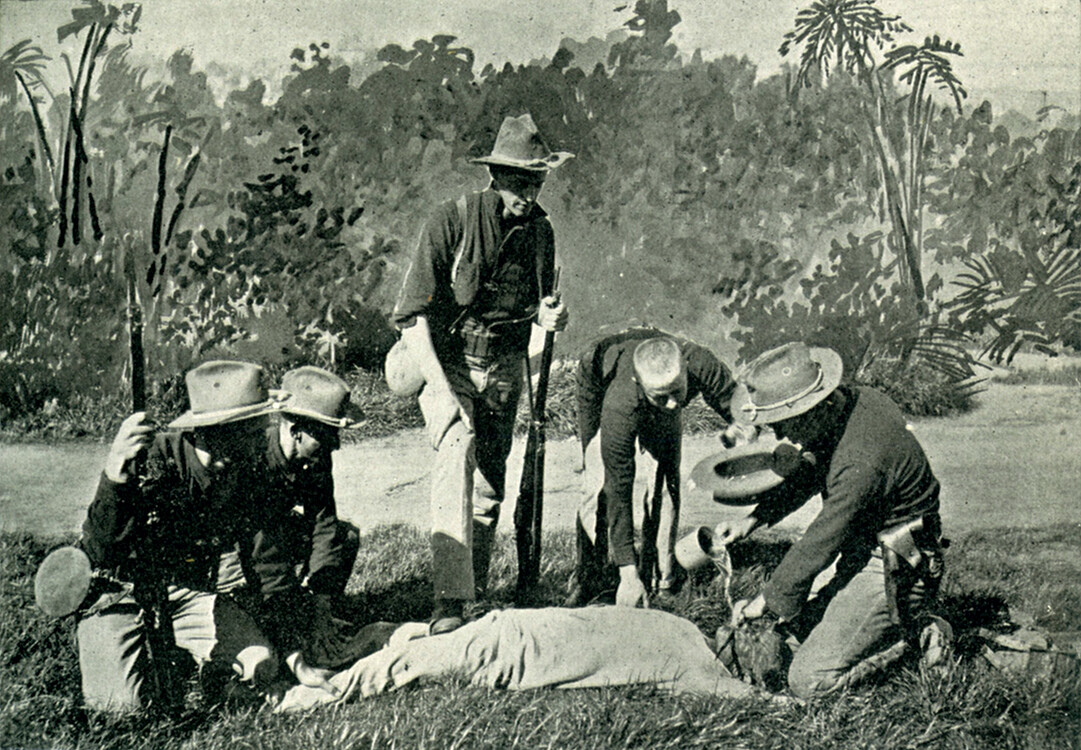
Both sides used torture to gain information. A favorite method employed by Americans was the “water cure,” a technique to simulate drowning developed in the Spanish Inquisition during the sixteenth century. (Today it is called waterboarding and is considered a war crime.) A captured insurgent would be placed on his back on the ground. While soldiers stood on his outstretched arms and feet, they pried his mouth open and poured salt water into the captive’s mouth and nose until his stomach was bloated, whereupon they would stomp on his abdomen, forcing the water, now mixed with gastric juices, out of his mouth. They repeated the process until the captive told the soldiers what they wanted to know—or died. “It is not civilized warfare,” wrote the Philadelphia Ledger, “but we are not dealing with civilized people.”
Thus did the United States set out to destroy a revolutionary movement modeled after America’s own struggle for independence from Great Britain. Organized Filipino resistance collapsed by the end of 1899, but sporadic clashes continued for months thereafter. On April 1, 1901, Aguinaldo swore an oath accepting the authority of the United States over the Philippines and pledging his allegiance to the U.S. government.
Against the backdrop of this nasty guerrilla war, a great debate over imperialism continued in the United States. In 1899, several groups combined to form the American Anti-Imperialist League. Andrew Carnegie financed the League and even offered $20 million to buy independence for the Filipinos. Other prominent anti-imperialists included Mark Twain, college presidents Charles Eliot of Harvard and David Starr Jordan of Stanford, and social reformer Jane Addams. Even former presidents Grover Cleveland and Benjamin Harrison urged President McKinley to withdraw U.S. forces from the Philippines. The conflict to suppress Filipino independence had become “a quagmire,” said Mark Twain, and the United States should “not try to get them under our heel” or intervene “in any other country that is not ours.” Harvard philosopher William James was even more emphatic, arguing that the nation’s imperialism in Asia had caused the United States to “puke up its ancient soul.” Of the Philippine-American War, James asked, “Could there be any more damning indictment of that whole bloated ideal termed ‘modern civilization’?”
Senator Hoar, one of the few surviving founders of the Republican party, led the opposition to annexation in the Senate. Under the Constitution, he pointed out, “no power is given the Federal government to acquire territory to be held and governed permanently as colonies” or “to conquer alien people and hold them in subjugation.”
Many ministers denounced imperialism as unchristian. Charles Ames, a prominent Unitarian leader, predicted that embracing imperialism would “put us into a permanent attitude of arrogance, testiness, and defiance towards other nations. . . . We shall be one more bully among bullies.”
ORGANIZING THE FORMER SPANISH TERRITORIES
In the end, the imperialists won the debate over the status of the territories acquired from Spain. Senator Albert J. Beveridge boasted in 1900: “The Philippines are ours forever. And just beyond the Philippines are China’s illimitable markets. . . . The power that rules the Pacific is the power that rules the world.” He added that the U.S. economy was producing “more than we can consume, making more than we can use. Therefore we must find new markets for our produce.” American-controlled colonies would make the best new markets. Without acknowledging it, Beveridge and others were using many of the same arguments that English officials had used in founding the American colonies in the seventeenth century.
On July 4, 1901, the U.S. military government in the Philippines gave way to civilian control, and William Howard Taft became the governor. In 1902, Congress passed the Philippine Government Act, which in essence, transformed the Philippines into an American-controlled colony, not a territory eligible for statehood. (In 1917, the Jones Act affirmed America’s intention to grant the Philippines independence, but that would not happen until 1946.)
Closer to home, Puerto Rico had been acquired in part to serve as a U.S. outpost guarding the Caribbean Sea. On April 12, 1900, the Foraker Act established a government on the island, and its residents were declared citizens of the Commonwealth of Puerto Rico, not Spain; they were made dual citizens of the United States 1917.
U.S. INTERESTS IN THE PACIFIC
- Why was President McKinley eager to acquire territory in the Pacific and the Caribbean?
- What kind of political system did the U.S. government create in Hawaii and in the Philippines?
- How did Filipinos and Hawaiians resist the Americans?
In Cuba, the United States finally fulfilled the promise of independence after restoring order, organizing schools, and improving sanitary conditions. The problem of widespread disease prompted the work of Dr. Walter Reed. Named head of the Army Yellow Fever Commission in 1900, he proved that mosquitoes carry yellow fever. The commission’s experiments led the way to effective control of the disease worldwide. In 1900, on President McKinley’s order, Cubans drafted a constitution modeled on that of the United States. The following year, however, the Platt Amendment, added to an army appropriations bill, sharply restricted the Cuban government’s independence by requiring that the Cuban government never sign a treaty with a third power and that it acknowledge the right of the United States to intervene in Cuba’s affairs whenever it saw fit. Finally, Cuba had to sell or lease to the United States lands to be used for coaling or naval stations, a stipulation that led to a U.S. naval base at Guantánamo Bay that still exists today. American troops remained in control of the rest of Cuba until 1902 and returned several times later (1912, 1917, and 1920) to suppress insurrections.
“UNINCORPORATED TERRITORIES”
Until 1900, the U.S. government granted territories the protection of the Constitution and a path to statehood. The acquisition of Puerto Rico, Guam, and the Philippines, however, led to a new policy. In 1900, William McKinley won reelection on a platform that celebrated America’s new overseas empire and referred to residents of the newly acquired territories as “rescued peoples.” His successor, Theodore Roosevelt, hailed “the expansion of the peoples of white, or European, blood” into the lands of “mere savages.”
The U.S. Supreme Court clarified the rights of the newly acquired territories in Downes v. Bidwell (1901). The justices declared that America’s territories were either “incorporated” with the United States or “unincorporated.” Only the “incorporated” territories—at that time Alaska, Arizona, Hawaii, Oklahoma, and New Mexico—received the full protections of the Constitution. The “unincorporated” territories—Guam, the Philippines, Puerto Rico, and Samoa—were, according to the justices, “inhabited by alien races” incapable of appreciating America’s constitutional values.
IMPERIAL RIVALRIES IN EAST ASIA
While the United States was suppressing the Filipino independence movement, other nations were threatening to carve up China. After Japan defeated China in the First Sino-Japanese War (1894–1895), European nations began to exploit the weakness of the virtually defenseless nation. By the end of the century, Russia, Germany, France, and Great Britain had each established spheres of influence in China—territories that they controlled but did not formally annex.
In 1898 and again in 1899, the British asked the American government to join them in preserving the territorial integrity of China against further imperialist actions. Both times, however, the Senate rejected the request because the United States had no strategic investment in the region. The American outlook changed with the defeat of Spain and the acquisition of the Philippines. Instead of acting jointly with Great Britain, however, the U.S. government decided to act alone (unilaterally) in implementing the British policy.
What came to be known as the Open Door policy was outlined in Secretary of State John Hay’s Open Door Note, dispatched in 1899 to his European counterparts. Without consulting the Chinese, Hay announced that China should remain an “open door” to European and American trade and that other nations should not try to take control of Chinese ports or territory. None of the European powers except Britain accepted Hay’s principles, but none rejected them, either. So, Hay announced that all major powers involved in China had accepted the policy.
The Open Door policy was rooted in the desire of American businesses to exploit and ultimately dominate Chinese markets. It also appealed to those who opposed imperialism because it pledged to keep China from being carved up by powerful European nations. The policy had little legal standing, however. When the Japanese became concerned about growing Russian influence in Manchuria (in northeast China) and asked how the United States intended to enforce the policy, Hay replied that America was “not prepared . . . to enforce these views.” So the situation would remain for forty years, until continued Japanese military expansion in China would bring about a diplomatic dispute with America that would lead to war in 1941.
THE BOXERS
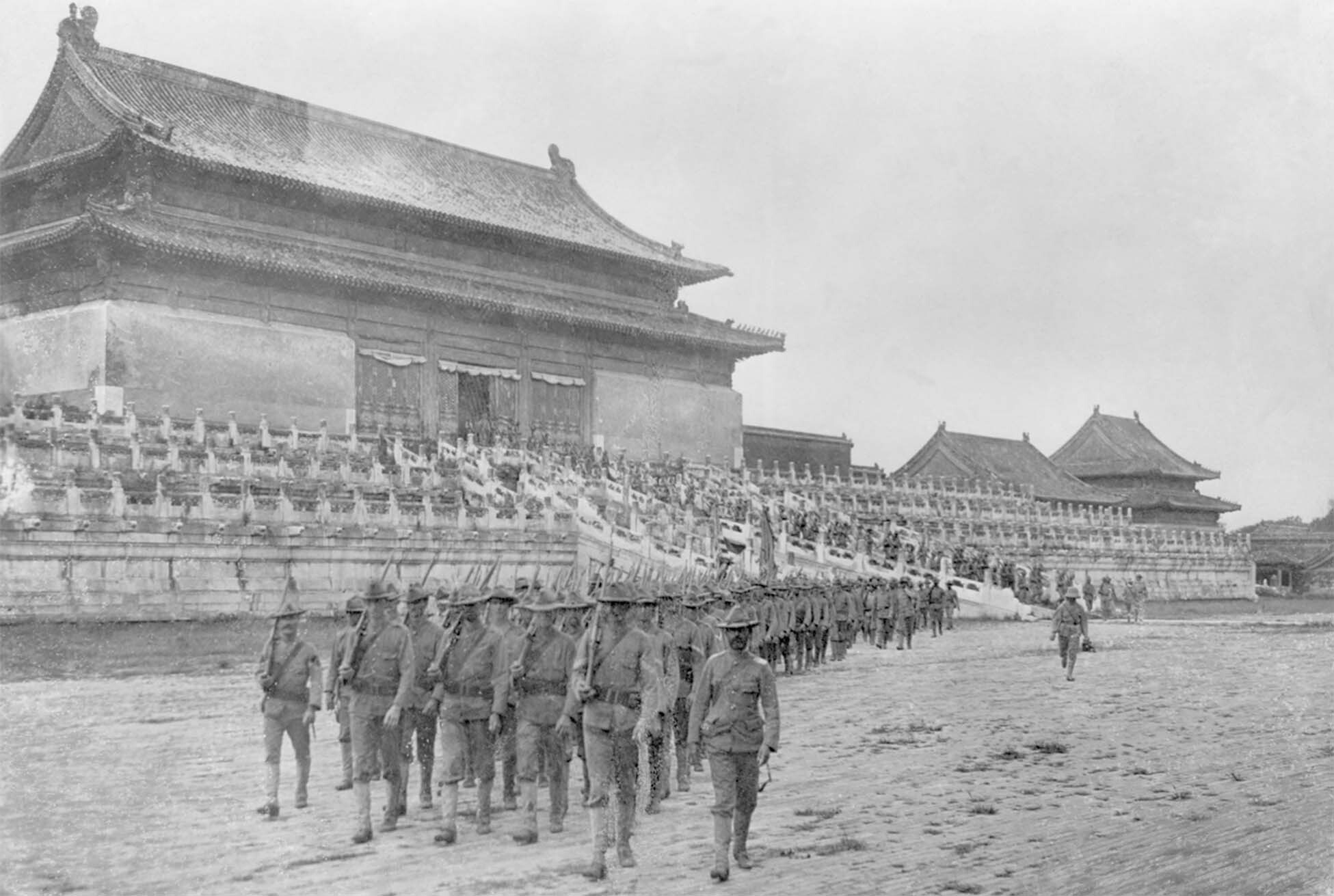
A new Asian crisis arose in 1900 when Chinese nationalists known to the Western world as Boxers—they called themselves the “Fists of Righteous Harmony”—rebelled against foreign involvement in China, especially Christian missionary efforts, and laid siege to foreign embassies in Peking (now known as Beijing). An expedition of British, German, Russian, Japanese, and American soldiers was organized to rescue the international diplomats and their staffs. Hay, fearful that the intervention might become an excuse for other nations to carve up China into separate colonies, took the opportunity to refine the Open Door policy. The United States, he said, sought a solution that would “preserve Chinese territorial and administrative integrity” as well as “equal and impartial trade with all parts of the Chinese Empire.” Six weeks later, the foreign military expedition reached Peking and ended the Boxer Rebellion.
Glossary
- American Anti-Imperialist League
- Coalition of anti-imperialist groups united in 1899 to protest American territorial expansion, especially in the Philippine Islands; its membership included prominent politicians, industrialists, labor leaders, and social reformers.
- Open Door policy (1899)
- Official U.S. assertion that Chinese trade would be open to all nations; Secretary of State John Hay unilaterally announced the policy in 1899 in hopes of protecting the Chinese market for U.S. exports.