A NEW OUTLOOK IN THE EARLY TWENTIETH CENTURY
Assess the impact of the consumer culture that emerged in America during the 1920s. What contributed to its growth?
A “NEW ERA” OF CONSUMPTION
During the 1920s, the U.S. economy became the envy of the world. Following the brief recession in 1920–1921, Americans benefited from the fastest economic growth in history. Between 1922 and 1928, industrial production soared by 70 percent. Jobs were plentiful, inflation was low, and income rose steadily. The nation’s total wealth almost doubled between 1920 and 1930, while wage workers enjoyed a whopping 30 percent increase in income—the sharpest rise in history. By 1929, the United States had the highest standard of living in the world.
Construction led the economic recovery. By 1921, a building boom was under way that would last throughout the decade. Technology boosted mass production through the moving assembly-line process. New machines (electric motors, steam turbines, dump trucks, tractors, bulldozers, steam shovels) and more efficient ways of operating farms, factories, plants, mines, and mills generated dramatic increases in productivity. In 1920, the nation’s factories produced 5,000 electric refrigerators; by 1929, they were producing almost a million.
In the late nineteenth century, commercial agriculture and large-scale industrial production spurred the building of railroads and bridges, the manufacturing of steel, and the construction of housing and businesses in cities. During the 1920s, such industrial production continued; but the new, dominant aspect of the economy involved the mass production of new consumer goods sold through a national marketplace, making mass consumption possible.
THE FLORIDA LAND RUSH
While production and consumption were soaring, so were get-rich-quick schemes, the most popular of which was the Florida real estate boom. One of the least developed states on the Atlantic coast suddenly became the nation’s fastest-growing state. The lack of an income tax or inheritance tax was one explanation. The widespread ownership of automobiles was another, making it possible for masses of people to vacation in what was known as the “winter playground of America.”
Like prospectors during the California gold rush, speculators and developers swooped into the Land of Flowers (a literal translation of the state’s Spanish name). They bought, cleared, tamed, subdivided, and sold parcels of land so fast that they could not keep up with the paperwork. Miami, the “Magic City,” had only 1,700 residents in 1900; by 1925 its population had mushroomed to 111,000. Miami was “growing so fast it creaks,” gushed one reporter. A beachfront property that sold for $35,000 went for $1 million just three years later.
Advertising that heralded Florida as “an emerald kingdom . . . clothed in perpetual verdure and lapt in the gorgeous folds of the semi-tropical zone” led hundreds of thousands of people, mostly northerners, to invest in Florida real estate sight unseen. But what they’d been told was prime property often turned out to be swampland.
By mid-1926, the Florida real estate bubble burst. Too much growth too fast had caused unexpected problems. Railroads struggling to supply food to the state’s rapidly growing population announced they were no longer transporting construction supplies, leaving thousands of homes unfinished. In September, a devastating hurricane roared across South Florida, deepening the pain.
By 1928, much of Florida was a wasteland. “Dead subdivisions line the highway,” one journalist reported, “their pompous names half-obliterated on crumbling stucco gates. Lonely, white-way lights stand guard over miles of cement sidewalks, where grass and palmetto [trees] take the place of homes that were to be.” The collapse of the Florida land boom demonstrated the dangers of financial speculation. It was but a preview for the great stock market bubble that would burst at the end of 1929.
A GROWING CONSUMER CULTURE
1920S CONSUMER CULTURE
Perhaps the most visible change during the 1920s was the emergence of a powerful consumer culture in which mass production and consumption of nationally advertised products dictated much of social life and social status. For many Americans (most notably the business interests that profited from it), the new consumerism was a marvel of modern life, providing everyday people a level of comfort, leisure, and self-expression unimaginable to previous generations. For its critics, however, the consumer culture threatened long-established virtues such as hard work, plain living, and prudent money management. “During the war,” one journalist worried in 1920, “we accustomed ourselves to doing without, to buying carefully, to using economically. But with the close of the war came reaction. A veritable orgy of extravagant buying is going on. Reckless spending takes the place of saving, waste replaces conservation.”
What was new in the 1920s was not just the goods being sold, but how businesses sold them. Marketing and advertising came of age during the decade. “Layaway” plans and installment buying encouraged consumers to “buy now, pay later.” As a result, consumer debt almost tripled during the decade. Yet despite the debt, advertising continued to drive consumer demand for new products. And businesses that utilized mass production techniques could provide those products. In fact, President Calvin Coolidge declared that advertising had become “the most potent influence in adopting and changing the habits and modes of life, affecting what we eat, what we wear, and the work and play of the whole nation.”
Advertisements shaped how people behaved, what they purchased, and how they pursued happiness. Zelda Sayre Fitzgerald, the spirited wife of celebrated novelist F. Scott Fitzgerald, recalled that “we grew up founding our dreams on the infinite promises of American advertising.” In a 1923 interview, she embraced the culture of consumption: “I don’t mean that money means happiness, necessarily. But having things, just things, objects, makes a woman happy. The right kind of perfume, the smart pair of shoes.” Her husband chimed in: “Women care for ‘things,’ clothes, furniture, for themselves . . . and men [do too], in so far as they contribute to their vanity.”
VISUAL EXPLORATIONS
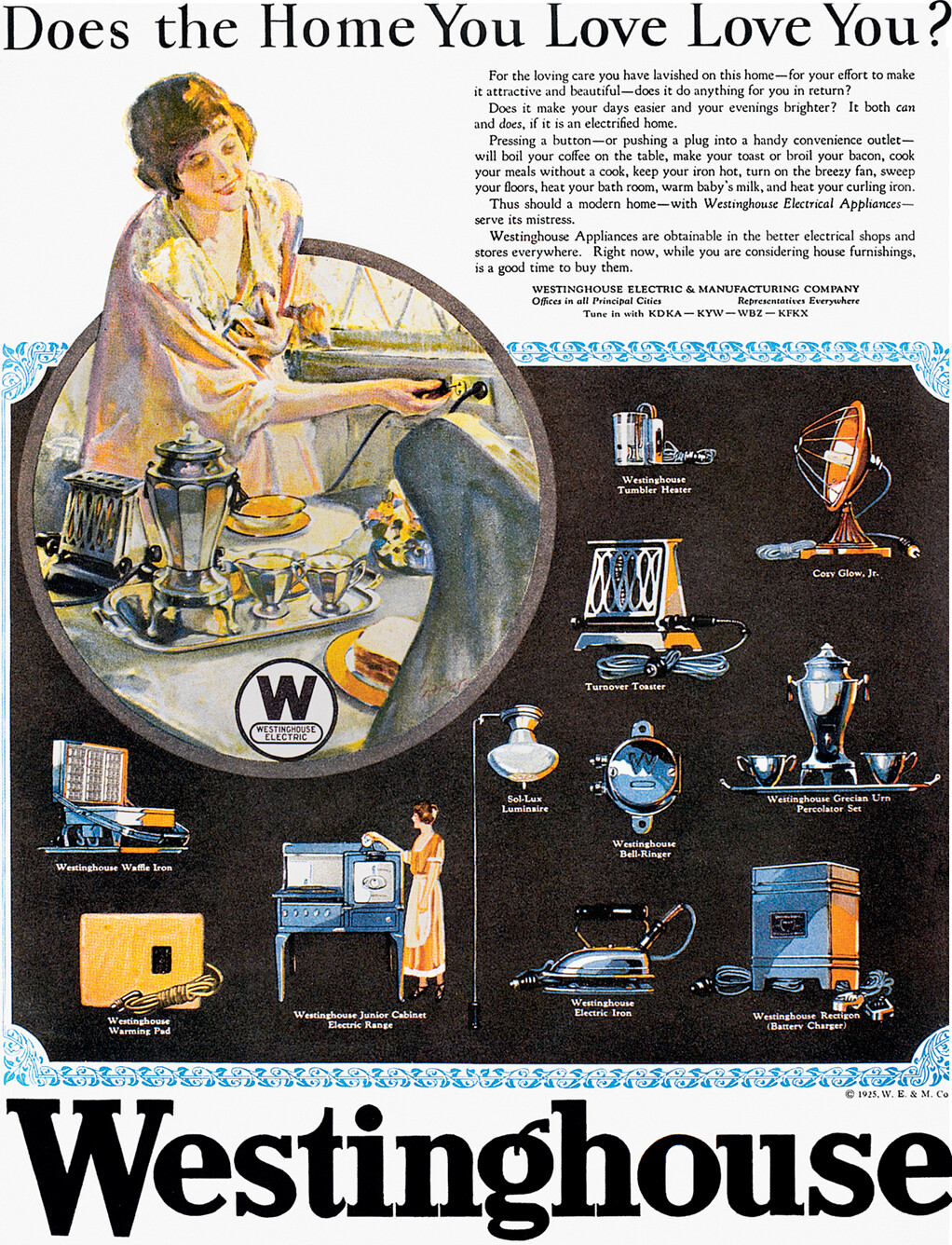
A MODERN HOME
More information
A poster advertisement for Westinghouse-brand household appliances from 1925. Pictured at the top left of the page is a woman, plugging in an appliance and smiling. Also pictured are various household appliances that include: a waffle iron, a warming pad, a junior cabinet electric range, a sol-lux luminaire, a electric iron, a bell-ringer, a turnover toaster, a tumbler heater, a Corv Glow Jr., a Grecian urn percolator set, and a rectigon (battery charger). Across the top of the page, the advertisement reads, “Does the home you love love you? For the loving care you have lavished on this home-for your effort to make it attractive and beautiful-does it do anything for you in return? Does it make your days easier and your evenings brighter? It both can and does, if it is an electrified home. Pressing a button-or pushing a plug into a handy convenience outlet-will boil your coffee on the table, make your toast or broil your bacon, cook your meals without a cook, keep your iron hot, turn on the breezy fan, sweep your floors, heat your bathroom, warm a baby’s milk, and heat your curling iron. Thus should a modern home-with Westinghouse Electrical Appliances-serve its mistress. Westinghouse Applications are obtainable in the better electrical shops and stores everywhere. Right now, while you are considering house furnishings, is a good time to buy them.”
Advertisers targeted women, who purchased two-thirds of consumer goods. They sponsored new weekday radio programs (popular with middle-class homemakers) that were funded by “commercials” promoting products that homemakers regularly bought, like laundry detergent and hand soap—hence the term soap operas.
Essential for the new consumer culture was the increasing availability of electricity. In 1920, only 35 percent of homes had electricity; by 1930, 68 percent did. Similar increases occurred in the number of households with indoor plumbing, washing machines, and automobiles. Moderately priced conveniences—such as flush toilets, electric irons and fans, handheld cameras, wristwatches, cigarette lighters, vacuum cleaners, and linoleum floors—became more widely available. Yet throughout the decade, these conveniences of modern life were enjoyed primarily by the urban middle and upper classes. It would be many years still before rural and working-class Americans could enjoy such luxuries.
THE RISE OF MASS CULTURE
NEW SOCIAL AND CULTURAL TRENDS DURING THE 1920S
Mass advertising, mass production, and the mass media combined to create a mass culture. Increasingly, Americans in all regions of the country read the same magazines, listened to the same radio programs, watched the same movies, and drove the same kinds of cars. They saw the same ads and shopped at the same national retail stores. By the 1920s, Woolworth’s, for example, had 1,500 stores across the country; Walgreen’s had 525. National retailers bought goods in such large quantities that they were able to get discounted prices that they passed on to consumers.
More information
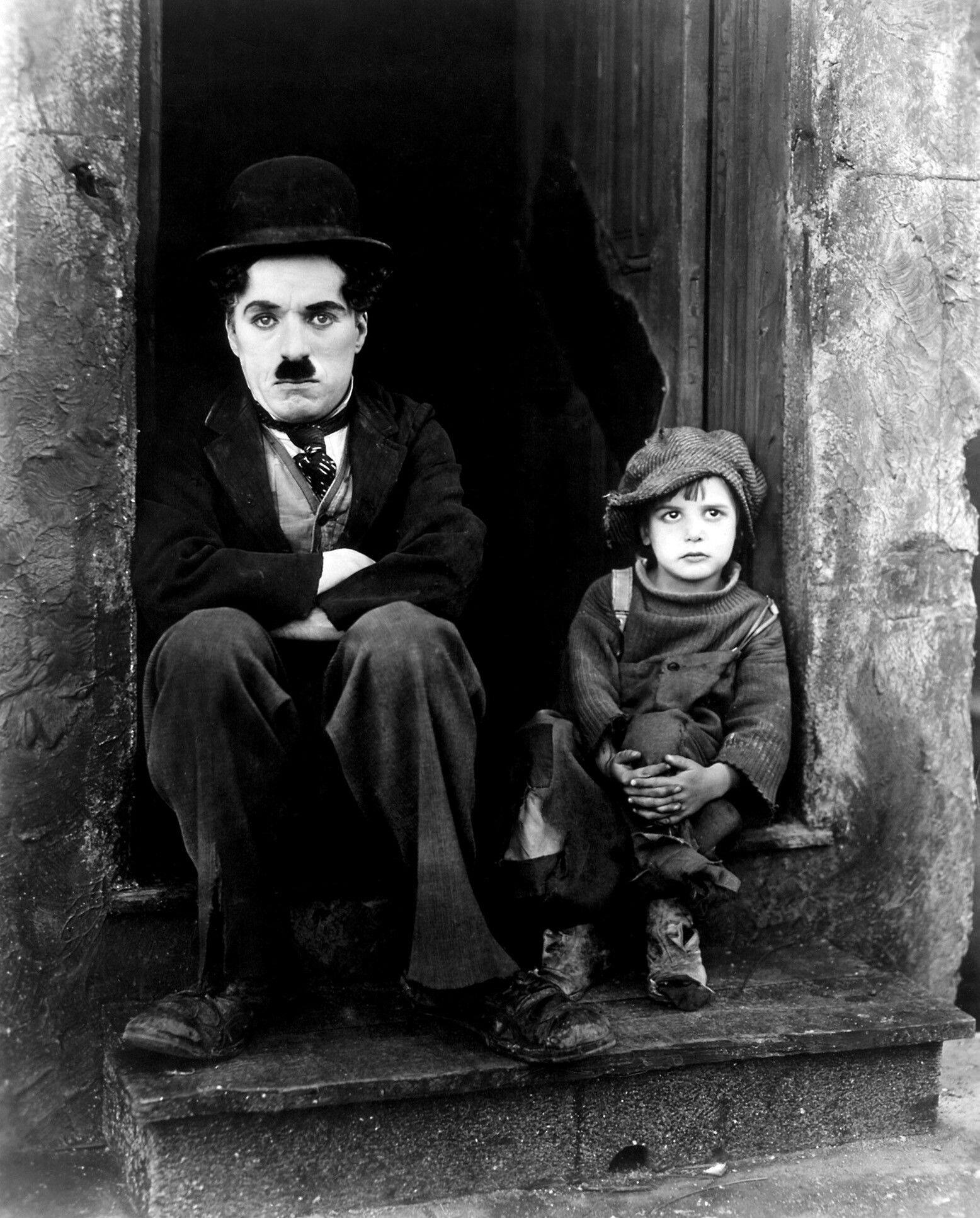
A black-and-white photograph of a man and a child sitting on a stoop in a doorway. The man is Charlie Chaplin. He sits with his arms crossed and wears a three piece suit, tie, and bowler cap and has a toothbrush moustache. The child next to him wears overalls, a sweater, and a large cloth cap.
A LOVE AFFAIR WITH MOVIES
In 1896, a New York City audience viewed one of the first moving-picture shows. By 1924, there were 20,000 theaters nationwide showing 700 new “silent” films a year with captions to show the dialogue, making movies the primary form of mass entertainment. Hollywood, California, emerged as the international center of movie production, turning out Westerns, crime dramas, murder mysteries—and the comedies of Mack Sennett’s Keystone Company, in which a raft of slapstick comedians, notably London-born Charlie Chaplin, perfected their art, transforming it into a form of social criticism.
Movie attendance during the 1920s averaged 80 million people a week. It surged even more after 1927 when movies with sound (“talkies”) appeared. Americans spent ten times as much on movies as they did on tickets to baseball and football games. Movies did much more than entertain, however. They helped expand the consumer culture by setting standards and tastes in fashion, music, dancing, and hairstyles.
THE RADIO CRAZE
Radio broadcasting experienced even more spectacular growth. Radios were invented in the late nineteenth century as a kind of wireless telegraph system. During the early twentieth century, they were developed primarily for military use. However, when thousands of radios were left over after World War I, advertisers were the first to recognize their commercial potential. They developed news broadcasts, drama, comedy, and music programming. The popularity of radios soared almost overnight.
Between 1922 and 1930, the number of families owning a radio skyrocketed from 60,000 to nearly 14 million. Almost two-thirds of homes had at least one radio. And the radio changed the patterns of everyday life. At night after dinner, families gathered to listen to the variety of new programs. The radio “is your theater, your college, your newspaper, your library,” boasted one ad. President Calvin Coolidge’s monthly radio talks paved the way for Franklin Delano Roosevelt’s influential “fireside chats” during the 1930s.
The first great popular entertainment of the radio age was jazz. Big band leaders Paul Whiteman, Guy Lombardo, Duke Ellington, Glenn Miller, and Tommy and Jimmy Dorsey regularly performed live over the radio. Country music also developed a national following thanks to radio broadcasts. In 1925, WSM, a station in Nashville, Tennessee, began offering a weekly variety show, The Grand Ole Opry, which featured an array of country music stars.
TAKING TO THE AIR
The 1920s saw notable advances in transportation as well. In 1903, Wilbur and Orville Wright, owners of a bicycle shop in Dayton, Ohio, had built and flown the first airplane at Kitty Hawk, North Carolina, flying only a few hundred feet at 34 miles per hour.
Thereafter, airplane technology advanced slowly until the outbreak of war in 1914. As with radios, European nations rapidly adapted the airplane as a military weapon. When the United States entered the war, it had no combat planes; American pilots flew British or French warplanes. Subsequently an American aircraft industry arose during the war, but it collapsed in the postwar demobilization.
The aviation industry received a huge psychological boost in May 1927 when twenty-six-year-old Charles A. Lindbergh Jr., a St. Louis–based pilot blessed with extraordinary courage and endurance, won a $25,000 prize (and a Medal of Honor) by making the first solo nonstop transatlantic flight. He traveled from New York City to Paris in thirty-three and a half hours through thunderstorms, ice clouds, and blinding fog.
A handsome, daring college dropout, Lindbergh oversaw a fanatical effort to reduce the weight of his plane to accommodate the 2,500 pounds of fuel—heavier than the plane itself—needed for the Atlantic crossing. He used a wicker basket for a seat, removed the radio, and modified the tail section to make the plane hard to control so as to ensure he did not fall asleep.
When Lindbergh, known as the “Lone Eagle,” landed in France, some 150,000 people greeted him with thunderous cheers. The New York City parade honoring his accomplishment surpassed the celebration of the end of the Great War. A new dance, the Lindy Hop, was named for him; and a popular song, “Lucky Lindy,” celebrated his “peerless, fearless” feat. Lindbergh’s flight redefined the potential of “flying machines” to transform transportation and compress distance.
No sooner did Lindbergh return to America than promoters began looking for a female pilot to equal his feat. Women had finally gained the right to vote in 1920, but they still had to fight for equal rights in most aspects of life. The first women who tried flying were dismissed as “petticoat pilots” or “flying flappers” who risked killing themselves—and others. Various aeronautic organizations sought to ban women from cockpits. A group of female pilots responded, “Women have the same inherent right to be killed in airplane races as men have.”
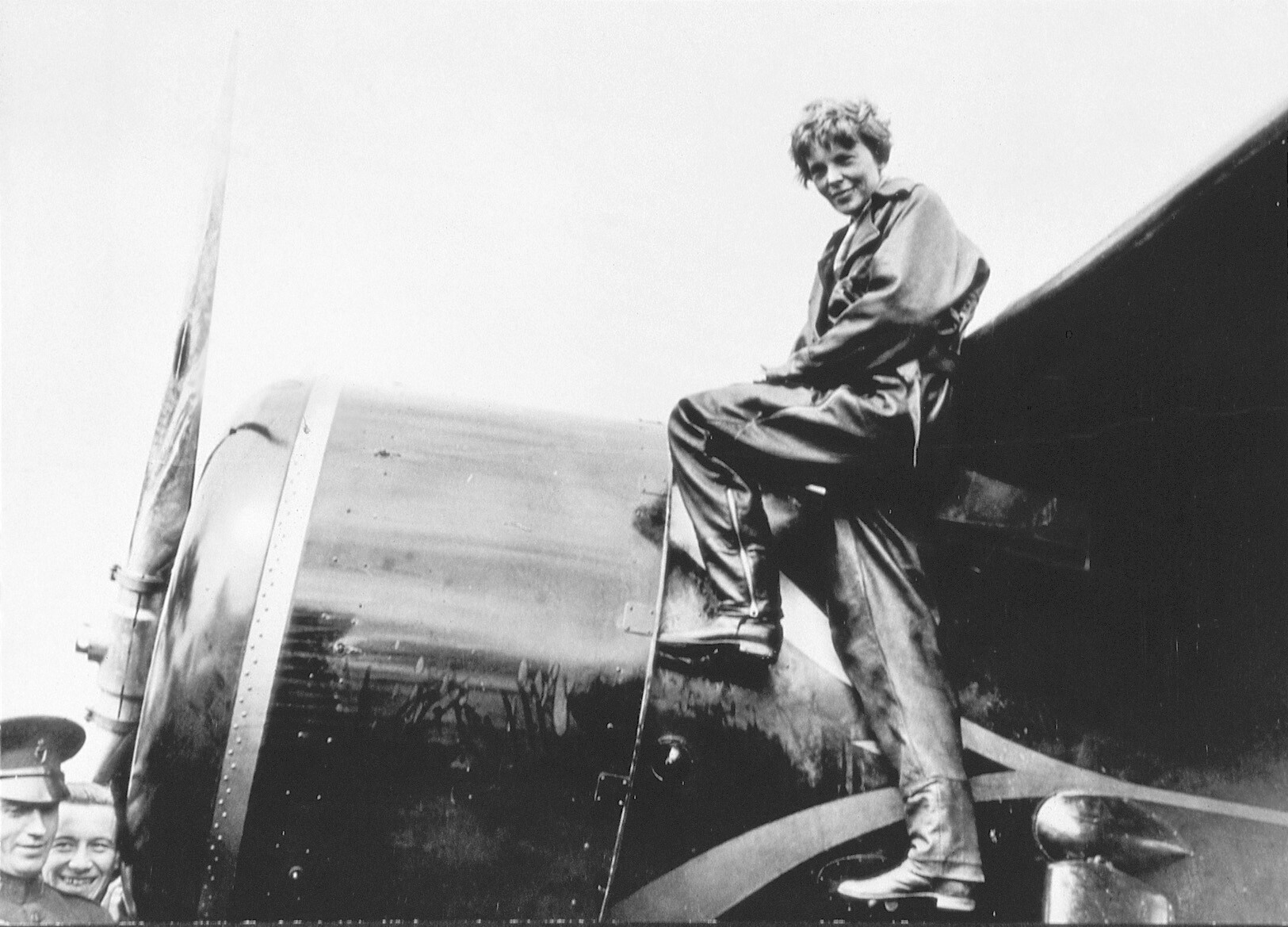
In June 1928, Kansas-born Amelia Earhart, who had dropped out of college during the Great War to nurse wounded soldiers, joined two male pilots to become the first woman to cross the Atlantic in an airplane—as a passenger. “Stultz did all the flying — had to,” she said. “I was just baggage, like a sack of potatoes. Maybe someday I’ll try it alone.” Thereafter, Earhart launched a national organization of female pilots, solo-piloted a plane nonstop coast to coast across the United States, and set several speed records for women pilots. In 1932, she climbed into her candy-apple-red Lockheed Vega and equaled Lindbergh’s accomplishment by flying solo from Canada to northern Ireland in fifteen hours, thereby becoming one of the most famous women in the world. In 1937, Earhart set out with a male navigator to fly around the globe at the equator, long before radar was developed. They planned to use the sun and stars to guide them the 30,000 miles. Just before taking off, she told reporters, “I won’t feel completely cheated if I fail to come back.” Tragically, while crossing the South Pacific, she lost radio contact and was never heard from again.
More information
A black-and-white photograph of a woman, Amelia Earhart, standing on the side of a propeller plane and smiling down at the camera. She is dressed in a full-body flight suit.
THE CAR CULTURE
The most significant economic and social development of the early twentieth century was the widespread ownership of automobiles. In fact, the motor car came to symbolize the mechanization of modern life. In 1924, when asked about the changes transforming American life, a resident of Muncie, Indiana, replied: “I can tell you what’s happening in just four letters: A-U-T-O.”
The first motorcars had been manufactured for sale in the late nineteenth century, but the founding of the Ford Motor Company in 1903 revolutionized the infant industry. The first cars were handmade, expensive, and designed for the wealthy. Henry Ford changed all that by pledging to build “a car for the multitude.” He vowed “to democratize the automobile. When I’m through, everybody will be able to afford one, and about everyone will have one.”
Ford’s Model T, affordable and durable, appeared in 1908 at a price of $850 (about $28,000 at today’s prices). By 1924, his increasingly efficient production techniques enabled him to sell the same car for $290. The Model T changed little from year to year. Ford ads assured buyers that they “could have any color [they] want, as long as it is black.” Selling millions of identical cars at a small profit allowed Ford to keep prices low and wages high—the perfect formula for a mass-consumption economy.
Other automakers followed Ford’s production model. In 1916, the total number of cars and trucks in the United States passed 1 million; by 1920, more than 8 million were registered, and in 1929 there were more than 23 million. The automobile revolution was made possible by the discovery of vast oil fields in Texas, Oklahoma, Wyoming, and California. By 1920, the United States produced two-thirds of the world’s oil and gasoline. By 1930, an estimated 10 percent of America’s workforce was producing automobiles.
The automobile industry also became the leading example of modern, mechanized, mass-production techniques. Ford’s Highland Park plant outside Detroit, Michigan, where 68,000 workers were employed, was the largest factory in the world. It increased output dramatically by creating a moving assembly line rather than having a crew of workers assemble each car in a fixed position. With conveyors pulling the parts along feeder lines and the chassis moving steadily down an assembly line, each worker performed a single task, such as installing a fender or a wheel. This system could produce a new car in ninety-three minutes. Such efficiency enabled Ford to lower car prices, thereby making them affordable for an increasing number of people.

More information
A black-and-white photograph of the exterior of Ford Motor Company’s Highland Park plant in 1913. Workers on a second story scaffold slide the bodies of cars down a ramp, where other workers fit them on to frames below.
Just as the railroad helped transform the pace and scale of life in the late nineteenth century, the automobile changed social life during the twentieth century. A car not only provided greater mobility; it offered freedom. In the words of one male driver, young people viewed the car as “an incredible engine of escape” from parental control and a safe place to “take a girl and hold hands, neck, pet, or . . . go the limit.”
Cars and networks of new roads enabled people to live farther away from their workplaces, thus encouraging suburban sprawl. Cars also helped fuel the economic boom of the 1920s by creating tens of thousands of new jobs and a huge demand for steel, glass, rubber, leather, oil, and gasoline. The ever-expanding car culture stimulated road construction, sparked the real estate boom in Florida and another one in California, and dotted the landscape with gasoline stations, traffic lights, billboards, and motels. By 1929, the federal government was constructing 10,000 miles of paved highways each year.
SPECTATOR SPORTS
Automobile ownership and rising incomes changed the way people spent their leisure time. During the 1920s, Americans fell in love with spectator sports; people in cities could drive into the countryside, visit friends and relatives, and go to ballparks, stadiums, or boxing rings.
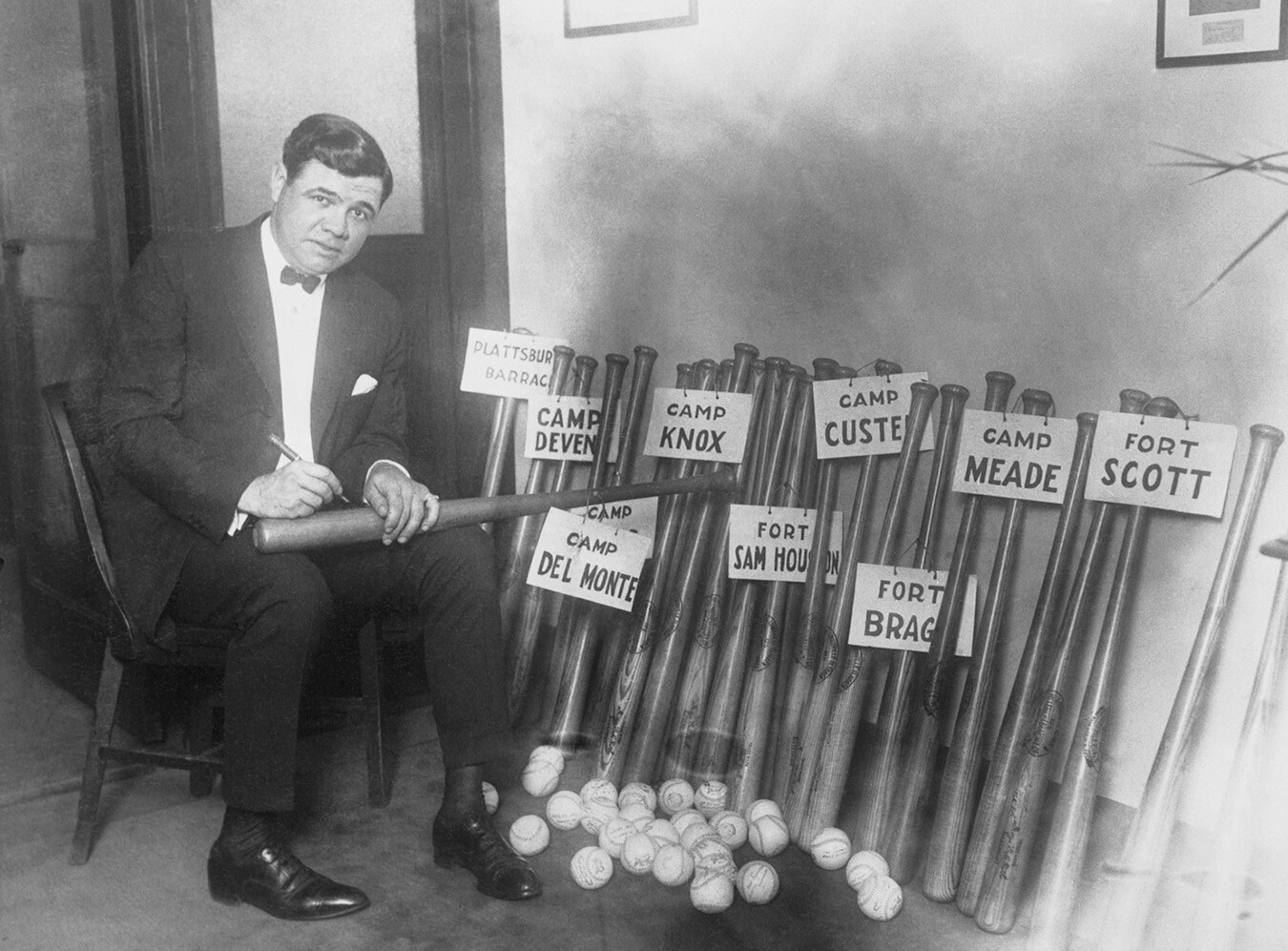
Baseball had become the “national pastime.” With larger-than-life heroes such as New York Yankee legends George Herman “Babe” Ruth and Henry Louis “Lou” Gehrig, baseball teams attracted intense interest and huge crowds. Ruth may well have been the most famous athlete of all time. In 1920, more than a million spectators attended his games.
Two years later, the Yankees moved into a new stadium, dubbing it the “House That Ruth Built.” They went on to win World Series championships in 1923, 1927, and 1928. More than 20 million people attended professional games in 1927, the year that Ruth, the “Sultan of Swat,” set a record by hitting an astonishing sixty home runs. Yet for all its popularity, baseball would remain a racially segregated sport for another twenty years; in the meantime, the so-called Negro Leagues provided playing opportunities for African Americans.
More information
A black-and-white photograph of a man, Babe Ruth, wearing a suit and bowtie, autographing baseball bats and baseballs. The balls lie on the ground, and the bats lean against the wall. Several have signs hanging around the handle with the names of military training camps, including “Fort Scott,” “Camp Meade,” “Camp Knox,” and “Camp Del Monte.”
Football, especially at the college level, also attracted huge crowds. It, too, benefited from outsized heroes such as running back Harold Edward “Red” Grange of the University of Illinois, the first athlete to appear on the cover of Time magazine. In a 1924 game against the University of Michigan, the “Galloping Ghost” scored touchdowns the first four times he carried the ball. After Illinois won, students carried him on their shoulders for two miles across the campus. When Grange signed a contract with the Chicago Bears in 1926, he single-handedly made professional football competitive with baseball as a spectator sport.
What Ruth and Grange were to their sports, William Harrison “Jack” Dempsey was to boxing. In 1919, he won the world heavyweight title from Jess Willard, a giant of a man weighing 300 pounds and standing six and a half feet tall. Dempsey knocked him down seven times in the first round. Willard gave up in the fourth round, and Dempsey became a dominant force in boxing. The “Manassa Mauler” was especially popular with working-class men, for he had been born poor and lived for years as a hobo, wandering the rails in search of work and challenging toughs in bars to fight for money.
Dempsey was more than a champion; he was a hero to millions. In 1927, when James Joseph “Gene” Tunney defeated Dempsey, more than 100,000 people attended, including 1,000 reporters, 10 state governors, and numerous Hollywood celebrities. Some 60 million people listened to the fight over the radio.
The size of that radio audience was a reflection of the widespread impact of the consumer culture of the 1920s. A strong economy with rising incomes for many; mass production and increased use of electricity; as well as innovations in advertising and financing had encouraged and enabled millions of Americans to purchase all manner of consumer goods (including radios) available through a national marketplace. Contributing to the surge of consumer culture was the nation’s record economic growth, the boosting of mass production through innovative technologies, and plentiful jobs along with low inflation. Meanwhile, paralleling the development of this consumerism were social and cultural movements unique to the times. These were typified by the cultural rebellion by young people known as the “Jazz Age.”
Glossary
- consumer culture
- A society in which mass production and consumption of nationally advertised products comes to dictate much of social life and status.