JIM CROW SEGREGATION LAWS AT THE END OF THE NINETEENTH CENTURY
How and why did White southerners adopt “Jim Crow” segregation laws and strip African American voting rights by the end of the nineteenth century?
THE ORIGINS OF JIM CROW SEGREGATION
The plight of poor southern farmers in the 1880s and 1890s worsened race relations, as economic frustration inflamed racial prejudice and spilled over into the political and social arenas. During the 1890s, White farmers and politicians demanded that Blacks be stripped of their voting rights and other civil rights. What northern observers called “Negrophobia” swept across the South and much of the nation.
In part, the resurgent wave of racism represented a revival of the idea that the Anglo-Saxon “race” of Whites, who originated in Germany and spread across western Europe and Great Britain and eventually to America, was intellectually and genetically superior to Blacks. Another reason stirring racial hatred was that many Whites had come to resent any signs of African American financial success and political influence after the Civil War. An Alabama newspaper editor reported that “our blood boils when the educated Negro asserts himself politically.”
DISENFRANCHISING AFRICAN AMERICANS
By the 1890s, Blacks in the South could still vote in large numbers, and several African Americans had served in Congress. In Mississippi, for example, John Roy Lynch served as a U.S. Congressman from 1875 to 1879 and from 1881 to 1883. Born into enslavement in Louisiana, he gained his freedom after the Civil War; moved to Natchez, Mississippi; and grew active within the Republican Party. In 1869, at the age of twenty-two, he was elected to the state’s House of Representatives, becoming the first African American to serve in that legislative body. Lynch quickly distinguished himself and was elected Speaker of the House in 1872, becoming the first African American to hold that position.
Subsequently, during and after the economic depression of the 1890s, a growing number of southern Whites sought to deny the civil rights of Blacks. Mississippi took the lead in stripping Blacks of their voting rights. The so-called Mississippi Plan (1890), a series of amendments to the state constitution, set the pattern of disenfranchisement that most southern states would soon follow.
The Mississippi Plan offered a framework for disenfranchisement based on four requirements. First, a residence requirement for voting—two years living in the state, one year in a local election district—targeted African American farmers who were in the habit of moving each year in search of better economic opportunities. Second, residents were disqualified from voting if they had committed certain crimes. Third, to vote, people had to have paid all taxes on time, including a so-called poll tax—a restriction that hurt both poor Blacks and poor Whites. Finally, the new state constitution required that all voters had to be able to read or at least “understand” the U.S. Constitution. White registrars, however, decided who satisfied this requirement, and they frequently discriminated against Blacks.
Within a few years, other southern states seeking to restrict Black voting created variations on the Mississippi Plan. In 1898, Louisiana inserted into its state constitution the “grandfather clause,” which allowed illiterate Whites to vote if their fathers or grandfathers had been eligible to vote on January 1, 1867, when African Americans were still disenfranchised. By 1910, Georgia, North Carolina, Virginia, Alabama, and Oklahoma had incorporated the grandfather clause. The result of these restrictions was the virtual elimination of Black voting and the Republican Party in the South. The overwhelmingly Democratic region came to be called the Solid South.
When such “legal” means were not enough to ensure their political dominance, White Democratic candidates turned to fraud and violence. Benjamin Tillman, the White supremacist who served as South Carolina’s governor from 1890 to 1894, maintained that his state’s problems were caused by White farmers renting their land to “ignorant lazy negroes.” African Americans, Tillman argued, “must remain subordinate or be exterminated.”
Such openly racist comments gained Tillman the support of poor Whites. To ensure his election as governor, he and his followers effectively suppressed the Black vote. “We have done our level best [to prevent Black people from voting],” he bragged. “We stuffed ballot boxes. We shot them. We are not ashamed of it.”
By the end of the nineteenth century, widespread racial discrimination—segregation of public facilities, political disenfranchisement, and vigilante justice—had elevated government-sanctioned bigotry to an official way of life in the South. The efforts of Ben Tillman and other White supremacists to suppress the Black vote succeeded in every southern state. In 1896, Louisiana had 130,000 registered Black voters; by 1900, it had only 5,320. In Alabama in 1900, census data indicated that 121,159 Black men were literate; only 3,742, however, were registered to vote. By that year, the number of Blacks voting across the South had declined by 62 percent, the White vote by 26 percent. As a newspaper in Charleston, South Carolina, declared, the South would never again “include Black men among its citizens.”
THE SPREAD OF SEGREGATION
While southern Blacks were being shoved out of the political arena, they were also being segregated socially. The symbolic first target was the railroad passenger car. In 1885, novelist George Washington Cable noted that in South Carolina, Blacks “ride in first-class [rail] cars as a right” and “their presence excites no comment.” Likewise, in New Orleans a visitor was surprised to find that “white and colored people mingled freely.” From 1875 to 1883, in fact, any local or state law requiring racial segregation in hotels, theaters, railroad cars, and other public facilities violated the federal Civil Rights Act.
In 1883, however, the U.S. Supreme Court ruled that the Civil Rights Act of 1875 was unconstitutional. In an 8–1 opinion written by Justice Joseph P. Bradley, the Court declared that individuals and organizations could engage in acts of racial discrimination because the Fourteenth Amendment specified only that “no State” could deny citizens equal protection of the law.
Justice John Marshall Harlan offered a famous dissent to the Court’s decision. He argued that the Thirteenth and Fourteenth Amendments, as well as the Civil Rights Act of 1875, gave the federal government both the authority and the responsibility to protect citizens from any actions that deprived them of their civil rights. To allow private citizens and enterprises to practice racial discrimination, Harlan wrote, would “permit the badges and incidents of slavery” to remain.
The Court’s interpretation in what came to be called the Civil Rights Cases (1883) left as an open question the validity of city and state laws requiring racially segregated public facilities under the principle of “separate but equal.” This slogan, popular in the South, referred to the argument that racial segregation laws were legal if the segregated facilities were equal in quality.
Plessy v. Ferguson (1896).
In the 1880s, the states of Florida, Tennessee, Texas, and Mississippi required railroad passengers to ride in racially segregated cars. After Louisiana followed suit in 1890 with a similar law, Blacks challenged it in the case of Plessy v. Ferguson (1896). The case originated in New Orleans when anti-segregation activists convinced Homer Adolph Plessy, an “octoroon” (a derogatory term for a person having one-eighth African ancestry), to refuse to leave a Whites-only railroad car. Plessy, having refused, was convicted of violating the law.
In arguments presented to the U.S. Supreme Court, Plessy’s attorney contended that the Louisiana law sought “to debase and distinguish against the inferior race.” He then asked the justices to imagine a future dictated by such statutes: “Was there any limit to such laws? Why not require all colored people to walk on one side of the street and Whites on the other?” The Court disagreed, ruling that states had a right to create laws segregating public places such as schools, hotels, and restaurants.
The only justice who dissented was again John Marshall Harlan, who feared that the Court’s ruling would plant the “seeds of race hate” under “the sanction of law.” That is precisely what happened. The Plessy ruling endorsed racially “separate but equal” facilities in virtually every area of southern life. In 1900, the editor of the Richmond Times insisted that racial segregation “be applied in every relation of Southern life. God Almighty drew the color line, and it cannot be obliterated. The negro must stay on his side of the line, and the White man must stay on his side, and the sooner both races recognize this fact and accept it, the better it will be for both.”
Jim Crow Segregation.
The new regulations came to be called Jim Crow laws. The name derived from “Jump Jim Crow,” a song-and-dance caricature of African Americans made popular in the 1830s by Thomas D. Rice, a White New York songwriter/dancer and comedian who performed in blackface makeup. By the 1890s, the term Jim Crow had become a satirical expression meaning “Negro.” Signs reading “Whites Only” or “Colored Only” above restrooms and water fountains emerged as hallmarks of the Jim Crow system of racial segregation.
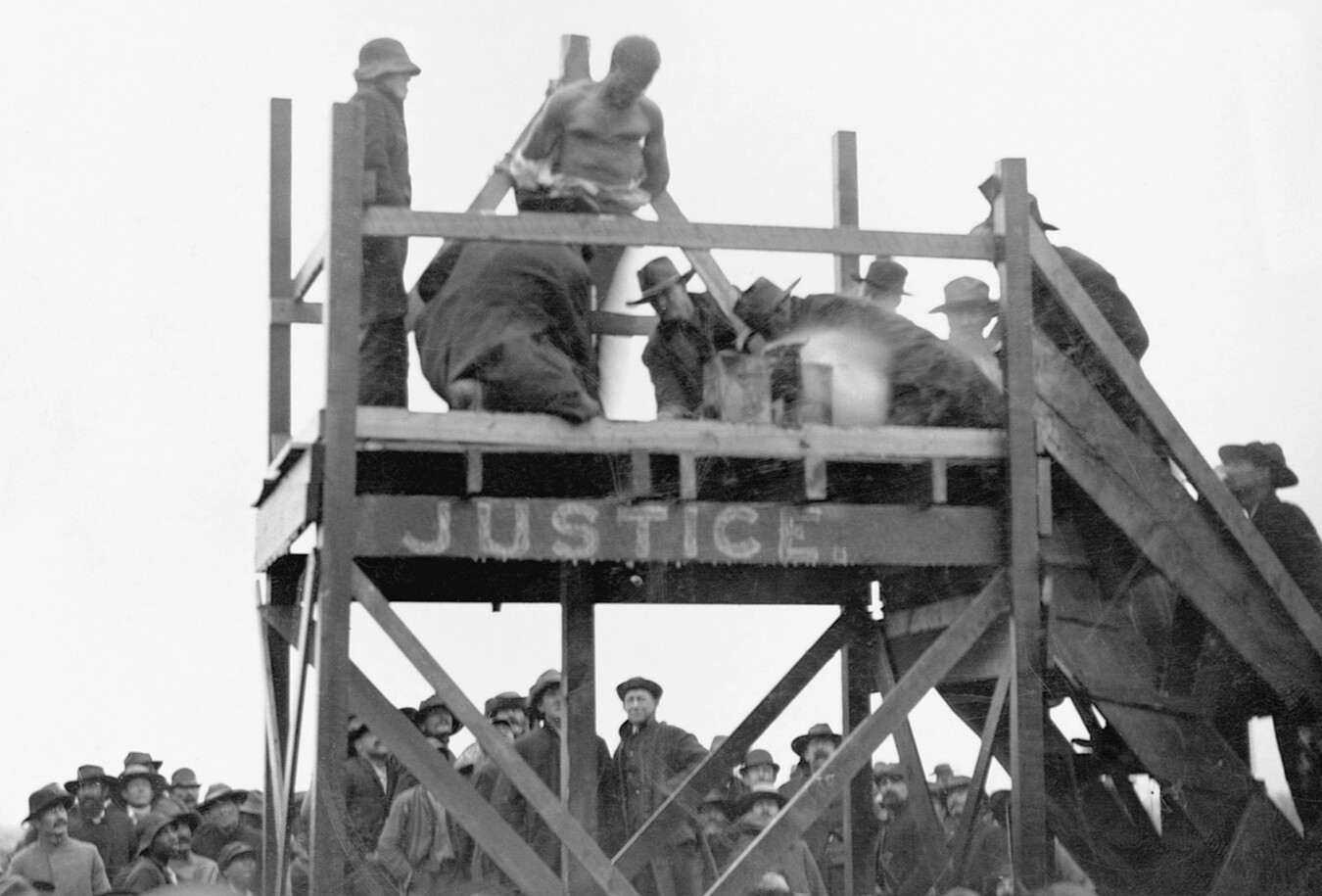
More information
A black and white photo of a crowd of mostly white people watching a platform on which a group of white men gather around a Black man, Henry Smith, who is tied up. Smith’s shirt has been unbuttoned and pulled down to waist level. The word Justice is painted on the platform.
Murderous violence accompanied the implementation of Jim Crow laws. From 1890 to 1899, the United States averaged 188 racial lynchings per year, 82 percent of which occurred in the South. Lynchings usually involved a Black man (or men) accused of a crime—often the rape of a White woman. White mobs would seize, torture, and kill the accused, often in ghastly ways. Large crowds, including women and children, would watch amid a carnival-like atmosphere. Photographs of gruesome lynchings surrounded by laughing and smiling Whites were reproduced on postcards and mailed across the nation. Mississippi governor James Vardaman declared that “if it is necessary that every Negro in the state will be lynched, it will be done to maintain white supremacy.”
THE WILMINGTON INSURRECTION (1898)
The actions of James Vardaman and other White elected officials who so blatantly promoted racial violence fed a savage wave of racial bloodshed across the South. In 1898 in North Carolina’s largest city, the prosperous coastal port of Wilmington, Whites toppled the multiracial local government.
In 1894 and 1896, Wilmington’s Black voters, a majority in the city, had elected African Americans and White Republicans to various municipal offices. This infuriated the White supremacist elite, all of whom were Democrats. “We will never surrender to a ragged rabble of Negroes led by a handful of white cowards,” warned Alfred “Colonel” Waddell, a former congressman and Confederate officer.
On the day before elections in 1898, Waddell urged a mob of 1,500 armed former Confederates, militiamen, and prominent Democrats to “do your duty” as White men: “This city, county and state shall be rid of Negro domination, once and forever. Go to the polls tomorrow and if you find the negro out voting, tell him to leave the polls. And if he refuses, kill him! Shoot him down in his tracks.”
The crowd did as ordered. Whites rampaged through the polling places, forcing Blacks out at gunpoint and stuffing ballot boxes to ensure that White candidates won. The rioters, armed with rifles, pistols, and even a machine gun, destroyed the offices of the Daily Record, the Black-owned newspaper, and then moved into African American neighborhoods, where they killed sixty, wounded dozens, and destroyed homes and businesses. An out-of-town reporter marveled at the audacity of the White assault on the city government: “What they did was done in broad daylight.”
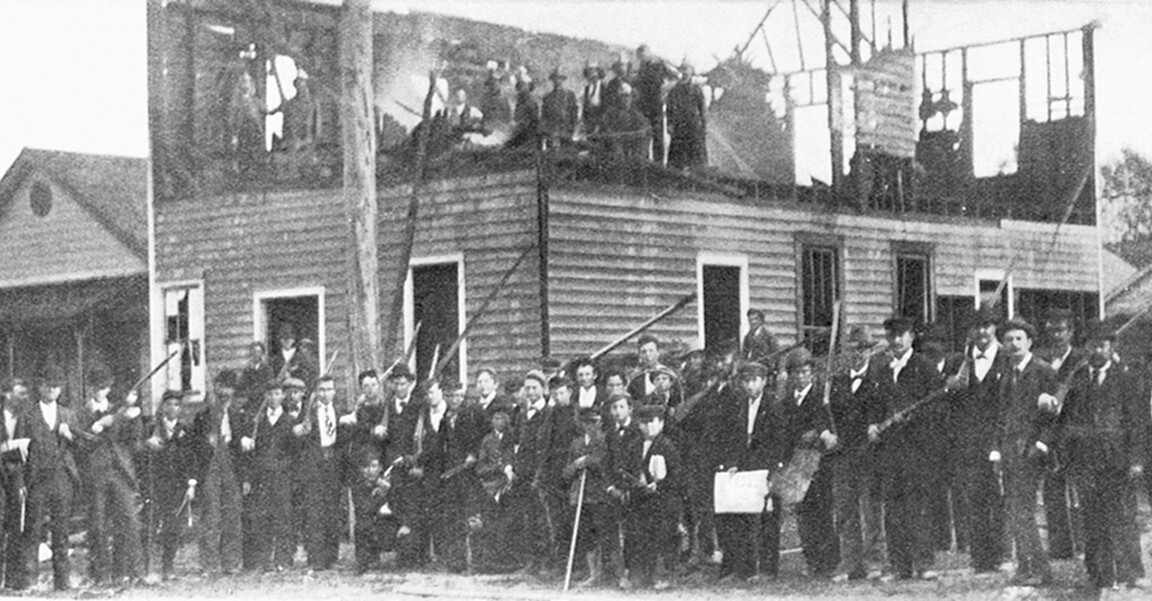
More information
A black and white photo of a large crowd of White men with rifles stand in front and on top of a wrecked building. The building’s second story has mostly burned down.
The mob then stormed the city hall, announced that “negro rule” was over, named Waddell mayor, and forced African American officials and their White Republican allies to resign. They even pushed prominent Blacks onto northbound trains, warning them never to return.
As a result of the insurrection, more than 2,000 African Americans fled the state or were forced out at gunpoint. The self-declared White supremacist city government issued a Declaration of White Independence that stripped Blacks of their jobs and voting rights. In response, desperate Blacks appealed to the governor and to President William McKinley, but they received no help. Ultimately, no one was ever convicted of the crimes committed against the African American community.
The Wilmington Insurrection (1898) marked the first (and only) time that an elected municipal government had been forcibly overthrown in the United States. Mayor Waddell boasted that his followers had “set the pace for the whole South on the question of white supremacy.”
Continuing the effort to eradicate the Black vote, Waddell and others convinced the state legislature to amend the constitution to create a poll tax and literacy test designed to disenfranchise Black voters. “The chief object” of the proposed amendments, said a Democratic pamphlet, “is to eliminate the ignorant and irresponsible Negro vote.” Such techniques worked better than anyone predicted. In 1896, there were 125,000 African Americans registered to vote in North Carolina. By 1902, there were only 6,000. The legislature went on to pass the state’s first Jim Crow laws, segregating train cars by race. Laws mandating separate public toilets, water fountains, theaters, and parks soon followed.
THE BLACK RESPONSE TO SEGREGATION
By the end of the nineteenth century, White supremacy had triumphed across the South. Some African Americans chose to leave in search of greater safety, equality, and opportunity. Those who stayed and resisted White supremacy—even in self-defense—were ruthlessly suppressed. In 1879, in Granville County, North Carolina, a White woman, Mrs. Pines, struck her Black maid, Sarah Barnett, with a stick. Barnett fought back. Infuriated at the maid’s “insolence,” Pines’s husband shot Barnett through the shoulder. She survived, only to be convicted of assault and fined. Unable to pay the fine, she was jailed.
Like Sarah Barnett, most African Americans had no choice but to adjust to the harsh realities of White supremacy and segregation. “Had to walk a quiet life,” explained James Plunkett, a Virginian. “The least little thing you would do, they [Whites] would kill ya.” Survival in the Jim Crow South required Black people to wear a mask of deference and to behave in a “servile way” when interacting with Whites. The many lynchings, burnings, and beatings sent chilling reminders to Blacks of the dangers they constantly faced.
Years later, the celebrated Black novelist Richard Wright remembered that as a child in his native Mississippi began each day with the “expectation of violence” at the hands of Whites. His fears induced a “paralysis of will and impulse” in him and others. It unconsciously affected his speech, movements, and manners around Whites. “The penalty of death awaited me if I made a false move.”
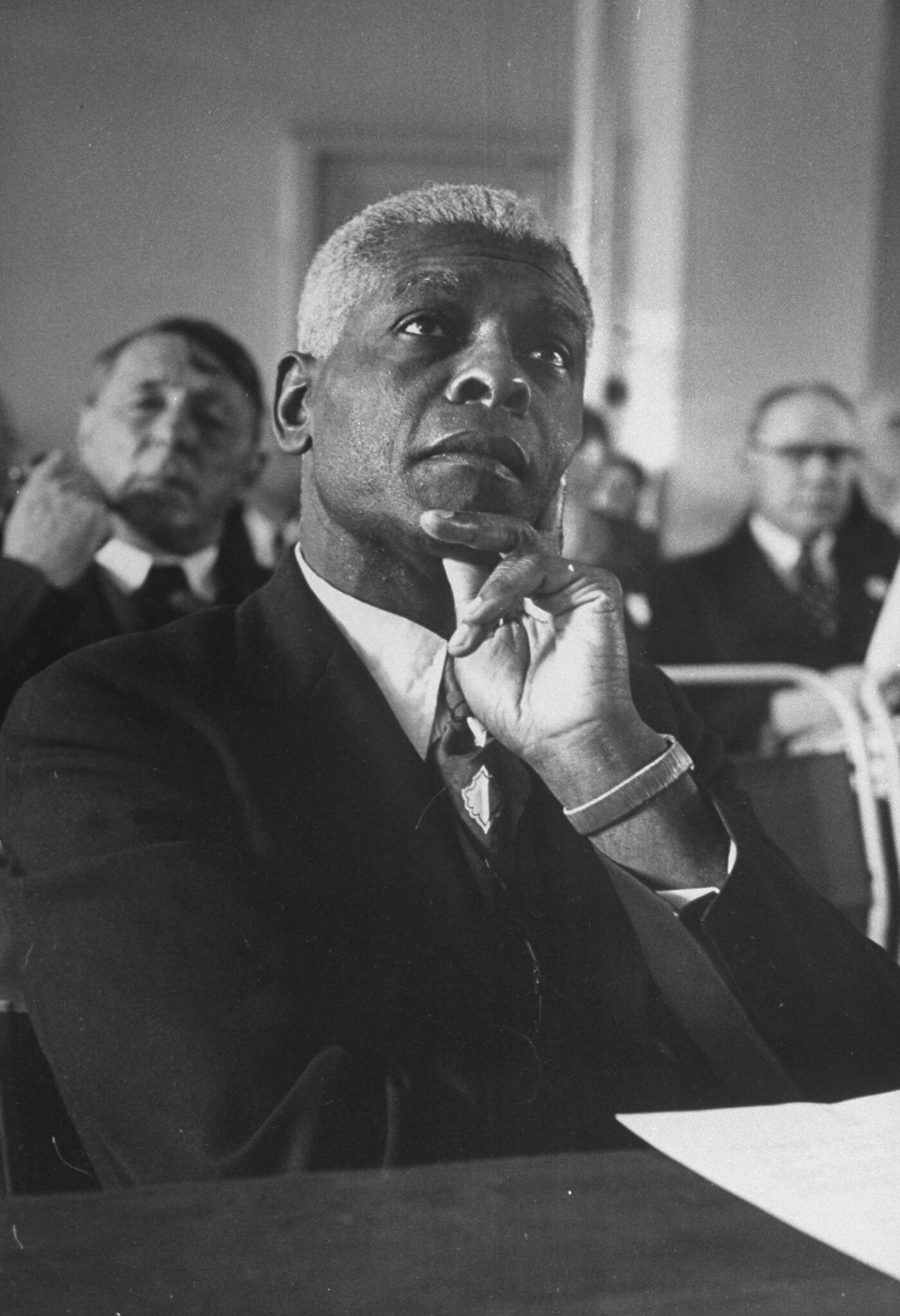
More information
A black and white photo of a man, Reverend Benjamin Mays, in a suit and tie sitting in a room and resting his chin on his hand. He is in late middle age and has short, curled, white hair. Several men in suits and ties sit in the background.
An Alternative Culture.
Yet accommodation to White supremacy did not mean surrender. African Americans constructed their own alternative culture. Churches continued to provide an anchor for Black communities and were often the only public buildings Blacks could use for large gatherings, such as club meetings, political rallies, and social events. For men especially, churches offered leadership roles and political status. Being a deacon was one of the most prestigious roles a Black man could achieve. As in many White churches, the men preached and governed church affairs; the women often did everything else.
Religious life provided great comfort to a people worn down by the hardships and abuses associated with segregation. As the Reverend Benjamin Mays explained, he and his Black neighbors in South Carolina “believed that the trials and tribulations of the world would be all over when one got to heaven. Beaten down at every turn by the White man, as they were, Negroes could perhaps not have survived without this kind of religion.”
Mays would become a distinguished minister and professor before being named president of Morehouse College in Atlanta, where he became a mentor to a young student named Martin Luther King Jr. Mays often criticized the Black churches for not confronting the violence of White racism, yet he also acknowledged the crucial spiritual comfort and community solidarity that Black churches and colleges provided during the many violent incidents provoked by White supremacists.
New Opportunities.
One ironic result of Jim Crow segregation was that it created new economic opportunities for African Americans. Black entrepreneurs emerged to provide the essential services denied to the Black community by White supremacists—insurance, banking, barbering, funerals, hair salons. Blacks also formed their own social and fraternal clubs and organizations, all of which provided fellowship, mutual support, and opportunities for service.
Middle-class African American women organized a network of social clubs that served as engines of community service across the South and the nation. They cared for the aged, infirm, orphaned, and abandoned; they provided homes for single mothers and nurseries for working mothers; and they sponsored health clinics and classes in home economics.
In 1896, the leaders of women’s clubs created the National Association of Colored Women. The organization’s first president, Mary Church Terrell, told the members they had an obligation to serve the “lowly, the illiterate, and even the vicious to whom we are bound by the ties of race and sex, and put forth every effort to uplift and reclaim them.” Courageous African American women declared that Black men were not providing sufficient leadership. An editorial in the Woman’s Era called for “timid men and ignorant men” to step aside and let the women show the way.
Others pursued legal recourse to improve their quality of life. Tennessean Callie Guy House launched a mass movement in the 1890s demanding pensions for former slaves. In 1897, she helped found the National Ex-Slave Mutual Relief, Bounty and Pension Association. Its proposals were modeled after the military pensions being paid to Union war veterans. House and others crisscrossed the southern states promoting pensions as “reparation” for the sin of slavery. By 1900, some 300,000 people had joined the organization.
Federal officials, however, opposed the pension idea. At the same time, the U.S. Post Office and Pensions Bureau harassed House and other officers of the group, falsely accusing them of mail fraud. House was arrested, tried, and sentenced to ten months in a federal prison. No pensions were ever paid to any formerly enslaved person.
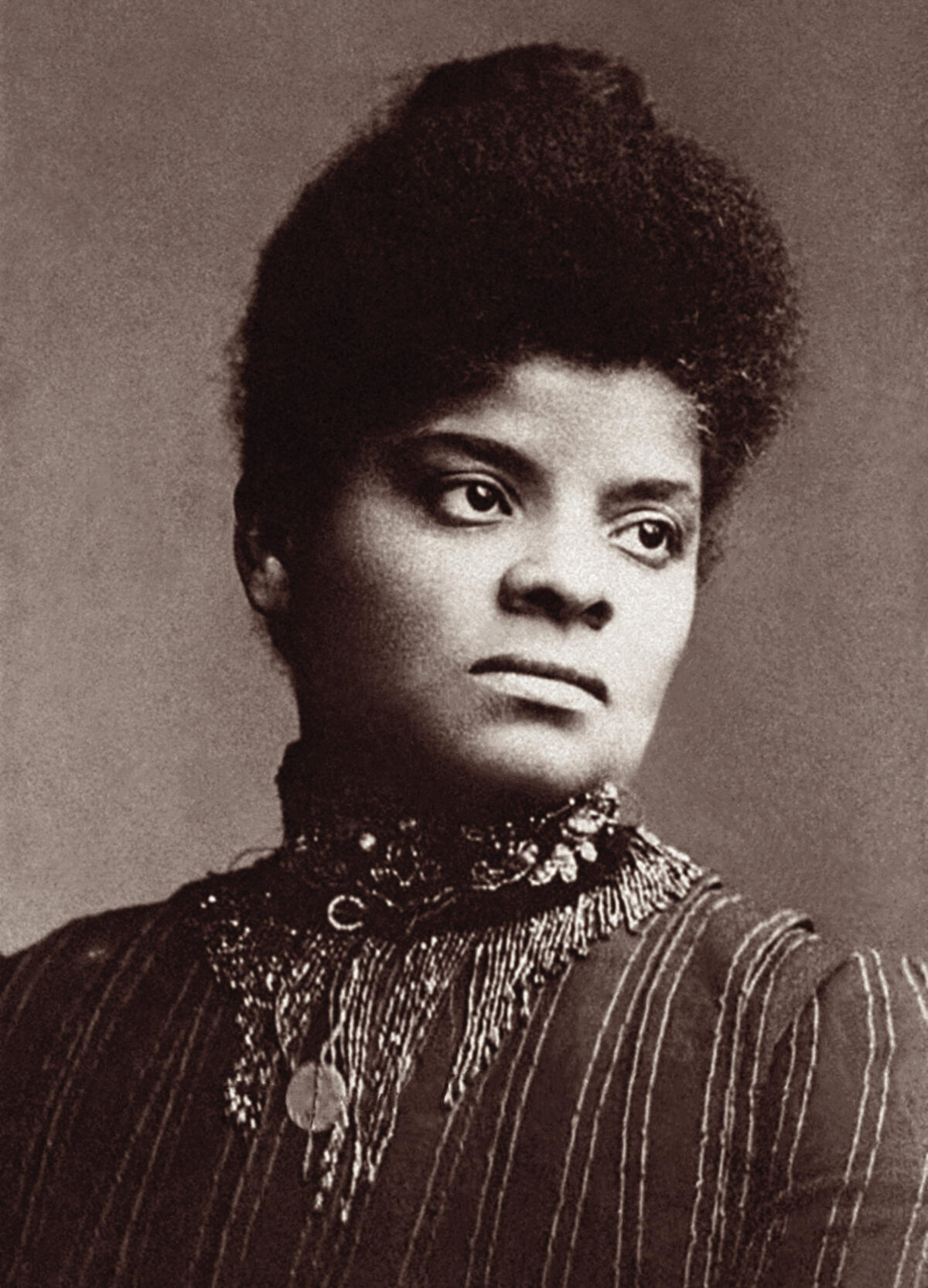
More information
A portrait of a Black woman in a striped dress and ornate collar, Ida B Wells. Her hair is gathered up in a soft bouffant and bun.
Ida B. Wells.
One of the most outspoken African American activists was Ida B. Wells. Born into enslavement in 1862 in Mississippi, she attended a school staffed by White missionaries. In 1880, she moved to Memphis, Tennessee, where she taught in segregated schools and gained entrance to the social life of the African American middle class.
In 1883, after losing her seat on a railroad car because she was Black, Wells became the first African American to file a lawsuit challenging such discrimination. The circuit court decided in her favor and fined the railroad, but the Tennessee Supreme Court overturned the ruling. Wells thereafter discovered “[my] first and [it] might be said, my only love”—journalism—which she used to fight for justice. She became the fearless editor of Memphis Free Speech, a newspaper that focused on African American issues.
In 1892, after three of her friends were lynched by a White mob, Wells launched a crusade against lynching. “The more the Afro-American yields and cringes and begs,” Wells argued, “the more he is insulted, outraged, and lynched.” She described Memphis as a White-governed “town which will neither protect our lives and property, nor give us a fair trial in the courts, but takes us out and murders us in cold blood.”
Angry Whites responded by destroying her office and threatening to lynch her. Wells countered by purchasing a pistol, for she “felt one had better die fighting against injustice than to die like a dog or a rat in a trap.” Later she settled in Chicago, where she continued to criticize Jim Crow laws and fought for the restoration of Black voting rights. “Somebody must show that the Afro-American race is more sinned against than sinning,” she explained, “and it seems to have fallen upon me to do so.”
Wells helped found the National Association for the Advancement of Colored People (NAACP) in 1909 and worked for women’s suffrage (voting rights). In promoting racial equality, she often found herself in direct opposition to Booker T. Washington, the most influential African American leader in the nation.
ComparingPERSPECTIVES
THE “NEW SOUTH” AND THE “RACE PROBLEM”
From: Speeches by Henry W. Grady, “The New South,” 1886, and “The South and Her Problems,” 1887.
As the powerful editor of the Atlanta Constitution, Henry W. Grady was one of the most influential southern journalists and public speakers after the Civil War. During the 1880s, he launched a crusading effort to convince northerners that a dynamic “New South” was emerging from the defeat of the Confederacy. In much-discussed speeches in Boston and New York City, he claimed that the New South would diversify its agricultural economy by embracing industrial growth. At the same time, he assured northerners that race relations in the postwar South were “close and cordial,” and he urged Americans to let White southerners deal with the region’s “race problem.” But Grady soon revealed his true self as a White supremacist determined to suppress the civil rights of African Americans.
Listen as you read
[Speech in 1886] Under the old régime the negroes were slaves to the South; the South was a slave to the [slavery] system. . . . The old South rested everything on slavery and agriculture, unconscious that these could neither give nor maintain healthy growth. The new South presents a perfect democracy, the oligarchs [ruling elite] leading in the popular movement—a social system compact and closely knitted, less splendid on the surface, but stronger at the core; a hundred farms for every plantation, fifty homes for every palace—and a diversified industry that meets the complex needs of this complex age.
The new South is enamored of her new work. Her soul is stirred with the breath of a new life. The light of a grander day is falling fair on her face. She is thrilled with the consciousness of growing power and prosperity. As she stands upright, full-statured and equal among the people of the earth, breathing the keen air and looking out upon the expanded horizon, she understands that her emancipation came because, through the inscrutable wisdom of God, her honest purpose was crossed and her brave armies were beaten.
[Speech in 1887] Those who would put the negro race in supremacy would work against infallible decree, for the white race can never submit to its domination. The white race must dominate forever in the South, because it is the white race, and superior to that race [Blacks] by which it is threatened. It is a race issue . . . not a sectional issue. The Anglo-Saxon blood has dominated always and everywhere.
From: Ida B. Wells, Southern Horrors: Lynch Law in All Its Phases, 1892.
Ida Wells-Barnett, a courageous Black journalist, emerged after the Civil War as a leader in the civil rights movement. Outraged by the pervasive violence directed at African Americans in the late nineteenth century, she wrote a pamphlet against lynching in 1892. She began by addressing Henry Grady’s insistence that the South should be left alone to deal with its “race problem.”
Listen as you read
Henry W. Grady in his well-remembered speeches in New England and New York pictured the Afro-American as incapable of self-government. Through him and other leading men, the cry of the South to the country has been, “Hands off! Leave us to solve our problem.” To the Afro-American, the South says, “the white man must and will rule.” [In this regard,] there is little difference between the Antebellum South and the New South.
Her white citizens are wedded to any method, however revolting, . . . for the subjugation of the young manhood of the [African American] race. They have cheated him out of his ballot, deprived him of civil rights, . . . robbed him of the fruits of his labor, and are still murdering, burning, and lynching him. . . . The South is brutalized to a degree not realized by its own inhabitants, and the very foundation of government, law, and order, are imperiled.
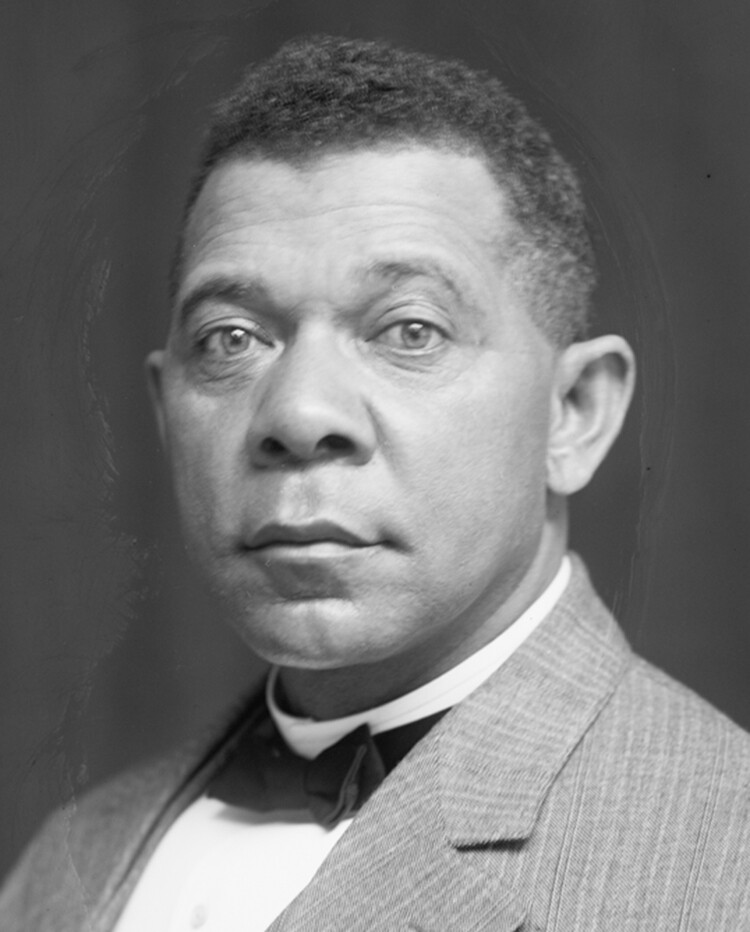
Booker T. Washington.
Booker T. Washington was born a slave in Virginia in 1856, the son of a Black mother and a White father. At age sixteen he enrolled at Hampton Normal and Agricultural Institute, one of several colleges created during Reconstruction specifically for newly emancipated African Americans. There he met the school’s founder, Samuel Chapman Armstrong, who preached moderation and urged the students: “Be thrifty and industrious,” “Command the respect of your neighbors by a good record and a good character,” “Make the best of your difficulties,” and “Live down prejudice.” Washington listened and learned.
Nine years later, Armstrong received a request from a group in northern Alabama who were starting a Black college called Tuskegee Institute. The college needed a president, and Armstrong urged them to hire Washington. Although only twenty-five, he was, according to Armstrong, “a very capable mulatto (a person of mixed Black and White ancestry), clear headed, modest, sensible, polite, and a thorough teacher and superior man.”
More information
A black and white photographic portrait of a Black man in a light colored suit and bow tie, Booker T Washington. He has short, curly hair that comes down in a widow’s peak. He has striking light-colored eyes.
Young Washington got the job and quickly went to work. The first students had to help construct the institute’s buildings by making the bricks themselves. As the years passed, Tuskegee Institute became celebrated as a college dedicated to promoting self-discipline in students and providing vocational training.
Over time, Washington became a skilled fund-raiser, gathering substantial gifts from wealthy Whites, most of them northerners. The complicated racial dynamics of the late nineteenth century required him to walk a tightrope between being candid and being an effective college president. He learned to act like a fox, masking his militancy to maintain the support of Whites. As the years passed, the pragmatic Washington became a source of inspiration and hope to millions of Blacks.
Washington’s recurring message to Black students emphasized the importance of gaining “practical knowledge.” In part to please his White donors, he argued that African Americans should not focus on fighting racial segregation. They should instead work hard in school and avoid stirring up trouble. Their priority should be self-improvement rather than social change. Washington told them to begin “at the bottom” as well-educated, hardworking farmers, not as social activists.
Washington was often criticized for too readily “accommodating” White concerns, yet his message of Black economic self-sufficiency, self-pride, and the dignity of work infuriated White racists of his day. Thomas Dixon, a North Carolina Baptist minister, state legislator, and novelist, complained that Washington was teaching Black students “to be masters of men, to be independent, to own and operate their own industries,” all of which would “destroy the last vestige of dependence on the white man for anything.”
Washington ignored such critics. In a famous speech at the Cotton States and International Exposition in Atlanta in 1895, he urged the African American community not to migrate to northern states or to other nations but to “Cast down your [water] bucket where you are—cast it down in making friends . . . of the people of all races by whom we are surrounded. Cast it down in agriculture, mechanics, in commerce, in domestic service, and in the professions.” Fighting for “social equality” and directly challenging White rule, Washington asserted, would be “the extremest folly,” and any effort at “agitation” would, he warned, backfire. African Americans first needed to become self-sufficient economically. Civil rights would have to wait.
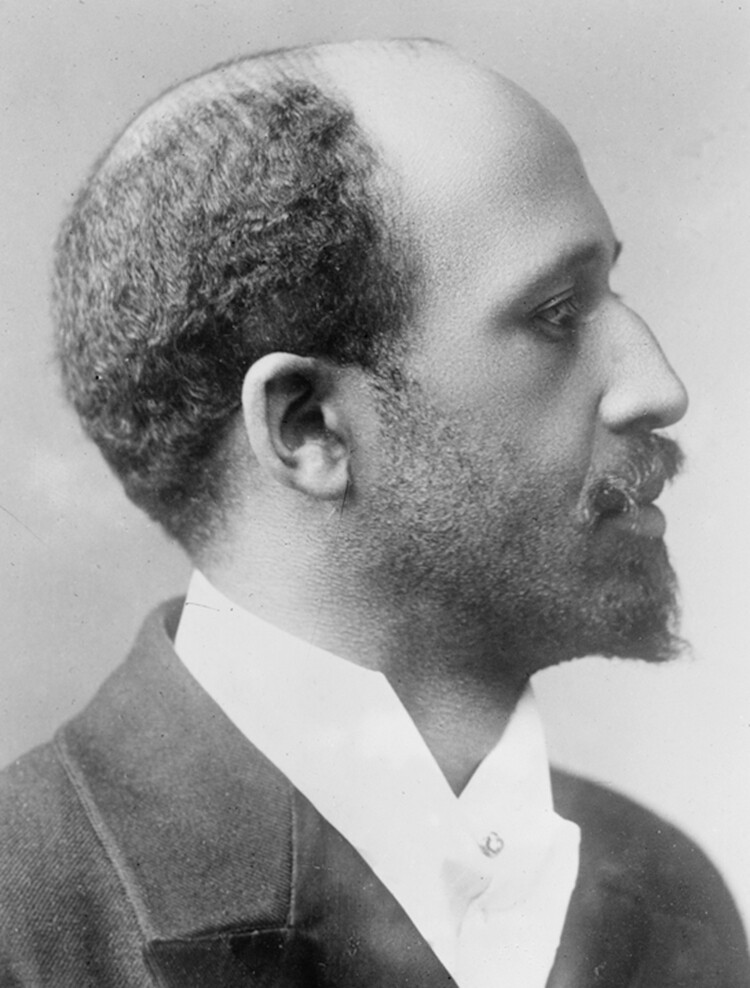
W.E.B. Du Bois.
Other African American leaders disagreed with Booker T. Washington’s accommodationist strategy. By prioritizing economic progress over political and social rights, they argued, Washington was undermining efforts to achieve full social and political equality for African Americans.
W.E.B. Du Bois emerged as Washington’s foremost rival and critic. A native of Massachusetts, Du Bois recalled that he first experienced racial prejudice as a student at Fisk University in Nashville, Tennessee. He later studied in Germany before becoming the first African American to earn a doctoral degree from Harvard (in history and sociology). In addition to promoting civil rights, he left a distinguished record as a scholar, authoring more than twenty books.
In his most famous work, The Souls of Black Folk (1903), Du Bois highlighted the “double consciousness” felt by African Americans: “One ever feels his two-ness—an American, a Negro; two souls, two thoughts, two unreconciled strivings; two warring ideals in one dark body, whose dogged strength alone keeps it from being torn asunder.” In fact, a young White visitor to Mississippi in 1910 noticed that nearly every Black person he met had “two distinct social selves, the one he reveals to his own people, the other he assumes among the Whites.” Du Bois spent his career exploring this double consciousness and how it inevitably hindered Black progress.
Trim and dapper, Du Bois had a flamboyant personality and a combative spirit. Not long after he began teaching at Atlanta University in 1897, he launched a public assault on Booker T. Washington’s conservative strategy for improving the quality of life for African Americans. Du Bois called Washington’s celebrated 1895 speech the Atlanta Compromise and said that he would not “surrender the leadership of this race to cowards” who, like Washington, “accepted the alleged inferiority of the Negro” so Blacks could “concentrate all their energies on industrial education, the accumulation of wealth, and the conciliation of the South.”
More information
A black and white photographic profile portrait of a Black man with a short, pointed beard wearing a collared shirt and jacket, W. E. B. Du Bois. His curly hair is cut short and he is bald to the top of his head.
Du Bois stressed that the priorities should be reversed—that African American leaders should adopt a strategy of “ceaseless agitation” directed at ensuring the right to vote and winning civil equality. The education of Blacks, he maintained, should not be merely vocational but comparable to that enjoyed by the White elite, and it should help develop bold leaders willing to challenge Jim Crow segregation and discrimination. He demanded that disenfranchisement and legalized segregation cease immediately and that the laws of the land be enforced.
For his part, Washington stressed that Du Bois, a New Englander, never understood the brutal dynamics of southern racism. A more militant strategy in the South, he argued, would only have gotten more Blacks lynched. Nor did Du Bois or other critics know that Washington secretly worked to challenge segregation and disenfranchisement, stop lynchings, increase funding for public schools, and finance legal efforts to oppose Jim Crow laws. He often acted privately because he feared that public activism would trigger violence against Tuskegee and himself. Such “quiet efforts,” he noted, were more successful and realistic than the “brass band” approach championed by Du Bois.
The dispute between Washington and Du Bois exposed the tensions that would ultimately divide the twentieth-century civil rights movement: militancy versus conciliation, separatism versus assimilation, social justice versus economic opportunities. In the end, Washington wanted to engender in his students a confident faith in molding a better future. He counseled them to grasp hope rather than hate, and he told racist Whites that “you can’t keep another man in the ditch without being in the ditch yourself.” By 1915, when Washington died, the leadership of the nation’s Black community was passing to Du Bois and others whose uncompromising efforts to gain true equality signaled the beginning of the civil rights century.
The transformation of southern race relations and politics during the late 1800s and early 1900s was triggered by economic stress and a resurgence of racial prejudice. Jim Crow laws, emblematic of this turbulent era, entrenched segregation and systematically disenfranchised Black Americans through various means such as literacy tests, poll taxes, and residency requirements, while often granting preferential treatment to illiterate Whites. State and federal laws, as well as the Supreme Court’s decision in Plessy v. Ferguson (1896), validated these actions. In the face of these obstacles, as well as increased violence, Black leaders urged African Americans to focus on vocational and educational advancement and economic independence while seeking redress for historical injustices in order to navigate the oppressive and often violent environment of the Jim Crow South.
Glossary
- Mississippi Plan (1890)
- A series of state constitutional amendments that sought to disenfranchise Black voters; the Plan was quickly adopted by nine other southern states.
- “separate but equal”
- The underlying principle behind segregation that was legitimized by the Supreme Court ruling in Plessy v. Ferguson (1896).
- Jim Crow laws
- State and local statutes enacted in the late nineteenth century to enforce racial segregation and discrimination against African Americans.
- Wilmington Insurrection (1898)
- Led by Alfred Waddell in Wilmington, North Carolina, an uprising in which White supremacists rampaged through the Black community, overthrew the local government, and forced over 2,000 African Americans into exile.
- Atlanta Compromise (1895)
- A speech by Booker T. Washington that called for the Black community to strive for economic prosperity before demanding political and social equality.
- Henry Grady isn’t referring to the emancipation of African American slaves; rather, he’s claiming that the Civil War freed the South from the system of slavery, which he says set the “new” South on a more prosperous path.
- unfailing or flawless
- In the 1800s, writers such as Henry Grady used the term “Anglo-Saxon” as part of a growing ideological movement called Anglo-Saxonism, which claimed that the white descendants of English and Germanic peoples were culturally and racially superior.
- Antebellum is a Latin word meaning “before the war.” In the context of American history, it nearly always refers to the period before the Civil War. When talking about the South, writers often use “Old South” and “Antebellum South” interchangeably.
- total control or domination