DNA REPLICATION
DNA replication is the process that allows for the duplication of genetic information. It is the important first step in the cell division processes discussed below. During DNA replication, a strand of DNA is copied, resulting in two identical strands where there was previously one. The replication process is very simple (FIGURE 2.7). First, the DNA strand is unzipped by an enzyme when replication needs to occur. The bonds holding the two sides of the DNA ladder together weaken and allow the two sides to separate. This exposes the nitrogen bases that were previously bonded together. Second, free-floating nucleotides in the cell (sets of phosphates, sugars, and nitrogen bases) line up with the exposed sides of the DNA strand. The nucleotides bond with the nitrogen bases on the strand, making a two-sided strand of DNA.
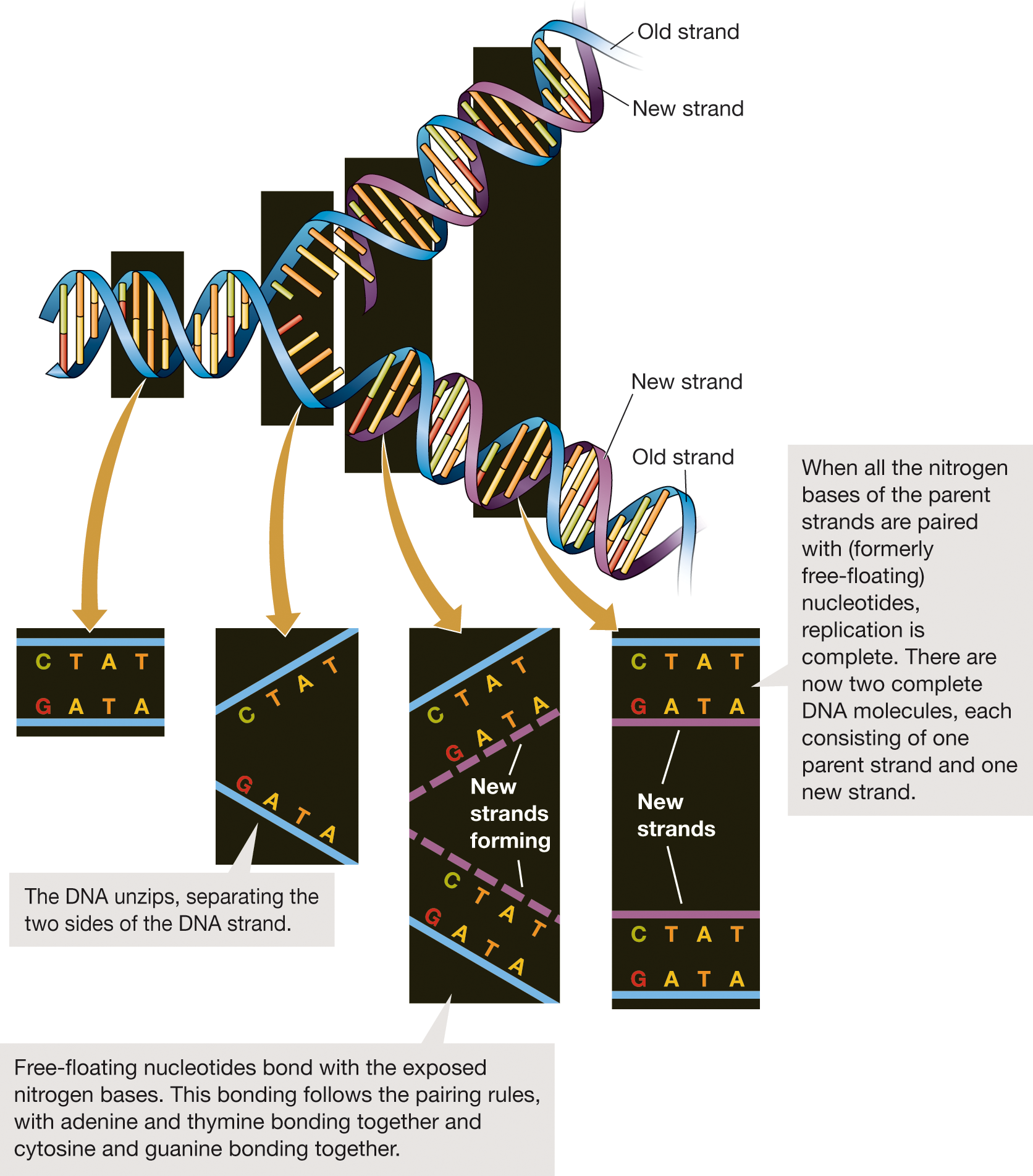
Because all of the bases in a sequence of DNA follow strict pairing rules, one side of a DNA strand can act as the blueprint for a complete strand during DNA replication. The existing nitrogen bases attract complementary free-floating nucleotides.
Because all of the bases in a sequence of DNA follow strict pairing rules, one side of a DNA strand can act as the blueprint for a complete strand. Each base on a side of DNA can determine which free-floating nucleotide is bonded to it. Imagine a DNA strand with a hydrogen bond between adenine and thymine. When this strand separates for replication, the adenine and thymine are exposed and open for bonding with free-floating nucleotides. The exposed adenine can bond only with a free-floating thymine, and the exposed thymine can bond only with a free-floating adenine. When these hydrogen bonds are formed with the free-floating nucleotides, the result is two sections of DNA that both have the same adenine–thymine bond. This structured pairing happens for each of the exposed sets of bases along the DNA strand, and each exposed base matches with its appropriate free-floating nucleotide until the strand is duplicated.
Glossary
- DNA replication
- the process whereby DNA is copied