1.3 The Psychological Story
Physicians were the early pioneers studying how the brain worked. In 1868 a Dutch ophthalmologist, Franciscus Donders, was the first to propose the now common method of using differences in reaction times to infer differences in cognitive processing (Donders, 1868/1969). He suggested that the difference between the amount of time it took to react to a light and the amount of time needed to react to a particular color of light was the amount of time required for the process of identifying a color. Psychologists began to use this approach, claiming that they could study the mind by measuring behavior, and experimental psychology was born.
Before the start of experimental psychological science, the mind had been the province of philosophers who wondered about the nature of knowledge and how we come to know things. The philosophers had two main positions: rationalism and empiricism. Rationalism grew out of the Enlightenment period and held that all knowledge could be gained through the use of reason alone: Truth was intellectual, not sensory. Through thinking, then, rationalists would determine true beliefs and would reject beliefs that, although perhaps comforting, were unsupportable and even superstitious. Among intellectuals and scientists, rationalism replaced religion and became the only way to think about the world. In particular, this view, in one form or another, was supported by René Descartes, Baruch Spinoza, and Gottfried Leibniz.
Although rationalism is frequently equated with logical thinking, the two are not identical. Rationalism considers such issues as the meaning of life, whereas logic does not. Logic relies simply on inductive reasoning, statistics, probabilities, and the like. It does not concern itself with personal mental states like happiness, self-interest, and public good. Each person weighs these issues differently, and as a consequence, a rational decision is more problematic than a simple logical decision.
Empiricism, by contrast, is the idea that all knowledge comes from sensory experience, that the brain begins life as a blank slate. Direct sensory experience produces simple ideas and concepts. When simple ideas interact and become associated with one another, complex ideas and concepts are created in an individual’s knowledge system. The British philosophers—from Thomas Hobbes in the 17th century, through John Locke and David Hume, to John Stuart Mill in the 19th century—all emphasized the role of experience. It is no surprise, then, that a major school of experimental psychology arose from this associationist view. Psychological associationists believed that the aggregate of a person’s experience determined the course of mental development.
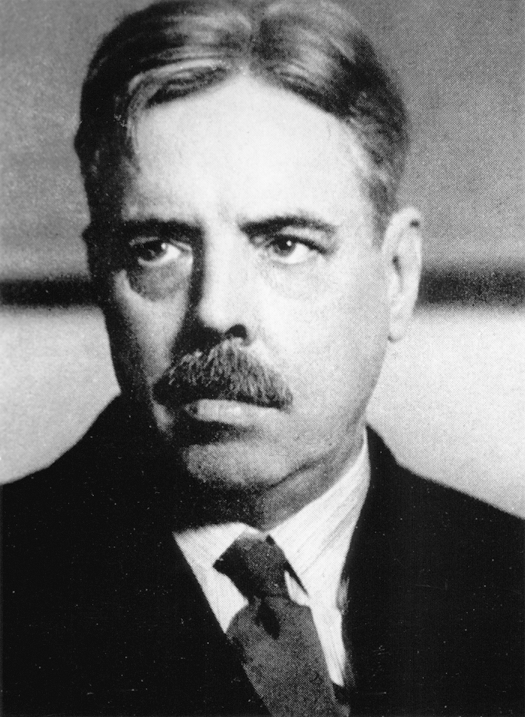
FIGURE 1.16
Edward L. Thorndike (1874–1949).
One of the first scientists to study associationism was the German psychologist Hermann Ebbinghaus, who, in the late 1800s, decided that complex processes like memory could be measured and analyzed. He took his lead from the great psychophysicists Gustav Fechner and Ernst Heinrich Weber, who were hard at work relating the physical properties of things such as light and sound to the psychological experiences that they produce in the observer. These measurements were rigorous and reproducible. Ebbinghaus was one of the first to understand that mental processes that are more internal, such as memory, also could be measured (see Chapter 9).
Even more influential to the shaping of the associationist view was a 1911 monograph by the American psychologist Edward Thorndike (Figure 1.16). In it, he described his observations that a response that was followed by a reward would be stamped into the organism as a habitual response. If no reward followed a response, the response would disappear. Thus, rewards provided a mechanism for establishing a more adaptive response.
Associationism became the psychological explanation for behavior, and soon the American behavioral psychologist John B. Watson (Figure 1.17) dominated the field. He proposed that psychology could be objective only if it was based on observable behavior. He rejected Ebbinghaus’s methods and declared that all talk of mental processes, which cannot be publicly observed, should be avoided. These ideas evolved into the methodological stance of behaviorism.
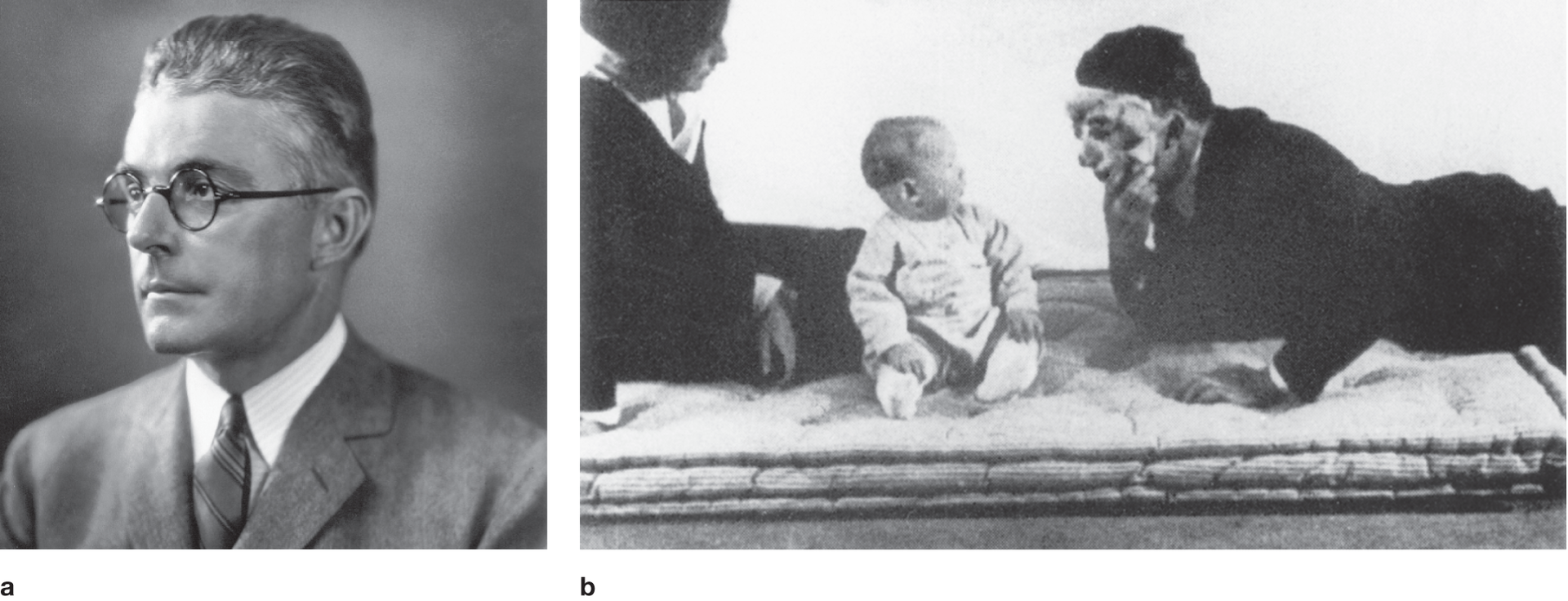
FIGURE 1.17
(a) John B. Watson (1878–1958). (b) Watson and “Little Albert,” the focus of study in one of Watson’s fear-conditioning experiments.
Behaviorism became committed to an idea, widely popularized by Watson, that he could turn any baby into an adult that could do anything from tightrope walking to neurosurgery. Learning was the key, he proclaimed, and everybody had the same neural equipment on which learning could build. Appealing to the American sense of equality, American psychology was giddy with this idea of the brain as a blank slate upon which to build through learning and experience. Though disciples of the blank slate and behaviorism were well-intentioned, a behaviorist–associationist bias had crept in, and every prominent psychology department in the country was run by people who held this view. Behaviorism persisted despite the already well-established position—first articulated by Descartes, Leibniz, Immanuel Kant, Charles Darwin, and others—that complexity is built into the human organism. Sensory information is merely data on which preexisting mental structures act. This idea, which dominates psychology today, was blithely asserted in that golden age, and later forgotten or ignored.
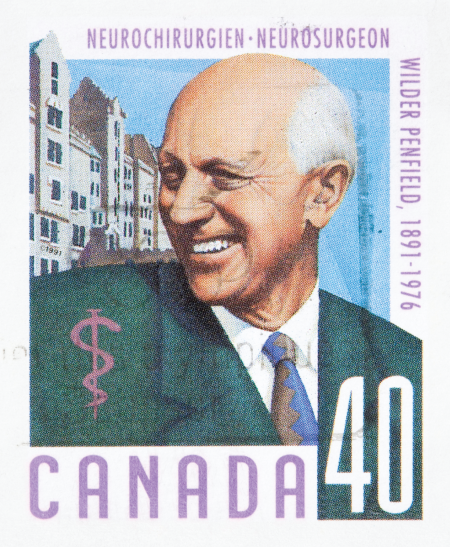
FIGURE 1.18
Wilder Penfield (1891–1976).
Psychologists in Britain and Canada did not share the behaviorist bias, however, and Montreal became a hot spot for new ideas on how biology shapes cognition and behavior. In 1928 Wilder Penfield (Figure 1.18), an American who had studied neuropathology with Sherrington at Oxford, became that city’s first neurosurgeon. In collaboration with Herbert Jasper, Penfield invented the Montreal procedure for treating epilepsy, in which he surgically destroyed the neurons in the brain that produced the seizures. To determine which cells to destroy, he stimulated various parts of the brain with electrical probes and observed the results on the patients—who were awake, lying on the operating table under local anesthesia only. From these observations, he was able to create maps of the sensory and motor cortices in the brain (Penfield & Jasper, 1954), confirming the topographic predictions of John Hughlings Jackson from over half a century earlier.
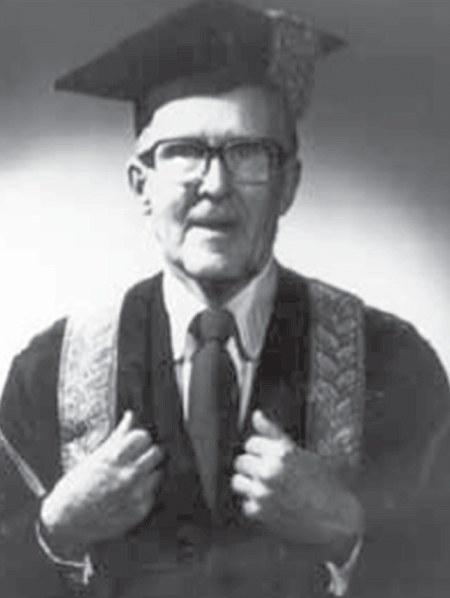
FIGURE 1.19
Donald O. Hebb (1904–1985).
Penfield was joined by a Nova Scotian psychologist, Donald Hebb (Figure 1.19), to study the effects of brain surgery and injury on the functioning of the brain. Hebb became convinced that the workings of the brain explained behavior, and that the psychology and biology of an organism could not be separated. Although this idea—which has kept popping up, only to be swept under the carpet again and again, over the past few hundred years—is well accepted now, Hebb was a maverick at the time.
In 1949 he published a book, The Organization of Behavior: A Neuropsychological Theory, that rocked the psychological world. In it he postulated that learning had a biological basis. The well-known neuroscience mantra “cells that fire together, wire together” is a distillation of his proposal that neurons can combine together into a single processing unit, and that the connection patterns of these units make up the ever-changing algorithms that determine the brain’s response to a stimulus. He pointed out that the brain is active all the time, not just when stimulated by an impulse, and that inputs from the outside can only modify the ongoing activity. Hebb’s theory was subsequently used in the design of artificial neural networks.
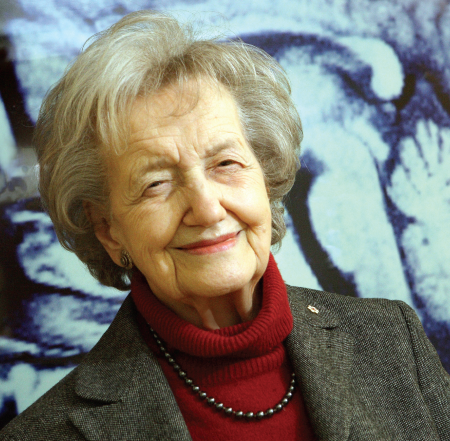
FIGURE 1.20
Brenda Milner (1918–).
Hebb’s British graduate student Brenda Milner (Figure 1.20) continued the behavioral studies on Penfield’s patients, both before and after their surgery. When postsurgical patients began to complain about mild memory loss, Milner became interested and was the first to provide anatomical and physiological proof that there are multiple memory systems. Brenda Milner is one of the earliest in a long line of influential women in the field.
The true end of the dominance of behaviorism and stimulus–response psychology in the United States did not come until the late 1950s, when psychologists began to think in terms of cognition, not just behavior. George Miller (Figure 1.21), who had been a confirmed behaviorist, had a change of heart in the 1950s. In 1951 he had written an influential book entitled Language and Communication and noted in the preface, “The bias is behavioristic.” Eleven years later, in 1962, he wrote another book, called Psychology, the Science of Mental Life—a title signaling a complete rejection of the idea that psychology should study only behavior.
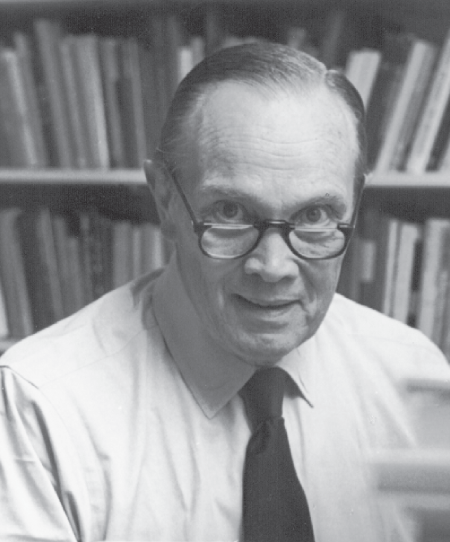
FIGURE 1.21
George A. Miller (1920–2012).
Upon reflection, Miller determined that the exact date of his rejection of behaviorism and his cognitive awakening was September 11, 1956, during the second Symposium on Information Theory, held at the Massachusetts Institute of Technology (MIT). That year had been a rich one for several disciplines. In computer science, Allen Newell and Herbert Simon successfully introduced Information Processing Language I, a powerful program that simulated the proof of logic theorems. The computer guru John von Neumann wrote the Silliman lectures on neural organization, in which he considered the possibility that the brain’s computational activities were similar to a massively parallel computer. A famous meeting on artificial intelligence was held at Dartmouth College, where Marvin Minsky, Claude Shannon (known as the father of information theory), and many others were in attendance.
Big things were also happening in psychology. Signal detection and computer techniques, developed in World War II to help the U.S. Department of Defense detect submarines, were now being applied by psychologists James Tanner and John Swets to study perception. In 1956 Miller published his classic and entertaining paper “The Magical Number Seven, Plus-or-Minus Two,” in which he described an experiment revealing a limit to the amount of information we can keep in short-term memory: about seven items. Miller concluded that the brain, among other things, is an information processor and, breaking the bonds of behaviorism, he realized that the contents of the mind could be studied, setting into motion the “cognitive revolution.”
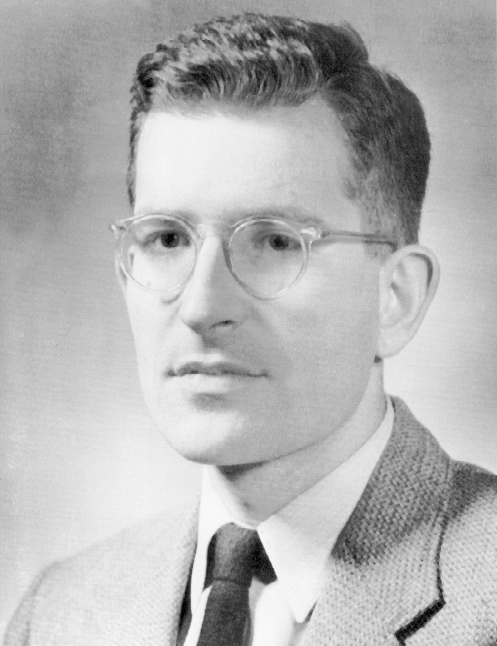
FIGURE 1.22
Noam Chomsky (1928–).
That same year, Miller also came across a preliminary version of the linguist Noam Chomsky’s ideas on syntactic theories (Figure 1.22; for a review, see Chomsky, 2006). In an article titled “Three Models for the Description of Language,” Chomsky showed how the sequential predictability of speech follows from adherence to grammatical, not probabilistic, rules. For example, while children are exposed to only a finite set of word orders, they can come up with a sentence and word order that they have never heard before. They did not assemble that new sentence using associations made from previous exposure to word orders. Chomsky’s deep message, which Miller gleaned, was that learning theory—that is, associationism, then heavily championed by the behaviorist B. F. Skinner—could in no way explain how children learned language. The complexity of language was built into the brain, and it ran on rules and principles that transcended all people and all languages. It was innate and it was universal.
Thus, on September 11, 1956, after a year of great development and theory shifting, Miller realized that, although behaviorism had important theories to offer, it could not explain all learning. He then set out with Chomsky to understand the psychological implications of Chomsky’s theories by using psychological testing methods, and the field of cognitive psychology was born. Miller’s ultimate goal was to understand how the brain works as an integrated whole—to understand the workings of the brain and the conscious mind it produces. Many followed his mission, and a few years later a new field was born: cognitive neuroscience.
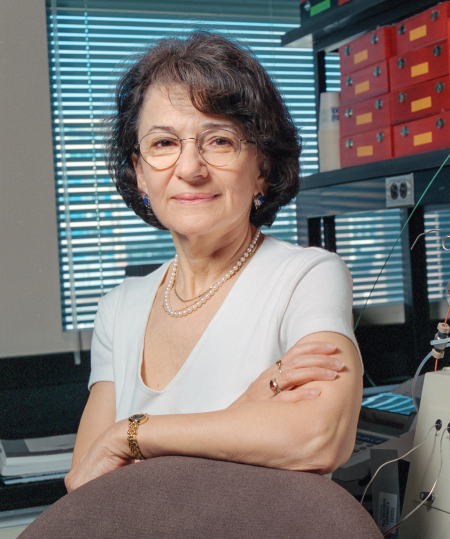
FIGURE 1.23
Patricia Goldman-Rakic (1937–2003).
What has come to be a hallmark of cognitive neuroscience is that it is made up of an insalata mista (“mixed salad”) of different disciplines. Miller had stuck his nose into the worlds of linguistics and computer science and had come out with revelations for psychology and neuroscience. In the same vein, in the 1970s Patricia Goldman-Rakic (Figure 1.23) put together a multidisciplinary team of people working in biochemistry, anatomy, electrophysiology, pharmacology, and behavior. She was curious about one of Brenda Milner’s memory systems, working memory, and chose to ignore the behaviorists’ claim that the higher cognitive function of the prefrontal cortex could not be studied. As a result, she produced the first description of the circuitry of the prefrontal cortex and how it relates to working memory (Goldman-Rakic, 1987).
Later, Goldman-Rakic discovered that individual cells in the prefrontal cortex are dedicated to specific memory tasks, such as remembering a face or a voice. She also performed the first studies on the influence of dopamine on the prefrontal cortex. Her findings caused a phase shift in the understanding of many mental illnesses—including schizophrenia, which previously had been thought to be the result of bad parenting.
- rationalism
The idea that, through right thinking and rejection of unsupportable or superstitious beliefs, true beliefs can be determined. Compare empiricism.
- empiricism
The idea that all knowledge comes from sensory experience. Compare rationalism.
- associationism
The theory that the aggregate of a person’s experience determines the course of mental development.
- behaviorism
The theory that environment and learning are the primary factors in mental development, and that people should be studied by outside observation.
- Montreal procedure
A surgical procedure to treat epilepsy, originally developed by Wilder Penfield and Herbert Jasper, in which the neurons that produced seizures were surgically destroyed.