Employ the concept of globalization to understanding contemporary culture change.
Cultures have never been made up of completely isolated or bounded groups of people located in a particular place. As we discussed in Chapter 1, cultures have always been influenced by flows of people, ideas, and goods, whether through migration, trade, or invasion. Today’s flows of globalization are intensifying the exchange and diffusion of people, ideas, and goods, creating more interaction and engagement among cultures. Let’s consider three key interrelated effects of globalization on local cultures: homogenization, the global flows of culture through migration, and increased cosmopolitanism.
More information
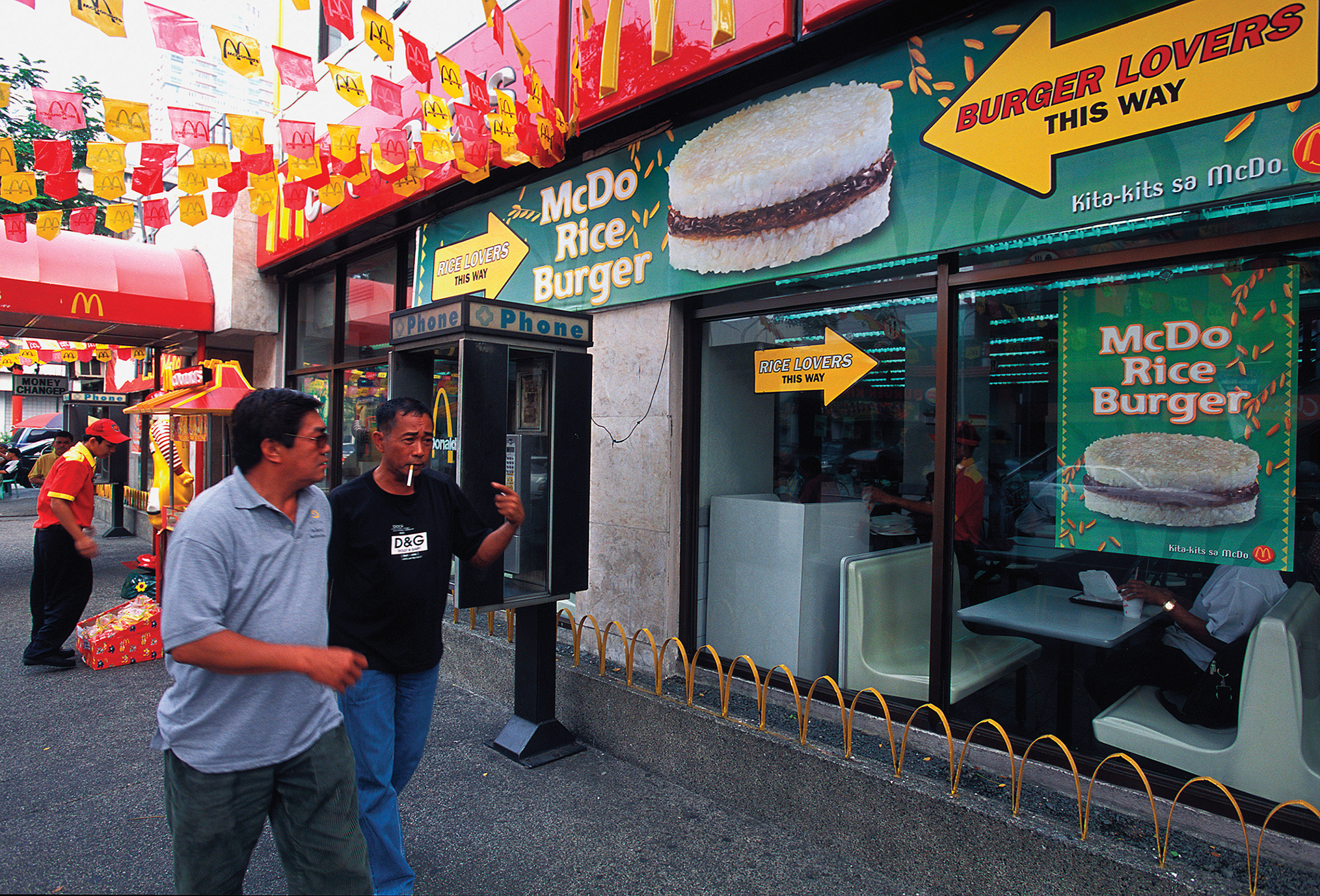
A McDonald’s restaurant with numerous signs advertising the McDo Rice burger. Two men are walking past.
A McDonald’s restaurant in downtown Manila, capital of the Philippines, advertises the McDo Rice Burger, a local product added to McDonald’s standard global menu.
The Global and Local in Tension: Homogenizing or Diversifying
The expansion of global corporations, products, and markets has led some anthropologists and cultural activists to warn of the rise of a homogenized global culture dominated by McDonald’s, Levi’s, Coca-Cola, CNN, Hollywood, and U.S. cultural values. Will the spread of Western goods, images, and ideas diminish the diversity of the world’s cultures as foreign influences inundate local practices, products, and ways of thinking? Certainly, global encounters of people, ideas, and things are influencing local cultures and communities. But instead of homogenization, the result of globalization is often hybridization, a mixing or incorporation and reworking of the influences of other cultures into a community’s beliefs and practices. Global encounters may even transform global practices and commodities to reflect more local cultural character.
Consider McDonald’s. Launched in the 1940s in San Bernardino, California, today McDonald’s operates nearly 40,000 restaurants in 119 countries. Though McDonald’s is a global brand, as the company has expanded it has adapted its menu in response to local tastes, culinary traditions, laws, and religious beliefs. In Egypt, where McDonald’s has more than seventy locations, the menu includes McFalafel Sandwiches. In Morocco and other parts of the Middle East, the McArabia, a grilled chicken sandwich, is served on flatbread. McDonald’s serves a teriyaki McBurger in Japan, McSpaghetti in the Philippines, and certified halal food in Malaysia. It has kosher stores in Israel, McCurrywurst hot sausages in Germany, and the McBurrito in Mexico.
To many people in developing countries, elements of global culture like McDonald’s symbolically represent the opportunity for economic advancement and participation in the idealized middle-class, consumerist lifestyle associated with these products. In Golden Arches East: McDonald’s in East Asia (1998), James Watson suggests that East Asians in Tokyo, Japan; Seoul, Korea; Hong Kong; Beijing, China; and Taipei, Taiwan, go to McDonald’s not so much for the food but to participate in what they view as a middle-class activity. By eating out and eating Western fast food, they hope to align themselves with the Western middle-class norms and values to which they aspire (Yan 2004).
More information
More information
THE SOCIAL LIFE OF THINGSBlue Jeans: Global Production and Local Culture
Americans love their blue jeans. The pants are comfortable yet tough, intimate yet anonymous. They shape to fit the contours of our bodies. You can dress them up or dress them down. Blue jeans are also a global fashion phenomenon. On average, people worldwide own 2.6 pairs and wear them 3.5 days a week. On any given day, the majority of people in the world may be wearing blue jeans (Miller and Woodward 2011). How do anthropologists make sense of the global love for this seemingly ordinary pair of trousers?
More information
A pair of blue jeans.
More information
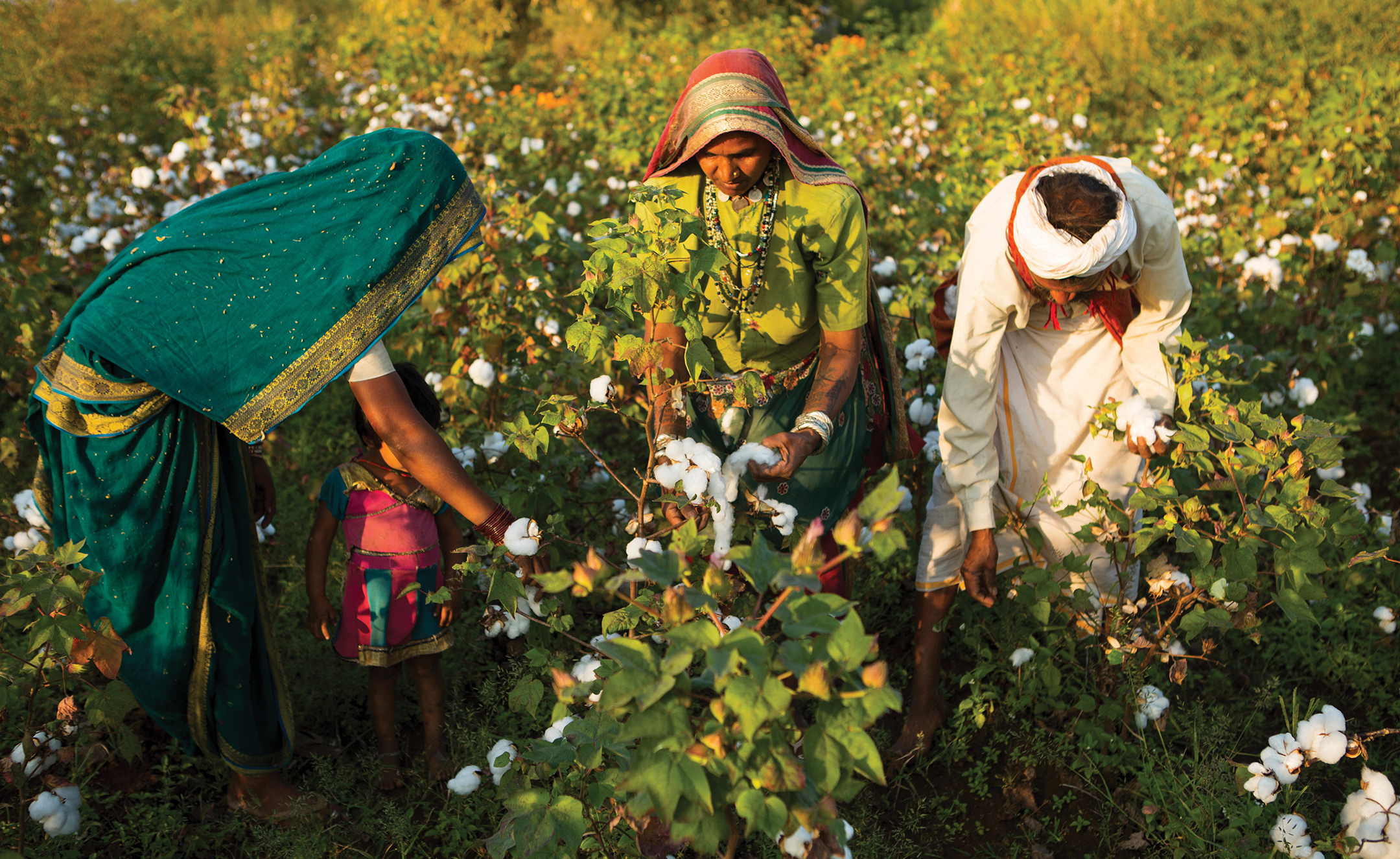
Three adults and one child bend down to pick cotton. Two of the adults are wearing headscarves.
More information
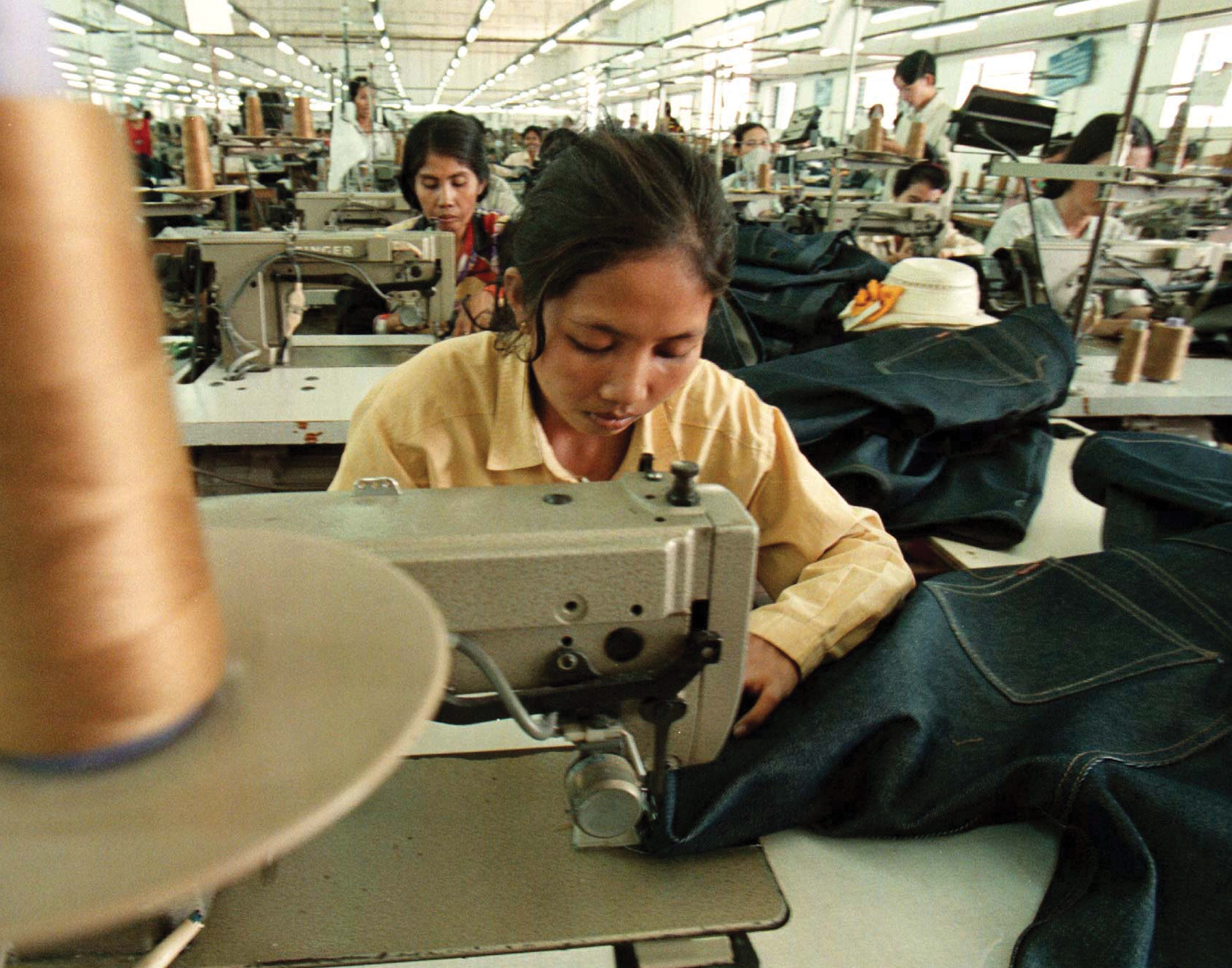
A woman sits on a production floor sewing blue jeans with other women also working.
1 A simple pair of jeans passes through many hands in a global production process. Designed and commissioned by global corporations, jeans are made in sixty to seventy countries by 30–40 million workers, primarily young women laboring in sweatshop conditions in developing countries in what amounts to a global assembly line. Cotton may come from Turkey, thread from North Carolina, and woven fabric from Italy before being sewn together in Cambodia and then dyed, chemically washed, and distressed in Mexico.
More information
Young children in school uniforms walk past a large advertisement for Lee Jeans that shows a posterior view of a woman with her hands in the back pockets of her jeans.
2 How do marketing and advertisements manufacture the desire for blue jeans? How do advertisements project desired values of modernity, cosmopolitanism, and individualism onto a simple pair of pants?
More information
A man in a nightclub wearing a T-shirt and baggy jeans looks at a cellphone while leaning against a pillar.
3 Though produced globally, jeans can reveal local expressions of identity. In the favelas of Rio de Janeiro, Brazil, stretch jeans worn in the heat, sweat, and dancing of funk balls emerge through the movement and music as an expression of the erotic. In Germany, young men of Turkish, Middle Eastern, and other immigrant backgrounds, primarily from working-class, low-income families, choose jeans to resist their marginalization in the dominant culture.
Anthropologists are interested not just in cultural norms, values, symbols, and mental maps of reality; they are also interested in people’s stuff, what we call material culture. The social life of these garments reveals the stories of the people who make, move, sell, wear, give, borrow, and discard them. And how these things move through the world reveals the unexpected ways people are interconnected and intertwined in today’s global age.
Why do you think blue jeans have become so popular on a global scale?
How many pairs do you own? How many days a week do you wear them? What do your jeans say about you?
Look in your closet. What stories do your clothes tell?
Migration and the Global Flows of Culture
The large-scale movement of people within and across national boundaries associated with contemporary globalization reveals that cultures are not necessarily bound to particular geographic locations. People migrate with their cultural beliefs and practices. They incorporate the cultural practices of their homelands into their new communities. They build links to their homelands through which culture continues to be exchanged.
Robert Smith’s book Mexican New York (2006) reveals one example of the deep transnational connections—links across national borders—that have become increasingly common in today’s globalizing world. Direct flights physically link immigrants living in the suburbs of New York City to their hometowns in Mexico in five hours. Telephone calls, emails, and videoconferences connect families and communities. The Mexican town of Tihuateca relies heavily on money sent back from villagers in New York City to build roads, water systems, and schools. Community leaders travel between countries to strengthen relationships, promote projects, and raise funds. In Boston, meanwhile, immigrants from India, Pakistan, Ireland, and Brazil maintain intense connections with their home communities, particularly through transnational religious practices. And a charismatic preacher from Brazil can lead thousands of Brazilians gathered in a Boston auditorium in worship by satellite hookup (Levitt 2007). These stories and many others reveal how global flows of people are transforming local cultures in both the sending and the receiving countries (Appadurai 1990; see also Chapter 13).
Increasing Cosmopolitanism
A third significant effect of globalization on culture is that the increasing flows of people, ideas, and products have allowed worldwide access to cultural patterns that are new, innovative, and stimulating. Local cultures are exposed to a greater range of cultural ideas and products—such as agricultural strategies and medicines, to name just two. Globalization means that communities in the most remote parts of the world increasingly participate in experiences that bridge and link cultural practices, norms, and values across great distances, leading to what some scholars have called a new cosmopolitanism.
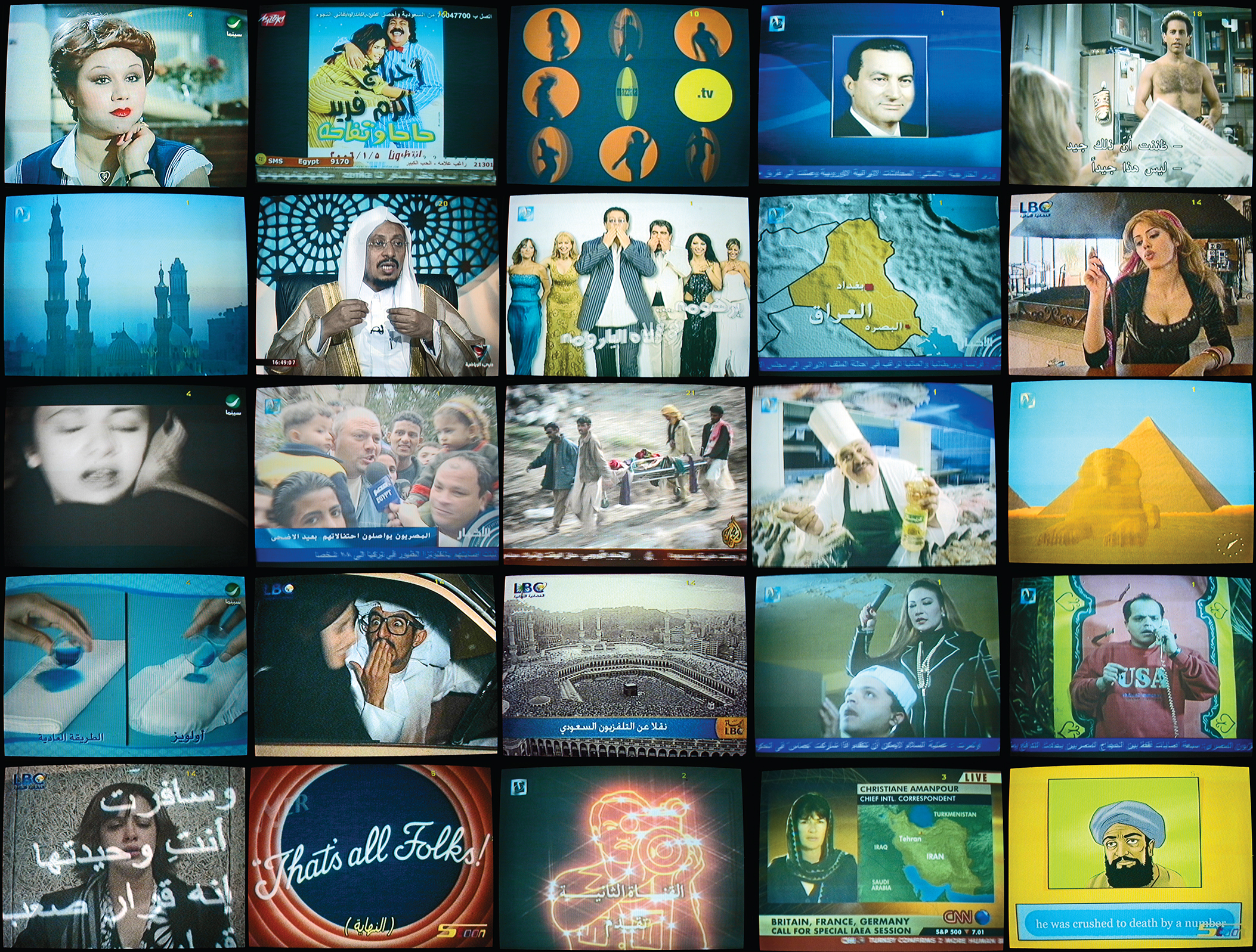
Cosmopolitanism is a very broad, sometimes global, outlook, rather than a limited, local one—an outlook that combines both universality and difference (Appiah 2006). The term is usually used to describe sophisticated urban professionals who travel and feel at home in different parts of the world. But anthropologist Lila Abu-Lughod’s study Dramas of Nationhood: The Politics of Television in Egypt (2005) explores the emergence of cosmopolitanism even among Egypt’s rural poor. Her book explores the role of television dramas—much like American soap operas, but more in tune with political and social issues—in creating ideas of a national culture, even among rural Egyptians, and crafting the identity of the new Egyptian citizen.
More information
A grid of 25 squares that depict different television shows. Among the images shown are a newscast, Jerry Seinfeld, a mosque, the sphinx and pyramid, and text from Looney Tunes that reads, “That’s all Folks!”
In a globalizing age, local cultures are increasingly exposed to a vast array of people, ideas, and products. Here, a montage of images from a day on Egyptian television, with channels from Egypt and across the Middle East, includes comedy and music from Lebanon, old Egyptian films, American entertainment, and news and religious discussion programs.More information
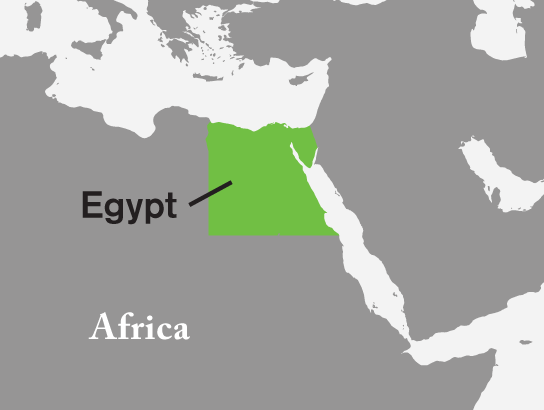
Egypt is highlighted and labeled.
MAP 2.3
Egypt
Abu-Lughod’s ethnography of television pushes us to move beyond notions of single cultures sharing a set of ideas and meanings distinct from those of other cultures in an era of mass media, migration, and globalization. Television, she argues, “is an extraordinary technology for breaking the boundaries and intensifying and multiplying encounters among life-worlds, sensibilities and ideas” (2005, 45). By the 1990s, there were 6 million television sets in Egypt, and more than 90 percent of the population had access. In this reality, television provides material—produced somewhere else—that is consumed locally; it is inserted into, mixed up with, and interpreted by local knowledge and systems of meaning. As Abu-Lughod writes:
Thinking about Zaynab [Abu-Lughod’s key informant] watching Egyptian dramatic serials and films, interviews with criminals, broadcasts of Parliament in session, American soap operas, imported nature programs that take her to the Caribbean or the Serengeti Plain, and advertisements for candy, ceramic toilets, chicken stock cubes and Coca-Cola leads me to begin thinking about her and others in this village not as members of some kind of unified Egyptian or Upper Egyptian peasant culture—one in which it is improper for women over thirty to marry or older women to be out and about going to school—but in terms of the cosmopolitanism they might represent. (2005, 46)
Even though poverty prevents the people in Abu-Lughod’s study from fully participating in the consumer culture of commodities promoted by television programming and commercials, they are not untouched by these features of cosmopolitanism.
The influences of globalization ensure that even in rural Egyptian peasant culture, the knowledge of other worlds comes not only from television but also from foreign friends, tourists, visiting scholars and anthropologists, relatives migrating to find work in cities, imported movies and electronics, and even teachers trained by the Egyptian state and their approved textbooks. This is just one example of the powerful effects of the intersection of culture and globalization. No matter where you look in the twenty-first century, you are sure to find some elements of this intersection.