What Moral and Ethical Concerns Guide Anthropologists in Their Research and Writing?
Describe the ethical concerns associated with fieldwork and ethnographic writing.
Anthropologists often face moral and ethical dilemmas while conducting fieldwork. These dilemmas require us to make choices that may affect not only the quality of our research but also the people we study. Indeed, the moral and ethical implications of anthropological research and writing are of deep concern within the discipline and have been particularly hot topics at various times in its history. As a result, the American Anthropological Association (AAA) has developed an extensive set of ethical guidelines, which you can view at www.aaanet.org.
Do No Harm
At the core of our ethics code is the mandate to do no harm. Even though as anthropologists we seek to contribute to general human knowledge and perhaps shed light on a specific cultural, economic, or political problem, we must not do so at the expense of the people we study. In fact, this issue spurred the creation of the AAA’s code of ethics. The organization’s website presents a great variety of advice about the anthropologist’s responsibility to the people being studied.
More information
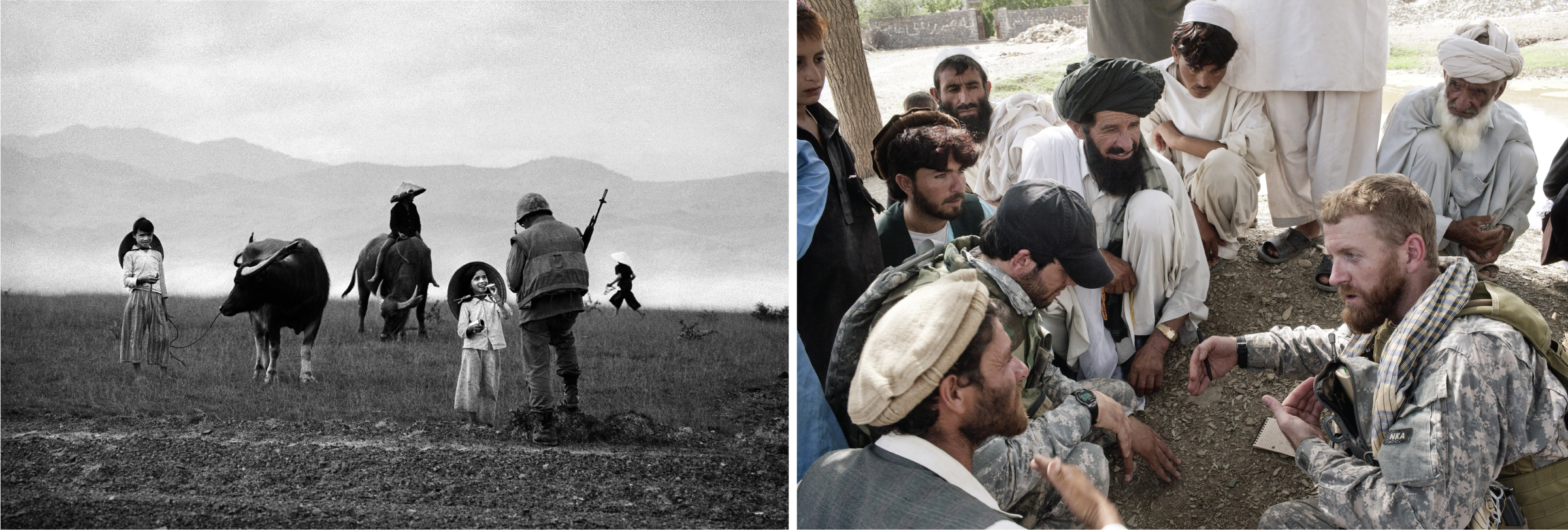
A black and white photo of a soldier with a machine gun talking to a young girl in a field. The young girl is smiling and holds something to her mouth. Behind them are two cattle and three other people in wide brimmed grass hats. In the distance are mountains.
Two soldiers dressed in camouflage squat down to converse with bearded men in robes and turbans. One soldier is gesturing with his hands to a man in a turban to his left. The other soldier is wearing a dark baseball cap and is looking at the floor.
The relationship of anthropology to colonialism and war has been complicated. During the Vietnam War, for instance, some anthropologists were criticized for collaborating with the U.S. military occupation and counterinsurgency efforts. (Left) An American soldier in rural Vietnam, 1967. (Right) Recently, the controversy continued as the U.S. military’s Human Terrain Systems program (2007–14) recruited anthropologists to help troops understand local culture and make better decisions in the field.More information
More information
The Social Life of ThingsMardi Gras Beads
Many anthropologists today are experimenting with ethnographic filmmaking to present their fieldwork research. The medium is proving especially effective in capturing the impact of globalization on local communities and the movement of people, things, and ideas. David Redmon and Ashley Sabin trace the global journey of Mardi Gras beads in their multisited ethnographic film Mardi Gras: Made in China.
More information
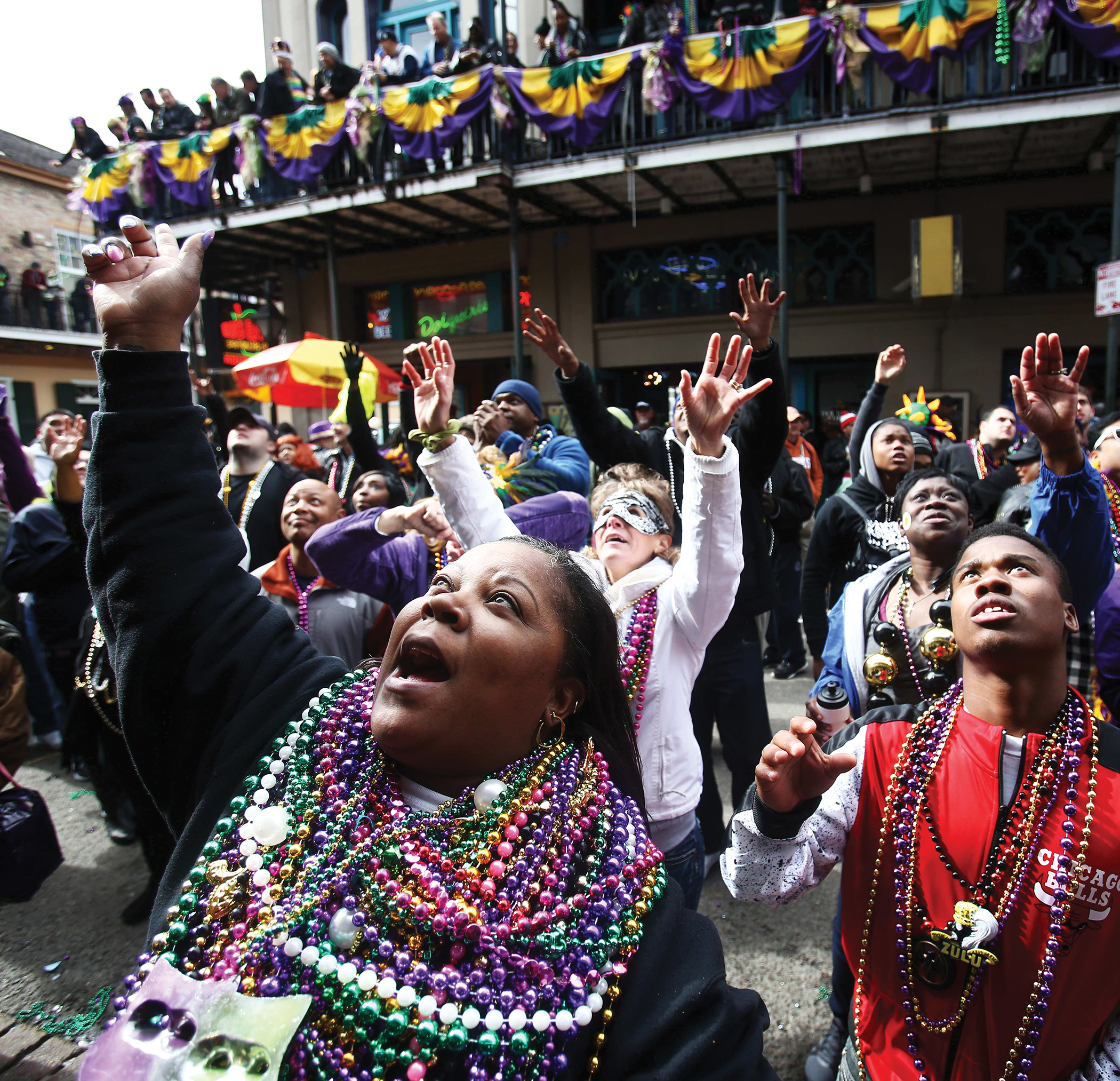
A celebration on a street where people are wearing plastic beads around their necks. Their hands and heads are raised, looking up at something. One Black woman in the foreground raises her right hand upward and her mouth is open. People in the background look down on the revelers from a balcony.
1 The first Mardi Gras revelers paraded through the streets of New Orleans in 1857, celebrating Fat Tuesday, a day of parties, drinking, and general excess immediately preceding the Christian season of fasting before Easter. Today, Mardi Gras attracts tens of thousands of tourists who come to see its marching bands, parades, and floats.
More information
Three necklaces made of colorful plastic beads. One necklace is purple, the second is gold, and the last necklace is green.
2 Colorful plastic beads, medallions, and other inexpensive jewelry circulate throughout the Mardi Gras celebration. Beads are sold in shops, thrown ostentatiously from floats, worn draped around the necks of revelers, and exchanged between friends and strangers. Since the late 1970s, revelers have exchanged beads for displays of nudity. Particularly men offer beads to entice women to bare their breasts, adding to the raucous and bawdy celebrations.
More information
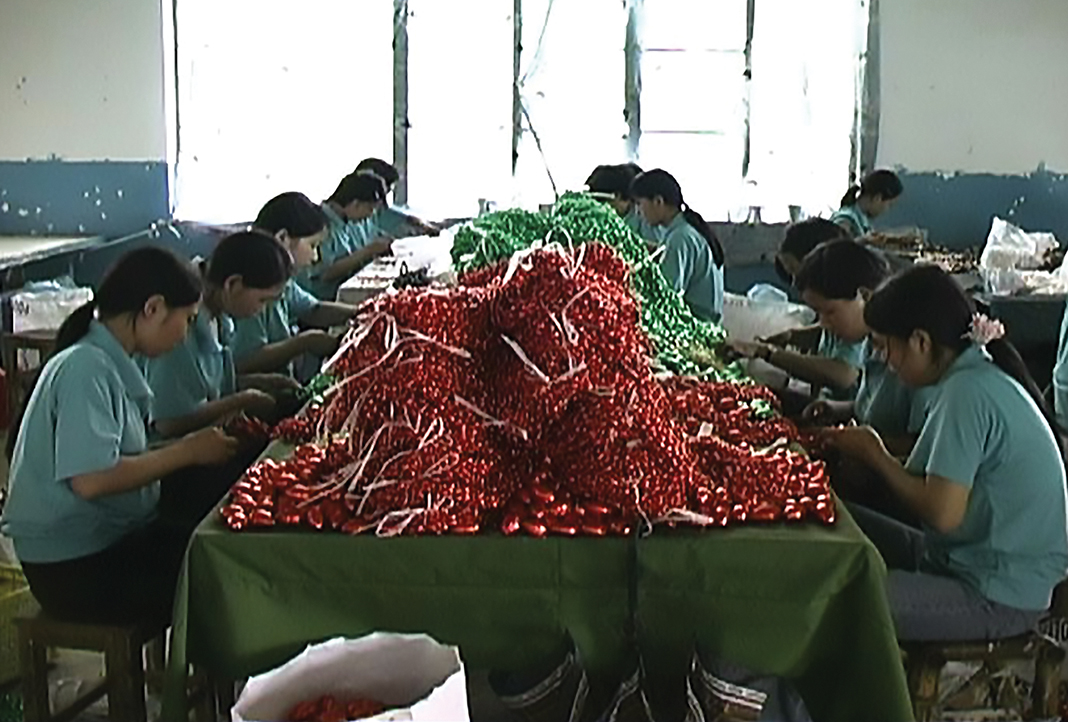
A shabby room where young people sit around a table with giant piles of red and green beads making necklaces. They are wearing turquoise collared shirts with their hair pulled back into ponytails.
3 But where do these beads come from? Redmon and Sabin trace their production to a factory on China’s southeast coast where workers, 90 percent of whom are women, live year-round toiling six or seven days a week, sometimes as much as sixteen hours a day, to make toys, clothes, and trinkets for Western buyers like Disney, McDonald’s, and Walmart. Factory conditions are grim. Workers operate dangerous machinery and inhale toxic fumes. Work and social life are tightly disciplined by supervisors who limit trips to the bathroom and prohibit romantic liaisons, even those after work hours.
More information
A split photograph where one half shows revelers wearing party beads watching a small video screen. The other half shows young Chinese people looking at photographs of revelers wearing beads.
4 Redmon and Sabin involve both the Mardi Gras revelers and Chinese factory workers as collaborators in telling their stories through a multimedia “cultural exchange,” bringing the effects of globalization into focus. In New Orleans, they show startled revelers video footage of beads being made by young girls in the Chinese factory. Then, returning to China, they reveal to the workers pictures of how their beads are used in the United States. “Tell them not to do that!” says one young woman, embarrassed by the Mardi Gras scenes. “They are only little beads. They’re not worth it!”
Redmon and Sabin’s fieldwork and ethnographic film shed light on the personal effects of globalization. Having considered the social life of Mardi Gras beads, is there something in your daily life that you would like to trace back to its origins?
What story do you think your chosen object would tell?
Given the opportunity, what do you think the producers and consumers of this object might say to one another?
Several key examples in the history of anthropology demonstrate the importance of the “do no harm” mandate. After World War II, anthropology as a discipline was criticized for intentionally and unintentionally aiding the European colonial encounter, assisting colonial administrators and military agents by providing detailed descriptions and analysis of local populations, many of which were actively engaged in struggles against colonial rule. Anthropology was also taken to task for helping to create an image of colonial subjects as unable to govern themselves and in need of Western guidance and rule (Asad 1973). During the Vietnam War in the 1960s, some anthropologists were rebuked for collaborating with the U.S. military occupation and counterinsurgency efforts. In the 1970s, the AAA experienced internal political turmoil as it addressed accusations of covert research conducted in Southeast Asia by anthropologists (Petersen 2015; Price 2004; Wakin 1992; Wolf and Jorgensen 1970).
More recently, the ethical practices of two American researchers, anthropologist Napoleon Chagnon and geneticist/physician James Neel, who worked among Brazil’s Indigenous Yanomami people (Chagnon 1968) in the 1960s and following, have come into question. In his book Darkness in El Dorado (2000), journalist Patrick Tierney claimed, among other things, that Chagnon and Neel compromised their subjects’ health to see how unprotected Indigenous populations would respond to the introduction of infectious disease. Later investigations did not support Tierney’s most serious charges, and the AAA’s original findings against Chagnon and Neel were rescinded. The controversy, however, stimulated a significant debate within the field about the code of ethics expected of all anthropologists.
More recently, the U.S. military has actively recruited anthropologists to serve as cross-cultural experts in Iraq and Afghanistan, renewing impassioned debates within the discipline about the proper role of anthropologists in military and covert operations. Through the Human Terrain Systems program, between 2007 and 2014 the U.S. military recruited, trained, and deployed anthropologists to be embedded with combat units and to advise military commanders on building local community relationships. Though this program has ended, a similarly controversial project, the U.S. Department of Defense’s Minerva Research Initiative, which funds social science research of benefit to U.S. military planning and operations, has raised concerns among anthropologists (Gusterson 2008). The role of anthropologists in military-sponsored “nation building” projects has been supported by some (McFate 2005) but criticized by many others, who have warned of the “weaponizing of anthropology”—turning anthropological research strategies and knowledge into a tool of war (Price 2011).
Obtain Informed Consent
One of the key principles for protecting research subjects involves obtaining informed consent. It is imperative that those whom we study agree to participate in the project. To do so, they must understand clearly what the project involves and the fact that they have the right to refuse to participate. After all, anthropological research is not undercover investigation using covert means and deception. The anthropologist’s hallmark research strategy is participant observation, which requires establishing rapport—that is, building relationships of trust over time. To develop rapport, the subjects of our studies must be clearly informed about the goals and scope of our projects and must willingly consent to being a part of them.
U.S. federal regulations protect human subjects involved in any research, and proposals to conduct research on humans, including anthropological research, must be reviewed by the sponsoring organization. Such regulations were originally designed to cover medical research, but anthropologists—whether students or professionals—now participate in these institutional reviews before conducting research.
Ensure Anonymity
Anthropologists take precautions to ensure the privacy and safety of the people they study by providing anonymity in research notes and in publications. We frequently change the names and disguise the identities of individuals or, at times, whole communities. For example, Nancy Scheper-Hughes disguises the identities of people and places in Brazil to protect the community and individuals she worked with (for example, “the market town that I call Bom Jesus da Mata”). Anonymity protects the people in our studies who may be quite vulnerable and whose lives we describe in intimate detail. This consideration becomes particularly important and sometimes controversial when research involves illegal activities—for instance, Claire Sterk’s ethnography about prostitution (2000) or Philippe Bourgois’s work with drug dealers in New York City (2003).
A key strategy for protecting those being studied by ensuring that they are fully informed of the goals of the project and have clearly indicated their consent to participate.