2.3 |
The Special Properties of Water |
Life evolved in the oceans about 3.5 billion years ago, and that aquatic ancestry is reflected in all living beings today. The average cell is about 70 percent water by weight, and nearly every chemical process associated with life occurs in water. Metabolism ceases in most cells if the water content drops below 50 percent. Water has chemical and physical properties unmatched by any other known substance, and water’s ability to sustain life is based on these qualities.
Water is a polar molecule
We noted earlier that each molecule of water is made up of two hydrogen atoms and one oxygen atom held together by covalent bonds. In some covalent bonds, however, electrons are not equally shared by the two atoms. In these molecules, one atom has greater electron-grabbing power (technically known as electronegativity). The more electronegative atom exerts a stronger pull on the shared electrons, resulting in a polar covalent bond. “Polar” means the two ends are the opposite of each other, like the two poles of Earth. The uneven distribution of electrical charge in a polar molecule makes one end of the molecule slightly negative and the opposite end slightly positive. Water is a polar molecule because the electrical charge is distributed unevenly over its boomerang shape. The nucleus of the oxygen atom pulls on the shared electrons more powerfully than do the nuclei of the two hydrogen atoms. The oxygen end of the molecule therefore has a slightly negative charge, while the two hydrogen atoms have a slightly positive charge. In the following schematic representation of the water molecule, the two polar regions are shown in green and blue:

Because opposite electrical charges attract, the slightly positive hydrogen atoms of one water molecule are drawn toward the slightly negative oxygen atom of a neighboring water molecule. A hydrogen bond is the weak electrical attraction between a hydrogen atom that has a slight positive charge and a neighboring atom with a slight negative charge. Intermolecular hydrogen bonds develop readily between adjacent water molecules:
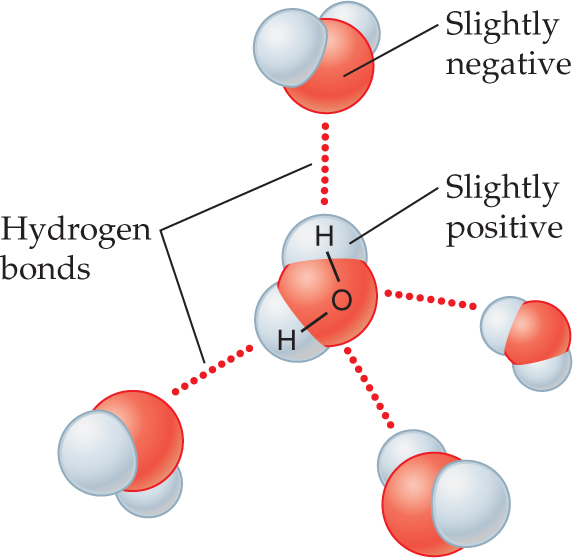
Although a single hydrogen bond is about 20 times weaker than a covalent bond, collectively the cross-linking of many water molecules through many hydrogen bonds amounts to a potent force. The polarity of water and the resultant hydrogen bonding explain nearly all of the special properties of water that we explore next.
Water is a solvent for charged or polar substances
Water molecules can form hydrogen bonds with other polar molecules, which is why polar compounds dissolve in water—that is, mix completely with the water. Ions also dissolve readily in water, because water molecules can form a network around the ions. For example, when table salt is added to water, the solid crystals dissolve. The crystals break apart as the ions in the salt crystal are surrounded by water molecules and held in solution throughout the liquid (FIGURE 2.8).  Animation: How Salts Dissolve in Water

FIGURE 2.8 Charged Substances Dissolve in Water to Form Solutions
Because dissolved compounds are so common in and around living cells, chemists and biologists use specific terms to describe these mixtures: a solution is any combination of a solute (a dissolved substance) and a solvent (the fluid into which the solute has dissolved). A cup of black coffee has hundreds of different types of solutes in it, caffeine being one of them. Stirring a spoonful of table sugar (sucrose) into the cup adds yet another solute. Water, which makes up more than 98 percent of the volume of that cup of coffee, is the solvent in which the many solutes are dissolved.
Water is also the solvent of life: the cytoplasm is a thick solution that contains thousands of different types of solutes and is about 70 percent water in most cells. Because so many biologically important ions and molecules function as solutes, water is commonly called the universal solvent.
Because of their polar nature, water molecules do not interact with uncharged or nonpolar substances. Electron sharing is largely symmetrical in nonpolar molecules. When added to water, nonpolar molecules fail to go into solution and tend to cluster among their own kind instead. This is exactly what happens when olive oil, composed of nonpolar molecules, is added to vinegar, an aqueous solution containing ions and polar molecules. To make a salad dressing, we must shake the oil and vinegar vigorously to mix them; left alone, the polar and nonpolar components will tend to separate.
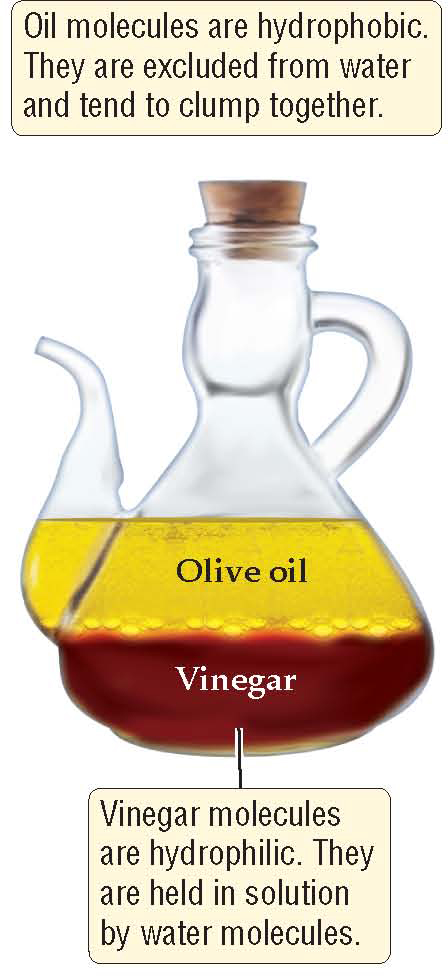
Molecules that associate with water (such as sugar and salt) are called hydrophilic (hydro, “water”; philic, “loving”); molecules that are excluded from water (such as oil and wax) are called hydrophobic (phobic, “fearing”). The reason that olive oil does not dissolve easily in vinegar is that the ingredients in the oil are hydrophobic and water molecules therefore do not interact with them. Being lighter than water, the “shunned” oil molecules clump together and float on top of the vinegar.
 Helpful to Know
Heat is the total energy in a body due to the movement of the atoms within it. Temperature is a measure of the average speed with which the atoms are moving. An object’s size affects its total heat but not its temperature. A bathtub with 30°C water has more heat than a teacup with 30°C water, but because water molecules move at the same average speed in both they have the same temperature.
●●●
Hydrogen bonding accounts for the physical properties of liquid water and ice
Water can exist in all three states of matter: liquid, solid, and gas. The interplay of hydrogen bonds explains the physical properties of the liquid and solid phases of water. At moderate temperatures, hydrogen bonds among water molecules are constantly forming and breaking. This nonstop jostling is the reason that water is a liquid at room temperature: the molecules cannot be packed together tightly enough to form a solid.
At 0°C, water molecules have less energy and cannot move about as vigorously. A more stable network of hydrogen bonds emerges as water turns into ice. A particular volume of liquid water expands when it turns into ice, taking up more space. The water molecules are farther apart in ice, locked into an orderly pattern known as a crystal lattice (FIGURE 2.9). Because ice is less dense, it floats on liquid water. If ice were denser than water, it would sink when it froze. Lakes in cold parts of the world would freeze from the bottom up. Instead, the ice that floats on the lake surface acts like an insulating blanket, enabling aquatic organisms to survive the winter in the liquid water below.
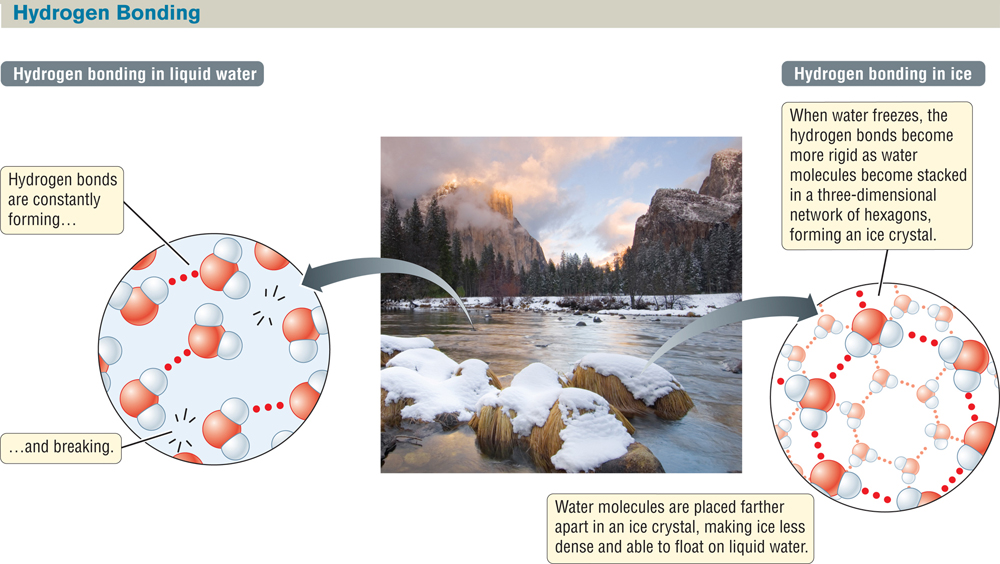
FIGURE 2.9 Hydrogen Bonding between Water Molecules
A hydrogen bond is a weak attraction between a hydrogen atom with a partial positive charge and the partially negative region of any polar molecule. In vapor form, water molecules move too rapidly, and are too far apart, to form hydrogen bonds.
Water moderates temperature swings
It takes a lot of heat energy to increase the temperature of water because a large proportion of the energy input goes toward breaking hydrogen bonds. The temperature of water—that is, the average speed of water molecules—can rise only after the hydrogen bonds are broken. For cells, the practical consequence is that it takes a relatively large amount of heat to increase the temperature of their watery contents.
Water is also a very effective heat reservoir. If air temperatures start to drop and water cools, some of the water’s stored heat is released, warming up the environment in the process. Seaside locations experience milder winters for this very reason. Cells, too, are buffered from a sharp decrease in internal temperature when external temperatures drop.
The evaporation of water has a cooling effect
When heat energy is supplied to a liquid, some molecules become energetic enough to make the transition from the liquid to the gaseous state—a phenomenon known as evaporation. In the case of water, a substantial amount of heat energy must first be invested in snapping the network of hydrogen bonds before water molecules in the liquid state can move fast enough to escape as water vapor (steam).
The evaporation of water molecules removes heat from a surface, cooling it in the process. Evaporative cooling is the lowering of temperature associated with the evaporation of liquids. The fastest molecules evaporate first because they alone have enough energy to break loose from the surface of the liquid. The departure of the high-speed molecules causes the average temperature of the remaining liquid to drop, because the molecules that stay behind are slower and therefore cooler. Sweaty humans and panting dogs are cooled when their body heat goes toward disrupting hydrogen bonds and increasing the speed of water molecules in human sweat or canine slobber.
Hydrogen bonding accounts for the cohesion of water molecules
Cohesion is the attractive force that holds atoms or molecules of the same kind to one another. Substances with high cohesion tend to stick together. The tendency of water molecules to cling to each other through hydrogen bonding generates strong cohesion. You can experience cohesion when you use a straw to drink water or soda: the liquid is pulled up in one continuous stream because all the water molecules are linked together by hydrogen bonds. This cohesive strength is also critical for the ascent of water into the canopy of tall trees.
Surface tension is an important property of water resulting from the cohesiveness of water molecules. This force tends to minimize the surface area of water at its boundary with air. Water has the highest surface tension of any liquid except mercury. The pull of hydrogen bonds generates surface tension, and this force holds the water surface taut, resisting stretching or breaking. Water’s surface tension is strong enough to support very light objects: aquatic organisms like water spiders, or a paper clip sitting on top of water in a cup filled to the brim. In the case of the spider, its long legs distribute its weight, and hydrophobic material on its legs repels water; the legs dimple the water surface without breaking through the air-water boundary (FIGURE 2.10).
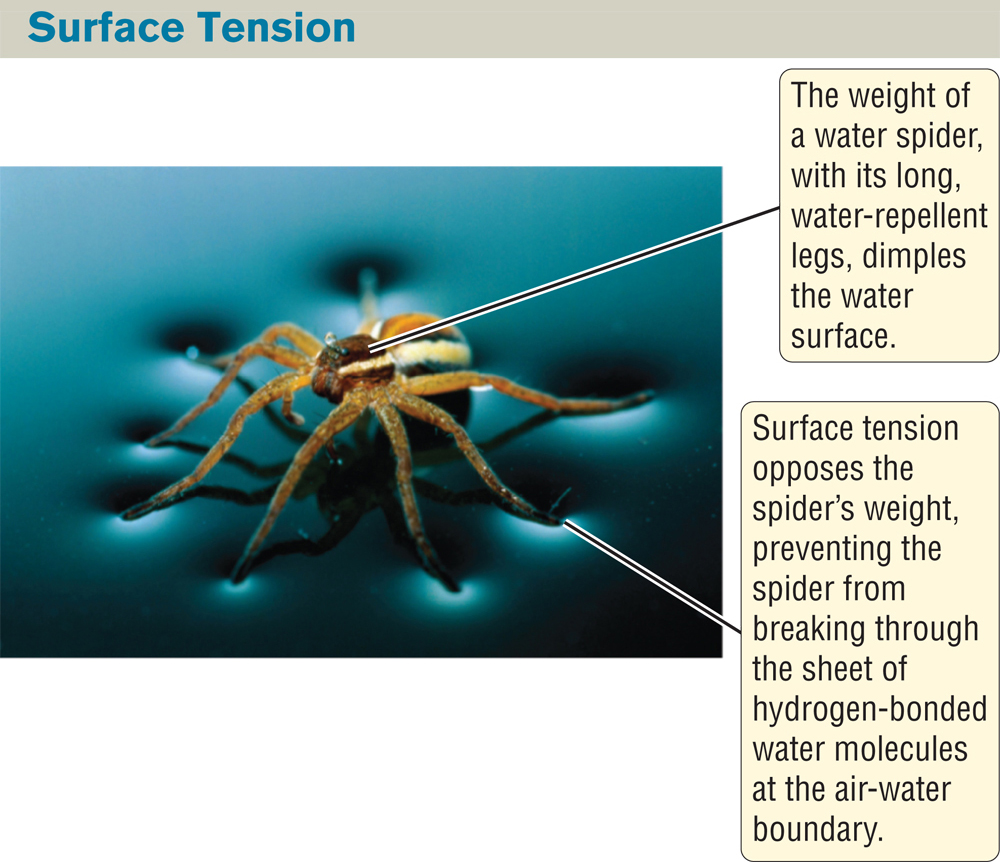
FIGURE 2.10 Hydrogen Bonding between Water Molecules Contributes to the High Surface Tension of Water
The cohesion of water molecules gives rise to surface tension, a force that resists the stretching of the water surface at any air-water boundary.
You do not feel the surface tension of water in a swimming pool if you dive in neatly, with your fingertips leading the way. But if you expose more of your body surface, as you do when you belly flop into the pool, you might feel the collective smack of the interlinked water molecules under tension at the air-water boundary.
Concept Check
1. Why don’t oil and water mix?
Oil molecules are nonpolar and therefore hydrophobic. They cannot dissolve in water because they have no electrical attraction for the polar water molecules, so they separate from water instead.
2. New York City and Pittsburgh are at the same latitude (about 40° north), but Pittsburgh is farther inland. Which one has a more moderate climate, with less difference between average midwinter and midsummer temperatures? Why?
New York City, because of its location. Large bodies of water moderate temperatures, releasing heat in the winter and absorbing it in the summer.