2.7 |
Carbohydrates |
Sugars are familiar as compounds that taste sweet. Although not all sugars are sweet-tasting, these small organic molecules are an important source of energy for nearly all organisms. Sugars and their polymers are carbohydrates. This name comes from the ratio of C, H, and O in the compounds, in which for each carbon atom (carbo) there are two hydrogens and one oxygen (corresponding to a molecule of water, a hydrate). We can define a carbohydrate as a molecule that contains carbon, hydrogen, and oxygen in a ratio of 1:2:1.
The simplest sugar molecules are called monosaccharides (mah-noh-sak-uh-ride; mono, “one”; sacchar, “sugar”). Monosaccharides are often referred to by the number of carbon atoms they contain. For example, a sugar with the general molecular formula (CH2O)5 is known as a five-carbon sugar. The more common way to express the molecular formula for this sugar is C5H10O5.
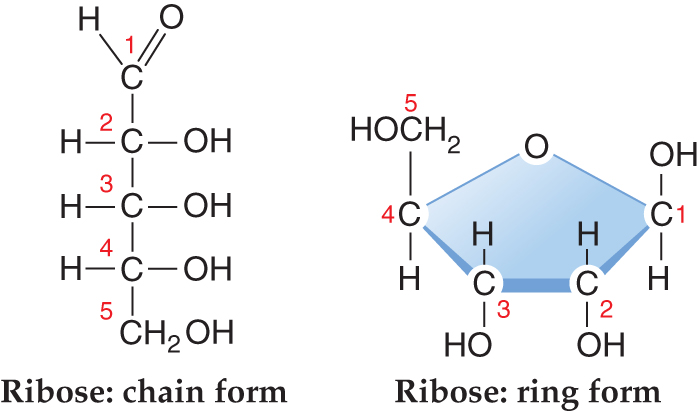
When monosaccharides with five or more carbon atoms are dissolved in water, the sugar molecules may exist in either chain form or ring form. Here are the chain and ring forms of a five-carbon sugar called ribose:
The one monosaccharide that is found in almost all cells is glucose (C6H12O6). Glucose has a key role as an energy source within the cell, and nearly all the chemical reactions that produce energy for living organisms involve the manufacture or breakdown of this sugar. Fructose, fruit sugar, has the same molecular formula as glucose (C6H12O6), but the atoms are connected in a different pattern, resulting in very different physical and chemical properties. Fructose is nearly twice as sweet as glucose, and it is widely used as a sweetener in processed foods because corn is a cheap source of the sugar.
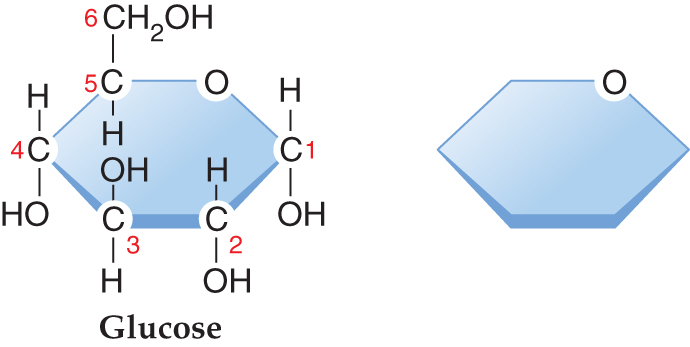
Scientists often use a shorthand notation to represent the ring form of carbon-containing molecules: the symbols for the carbon atoms, and most of the hydrogen and oxygen atoms, are left out. Here are the structural formula and shorthand notation for glucose:
Monosaccharides can combine to form larger, more complex molecules. Two covalently joined monosaccharides form a disaccharide (di, “two”). Our familiar table sugar, sucrose, is a disaccharide built by linking a molecule of glucose and a molecule of fructose, with the removal of a water molecule (FIGURE 2.13).
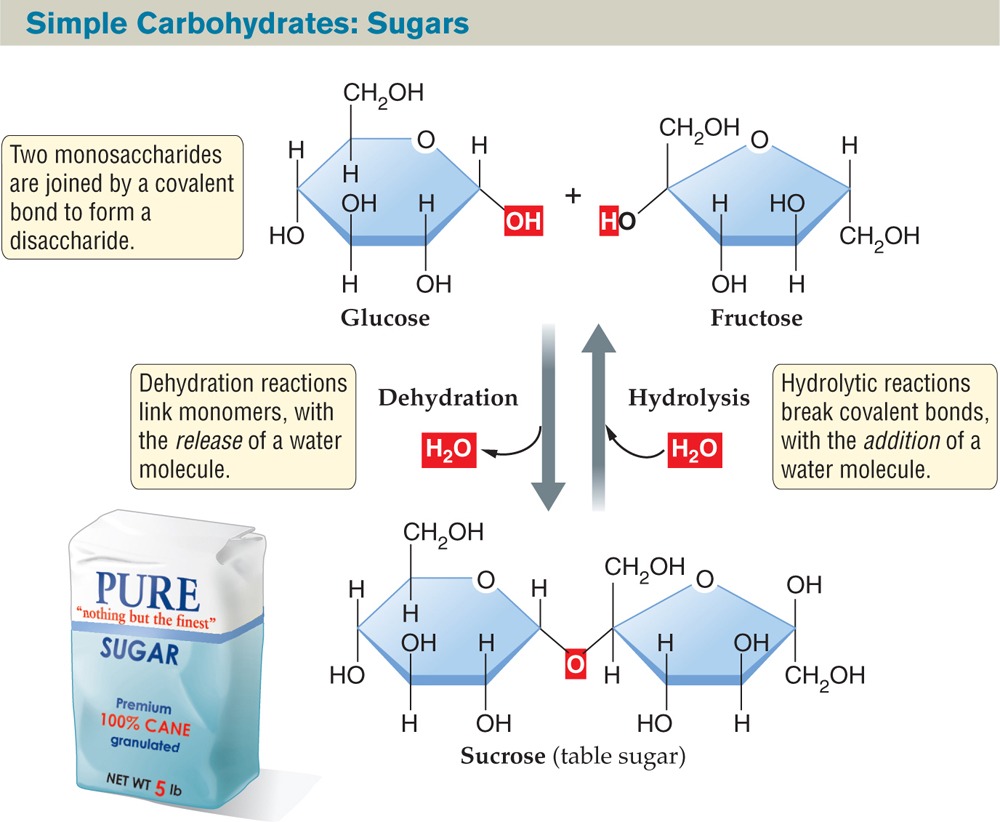
FIGURE 2.13 Monosaccharides Can Bond Together to Form Disaccharides
Glucose and fructose are sugar monomers that, when linked by a covalent bond, form the disaccharide sucrose, or table sugar.
The chemical reaction in which a water molecule is removed as a covalent bond forms is known as a dehydration reaction. The reverse reaction, in which a water molecule is added to break a covalent bond, is called a hydrolytic reaction. Sucrose is broken down in our digestive system through hydrolytic reactions, and the released monomers are absorbed by the intestinal wall and eventually delivered to the bloodstream.
Polysaccharides are large polymers built by linking many monosaccharides. Polysaccharides perform a variety of functions in living organisms (FIGURE 2.14). Cellulose, for example, is a polysaccharide that is bundled into strong parallel fibers that help support the plant body (FIGURE 2.14a). Cotton fabric, made from special cells on the surface of cotton seeds, is mostly cellulose. Carbohydrates are polysaccharides that provide metabolic energy, as we have already seen in the case of glucose. Starch—abundant in a dish of mashed potatoes or steamed rice—is a polysaccharide that serves as an energy storage molecule inside plant cells (FIGURE 2.14b).
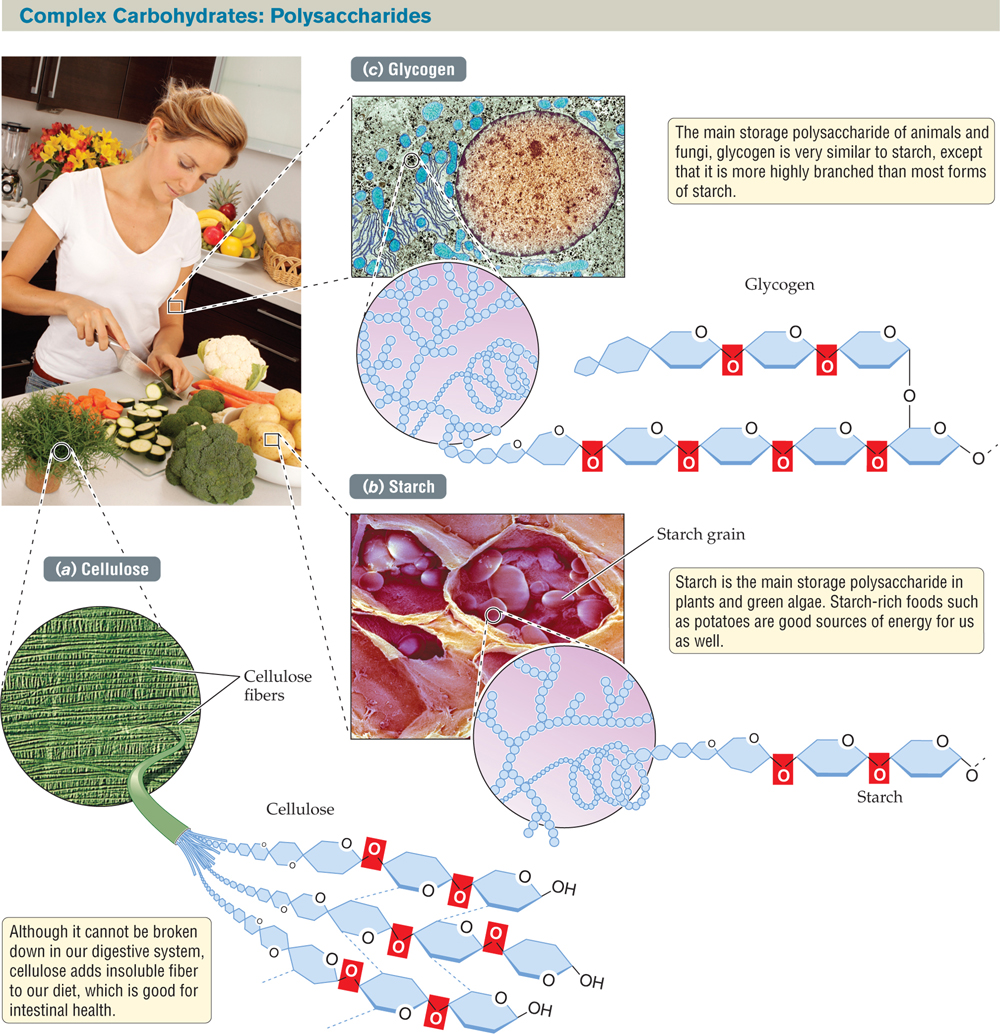
FIGURE 2.14 Monosaccharides Can Bond Together to Form Polysaccharides
Cellulose, starch, and glycogen are all polymers built from glucose subunits.

 Helpful to Know
Humans have only ~200–500 grams of glycogen, stored mainly in the liver and muscles. That’s worth 800–2,000 Calories of stored energy. About 14 hours without food, or a couple of hours of intense exercise, will use up most of the glycogen stored in a typical adult. The fatigue that results is called “hitting the wall” in the world of long-distance runners and bikers. When glycogen runs low, the body switches to “burning” stored lipids, but energy from lipid reserves is released more slowly than from glycogen reserves.
●●●
Cellulose and starch are both built from glucose, but they differ in how the monosaccharides are linked. Starch is water-soluble and easily broken down in our digestive system. Cellulose, on the other hand, is not water-soluble, which is fortunate for owners of 100 percent cotton clothes, who would literally lose their shirts in the wash otherwise. Unlike starch, cellulose cannot be broken down in the human digestive system, and only some bacteria and fungi can use it for energy.
Glycogen is the main storage polysaccharide in animal cells (FIGURE 2.14c), although, as we will see later, most of the surplus energy ingested by animals is stockpiled in the form of storage lipids (“fat”) rather than carbohydrate. The majority of the glycogen reserve in our bodies is stored inside liver cells and skeletal muscle cells.
Concept Check
1. Which atoms are found in all carbohydrates?
Hydrogen, oxygen, and carbon.
2. Which of the following is a polysaccharide and a key structural component of plant cell walls: glucose, sucrose, monosaccharide, cellulose, or glycogen?
Cellulose.