2.2 What Is Entrepreneurship?
Oprah Winfrey chose to become an entrepreneur. What does this mean? The most basic definition of entrepreneurship is the act of founding a new organization or venture. This is most often thought of as a for-profit company, though it applies to nonprofits too, such as social ventures like Grameen Bank, founded by Muhammad Yunus. However, while concise, that dictionary definition leaves out almost as much as it captures and needs to be expanded in two important ways:
- An entrepreneur does not build a new company for its own sake; instead, the very act of founding a new business means that entrepreneurship involves recognizing and actively pursuing an “opportunity” or “idea.” In the same way, many individuals (and companies) pursue new opportunities without establishing new businesses.
- Entrepreneurship means building a new organization and attracting new resources (or building new capabilities) to pursue a new opportunity.
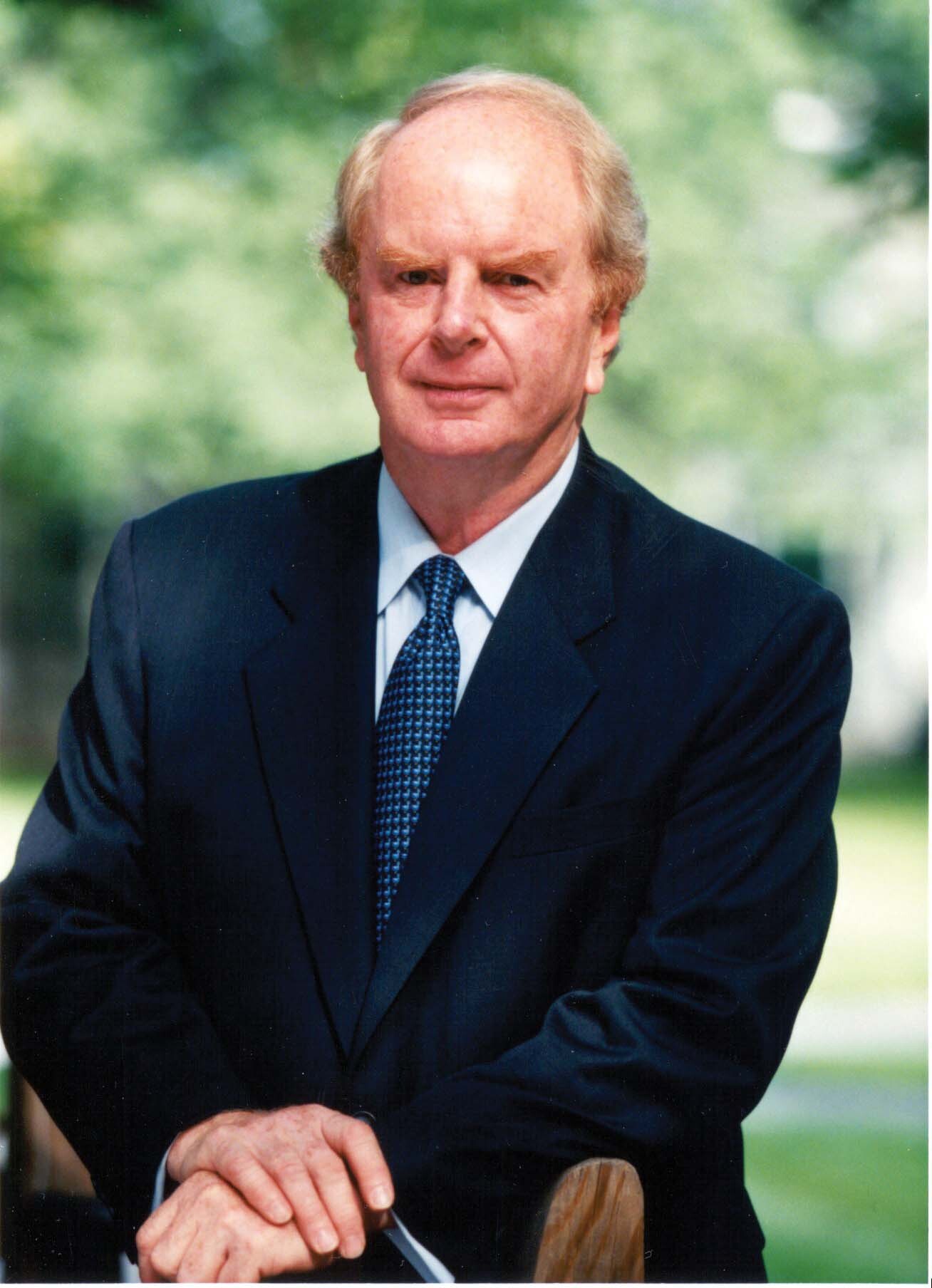
FIGURE 2.4 Howard Stevenson
More information
Harvard professor Howard Stevenson. He poses for the camera in an outdoor setting, wearing a dark blue suit.
Howard Stevenson, a Harvard professor for almost 30 years, has been described as Harvard Business School’s “lion of entrepreneurship.” One of his students, Frank Batten, went on to create The Weather Channel. Stevenson founded his own investment firm and also served as chair of the board of directors of National Public Radio.
Howard Stevenson (Figure 2.4), who jump-started the study of entrepreneurship in the 1980s while teaching at Harvard Business School, succinctly captured these two elements at that time, writing, “Entrepreneurship is the pursuit of opportunity beyond resources currently controlled.”10 Let’s now turn to a slightly different way of describing this, using the ideas of value creation and value capture we saw in Chapter 1.
VALUE CREATION AND VALUE CAPTURE
Simply establishing a new enterprise is not enough. As we saw in Chapter 1, successful entrepreneurship requires value creation—some customers must be made better off by the product, service, or platform you are building. Then, the most direct test of whether consumers are made better off by a product or service is whether they are willing to pay a price more than your costs. Further, thinking about new ideas for businesses or undertaking a particular program of scientific or engineering research does not, by itself, constitute entrepreneurship; instead, successful entrepreneurship ultimately involves serving a (paying) customer and creating value for them. Oprah Winfrey became an entrepreneur when her new studio launched her talk show, creating value for television stations and viewers. In another example, as part of his academic research, Professor J. Robert Cade, a physician and professor of renal medicine at the University of Florida, first formulated and experimented with an electrolyte-rich solution to see if the Florida Gators football team could be hydrated more effectively. Choosing to found a firm selling what came to be called Gatorade created value for professional and amateur athletes and made him an entrepreneur.11
Successful entrepreneurship also involves value capture—the ability to realize personal value (financial and otherwise) from establishing and operating a new enterprise. Value capture is usually measured by profitability—receiving higher revenues from customers than the total costs of serving them. Capturing value means that businesses must create value in a way that cannot easily (or quickly) be imitated (or improved upon) by potential competitors. And because value capture is necessary for the company to survive in the long term (otherwise the firm will go bankrupt!), the economic return to a venture is more than simply its level of sales; to use the words of an old business joke, a venture cannot simply “lose money on each unit but make it up on volume!” (See the sidebar on Uber.)

More information
Uber C E O Dara Khosrowshahi. He is standing at a podium and giving a talk to an unseen audience. The Uber logo appears behind him.
Uber. Many businesses seem to start with the model of losing money on each unit but making up for it on volume, and they work with it for a long time. One business writer quipped that Uber, for example, was doing just that.a The company is still losing money as of 2023, though CEO Dara Khosrowshahi recently said, “I challenged the team to meet our profitability commitments even faster than planned.”b
The ultimate test of the financial success of a venture is not how much investment (e.g., venture capital; see Chapter 14 for more information) goes into a company but the economic return to the founders, investors, and other stakeholders that results from those investments. The most iconic businesspeople in history, such as John D. Rockefeller, Coco Chanel, or Bill Gates, not only established new industries and built large companies, but did so in a way that was enormously profitable in the long term. Their entrepreneurial journeys began with unique insights into how to create value for consumers and, equally significant, clarity about the resources and advantages they possessed to deliver and capture value on a sustainable basis. Consider their words:
“The secret to success is to do things uncommonly well.”
“Fashion changes, but style endures.”
“In business, the idea of measuring what you are doing, picking the measurements that count, like customer satisfaction and performance . . . you thrive on that.”
PERSONAL CONTROL
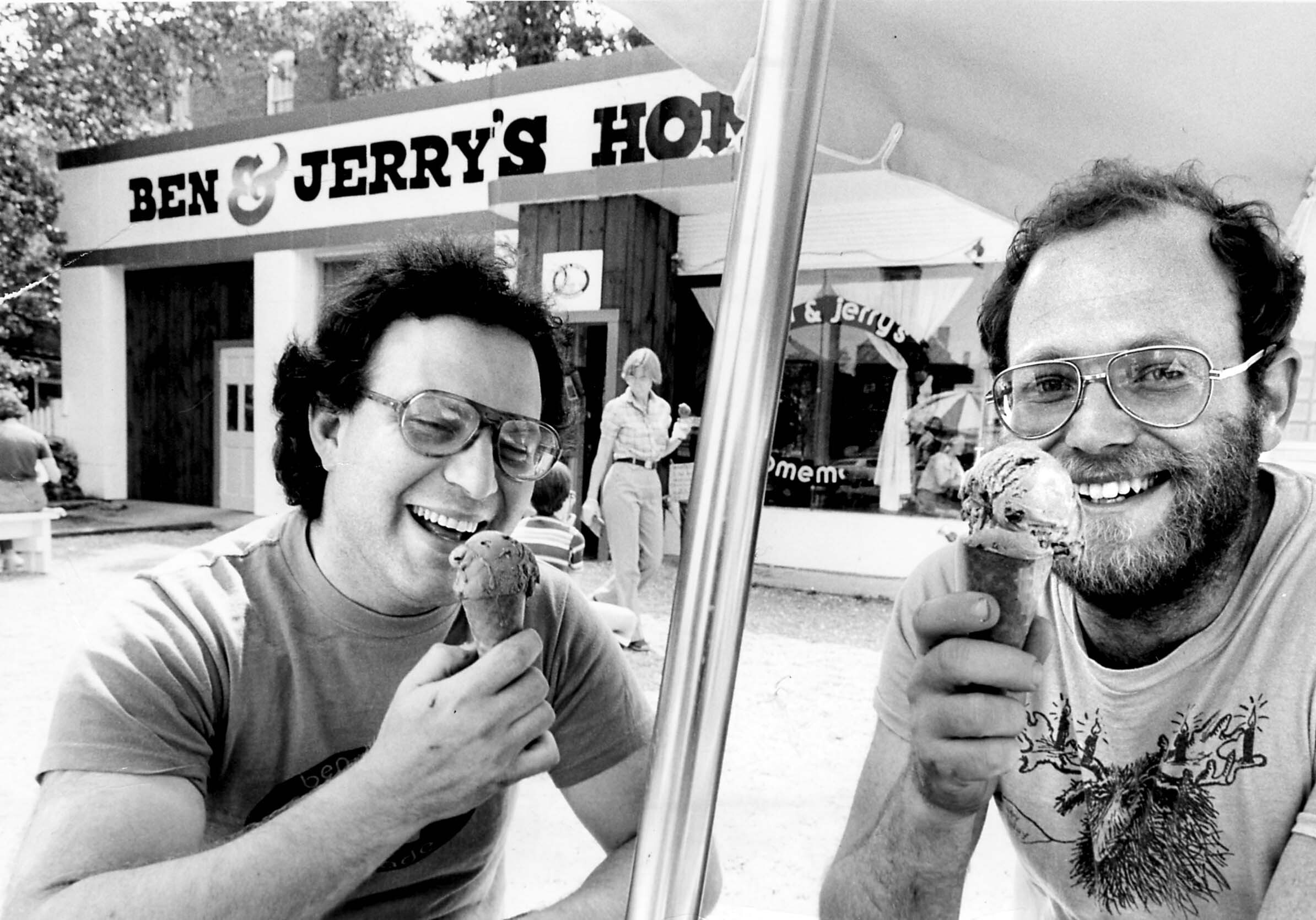
A distinctive aspect of entrepreneurship is that founding a new business lets an individual exercise significant control over the core choices of how to create and capture value. Relative to working for a company, entrepreneurs can choose which broad idea to pursue, customer segment to prioritize, or innovation to leverage. For instance, no one instructed Ben Cohen and Jerry Greenfield to make tasty ice cream. Instead, they pursued a personal passion for ice cream making by establishing a company and creating a new category in the ice cream market (see the sidebar on Ben & Jerry’s). Similarly, Anita Roddick had a vision for ethically sourced cosmetics developed without animal testing. Rather than trying to work from within a larger cosmetics business, she pursued that vision as well as her passion for environmental sustainability by founding and building her own company, The Body Shop. Control over their ventures let these founders create and capture value in ways that realized their unique visions and were true to their passions and personal values.
More information
A black and white photo of Ben Cohen and Jerry Greenfield. The photo shows the founders of Ben and Jerry’s as young men, enjoying single-scoop cones while seated under a sun umbrella at a table in front of one of their stores.
Ben & Jerry’s. Ben Cohen (right) and Jerry Greenfield built their business with their personal passions in mind. Cohen, who had severe anosmia (a lack of the sense of smell), was very sensitive to texture and taste. This spurred the idea to make ice cream with chunks included and a variety of flavors. Starting with an ice cream parlor in Vermont in 1978, Cohen and Greenfield eventually started packing their ice cream in pints and franchised their stores. They were innovative in their marketing tactics, offering an annual free ice cream day and driving a famous “cowmobile” across the country themselves. Throughout, they modeled their business to reflect various environmental causes and made that a part of their brand. They also produced flavors in honor of celebrities, including the Grateful Dead’s Jerry Garcia (“Cherry Garcia”), basketball player Jeremy Lin (“Taste the Lin-Sanity”), and Stephen Colbert (“Americone Dream”). The company was acquired by British food giant Unilever in 2000 with a requirement to continue Ben & Jerry’s social mission.
While entrepreneurs exercise significant control over their venture, they are similarly responsible (at least at the outset) for all the different tasks associated with that venture. Most workers with traditional jobs are highly specialized, with jobs that cross only a small number of functional areas. A programmer at Microsoft is not directly responsible for the latest ad campaign, nor does the marketing team have to have deep expertise in programming. However, at the beginning, entrepreneurs must create value for customers with the assistance of only a limited set of people. An early test for an entrepreneurial team is whether they can manage a wide range of disparate activities (serving more like jacks-of-all-trades) rather than mine the depth of their expertise in any one area.
Entrepreneurship thus combines several distinctive elements. However, to realize the value and confront the challenges of entrepreneurship, the first choice that an individual (or team) must make is whether to pursue entrepreneurship in the first place. While the success or failure of a venture depends on more than just the founders, the entrepreneur is nonetheless responsible for the critical choices that shape value creation and capture and overall direction. But the first step in that entrepreneurial journey is simply the decision to choose entrepreneurship. We will turn to this choice next.
Glossary
- value creation
- Making customers better off via the product, platform, or service that is offered
- value capture
- The ability to realize personal value (financial and otherwise) from establishing and operating a new enterprise
Endnotes
- Tom Eisenmann, “Entrepreneurship: A Working Definition,” Harvard Business Review, January 10, 2013, https://hbr.org/2013/01/what-is-entrepreneurship#:~:text=It%20was%20formulated%20by%20Professor,a%20short%20window%20of%20opportunity; and Peter Cohan, “Harvard’s Lion of Entrepreneurship Packs Up His Office,” Forbes, June 15, 2011, https://www.forbes.com/sites/petercohan/2011/06/15/harvards-lion-of-entrepreneurship-packs-up-his-office/?sh=440893554e89. Return to reference 10
- Daniel Roberts and Kacy Burdette, “The History of an Iconic Sports Beverage: Gatorade Turns 50,” Fortune, October 1, 2015, https://fortune.com/2015/10/01/gatorade-turns-50. Return to reference 11
- Josh Barro, “Uber’s Plan to Lose Money on Each Transaction and Make It Up in Volume, Annotated,” New York, April 26, 2019, https://nymag.com/intelligencer/2019/04/ubers-plan-to-lose-money-on-each-ride-make-it-up-in-volume.html. Return to reference a
- Kellen Browning, “Uber Posts Record Revenue but Loses More Money from Investments,” New York Times, August 2, 2022, https://www.nytimes.com/2022/08/02/business/uber-quarterly-earnings.html. Return to reference b