What Is Globalization, and Why Is It Important for Anthropology?
The term globalization refers to the worldwide intensification of interactions and increased movement of money, people, goods, and ideas within and across national borders. Growing integration of the global economy has driven the rapid globalization of the past fifty years. Corporations have relocated factories halfway around the world. People are crossing borders legally and illegally in search of work. Goods, services, and ideas are flowing along high-speed transportation and communication networks. People, organizations, and nations are being drawn into closer connection.
Globalization is not an entirely new phenomenon. Intensification of global interaction occurred in earlier eras as breakthroughs in communication and transportation brought the world’s people into closer contact. The present period of globalization, however, has brought a level of interaction previously unknown.
Globalization has not resulted in the broad improvements to local communities originally imagined by its proponents. As we will see in Chapter 10, The Global Economy, the economic expansion and growth associated with globalization has also created significant global economic inequalities as billions of people are left out of these advances. At the same time, as we will see in Chapter 12, Politics and Power, key characteristics of globalization, particularly innovations in communication and transportation, enable grassroots social and non-governmental movements to build networks and coalitions across national boundaries to address problems created by economic globalization.
GLOBALIZATION AND ANTHROPOLOGY
Globalization and anthropology have always been intricately intertwined. As we have noted, the field of anthropology emerged in the mid-nineteenth century during an earlier era of globalization. At that time, technological inventions in transportation and communication enabled a period of colonial encounter, the slave trade, and the emerging capitalist economic system while facilitating deeper interactions of people across cultures. Early anthropologists sought to organize the vast quantity of information being accumulated about people across the globe. Unlike most contemporary anthropologists who conduct research in the field, however, they did so primarily from the comfort of their own homes and meeting halls.
Today, another era of even more dynamic globalization is transforming the lives of the people whom anthropologists study in every part of the world. And, as we will see throughout this book, it is also transforming the ways anthropologists conduct research and communicate their findings. To understand these sweeping changes, we must understand the key dynamics of globalization at play in the world today (Inda and Rosaldo 2002; Kearney 1995; Lewellen 2002; Trouillot 2003).
GLOBALIZATION: KEY DYNAMICS
Globalization today is characterized by several key dynamics: time-space compression, flexible accumulation, increasing migration, and uneven development, all of which are happening at an accelerating pace. These dynamics are reshaping the ways humans adapt to the natural world, and the ways the natural world is adapting to us.
Time-Space Compression. Time-Space Compression. According to the theory of time-space compression, the rapid innovation of communication and transportation technologies has transformed the way we think about space (distances) and time. Jet travel, supertankers, superhighways, high-speed railways, telephones, computers, the Internet, digital cameras, and cell phones have condensed time and space, changing our sense of how long it takes to do something and how far away someplace or someone is. The world no longer seems as big as it used to.
Consider these examples of a changing sense of time. Today we can fly from New York to Paris in eight hours or from Los Angeles to Hong Kong in twelve. A letter that once took ten days to send from Texas to Kenya can now be attached as a PDF and emailed with a few clicks of a mouse. We instant message, text message, Skype, videoconference, Snapchat, and FaceTime. These kinds of changes have transformed not only how long it takes us to do something, but also how quickly we expect other people to do things. For example, how much time do you have to respond to an email or a text message before someone thinks you are rude or irresponsible?
Flexible Accumulation. A second characteristic of today’s globalization, flexible accumulation, reflects the fact that advances in transportation and communication have enabled companies to move their production facilities and activities around the world in search of cheaper labor, lower taxes, and fewer environmental regulations—in other words, to be increasingly flexible about the way they accumulate profits (see Chapter 10). Companies in developed countries move their factories to export-processing zones in the developing world, a process called offshoring. Other corporations shift part of their work to employees in other parts of the world, a process called outsourcing. For example, General Motors used to make all of its automobiles in Flint, Michigan, but now the company has factories in Mexico, Brazil, China, and Thailand. Walmart, once known for its advertising campaign “Made in America,” now has 7,000 factories in China.
Other examples span the globe as well: Phone and computer companies hire English-speaking operators and technicians in Manila, the Philippines, to answer customers’ questions called in on 800 numbers. A company based in Sierre Leone, West Africa, processes traffic tickets issued in New York City. X-rays, CT scans, and MRIs taken in Colorado may be read and interpreted by doctors in Bangalore, India. Clearly, flexible accumulation allows corporations to maximize profits, while time-space compression enables the efficient management of global networks and distribution systems (Harvey 1990).
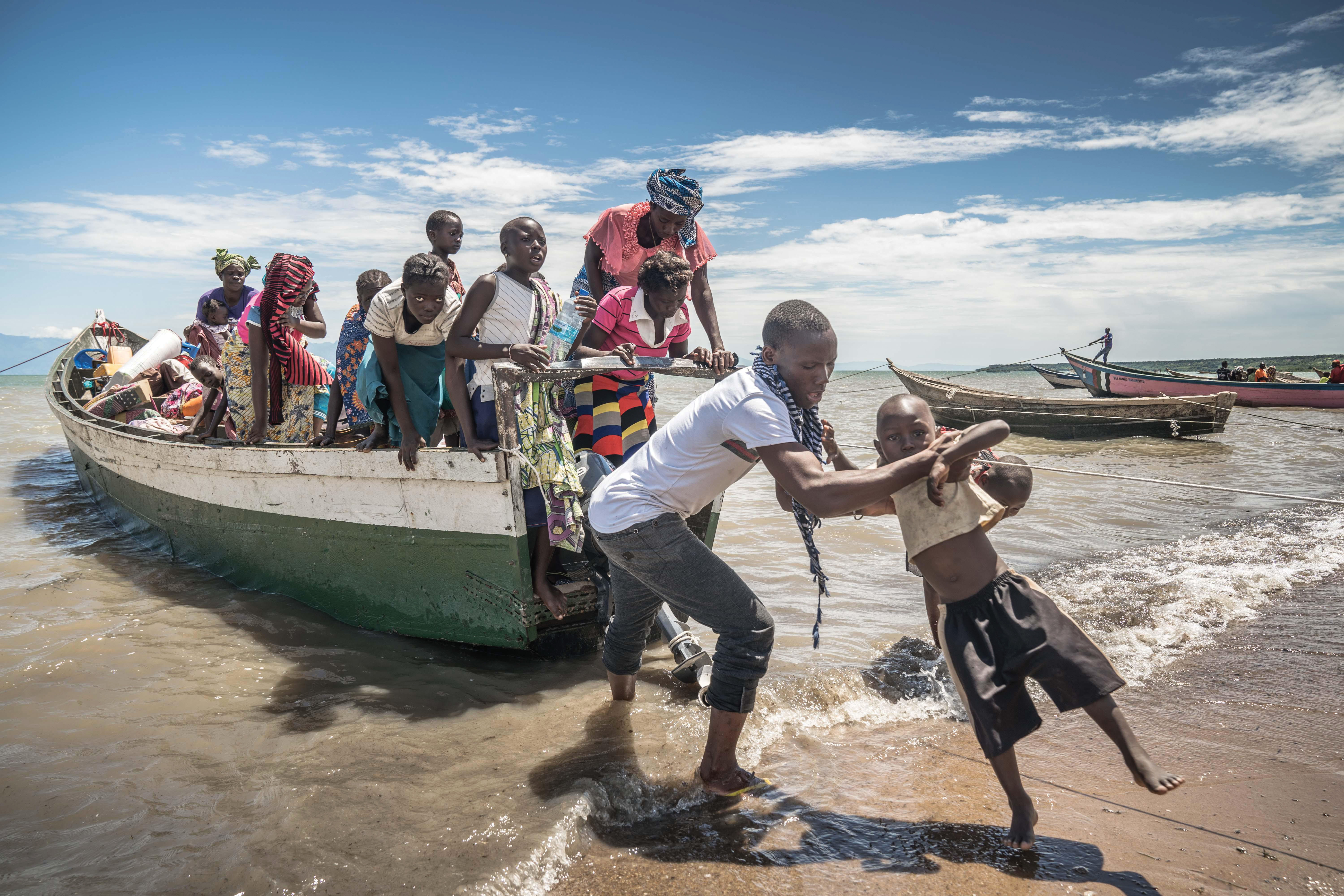
Increasing Migration. A third characteristic of globalization is increasing migration, the accelerated movement of people both within countries and between countries. In fact, recent globalization has spurred the international migration of more than 258 million people, 50 million of them to the United States alone (see Chapter 10) (United Nations Department of Economic and Social Affairs, Population Division 2017). An estimated 700 million more are internal migrants within their own countries, usually moving from rural to urban areas in search of work (International Organization for Migration 2018). The Chinese government counts nearly 245 million internal migrants floating in China’s cities, drawn by construction projects, service jobs, and export-oriented factories (Liang, Li, and Ma 2014; Chang 2017).
In countries from Pakistan to Kenya to Peru, rural workers migrate to urban areas seeking to improve their lives and the lives of their families back home. This movement of people within and across national borders is stretching human relationships and interactions across space and time. Immigrants send money home, call and email friends and family, and sometimes even travel back and forth. Migration is building connections between distant parts of the world, replacing face-to-face interactions with more remote encounters and potentially reducing the hold of the local environment over people’s lives and imaginations.
More information
Globalization has accelerated the movement of people within countries and between countries. Here, Congolese refugees arrive on the coast of Lake Albert in Uganda in 2018.
Uneven Development. Globalization is also characterized by uneven development. Although many people associate globalization with rapid economic development and progress, globalization has not brought equal benefits to the world’s people. Some travel the globe for business or pleasure; others are limited to more local forms of transportation. Although 3.9 billion people now have Internet access, the distribution is uneven. Three and a half billion people in developing countries remain offline, representing more than half of their population. And only 19.5 percent of the one billion people living in the least-developed countries have Internet access. Europe, North America, and Asia account for the vast majority of high-tech consumption, while areas of Africa are marginalized and excluded from the globalization process (International Telecommunication Union 2018). Such uneven development and uneven access to the benefits of globalization reflect the negative side of changes in the world today.
Although the global economy is creating extreme wealth, it is also creating extreme poverty. Fully half of the world’s population continues to live in poverty. And nearly 700 million people live in extreme poverty, surviving on less than $1.90 each day (World Bank 2019). Even in the United States, the wealthiest country in the world, 40 million people, including 12 million children, experience food insecurity (United States Department of Agriculture 2018). In Chapter 10, we will explore the possibility that the rapid growth seen in globalization actually depends on uneven development—extracting the resources of some to fuel the success of others.
GLOBALIZATION AND THE ENVIRONMENT
Modern humans and our ancestors have been adapting to changes in the environment for millions of years. In fact, perhaps our most distinctive characteristic is our ability to adapt—to figure out how to survive and thrive in a world that is swiftly changing. Change has been a constant. So has human adaptation, both biological and cultural.
Our species has successfully adapted genetically to changes in the natural environment over millions of years. We walk upright on two legs. We have binocular vision and see in color. We have opposable thumbs for grasping. Our bodies also adapt temporarily to changes in the environment on a daily basis. We sweat to keep cool in the heat, tan to block out the sun’s ultraviolet rays, shiver to generate warmth in the cold, and breathe rapidly to take in more oxygen at high altitudes.
As our ancestors evolved and developed greater brain capacity, they invented cultural adaptations—tools, the controlled use of fire, and weapons—to navigate the natural environment. Today, our use of culture to adapt to the world around us is incredibly sophisticated. In the United States, we like our air conditioners on a hot July afternoon and our radiators in the winter. Oxygen masks deploy for us in sky-high airplanes, and sunscreen protects us against sunburn and skin cancer. These are just a few familiar examples of adaptations our culture has made. Looking more broadly, the worldwide diversity of human culture itself is a testimony to human flexibility and adaptability to particular environments.
Shaping the Natural World. To say that humans adapt to the natural world is only part of the story. Humans actively shape the natural world as well. Humans have planted, grazed, paved, excavated, and built on at least 40 percent of Earth’s surface. Our activities have caused profound changes in the atmosphere, soil, and oceans. Human impact on the planet is so extensive that scholars in many disciplines have come to refer to the current historical period as the Anthropocene—a distinct era in which human activity is reshaping the planet in permanent ways. Whereas our ancestors struggled to adapt to the uncertainties of heat, cold, solar radiation, disease, natural disasters, famines, and droughts, today we confront changes and social forces that we ourselves have set in motion. These include climate change, global warming, water scarcity, overpopulation, extreme poverty, biological weapons, and nuclear missiles. They pose the greatest risks to human survival. As globalization accelerates, it escalates the human impact on the planet.
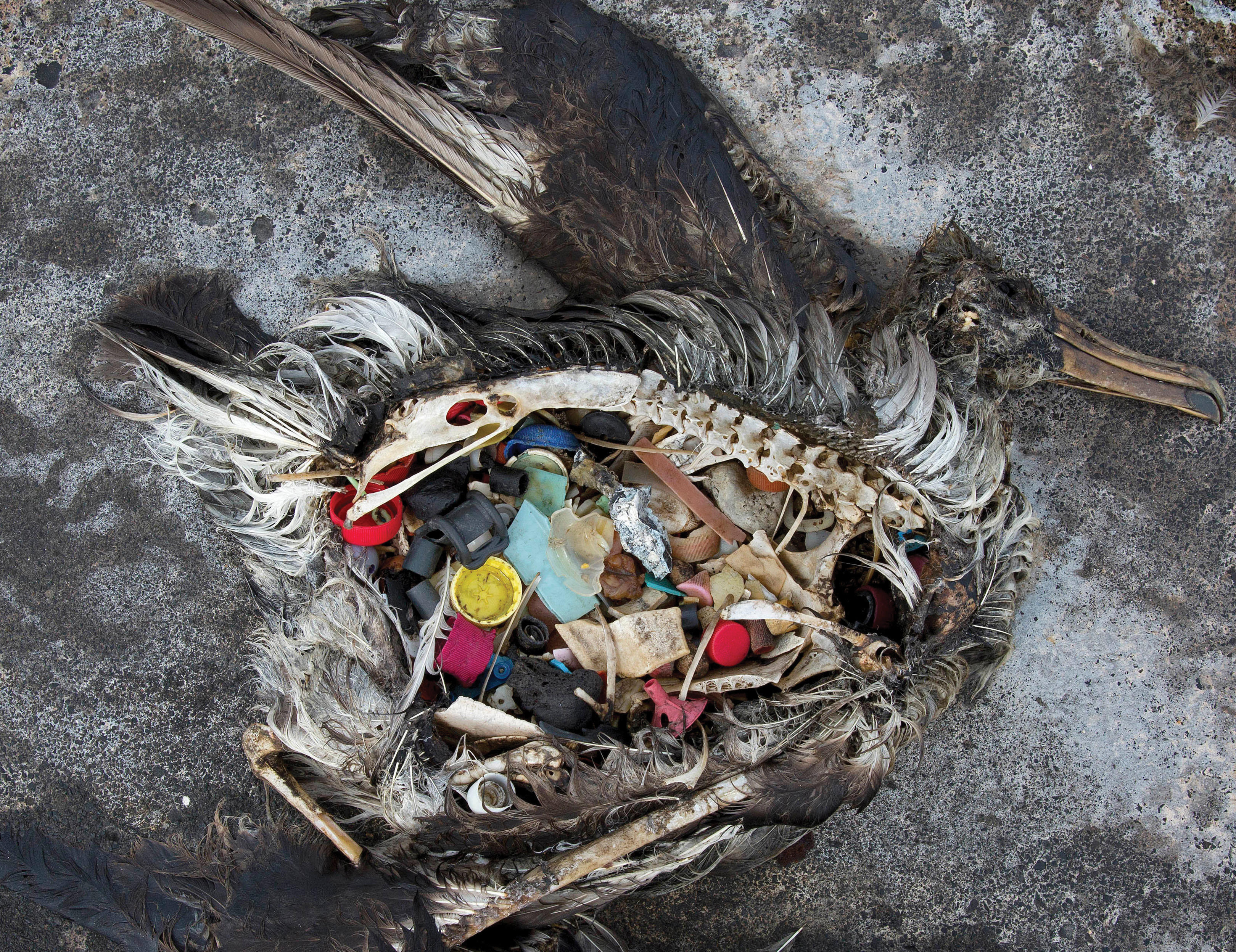
As we will explore further in Chapter 11, Environment and Sustainability, human activity already threatens the world’s ecological balance. We do not need to wait to see the effects. For instance, population growth and consumption patterns have placed incredible stress on Earth’s water resources, both fresh water and saltwater. The struggle to gain access to the fresh water in lakes, rivers, and aquifers can be a source of conflict. Private companies are buying up rights to water in many countries, and bottled water sales have grown to a $300 billion global business. The seemingly vast oceans are also experiencing significant distress. In the middle of the Pacific Ocean sits a floating island of plastic the size of Texas, caught in an intersection of ocean currents. The plastic originates mainly from consumers in Asia and North America. Pollution from garbage, sewage, and agricultural fertilizer runoff, combined with overfishing, rising water temperatures and increasing acidity caused by carbon dioxide, have caused a 50 percent decline in marine populations over the past 50 years (World Wildlife Fund 2015). These sobering realities are characteristic of today’s global age and the impacts of increasing globalization.
More information
Actual stomach contents of a baby albatross on the remote north Pacific Midway Atoll, 2,000 miles from the nearest continent. Thousands die as their parents feed them lethal quantities of floating plastic trash that they mistake for food as they forage over the polluted Pacific Ocean.
Humans and Climate Change. Human activity is also producing accelerating climate change. Driven by the increase of greenhouse gases in the atmosphere, largely from the burning of fossil fuels, global warming is already reshaping the physical world and threatening to radically change much of modern human civilization. Scientists predict a rise in average global temperatures of between 2.5 and 10 degrees Fahrenheit by 2100 (Intergovernmental Panel on Climate Change 2018). Changing weather patterns have already begun to alter agricultural patterns and crop yields. Global warming has spurred rapid melting of polar ice and glaciers, well before most scientists had predicted, and the pace is increasing.
Melting glaciers mean rising sea levels. Given the current speed of melting, a one- to four-foot sea level rise by 2100 is entirely possible (National Aeronautics and Space Administration 2015). Half of the world’s population lives within fifty miles of the coast, so the implications are enormous—especially in low-lying delta regions. Bangladesh, home to more than 150 million people, will be largely underwater. Miami—parts of which already flood during heavy rainstorms—will have an ocean on both sides. Should all the glacier ice on Greenland melt, sea levels would rise an estimated twenty-three feet. How will the planet cope with the growth of the human population from 7.7 billion in 2020 to more than 9.8 billion in 2050? Our ancestors have successfully adapted to the natural world around us for millions of years, but human activity and technological innovation now threaten to overwhelm the natural world beyond its ability to adapt to us.
Glossary
- globalization
- The worldwide intensification of interactions and increased movement of money, people, goods, and ideas within and across national borders.
- time-space compression
- The rapid innovation of communication and transportation technologies associated with globalization that transforms the way people think about space (distances) and time.
- flexible accumulation
- The flexible strategies that corporations use to accumulate profits in an era of globalization, enabled by innovative communication and transportation technologies.
- increasing migration
- The accelerated movement of people within and between countries.
- uneven development
- The unequal distribution of the benefits of globalization.
- Anthropocene
- The current historical era in which human activity is reshaping the planet in permanent ways.
- climate change
- Changes to Earth’s climate, including global warming produced primarily by increasing concentrations of greenhouse gases created by the burning of fossil fuels.