How Is Anthropology Changing Today?
The field of anthropology has changed significantly in the past forty years as the world has been transformed by globalization. Just as the local cultures and communities we study are changing in response to these forces, our focus and strategies must also change.
CHANGING COMMUNITIES
Globalization is changing the communities we study. Today vulnerable people and cultures are encountering powerful economic forces that are reshaping family, gender roles, ethnicity, sexuality, love, and work patterns. Debates over the effects of globalization on local cultures and communities are intense. Critics of globalization warn of the dangers of homogenization and the loss of traditional local cultures as products marketed by global companies flood into local communities. (Many of these brands originate in Western countries, including Coca-Cola, Microsoft, McDonald’s, Levi’s, Disney, Walmart, CNN, and Hollywood.) Yet globalization’s proponents note the new exposure to diversity that is now available to people worldwide, opening possibilities for personal choice that were previously unimaginable. As with the case of coltan mining in Congo—and as we will see throughout this book—although global forces are increasingly affecting local communities, local communities are also actively working to reshape encounters with globalization to their own benefit: fighting detrimental changes, negotiating better terms of engagement, and embracing new opportunities.
CHANGING RESEARCH STRATEGIES
Anthropologists are also changing research strategies to reflect the transformations affecting the communities we study (see Chapter 3). Today it is impossible to study a local community without considering the global forces that affect it. Thus, anthropologists are engaging in more multi-sited ethnographies, comparing communities linked, for instance, by migration, production, or communication. My own research is a case in point.
Multisited Ethnography: China and New York. When I began my fieldwork in New York City’s Chinatown in 1997, I anticipated conducting a year-long study of Chinese immigrant religious communities—Christian, Buddhist, and Daoist—and their role in the lives of new immigrants. I soon realized, however, that I did not understand why tens of thousands of immigrants from Fuzhou, China, were taking such great risks—some hiring human smugglers at enormous cost—to come and work in low-paying jobs in restaurants, garment shops, construction trades, and nail salons. To figure out why so many were leaving China, one summer I followed their immigrant journey back home.
More information
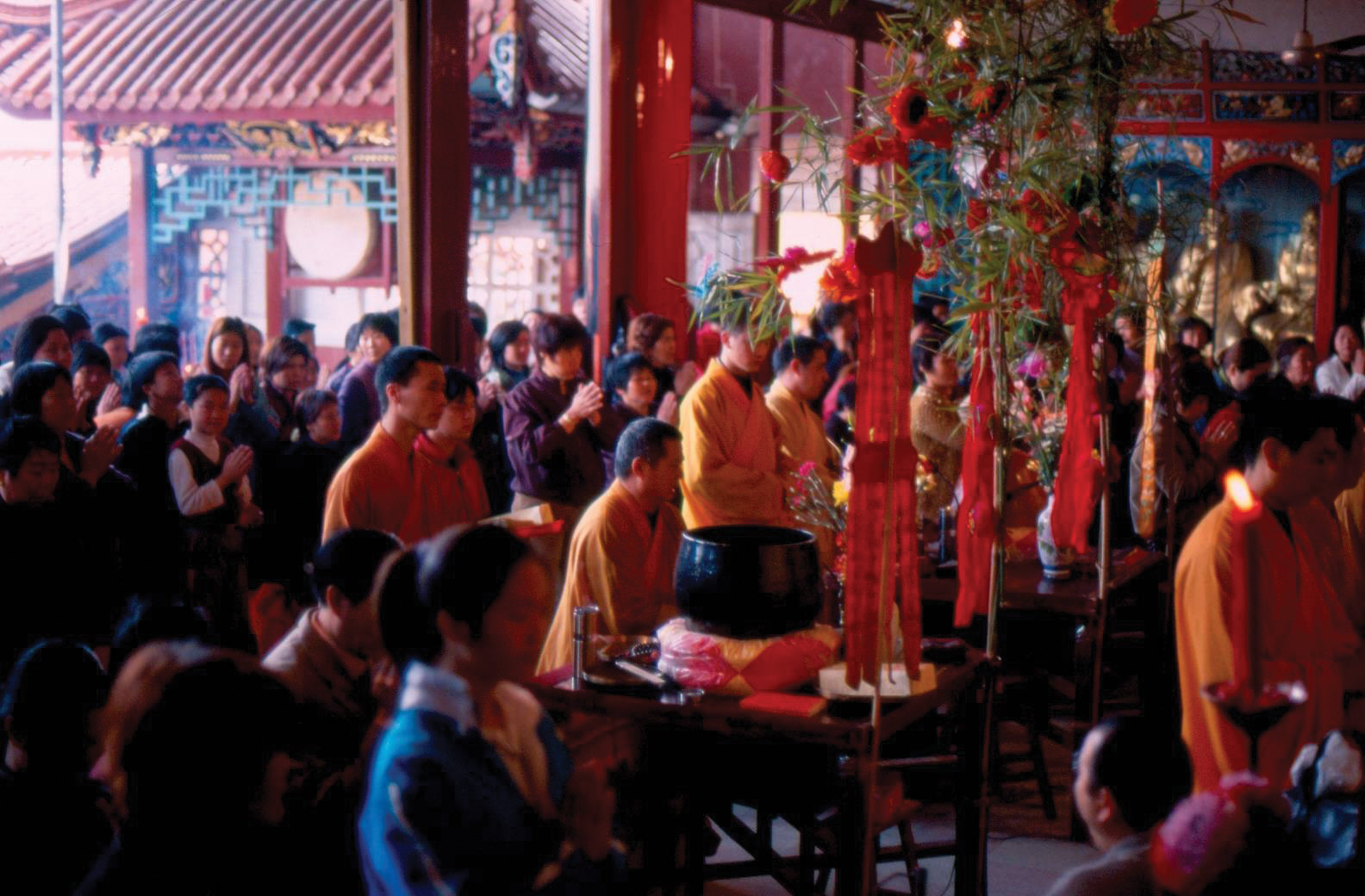
Rural Fuzhou villagers worship at a Chinese temple constructed with funds sent home by community members working in the United States.
More information
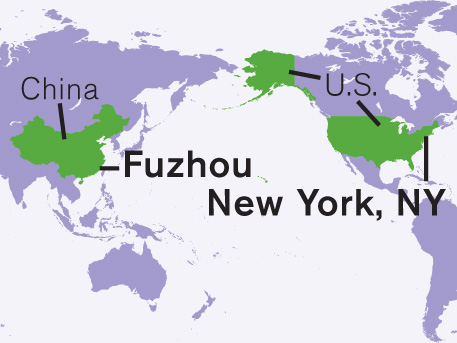
MAP 1.2
Fuzhou/New York
I boarded a plane from New York to Hong Kong and on to Fuzhou, the capital of Fujian Province on China’s southeast coast. From Fuzhou, I took a local bus to a small town at the end of the line. A ferry carried me across a river to a three-wheeled motor taxi that transported me across dirt roads to the main square of a rural fishing village at the foot of a small mountain. I began to hike up the slope and finally caught a ride on a motorcycle to my destination.
Back in New York, I had met the master of a temple, an immigrant from Fuzhou who was raising money from other immigrant workers to rebuild their temple in China. He had invited me to visit their hometown and participate in a temple festival. Now, finally arriving at the temple after a transcontinental journey, I was greeted by hundreds of pilgrims from neighboring towns and villages. “What are you doing here?” one asked. When I told them that I was an anthropologist from the United States, that I had met some of their fellow villagers in New York, and that I had come to learn about their village, they began to laugh. “Go back to New York!” they said. “Most of our village is there already, not here in this little place.” Then we all laughed together, acknowledging the irony of my traveling to China when they wanted to go to New York—but also marveling at the remarkable connection built across the 10,000 miles between this little village and one of the most urban metropolises in the world.
Over the years, I have made many trips back to the villages around Fuzhou. My research experiences have brought to life the ways in which globalization is transforming the world and the practice of anthropology. Today, 70 percent of the village population resides in the United States, but the villagers live out time-space compression as they continue to build strong ties between New York and China. They travel back and forth. They build temples, roads, and schools back home. They transfer money by wire. They call, text, Skype, and post videos online. They send children back to China to be raised by grandparents in the village. Parents in New York watch their children play in the village using webcams and the Internet.
Back home, local factories built by global corporations produce toys for Disney and McDonald’s and Mardi Gras beads for the city of New Orleans. The local jobs provide employment alternatives, but they have not replaced migration out of China as the best option for improving local lives.
These changes are happening incredibly rapidly, transforming people’s lives and communities on opposite sides of the world. But globalization brings uneven benefits that break down along lines of ethnicity, gender, age, language, legal status, kinship, and class. These disparities give rise to issues that we will address in depth throughout this book. Such changes mean that I as an anthropologist have to adjust my own fieldwork to span my subjects’ entire reality, a reality that now encompasses a village in China, the metropolis of New York City, and many people and places in between (Guest 2003, 2011). And as you will discover throughout this book, other anthropologists are likewise adapting their strategies to meet the challenges of globalization. Learning to think like an anthropologist will enable you to better navigate our increasingly interconnected world.