How Are Culture and Power Related?
For many years, anthropologists focused primarily on culture as a system of ideas, as represented in the section you have just read. But more recent scholarship has pushed anthropology to consider the deep interconnections between culture and power in more sophisticated ways (Foucault 1977; Gramsci 1971; Wolf 1982), and the chapters of this book take this challenge seriously.
Power is often described as the ability or potential to bring about change through action or influence, either one’s own or that of a group or institution. This may include the ability to influence through force or the threat of force. Power is embedded in many kinds of social relations, from interpersonal relations, to institutions, to structural frameworks of whole societies. In effect, power is everywhere and individuals participate in systems of power in complex ways. Throughout this book we will work to unmask the dynamics of power embedded in culture, including systems of power such as race and racism, ethnicity and nationalism, gender, human sexuality, economics, and family.
Anthropologist Eric Wolf (1923–1999) urged anthropologists to see power as an aspect of all human relationships. Consider the relationships in your own life: teacher/student, parent/child, employer/employee, landlord/tenant, lender/borrower, boyfriend/girlfriend. Wolf (1990, 1999) argued that all such human relationships have a power dynamic. Though cultures are often assumed to be composed of groups of similar people who uniformly share norms and values, in reality people in a given culture are usually diverse and their relationships are complicated.
Power in a culture reflects stratification—uneven distribution of resources and privileges—among participants that often persists over generations. Some people are drawn into the center of the culture. Others are ignored, marginalized, or even annihilated. Power may be stratified along lines of gender, racial or ethnic group, class, age, family, religion, sexuality, or legal status. These structures of power organize relationships among people and create a framework through which access to cultural resources is distributed. As a result, some people are able to participate more fully in the culture than others. This balance of power is not fixed; it fluctuates. By examining the way access to the resources, privileges, and opportunities of a culture are shared unevenly and unequally, we can begin to use culture as a conceptual guide to power and its workings.
POWER AND CULTURAL INSTITUTIONS
One key to understanding the relationship between culture and power is to recognize that a culture is more than a set of ideas or patterns of behavior shared among a collection of individuals. A culture also includes the powerful institutions that these people create to promote and maintain their core values. Ethnographic research must consider a wide range of institutions that play central roles in the enculturation process. For example, schools teach a shared history, language, patterns of social interaction, notions of health, and scientific ideas of what exists in the world and how the world works. Religious institutions promote moral and ethical codes of behavior. The media conveys images of what is considered normal and valued. Other prominent cultural institutions that reflect and shape core norms and values include the family, medicine, government, courts, police, and the military.
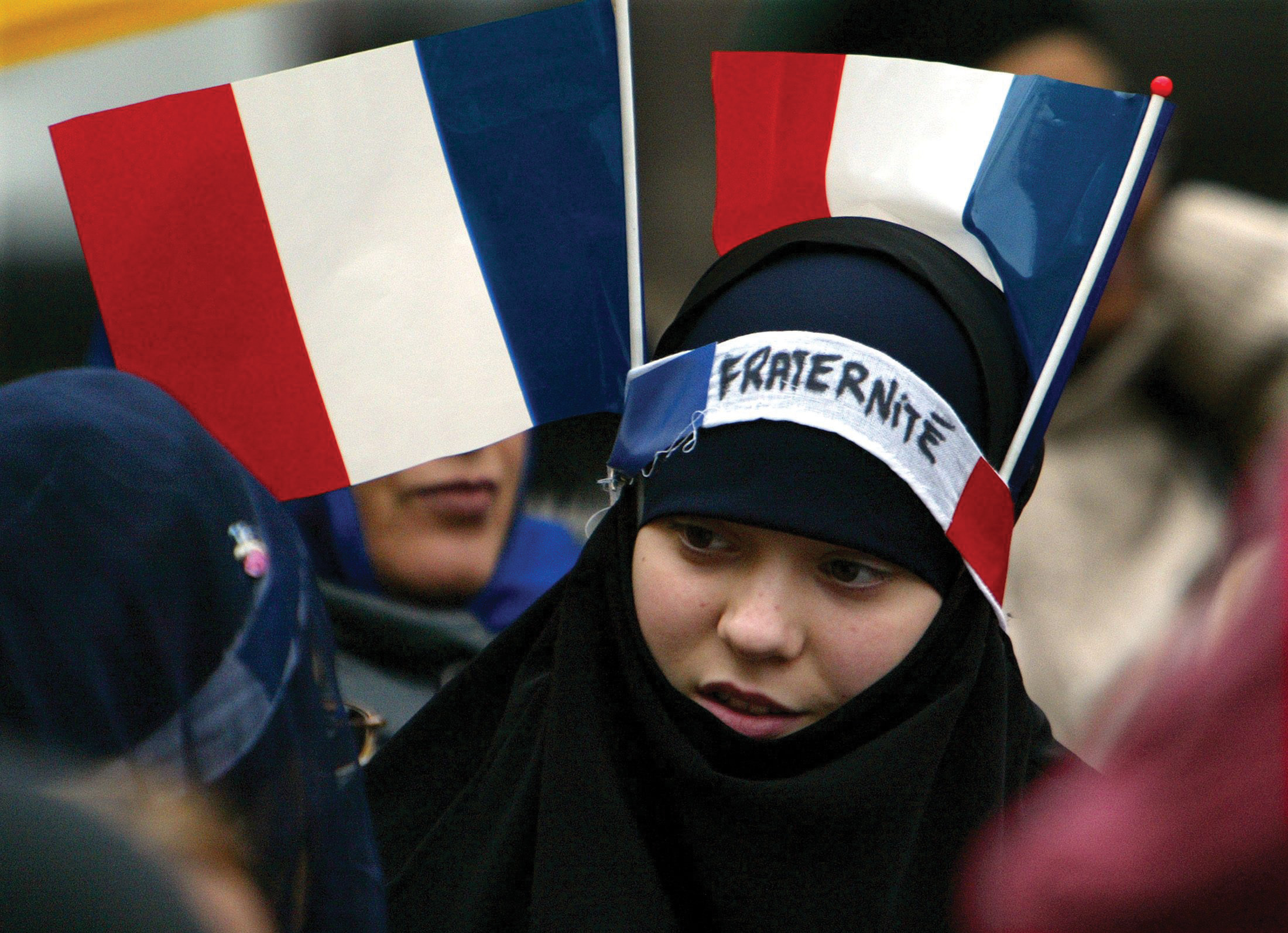
These cultural institutions are also locations where people can debate and contest cultural norms and values. In 2003, an intense debate erupted in France about Muslim girls wearing headscarves to public schools. Although few girls actually wore headscarves, the controversy took on particular intensity in the aftermath of the events of September 11, 2001, the invasions of Afghanistan and Iraq, and terrorist incidents in Europe. For many non-Muslim people in France, the wearing of head coverings represented a grave danger to French society, particularly its commitment to equality for women, its history of ethnic assimilation, and its tradition of the separation of church and state. Passage of a law banning the headscarf from public schools was intended as a signal (to people both inside and outside France) of the country’s commitment to these principles. But many Muslim girls believed that wearing the headscarf also expressed a commitment to French values—the country’s commitment to religious freedom and liberty.
Despite legal challenges, strikes by students, and street demonstrations in opposition to the law, in 2004 the French government banned any clothing in public schools that indicates particular religious beliefs. Although the language of the law was broadly stated to include all religions, everyone understood that the headscarves of Muslim girls were the target. France’s public schools had become the venue for debating, contesting, and enforcing key French cultural norms and values (Bowen 2006). As we will see, cultural institutions such as schools are not only places where norms are enforced, but also places where powerful ideas of what is normal and natural are shaped.
More information
A young Muslim woman with two French flags pulled over her head covering marches in Paris against a French ban on religious symbols, including head coverings, in public schools.
HEGEMONY
The Italian political philosopher Antonio Gramsci (1891–1937) described two aspects of power. Material power, the first component, includes political, economic, or military power. It exerts itself through coercion or brute force. The second aspect of power involves the ability to create consent and agreement within a population, a condition that Gramsci (1971) called hegemony.
Gramsci recognized the tremendous power of culture—particularly the cultural institutions of media, schools, and religion—to shape, often unconsciously, what people think is normal, natural, and possible, and thereby directly influence the scope of human action and interaction. Cultures, which develop slowly over time, include a shared belief system of what is right and what is wrong, and what is normal and appropriate. In this hegemony of ideas, some thoughts and actions become unthinkable, and group members develop a set of “beliefs” about what is normal and appropriate that come to be seen as natural “truths.” The French sociologist Michel Foucault (1926–1984), in Discipline and Punish (1977), described this hegemonic aspect of power as the ability to make people discipline their own behavior so that they believe and act in certain “normal” ways—often against their own interests, even without a tangible threat of punishment for misbehavior.
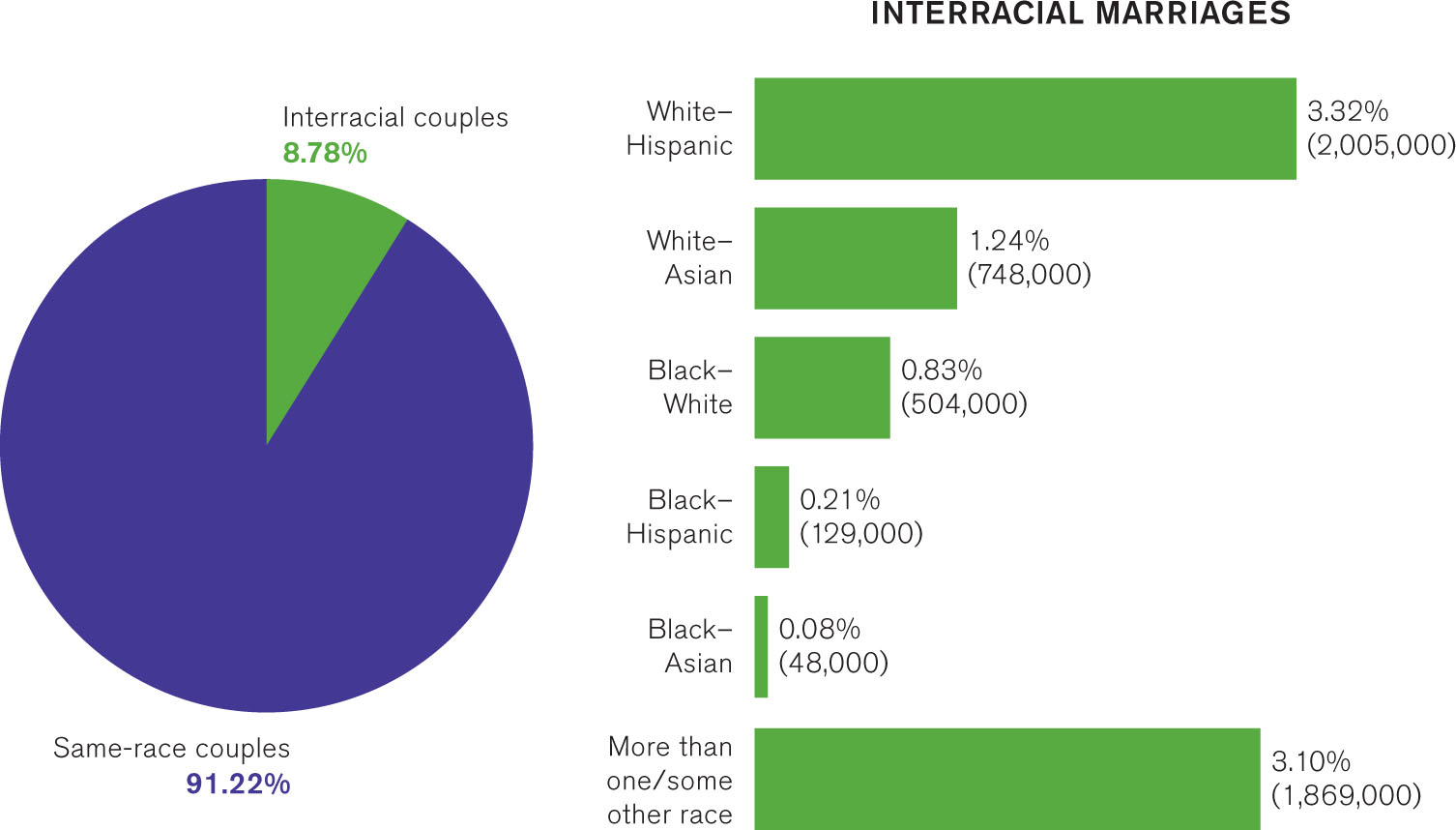
Earlier in this chapter we discussed anti-miscegenation laws in the history of the United States. These laws drew upon cultural beliefs in “natural” biological differences among races and the seemingly unnatural, deviant practice of intermarriage. Despite the elimination of these formal laws, a certain hegemony of thought remains: Many in U.S. culture still see interracial marriage as unthinkable and undoable. As evidence, consider current intermarriage rates in the United States (Figure 2.1). According to the U.S. Census Bureau (2010), there were 5,303,000 interracial married couples in 2010, only 8.78 percent of all marriages in the U.S.
More information
Clearly, although U.S. culture has very few formal rules about whom one can marry, cultural norms combined with long-term geographic and institutional patterns of segregation still powerfully inform and enforce our behavior. As this example shows, views against interracial marriage do not require legal sanction to remain dominant, hegemonic norms.
HUMAN AGENCY
Although hegemony can be very powerful, it does not completely dominate people’s thinking. Individuals and groups have the power to contest cultural norms, values, mental maps of reality, symbols, institutions, and structures of power—a potential known as agency. Cultural beliefs and practices are not timeless; they change and can be changed. Cultures are not biologically determined; they are created over time by particular groups of people. By examining human agency, we see how culture serves as a realm in which battles over power take place—where people debate, negotiate, contest, and enforce what is considered normal, what people can say, do, and even think.
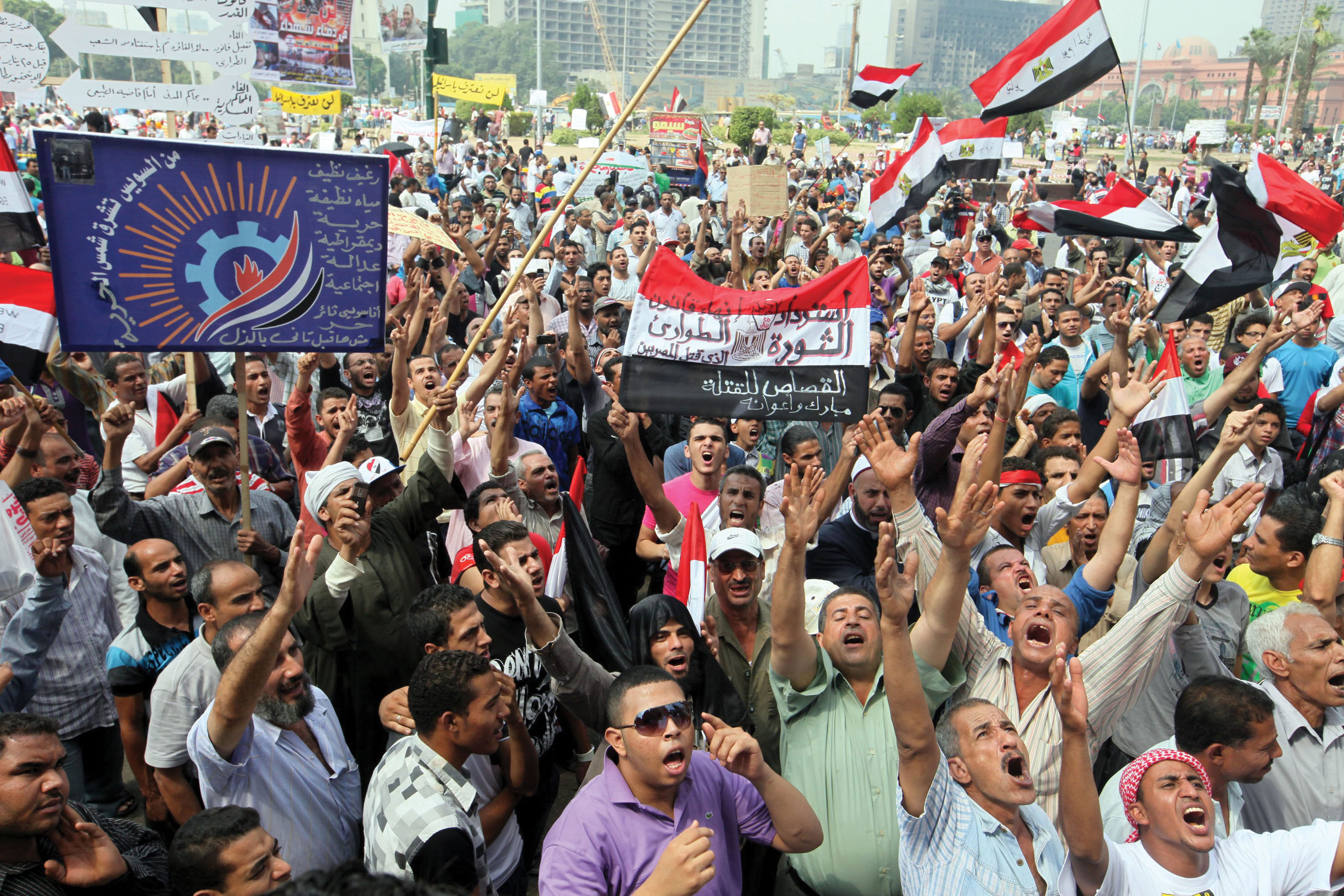
Although a dominant group may have greater access to power, resources, rights, or privileges, the systems of power they create are never absolute, and their dominance is never complete. Individuals and groups with less power or no power may contest the dominant power relationships and structures, whether through political, economic, religious, or military means. At times these forms of resistance are visible, public, and well organized, including negotiations, protests, strikes, or rebellions. At other times the resistance may be more subtle, discreet, and diffuse. For example, James Scott’s book Weapons of the Weak: Everyday Forms of Peasant Resistance (1985) identifies strategies—such as foot dragging, slowdowns, theft, sabotage, trickery, arson, and false compliance with regulations—that people in very weak positions use to express their agency and to resist the dominant group.
More information

More information
Resistance to unfair conditions takes many forms. (left) Egyptian protestors in Tahrir Square, Cairo, demonstrate against their government. (right) Malaysian farmers conduct a slowdown to protest working conditions.
Glossary
- power
- The ability or potential to bring about change through action or influence.
- stratification
- The uneven distribution of resources and privileges among participants in a group or culture.
- hegemony
- The ability of a dominant group to create consent and agreement within a population without the use or threat of force.
- agency
- The potential power of individuals and groups to contest cultural norms, values, mental maps of reality, symbols, institutions, and structures of power.