What Is Culture?
Define culture and its key characteristics.
When people hear the word culture, they often think about the material goods or artistic forms produced by distinct groups of people—Chinese food, Middle Eastern music, Indian clothing, Greek architecture, African dances. Sometimes people assume that culture means elite art forms such as those displayed in museums, operas, or ballets. But for anthropologists, culture is much more: It encompasses people’s entire way of life.
More information
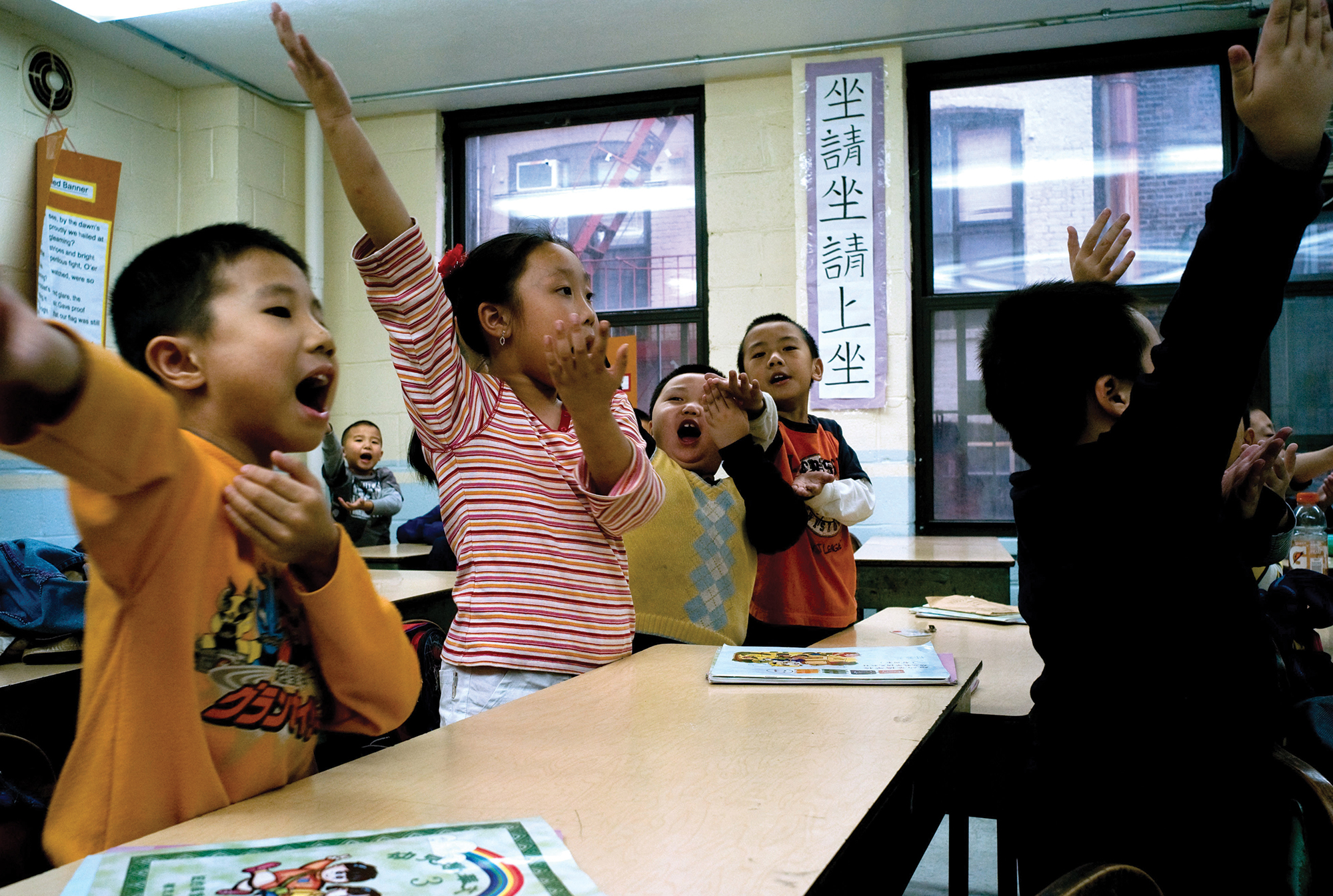
A group of children stand singing and making hand gestures in a classroom.
Culture is a system of knowledge, beliefs, patterns of behavior, artifacts, and institutions that are created, learned, shared, and contested by a group of people. Culture is our guide for understanding and interacting with the people and the world around us. It includes shared norms, values, symbols, mental maps of reality, and material objects, as well as structures of power—including the media, education, religion, and politics—in which our understanding of the world is shaped and negotiated. We will explore these concepts over the next few pages. A cultural group may be large or small, and it may have within it significant diversity of region, religion, race, gender, sexuality, class, generation, and ethnic identity. It may not be accepted by everyone living in a particular place or time. But ultimately, the culture that we learn has the potential to shape our ideas of what is normal and natural, what we can say and do, and even what we can think.
CULTURE IS LEARNED AND TAUGHT
Humans do not genetically inherit culture. We learn culture throughout our lives from the people and organizations that surround us. Anthropologists call the process of learning culture enculturation. Some aspects of culture we learn through formal instruction: English classes in school, religious education, visits to the doctor, history lessons, dance classes. Other processes of enculturation are informal—even unconscious—as we absorb culture from family, friends, and the media. All humans are equally capable of learning culture and of learning any culture they are exposed to. And while the process of social learning and passing information across generations is not unique to humans, humans have developed a unique capacity for culture.
More information
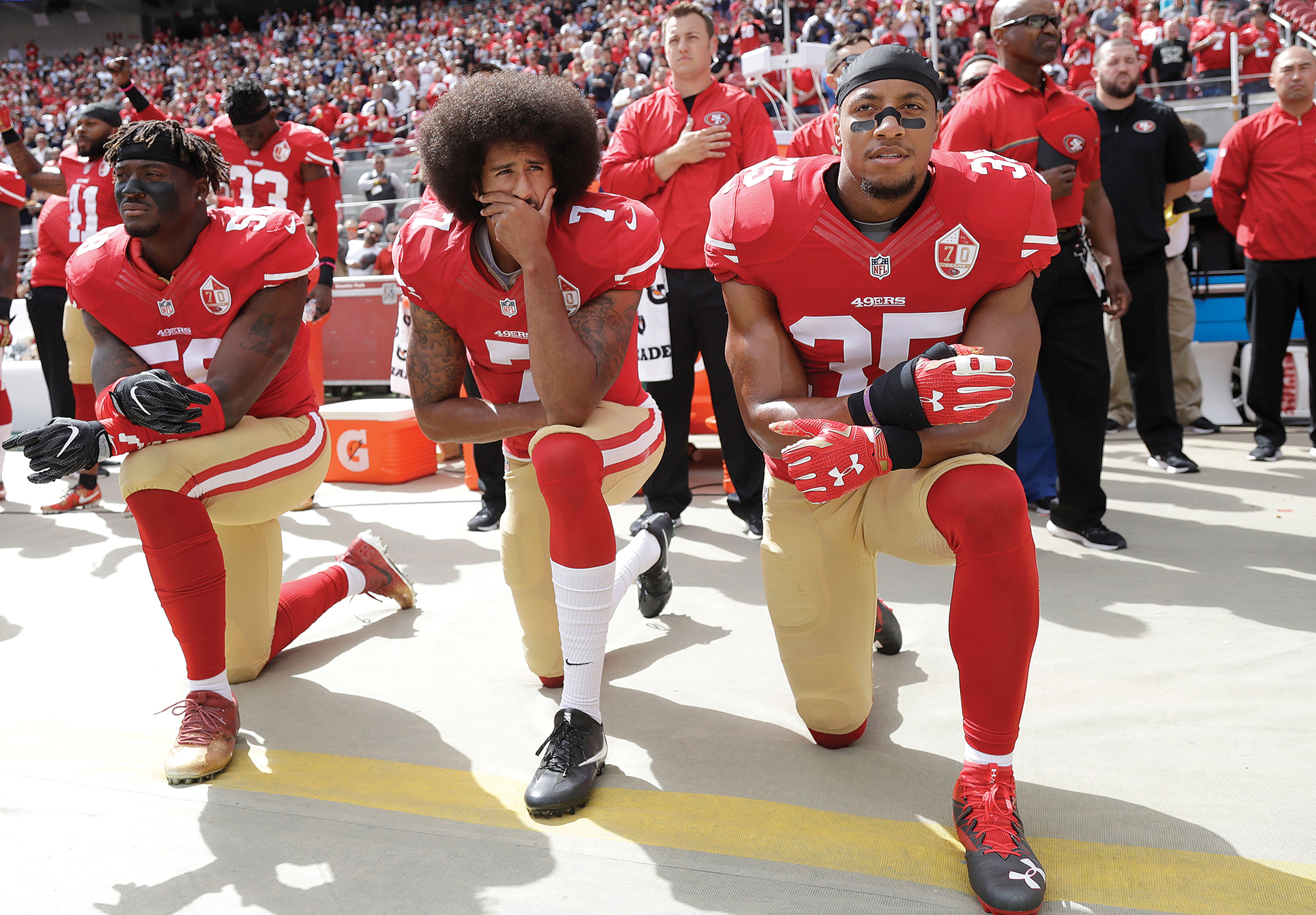
NFL players Eli Harold, Colin Kaepernick, and Eric Reid kneel in uniform during the National Anthem.
Humans establish cultural institutions as mechanisms for enculturating their members. Schools, medical and legal systems, media, and religious institutions promote the ideas and concepts that are considered appropriate behavior and thinking.
CULTURE IS SYMBOLIC AND MATERIAL
Through enculturation, the members of a culture develop a shared body of cultural knowledge and patterns of behavior. The elements of a culture powerfully frame what its participants say, what they do, and even what they think is possible and impossible, real or unreal. Though anthropologists no longer think of culture as a discrete, unique possession of a specific group of people, most argue that any given culture has a common core, at least among certain more dominant groups within the culture. Norms, values, symbols, and mental maps of reality are four elements that an anthropologist may consider in attempting to understand the complex workings of a culture.
Norms. In a culture, norms are ideas or rules about how people should behave in particular situations or toward certain other people—what is considered “normal” and appropriate behavior. Norms may include what to wear on certain occasions, what you can say in polite company, how younger people should treat older people, whom you can date, who can own guns, or, as the opening story in this chapter demonstrated, where and when to wear masks. Many norms are assumed, not written down. We learn them—consciously and unconsciously—and incorporate them into our patterns of daily living. Other norms are formalized in writing and made publicly available, such as a country’s laws, systems of medical and business ethics, and the code of academic integrity at your college or university. Norms may vary for segments of the population, imposing different expectations on men and women, for instance, or children and adults. Cultural norms may be widely accepted, but they also may be debated, challenged, and changed, particularly when norms enforced by a dominant group disadvantage or oppress a minority within the population.
Consider the question of whom you can marry. Cultures have clear norms based on ideas of age, kinship, sexuality, race, religion, class, and legal status that specify which kinds of partners are normal and which are not. Let’s consider some extreme cases.
In Nazi Germany, the Nuremberg Laws passed in 1935 banned marriage or sexual relations between German Jews and other persons with German or related blood. From 1949 to 1985, South Africa’s apartheid government, dominated by White lawmakers, declared marriage and sex between White people and people of mixed race, Asian people, and Black people to be a crime under the Prohibition of Mixed Marriages Act and the Immorality Act. In the history of the United States, as many as forty states passed anti-miscegenation laws that barred interracial marriage and sex. Such laws targeted marriages between Whites and non-White partners—primarily Black people, but also Asians and Native Americans. Only in 1967 did the U.S. Supreme Court unanimously rule (in Loving v. Virginia) that these laws were unconstitutional, thereby striking down statutes that were then still on the books in sixteen states (all the states in which slavery was once legal plus Oklahoma).
Cultural norms may discourage exogamy (marriage outside one’s “group”) and encourage endogamy (marriage within one’s “group”). Think about your own family. Who could you bring home to your parents? Could you cross boundaries of race, ethnicity, nationality, religion, class, or gender? Although U.S. culture has very few formal rules about whom one can marry—with some exclusions related to age and certain kinship relations—cultural norms still powerfully inform and enforce our behavior.
Most people, though not all, accept and follow a culture’s norms. If they choose to challenge the norms, other members of the culture have means for enforcing its standards, whether through shunning; institutionalized punishment, such as fines or imprisonment; or, in more extreme cases, violence and threats of violence. For example, in 1958, Richard and Mildred Loving, an interracial couple, married in Washington, D.C., but were arrested when they returned to Virginia. During their trial, the judge gave them a choice of going to prison, divorcing, or moving out of the state. The Lovings ultimately brought suit in Loving v. Virginia to challenge the illegality of interracial marriage.
Values. Every culture promotes and cultivates a core set of values—fundamental beliefs about what is important, what makes a good life, and what is true, right, and beautiful. Values reflect shared ultimate standards that should guide people’s behavior as well as goals that people feel are important for themselves, their families, and their community. What would you identify as the core values of U.S. culture? Individualism? Independence? Care for the most vulnerable? Freedom of speech, press, and religion? Equal access to social mobility?
As with all elements of culture, cultural values are not fixed. They can be debated and contested. And they may have varying degrees of influence. For example, if you pick up a newspaper in any country, you will find a deep debate about cultural values. Perhaps the debate focuses on modesty versus public displays of affection in India, economic growth versus environmental pollution in China, or land settlement versus peace in the Middle East. In the United States, while the value of privacy is held dear, so is the value of security. The proper balance of the two is constantly being contested and debated. Under what conditions should the U.S. government be able to breach your privacy—by eavesdropping on telephone calls and emails or unlocking your iPhone, for instance—in order to ensure your safety? To what extent should a government, hospital, restaurant, or college restrict individual freedoms to ensure public health?
Ultimately, values are not simply platitudes that express people’s ideals about the good life. Values are powerful cultural tools for clarifying cultural goals and motivating people to act. When enshrined in law, values can become powerful political and economic tools. Values can be so potent that some people are willing to kill or die for them. During the COVID-19 pandemic, some people have been so committed to the value of individual freedom that they risked their health and life rather than taking a government-approved vaccine or wearing a mask.
Symbols. Cultures include complex systems of symbols and symbolic actions—in realms such as language, art, religion, politics, and economics—that convey meaning to those who share the culture. We are immersed in worlds of symbols that we create. And symbols are central to human culture. In essence, a symbol is something that stands for something else. For example, language enables humans to communicate abstract ideas through the symbols of written and spoken words as well as unspoken sounds and gestures (see Chapter 4). People wave, whistle, nod, smile, give two thumbs up, give thumbs down, give someone the middle finger. Pre-pandemic, people shook hands, but now people may also touch elbows, bump fists, or simply maintain social distance. These symbols are not universal, but within their particular cultural context they convey certain meanings.
Much symbolic communication is nonverbal, action-based, and unconscious. Religions include powerful systems of symbols that represent deeper meanings to their adherents. Consider mandalas, the Koran, the Torah, the Christian cross, holy water, statues of the Buddha—all carry greater meanings and value than the physical material they are constructed of. National flags, which are mere pieces of colored cloth, are symbols that stir deep political emotions. Even money is simply a symbolic representation of value guaranteed by the sponsoring government. It has no value except in its symbolism. Estimates suggest that only about 10 percent of money today exists in physical form. The rest moves electronically through banks, stock markets, and credit accounts (Graeber 2011). Symbols change in meaning over time and from culture to culture. Not understanding another culture’s collective understandings—that is, their sets of symbolic actions—can lead to embarrassing misunderstandings and cross-cultural miscues.

More information
Men sit and stand looking at numerous computer screens that show stock prices.
Mental Maps of Reality. Along with norms, values, and symbols, another key component of culture is mental maps of reality. These are “maps” that humans construct of what kinds of people and what kinds of things exist. Because the world presents our senses with overwhelming quantities of data, our brains create shortcuts—maps—to navigate our experiences and organize all the data that come our way. A road map condenses a large world into a manageable format (one that you can hold in your hands or view on your portable GPS system) and helps us navigate the territory. Likewise, our mental maps organize the world into categories that help us sort out our experiences and what they mean. We do not want all the details all the time. We could not handle them anyway. From our general mental maps, we can then dig deeper as required.
Our mental maps are shaped through enculturation, but they are not fixed. Like other elements of culture, they can be challenged and redrawn. Today, globalization continues to put pressure on mental maps of reality as people on the planet are drawn into closer contact with the world’s diversity. We will examine these transformations throughout this book, especially in the chapters on language, race, ethnicity, gender, sexuality, and kinship.
Mental maps have two important functions. First, mental maps classify reality. Starting in the eighteenth century, European naturalists such as Carolus Linnaeus (1707–1778) began creating systems of classification for the natural world. These systems included five kingdoms subdivided into phylum, class, order, family, genus, and species. Through observation (this was before genetics), these naturalists sought to devise a logical framework to organize the world into kinds of things and kinds of people. In a similar way, our cultures’ mental maps seek to classify reality—everything from units of time to what is considered food to who is considered a relative. Often, however, a culture’s mental maps are drawn from the distinct vantage point of those in power.
A culture creates a concept such as time. Then we arbitrarily divide this concept into millennia, centuries, decades, years, seasons, months, weeks, hours, morning, afternoon, evening, minutes, seconds. Categories of time are assumed to be scientific, universal, and “natural.” But mostly they are cultural constructs. The current Gregorian calendar, which is used in much of the world, was introduced in 1582 by the Catholic Church, but its adoption occurred gradually; it was accepted in the United States in 1756, replacing the earlier Julian calendar, and in China in 1949. Still today, much of China relies on the traditional lunar calendar in which months and days align with the waxing and waning of the moon. According to this calendar, New Year’s Day shifts each year. So do Chinese holidays and festivals. Even in the Gregorian calendar, the length of the year is modified to fit into a neat mental map of reality. A year (how long it takes Earth to orbit the sun) is approximately 365.2425 days long, so every four years the Gregorian calendar must add a day, creating a leap year of 366 days rather than 365.
As these examples demonstrate, categories that seem completely fixed and “natural” are in reality flexible and variable, showing the potential role of culture in defining our fundamental notions of reality.
Mental maps of reality become problematic when people treat cultural notions of difference as being scientifically or biologically “natural.” Race is a key example. As we will see in Chapter 5, the notion of race is assumed in popular culture and conversation to have a biological basis. There is, however, no scientific basis for this assumption. The particular racial categories in any given culture do not correlate directly to any biological differences. Although most people in the United States would name White, Black, Latino, Asian, and perhaps Native American people as distinct races, no genetic line marks clear differences among these groups. The classifications are created by and are specific to our culture. Other cultures draw different mental maps of the reality of human physical variation. The Japanese use different racial categories than we do in the United States. Brazilians have more than 500 racial classifications.
More information
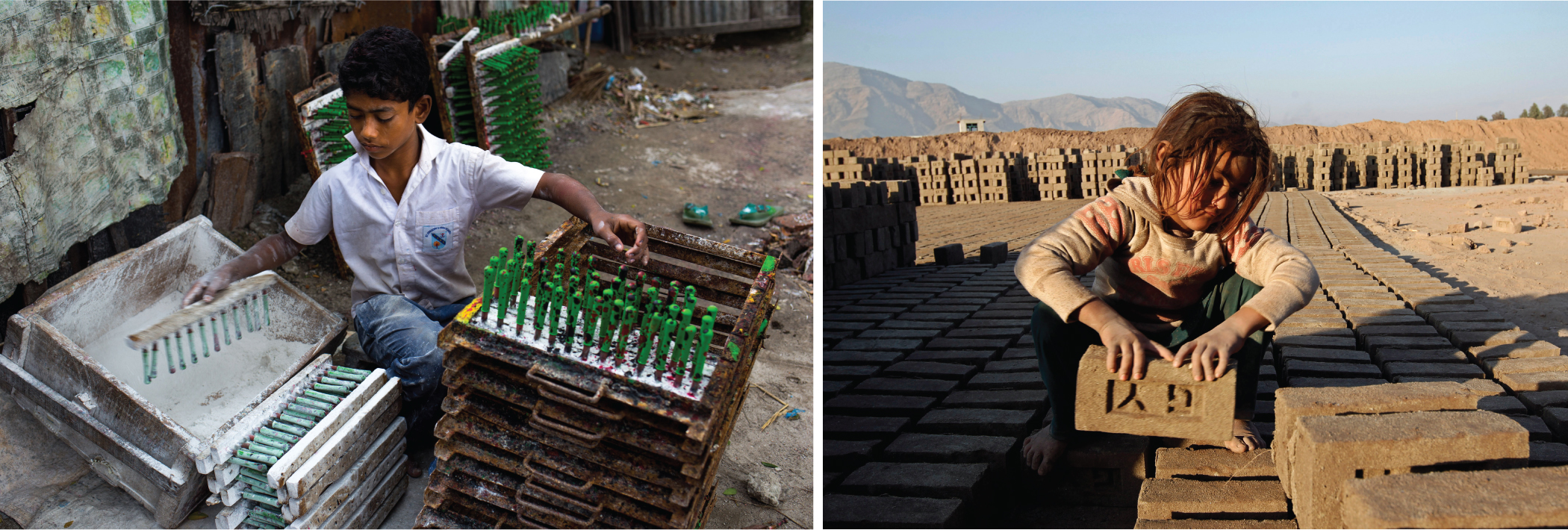
A boy sits in an alley dipping rods on racks into a container.
A young girl stacks bricks in rows. In the background are large stacks of bricks and dry desert mountains.
Second, mental maps assign meaning to what has been classified. Not only do people in a culture develop mental maps of things and people, they also place values and meanings on those maps. For example, we divide the life span into categories—that is, infants, children, adolescents, teenagers, young adults, adults, and seniors—but then we give different values to different ages. Some carry more respect, some more protection, and others more rights, privileges, and responsibilities. In the United States, these categories determine at what age you can marry, have sex, drink alcohol, drive, vote, go to war, stand trial, retire, and collect Social Security and Medicare benefits. Anthropologists warn that by assuming our mental maps of reality are natural, fixed, and universal, we risk misunderstanding and disregarding others’ cultural values.
CULTURAL APPROPRIATION
In recent years, debates about cultural appropriation have flooded media reports and social media feeds. Stories have focused on Halloween costumes, prom dresses, and sports teams’ mascots. But what does cultural appropriation mean from an anthropological perspective? How can an anthropological perspective inform our conversations and actions?
Throughout the history of our discipline, anthropology has studied many forms of cultural borrowing between individuals and groups. Early anthropologists examined the wide occurrence of diffusion—the movement of cultural forms, practices, values, and technologies from one setting to another. Diffusion has occurred widely between groups of relatively equal status in human history, a movement that has often prompted innovations and changes in the cultural practices of the receiving group. Anthropologists have also considered cultural exchanges framed by more unequal power dynamics. Acculturation has been used to describe the mutual influencing of two unequal groups that have come into continuous firsthand contact—for instance, under colonialism. Similarly, assimilation has been used to describe a powerful group’s imposition of its cultural practices upon an economically, politically, or demographically weaker target group.
From an anthropological perspective, cultural appropriation refers to the unwanted taking of an important cultural practice or body of knowledge from one group by another, more dominant group. The cultural appropriation of Native American iconography and sacred symbols by U.S. sports teams provides a clear example. A number of large non–Native American corporations and institutions, including schools and colleges, have fraudulently claimed a connection to Indigenous people and their cultures, religious practices, symbols, and crafts for commercial profit. The National Football League’s Washington Commanders, for instance, used a racial slur directed at Native Americans as its team name for eighty-seven years. The team placed that slur and other Native American images on helmets, uniforms, tickets, merchandise, and advertising, generating enormous profits for the team’s owners and shareholders while denigrating and damaging the broader Native American community. The team dropped the offensive name in 2020 after years of widespread protests and condemnation by Native Americans and their allies.
As we will discuss later in this chapter, power is key to analyzing the dynamics of cultural appropriation. Appropriation occurs when a more powerful group takes aspects of a subordinate group’s culture for personal or corporate gain, using those taken elements in ways considered offensive to members of the source community. In the process of cultural appropriation, the taking group improves its status and power while creating negative consequences for the group of origin: harmful stereotypes; stripping of heritage, artifacts, and resources; and a deep sense of grief, loss, and violation (Jackson 2021).
Glossary
- culture A system of knowledge, beliefs, patterns of behavior, artifacts, and institutions that are created, learned, shared, and contested by a group of people.
- enculturation The process of learning culture.
- norms Ideas or rules about how people should behave in particular situations or toward certain other people.
- values Fundamental beliefs about what is important, what makes a good life, and what is true, right, and beautiful.
- symbol Anything that represents something else.
- mental maps of reality Cultural classifications of what kinds of people and things exist, and the assignment of meaning to those classifications.
- cultural appropriation The unwanted taking of cultural practices or knowledge from one group by another, more dominant group.