A late-twentieth-century addition to international relations, constructivism explains events in international politics through a focus on norms and identities—both of individuals and of states. It has returned international relations scholars to foundational questions, including the nature of the state itself, how state interests are formed, and the nature of key concepts such as sovereignty. Yet, like liberalism and realism, constructivism is not a uniform theory. It is an overarching perspective with a set of core ideas that most constructivists share.
For constructivists, the objects of study in international relations should be the identities of actors, and the norms and practices of individuals and groups that stem from those identities. Ted Hopf offers a simple analogy that highlights the importance of understanding identities and norms:
The scenario is a fire in a theater where all run for the exits. Absent knowledge of social norms, even this seemingly overdetermined circumstance, the outcome is indeterminate. In a theater with just one door, while all run for that exit, who goes first? Are they the strongest or the disabled, the women or the children, the aged or the infirm, or is it just a mad dash? Determining the outcome will require knowing more about the situation than just the distribution of material power or the structure of authority. One will need to know about the culture, norms, institutions, procedures, rules, and social practices that constitute the actors and the structure alike.15
Note that had realist logic been employed to predict the outcome of Hopf’s fire-in-a-theater example, or, say, the demographic composition of the Titanic’s lifeboats in 1912, the focus on one’s own survival and self-interests, and on relative power, would have caused an incorrect prediction. In real life, the strong sometimes yield to the weak, rather than forcing the weak to “suffer what they must.” That is why the Titanic’s lifeboats were filled not with strong men, but with the ship’s physically weaker passengers: women and children. The identities of the individuals, and the norms and practices that stem from those identities, are what influence their behavior.
The relationship between different identities is also an important facet of understanding international politics from the constructivist perspective. States’ identities can be convergent, meaning that those states share similar characteristics and ideals, or they can be divergent, meaning that they do not share similar characteristics and ideals. This difference does not mean that states necessarily have interests and ideals that are opposed to one another, but they could. Understanding the relationship between different identities is of central importance in international politics today. For example, one of the main divides that has created a long-standing rivalry between Saudi Arabia and Iran stems from their divergent Sunni (Saudi Arabia) and Shia (Iran) Islamic identities. The meanings attached to these divergent identities can create a political divergence between the states themselves. For Iran, the Shia identity is one that is bound up with a revolutionary idea of religion and politics which it seeks to export outside its borders. Iran’s Shia identity therefore creates interests that are fulfilled by regional meddling and which are threatening to Sunni interests. In contrast, Saudi Arabia embraces a conservative Sunni Islam which supports conservative Sunni interests in the region. These divergent identities and the politics they generate are arguably part of the reason that Saudi Arabia and Iran support opposing sides of the Syrian conflict that began in 2011. Iran backs the Bashar al-Assad government in Syria, while Saudi Arabia supports rebel groups. In addition to Syria’s inclusion in Iran’s sphere of influence, Bashar al-Assad also practices a Shia branch of Islam, sharing that identity with Iran. The rebels supported by Saudi Arabia share their Sunni identity. Iran and Saudi Arabia politically and militarily support the actors in the conflict with which they share an identity and which align with their political interests in the region.
In addition to focusing attention on the role of norms and identities, constructivism offers the major theoretical proposition that neither objects nor concepts have any necessary, fixed, or objective meaning. Instead, their meanings are constructed through social interaction. For example, constructivists see sovereignty not as an absolute but rather as a contested concept. They point out that states have never had exclusive control over territory. State sovereignty has always been challenged, and is continuously being challenged by globalization, new institutional forms, and the development of new transitional problems that states must face. Constructivists argue that the idea of sovereignty still exists as a concept that governs state behavior only because when states interact, they do so in a way that treats themselves and other states as sovereign entities. State sovereignty is therefore a socially constructed facet of reality.
Identities are similarly socially constructed. State behavior thus depends not on the objective reality of a situation but on our subjective interpretation of that reality. An important part of that social construction of identities (and the resulting behavior) is our discourse. How we choose to talk about ourselves and others influences our interpretation of our respective identities, as well as others’ interpretations of those identities. Therefore, in addition to how we act toward others, how we choose to talk about and frame our identities is important for understanding how those identities (and the resulting behavior) come to be formed. For example, a state that is viewed and treated as aggressive by other states might begin to act more aggressively, making that interpretation of reality real. After the attacks in the United States on September 11, 2001, Iran engaged in cooperative relations with the United States to fight the Taliban and Al Qaeda in Afghanistan. In 2002, however, President George W. Bush gave a speech labeling Iran part of the “axis of evil.” Iran concluded that the United States was hostile toward it, and ceased cooperative activities in the war. Relations between them deteriorated to the point where, instead of assisting the United States, Iran even began to work against U.S. goals. According to constructivist logic, labeling and treating Iran as an enemy led it to pursue policies that coincided with that reality.
Constructivists argue that it is not only states’ behaviors that are shaped by beliefs about themselves and others, but also states’ very interests. For constructivists, states’ interests are the result of their socially constructed identities. Moreover, those identities and interests are not fixed. They can change as experience, discourse, and practices change. This stands in contrast to realist and liberal approaches to the study of international relations, which view state interests as based on purely material factors.
For example, Germany and Japan had highly militaristic cultures and behavior leading into, and during, World War II. However, as Thomas Berger argues, the way their historical experiences during World War II have been interpreted and internalized by individuals at the domestic level has reshaped their national identities and interests.16 In particular, their identities have been reconstructed in such a way that they are averse to resorting to the use of force in their relations with other states. Understanding Germany’s national identity can help explain why, despite its fears that it could no longer rely on the United States to deter Russian aggression, there was little to no public support in Germany for its acquisition of nuclear weapons when the issue of obtaining them was floated in 2017. Similarly, this identity change can help explain why there was strong opposition in the mid-2010s to a proposal to revise the Japanese constitution by removing Article 9, which legally prohibits Japan from waging war or obtaining “war potential.” Indeed, the argument that Japan’s pacifist ideals are a foundation of their democracy has been widely cited by opponents of the change.
Overall, constructivists dispute the idea that material structures have a necessary, fixed, or inherent meaning. Alexander Wendt, one of the best-known constructivists, argues that, on its own, the political structure of the international system (that is, whether the distribution of power is unipolar, bipolar, or multipolar) cannot tell us much of interest. It does not predict whether two states will be friends or enemies, whether they will recognize each other’s sovereignty, whether they will have revisionist or status quo ideals, and so on.17 It is the identities of states and the relationship between their identities, along with the norms that stem from those identities, that matter most.
Constructivists do align with realists and liberals in that they view power as important. However, whereas realists and liberals primarily see power in material terms (military, economic, or political), constructivists also see power in discursive terms—they focus on the power of ideas, culture, and language. In some constructivist theories, power rests in the ability to persuade when deliberating or arguing with others. Other theories invoke the idea of legitimacy as an important source of power. States may alter their actions so other members of the international community will view them as legitimate. These arguments about persuasion and legitimacy lead to the idea of soft power—the power of a state to attract states to change their behavior based on the legitimacy of its values or policies, rather than having to coerce them into doing so.18 In other words, the legitimacy of one state’s actions can help it persuade others to adopt similar behavior. For example, the European Union has chosen to take the lead in addressing environmental issues like climate change, with the hope that their example will lead states outside the EU to follow suit.
GLOBAL PERSPECTIVESPolicy Perspectives: A View from India
Narendra Modi came into power in India in 2014. The policies that his government has adopted are policies whose characteristics might be highlighted by the three main IR perspectives. Which one likely best explains Modi’s foreign policies?
Since coming into power in 2014, the government of Narendra Modi has adopted clear policy positions that reflect approaches from the various IR perspectives. First, the Modi government has endorsed a policy of nuclear deterrence. The policy is not one of first-strike use but based on the credibility of assured retaliation if a nuclear weapon is used against India. The government has therefore focused on building up the survivability and reliability of its nuclear arsenal, and demonstrating these capabilities to its adversaries, as evident in its regular testing of delivery systems. Such a strategy, the government believes, can strengthen its overall strategy of deterrence. This policy position is consistent with a defensive realist orientation.
However, with regard to Kashmir—one of India’s most prominent security issues—the Modi government seems to take a policy stance more consistent with offensive realism. In August 2019, Modi announced the revocation of Kashmir’s autonomy. Cell phone and Internet access was shut off in the region, and military troops were sent in to lock down the area in the expectation of potentially violent resistance. Kashmir has been in turmoil since, leading to clashes between security forces and residents. In March and April of 2020 alone, 50 people (including militants, armed forces, and civilians) were killed as a result of the conflict. The actions illustrate Modi’s attempts to solidify India’s power, a factor that would serve India well internationally.
Religious identity has also become an important factor in Modi’s policies. In December 2019, the Modi government was able to pass the Citizenship (Amendment) Act and is pushing for a National Register of Citizens (NRC). Under the act, for the first time in India, religion was made a basis for citizenship. The law specifically fast-tracks asylum claims for non-Muslim illegal immigrants from the neighboring Muslim-majority countries of Afghanistan, Bangladesh, and Pakistan. It also allows them a path to citizenship. Combined with the NRC, the act would thus identify Muslims not on the register as illegal immigrants; non-Muslims not on the register would also be considered illegal but would be immunized by the Citizenship Act. As sociologist Niraja Gopal Jaya said, the Citizenship Act raises the “potential of transforming India into a majoritarian polity with gradations of citizenship rights.”a Constructivists would point to the importance of identity underlying these policies.
But not all policies of the Modi government are confrontational in nature. In fact, it is pursuing a policy of cooperation and multilateralism in the area of maritime security that is more consistent with the liberal perspective. The scale and complexity of maritime security challenges India faces have increased in recent years. They stem from piracy and terrorism emanating from the seas to the changing balance of power in the Indo-Pacific region, the militarization in the South China Sea, and the increasing number of naval platforms in the Indian Ocean. In response to these challenges, the Modi government has taken actions to further cooperate with its neighbors and island states in the Indian Ocean, with the belief that stability on the seas cannot be achieved by a single nation alone. It has supported multilateral initiatives such as the Indian Ocean Rim Association and Indian Ocean Naval Symposium, as well as working at the bilateral level with coastal states such as Kenya and Tanzania and island countries such as Seychelles, Maldives, and Sri Lanka—states that lack maritime military prowess and thus are vulnerable to the threats arising from the seas. Proactively engaging with these states, India has become a “formidable and reliable” maritime partner.b
Muslims across India protested the Citizenship Amendment Act, which made religion a basis for citizenship across India.
These different policies reflect different perspectives from IR theory. Some of them focus on the use of force, while others focus on cooperation. Others focus on identity politics. Is Modi a realist? Or do you think his policies reflect that he has a more liberal approach? Or does he use more constructivist-oriented tactics?
FOR CRITICAL ANALYSIS
The Modi government’s security policies differ widely. Some are focused on the active use of force, others focus on deterrence, and others focus on cooperation. How might a realist theorist try to explain India’s overall foreign policy?
If you were a liberal, how could you justify the realist response?
If you were a constructivist, how might you argue that identity influences the Modi government’s approach to Kashmir and its maritime policies?
Constructivist theories also offer explanations of change that differ from those of realism and liberalism. Change can occur through diffusion of ideas or the internationalization of norms, as well as through socialization (the process through which one adopts the identities of peer groups). These explanations help us understand that ideas are spread both within a national setting and cross-nationally. This is how democracy is diffused, how ideas about human rights protection have been internationalized, and how states such as the new members of the European Union become socialized into the community’s norms and practices. Put another way, realism and liberalism both have a more difficult time explaining the advent, spread, and real-world impact of ideas and norms such as taboos against land mines or the “responsibility to protect” (discussed in Chapter 10). Constructivist theories offer an answer.
Like realism and liberalism, however, constructivism has shortcomings. Until recently, constructivism remained mainly a powerful tool of criticism rather than an approach capable of explaining outcomes in the real world. This situation is changing, however. Throughout this book, examples of constructivist scholarship will allow you to see this approach in use so that you can make your own judgments concerning this crucial and still relatively new theoretical perspective.
THEORY IN BRIEF
Constructivism
Key Actors
People, elites, cultures
Characteristics of Individuals
Key actors in creation of meaning; bound by education, socialization, and culture; their identities matter
Characteristics of States
Artifacts whose significance is socially constructed through discourse; their identities matter
Characteristics of the International System
An artifact whose significance is socially constructed through discourse; distribution of identities matters
Beliefs about Change
Possible through socialization, diffusion of ideas, or internationalization of norms
Major Theorists
Hopf, Wendt
Check Your Understanding
The central theoretical tenet of constructivism is
international economic relations determine political relations.
neither state nor international community interests are predetermined or fixed.
human nature is inherently flawed and conflictual.
international institutions are the key to altering the behavior of political leaders.
AnswerAnswer:b
Constructivists like Alexander Wendt argue that material structures, on their own, explain
the process through which one adopts the identities of other groups
Endnotes
Ted Hopf, “The Promise of Constructivism in International Relations Theory,” International Security 23:1 (Summer 1989): 172. Return to reference 15
Thomas U. Berger, “Norms, Identity, and National Security in Germany and Japan,” in The Culture of National Security: Norms and Identity in World Politics, ed. Peter J. Katzenstein (New York: Columbia University Press, 1996), p. 318. Return to reference 16
Alexander Wendt, “Anarchy Is What States Make of It: The Social Construction of Power Politics,” International Organization 46:2 (Spring 1992): 396. For a more complete analysis, see Alexander Wendt, Social Theory of International Politics (Cambridge, UK: Cambridge University Press, 1999). Return to reference 17
Joseph S. Nye Jr., Soft Power: The Means to Success in World Politics (New York: Public Affairs, 2004). Return to reference 18
Quoted in “Citizenship Amendment Bill: India’s New ‘Anti-Muslim’ Law Explained,” BBC News, November 11, 2019, www.bbc.com/news/world-asia-india-50670393 (accessed 12/10/20). Return to reference a
Institute of Peace and Conflict Studies, Special Report 191, “3 Years of the Modi Government,” 2017, p. 18. Return to reference b

 GLOBAL PERSPECTIVESPolicy Perspectives: A View from India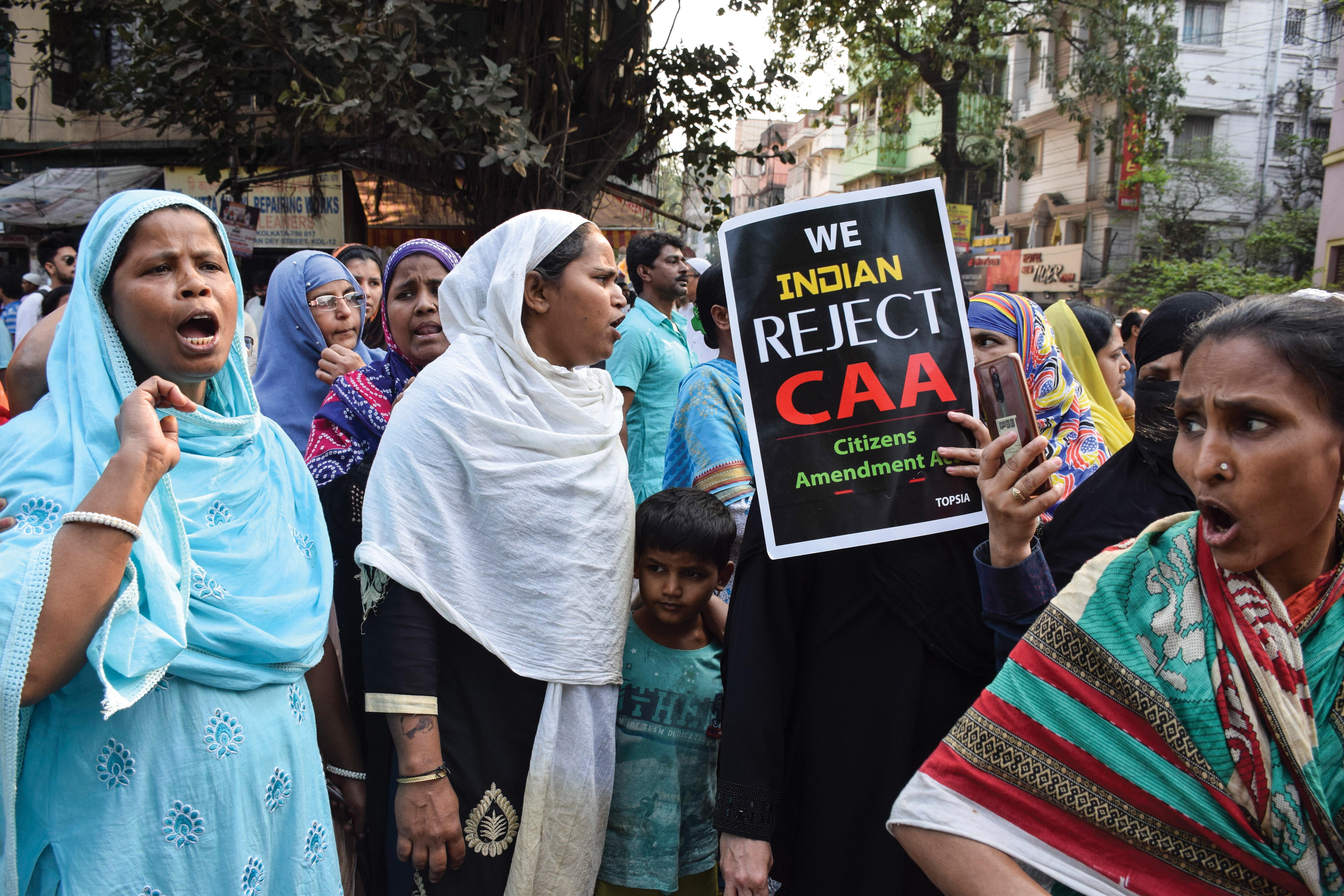

 Answer
 Answer: b