 REFLECT & WRITE. Using the
 Google Home vs. Alexa: Two Simple User Experience Design Gestures That Delighted a Female User

JOHNA MANDEL (née Paolino) is a product designer at Instagram. Previously she designed digital tools for the New York Times newsroom. She has published articles on user experience and design; this piece appeared on Medium in 2017.
AYEAR AGO, MY BOYFRIEND got an Amazon Echo. I remember first using the product, dazzled at its ability to process requests from across the room. Alexa, play us some music.
As the year progressed, the wow factor faded quickly.
The product features continued working to their full effect, but I felt very unsettled. I found myself constantly agitated as I observed my boyfriend bark commands at this black cylinder.
Alexa, turn off the lights. Alexa, set my alarm for 8am.
This declarative speech was so incongruous with how he interacts with me, with how he interacts with any human.
Was it how he was asking? Was it that she was female? Was I jealous?
As a user experience designer, I am constantly questioning the emotional effect technology has on me. Perhaps I was taking too much of my day job into my personal life. I decided to mute this awareness until this holiday season when I unwrapped my very own Google Home. I configured the device, hesitantly looking forward to some of the features my apartment had been missing over the past year.
More information
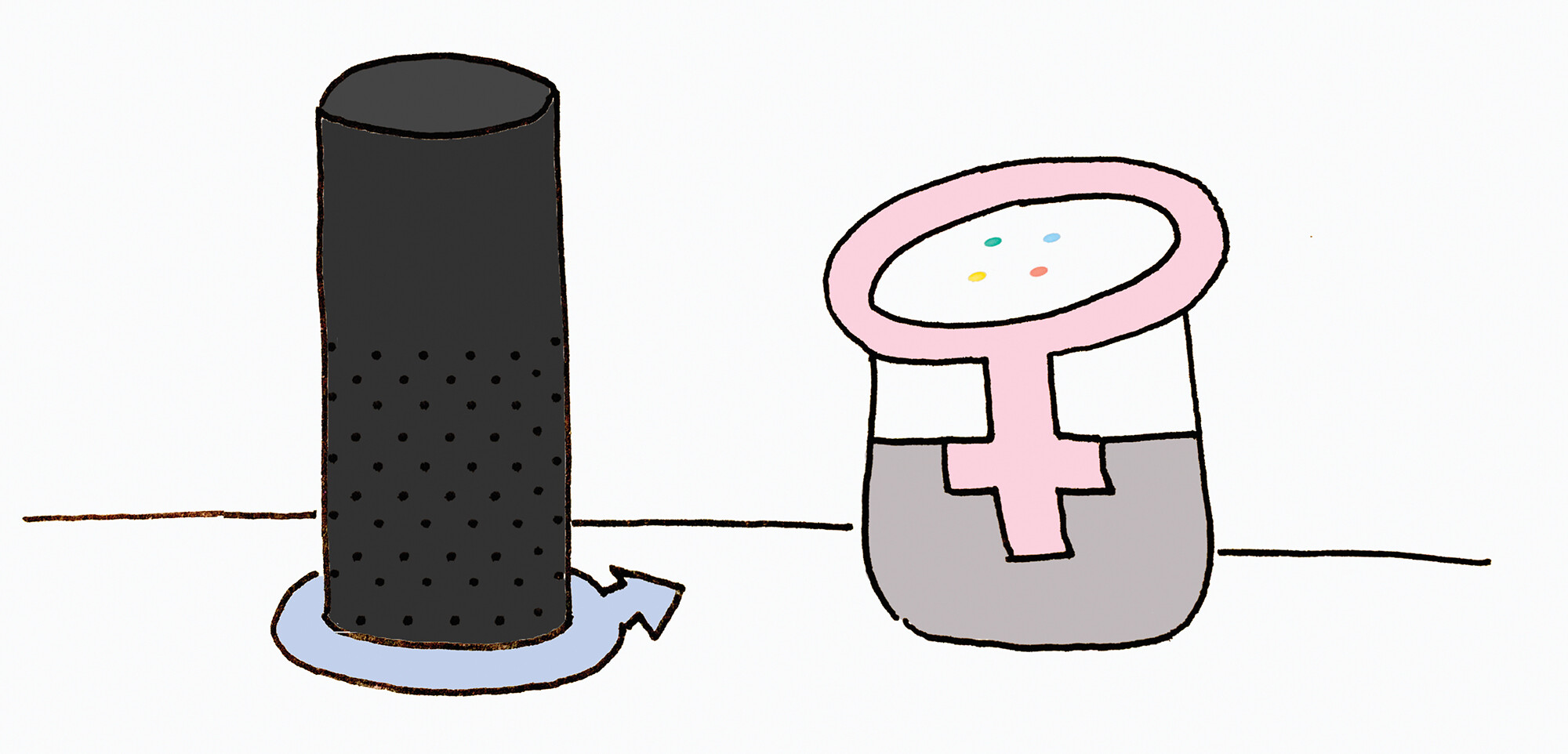
The Amazon Echo is drawn as a tall, narrow black speaker, and the Google Home is drawn as a short, white and gray device with multi-colored dots on it’s surface.
Ok Google, play NPR news. Hey Google, set my alarm for 8am.
Why did these interactions suddenly feel so natural? They felt appropriate. In fact, I was delighted by my new Google Home.
Although product features differ slightly, the root cause of my emotional shift had nothing to do with these capabilities. All the feelings I had for Alexa came down to two simplistic user experience design differences.
The Naming of the Products
5
I’ve learned throughout my career that the most significant UX performance gains often come down to microcopy. This could not be more true here. Amazon is the name of a pioneering e-commerce platform and revolutionary cloud computing company. Echo is its product name, first to market of its kind. Alexa? Alexa is just the name of a female that performs personal tasks for you in your home.
Apple and Siri set a precedent for this. Was there a need to rename the voice component of these products? Why isn’t it Echo or Amazon? Why not Apple? By doing this, we’ve subconsciously constrained the capabilities of a female. With the Echo, we’ve even gone as far as to confine her to a home.
The voice component of the Google Home, however, is simply triggered with “Google.” Google, a multinational, first-of-its-kind technology company. Suddenly a female’s voice represents a lot more. This made me happy.
Conversational Triggers
Alexa responds to her name only. Google’s product must be triggered with a “hey Google” or “ok Google.” By requiring these introductory words as triggers, Google has forced an element of conversation. The experience difference here is huge! When I return to Alexa now I feel authoritative.
The advancement of feminism requires awareness from both genders. It isn’t isolated to how men treat women, but extends to how women treat each other. I am constantly making an effort to change my behaviors towards other women, and in this effort certainly prefer how I am asked to greet Google.
10
The smallest of user experience details matter. My entire emotional experience between these products can be boiled down to: “Hey,” “Ok,” and a name. I want to thank Google. Thank you for paying closer attention to the details, and to the female users.
We have a responsibility as designers and technologists. We can make these systems model how we want the world to be — let’s take steps forward not backward.
Thinking about the Text
- With her title, Johna Paolino immediately establishes that this will be a contest: Google Home against Alexa. How does she establish her AUTHORITY to write on this topic?
- Where does Paolino indicate the question driving her analysis?
- Who is Paolino’s AUDIENCE? Point to specific places where she uses language to establish a connection with readers. How would you describe her TONE?
- Since Paolino doesn’t include any photographs or audio clips (just her own original drawing of her subjects), the analysis largely depends on her DESCRIPTION of the two smart speakers. What EVIDENCE does Paolino provide to support her stance? What details or evidence might you add to make her argument even stronger?
- Following the guidelines in this chapter, write an ANALYSIS of two competing tech products you have experience using—perhaps an Android phone and an iPhone, two fitness tracking apps, or competing social media platforms. Be sure to state the question you’re exploring, the insight you gain, and the evidence supporting your stance.