 English Settlers’ Inspiration
AN OLD WORLD: NORTH AMERICA
The most striking feature of Native American society at the time Europeans arrived was its sheer diversity. Each group had its own political system and set of religious beliefs, and North America was home to hundreds of mutually unintelligible languages. Indians did not define “America” as a continent or hemisphere. They did not think of themselves as a single people, and Native Americans still today identify primarily as separate nations. Identity centered on the immediate social group—a family, clan, town, nation, or confederacy. When Europeans first arrived, many Indians saw them as simply one group among many. Their first thought was how to use the newcomers to enhance their standing in relation to other Native peoples rather than to unite against them. The sharp dichotomy between “Indians” and “white” persons did not emerge until later in the colonial era.
The Settling of the Americas
During the Ice Age tens of thousands of years ago, bands of hunters and fishers crossed the Bering Strait via a land bridge. Others arrived by sea from Asia or Pacific islands earlier or later than the Bering migrants (exact dates are very difficult to measure). Around 14,000 years ago, when glaciers began to melt at the end of the last Ice Age, the Bering land link became submerged under water, separating the Western Hemisphere from Asia. Some Native American creation stories tell of migrations, but others describe creations within their homelands, of ancestors who fell from the sky or came into the world from a hollow log.
However people got there originally, the Americas were an ancient homeland to Native Americans by the time Europeans arrived. The hemisphere had witnessed many changes during its human history. First, the early inhabitants and their descendants spread across the two continents. Around 9,000 years ago, at the same time that agriculture was being developed in Mesopotamia, it also emerged in modern-day Mexico and the Andes and then spread to other parts of the Americas. Throughout the hemisphere, maize (corn), squash, and beans formed the basis of agriculture.
THE ATLANTIC WORLD, ca. 1300
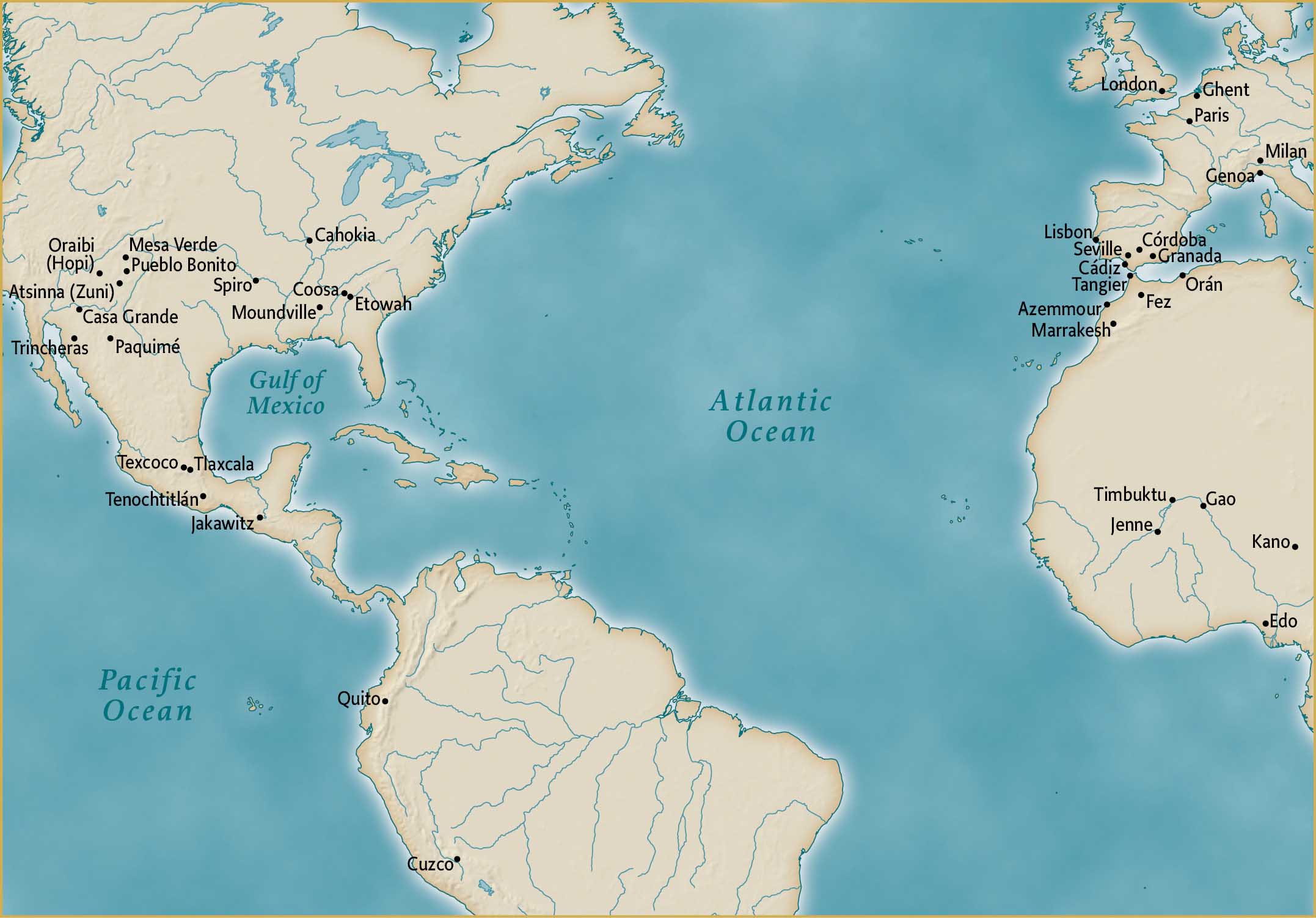
More information
A map of the Atlantic region highlights key cities and cultural centers in the Americas, Europe, and Africa. In North America, locations such as Cahokia and Mesa Verde are labeled, while in Mesoamerica cities like Tenochtitl�n and Texcoco appear. In South America, Quito and Cuzco are marked. Across the ocean, European cities including London, Paris, and Lisbon are shown, along with African centers such as Timbuktu and Gao.
Politics and Power in Native North America
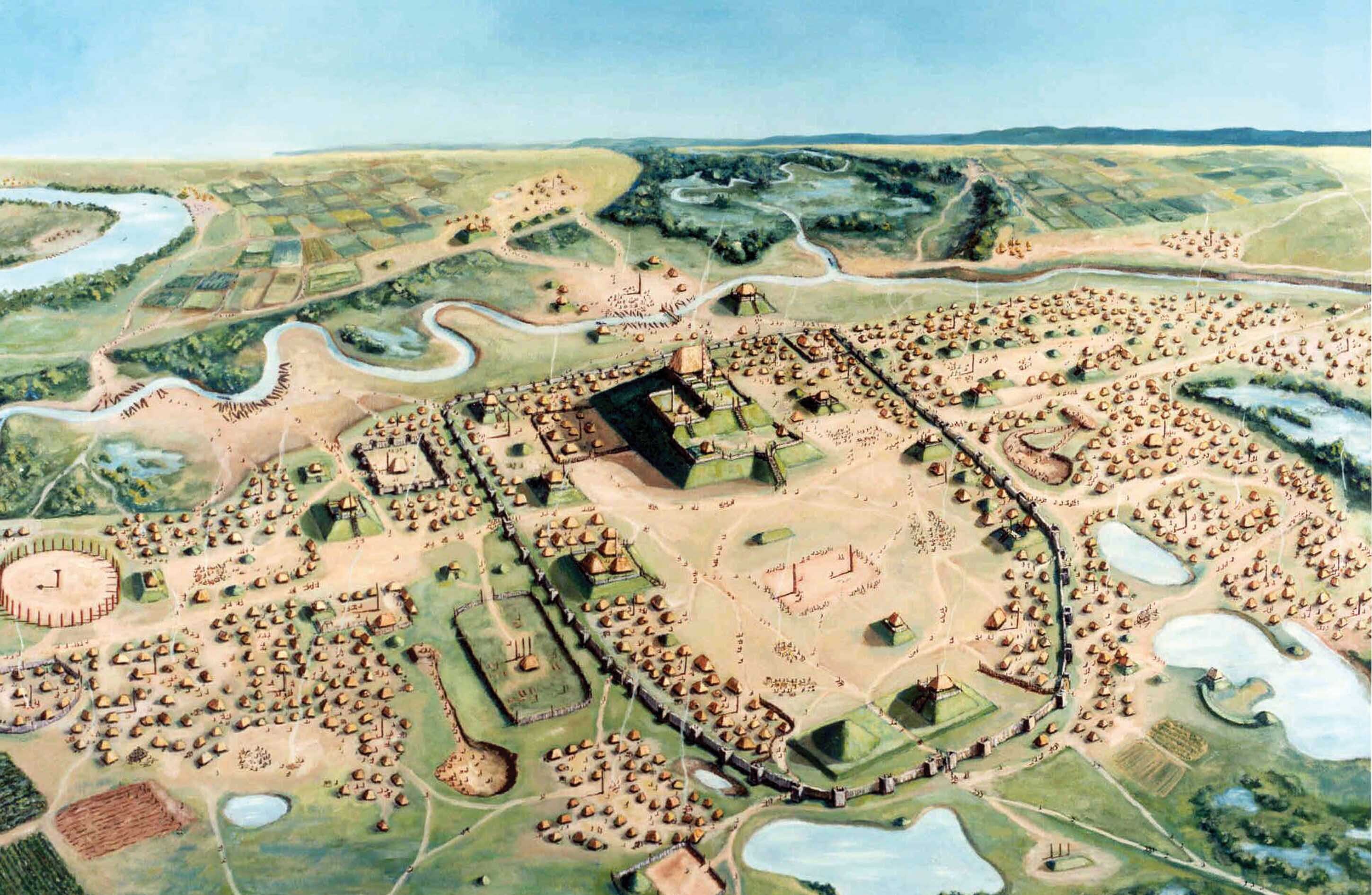
The Medieval Warm Period that began around the year 950 allowed the expansion of agriculture and the rise of cities in North America, much as it did in Europe and West Africa. The longer growing seasons and more predictable weather of the era were ideal for farming, and large-scale farming made urban living possible. The largest city north of Mexico was Cahokia, across the Mississippi River from what is now St. Louis. In the year 1200, Cahokia’s central city was home to some 12,000 people, plus a large population in outlying dependent cities, towns, and farms. Cahokia was a major manufacturing and trading center, whose prominence influenced other people throughout the Mississippi Valley to build their own cities and dependent provinces—what archaeologists call “Mississippian civilizations.” Mississippian leaders ruled their realm from the large houses, halls, temples, and council chambers built on top of a central mound. Native people built scores of cities and thousands of mounds during the Mississippian era. Most of them have been destroyed, but Cahokia’s central mound is still ten stories tall, even after centuries of erosion.
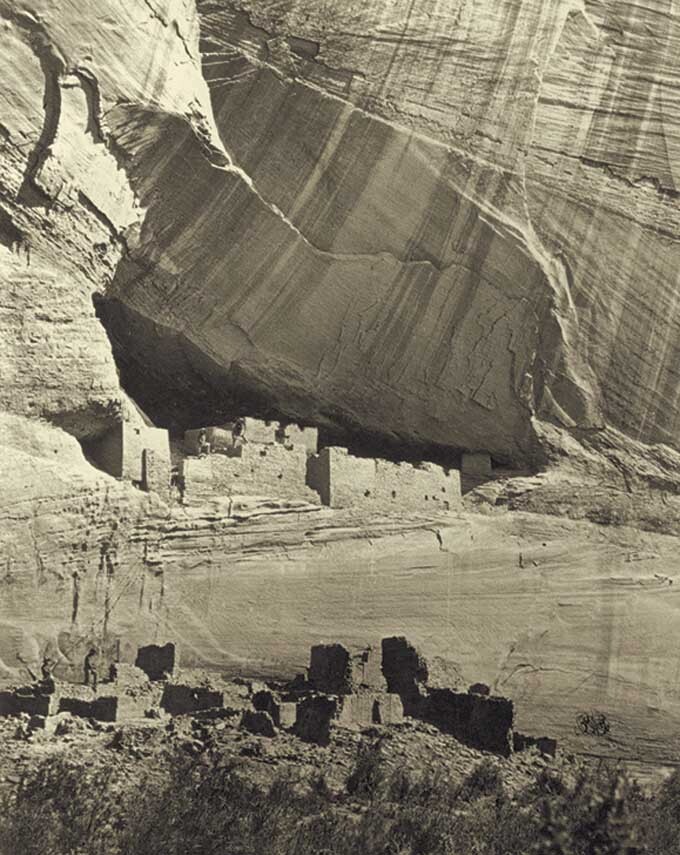
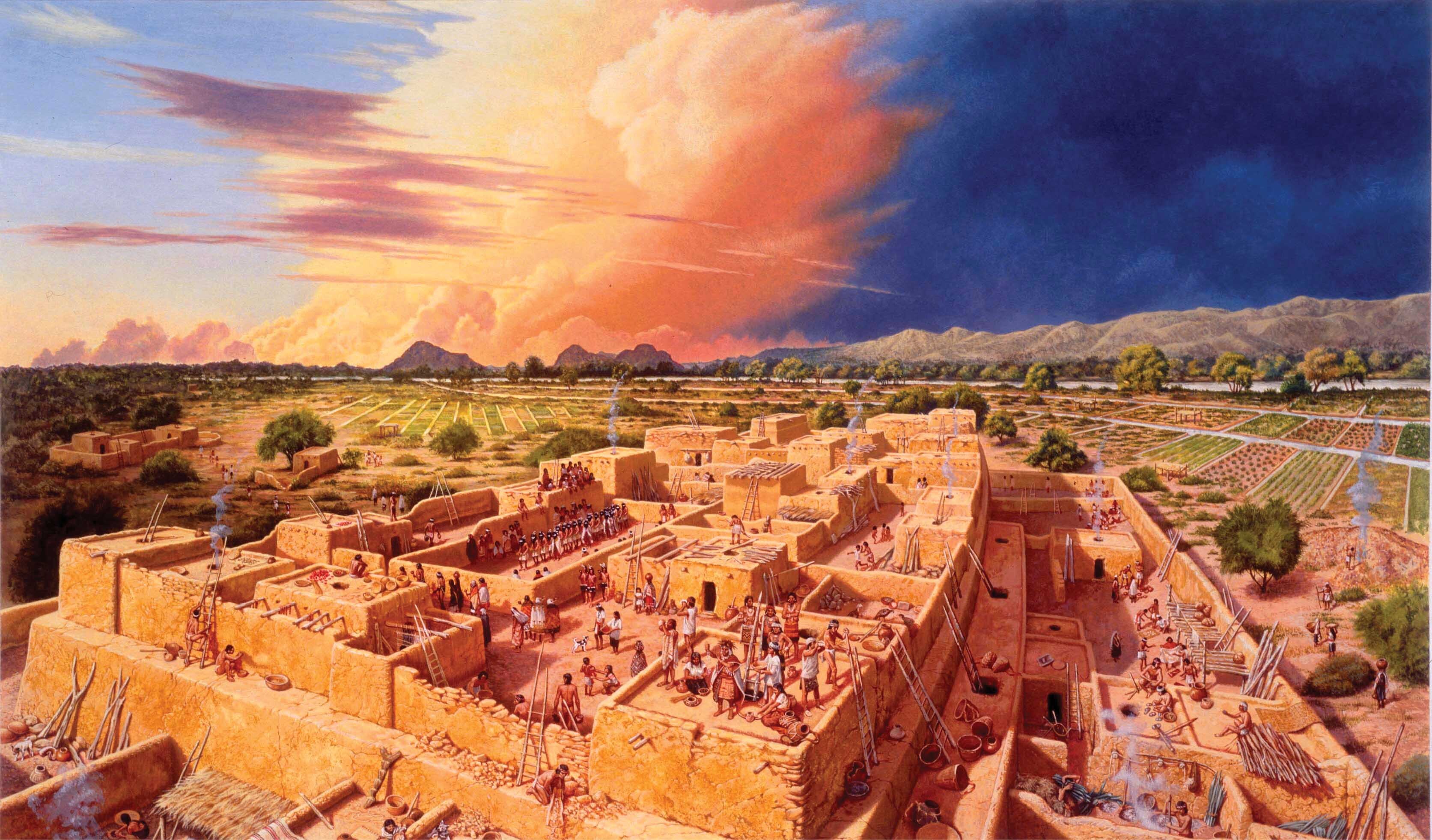
Ancestors of Native peoples of the arid Southwest, including the Ancestral Puebloans and the Huhugam, constructed elaborate irrigation systems in order to farm in the desert. They built great planned towns with large multi-family dwellings and conducted trade with groups as far away as central Mexico and the Mississippi Valley. Pueblo Bonito, in Chaco Canyon, New Mexico, stood five stories high and had more than 600 rooms. Like Mississippians, an elite class of leaders arose in large southwestern civilizations.
The Medieval Warm Period ended around 1250, and a colder and less predictable era called the Little Ice Age began. Large-scale agriculture became more difficult, and large centralized societies and urban populations became harder to sustain. Leaders’ positions may have become more tenuous during droughts and the shorter growing seasons. It is hard to know exactly what happened, but oral histories and archaeological evidence indicate a period of growing distrust in powerful leaders and centralized political systems. People moved out of Mississippian and southwestern cities into smaller-scale, more ecologically sustainable towns and surrounding farms. When Spanish explorers came to the Southwest, they called some people the Pueblo Indians because they lived in towns, or pueblos. Spanish explorers in the sixteenth-century Southeast saw Mississippian cities, but the largest of them had already fallen. Mississippian descendants built smaller-scale, kin-based communities that mixed agriculture, hunting, and trade. Across North America, most Native people created a relatively egalitarian politics that emphasized consensus.
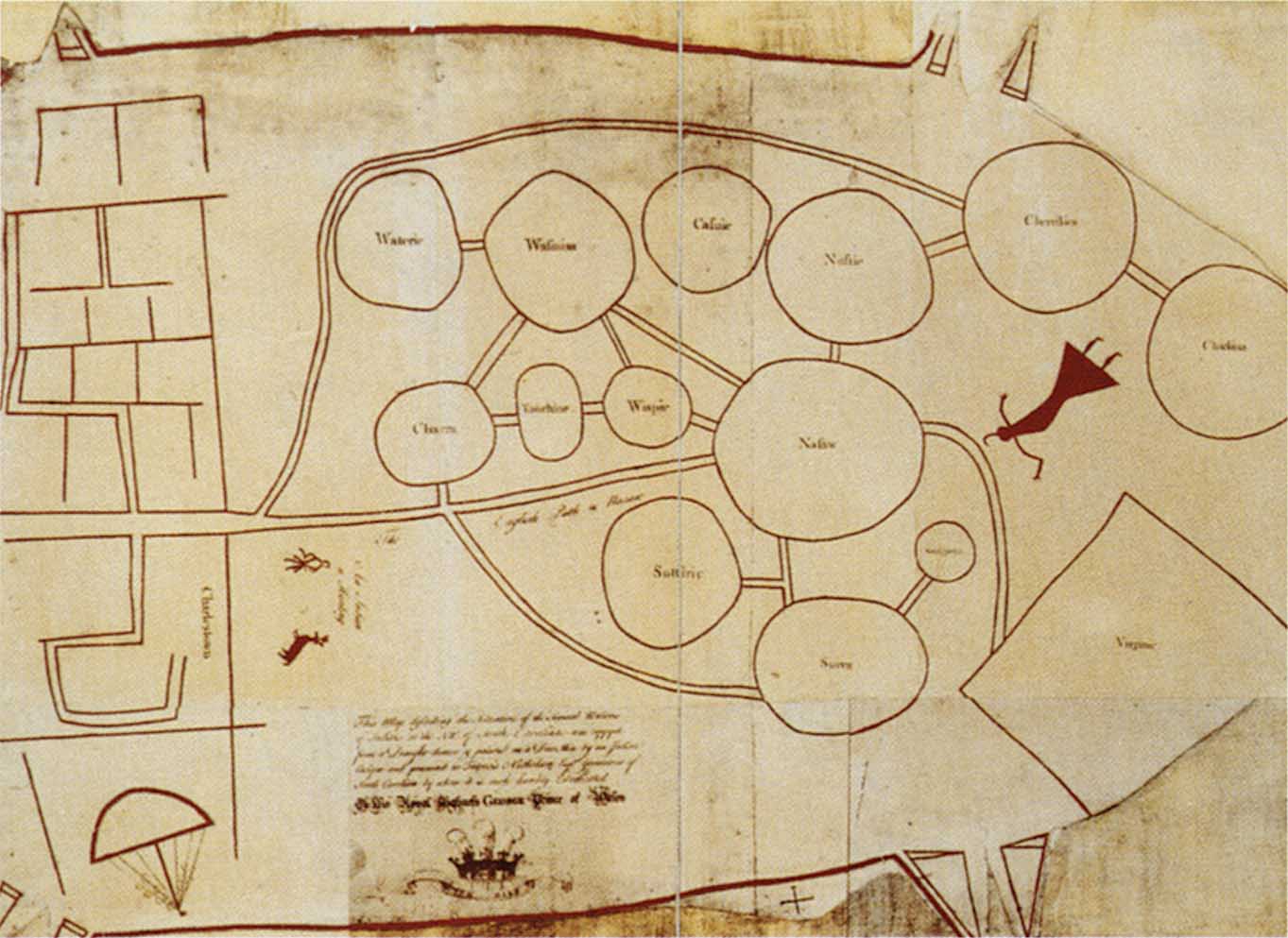
Towns confederated with related towns but resisted powerful leaders. In some places, larger confederacies formed to bring order to local regions or to fight together against a common enemy. In present-day New York and Pennsylvania, five nations—namely, the Mohawks, Oneidas, Cayugas, Senecas, and Onondagas—formed a Great League of Peace. They called their league the Haudenosaunee, “the people of the longhouse.” (Their enemies called them the Iroquois, which probably meant something like “snakes.”) Each year the Haudenosaunee Great Council, with male representatives chosen by the women of the five nations, met to coordinate dealings with outsiders. In the Southeast, the Choctaw, Cherokee, Chickasaw, Muscogee (Creek), and Catawba nations each eventually united dozens of towns in loose alliances.
Economics and Trade in Native North America
By the 1500s, Native leaders generally led through persuasion and reciprocity. A successful leader needed to have connections to outsiders and the ability to trade and make alliances with foreign peoples, thus bringing in valuable goods and ideas.
Exchange networks crossed North America, carrying local goods such as food, plant dyes and medicines, pottery, and quarried rock of various kinds. Trade networks also distributed goods from far away, including shell beads from the coasts, copper from the Great Lakes region, and mica from the Appalachians.
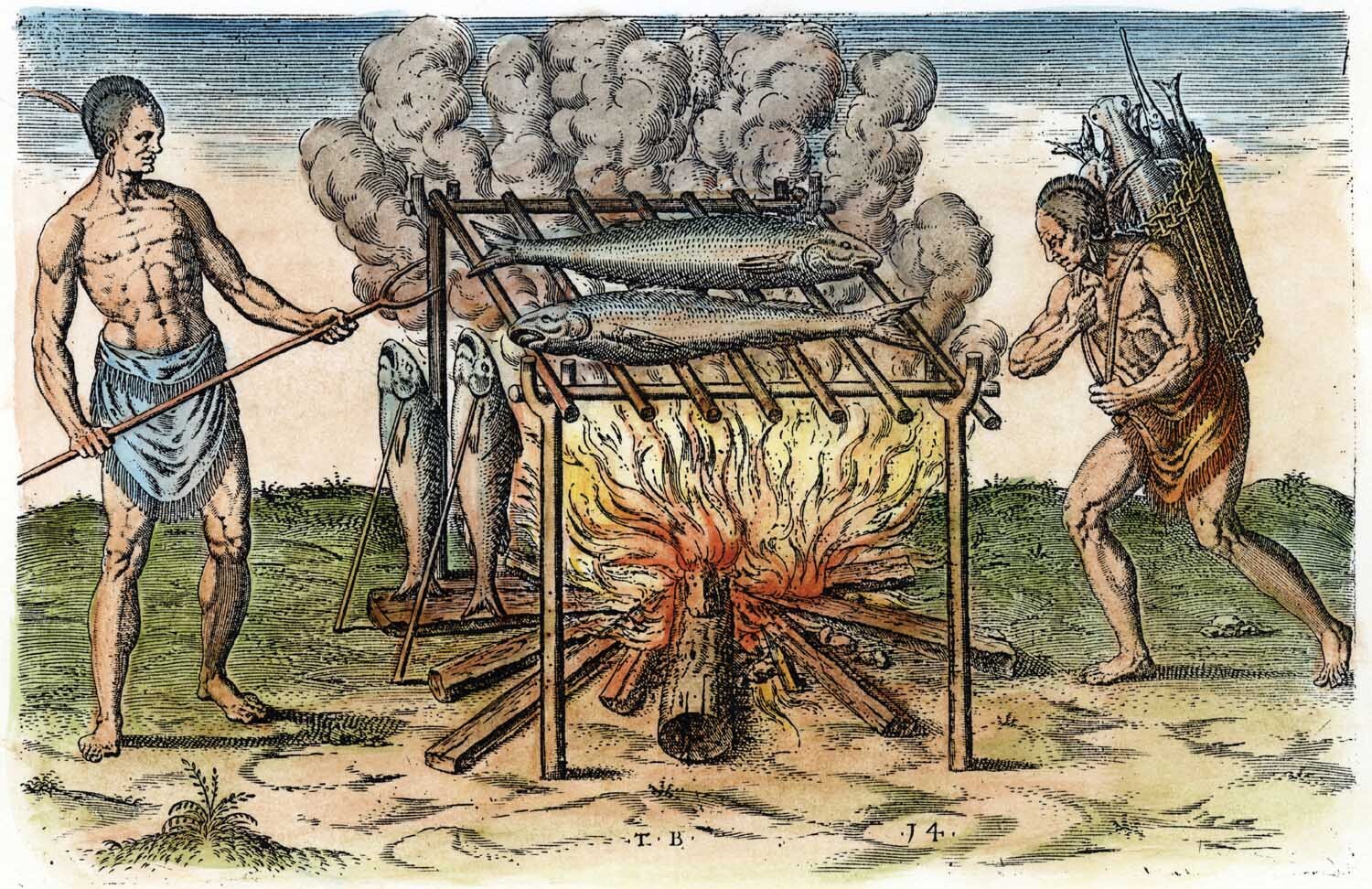
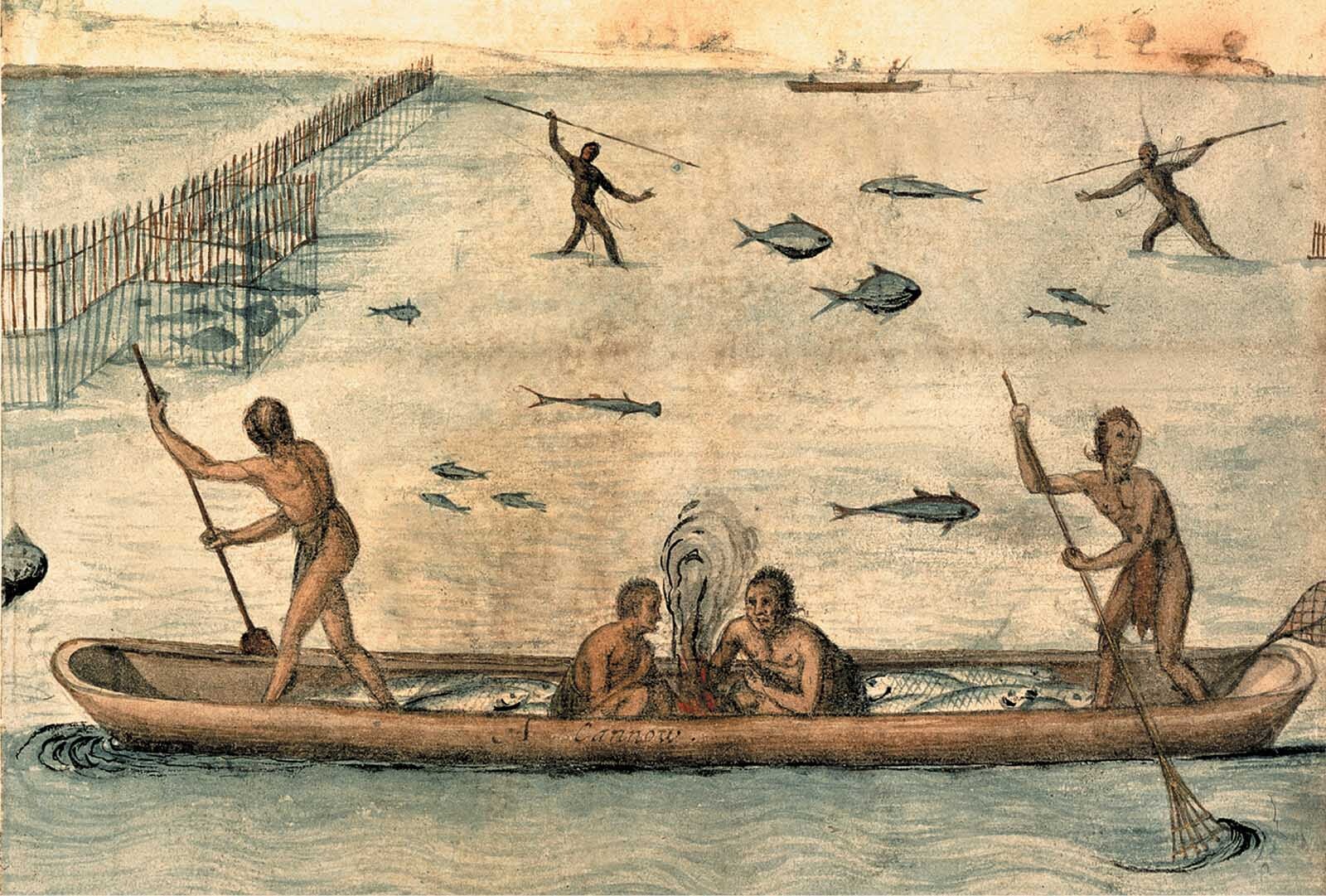
Although trading networks spanned the continent, Native Americans remained diverse. In eastern North America, hundreds of peoples inhabited towns and villages scattered from the Gulf of Mexico to present-day Canada. They lived on corn, squash, and beans, supplemented by fishing and hunting deer, turkeys, and other animals. On the densely populated Pacific coast, hundreds of distinct groups resided in independent villages and lived primarily by fishing, hunting sea mammals, and gathering wild plants and nuts. As many as 25 million salmon swam up the Columbia River each year, providing them with abundant food. On the Great Plains, with its herds of buffalo, many groups were hunters (who tracked animals on foot before the arrival of horses with the Spanish) part of the year while living in agricultural communities in the river valleys when they were not on the hunt.
NORTH AMERICA, ca. 1500
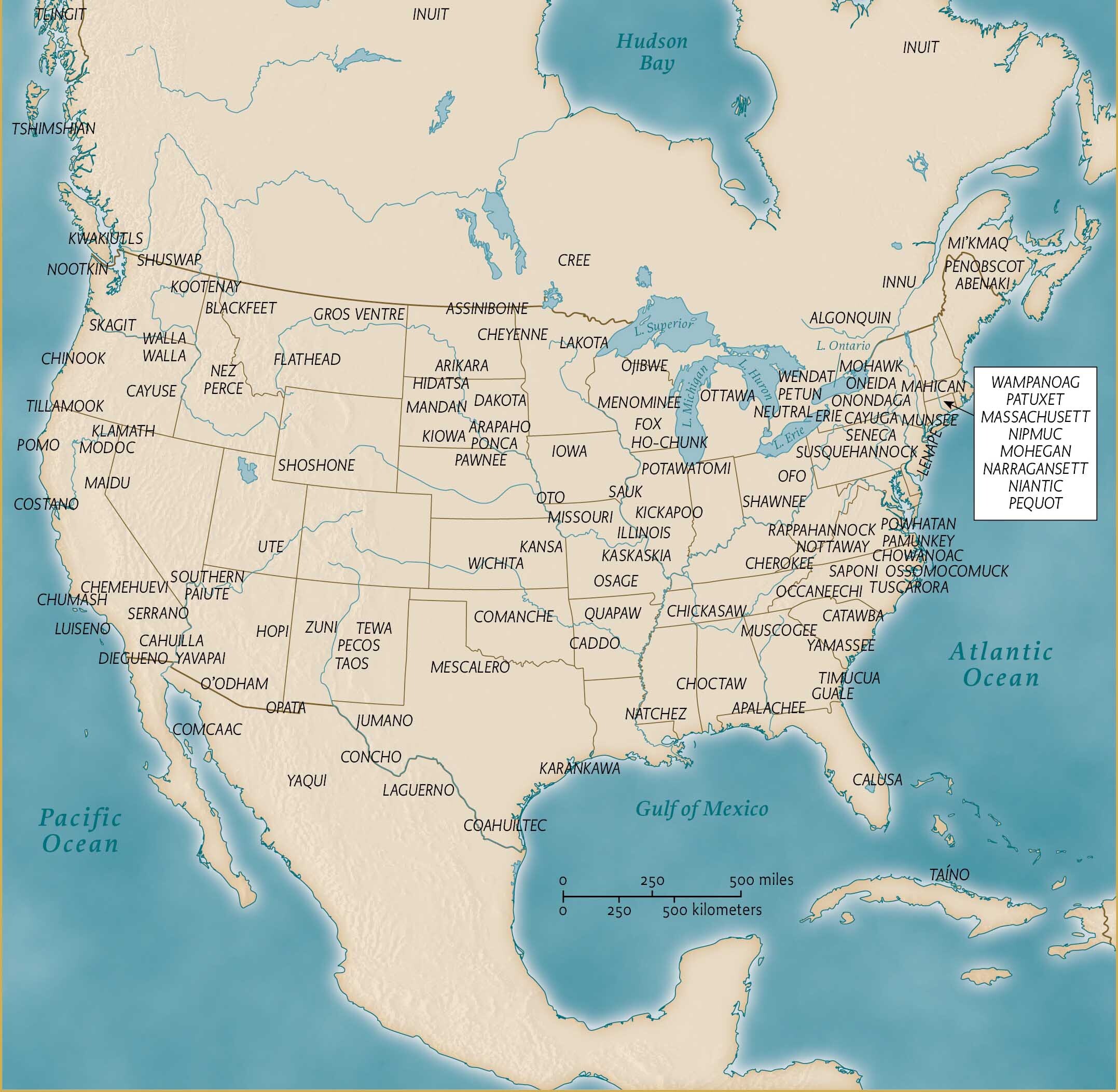
More information
A detailed map of North America labels numerous Native American nations across the continent. Groups are shown from the Pacific Coast to the Atlantic, including regions around the Great Lakes, Plains, Southeast, and Southwest. Names such as Cherokee, Lakota, Navajo, Iroquois nations, and many others are placed across their respective areas. Major geographic features like the Pacific Ocean, Atlantic Ocean, Hudson Bay, and Gulf of Mexico are included.
Numerous land systems existed among Native Americans. Generally, however, specific families or towns had the right to farm on certain lands, and nations or confederacies claimed specific areas for hunting, fishing, and gathering. Indians saw land as a resource that particular people had the right to use but not as an economic commodity that could be bought and sold. In the nineteenth century, the Sauk leader Black Hawk explained: “The Great Spirit gave it to his children to live upon, and cultivate as far as necessary for their subsistence; and so long as they occupy and cultivate it, they have a right to the soil.” Few if any Native societies believed a piece of land could be fenced off and allotted forever to a single individual or family.
Nor were Native Americans devoted to the accumulation of wealth and material goods. However, status certainly mattered. Leaders tended to come from certain families or clans, and they often controlled access to resources. But their reputation and influence rested on their ability to distribute goods with their followers rather than hoarding them for themselves. Generosity was among the most valued social qualities, and gift giving was essential. Trade, for example, meant more than a commercial transaction—it was accompanied by elaborate ceremonies of gift exchange. Under normal circumstances no one in Native societies went hungry or experienced the extreme inequalities of Europe. “There are no beggars among them,” reported the English colonial leader Roger Williams of Indians around New England.
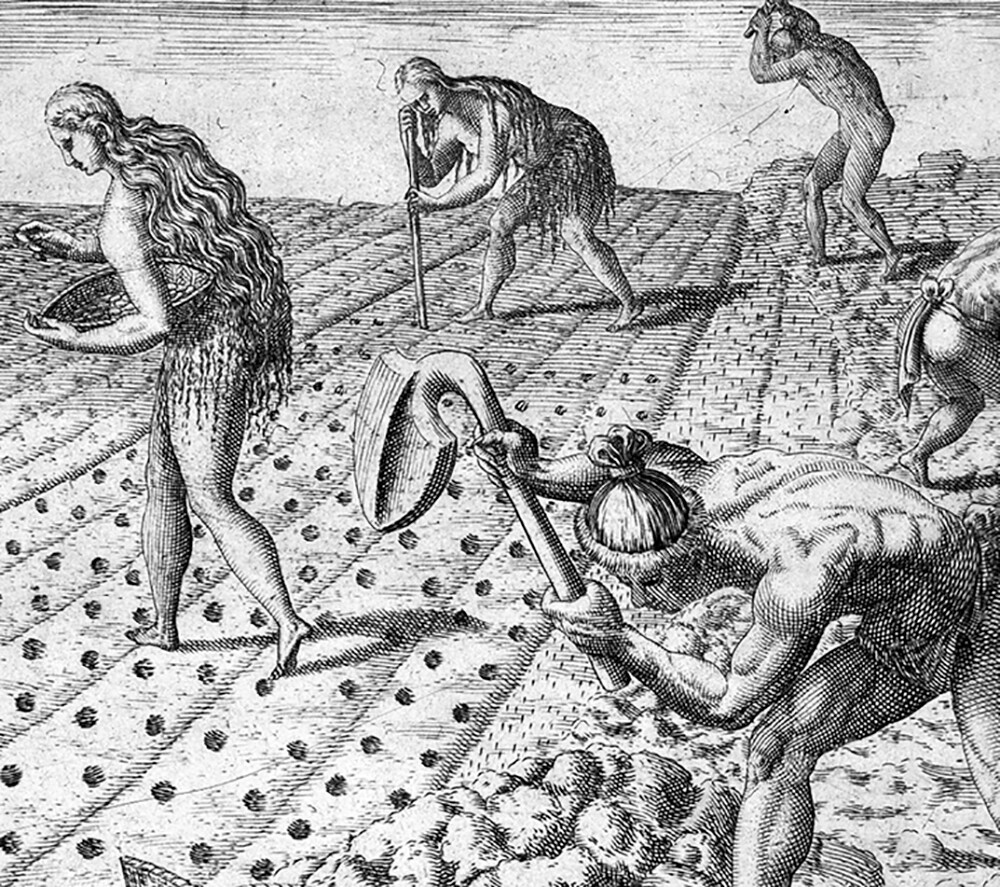
Native societies were highly gendered but much more equal than the system of gender relations in Europe. In most Native communities, women had responsibility for farming and running the households, including literally building the houses. Although diplomatic leaders were usually men, women generally made the decisions about food cultivation, storage, and preparation. They participated in councils, especially when matters within the realm of women were being considered, including going to war and making peace because of women’s roles in life-giving and in providing food for battle and diplomacy. Many North American societies were matrilineal—that is, tracing descent through the mother’s line and making children members of the mother’s family or clan, not the father’s. Women generally had some power over their own sexuality and marriage, including divorce.
Religion in Native North America
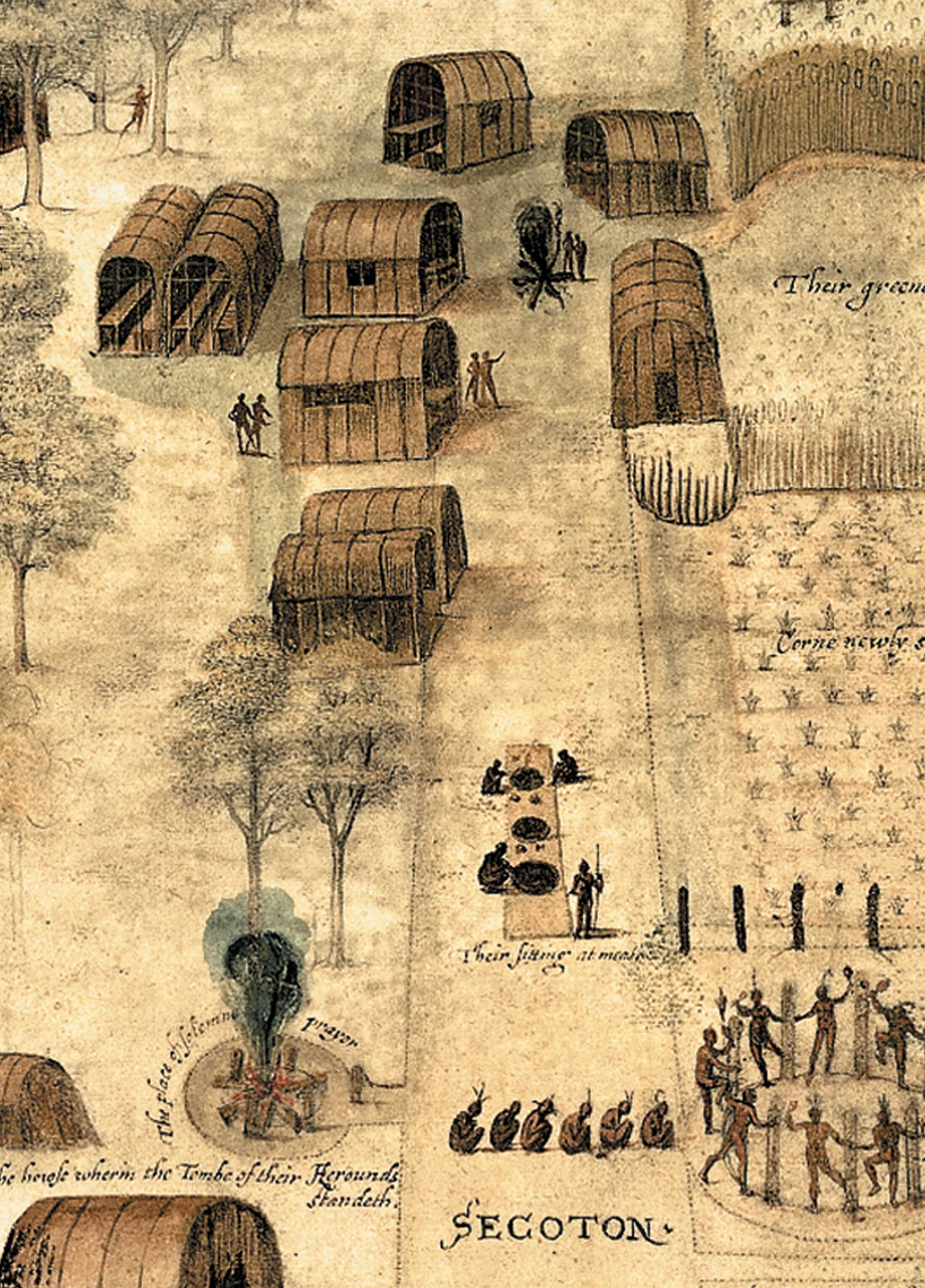
For the diverse Native societies of North America, as for people all around the world in the medieval and early modern eras, religion was not simply a matter of spiritual doctrines and practices, but also systems of belief that permeated every aspect of people’s lives. Their lives were steeped in religious ceremonies often directly related to farming and hunting. Spiritual power, they believed, suffused the world, and sacred spirits could be found in all kinds of living and inanimate things—animals, plants, trees, water, and wind. Through religious ceremonies, they aimed to harness the aid of powerful supernatural forces to serve human interests. Religious ceremonies sought to engage the spiritual power of nature to secure abundant crops or fend off dangerous spirits. Towns or clans also held elaborate religious rites, participation in which helped to define the boundaries of community membership. Those who seemed to possess special abilities to invoke supernatural powers—namely, shamans, medicine men, and other religious leaders—held positions of respect and authority. They did not make a sharp distinction between the natural and the supernatural, or secular and religious activities.
A major difference with Christianity, as well as with Judaism and Islam, was that Native North American religions were inclusivist. In theory at least, Christians were supposed to be exclusively Christian, rejecting all other religions’ beliefs and practices as idolatry and blasphemy. Inclusivist religions, in contrast, allowed adherents to incorporate new religious beliefs and practices as part of a larger effort to make sense of the world. This fundamental difference between inclusivist and exclusivist ways of seeing religion would lead to grave misunderstandings when Christian missionaries tried to convert Native Americans.
Slavery and Freedom in Native North America
Settlers and Indians
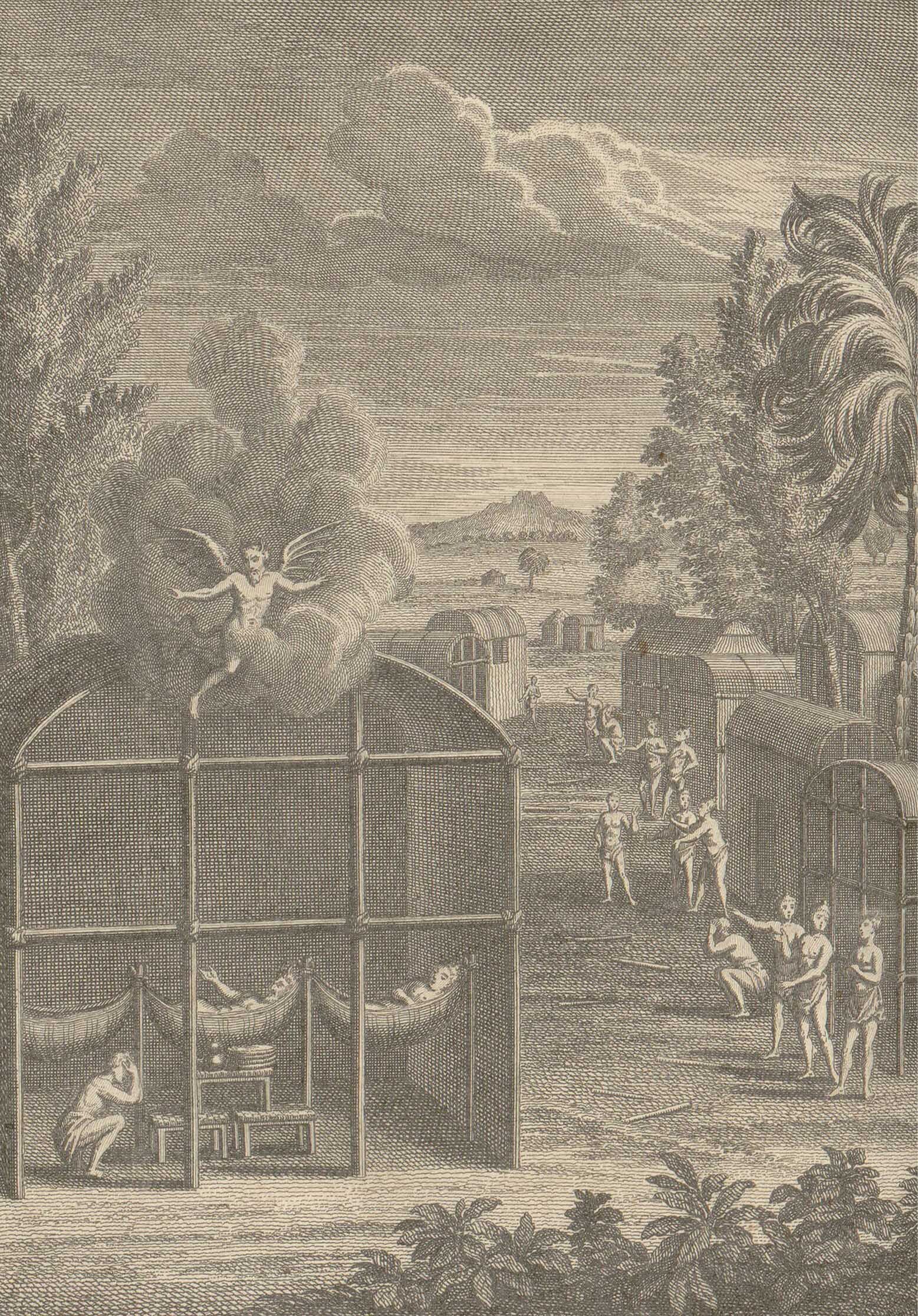
And what of liberty as the Native inhabitants of North America understood it? Many Europeans saw Indians as embodying freedom. The Haudenosaunee, wrote one colonial official, held “such absolute notions of liberty that they allow of no kind of superiority of one over another, and banish all servitude from their territories.” But most colonizers quickly concluded that the notion of “freedom” was alien to Indian societies. Early English and French dictionaries of Indian languages contained no entry for “freedom” or liberté. Nor, wrote one early trader, did Indians have “words to express despotic power, arbitrary kings, oppressed or obedient subjects.” Of course, Native Americans whose ancestors had been part of Mississippian or other hierarchical societies in previous generations did know about the dangers of excessive power. Unlike Europeans, they had rejected that way of life to develop societies with the kind of freedom that they valued.
Europeans considered Indians barbaric in part because they did not appear to live under established governments or fixed laws or have the proper respect for authority. “They are born, live, and die in a liberty without restraint,” wrote one religious missionary. In a sense, they seemed too free, lacking the order and discipline that Europeans considered the hallmarks of civilization. When Giovanni da Verrazano described the Indians as living in “absolute freedom,” he did not intend this as a compliment.
The familiar modern understanding of freedom as personal independence, often based on ownership of private property, had little meaning in Native societies. But Indians certainly had their own ideas of freedom. Although individuals were expected to think for themselves and did not always have to go along with collective decision making, men and women judged one another according to their ability to live up to widely understood ideas of appropriate behavior. Far more important than individual autonomy were kinship ties, the ability to follow one’s spiritual values, and the well-being and security of one’s community. Group autonomy and self-determination, and the mutual obligations that came with a sense of belonging and connectedness, took precedence over individual freedom. Indeed, the emphasis on consensus-building (rather than dictatorial decision making or majority rule) at times required someone with a dissenting point of view simply to leave a council meeting or diplomatic negotiation rather than continue to argue. The Haudenosaunee League held its leaders and representatives to a high standard: “Their hearts shall be full of peace and good will and their minds filled with a yearning for the welfare of the people. . . . Neither anger nor fury shall find lodgment in their minds and all their words and actions shall be marked by calm deliberation.”
Like medieval and early modern people around the globe, many Native North American societies practiced small-scale slavery, mostly enslavement of war captives. Captives had none of the rights or privileges of members of a society. Ripped from their own societies and families, they could be forced to labor or traded away. But slavery was not inheritable, and captives could become full members of the society that adopted them.
Glossary
- Great League of Peace
- An alliance of the Haudenosaunee (Iroquois) nations, originally formed at least 400 years ago. Each year the Haudenosaunee Great Council, with male representatives chosen by the women of the five (and later six) nations, met to coordinate dealings with outsiders. The League was a major force in the 1600s and 1700s.