 Treatment of Native Peoples in the Nineteenth Century
THE TRANSFORMATION OF THE WEST
Nowhere did capitalism penetrate more rapidly or dramatically than in the trans-Mississippi West, whose “vast, trackless spaces,” as the poet Walt Whitman called them, were now absorbed into the expanding economy. At the close of the Civil War, the frontier of continuous white settlement did not extend very far beyond the Mississippi River. To the west lay millions of acres of fertile and mineral-rich land roamed by giant herds of buffalo whose meat and hides provided food, clothing, and shelter for a population of more than 250,000 Indians.
In 1893, the historian Frederick Jackson Turner gave a celebrated lecture, “The Significance of the Frontier in American History,” in which he argued that on the western frontier the distinctive qualities of American culture were forged: individual freedom, political democracy, and economic mobility. The West, he added, acted as a “safety valve,” drawing off those dissatisfied with their situation in the East and therefore counteracting the threat of social unrest. Turner’s was one of the most influential interpretations of American history ever developed. But his lecture summarized attitudes toward the West that had been widely shared among Americans long before 1893. Ever since the beginning of colonial settlement in British North America, the West—a region whose definition shifted as the population expanded—had been seen as a place of opportunity.
Many Americans did indeed experience the westward movement in the way Turner described it. From farmers moving into Ohio, Indiana, and Illinois in the decades after the American Revolution to prospectors who struck it rich in the California gold rush of the mid-nineteenth century, millions of Americans and immigrants from abroad found in the westward movement a path to economic opportunity. But Turner seemed to portray the West as an empty space before the coming of white settlers. In fact, of course, it was already inhabited by Native Americans, who bore the brunt of westward expansion as people from the East invaded their homelands. Moreover, the West was hardly a uniform paradise of small, independent farmers. Landlords, railroads, and mining companies in the West also utilized Mexican migrant and indentured labor, Chinese working on long-term contracts, and, until the end of the Civil War, African American slaves.
A Diverse Region
The West, of course, was hardly a single area. West of the Mississippi River lay a variety of regions, all marked by remarkable physical beauty—the Great Plains, the Rocky Mountains, the desert of the Southwest, the Sierra Nevada, and the valleys and coastline of California and the Pacific Northwest. It would take many decades before individual settlers and corporate business enterprises penetrated all these areas. But the process was far advanced by the end of the nineteenth century.
The political and economic incorporation of the American West was part of a global process. In many parts of the world, indigenous inhabitants—the Mapuche in Chile, the Zulu in South Africa, Aboriginal peoples in Australia, American Indians—were pushed aside (often after fierce resistance) as centralizing governments brought large interior regions under their control. In the United States, the incorporation of the West required the active intervention of the federal government, which acquired Indian land by war and treaty, administered land sales, regulated territorial politics, and distributed land and money to farmers, railroads, and mining companies. Western states used land donated by the federal government, in accordance with the Morrill Land-Grant Act passed during the Civil War, to establish public universities. And, of course, the abolition of slavery by the Thirteenth Amendment decided the long contest over whether the West would be a society based on free or slave labor.
Newly created western territories such as Arizona, Idaho, Montana, and the Dakotas remained under federal control far longer than had been the pattern in the East. Eastern territories had taken an average of thirteen years to achieve statehood; it took New Mexico sixty-two years to do so, Arizona forty-nine, and Utah forty-six. Many easterners were wary of granting statehood to the territories until white and non-Mormon settlers counterbalanced the large Latino and Mormon populations.
In the twentieth century, the construction of federally financed irrigation systems and dams would open large areas to commercial farming. Ironically, the West would become known (not least to its own inhabitants) as a place of rugged individualism and sturdy independence. But without active governmental assistance, the region could never have been settled and developed.
Farming on the Middle Border
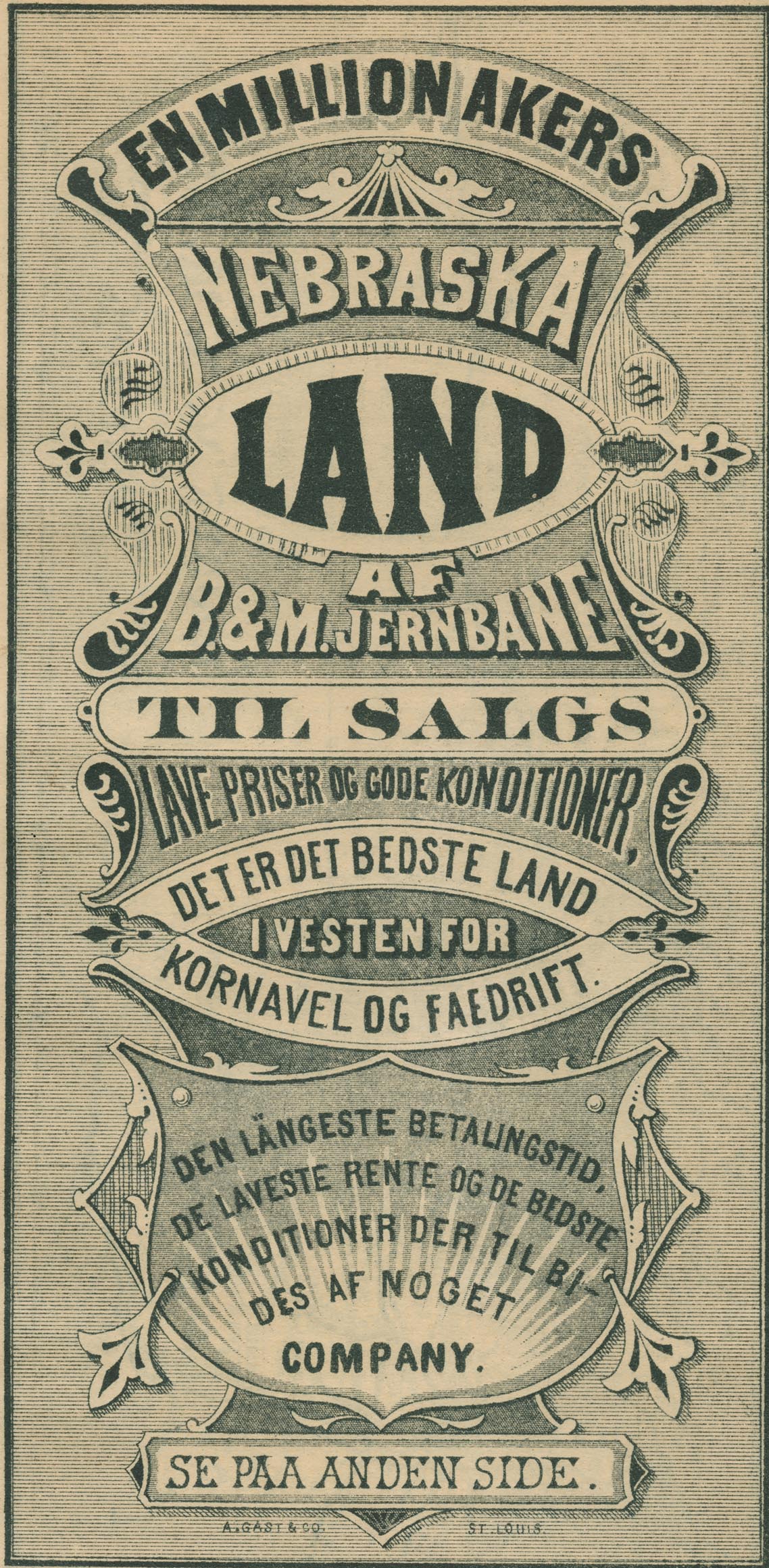
Even as sporadic Indian wars raged, settlers poured into the West. Territorial and state governments eager for population, and railroad companies anxious to sell land they had acquired from the government, flooded European countries and eastern cities with promotional literature promising easy access to land. More land came into cultivation in the thirty years after the Civil War than in the previous two and a half centuries of American history. Hundreds of thousands of families acquired farms under the Homestead Act, and even more purchased land from speculators and from railroad companies that had been granted immense tracts of public land by the federal government. A new agricultural empire producing wheat and corn for national and international markets arose on the Middle Border (Minnesota, the Dakotas, Nebraska, and Kansas), whose population rose from 300,000 in 1860 to 5 million in 1900. The farmers were a diverse group, including native-born easterners, Blacks escaping the post-Reconstruction South, and immigrants from Canada, Germany, Scandinavia, and Great Britain. Although ethnic diversity is generally associated with eastern cities, in the late nineteenth century the most multicultural state in the Union was North Dakota.
Despite the promises of promotional pamphlets, farming on the Great Plains was not an easy task. Difficulties came in many forms—from the poisonous rattlesnakes that lived in the tall prairie grass to the blizzards and droughts that periodically afflicted the region. Much of the burden fell on women. Farm families generally invested in the kinds of labor-saving machinery that would bring in cash, not machines that would ease women’s burdens in the household (like the backbreaking task of doing laundry). While husbands and sons tended to devote their labor to cash crops, farm wives cared for animals, grew crops for food, and cooked and cleaned. A farm woman in Arizona described her morning chores in her diary: “Get up, turn out my chickens, draw a pail of water . . . make a fire, put potatoes to cook, brush and sweep half inch of dust off floor, feed three litters of chickens, then mix biscuits, get breakfast, milk, besides work in the house, and this morning had to go half mile after calves.” On far-flung homesteads, many miles from schools, medical care, and sources of entertainment, farm families suffered from loneliness and isolation—a problem especially severe for women when their husbands left, sometimes for weeks at a time, to market their crops.
Bonanza Farms
John Wesley Powell, the explorer and geologist who surveyed the Middle Border in the 1870s, warned that because of the region’s arid land and limited rainfall, development there required large-scale irrigation projects. The model of family farming envisioned by the Homestead Act of 1862 could not apply: no single family could do all the work required on irrigated farms—only cooperative, communal farming could succeed, Powell maintained.
Despite the emergence of a few bonanza farms that covered thousands of acres and employed large numbers of agricultural wage workers, family farms still dominated the trans-Mississippi West. Even small farmers, however, became increasingly oriented to national and international markets, specializing in the production of single crops for sale in faraway places. At the same time, railroads brought factory-made goods to rural people, replacing items previously produced in farmers’ homes. Farm families became more and more dependent on loans to purchase land, machinery, and industrial products, and more and more vulnerable to the ups and downs of prices for agricultural goods in the world market. Agriculture reflected how the international economy was becoming more integrated. The combination of economic depressions and expanding agricultural production in places like Argentina, Australia, and the American West pushed prices of farm products steadily downward. From Italy and Ireland to China, India, and the American South, small farmers throughout the world suffered severe difficulties in the last quarter of the nineteenth century. Many joined the migration to cities within their countries or the increasing international migration of labor.
The future of western farming ultimately lay with giant agricultural enterprises relying heavily on irrigation, chemicals, and machinery—investments far beyond the means of family farmers. A preview of the agricultural future was already evident in California, where, as far back as Spanish and Mexican days, landownership had been concentrated in large units. In the late nineteenth century, California’s giant fruit and vegetable farms, owned by corporations like the Southern Pacific Railroad, were tilled not by agricultural laborers who could expect to acquire land of their own, but by migrant workers from China, the Philippines, Japan, and Mexico, who tramped from place to place following the ripening crops.
In the 1870s, California’s “wheat barons,” who owned ranches of 30,000 or more acres, shipped their grain from San Francisco all the way to Great Britain, while large-scale growers in the new “Orange Empire” of the southern part of the state sent fruit east by rail, packaged in crates bedecked with images of an Edenic landscape filled with lush orchards.
The Cowboy and the Corporate West
The two decades following the Civil War also witnessed the golden age of the cattle kingdom. The Kansas Pacific Railroad’s stations at Abilene, Dodge City, and Wichita, Kansas, became destinations for the fabled drives of millions of cattle from Texas. A collection of white, Mexican, and Black men who conducted the cattle drives, the cowboys became symbols of a life of freedom on the open range. Their exploits would later serve as the theme of many a Hollywood movie, and their clothing inspired fashions that remain popular today. But there was nothing romantic about the life of the cowboys, most of whom were low-paid wage workers. (Texas cowboys even went on strike for higher pay in 1883.) The days of the long-distance cattle drive ended in the mid-1880s, as farmers enclosed more and more of the open range with barbed-wire fences, making it difficult to graze cattle on the grasslands of the Great Plains, and two terrible winters destroyed millions of cattle. When the industry recuperated, it was reorganized in large, enclosed ranches close to rail connections.
THE INDUSTRIAL WEST
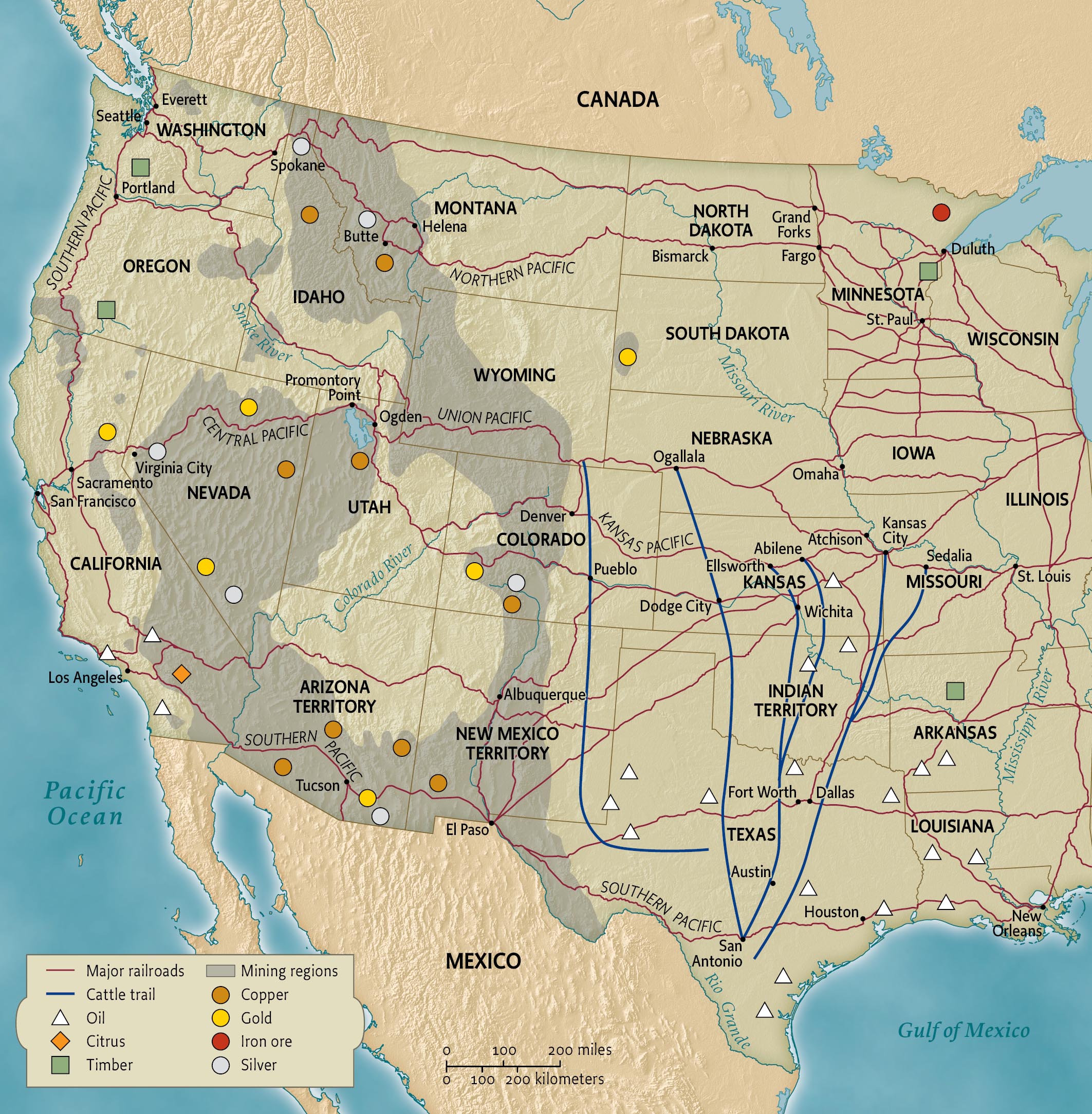
The West was more than a farming empire. By 1890, a higher percentage of its population lived in cities than was the case in other regions. The economic focus of California’s economy remained San Francisco, a major manufacturing center and one of the world’s great trading ports. The explosive growth of southern California began in the 1880s, first with tourism, heavily promoted by railroad companies, followed by the discovery of oil in Los Angeles in 1892. Large corporate enterprises appeared throughout the West. The lumber industry, dominated by small-scale producers in 1860, came under the control of corporations that acquired large tracts of forest and employed armies of loggers. Lumbermen had cut trees in the Far West’s vast forests since the days of Spanish and Mexican rule. Now, with rising demand for wood for buildings in urban centers and with new railroads making it possible to send timber quickly to the East, production expanded rapidly. Sawmills sprang up near rail lines, and lumber companies acquired thousands of acres of timber land. Loggers who had migrated from the East and Midwest and were used to cutting pine trees had to develop new techniques for felling the far larger giant redwoods of northern California. Once they did, coastal forests were decimated, with the high-quality wood being used to construct many of the buildings in San Francisco and other communities. In the early twentieth century, the desire to save the remaining redwoods would become one inspiration for the conservation movement.
Western mining, from Michigan iron ore and copper to gold and silver in California, Nevada, and Colorado, fell under the sway of companies that mobilized eastern and European investment to introduce advanced technology. Gold and silver rushes took place in the Dakotas in 1876, Idaho in 1883, Colorado in the 1890s, and Alaska at the end of the century. Railroad hubs like Albuquerque, Denver, El Paso, and Tucson flourished as gateways to the new mineral regions. But as in California after 1848, the independent prospector working a surface mine with his pick and shovel quickly gave way to deep-shaft corporate mining employing wage workers. As with other western industries, the coming of the railroad greatly expanded the possibilities for mining, making it possible to ship minerals from previously inaccessible places. Moreover, professionally trained engineers from the East and Europe introduced new scientific techniques of mining and smelting ore. For example, the town of Leadville, Colorado, which did not exist before the mid-1870s, became one of the world’s great centers of lead production after August R. Meyer, a European mining engineer, analyzed the precise content of silver and lead in the area’s minerals. The economic crosscurrents at work in post–Civil War mining were illustrated at Butte, Montana. In the 1880s, absentee owners from San Francisco poured millions of dollars into what they thought was a silver mine, only to learn that they had acquired one of the world’s richest deposits of copper. A new town, Anaconda, quickly arose, with a population of 2,000 miners, smelters, engineers, and others, from a wide variety of ethnic backgrounds. In the early twentieth century, the company would be acquired by bankers and other investors from the East.
A similar process occurred in New Mexico, where traditional life based on sheep farming on land owned in common by Mexican villagers had continued more or less unchanged after the United States acquired the area in the Mexican War. The existence of these Spanish and Mexican communal landholdings may have influenced John Wesley Powell’s recommendations concerning communal farming. Railroads reached the area in the 1870s, bringing with them eastern mining companies and commercial ranchers and farmers. Because courts only recognized Mexican-era land titles to individual plots of land, communal landholdings were increasingly made available for sale to newcomers. By 1880, three-quarters of New Mexico’s sheep belonged to just twenty families. Unable to continue as sheep raisers, more and more Hispanic residents went to work for the new mines and railroads.
The Chinese Presence
Labor in the West
Chinese immigration, which had begun at the time of the California gold rush, continued in the postwar years. Before the Civil War, nearly all Chinese newcomers had been unattached men, brought in by labor contractors to work in western gold fields, railroad construction, and factories. In the early 1870s, entire Chinese families began to immigrate. By 1880, 105,000 persons of Chinese descent lived in the United States. Three-quarters lived in California, where Chinese made up over half of the state’s farm workers. But Chinese immigrants were present throughout the West and in all sorts of jobs. After the completion of the transcontinental railroad in 1869, many worked in construction on other railroad lines that sprang up throughout the region. Chinese could be found in mines in Idaho, Colorado, and Nevada, as domestic workers in urban households, and in factories producing cigars, clothing, and shoes in western cities. They built levees, drained agricultural fields, and worked on fishing boats. Many men had wives and children in China, and like members of other immigrant groups, they kept in touch by sending letters and money to their families at home and reading magazines aimed at emigrants that reported on local events in China. As will be related in the next chapter, their growing presence sparked an outpouring of anti-Chinese sentiment, leading to laws excluding virtually all Chinese from entering the country.
Conflict on the Mormon Frontier
The Mormons had moved to the Great Salt Lake Valley in the 1840s, hoping to practice their religion free of the persecution that they had encountered in the East. They envisioned their community in Utah as the foundation of a great empire they called Deseret. Given the widespread unpopularity of Mormon polygamy and the close connection of church and state in Mormon theology, conflict with both the federal government and the growing numbers of non-Mormons moving west became inevitable. In 1857, after receiving reports that the work of federal judges in Utah was being obstructed by the territorial governor, the Mormon leader Brigham Young, President James Buchanan removed Young and appointed a non-Mormon to replace him. Young refused to comply, and federal troops entered the Salt Lake Valley, where they remained until the beginning of the Civil War. During this time of tension, a group of Mormons attacked a wagon train of non-Mormon settlers traveling through Utah and intending to settle in California. What came to be called the Mountain Meadows Massacre resulted in the death of all the adults and older children in the wagon train—over 100 persons. Only a handful of young children survived. Nearly twenty years later, one leader of the assault was convicted of murder and executed.
After the Civil War, Mormon leaders sought to avoid further antagonizing the federal government. In the 1880s, Utah banned the practice of polygamy, a prohibition written into the state constitution as a requirement before Utah gained admission as a state in 1896.
The Plains Indians in a Changing West
The transcontinental railroad, a symbol of the reunited nation, brought tens of thousands of newcomers to the West and stimulated the expansion of farming, mining, and other enterprises. The incorporation of the West into the national economy spelled the doom of the world of the Plains Indians. Their lives had already undergone profound transformations. In the eighteenth century, the spread of horses, originally introduced by the Spanish, led to a wholesale shift from farming and hunting on foot to mounted hunting of buffalo. New Indian groups migrated to the Great Plains to take advantage of the horse, coalescing into the great tribes of the nineteenth century—the Cheyenne, Comanche, Crow, Kiowa, and Lakota. As newcomers sought to stake a claim on the hunting grounds of the Great Plains and existing groups fought to defend their homelands, cycles of warfare spread across the region.
Until the Civil War, Native nations ruled the Great Plains and the American presence was mostly limited to army forts and trading posts. Most migrants on the Oregon and California trails before the Civil War encountered little hostility from Indians, often trading with them for food and supplies. But as settlers encroached on Indian lands, bloody conflict between the army and Plains tribes began in the 1850s and continued for decades.
Grant’s Peace Policy and Reconstruction in Indian Territory
In 1869, President Grant announced a “Peace Policy” in the West. It was designed by Ely Parker, a Seneca man who had served on Grant’s staff during the war and who had written out Robert E. Lee’s terms of surrender in 1865. Appointed by Grant, Commissioner of Indian Affairs Ely Parker was the first Native American to hold that office. (The first Indian Cabinet member, Secretary of the Interior Deb Haaland, was appointed by President Joe Biden in 2021.) Initially, the Peace Policy curtailed military violence in the West. Its announcement was soon followed by an act of Congress ending the practice of making treaties with Indigenous peoples—a severe blow to Native American sovereignty. Now Indian policy would be determined unilaterally by Congress and the president. The underlying assumption remained what it long had been: that Indians must accept removal to reservations and eventual assimilation into American life. In some ways, these policies offered a parallel to Reconstruction in the South. In both cases the federal government sought to consolidate its control over the entire country and to fit large numbers of conquered people—white southerners and western Indians—into a single national mold.
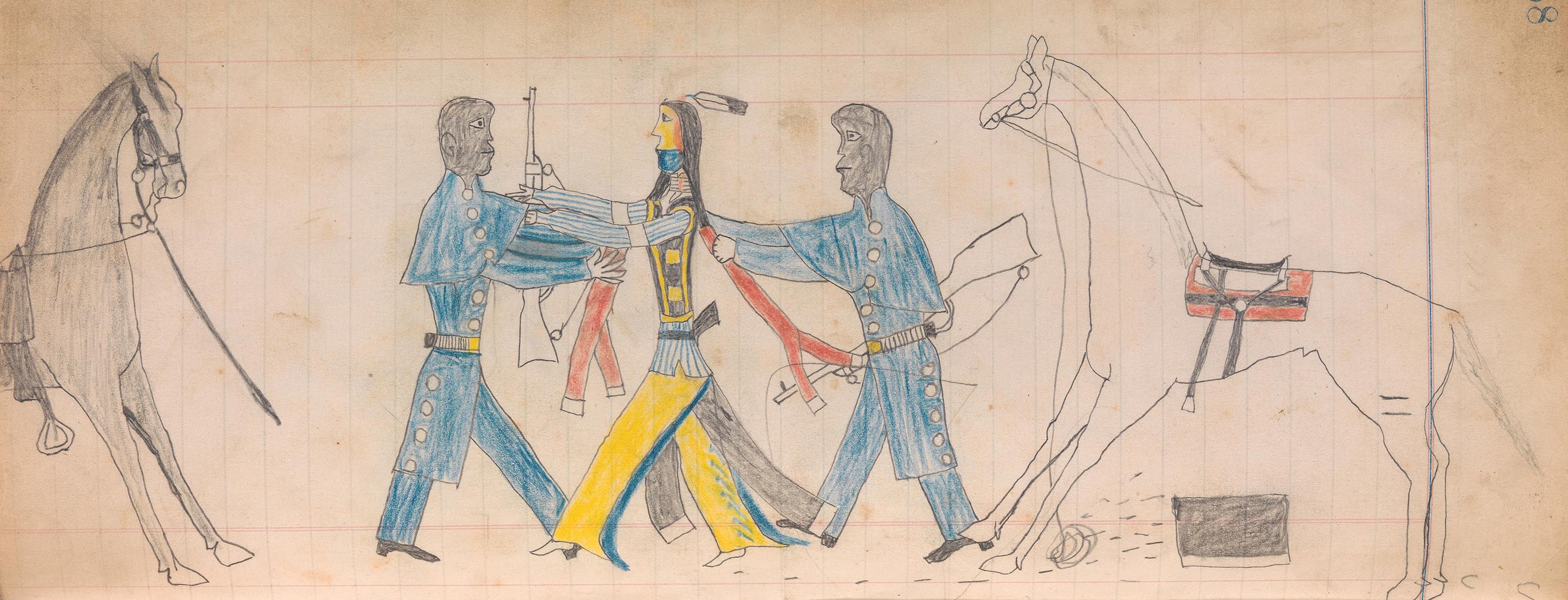
Despite the Peace Policy, warfare soon resumed. Drawing on methods used to defeat the Confederacy, Civil War generals like Philip H. Sheridan set out to destroy the foundations of the Indian economy—villages, horses, and especially the buffalo. Hunting by mounted Indians had already reduced the buffalo population—estimated at 30 million in 1800—but it was army campaigns and the depredations of hunters seeking buffalo hides that rendered the vast herds all but extinct. By 1886, an expedition from the Smithsonian Institution in Washington had difficulty finding twenty-five “good specimens.” “A cold wind blew across the prairie when the last buffalo fell,” said the Sioux leader Sitting Bull, “a death-wind for my people.”
“Let Me Be a Free Man”
Comanche and the Borderlands
The army’s relentless attacks broke the power of one tribe after another. In 1877, troops commanded by former Freedmen’s Bureau commissioner O. O. Howard pursued the Nez Percé Indians and their leader, Chief Joseph, on a 1,700-mile chase across the Far West. The Nez Percé (whose name was given them by Lewis and Clark in 1805 and means “pierced nose” in French) were seeking to escape to Canada after fights with settlers who had encroached on tribal lands in Oregon and Idaho. After four months, Howard forced the Indians to surrender, and they were removed to Oklahoma and later to a reservation in Washington Territory. Until his death in 1904, Joseph would unsuccessfully petition successive presidents for his people’s right to return to their beloved Oregon homeland.
Indians occasionally managed to inflict costly delay and even defeat on army units. The most famous Indian victory took place in June 1876 at the Battle of the Little Bighorn, when General George A. Custer and his entire command of 250 men perished. The Lakota, Arapaho, and Cheyenne warriors, led by Sitting Bull and Crazy Horse, were defending tribal land in the Black Hills of the Dakota Territory. Reserved for them in an 1868 treaty “for as long as the grass shall grow,” their lands had been invaded by whites after the discovery of gold. Eventually the Indians were worn down, partly because of the decimation of the buffalo, and relinquished their claim to the Black Hills. In the Southwest, Cochise, Geronimo, and other leaders of the Apache, who had been relocated by the government a number of times, led bands that crossed and recrossed the border with Mexico, evading the army and occasionally killing civilians. They would not surrender until the mid-1880s.
Another casualty was the Comanche empire, centered in modern-day New Mexico and Colorado. Beginning in the mid-eighteenth century, the Comanche dominated much of the Great Plains and Southwest. The Comanche subordinated local Indian groups to their power, imposed a toll on trade routes like the Santa Fe Trail, and dealt for a time as an equal with the Spanish, French, and American governments. Their power was not finally broken until the 1870s.
VOICES OF FREEDOM
From SPEECH OF CHIEF JOSEPH OF THE NEZ PERCÉ INDIANS, IN WASHINGTON, D.C. (1879)
Chief Joseph, leader of the Nez Percé Indians, led his people on a 1,700-mile trek through the Far West in 1877 in an unsuccessful effort to escape to Canada. Two years later, he addressed an audience in Washington, D.C., that included President Rutherford B. Hayes, appealing for the freedom and equal rights enshrined in the law after the Civil War.
Listen as you read
I have heard talk and talk, but nothing is done. Good words do not last long unless they amount to something. Words do not pay for my dead people. They do not pay for my country, now overrun by white men. . . . Good words will not get my people a home where they can live in peace and take care of themselves. I am tired of talk that comes to nothing. It makes my heart sick when I remember all the . . . broken promises. . . .
If the white man wants to live in peace with the Indian he can live in peace. There need be no trouble. Treat all men alike. Give them the same law. Give them all an even chance to live and grow. All men were made by the same Great Spirit Chief. They are all brothers. The earth is the mother of all people, and all people should have equal rights upon it. You might as well expect the rivers to run backward as that any man who was born a free man should be contented when penned up and denied liberty to go where he pleases. . . .
When I think of our condition my heart is heavy. I see men of my race treated as outlaws and driven from country to country, or shot down like animals. I know that my race must change. We cannot hold our own with the white men as we are. We only ask an even chance to live as other men live. . . .
Let me be a free man—free to travel, free to stop, free to work, free to trade where I choose, free to choose my own teachers, free to follow the religion of my fathers, free to think and talk and act for myself—and I will obey every law, or submit to the penalty.
From LETTER BY SAUM SONG BO, AMERICAN MISSIONARY (OCTOBER 1885)
During the 1880s, Chinese Americans were subjected to discrimination in every phase of their lives. In 1882, Congress temporarily barred further immigration from China. In 1885, when funds were being raised to build a pedestal for the Statue of Liberty, Saum Song Bo, a Chinese American writer, contrasted the celebration of liberty with the treatment of the Chinese.
Listen as you read
A paper was presented to me yesterday for inspection, and I found it to be specially drawn up for subscription among my countrymen toward the Pedestal Fund of the . . . Statue of Liberty. . . . But the word liberty makes me think of the fact that this country is the land of liberty for men of all nations except the Chinese. I consider it as an insult to us Chinese to call on us to contribute toward building in this land a pedestal for a statue of Liberty. That statue represents Liberty holding a torch which lights the passage of those of all nations who come into this country. But are the Chinese allowed to come? As for the Chinese who are here, are they allowed to enjoy liberty as men of all other nationalities enjoy it? Are they allowed to go about everywhere free from the insults, abuses, assaults, wrongs, and injuries from which men of other nationalities are free? . . .
And this statue of Liberty is a gift from another people who do not love liberty for the Chinese. [To] the Annamese and Tonquinese Chinese [colonial subjects of the French empire in Indochina], . . . liberty is as dear as to the French. What right have the French to deprive them of their liberty?
Whether this statute against the Chinese or the statue to Liberty will be the most lasting monument to tell future ages of the liberty and greatness of this country, will be known only to future generations.
Remaking Indian Life
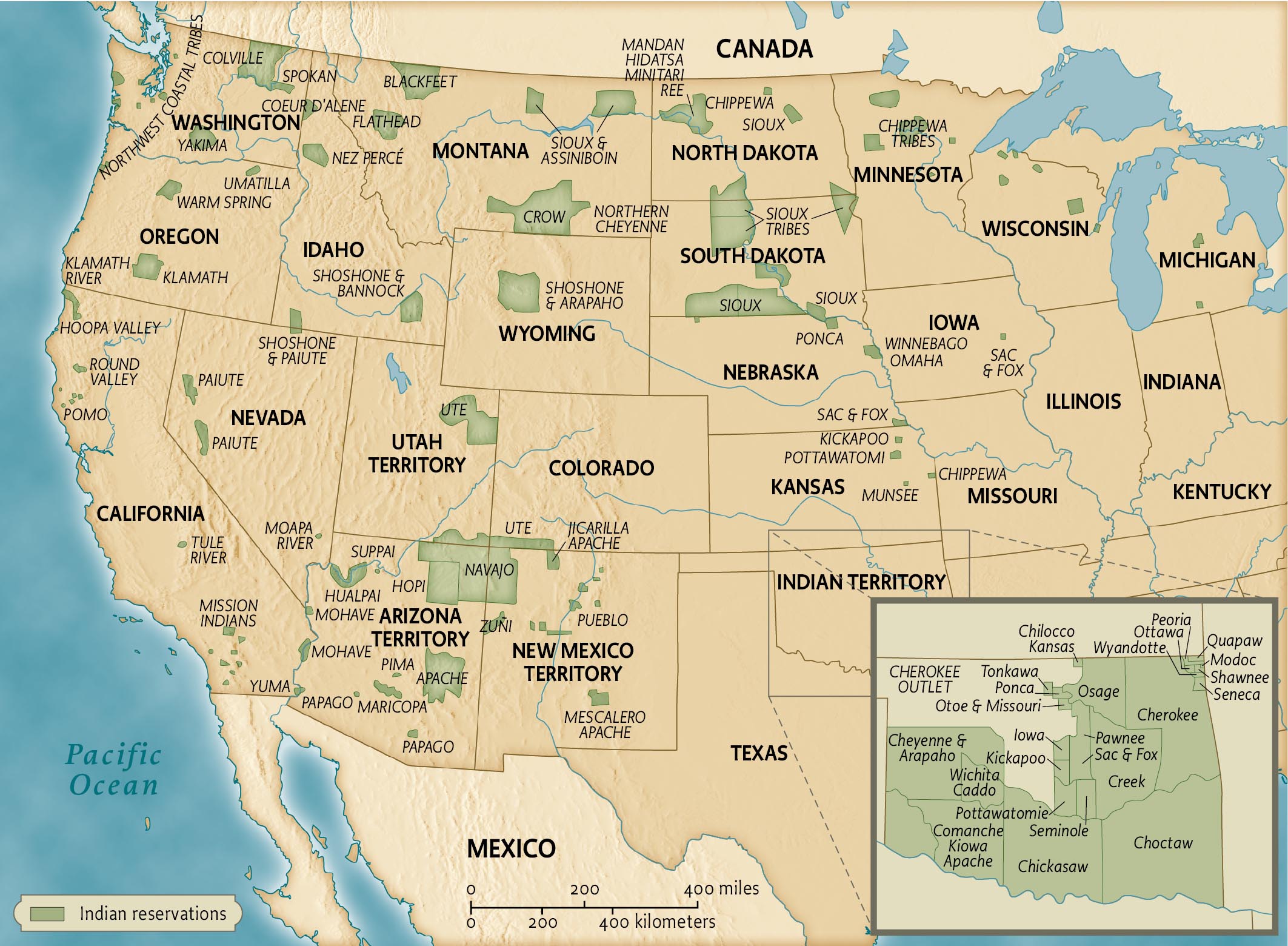
“The life my people want is a life of freedom,” Sitting Bull declared. The Indian idea of freedom, however, which centered on preserving their cultural and political autonomy and control of ancestral lands, conflicted with the interests and values of most white Americans. Nearly all officials believed that the federal government should persuade or force the Plains Indians to surrender most of their land and to exchange their religion, communal property, nomadic way of life, and gender relations for Christian worship, private ownership, and small farming on reservations with men tilling the fields and women working in the home.
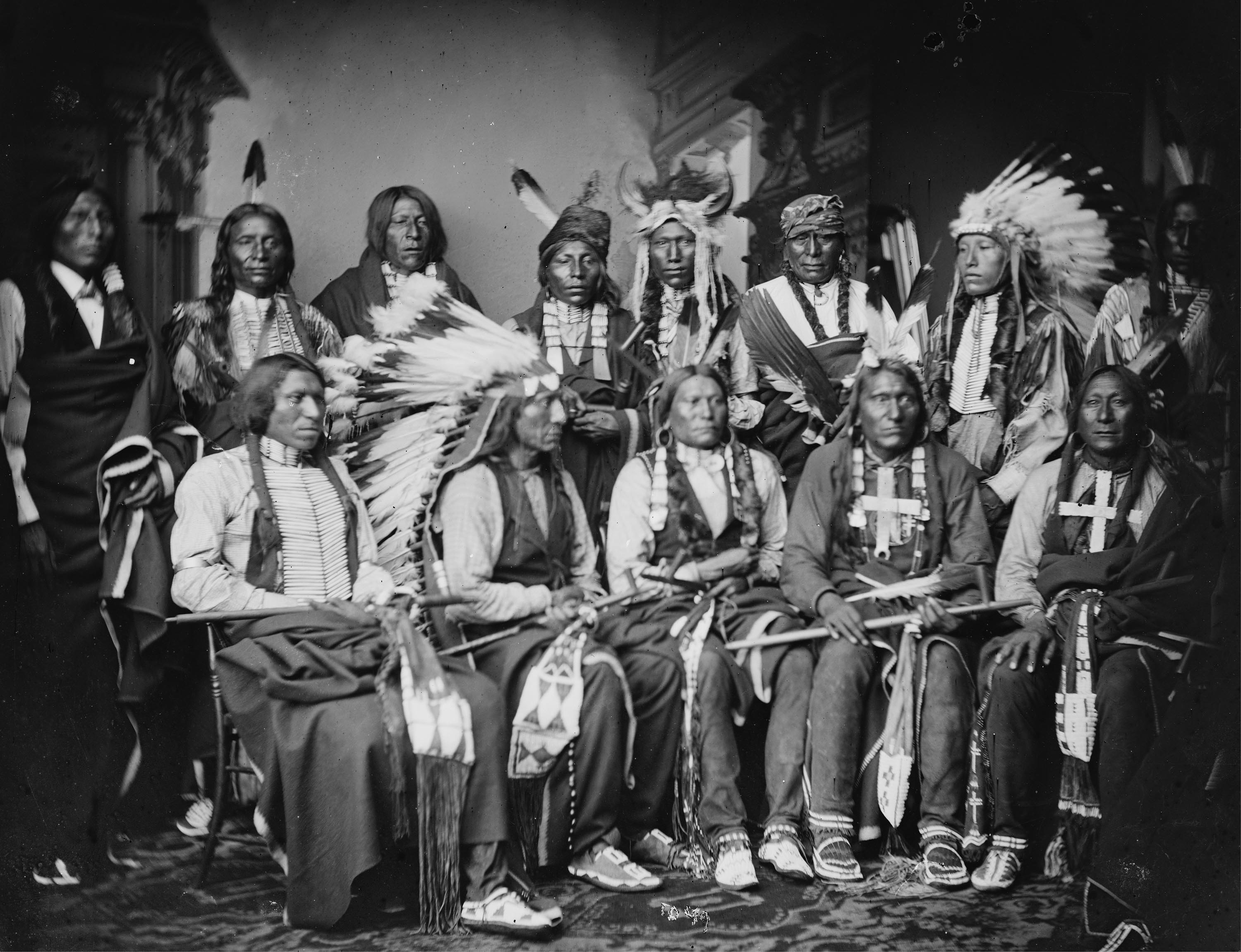
In 1871, Congress eliminated the treaty system that dated back to the revolutionary era, by which the federal government negotiated agreements with Indians as if they were independent nations. This step was supported by railroad companies that found tribal sovereignty an obstacle to construction and by Republicans who believed that it contradicted the national unity born of the Civil War. The federal government pressed forward with its assault on Indian culture. The Bureau of Indian Affairs established boarding schools where Indian children, removed from the “negative” influences of their parents and tribes, were dressed in non-Indian clothes, given new names, and educated in white ways.
The boarding schools established by the federal government lasted for a century and a half and during their existence housed hundreds of thousands of Indigenous children. The aim was forced assimilation: “kill the Indian and save the man,” as the founder of one such school put it. The administrators imposed a regimented schedule and harsh discipline on Indian students, who were not allowed to return home, even when family members fell ill or died. Being removed from their families and communities had a long-term negative impact on many students. The boarding schools were rife with disease. Many students succumbed to tuberculosis and other illnesses and some died by suicide. The curriculum downplayed Indians’ role in American history, prohibited the use of Native languages, and emphasized patriotic identification with the national government, not with individual tribes, all as part of the effort to assimilate the students into white society and to facilitate the seizure of Indian land.
The Dawes Act
The crucial step in attacking “tribalism” came in 1887 with the passage of the Dawes Act, named for Senator Henry L. Dawes of Massachusetts, chair of the Senate’s Indian Affairs Committee. The act broke up the land of nearly all tribes into small parcels to be distributed to Indian families, with the remainder auctioned off to white purchasers. Indians who accepted the farms and “adopted the habits of civilized life” would become full-fledged American citizens. The policy proved to be a disaster, leading to the loss of much tribal land and the erosion of Indian cultural traditions. Whites, however, benefited enormously. When the government made 2 million acres of Indian land available in Oklahoma, 50,000 white settlers poured into the territory to claim farms on the single day of April 22, 1889. Further land rushes followed in the 1890s. In the half century after the passage of the Dawes Act, Indians lost 86 million of the 138 million acres of land in their possession in 1887. Overall, according to one estimate, between 1776 and today, via the “right of discovery,” treaties, executive orders, court decisions, and outright theft, the United States has acquired over 1.5 billion acres of land from Native Americans, an area twenty-five times as large as Great Britain.
Are Native Americans American?
Many laws and treaties in the nineteenth century offered Indians the right to become American citizens if they left the tribal setting and assimilated into American society. But tribal identity was the one thing nearly every Indian wished to maintain, and very few took advantage of these offers. Thus, few Native Americans were recognized as American citizens. Western courts ruled that the rights guaranteed in the Civil Rights Act of 1866 and the Fourteenth and Fifteenth Amendments did not apply to them. In one of its most controversial rulings, Elk v. Wilkins (1884), the Supreme Court agreed.
John Elk was born in Indian Territory (in present-day Oklahoma), but gave up his tribal affiliation and moved to Omaha, where he worked and paid taxes. He tried, unsuccessfully, to claim American citizenship and register to vote. The Civil Rights Act had excluded only Indians “not taxed” from birthright citizenship, and the Fourteenth Amendment, as noted in Chapter 15, recognized as citizens all persons born in the United States and subject to its “jurisdiction.” John Elk certainly seemed to meet all these criteria. Yet the Supreme Court rejected his appeal. It questioned whether any Indian had achieved the degree of “civilization” required of citizens.
By 1900, roughly 53,000 Indians had become American citizens by accepting land allotments under the Dawes Act. The following year, Congress granted citizenship to 100,000 residents of Indian Territory. The remainder would have to wait until 1919 (for those who fought in World War I). In that year there were around 300,000 Indians in the United States, of whom 125,000 were not citizens. Finally, in 1924, Congress extended citizenship to all Native Americans. But their right to cast ballots remained contested. As late as 1948, Arizona and New Mexico did not allow Indians to vote.
INDIAN RESERVATIONS, ca. 1890
The Ghost Dance and Wounded Knee
Some Indians sought solace in the Ghost Dance, a religious revitalization campaign. Its leaders foretold a day when whites would disappear, the buffalo would return, and Indians could once again practice their ancestral customs “free from misery, death, and disease.” Large numbers of Native Americans gathered for days of singing, dancing, and religious observances. Fearing a general uprising, the government sent troops to the reservations. On December 29, 1890, soldiers opened fire on Ghost Dancers encamped near Wounded Knee Creek in South Dakota, killing between 150 and 200 Indians, mostly women and children.
The Wounded Knee massacre was widely applauded in the press. An Army Court of Inquiry essentially exonerated the troops and their commander, and twenty soldiers were later awarded the Medal of Honor, a recognition of exceptional heroism in battle, for their actions at Wounded Knee. Like federal efforts to exert control over the Mormons in Utah, the suppression of the Ghost Dance revealed the limits on Americans’ efforts to seek in the West the freedom to practice nonmainstream religions.
Although violent skirmishes from Oklahoma to Minnesota in the early twentieth century showed that small-scale Indian resistance continued, the Wounded Knee massacre marked the end of four centuries of armed conflict between the continent’s native population and European settlers and their descendants. By 1900, the Indian population had fallen to 250,000, the lowest point in American history. A children’s book about Indians published around this time stated flatly, “The Indian pictured in these pages no longer exists.” Yet despite everything, Indians survived, and in the twentieth century their numbers once again would begin to grow.
Settler Societies and Global Wests
The conquest of the American West was part of a global process whereby settlers moved boldly into the interior of regions in temperate climates around the world, bringing their familiar crops and livestock and establishing mining and other industries. Countries such as Argentina, Australia, Canada, and New Zealand, as well as the United States, are often called “settler societies,” because immigrants from overseas quickly outnumbered and displaced the original inhabitants—unlike in India and most parts of colonial Africa, where fewer Europeans ventured and those who did relied on the labor of the indigenous inhabitants.
In many settler societies, native peoples were subjected to cultural reconstruction similar to policies in the United States. In Australia, the government gathered the Aboriginal populations—their numbers devastated by disease—in “reserves” reminiscent of American Indian reservations. Australia went further than the United States in the forced assimilation of surviving Aboriginal peoples. The government removed large numbers of children from their families to be adopted by whites—a policy only abandoned in the 1970s and for which the prime minister formally apologized in 2008 in a national moment of reconciliation called Sorry Day.
Myth, Reality, and the Wild West
The West has long played many roles in Americans’ national self-consciousness. It has been imagined as a place of individual freedom and unbridled opportunity for those dissatisfied with their lives in the East and as a future empire that would dominate the continent and the world. Even as farms, mines, and cities spread over the landscape in the post–Civil War years, a new image of the West began to circulate—the Wild West, a lawless place ruled by cowboys and Indians (two groups by this time vastly outnumbered by other westerners), and marked by gunfights, cattle drives, and stagecoach robberies.
This image of a violent yet romantic frontier world would later become a staple of Hollywood movies. In the late nineteenth century, it was disseminated in vaudeville shows that achieved immense popularity. Although not the first, William “Buffalo Bill” Cody was the most important popularizer of this idea of the West. A former hunter and scout for the U.S. Army, Cody developed an elaborate theatrical presentation that toured for decades across the United States and Europe. Buffalo Bill’s Wild West Show included reenactments of battles with Indians (including Custer’s Last Stand), buffalo hunts, Indian rituals, and feats by the sharpshooter Annie Oakley. Along with Cody, other persons who had actually participated in these events appeared in the show, including the warrior Sitting Bull and a group of Indian fighters. The image of the Wild West also circulated in cheap popular books known as dime novels and sensational journalistic accounts.
Theater audiences and readers found fantasies of adventure in observing western violence from a safe distance and marveled at the skills of horseback riding, roping, and shooting on display. They imagined the West as a timeless place immune to the corruptions of civilization, which offered a striking contrast to the increasingly sedentary lives of men in eastern cities. Indeed, despite the inclusion of Oakley, this West of the imagination was emphatically a male preserve. The real West—for example, the struggles of farm families—played no role in this depiction. Nor did pervasive labor conflict in mining centers, or the role of the federal government and eastern capital in the region’s development. The West’s multiracial, multiethnic population also disappeared, although different groups added their own elements to the mythical west. Mexican Americans, for example, made a folk hero of Gregorio Cortez, a Texas outlaw renowned for his ability to outwit pursuers. The West Coast also had no place in the picture—the imagined West seemed to stop at the Rocky Mountains.
Glossary
- bonanza farms
- Large farms that covered thousands of acres and employed hundreds of wage laborers in the West in the late nineteenth century.
- Little Bighorn, Battle of the
- Most famous battle of the Black Hills War; took place in 1876 in the Montana Territory; Lakota and Cheyenne warriors massacred a vastly outnumbered U.S. Cavalry commanded by Lieutenant Colonel George Armstrong Custer.
- Dawes Act
- Law passed in 1887 meant to encourage adoption of white norms among Indians; broke up tribal holdings into small farms for Indian families, with the remainder sold to white purchasers.
- Ghost Dance
- A spiritual and political movement among Native Americans whose followers performed a ceremonial “ghost dance” intended to connect the living with the dead and make the Indians bulletproof in battles intended to restore their homelands.
- Wounded Knee massacre
- Last incident of the Indian Wars; it took place in 1890 in the Dakota Territory, where the U.S. Cavalry killed over 200 Sioux men, women, and children.
- my country
- Here Chief Joseph refers to his former tribal lands in Oregon and Idaho.
- when penned up
- Chief Joseph and his people were, by this time, forcefully moved onto reservations. This is what he means by being “penned up.”
- country to country
- Meaning place to place.
- Let me be a free man
- Here Chief Joseph is listing all of the restrictions placed upon Indian tribes on reservations. More often than not, their entire cultural, religious, and educational practices were forbidden, and a policy of “Kill the Indian, Save the Man” became the order of the day. Under this policy, the Americans’ goal was for the old ways (the “Indian”) to end, while the assimilated “man” emerged.
- subscription among my countrymen
- Saum Song Bo refers to a common way of fundraising in this era, similar to today’s monthly or weekly donations. The writer noted that this had been drawn up “specially” to appeal to Chinese Americans, likely through use of the Chinese language.
- pedestal
- Although the statue was a gift from France, the pedestal was not included, and fundraising efforts were undertaken to construct the pedestal.
- are the Chinese allowed to come
- Here Saum Song Bo is referring to the Chinese Exclusion Act, signed into law in 1882 by President Chester Arthur.