 Jim Crow and Segregation
THE SEGREGATED SOUTH
The Redeemers in Power
The failure of Populism in the South opened the door for the full imposition of a new racial order. The coalition of merchants, planters, and business entrepreneurs who dominated the region’s politics after 1877, who called themselves Redeemers, had moved to undo as much as possible of Reconstruction. State budgets were slashed, taxes, especially on landed property, reduced, and public facilities like hospitals and asylums closed. Hardest hit were the new public school systems. Louisiana spent so little on education that it became the only state in the Union in which the percentage of whites unable to read and write actually increased between 1880 and 1900. Black schools, however, suffered the most, as the gap between expenditures for Black and white pupils widened steadily. “What I want here is Negroes who can make cotton,” declared one planter, “and they don’t need education to help them make cotton.”
New laws authorized the arrest of virtually any person without employment and greatly increased the penalties for petty crimes. “They send [a man] to the penitentiary if he steals a chicken,” complained a former slave in North Carolina. The Thirteenth Amendment, which abolished slavery, allowed “involuntary servitude” to continue for those convicted of crime. And as the South’s prison population rose, the renting out of convicts became a profitable business. Every southern state placed at least a portion of its convicted criminals, the majority of them Blacks imprisoned for minor offenses, in the hands of private businessmen. Railroads, mines, and lumber companies competed for this new form of cheap, involuntary labor. Conditions in labor camps were often barbaric, with disease rife and the death rates high. “One dies, get another” was the motto of the system’s architects.
The Failure of the New South Dream
During the 1880s, Atlanta editor Henry Grady tirelessly promoted the promise of a New South, an era of prosperity based on industrial expansion and agricultural diversification. In fact, while planters, merchants, and industrialists prospered, the region as a whole sank deeper and deeper into poverty. Some industry did develop, including mining in the Appalachians, textile production in the Carolinas and Georgia, and furniture and cigarette manufacturing in certain southern cities. The new upcountry cotton factories offered jobs to entire families of poor whites from the surrounding countryside. But since the main attractions for investors were the South’s low wages and taxes and the availability of convict labor, these enterprises made little contribution to regional economic development. With the exception of Birmingham, Alabama, which by 1900 had developed into an important center for the manufacture of iron and steel, southern cities were mainly export centers for cotton, tobacco, and rice, with little industry or skilled labor. Overall, the region remained dependent on the North for capital and manufactured goods. In 1900, southern per capita income amounted to only 60 percent of the national average. As late as the 1930s, President Franklin D. Roosevelt would declare the South the nation’s “number one” economic problem.
Black Life in the South
As the most disadvantaged rural southerners, Black farmers suffered the most from the region’s condition. In the Upper South, economic development offered some opportunities—mines, iron furnaces, and tobacco factories employed Black laborers, and a good number of Black farmers managed to acquire land. In the rice kingdom of coastal South Carolina and Georgia, planters found themselves unable to acquire the capital necessary to repair irrigation systems and machinery destroyed by the war. By the turn of the century, most of the great plantations had fallen to pieces, and many Blacks acquired land and took up self-sufficient farming. In most of the Lower South, however, African Americans owned a smaller percentage of the land in 1900 than they had at the end of Reconstruction.
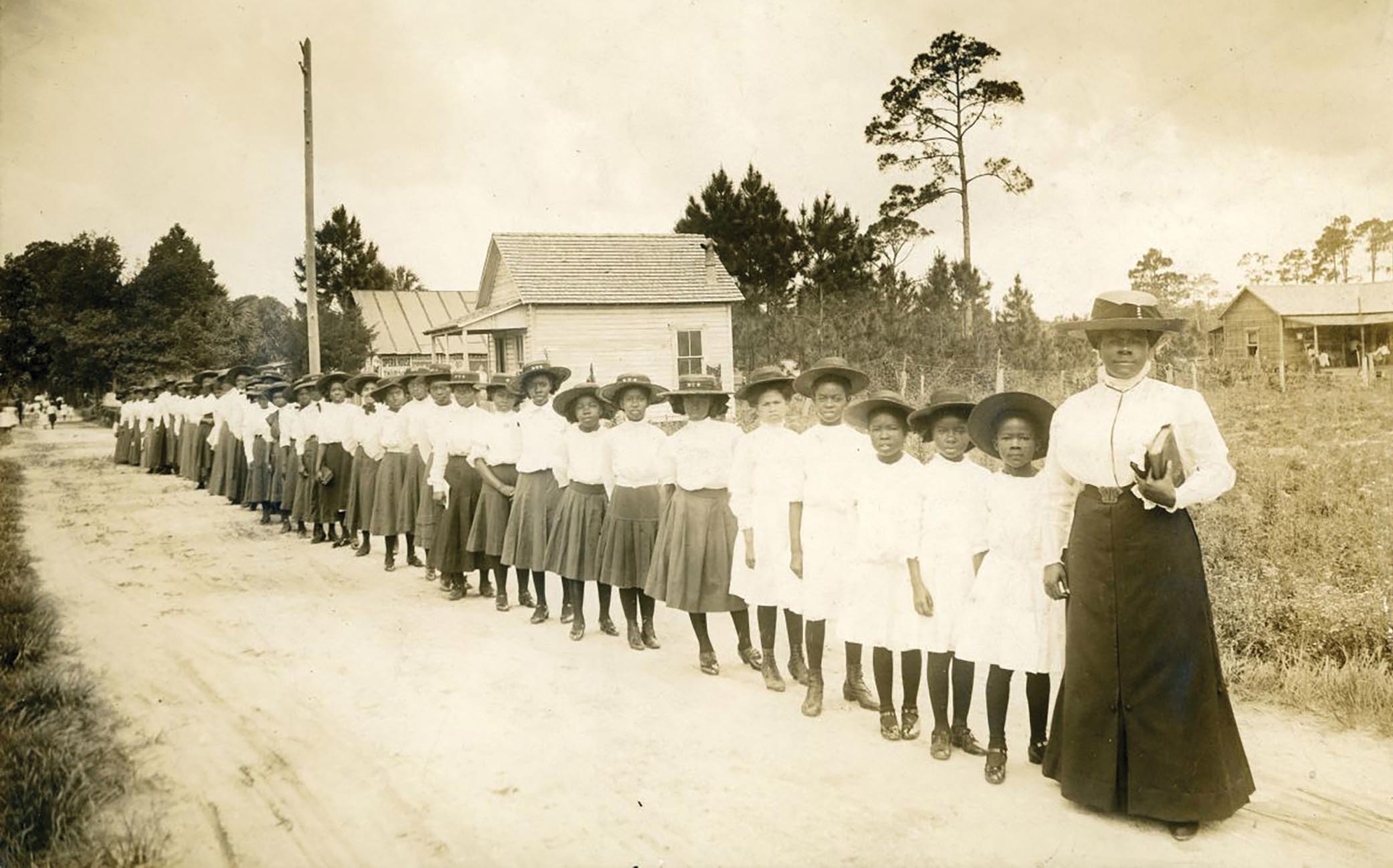
In southern cities, the network of institutions created after the Civil War—schools and colleges, churches, businesses, women’s clubs, and the like—served as the foundation for increasingly diverse Black urban communities. They supported the growth of a Black middle class, mostly professionals like teachers and physicians, or businessmen like undertakers and shopkeepers serving the needs of Black customers. But the labor market was rigidly divided along racial lines. Black men were excluded from supervisory positions in factories and workshops and white-collar jobs such as clerks in offices. A higher percentage of Black women than white worked for wages, but mainly as domestic servants. They could not find employment among the growing numbers of secretaries, typists, and department store clerks.
The Kansas Exodus
Overall, one historian has written, the New South was “a miserable landscape dotted only by a few rich enclaves that cast little or no light upon the poverty surrounding them.” Trapped at the bottom of a stagnant economy, some Blacks sought a way out through emigration from the South. In 1879 and 1880, an estimated 40,000 to 60,000 African Americans migrated to Kansas, seeking political equality, freedom from violence, access to education, and economic opportunity. The name participants gave to this migration—the Exodus, derived from the biblical account of the Jews escaping slavery in Egypt—indicated that its roots lay in deep longings for the substance of freedom. Those promoting the Kansas Exodus, including former fugitive slave Benjamin “Pap” Singleton, the organizer of a real estate company, distributed flyers and lithographs picturing Kansas as an idyllic land of rural plenty. Lacking the capital to take up farming, however, most Black migrants ended up as unskilled laborers in towns and cities. But few chose to return to the South. In the words of one minister active in the movement, “We had rather suffer and be free.”
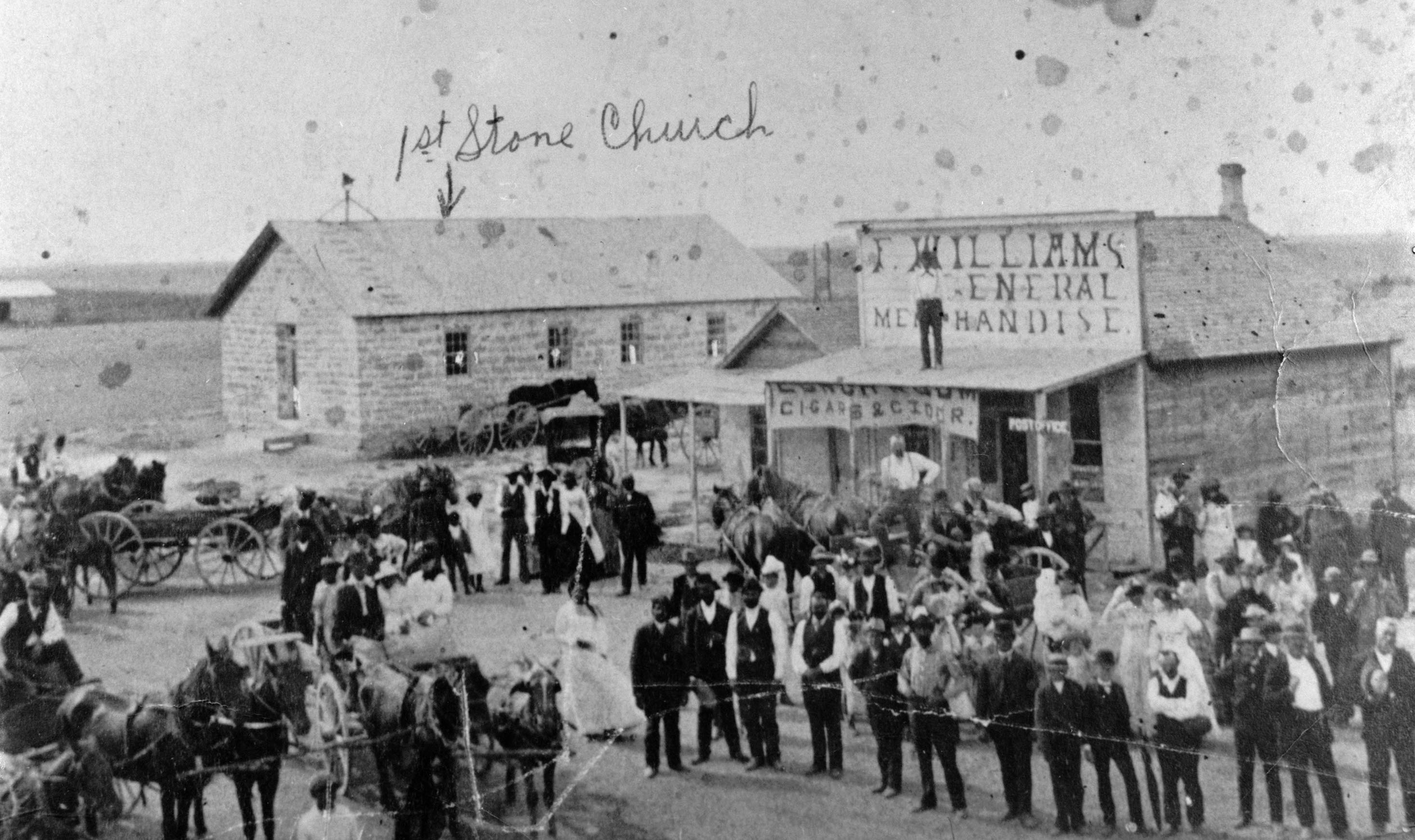
Despite deteriorating prospects in the South, most African Americans had little alternative but to stay in the region. The real expansion of job opportunities was taking place in northern cities. But most northern employers refused to offer jobs to Blacks in the expanding industrial economy, preferring to hire white migrants from rural areas and immigrants from Europe. Not until the outbreak of World War I in Europe in 1914 cut off immigration did northern employers open industrial jobs to Blacks, setting in motion the Great Migration discussed in Chapter 19. Until then, the vast majority of African Americans remained in the South.
The Transformation of Black Politics
Neither Black voting nor Black officeholding came to an abrupt end in 1877, although Democrats solidified their control of state and local affairs by redrawing district lines and substituting appointive for elective officials in counties with Black majorities. A few Blacks even served in Congress in the 1880s and 1890s. Nonetheless, political opportunities became more and more restricted. Not until the 1990s would the number of Black legislators in the South approach the level seen during Reconstruction.
For Black men of talent and ambition, other avenues—business, the law, the church—increasingly seemed to offer greater opportunities for personal advancement and community service than politics. The banner of political leadership passed to Black women activists. The National Association of Colored Women, founded in 1896, brought together local and regional women’s clubs to press for both women’s rights and racial uplift. Most female activists emerged from the small urban Black middle class and preached the necessity of “respectable” behavior as part and parcel of the struggle for equal rights. They aided poor families, offered lessons in home life and childrearing, and battled gambling and drinking in Black communities. Some poor Blacks resented middle-class efforts to instruct them in proper behavior. But by insisting on the right of Black women to be considered as “respectable” as their white counterparts, the women reformers challenged the racial ideology that consigned all Blacks to the status of degraded second-class citizens.
The Emergence of Booker T. Washington
The social movements that had helped to expand the nineteenth-century boundaries of freedom now redefined their objectives so that they might be realized within the new economic and intellectual framework. Prominent Black leaders, for example, took to emphasizing economic self-help and individual advancement into the middle class as an alternative to political agitation.
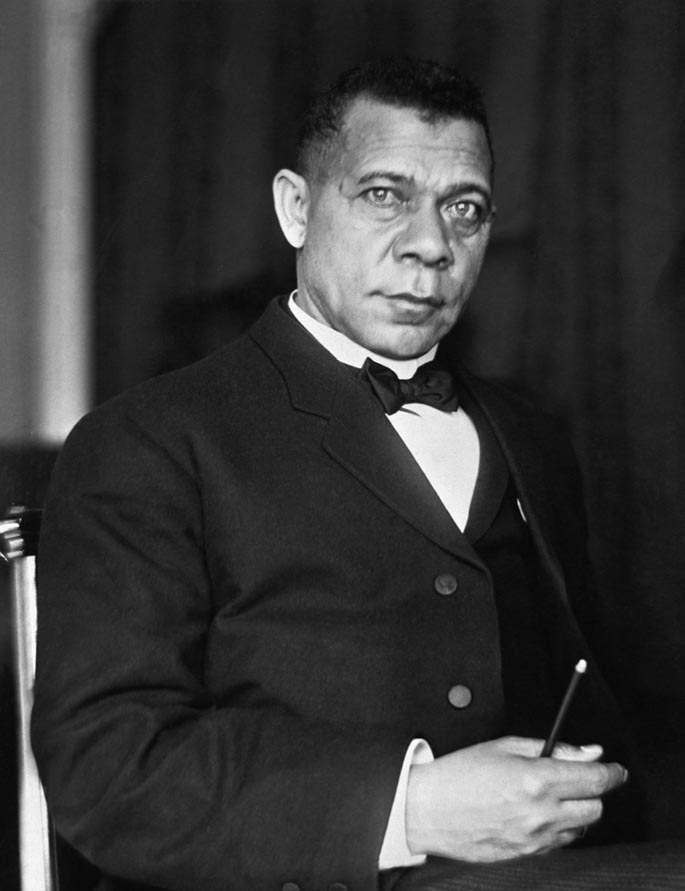
Symbolizing the change was the juxtaposition, in 1895, of the death of Frederick Douglass with Booker T. Washington’s widely praised speech, known as the “Atlanta Compromise,” at the Atlanta Cotton Exposition. He urged Blacks to adjust to segregation and abandon agitation for civil and political rights. Born a slave in 1856, Washington had studied as a young man at Hampton Institute, Virginia. He adopted the outlook of Hampton’s founder, General Samuel Armstrong, who emphasized that obtaining farms or skilled jobs was far more important to African Americans emerging from slavery than the rights of citizenship. Washington put this view into practice when he became head of Tuskegee Institute in Alabama, a center for vocational education (education focused on training for a job rather than broad learning).
In his Atlanta speech, Washington repudiated the abolitionist tradition that stressed ceaseless agitation for full equality. He urged Blacks not to try to combat segregation: “In all the things that are purely social we can be as separate as the fingers, yet one as the hand in all things essential to mutual progress.” Washington advised his people to seek the assistance of white employers who, in a land racked by labor turmoil, would prefer a docile, dependable Black labor force to unionized whites. Washington’s ascendancy rested in large part on his success in channeling aid from wealthy northern whites to Tuskegee and to Black politicians and newspapers who backed his program. But his support in the Black community also arose from a widespread sense that in the world of the late nineteenth century, frontal assaults on white power were impossible and that Blacks should concentrate on building up their segregated communities.
The Elimination of Black Voting
For nearly a generation after the end of Reconstruction, despite fraud and violence, Black southerners continued to cast ballots. In some states, the Republican Party remained competitive. Despite the limits of the Populists’ interracial alliance, the threat of a biracial political insurgency frightened the ruling Democrats and contributed greatly to the disenfranchisement movement.
Between 1890 and 1908, every southern state enacted laws or constitutional provisions meant to eliminate the Black vote. Since the Fifteenth Amendment prohibited the use of race as a qualification for the suffrage, how were such measures even possible? Southern legislatures drafted laws that on paper appeared color-blind but that were actually designed to end Black voting. The most popular devices were the poll tax (a fee that each citizen had to pay in order to retain the right to vote), literacy tests, and the requirement that a prospective voter demonstrate to election officials an “understanding” of the state constitution. Six southern states also adopted a grandfather clause, exempting from the new requirements descendants of persons eligible to vote before the Civil War (when only whites, of course, could cast ballots in the South). The racial intent of the grandfather clause was so clear that the Supreme Court in 1915 invalidated such laws for violating the Fifteenth Amendment. The other methods of limiting Black voting, however, remained on the books.
Some white leaders presented disenfranchisement as a “good government” measure—a means of purifying politics by ending the fraud, violence, and manipulation of voting returns regularly used against Republicans and Populists. But ultimately, as a Charleston newspaper declared, the aim was to make clear that the white South “does not desire or intend ever to include Black men among its citizens.” Although election officials often allowed whites who did not meet the new qualifications to register, numerous poor and illiterate whites also lost the right to vote, a result welcomed by many planters and urban reformers. Louisiana, for example, reduced the number of Blacks registered to vote from 130,000 in 1894 to 1,342 a decade later. But 80,000 white voters also lost the right. Disenfranchisement led directly to the rise of a generation of southern “demagogues,” who mobilized white voters by extreme appeals to racism. Tom Watson, who as noted above had tried to forge an interracial Populist coalition in the 1890s, reemerged early in the twentieth century as a power in Georgia public life through vicious speeches whipping up prejudice against Blacks, Jews, and Catholics.
As late as 1940, only 3 percent of adult Black southerners were registered to vote. The elimination of Black and many white voters, which reversed the nineteenth-century trend toward more inclusive suffrage, could not have been accomplished without the acquiescence of the North. In 1891, the Senate failed to pass a proposal for federal protection of Black voting rights in the South. Apart from the grandfather clause, the Supreme Court gave its approval to disenfranchisement laws. According to the Fourteenth Amendment, any state that deprived male citizens of the franchise was supposed to lose part of its representation in Congress. But like much of the Constitution, this provision was consistently violated so far as African Americans were concerned. As a result, southern congressmen wielded far greater power on the national scene than their tiny electorates warranted. As for Blacks, for decades thereafter, they would regard “the loss of suffrage as being the loss of freedom.”
The Law of Segregation
Southern Segregation
Along with disenfranchisement, the 1890s saw the widespread imposition of segregation in the South. Laws and local customs requiring the separation of the races had numerous precedents. They had existed in many parts of the pre–Civil War North. Southern schools and many other institutions had been segregated during Reconstruction. In the 1880s, however, southern race relations remained unsettled. Some railroads, theaters, and hotels admitted Blacks and whites on an equal basis while others separated them by race or excluded Blacks altogether.
In 1883, in the Civil Rights Cases, the Supreme Court invalidated the Civil Rights Act of 1875, which had outlawed racial discrimination by hotels, theaters, railroads, and other public facilities. The Fourteenth Amendment, the Court insisted, prohibited unequal treatment by state authorities, not private businesses. In 1896, in the landmark decision in Plessy v. Ferguson, the Court gave its approval to state laws requiring separate facilities for Blacks and whites. The case arose in Louisiana, where the legislature had required railroad companies to maintain a separate car for Black passengers. A Citizens Committee of Black residents of New Orleans came together to challenge the law. To create a test case, Homer Plessy, a light-skinned African American, refused a conductor’s order to move to the “colored only” railroad car and was arrested.
To argue the case before the Supreme Court, the Citizens Committee hired Albion W. Tourgée, who as a judge in North Carolina during Reconstruction had waged a courageous battle against the Ku Klux Klan. “Citizenship is national and knows no color,” he insisted, and racial segregation violated the Fourteenth Amendment’s guarantee of equal protection before the law. But in a 7-1 decision, the Court upheld the Louisiana law, arguing that segregated facilities did not discriminate so long as they were “separate but equal.” The lone dissenter, John Marshall Harlan, reprimanded the majority with an oft-quoted comment: “Our constitution is color-blind.” Segregation, he insisted, sprang from whites’ conviction that they were the “dominant race” (a phrase used by the Court’s majority), and it violated the principle of equal liberty. To Harlan, freedom for the former slaves meant the right to participate fully and equally in American society.
Segregation and White Domination
As Harlan predicted, states reacted to the Plessy decision by passing laws mandating racial segregation in every aspect of southern life, from schools to hospitals, waiting rooms, toilets, and cemeteries. Some states forbade taxi drivers to carry members of different races at the same time. Despite the “thin disguise” (Harlan’s phrase) of equality required by the Court’s “separate but equal” doctrine, facilities for Blacks were either nonexistent or markedly inferior. In 1900, no public high school for Blacks existed in the entire South. Black elementary schools, one observer reported, occupied buildings “as bad as stables.”
More than a form of racial separation, segregation was one part of an all-encompassing system of white domination, in which each component—disenfranchisement, unequal economic status, inferior education—reinforced the others. The point was not so much to keep the races apart as to ensure that when they came into contact with each other, whether in politics, labor relations, or social life, whites held the upper hand. For example, many Blacks could be found in “whites-only” railroad cars. But they entered as servants and nurses accompanying white passengers, not as paying customers entitled to equal treatment.
An elaborate social etiquette developed, with proper behavior differentiated by race. One sociologist who studied the turn-of-the-century South reported that in places of business, Blacks had to stand back and wait until whites had been served. They could not raise their voices or in other ways act assertively in the presence of whites, and they had to “give way” on the streets. In shops, whites but not Blacks were allowed to try on clothing.
Segregation affected other groups as well as Blacks. In some parts of Mississippi where Chinese laborers had been brought in to work the fields after the Civil War, three separate school systems—white, Black, and Chinese—were established. In California, Black, Hispanic, and American Indian children were frequently educated alongside whites, but state law required separate schools for those of “mongolian or Chinese descent.” In Texas and California, although Mexicans were legally considered “white,” they found themselves barred from many restaurants, places of entertainment, and other public facilities.
The Rise of Lynching
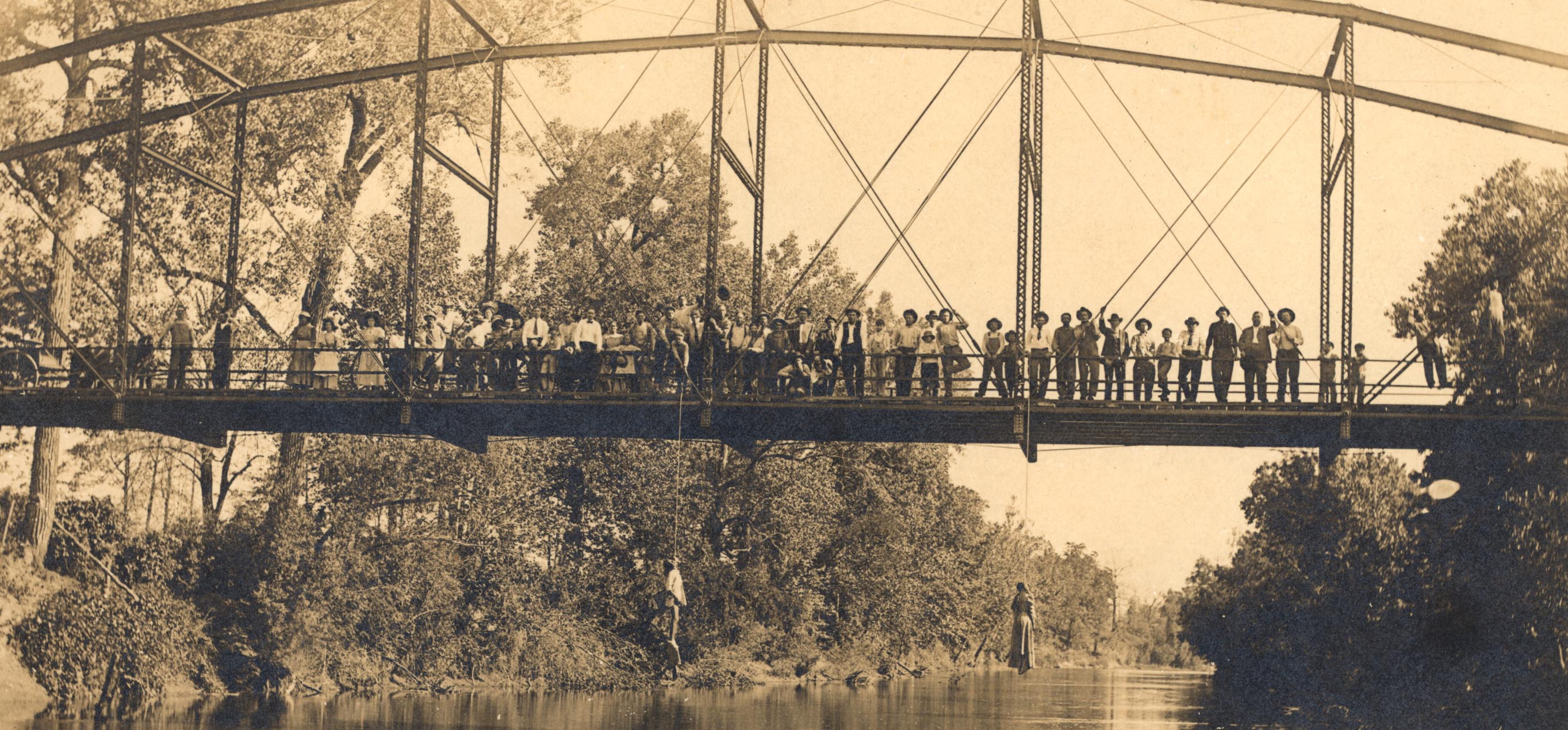
Those Blacks who sought to challenge the system, or who refused to accept the demeaning behavior that was a daily feature of southern life, faced not only overwhelming political and legal power but also the threat of violent reprisal. In every year between 1883 and 1905, more than fifty persons, the vast majority of them Black men, were lynched in the South—that is, murdered by a mob. Lynching continued well into the twentieth century. By 1950, the total number of victims since 1880 had reached over 4,000. Some lynchings occurred secretly at night; others were advertised in advance and attracted large crowds of onlookers. Mobs engaged in activities that shocked the civilized world. In 1899, Sam Hose, a plantation laborer who killed his employer in self-defense, was brutally murdered near Newman, Georgia, before 2,000 onlookers, some of whom arrived on a special excursion train from Atlanta. A crowd including young children watched as his executioners cut off Hose’s ears, fingers, and genitals, burned him alive, and then fought over pieces of his bones as souvenirs. Law enforcement authorities made no effort to prevent the lynching or to bring those who committed the crime to justice.
Like many victims of lynchings, Hose was accused after his death of having raped a white woman. Many white southerners considered preserving the purity of white womanhood a justification for extralegal vengeance. Yet in nearly all cases, as activist Ida B. Wells argued in a newspaper editorial after a Memphis lynching in 1892, the charge of rape was a “bare lie.” Born a slave in Mississippi in 1862, Wells had become a schoolteacher and editor. Her essay condemning the lynching of three Black men in Memphis led a mob to destroy her newspaper, the Memphis Free Press, while she was out of the city. Wells moved to the North, where she became the nation’s leading antilynching crusader. She bluntly insisted that given the conditions of southern Blacks, the United States had no right to call itself the “land of the free.”
VOICES OF FREEDOM
From IDA B. WELLS, LYNCH LAW IN ALL ITS PHASES (1893)
After being driven from Memphis because of her outspoken opposition to lynching, Ida B. Wells campaigned to awaken the public to racial terrorism. This is an excerpt from a speech she delivered in Boston in 1893.
Listen as you read
I am before the American people today through no inclination of my own, but because of a deep-seated conviction that the country at large does not know the extent to which lynch law prevails in parts of the republic. . . .
Although the impression has gone abroad that most of the lynchings take place because of assaults on white women only one-third of the number lynched in the past ten years have been charged with that offense, to say nothing of those who were not guilty of the charge. . . . But the unsupported word of any white person for any cause is sufficient to cause a lynching. . . . Governors of states and officers of the law stand by and see the work well done.
And yet this Christian nation, the flower of the nineteenth century civilization, says it can do nothing to stop this inhuman slaughter. The general government is willingly powerless to send troops to protect the lives of its Black citizens. . . . The lawlessness which has been here described is like unto that which prevailed under slavery. The very same forces are at work now as then. [They] can be traced to the very first year Lee’s conquered veterans marched from Appomattox to their homes in the southland. They were conquered in war, but not in spirit. They believed as firmly as ever that it was their right to rule Black men and dictate to the national government. . . . All their laws are shaped to this end—school laws, railroad car regulations . . . every device is adopted to make slaves of free men. . . . The rule of the mob is absolute. . . .
Do you ask the remedy? A public sentiment strong against lawlessness must be aroused [to demand] that equal and exact justice be accorded to every citizen of whatever race, who finds a home within the borders of the land of the free and the home of the brave.
From W. E. B. DU BOIS, THE SOULS OF BLACK FOLK (1903)
Like Wells, the Black educator and activist W. E. B. Du Bois demanded equal treatment for Black Americans. In The Souls of Black Folk, he sought to revive the tradition of agitation for basic civil, political, and educational rights, and for recognition of Blacks as full members of American society.
Listen as you read
The silently growing assumption of this age is that . . . the backward races of to-day are of proven inefficiency and not worth the saving. Such an assumption is the arrogance of peoples irreverent toward time and ignorant of the deeds of men. A thousand years ago such an assumption, easily possible, would have made it difficult for the Teuton to prove his right to life. Two thousand years ago such dogmatism, readily welcome, would have [refuted] the idea of blond races ever leading civilization. . . .
Your country? How came it yours? Before the Pilgrims landed we were here. Here we have brought our three gifts and mingled them with yours: a gift of story and song—soft, stirring melody in an ill-harmonized and unmelodious land; the gift of sweat and brawn to beat back the wilderness, conquer the soil, and lay the foundations of this vast economic empire two hundred years earlier than your weak hands could have done it; the third, a gift of the Spirit. Around us the history of the land has centered for thrice a hundred years. . . . Actively we have woven ourselves with the very warp and woof of this nation,—we fought their battles, shared their sorrow, mingled our blood with theirs, and generation after generation have pleaded with a headstrong, careless people to despise not Justice, Mercy, and Truth, lest the nation be smitten with a curse. Our song, our toil, our cheer, and warning have been given to this nation in blood-brotherhood. Are not these gifts worth the giving? Is not this work and striving? Would America have been America without her Negro people?
Although many countries have witnessed outbreaks of violence against minority racial, ethnic, or religious groups, widespread lynching of individuals over so long a period was a phenomenon unknown elsewhere. Canada, for example, has experienced only one lynching in its history—in 1884, when a mob from the United States crossed the border into British Columbia to lynch an Indian teenager who had fled after being accused of murder.
Years later, Black writer Blyden Jackson recalled growing up in early-twentieth-century Louisville, Kentucky, a city in many ways typical of the New South. It was a divided society. There was the world “where white folks lived . . . the Louisville of the downtown hotels, the lower floors of the big movie houses . . . the inner sanctums of offices where I could go only as a humble client or a menial custodian.” Then there was the Black world, “the homes, the people, the churches, and the schools,” where “everything was Black.” “I knew,” Jackson later recalled, “that there were two Louisvilles and . . . two Americas.”
Politics, Religion, and Memory
As the white North and South moved toward reconciliation in the 1880s and 1890s, one cost was the abandonment of the dream of racial equality written into the laws and Constitution during Reconstruction. In popular literature and memoirs by participants, at veterans’ reunions and in public memorials, the Civil War came to be remembered as a tragic family quarrel among white Americans in which Blacks had played no significant part. It was a war of “brother against brother” in which both sides fought gallantly for noble causes—local rights on the part of the South, preservation of the Union for the North. Slavery increasingly came to be viewed as a minor issue, not the war’s fundamental cause, and Reconstruction as a regrettable period of “Negro rule” when former slaves had power thrust upon them by a vindictive North. This outlook gave legitimacy to southern efforts to eliminate Black voting, lest the region once again suffer the alleged “horrors” of Reconstruction.
At the same time as they reduced Blacks to second-class citizenship, southern governments erected monuments to the Lost Cause, a romanticized version of slavery, the Old South, and the Confederate experience.
Even as white northern Protestants abandoned concern for racial justice and embraced the idea of sectional reconciliation, southern churches played a key role in keeping the values of the Old South alive by refusing to reunite with northern counterparts. In the 1840s, the Methodist and Baptist churches had divided into northern and southern branches. Methodists would not reunite until well into the twentieth century; Baptists have yet to do so. In both North and South, school history textbooks emphasized happy slaves and the evils of Reconstruction, and the role of Black soldiers in winning the war was all but forgotten. When a group of Black veterans attempted to participate in a Florida ceremony commemorating the fiftieth anniversary of the outbreak of the Civil War in 1911, a white mob tore the military insignias off their jackets and drove them away.
Glossary
- New South
- Atlanta Constitution editor Henry W. Grady’s 1886 term for the prosperous post–Civil War South he envisioned: democratic, industrial, urban, and free of nostalgia for the defeated plantation South.
- Kansas Exodus
- A migration in 1879 and 1880 by some 40,000–60,000 Blacks to Kansas to escape the oppressive environment of the New South.
- grandfather clause
- Loophole created by southern disenfranchising legislatures of the 1890s for illiterate white males whose grandfathers had been eligible to vote before the Civil War.
- disenfranchisement
- Depriving a person or persons of the right to vote; in the United States, exclusionary policies were used to deny groups, especially African Americans and women, their voting rights.
- lynching
- Practice, particularly widespread in the South between 1890 and 1940, in which persons (usually Blacks) accused of a crime were murdered by mobs before standing trial. Lynchings often took place before large crowds, with law enforcement authorities not intervening.
- Lost Cause
- A romanticized view of slavery, the Old South, and the Confederacy that arose in the decades following the Civil War.
- Plessy v. Ferguson
- U.S. Supreme Court decision supporting the legality of Jim Crow laws that permitted or required “separate but equal” facilities for Blacks and whites.
- Atlanta Compromise
- Speech to the Cotton States and International Exposition in 1895 by educator Booker T. Washington, the leading Black spokesman of the day; Black scholar W. E. B. Du Bois gave the speech its derisive name and criticized Washington for encouraging Blacks to accommodate segregation and disenfranchisement.
- “separate but equal”
- Principle underlying legal racial segregation, upheld in Plessy v. Ferguson (1896) and struck down in Brown v. Board of Education (1954).
- They were conquered in war, but not in spirit. They believed as firmly as ever that it was their right to rule Black men
- Here Wells uses “they” to refer to white people in the South, and “men” to refer to all Black people.
- equal and exact justice be accorded to every citizen
- This protection, of course, was part of the Fourteenth Amendment’s equal protection clause, but it, like other civil rights laws, was not enforced in the South by state and local law enforcement and judicial authorities.
- the Teuton
- A people from the fourth century BCE that were referenced by later Roman writers. Sometimes this term is used to describe an ancient German tribe.
- Before the Pilgrims landed we were here
- Here Du Bois is referencing the arrival of twenty Black people to Virginia in 1619. The Pilgrims landed at Plymouth the following year in 1620.
- woven ourselves with the very warp
- The warp of the fabric is the lengthwise thread in the weave and is the stronger of the two. Du Bois here argues that Black people were not an appendage but rather were literally the strongest part of the fabric of the nation.