VIDEO: Making It Real, Lost-Wax Casting Techniques for Copper AlloysShow VideoHide Video
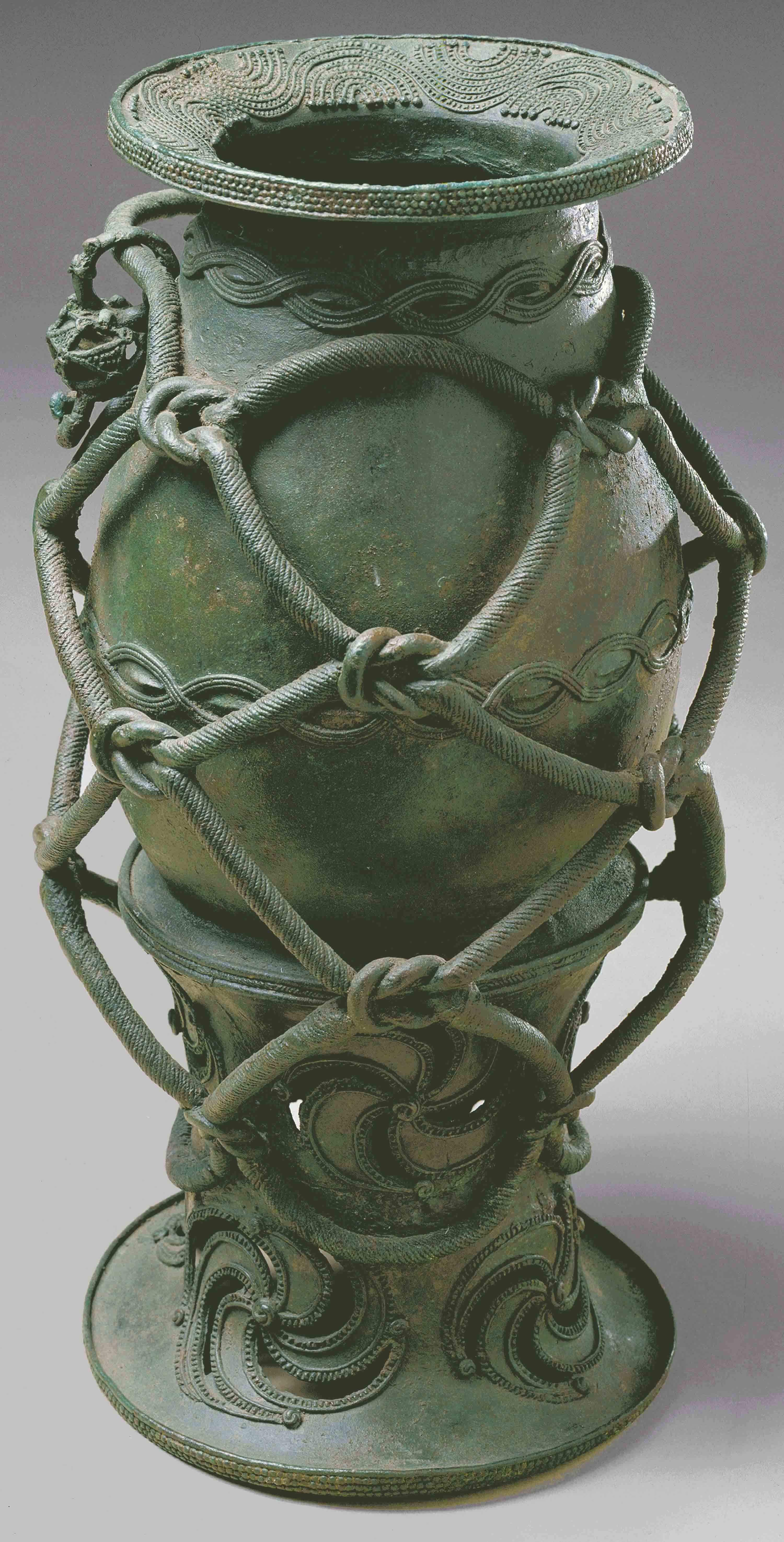
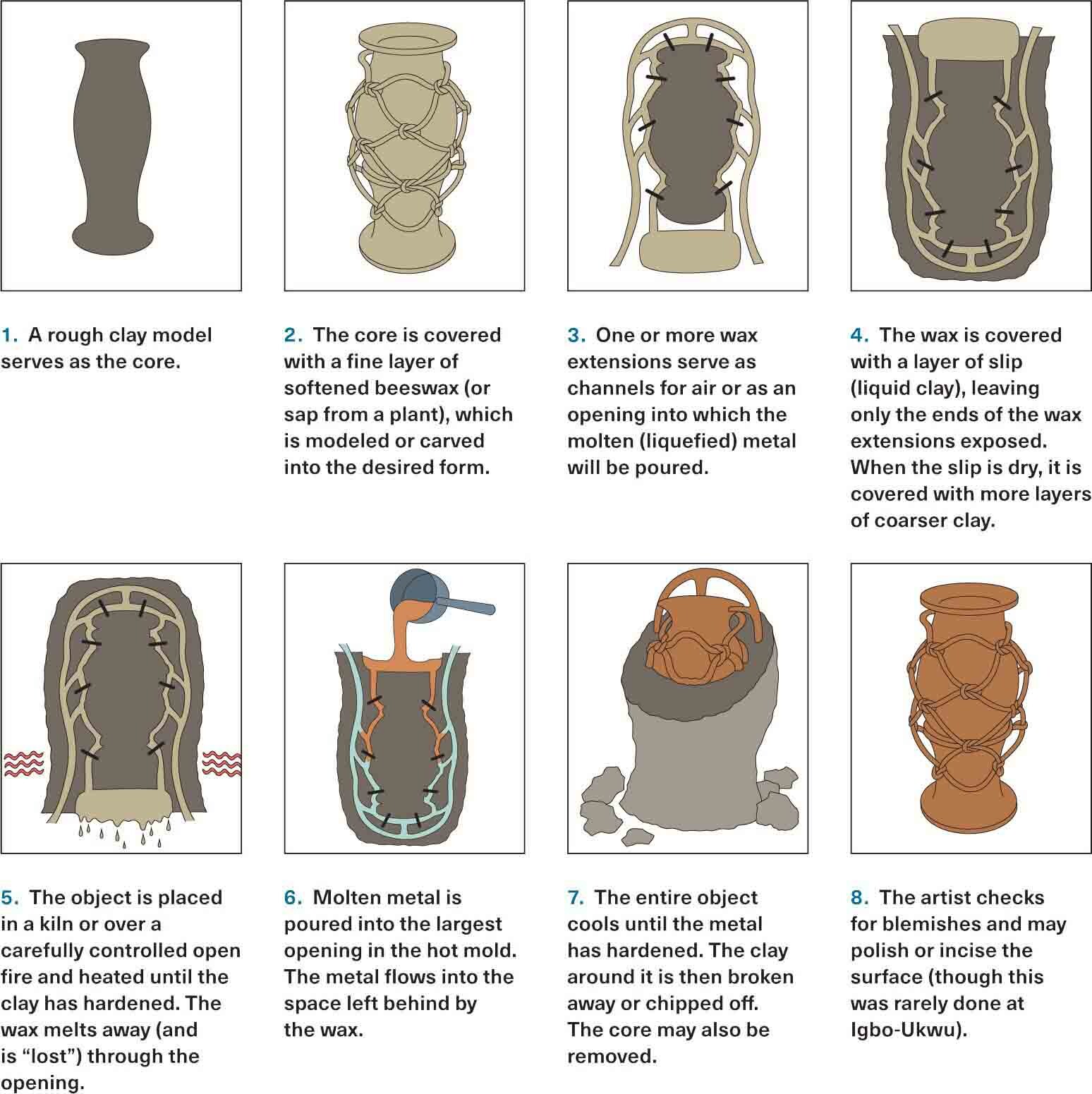
Societies around the world have developed many techniques for working gold, silver, and the shiny, durable metals that are formed by mixing copper with other minerals, such as zinc or tin, to produce brass or bronze alloys. In some places, such as ancient North America, naturally occurring sheets of metal were simply hammered and cut into shapes. In others, such as ancient East Asia, multiple molds were joined to produce huge artworks assembled from cast bronze. The description here applies to the lost-wax casting process used over 1,000 years ago to make the bronze objects found at Igbo-Ukwu (such as Fig. 2.16). Variations on this process are used today by goldsmiths, makers of cast brass, and other metalworkers in Africa and around the world.
More information
The pot includes a round stand. Both have decorations on their edges and surfaces. Together, they appear to be enclosed in knotted ropework, which is also made of the same metal.
More information
The process begins with a wax model formed around a clay core. More clay is packed around the model to form a mold, with wax extensions connecting the model to the outside. After the wax is melted away, molten metal is poured into the resulting space, through the channels left by the extensions. After the casting has cooled and the clay mold is chipped away, final cleanup and embellishing is done by hand.