cuneiform
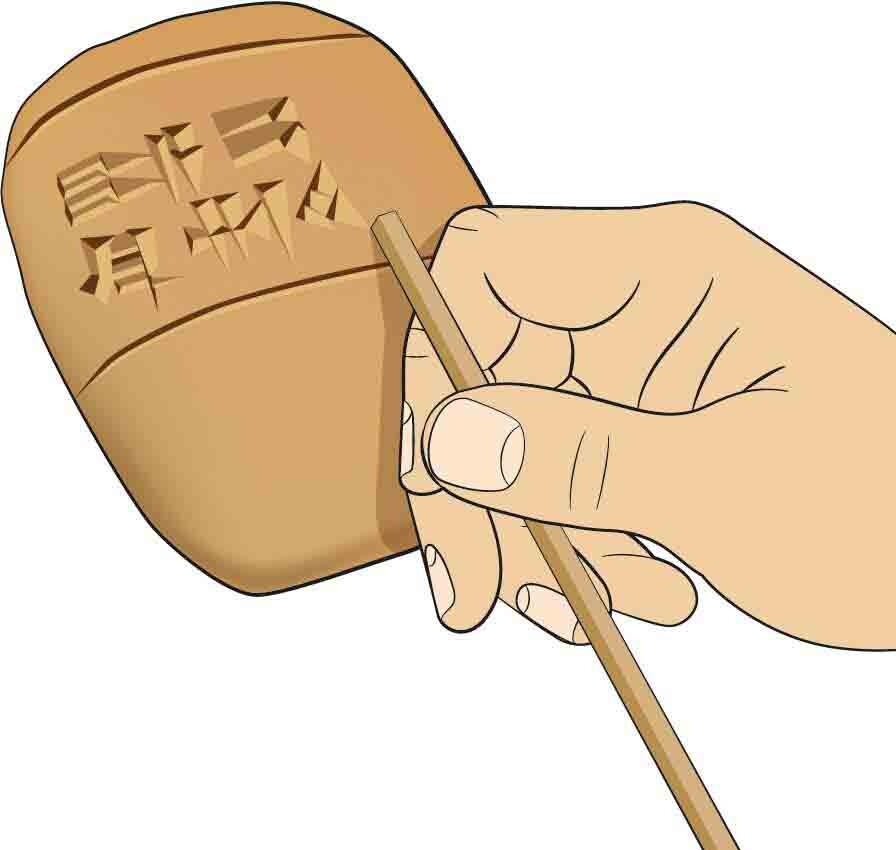
Mesopotamians used a reed stylus with a triangular tip to inscribe or impress symbols into moist clay tablets (Fig. 3.5). This form of writing is called cuneiform, which means “wedge-shaped” in Latin. After being inscribed, tablets were either dried in the sun or—if they were particularly important—fired in a kiln. They are perhaps the most durable written documents ever created.
Cuneiform script was not invented overnight. Long before tablets, Mesopotamian merchants and administrators used small lumps of clay, known as tokens, which they incised with marks to record a numerical value for specific commodities for sale or transfer. They then deposited the tokens inside hollow clay spheres and sealed them by rolling a small cylinder across the clay, making an impression (see Fig. 3.10) to prevent tampering. The impressions on the seals served as the signatures of administrative offices or individuals. The sealed hollow clay spheres, filled with tokens, served as stable, precisely detailed records of economic transactions.
More information
The stylus is grasped between thumb and forefinger, with the palm generally downward and the curved fingers pointing down and away from the tablet. The marks on the tablet, which consist of variously arranged wedge-shaped indentations, are placed between two horizontal lines.
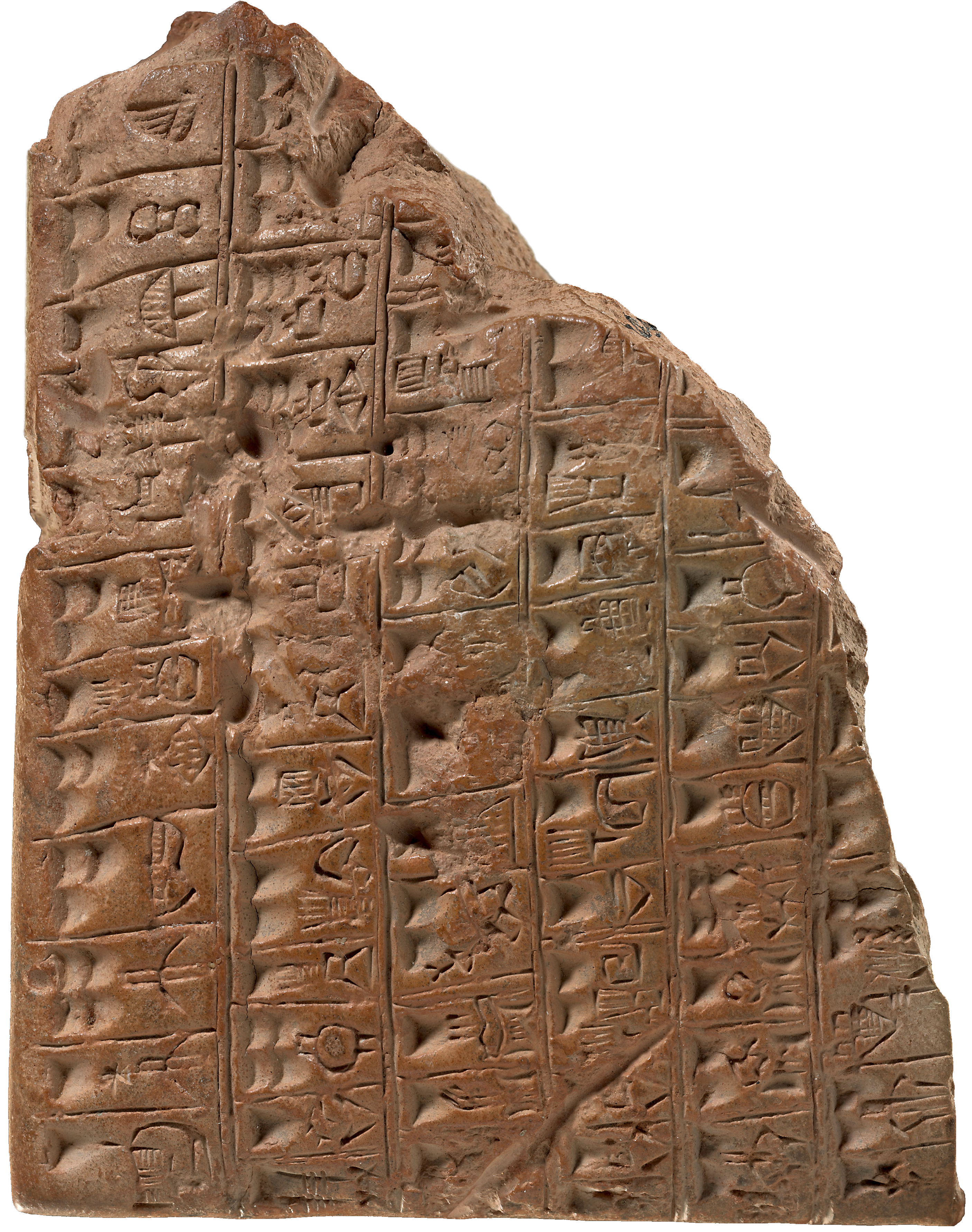
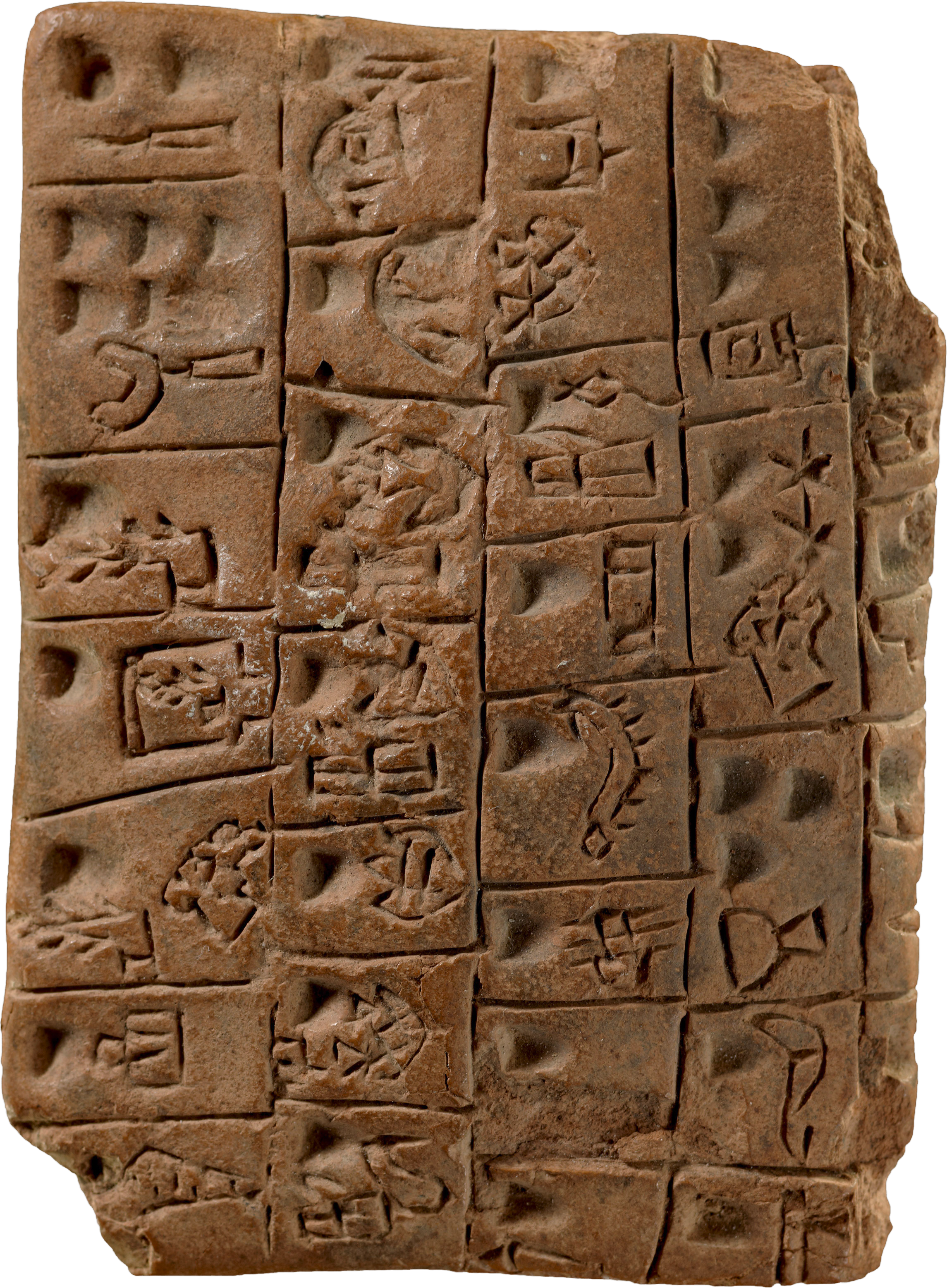
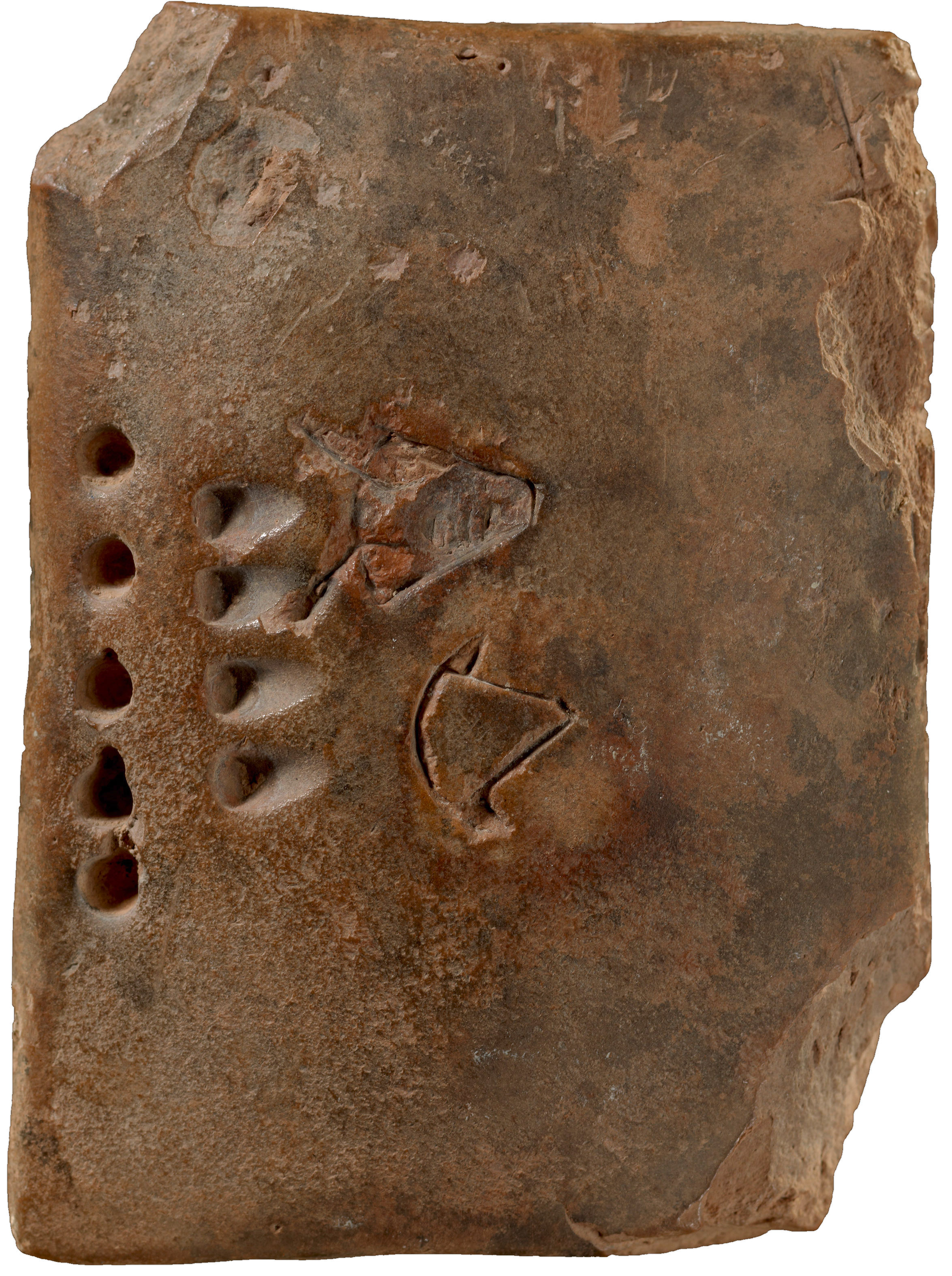
The earliest tablets from Uruk used a complex system of around nine hundred signs (see Fig 3.6). These signs include numbers or units of measurement, and pictograms or logograms (signs that represent and stand in for a whole word or a phrase). The pictograms drew heavily from representational elements found on seals and other media. Early in its development, therefore, writing derived substantially from pictures.
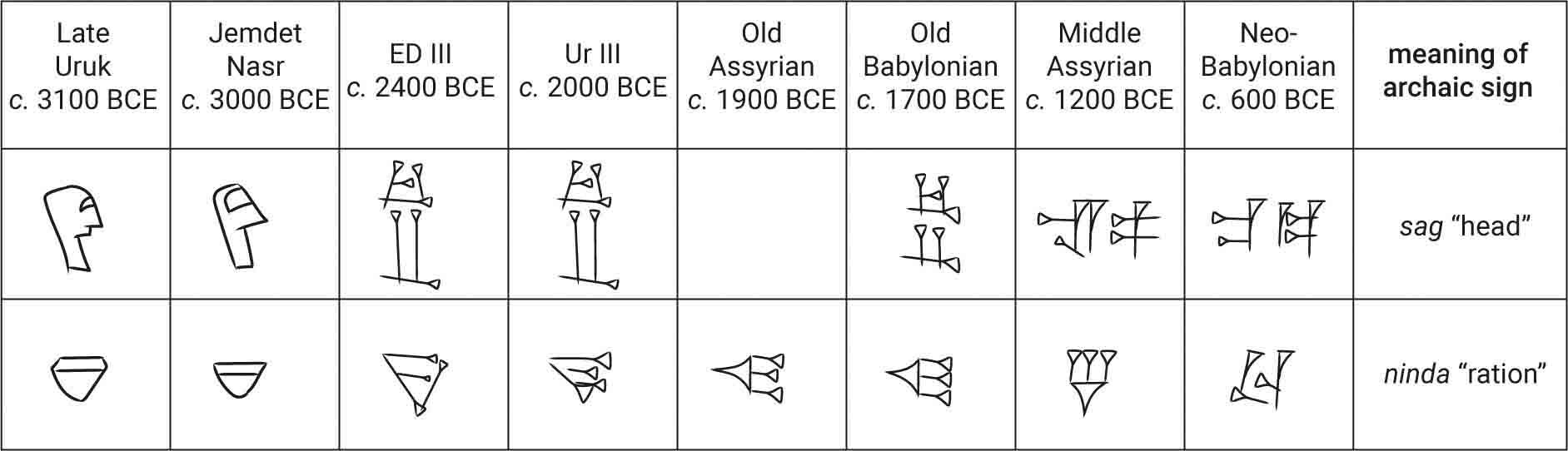
For example, as the chart shows (Fig. 3.7), when the ancient Sumerian language of southern Mesopotamia was first written down, a drawing of a human head stood for the word “head” (Sumerian sag), while a drawing of a bowl stood for “ration” (Sumerian ninda). As writing became more widespread and complex, pictograms gradually transformed into abstract glyphs, which were easier to write with a stylus. A glyph is a conventionalized representation that consistently stands for a word, syllable, or sound. In the most developed cuneiform writing systems, some glyphs stood for a complete word or a phrase, while others stood for syllables. That is, the latter were phonetic, or sound-based, signs.
Over the centuries, many different languages of West Asia used cuneiform script. Mesopotamian texts were written in Sumerian, and later Akkadian, Hittite, and Hurrian.
More information
The tablet has a corner broken off. It is covered with cuneiform markings.
More information
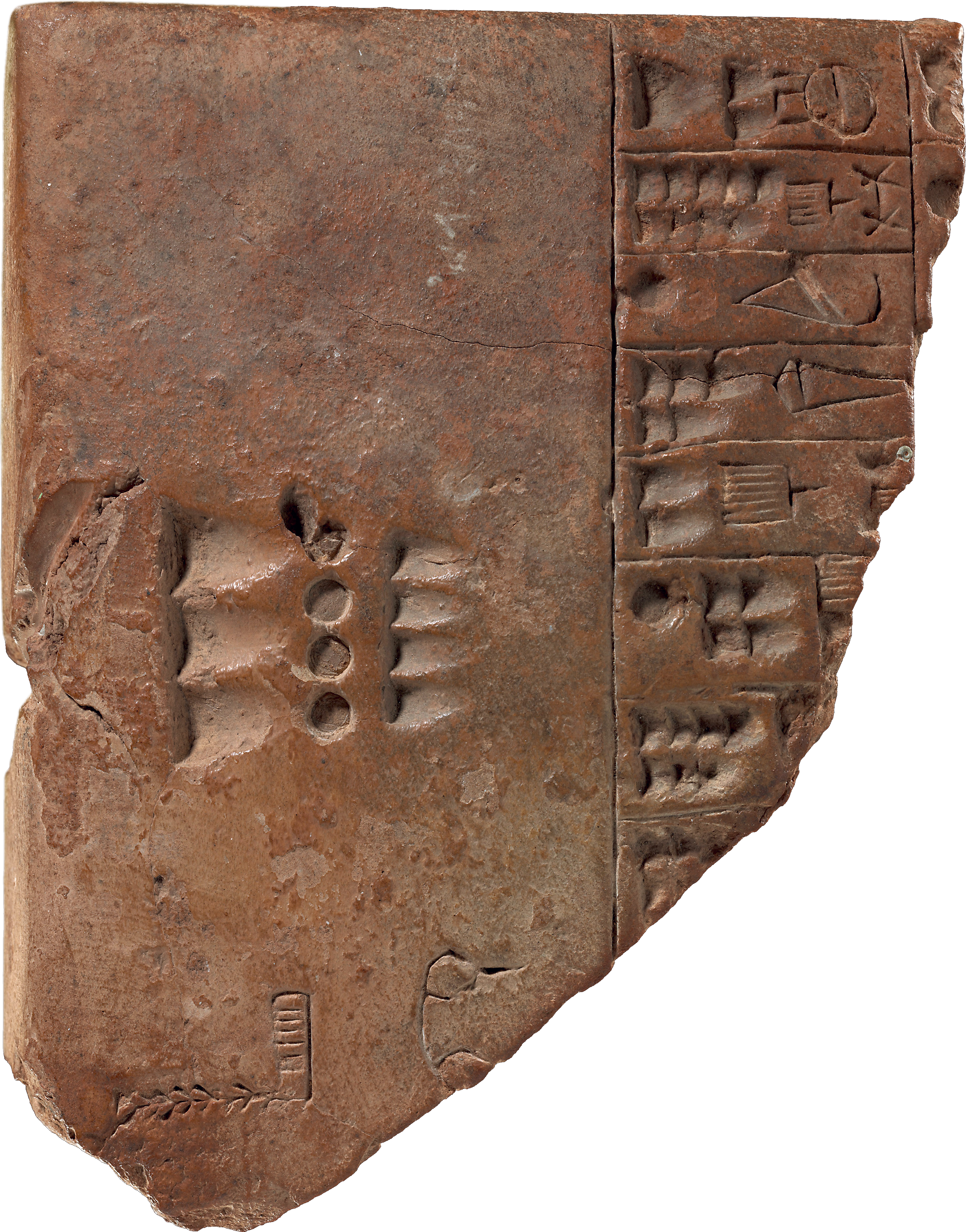
The tablet has a corner broken off. It has fewer markings.
More information
The tablet is nearly whole. It is covered with cuneiform markings.
More information
The tablet is nearly whole. It has fewer markings.
More information
The sign for head evolved from a drawing of a head to a very abstract-looking figure consisting of four horizontal marks and three vertical ones. The sign for ration evolved from a drawing of a bowl to a figure consisting of two vertical marks and two slanting ones.