THE EARLIEST MUSIC
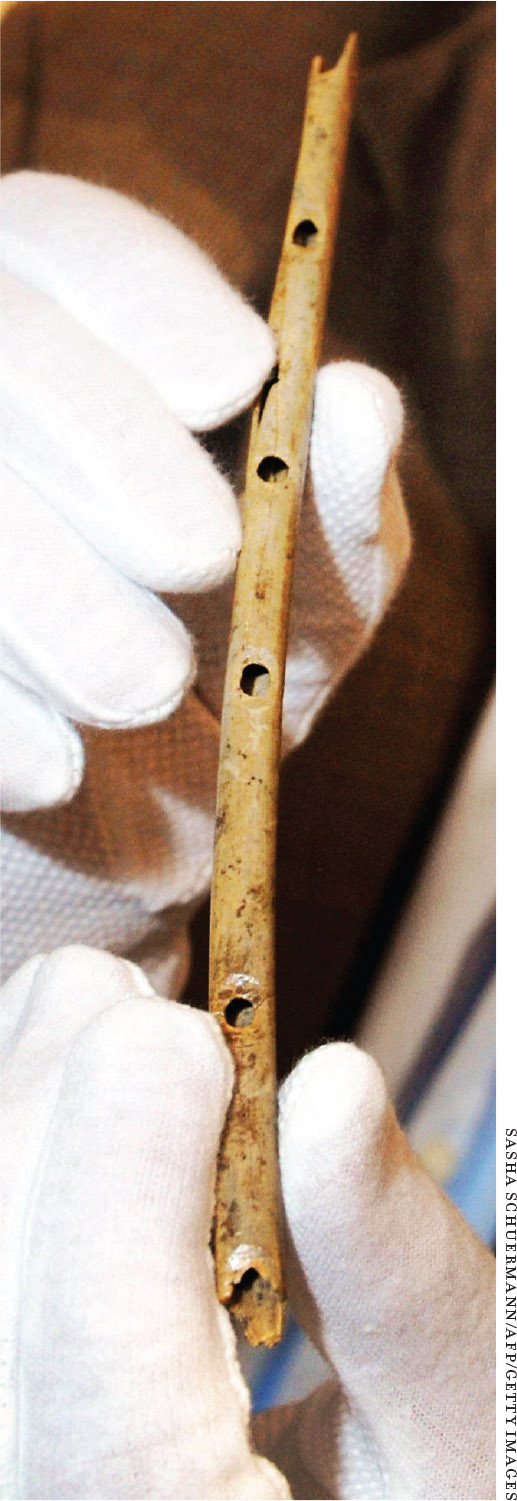
The earliest evidence of music-making lies in surviving instruments and representations. In the Stone Age, people bored finger holes in animal bones and mammoth ivory to make whistles and flutes. Figure 1.1 shows one of the oldest and most complete bone flutes yet found in Europe, dating from about 40,000 BCE. Paleolithic cave paintings appear to show musical instruments being played. Pottery flutes, rattles, and drums were common in the Neolithic era, and wall paintings in Turkey from the sixth millennium BCE show drummers playing for dancers and for the hunt, to drive out game. Such images provide our primary evidence for the roles music played in these cultures. Once people learned to work with metal, in the Bronze Age (beginning in the fourth millennium BCE), they made metal instruments, including bells, jingles, cymbals, rattles, and horns. Plucked string instruments appeared around the same time, as shown on stone carvings; the instruments themselves were made of perishable materials, and few have survived.
Although we can learn about various facets of prehistoric musical cultures from images and archaeological remains, our understanding is severely limited by the lack of any written record. The invention of writing, which marked the end of the prehistoric period, added a new type of evidence, and it is with these accounts that the history of music properly begins.