The origins of vertebrate immune cells.
The body is protected from infectious agents, their toxins, and the damage they cause by a variety of effector cells and molecules that together make up the immune system. Both innate and adaptive immune responses depend on the activities of white blood cells, or leukocytes. Most cells of the immune system arise from the bone marrow, where many of them develop and mature. But some, particularly certain tissue-resident macrophage and lymphocyte populations (for example, the microglia of the central nervous system), originate from the yolk sac or fetal liver during embryonic development. They seed tissues before birth and are maintained throughout life as independent, self-renewing populations.
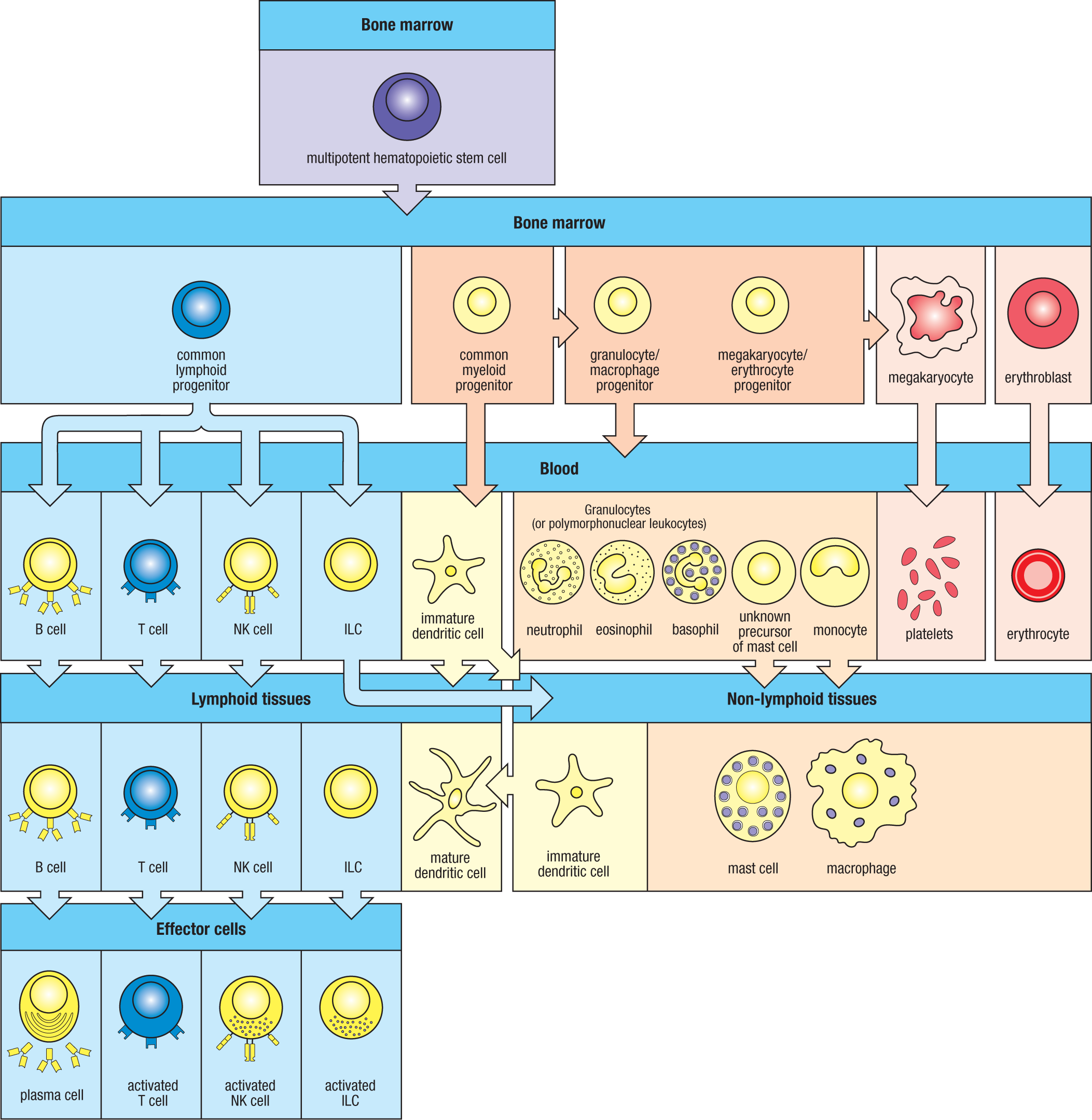
After birth, all the cellular elements of blood, including the red blood cells that transport oxygen, the platelets that trigger blood clotting in damaged tissues, and the white blood cells of the immune system, ultimately derive from the hematopoietic stem cells (HSCs) of the bone marrow. Because these can give rise to all the different types of blood cells, they are often known as pluripotent (or multipotent) hematopoietic stem cells. The hematopoietic stem cells give immediate rise to cells of more limited developmental potential, which are the progenitors of red blood cells, platelets, and the two main categories of white blood cells, the lymphoid and myeloid lineages. Once mature, immune cells reside within peripheral tissues, circulate in the bloodstream, or circulate in a specialized system of vessels called the lymphatic system. The lymphatic system drains extracellular fluid and immune cells from tissues and transports them as lymph, which is eventually emptied back into the blood system. The different types of blood cells and their lineage relationships are summarized in Fig. 1.3.
Glossary
- immune system
- The tissues, cells, and molecules involved in innate immunity and adaptive immunity.
- leukocyte
- A white blood cell. Leukocytes include lymphocytes, polymorphonuclear leukocytes, and monocytes.
- bone marrow
- The tissue where all the cellular elements of the blood—red blood cells, white blood cells, and platelets—are initially generated from hematopoietic stem cells. The bone marrow is also the site of further B-cell development in mammals and the source of stem cells that give rise to T cells on migration to the thymus. Thus, bone marrow transplantation can restore all the cellular elements of the blood, including the cells required for adaptive immune responses.
- hematopoietic stem cells (HSCs)
- Type of pluripotent (or multipotent) cell in the bone marrow that can give rise to all the different blood cell types.
- pluripotent
- Typically referring to the capacity of a progenitor cell to generate all possible lineages of an organ system.
- lymphoid
- Describes tissues composed mainly of lymphocytes.
- myeloid
- Refers to the lineage of blood cells that includes all leukocytes except lymphocytes.
- lymphatic system
- The system of lymph-carrying vessels and peripheral lymphoid tissues through which extracellular fluid from tissues passes before it is returned to the blood via the thoracic duct.
- lymph
- The extracellular fluid that accumulates in tissues and is drained by lymphatic vessels that carry it through the lymphatic system to the thoracic duct, which returns it to the blood.