
More information
A profile portrait photo of Monica Lewinsky, a smiling white woman with long dark brown hair.
NOTABLE SPEAKER Monica Lewinsky
In 1995—at the age of 22—Monica Lewinsky had spent more than a year working as a White House intern, during which time she had an affair with President Bill Clinton. Lewinsky faced intense media scrutiny when the matter became national news in January 1998. Although social media websites such as X (formerly Twitter) and Facebook did not exist at the time, the internet still provided a platform for the public shaming of Lewinsky. By 2005, she decided to escape the spotlight and move to London to pursue a master’s degree in psychology. She maintained a relatively private life until October 2014, when she spoke about cyberbullying and internet shaming at a Forbes magazine “30 under 30” summit. Since her presentation at the summit and subsequent TED talk in 2015, Lewinsky has served as an ambassador for the antibullying organization Bystander Revolution, participated in a number of antibullying campaigns, and written about the #MeToo movement. In 2021, she created her own production company that aims to give a platform to others who have been silenced.
Search Terms
To locate videos of these presentations online, enter the following key words into a search engine: Monica Lewinsky first public speech Forbes; and Monica Lewinsky price of shame. The videos are approximately 25:31 and 22:31 in length.
What to Watch For
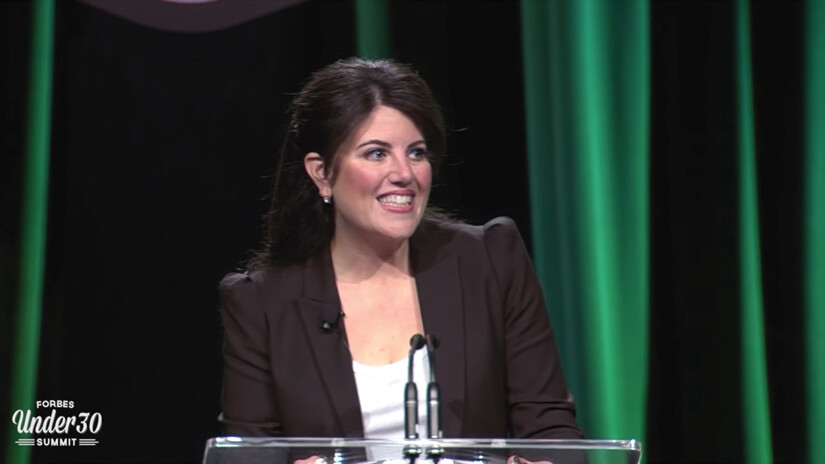
More information
Lewinsky is standing in front of a clear podium on a stage. She is wearing a white blouse with a black blazer. She looks to her left and is smiling awkwardly, appearing nervous as she addresses the audience.
First speech: October 2014
[0:00–0:35] At the outset of the presentation, Lewinsky tells the audience that this is only her fourth time delivering a speech in public. She asks them to forgive her because she is nervous and emotional. Since anxiety is a common experience for most speakers, especially for those who don’t have much experience speaking in public, it’s not surprising that she is nervous.
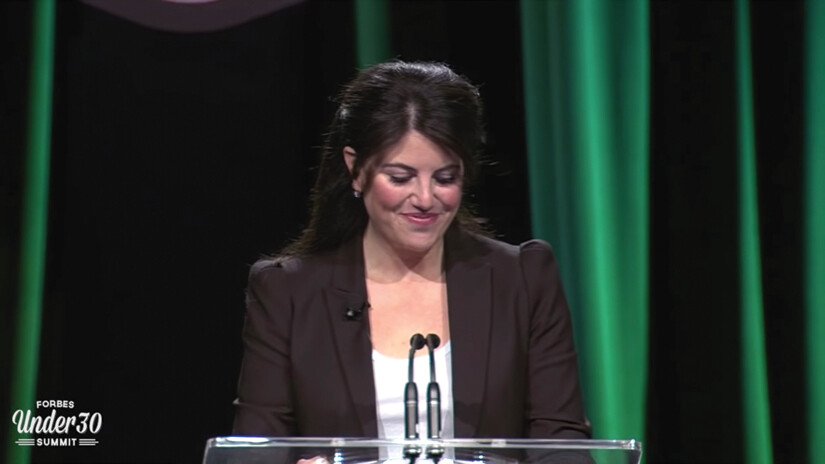
More information
Lewinsky looks down at the podium. Her eyes are downcast as she smiles to herself.
[0:35–0:40] Since she has not given many public speeches, it is possible that she is experiencing fear of the unknown. In an effort to manage her anxiety, Lewinsky takes a deep breath before beginning her presentation. In the absence of her telling the audience that she is nervous and taking a deep breath, it’s likely that the audience wouldn’t be able to observe any outward signs of her anxiety because most symptoms of speaking anxiety are not visible.
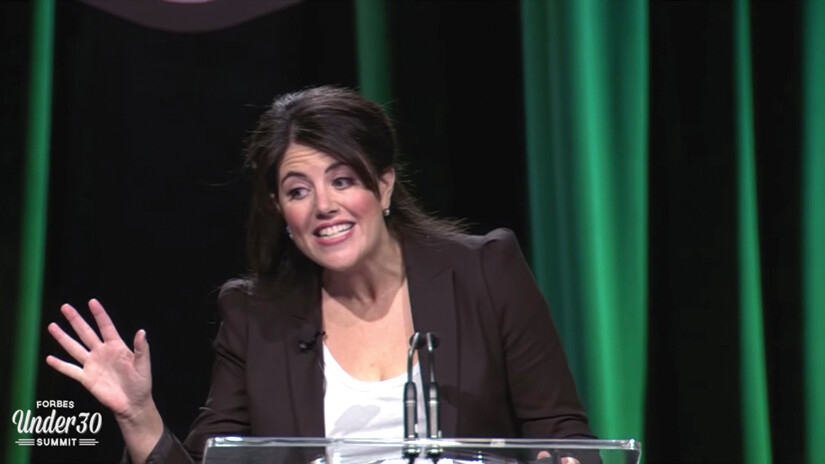
More information
Lewinsky raises her right hand towards the audience. Her eyes are focused on individuals in the front of the audience, but her smile is awkward and uncomfortable.
[1:30–2:05] As a way of introducing herself to an audience who may know who she is but not know much else about her personal life, Lewinsky makes a humorous reference to all the rap songs she is mentioned in. The audience laughs at the reference, and Lewinsky pauses and thanks them for doing so. Focusing on the audience is an effective way of shifting the attention away from herself. This may help her feel less conspicuous.
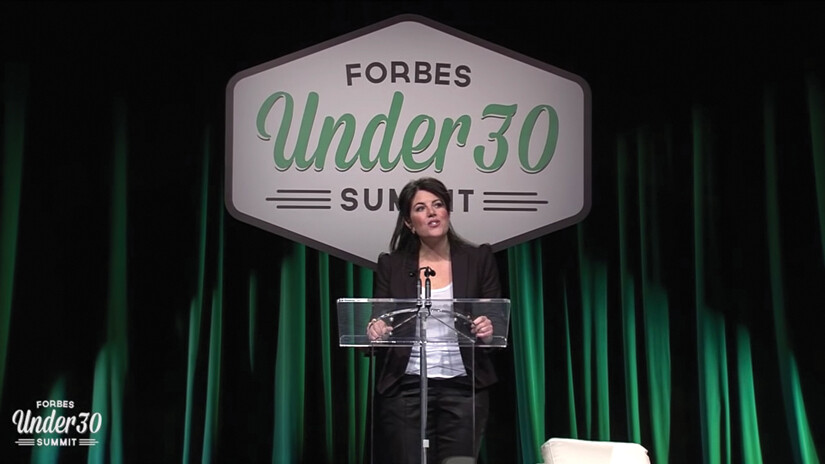
More information
The camera zooms out and provides a full body view of Lewinsky. Behind her is a white sign with black and green text that reads, “FORBES Under 30 SUMMIT.” Her hands rest on the clear podium in front of her as she looks out at the audience and continues to speak.
[12:15–25:00] As Lewinsky reaches the midpoint of her speech, she appears more comfortable. While she may still be experiencing some anxiety, it is difficult from the audience’s point of view to see her symptoms of nervousness.
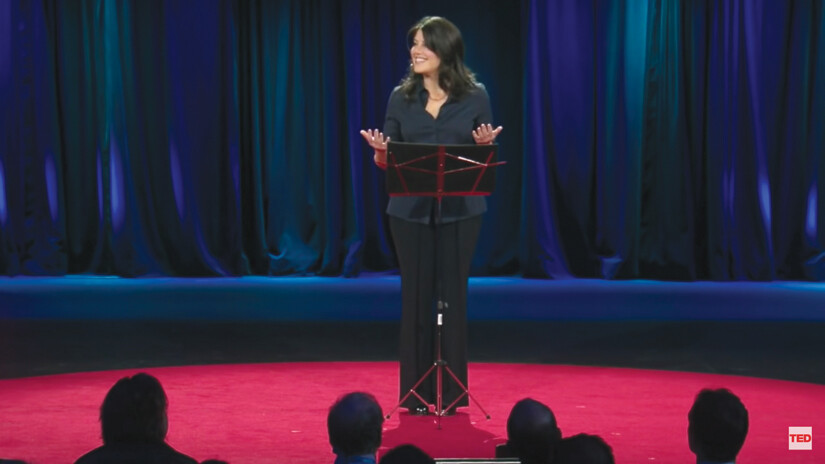
More information
Lewinsky is standing in front of a small, black podium on a stage. The background curtain is dark blue and the floor she stands on is red. She is wearing a button down shirt and dress pants and is addressing the audience with a smile as her hands are raised upward.
Second speech: March 2015
[0:14–1:00] In March 2015, Lewinsky delivered a similar presentation at a TED talk event in Vancouver, British Columbia. Unlike her previous presentation, she begins this one without any mention of her nervousness. There is no way to know if she was experiencing the same level of anxiety as she did in October 2014.
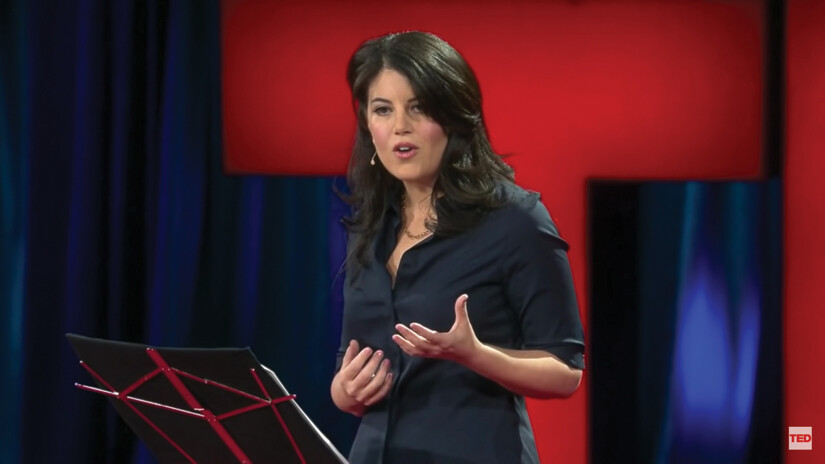
More information
The camera zooms in on Lewinsky as she continues to address the audience. Behind her is a large letter “T” from the word “TED.” Her hands are raised towards her chest as she stares towards the left. Her facial expression appears calm and assertive while she speaks.
[4:00–4:30] As the speech progresses, Lewinsky projects confidence by maintaining eye contact with audience members, using purposeful gestures, and speaking clearly. She mirrors the content of her message by using a kind and compassionate tone throughout the presentation. If she is experiencing any nervousness internally, it is not visible to the audience. The audience gives her a standing ovation at the conclusion of her presentation—a sign that her message and presentation achieved her purpose.
EXERCISE
After viewing both of Lewinsky’s speeches, reflect on these questions:
- In her 2014 speech, would you have known that Lewinsky was nervous if she hadn’t told you?
- Although we do not recommend telling an audience that you are nervous, was this a useful tactic for Lewinsky? Why or why not? How might doing so affect a speaker’s credibility?
- If at all, how did Lewinsky appear to use her nervousness to make her first speech more credible and effective?
- Describe your reaction to Lewinsky’s display of emotion about the possibility of her mother being prosecuted (7:20–7:30 in the first speech). Do you think it was appropriate? Did she need to say “sorry” before moving on?
- How might preparation and practice have helped Lewinsky manage her anxiety between her first public address and her TED talk? What might account for a noticeable increase in her comfort level?