
More information
A close-up portrait of Susan Cain. She has long brown hair and is smiling.
NOTABLE SPEAKER Susan Cain
After practicing corporate law for seven years, Susan Cain left her successful career behind to pursue her childhood passion for reading and writing. This passion led her to research and think critically about the general cultural preference for extroverts in the United States. As the self-described “Chief Revolutionary” of an organization she has called the Quiet Revolution, Cain has authored two best-selling books and led hundreds of workshops about the often overlooked power of introverts in everyday life. She took to the TED stage in 2012 to address the challenges faced by introverts living in a world favoring extroverts—a topic that she had written about in her book Quiet: The Power of Introverts in a World That Can’t Stop Talking. The talk has been viewed more than 22 million times and was featured by the curators of the TED website on their homepage. In 2014, she was named one of the world’s top 50 leadership and management experts by Inc. magazine.
Search Terms
To locate a video of this presentation online, enter the following key words into a search engine: Susan Cain introverts. The video is approximately 19:04 in length.
What to Watch For
More information
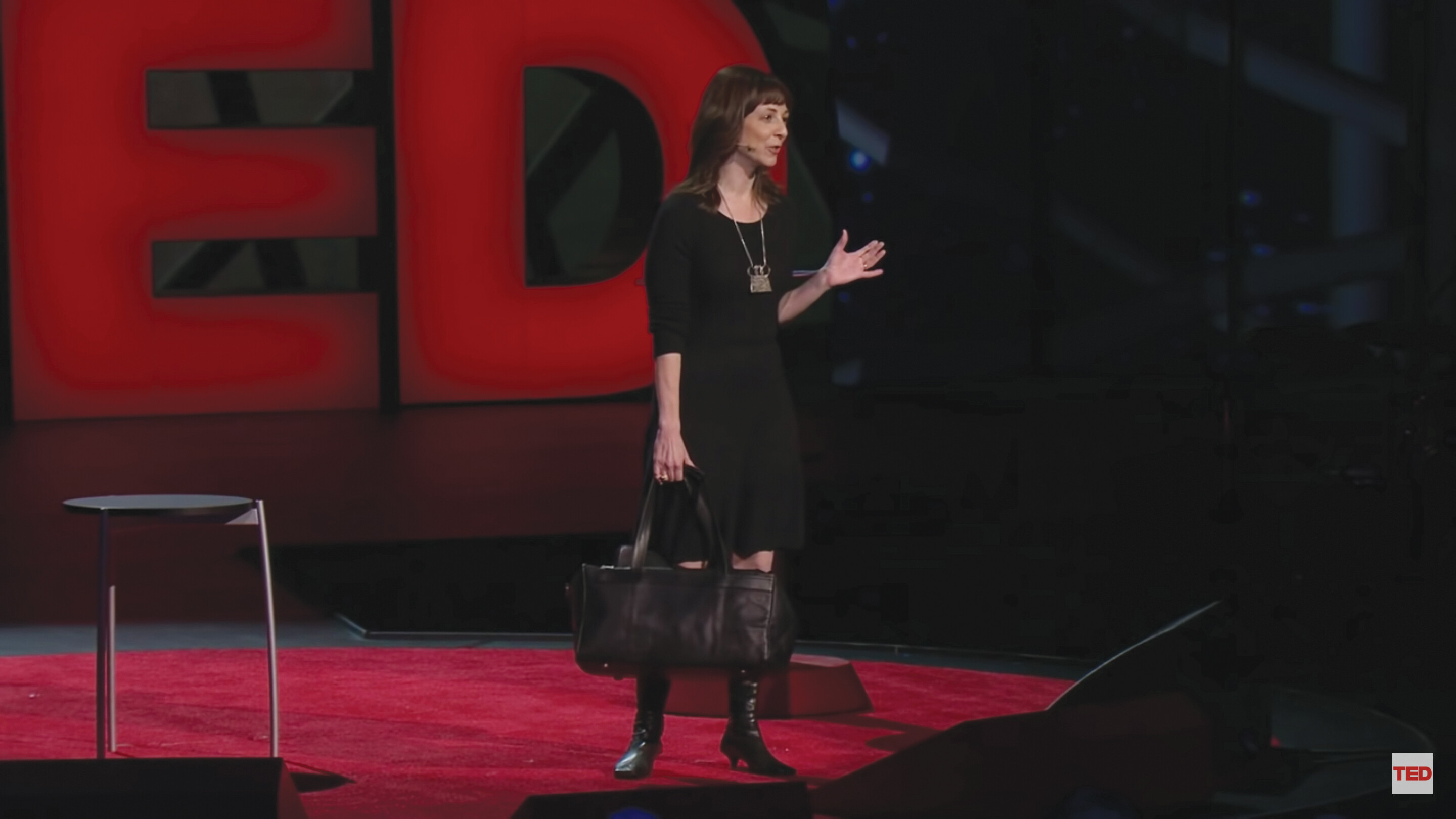
A screenshot of Susan Cain’s TED talk. She stands on a stage in an auditorium wearing a black dress, knee-high black boots, and holding a black suitcase.
[0:00–1:19] Cain focuses her audience’s attention and interest by beginning her talk with a compelling story about her time away at summer camp as a young girl. She adds a visual component by holding a suitcase in her hand as she talks about how her mother packed her a suitcase full of books to take to camp. She continues to draw the audience into her personal experience by sharing the “R-O-W-D-I-E” cheer with them. This brings a touch of humor to the story and lightens the mood before she expresses the more serious point behind the story.
More information
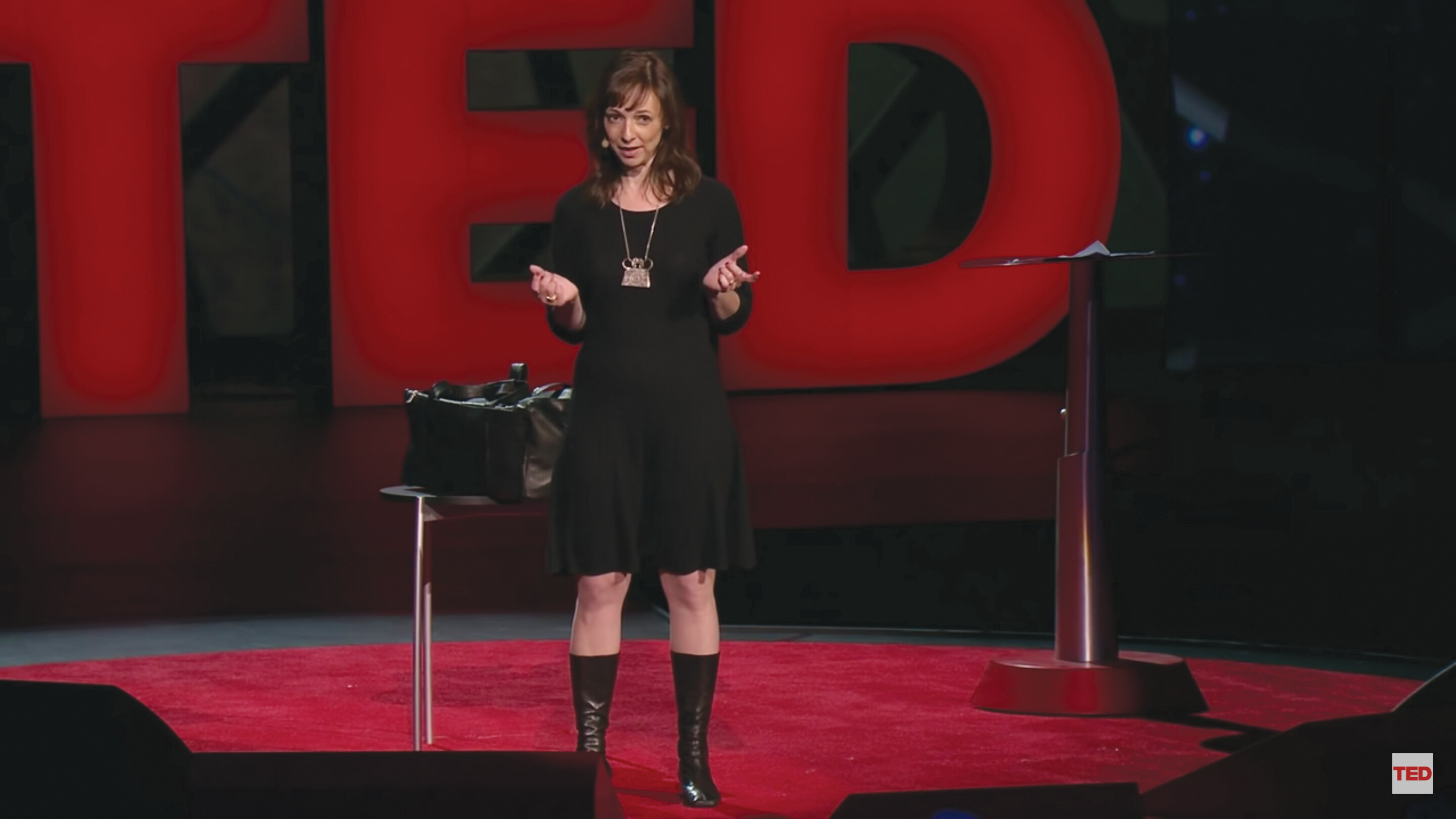
A screenshot of Susan Cain’s TED talk. She stands on a stage in an auditorium wearing a black dress and knee-high black boots. Next to her is a table where a black suitcase has been placed.
[1:34–2:06] Cain connects with her audience by contrasting her desire to read books while at camp with her counselor’s desire that she should work hard to be outgoing. In doing so, she highlights experiences that some audience members will recognize at some level. An emotional tone in the message emerges as she moves the suitcase behind her to demonstrate hiding away a passion so that she could fit in with the other girls. She then tells the audience that she could have shared 50 similar stories with them—each one highlighting a time that she was told that she should try “to pass as more of an extrovert.” In essence, she is asking the audience to connect with her human experience of not fitting in.

More information
A screenshot of Susan Cain’s TED talk. She stands on a stage in an auditorium. She is speaking to the crowd with both hands extend outwards with he palms facing up.
[2:31–4:02] She notes that “a third to half of the population are introverts,” which is “one out of every two or three people” each of the audience members know—partners, children, and colleagues. From this foundation, she states her central idea: “When it comes to creativity and to leadership, we need introverts doing what they do best.” To achieve this goal, she advocates a better balance between extroverts and introverts. This balance can be achieved if people accept and appreciate introverts’ work-style preferences, such as more autonomy and less group work.
More information
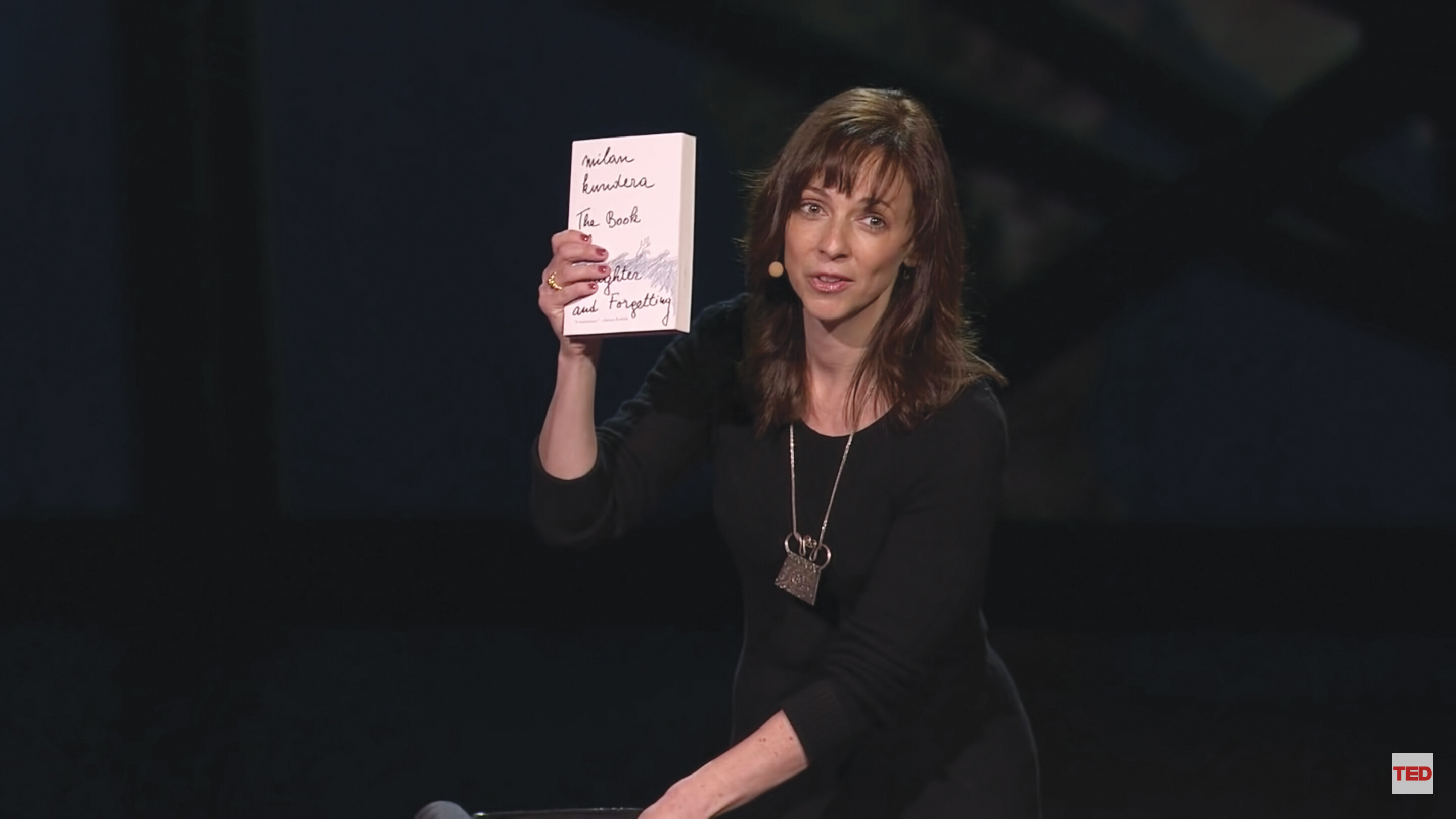
A screenshot of Susan Cain’s TED talk. She stands on a stage in an auditorium. She is holding up a book to show to the crowd.
[13:21–15:54] As Cain prepares to end her talk, she returns to the suitcase. She pulls out several books from it and tells the audience that these books were written by some of her grandfather’s favorite authors. Referencing the suitcase serves as a bookend to the beginning of the talk. The suitcase becomes a focal point of how books have affected her and how she wants her message to affect her audience. One of the lasting ideas she wants her listeners to embrace is the value of having time alone to think and to reflect. She reinforces her central idea by underscoring her belief that we are on the cusp of a cultural shift in how we understand and accommodate the unique skills of introverts.
More information
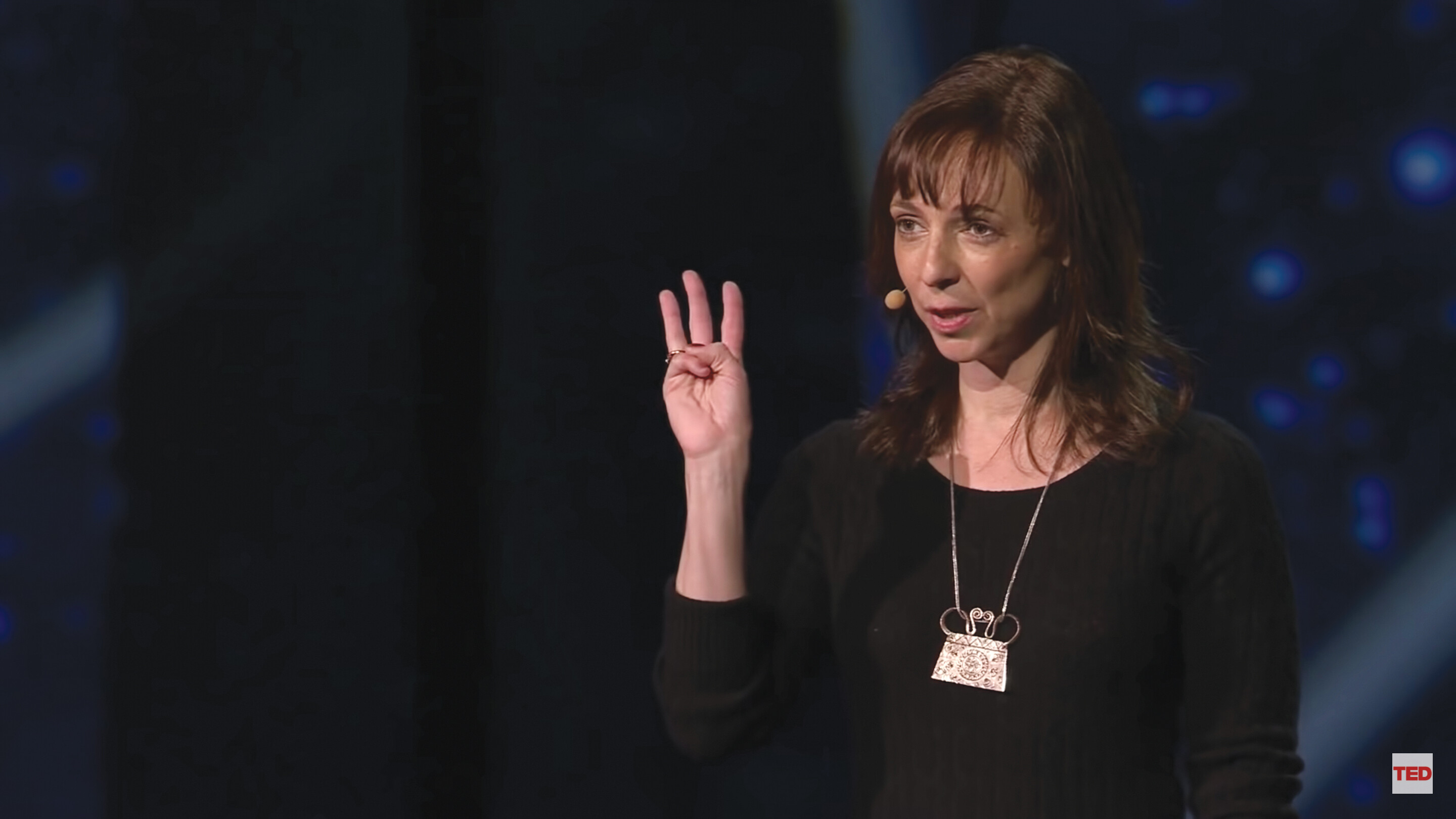
A screenshot of Susan Cain’s TED talk. She stands on a stage in an auditorium. She is holding up her right hand with three fingers extended upwards.
[16:21–18:32] She ends the speech with a very clear call for action. She asks the audience to stop the “madness of constant group work,” to unplug and get inside their own heads more, and to take a good look at what’s inside their own “suitcase” and why they put it there. This last call to action is another clear reminder of how the suitcase serves as a centerpiece of making her message memorable.
EXERCISE
After viewing Cain’s speech, reflect on these questions:
- Did Cain effectively and appropriately incorporate herself into the introduction, body, and conclusion of her presentation?
- Cain’s introductory story was two-and-a-half-minutes long—about 25 percent of her speech. What did such a long introduction achieve?
- Explain the role of the suitcase in her talk. Did it help her or distract you?
- How successfully did Cain’s speech demonstrate the primacy and recency effects?
- How did the delivery of her last line—“So I wish you the best of all possible journeys and the courage to [in a quiet voice] speak softly”—help reiterate her central idea?