AN ATOMIC FOOTNOTE: DEMOCRITUS, EPICURUS, AND LUCRETIUS
We have noted how several presocratic philosophers speculated on the physical foundations of the universe, usually by invoking some combination or aspect of the four classical elements: fire, air, water, and earth. In addition, some of them focused on the notion of infinity, pondering the idea that physical quantities can be indefinitely subdivided into ever smaller segments or pieces, into infinity. Both of these notions were challenged by a slightly younger contemporary of Socrates named Democritus (ca. 460–370 B.C.). Building on the teachings of a man named Leucippus, about whom little information has survived, Democritus formulated an atomic theory which held that there is a limit to the divisibility of all material objects, and that they are ultimately composed of tiny, solid, unbreakable particles he called atoms (the Greek word atoma means “uncuttable”). He further proposed that atoms have differing shapes, and that the universe is entirely made up of an unlimited number of solid atoms moving about in otherwise empty space, the void. Inevitably they collide and come into contact with one another, and because of their differing shapes and trajectories, they may cluster and coalesce in any number of combinations to make up all of the physical substances in the universe.
On a personal level, Democritus was apparently a pleasant person who made a good impression on others; he had a lively sense of humor and became known as “the laughing philosopher.” Some 2000 years after the death of Democritus, the great Dutch artist Rembrandt imagined himself to be Democritus in a self-portrait (Figure 1.7).
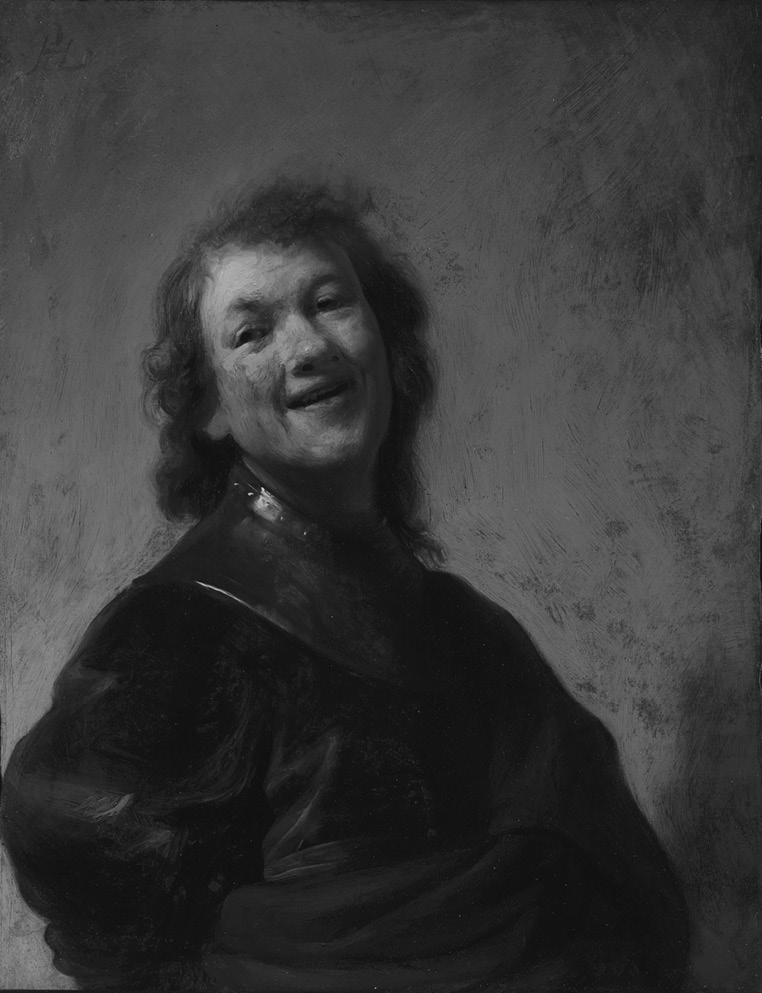
Figure 1.7 Rembrandt’s painting The Laughing Philosopher, a self-portrait based on the reputation of Democritus.
Figure 1.7 Rembrandt’s painting The Laughing Philosopher, a self-portrait based on the reputation of Democritus.
Despite his congenial personality, Democritus’s atomic theory was widely attacked because he stipulated that the movements of atoms were random, and that all physical phenomena were accidents created mechanistically; that is, as a result of material atoms physically impacting and interacting with one another. He believed these interactions to be random, and in so doing contradicted the predominant Greek assumptions about the nature of causality, which held that every caused event had to have a purpose.
Aristotle provided the most authoritative statement of this viewpoint by asserting that all caused events had to have four essential components: a material cause, the stuff out of which something is made (such as the marble of a statue); a formal cause, the idea or plan behind the caused thing (the sculptor’s model or image); an efficient cause, the actions or interactions that bring the caused thing into being (the hammer and chisel blows that shape the statue); and a final cause, the purpose for which the thing is caused (the sculptor’s desire to create beauty, or to commemorate someone). This conception was clearly modeled on human creative activity, but Aristotle and most of his contemporaries believed it also applied to the physical universe as a whole. In other words, the material elements were presumably set into motion and interaction according to some cosmic plan (formal cause) predetermined by the purposes of an ultimate “unmoved mover” (final cause). For most Greeks, the unmoved mover was interpreted to be a god or collection of gods.
Democritus’s atomic theory proposed material and efficient causes of the universe, but denied the reality of any underlying plan or final purpose. Accordingly, it was widely regarded as dangerously sacrilegious. Plato did not mention Democritus at all in his known writings, but reportedly said that his atomic works should be burned. Aristotle discussed atomic theory more seriously, but dismissed it as outdated and “presocratic.”
It took a half-century after Democritus’s death before his theory found a significant admirer and advocate in the person of Epicurus (ca. 341–270 B.C.). For Epicurus, adoption of the atomic theory meant that one should not fear the irrational or punitive whims of capricious gods, but instead should conduct one’s life as tranquilly as possible in the pursuit of socially responsible “happiness.” Epicurean happiness was not unbridled hedonism, but rather a self-sufficient life free from pain and fear, in the company of friends. Temperamentally a quieter version of Democritus, Epicurus founded a school in Athens appropriately called the Garden that attracted a small but devoted group of followers.
The Epicureans consistently maintained that the human psyche, along with the body and all other objects in the universe, are nothing but collections of material atoms. This remained a distinctly unpopular, minority view and might have disappeared completely, except for the effect it had on an obscure Roman poet. Almost nothing is known about the life of Lucretius (ca. 99–55 B.C.), but somehow he learned about Epicurean philosophy and celebrated it in an extraordinary extended poem with the Latin title De Rerum Natura (On the Nature of Things). Extending more than 200 pages in modern translation, this poem elegantly laid out all the main principles of Epicureanism, including its atomism, its moderate hedonism, and its materialistic conception of the anima, or soul. It seems that the author died shortly after the poem’s completion—or even before, as the final part ends abruptly as if not quite finished. Although the poem was initially praised for its style, its reputedly atheistic and hedonistic message did not sit well, and only a very few copies of it survived, to be rediscovered and newly appreciated many centuries later.
The centuries immediately following the fall of Rome are sometimes referred to as the Dark Age of Western Europe, because the writings of both the atomists and all the classical Greek philosophers were condemned as pagan blasphemy by early Christian scholars. Lucretius was a particular target, as the early Bible translator Saint Jerome spread a factually unsupported story that the poet had been an oversexed hedonist who became insane after ingesting a powerful aphrodisiac, and finally committed suicide. But even the less controversial classical writings were condemned and might well have disappeared completely if their surviving fragments had not been preserved, respected, and studied by a large number of non-European scholars from the farther edges of Alexander’s old empire. The most important scholars came from Arabia, Egypt, Persia (present-day Iran), Mesopotamia (present-day Iraq and Syria), and parts of India, which constituted the large and powerful Islamic empire.