DISCIPLES AND DISSIDENTS
By 1905, Freud’s works had begun to attract the attention of a growing group of admirers. The first of these came from his native Vienna, and they began meeting regularly at his home for psychoanalytic discussions, calling themselves the Wednesday Psychological Society. Prominent early members included the physician Alfred Adler and the young student Otto Rank, who had greatly impressed Freud with an essay on the psychology of the artist. The group quickly outgrew its local roots, and in 1906 it was visited by the Swiss psychiatrist Carl Jung, followed shortly afterwards by the Berlin-based Karl Abraham and the Welsh neurologist Ernest Jones, among many others. By 1910 the members had begun participating in formal meetings in different European cities, and they changed the group’s name to the International Psychoanalytic Association (IPA).
All these figures became prominent during subsequent decades—some as faithful disciples of Freud himself, others as dissidents who established their own competing schools of psychological theory. Among the former, Rank became a close personal friend to Freud and extended the theoretical emphasis on childhood back to the birth experience, which he believed could leave lasting unconscious psychological effects. Abraham elaborated significantly on the effects of childhood sexual experience on character development, and Jones became a close family confidant and, eventually, Freud’s first serious biographer. From 1912 to 1924, these three joined with four other disciples to create a secret and protective inner circle around Freud—a development precipitated by the angry defections of Adler and Jung.
In the years following Freud’s death several younger therapists—while still considering themselves Freudian—proposed modifications to psychoanalysis. Anna,, who had accompanied her father to London, extended psychoanalytic therapy to the treatment of young children, while maintaining Freud’s emphasis on the centrality of the Oedipus complex in their development. Also in London was Hungarian-born Melanie Klein (1882–1960), a protégé of Abraham and Jones who also specialized in child analysis. Gradually she came to believe that Anna Freud overemphasized the Oedipal period and that by far the most crucial formative relationship was the very first one, between the infant and mother. With its greater emphasis on the child’s relationship to its first “love object,” Klein’s theory generated an offshoot movement that became known as the object relations school of psychoanalysis.
Another approach to child psychoanalysis was developed by Erik Erikson (1902–1994), the son of Danish parents but raised in Germany, who studied with Anna Freud in Vienna before emigrating to the United States. Although he accepted the orthodox Freudian theory of childhood sexuality, he postulated a complementary series of psychosocial stages to parallel the psychosexual events Freud proposed. Erikson extended the developmental analysis by postulating the “identity crisis” as characteristic of adolescence, and writing about early adulthood and even later stages of the life cycle.
The previously mentioned Horney emigrated to the United States in 1930, where she continued to promote feminist issues while downplaying the importance of sexual factors and emphasizing social adaptation. As we shall see in Chapter 12, she became an important influence on the future humanistic psychologist Abraham Maslow. Horney, by coincidence, was joined in New York by Adler, another Jewish emigré who also influenced Maslow, but whose break from Freud had been much earlier and more dramatic than hers. Adler had been Freud’s most prominent early supporter, and also the first to publicly break from him. Adler, closely followed by Jung, became the most famous of the Freudian dissidents.
Adler and Individual Psychology
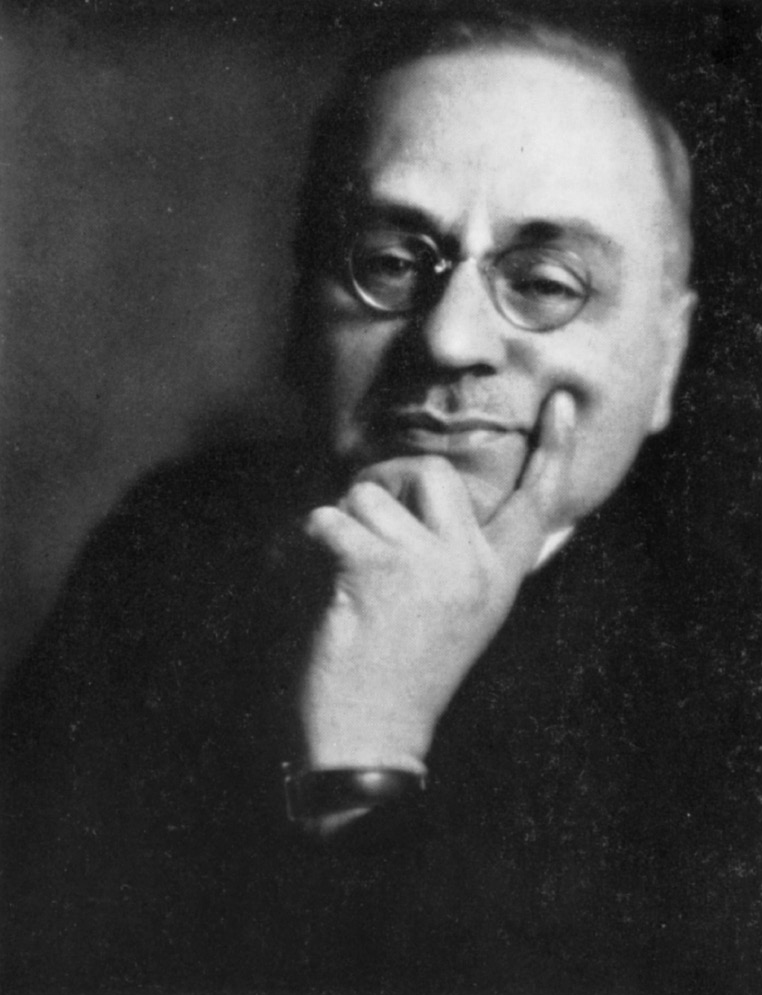
Figure 11.7 Alfred Adler (1870–1937).
Figure 11.7 Alfred Adler (1870–1937).
Alfred Adler (1870–1937; Figure 11.7), like Freud, grew up in a large, lower middle-class Jewish family in Vienna. The two boys’ circumstances were quite different, however. As the oldest child in his immediate family, and also intellectually precocious, young Freud was treated as a shining star and given special privileges by his parents. Adler, by contrast, was a second son with an active and popular older brother (named Sigmund, coincidentally). Crippled by a severe case of early childhood rickets (a softening of the bones now known to be caused by vitamin D deficiency), young Alfred at first could not possibly keep up. He developed a keen determination to overcome his handicap, however, and after much hard work and a presumably healthier diet, he succeeded. He became strong and popular in his own right—and highly competitive in his relationship with his brother.
Like Freud before him, Adler earned a medical degree from the University of Vienna. He began his career as an eye doctor before switching to general practice in a poor section of Vienna. In both of those capacities he encountered patients with a wide variety of organic disabilities, and provided counselling on how to deal with them. In the early 1900s Adler read The Interpretation of Dreams; when Freud somehow learned of the young doctor’s interest, he invited him to join his new Wednesday Psychological Society. Adler immediately became the group’s most active participant and, after Freud, its leader. Gradully, however, tensions arose, partly because of theoretical disagreements based on their differing medical backgrounds, and also due to personality differences.
Both men believed that a “complex”—a constellation of highly charged and conflict-laden issues dating from childhood—plays a central role in both normal and abnormal psychological development. Freud naturally emphasized the Oedipus complex, with its tangled network of “perverse” sexual attitudes and impulses, directed mainly toward the parents. Adler, however, was more impressed by the omnipresence of inferiority feelings during childhood. In his own case, these feelings had focused intensely on his frail physical condition, relative to the strength and vigor of his older brother. But all human children, he recognized, come into the world in a state of extreme general inferiority, incapable of fending for themselves and completely dependent on others for survival. Adler believed the deepest source of human motivation lies in the attempt to overcome this inferiority and to become independent masters of our environment.
While Adler believed the general feeling of inferiority is universal, he also argued that every child will experience a unique inferiority complex: an individual’s most basic pattern of inferiority feelings and attitudes, determined by a combination of innate and environmental factors from childhood. Some complexes, like Adler’s own, are built upon early physical defects or disadvantages that a child is strongly motivated to overcome. Adler was fond of citing historical cases like the ancient Greek politician Demosthenes, who was born with a severe speech impediment which he overcame so well that he became the most famous orator of his time. Although such physical inferiorities are obviously important, their role in a particular complex is modified by the child’s environment; in Adler’s case, the constant presence of his older and stronger brother brought his own physical weakness into sharper relief. Adler also emphasized the importance of the child’s subjective assessment of personal inferiority. A gifted child who is raised in an extremely demanding environment, for example, may develop a much sharper sense of intellectual inferiority than an average child from whom much less is expected.
By 1911 Adler’s divergences from Freud became serious enough that he formally broke from the psychoanalytical group and created his own school of theory and therapy. Although the concept of inferiority would be its dominant theme, Adler’s conviction that everyone experiences and reacts to inferiority in his or her unique way led him to name his system individual psychology.
Adler and his followers continued to probe memories from early life for the sources of symptoms and conflicts, and to investigate dreams and fantasies to bring to light unconscious or deeply suppressed memories and ideas, similar to Freud’s approach. Unlike Freud, however, Adler did away with the analytic couch and seated his patients in a chair directly facing him, symbolically treating them as equals, thereby minimizing any sense of the inherent inferiority relative to the therapist. The therapeutic conversations in Adlerian therapy had quite a different focus from Freud’s. Whereas Freud probed the deeply personal and private roots of the patients’ problems, Adler focused on their social contexts. For Freud, the social conscience or superego was not an innate psychic feature, but something acquired following an emotionally fraught repression of Oedipal and sexual wishes. Adler saw humans as innately social, with an inborn motive or capacity he called social interest: a desire to relate harmoniously and constructively with fellow humans.
Consistent with his emphasis on socialization, Adler focused more attention than Freud on the full dynamics within a child’s family, and on the birth order effect. Without claiming universality, Adler theorized that different types of inferiority feelings, and compensations for them, are typical for children according to their birth order. Oldest children, for example, spend their earliest years as only children who bask in the undivided attention of their parents, whose approval assumes great importance. But when a younger sibling arrives, they are supplanted as the prime object of attention, and as a result their inferiority complexes will often entail feelings of vulnerability, of never being completely exempt from displacement by an unforeseen rival. Only children never get supplanted, but grow up without other children in their immediate environment and have to cope with often being alone. Second or middle children have older and more competent siblings to contend with, and so, like Adler himself, may develop compensatory competitive strivings. Youngest children in large families face the burden of being last in a large group, but this may be moderated if they are pampered or treated as special. None of these outcomes is automatic, and individual variations are inevitable. But Adler believed a child’s role in his or her family constellation was bound to be important in some way, and it was invariably discussed in Adler’s therapy sessions.
Another feature of Adlerian therapy developed after he read a book by the German writer Hans Vaihinger entitled (in translation) The Philosophy of “As If,” which argued that many behavioral patterns are based on assumptions that are actually false but are accepted as if they are true.23 Adler detected something similar in many of his patients: they ran their lives according to what he called guiding fictions—partially or completely incorrect ideas about the self, often dating from childhood, that are believed to be true and may consciously or unconsciously influence behavior. Sometimes their effects may be positive, as when the fiction that “I can do anything I want as long as I put my mind to it” inspires someone to complete a difficult task. But sometimes they can be negative, as when the childhood idea that “I am physically weaker than my older brother and will never be able to keep up with him” leads to either helpless depression or exaggerated and harmful competitiveness.
Much of Adlerian therapy attempted to uncover not the dark and deeply repressed memories and impulses said to inhabit the Freudian unconscious, but rather fictions and misconceptions about the self. Rightly or wrongly, these kinds of ideas were regarded by Freud as less deeply repressed than his own theory’s pathogenic ideas. Freud acknowledged that Adler’s techniques were all right as far as they went, but added that ultimately they were superficial, scratching only the surface of the psyche. Adler was content to remain relatively close to the surface, and numbered among his successful cases several patients who had previously undergone full psychoanalysis but still remained unhappy and uncured.
In 1932 Adler emigrated to New York, where he attracted a strong following among younger psychologists. Although never as universally famous as Freud, his basic therapeutic and theoretical ideas have been continuously maintained and developed in the Journal of Individual Psychology, and by the North American Society of Adlerian Psychology, which has several local affiliates.
Jung and Analytical Psychology
Freud’s second great disciple-turned-dissenter, Carl Jung (1875-1961; Figure 11.8), grew up in the northern German-speaking region of Switzerland, the son of a poor pastor in the Swiss Reformed Church and a mentally unstable mother. His mother, Jung recalled, could seem relatively normal during the day but was haunted by visions at night, and had to be hospitalized for several months during his boyhood. Young Carl seemed to have inherited or acquired some of his father’s scholarly and philosophical attitudes and his mother’s more mystical and sometimes destabilizing tendencies. At one point he had a fantasy of being two people: a schoolboy of his own time and a dignified gentleman from the past. For a time he experienced fainting fits resembling epilepsy. Throughout his life, he was fascinated with his own inner experiences. His autobiography, written late in life, dealt less with documented facts and more with recollections of his fantasies, dreams, and highly subjective reactions to events from childhood onwards. The book was appropriately entitled Memories, Dreams, and Reflections.24
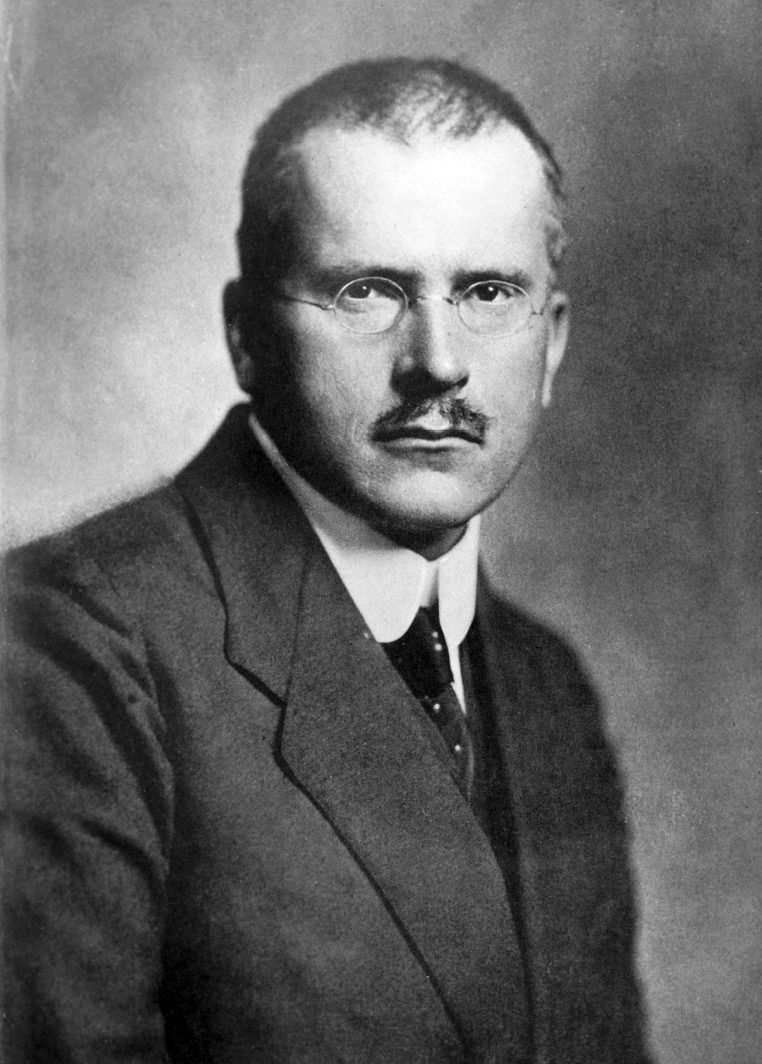
Figure 11.8 Carl Gustav Jung (1875–1961).
Figure 11.8 Carl Gustav Jung (1875–1961).
Jung overcame his early emotional difficulties sufficiently to become an outstanding student, and at age 20 he began medical training at the University of Basel. There his attention was captured by a textbook on the newly named field of psychiatry, and in 1900 he went to work at the large Burghölzi Hospital in Zurich with the most famous psychiatrist of his time, Eugen Bleuler. Bleuler had recently coined the diagnostic term schizophrenia for severe mental disturbances marked by delusions, hallucinations, and other breaks with objective reality. Under Bleuler Jung gathered considerable experience with schizophrenic and other severely disturbed patients, becoming fascinated by their often strange trains of association.
Bleuler had been impressed by Freud’s Interpretation of Dreams and recommended it to Jung. An intrigued Jung combined the ideas of Freud’s free association with Galton’s earlier invention of the word-association technique (see Chapter 7) and developed a more formal version. Jung’s word-association test consisted of a list of words presented to subjects with instructions to respond to each “as quickly as possible [with] the first word that occurs to your mind.”25 The examiner would record each response verbatim, as well as the amount of time the subject took before producing it, and note any signs of anxiety or confusion. As a more formally standardized approach to obtaining the data of Freudian free association, the test provided clues to the nature of possible psychic “complexes,” as Jung referred to them.
In 1906 Jung sent Freud a complimentary letter along with a copy of his word-association test, and the next year accepted an invitation to visit Freud at his home in Vienna. Jung completely charmed both Freud and his family. Freud quickly concluded that this young and charismatic figure should become his successor; not only was he clinically gifted, but as a non-Jew from Switzerland his prominence in the movement would ensure that psychoanalysis was not dismissed only as a special creation of Viennese Jewish culture. The two corresponded with each other regularly and in 1909, after Freud was invited to visit America, he persuaded his host G. Stanley Hall to invite Jung as a fellow participant.
In the following few years Jung increasingly chafed under Freud’s affectionate but sometimes overbearing attitude and demand for total loyalty. More importantly, Jung was starting to believe that although Freud’s theory was correct for some cases, it told only part of the full story. He agreed that there is a “personal unconscious” with major sexual content, but came to feel it could contain other kinds of wishes and conflicts as well. Freud used the term libido to denote the specifically sexual energy that activates the unconscious; Jung used the term to represent psychic energy in general, with sexuality being just one variety of it. Tensions came to a head in late 1912, leading Jung to follow Adler’s example and formally break from the psychoanalytic group and create his own movement called analytical psychology.
Underlying Jung’s break was a fundamental philosophical difference from Freud. From his own dreams and those of his patients, and from other sources such as mythology, the artwork of children, and decorative art from various cultures, Jung concluded that there are certain archetypes—universal images, themes, and ideas—that originate not out of personal experience but rather from an innate collective unconscious. In some ways resembling Plato’s ideal forms and Descartes’s innate ideas, Jung’s archetypes included the basic inspirations for dreams or myths concerning the mother, the father, the “trickster,” or cultural memories of a great flood.
Many of Jung’s presumed archetypes were visual, and one that he particularly emphasized was the image of a mandala (Sanskrit for “circle”), a spiritual and ritual symbol representing the universe. Examples of mandalas ranged from a simple radiating sun in children’s drawings, to highly elaborate rose windows in cathedrals or the beautiful circular designs found in Buddhist art. In addition to symbolizing the totality of the universe, for Jung the mandala represented the potential unity and wholeness of the human psyche. The ideal psychological condition, he believed, was one of balance among many tendencies, some of them diametrically opposed, and the mandala symbolized this sense of harmony.
The notion of balance remained a constant theme throughout Jung’s theorizing. He famously proposed a personality dimension he called extroversion-introversion, denoting a person’s relative orientation toward the outer world or the inner world. In current popular usage, these terms have assumed a primarily social connotation. Extroverts tend to be gregarious, talkative, and most comfortable in groups; introverts prefer reflective solitary activities, such as reading and writing, and often feel shy in large groups. For Jung, the terms signified a more general tendency to be temperamentally oriented either externally toward the objective, outside world, or internally toward one’s own deeply subjective experiences. Significantly, he saw this as a major differentiator between Freud and himself.
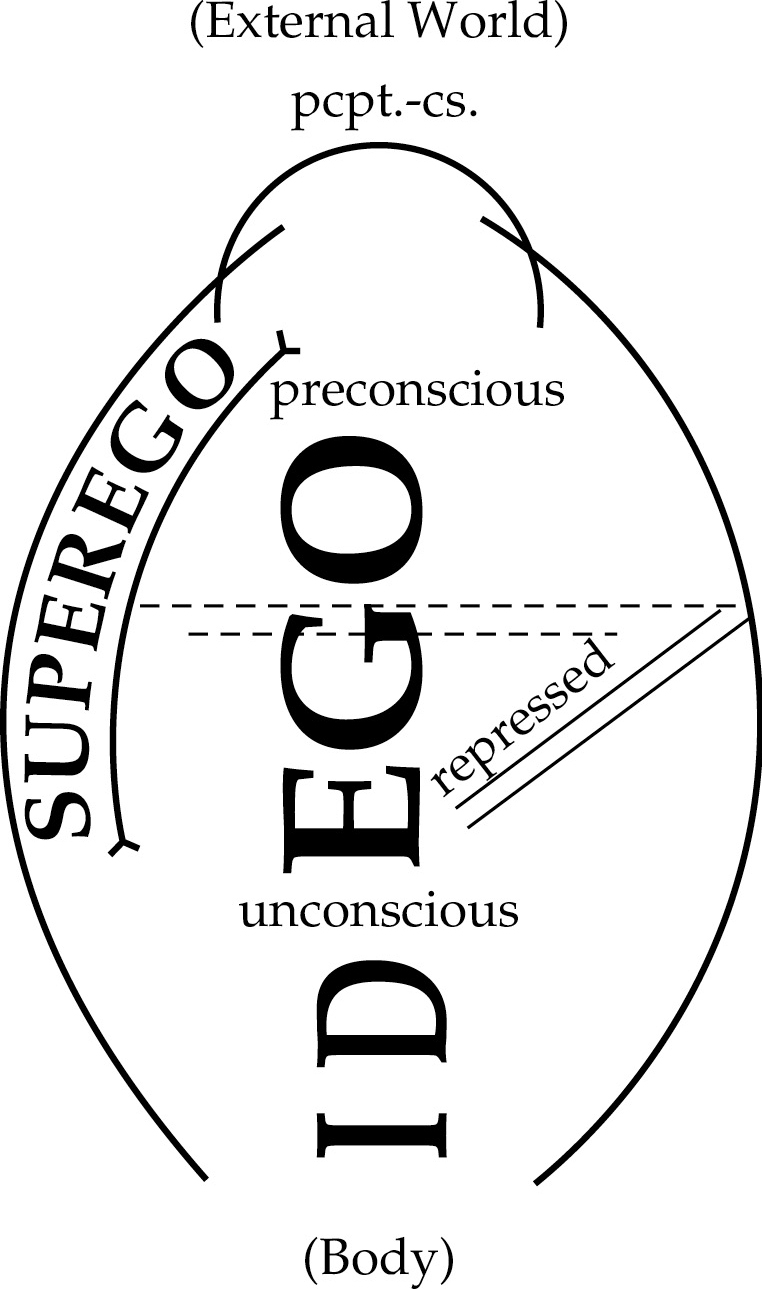
Freud, Jung believed, saw the inner world as essentially a seething mass of largely unconscious and sexual impulses (the id) striving for satisfactions in the external world, and in the service of that goal the psyche’s “eye” (the pcpt.-cs. on top in Figure 11.4) is firmly pointed toward the external world. Jung, by contrast, saw the unconscious with its inherited collective features as much larger than Freud did, with its archetypes containing germs of potential insight and wisdom. As Jung summarized in his autobiography:
[Freud] was blind to the paradox and ambiguity of the contents of the unconscious, and did not know that everything which arises out of the unconscious has a top and a bottom, an inside and an outside. When we speak of the outside—and that is what Freud did—we are considering only half of the whole.26
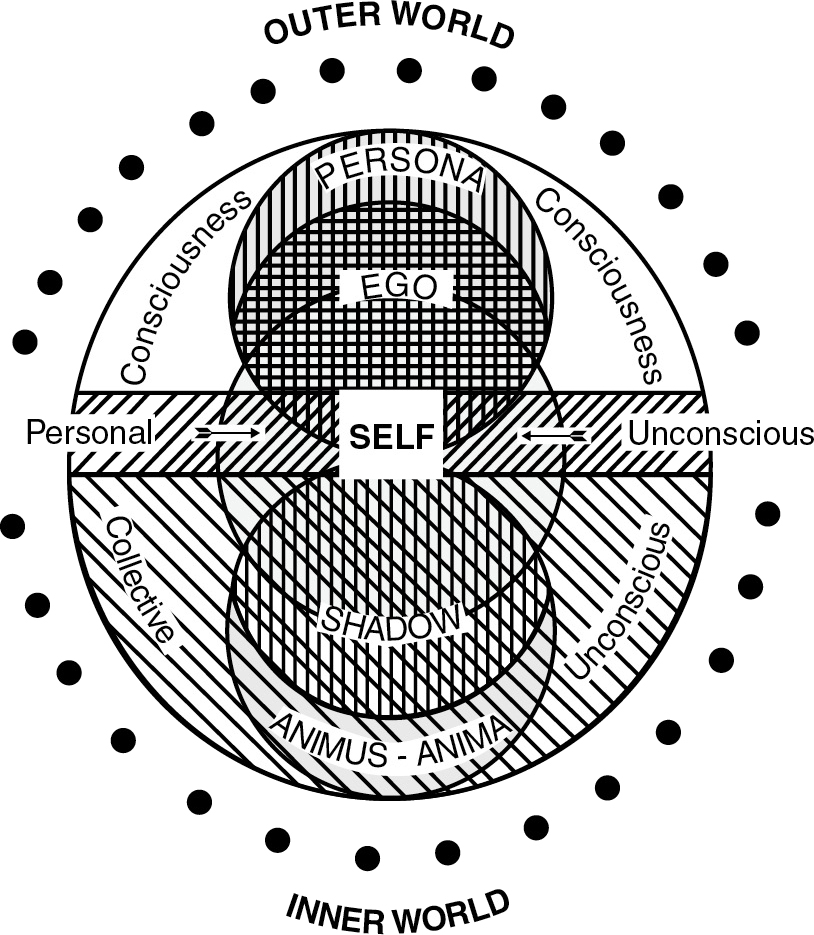
Figure 11.9 Jung’s model of the psyche.
Figure 11.9 Jung’s model of the psyche.
For Jung, the ideal psychic condition was to achieve a balance between extroversion and introversion, or an ability to alternate voluntarily between the two.
As Jung went on to elaborate his own model of the psyche, shown in Figure 11.9, the notion of balance was further emphasized. The top half, oriented toward the outer world, closely approximates the totality of Freud’s version (see Figure 11.4). Jung’s top half is dominated by an ego that attempts to resolve the conflicting demands arising from external reality and those from the body and the personal unconscious. It creates the compromises and defenses that result in one’s overt and public behavior. Jung used the term persona (Greek for “mask”) to denote the public face or appearance that one presents to the external world.
The bottom half of Jung’s model, oriented toward that inner world to which the extroverted Freud was presumably blind, was essentially a mirror image of the top. Drawing on the collective as well as the personal unconscious, it is dominated by the shadow, a structure that is essentially the inverse of the ego, containing representations of all of the conflict-reducing decisions not made by the ego. Deepest within the shadow lies the opposite of the public persona one presents to the world. Perhaps reflecting the gender-role stereotypes of his time, Jung referred to this as either the animus (signifying the repressed masculine characterisitics of someone with a feminine persona) or the anima (the reverse for someone with a masculine persona).
Central in Jung’s model was something he called the Self, representing a person’s subjective awareness and appreciation of the coexistence of his or her ego and shadow. Jung thought that during childhood, while the ego and persona are developing into their early adult forms, the Self remains relatively small. As a person ages, however, Jung thought it desirable for the Self to expand, at least to acknowledge, and at best to partially express, those qualities that had been relegated to the shadow. Freud, for all of his courage and skill in probing the personal unconscious, was for Jung an extreme extrovert who never achieved this desirable state: “He remained the victim of the one aspect [of his personality] he could recognize, and for that reason I see him as a tragic figure.”27.
These concepts represent a high level of abstraction. In concrete Jungian analysis, the traditional techniques of free association to dreams and fantasies would be applied, but with a focus on extracting meaning not so much from repressed sexual experience as from the more philosophical and “spiritual” issues emphasized by Jung. The main goal was helping the patient achieve balance in his or her psychic life.
Although Jungian psychology never achieved the same level of fame and popularity as psychoanalysis, it attracted considerable favorable attention from people with strong interests in cultural history and the arts. Among Jung’s wealthy clients were Paul Mellon of the famous banking family and his wife Mary Conover Mellon, who in 1945 established the Bollingen Foundation, named after Jung’s country home in Bollingen, Switzerland. The Foundation supported the publication of a uniform edition of Jung’s own collected works, plus more than 200 other volumes on broadly Jungian topics, including the history of art and mythology, and symbolism in the arts.
In 2009 Jung scholarship was enhanced with the publication of an annotated facsimile edition of his Red Book, a large red leatherbound notebook in which Jung privately recorded his most intimate thoughts and reflections, illustrated with many hand-drawn mandalas and other images, over a period of fifteen years.28 Although much less accessible to a general reader than his Memories, Dreams, and Reflections, this volume reveals the personal origins of many of his ideas, as well as the highly introverted and introspective side to his own personality.
In the universities, several early twentieth-century psychologists acknowledged Jung’s word-association procedure as an early example of an objective psychological test, and more significantly, his concept of extroversion-introversion was eagerly adopted by pioneering researchers in the new field of personality psychology (see Chapter 12). In the early 1920s, Jung expanded this concept in his theory of psychological types, in which he proposed two additional dimensions defining a person’s preferred mode of perception and mode of judgement. In perception, he argued, a person’s conscious experiences arise primarily through sensations from the external world or from intuitions arising from within. Judgments about those perceptions then occur along a dimension ranging from a coldly rational thinking process to a highly emotionalized feeling about them. Although few people lie at the far extremes of any of these dimensions, Jung believed that most would show general preferences for one or the other. Therefore, any person could be classified as one of eight possible types: introverted or extroverted in basic attitude, senser or intuiter in perception, and thinker or feeler in judgment. In the 1940s a slightly modified version of these dimensions became the basis for a highly successful personality test, the Myers-Briggs Type Indicator, developed by the mother and daughter team of Catherine Cook Briggs and Isabel Briggs Myers.