FREUD AND ACADEMIC PSYCHOLOGY
Like Jung, Adler, and most of the other pioneers in this chapter, Freud was primarily a clinician, and although his work involved psychological issues, his direct contact with academic psychologists was limited. As noted, he studied briefly with Brentano while a young university student, and his early writings made occasional and usually fleeting reference to the work of Fechner and Wundt. But his primary emphasis was clinical, and his German-language works attracted little attention from academic psychologists until 1906. That year a few Boston psychiatrists published a short article on new approaches to the treatment of hysteria, concluding with “Remarks on Freud’s Method of Treatment by ‘Psycho-Analysis.’”29 This appeared in the very first issue of the new Journal of Abnormal Psychology, created by Prince and Allport, and directed at psychologists interested in psychopathology (see Chapter 10).
Among the psychologists who read the article was the formidable G. Stanley Hall, President of Clark University and director of America’s largest graduate program in psychology. As described in Chapter 8, Hall had also popularized the word adolescence. Newly alerted to Freud’s growing significance, Hall noted that the psychoanalyst’s recently published Three Essays on the Theory of Sexuality suggested the two shared common interests in children’s development and sexuality. Seeing Freud as a potentially important ally, Hall invited him to participate as a speaker at Clark University’s twentieth-anniversary celebration, joining a group that included several distinguished experimental psychologists. Freud agreed, and also convinced Hall to invite his then-protégé Jung to accompany him and be the youngest speaker.
At that event in the autumn of 1909, Freud delivered five informal lectures in German, telling the chronological story of how he had arrived at the main points of his theory and technique. Although Freud was not the only distinguished speaker, Hall made sure his lectures received wide coverage in the popular press. More importantly, Hall persuaded Freud to reproduce his lectures in writing, which he promptly had translated into English and published in the American Journal of Psychology under the title “The Origin and Development of Psychoanalysis.” These articles vividly and clearly presented Freud to the English-speaking world, and they remain excellent introductions to his thought.30 The success of this publication opened the gates for English translations of Freud’s longer works, with The Interpretation of Dreams appearing in 1913, followed by translations of most of his major works, many appearing almost immediately after their publication in German.
The Clark conference marked Freud’s only venture to the United States, and his only personal interaction with the country’s academic psychologists. The famous photograph in Figure 11.10 shows all the conference participants. Hall is the tall figure in the center of the front row, with Freud to his right and Jung next to Freud. E. B. Titchener is second left in the front row, with William James to the right of him.
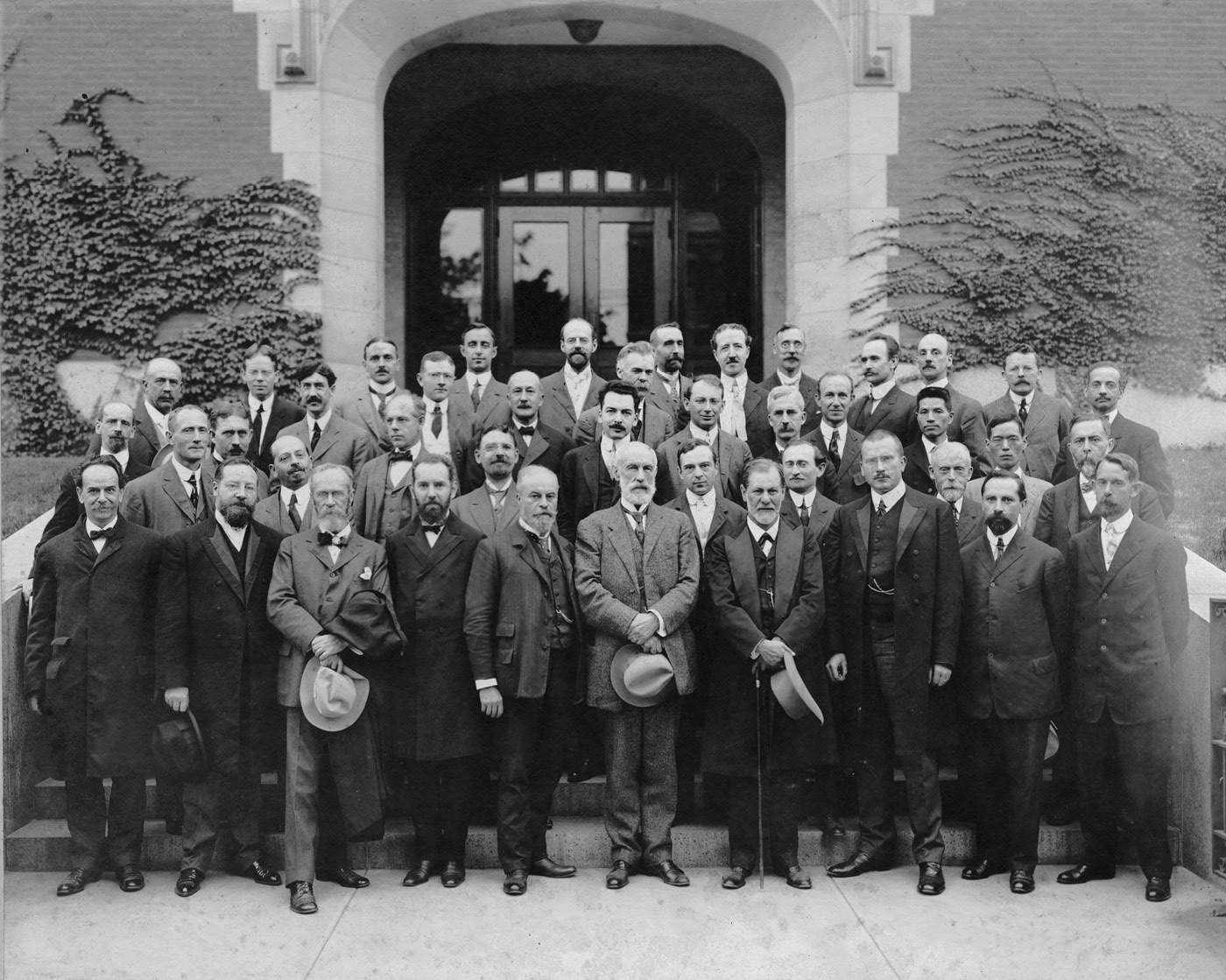
Figure 11.10 Participants at the 1909 Clark University conference.
Hall’s positive reaction to Freud was not shared by most of the other psychologists. Freud’s method of free association ran directly counter to Titchener’s rules for scientific and objective introspection (see Chapter 5). Titchener insisted that introspectors must be rigorously trained to strip subjective meanings from their analyses and to reduce consciousness to its most elemental sensations; free association aimed to discover the subjective meaning of apparently meaningless dreams and fantasies. Therefore, when Freud first met Titchener at the conference’s opening reception he remarked, “Oh, you are the opponent!”—to which Titchener replied that he was less an opponent than someone who could “translate” Freud’s theories “into modern psychological terms.” Freud responded that if Titchener would only spend some time with him, he would see that all modern psychology needed to be “revolutionized” along psychoanalytic lines. Titchener reportedly thought but refrained from saying aloud: “Revolutionised, ye gods! That means, set back just about two generations.”31
A frail William James, ailing with a serious heart condition, visited Clark for just one day “to see what Freud was like.” The two had a polite private conversation, in which James impressed Freud with his fortitude in the face of severe illness but which left James unconverted. He remarked privately that Freud seemed to be a “regular halluciné” and “a man obsessed with fixed ideas.” He admired Freud’s sincerity, however, and hoped the psychoanalysts “would push their ideas to their utmost limits.”32
As Freud’s translated works became increasingly prominent in the popular media, however, other mainstream American psychologists showed less restraint and began publicly treating psychoanalysis with contempt. Knight Dunlap, who was John B. Watson’s senior colleague at Johns Hopkins, described psychoanalysis as waging “an assault on the very life of the biological sciences,” an attempt to “creep in wearing the uniform of science, and to strangle it from the inside.”33 As noted in Chapter 9, Watson himself took a sarcastic swipe at Freud in the case report of Little Albert by portraying a fictional psychoanalyst twenty years later investigating Albert’s continuing fear of furry objects and “teas[ing] from him a dream which upon their analysis will show that Albert at three years of age attempted to play with the pubic hair of the mother and was scolded violently for it.”34 The powerful James McKeen Cattell publicly described Freud at a 1923 psychology convention as someone “who lives in the fairyland of dreams among the ogres of perverted sex.”35 Consistent with these attitudes, most conventional psychology textbooks throughout the 1920s paid little or no attention to psychoanalysis.
These objections ran against the tide of popular culture, however, as the potential relevance of psychoanalysis to everyday issues made Freud’s name a household word in America. By the early 1920s he had been featured on the cover of Time magazine, and the lyrics of a popular song declaimed, “Don’t tell me what you dream’d last night, For I’ve been reading Freud!”36 As Freud’s popularity grew, the words psychology and psychoanalysis became increasingly confused with each other in the public mind.
By the early 1930s, the tide began to turn. Some younger psychologists began arguing that psychoanalytic ideas should not be dismissed but instead they should be regarded as hypotheses to be investigated experimentally in laboratory situations. Among the first of these was Saul Rosenzweig (1907–2004), whose doctoral research at Harvard investigated the memory for completed versus incompleted or interrupted tasks. Previous research by Lewin’s student Bluma Zeigarnik had shown that when subjects were asked to remember a series of tasks they had performed, some of which had been interrupted before their completion, their recall of the uncompleted tasks was significantly greater than for the completed tasks. Rosenzweig’s new twist was to deliberately lead some of his subjects to interpret the incompletion of their tasks as a personal failure, telling them that most people found the tasks very easy to complete. Under this condition Zeigarnik’s results were reversed, as the incompleted, “failed” tasks were more likely to be forgotten than the completed ones. Rosenzweig interpreted these results as an experimental demonstration of repression, the motivated forgetting of negative events.
When Rosenzweig sent Freud a copy of his study, the reply was unenthusiastic: “I cannot put much value on these confirmations because the wealth of reliable observations on which [psychoanalytic] assertions rest make them independent of experimental verification,” he wrote, but “still it can do no harm.”37 From the beginning, Freud had been indifferent to the results of laboratory investigations of his theory, believing that they inevitably lacked the real-life authenticity of actual clinical cases.
Despite Freud’s condescension, however, Rosenzweig’s study showed that at least some psychoanalytic concepts could be brought into the lab, and it initiated a new strategy for many psychologists. Instead of ignoring or denigrating Freudian ideas, they would design controlled experiments to determine validity. In the words of historian Gail Hornstein, they would presumably establish themselves “as arbiters of the mental world, able to make the final judgement about what would and would not count as psychological knowledge.” The extent to which they actually achieved that goal may be debatable, but Hornstein documented how research by psychologists on psychoanalytically related ideas quickly exploded into a growth industry.38 Empirical studies of topics such as dreams, childhood experience and character development, stages of sexual development, the role of conflict in learning, and the development of neurotic and psychotic responses proliferated in the psychology journals, with more than 400 published in the 1940s and 1950s and at least a thousand more by the mid-1970s.
Many of these studies, including those inspired by the theories of Jung, Adler, and other neo-Freudians, played an important role in the development of a new subdiscipline of personality psychology that began to flourish in the 1930s (as shall be described in Chapter 12). Today, personality psychology is taught in the psychology departments of virtually all colleges and universities. Ironically, however, many of these courses and their textbooks fail to acknowledge the formative role of Freudian and other psychoanalytical concepts in establishing the field.