JOHN LOCKE AND THE EMPIRICIST TRADITION
In 1690 the English philosopher and physician John Locke (1632–1704) published his important book, An Essay Concerning Human Understanding, which attracted the attention of Gottfried Leibniz in Germany. The two eminent scholars had never met personally, so Leibniz jotted down some reactions to the book in a short paper, which he asked a mutual friend to transmit to Locke along with the assurance that “it is not possible to express in a letter the great character Monsieur Leibniz has of you.” Locke reacted coolly to this overture, however, and did not condescend to reply. He told a friend, “Mr. L’s great name had raised in me an expectation which the sight of his paper did not answer.”13
Upon learning that Locke had not fully appreciated his criticisms, Leibniz expanded on them in a book-length manuscript. In New Essays on Human Understanding (Nouveaux Essais sur l’Entendement Humain), a fictional representative of Locke engages in Platonic-style dialogue with a mouthpiece for Leibniz himself. Unfortunately, Locke died just as the work was finished, and Leibniz, not wanting to dispute with a dead author, put his manuscript aside and it remained unpublished until a half-century after his own death.
It was a shame that these two great philosophers never engaged in real dialogue, for both had important points to discuss and Locke’s replies to Leibniz would have been illuminating. And despite their intellectual differences, the two had much in common. Both had extremely broad interests and had rejected opportunities to pursue academic careers in favor of participation in the “real world” of politics and public affairs. Born outside the wealthy aristocracy, both of these middle-class men had become courtiers, working for aristocratic patrons who valued but sometimes restricted their activities. And both had been profoundly influenced by the earlier work of Descartes, though in quite different ways.
Locke adopted many of Descartes’s basic ideas regarding physics and physiology and used them as the foundation for an empiricist theory of knowledge. He did not accept, however, Descartes’s conception of a constantly active conscious mind, with a ready-made supply of innate ideas. Leibniz, by contrast, took exception to aspects of Descartes’s physics, while accepting the reality of an active conscious soul with its own important role in creating our experience of the world. In doing so he advocated a philosophy emphasizing the nativist and rationalist tendencies of Descartes. These two philosophers initiated major, and often competing intellectual traditions that shaped the development of modern psychology.
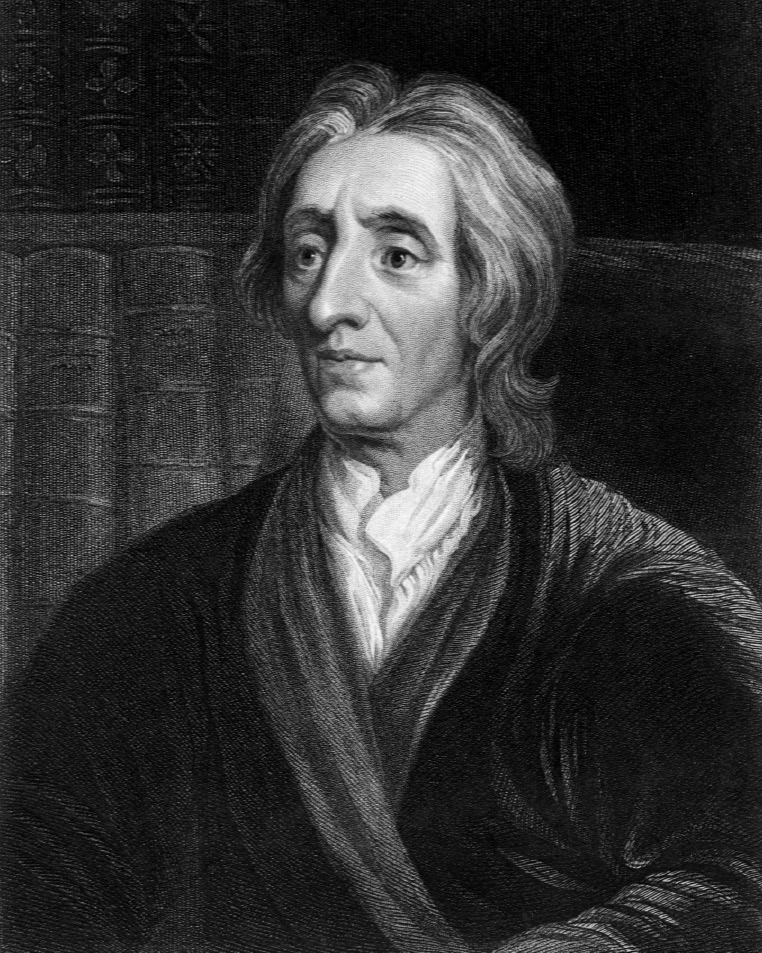
Figure 2.5 John Locke (1632–1704).
Figure 2.5 John Locke (1632–1704).
Born in southern England, Locke experienced an early life dominated first by the prelude to the English Civil War, and then its actual unfolding during the 1640s (Figure 2.5). In that conflict his lawyer father strongly supported the anti-monarchist Puritan Roundheads against the Royalist Cavaliers, who asserted King Charles I’s divinely given right to political and religious authority. On the winning side, the elder Locke was rewarded by an appointment for his teenaged son to the prestigious Westminster School in London. John’s fellow students came from many backgrounds and the school’s remarkable headmaster, who had personally favored the Royalists, urged students to think for themselves and to be wary of anyone who tried to influence them by mere propaganda. In this tolerant atmosphere, Locke learned the lasting lesson that there are two (or more) sides to most viewpoints.
After Westminster, Locke won a scholarship to Oxford University, which would remain his home for many years. There he continued to befriend others with differing religious and political views, and was untroubled in 1660 when Oliver Cromwell’s Commonwealth failed and the monarchy was restored with King Charles II on the throne. In the meantime, Locke was influenced by an intellectual atmosphere that was in transition. Although the official Oxford curriculum was restricted to classical and medieval texts, some members of the faculty privately practiced and promoted an observational approach to science and medicine.* The physician Thomas Willis, for example, studied the brain in unprecedented detail and made several fundamental anatomical discoveries (see Chapter 3). While earning a degree in classics, Locke studied on the side with Willis and some other progressive physicians, attaining the skills— although not the official degree—of an effective doctor.
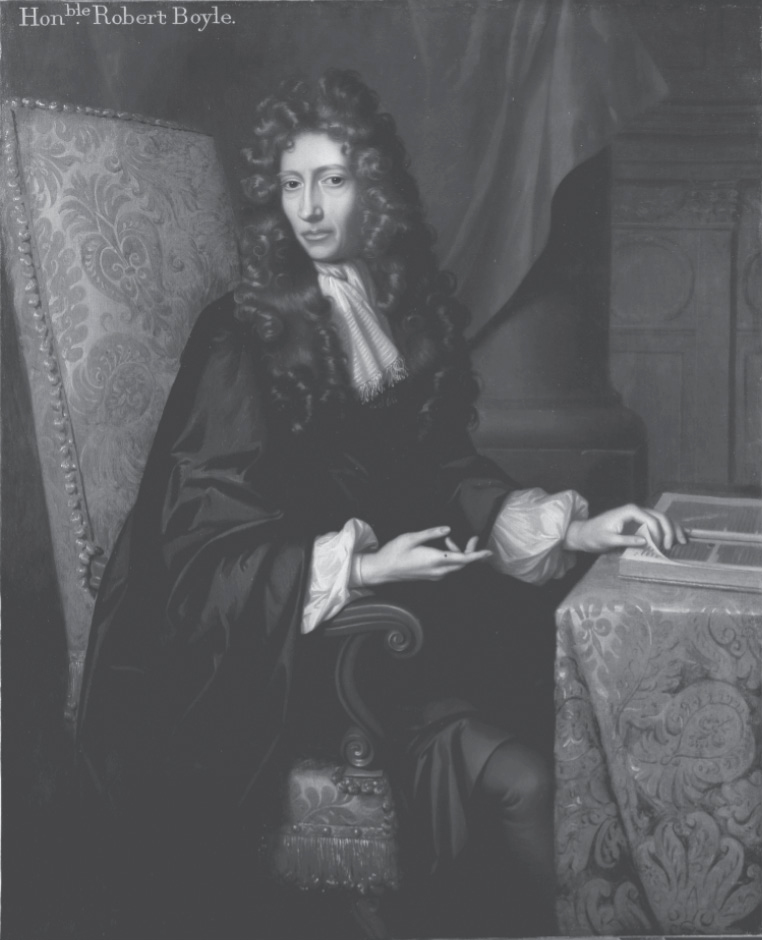
Figure 2.6 Robert Boyle (1627–1691).
Figure 2.6 Robert Boyle (1627–1691).
Locke also became a follower and friend of the eminent chemist Robert Boyle (1627–1691; Figure 2.6). Boyle had previously conducted famous experiments demonstrating what became known as Boyle’s law: the fact that the volume of a gas varies inversely with the pressure exerted upon it. Sociable as well as scientifically ingenious, Boyle regularly invited colleagues to his Oxford home for scientific discussion in convivial social gatherings. Locke participated so actively in these discussions that one irritated member complained that while everyone else “wrote and took notes from the mouth of their master, [Locke] scorned to do it. . . . [and] would be prating and troublesome.”14 Boyle himself, however, enjoyed Locke’s shows of independence and became a lifelong mentor and friend.
During the same period when he was learning the practical elements of science and medicine, Locke read Descartes’s works, which reinforced his growing belief that nothing should be taken on mere authority and gave him “a relish of philosophical studies.”15 From these varied influences, by his early 30s Locke had become reasonably expert in classical scholarship, medicine, science, and philosophy. While each subject had its attractions, none had really gripped him as the basis for a permanent vocation. At this point fate intervened, and he had a fortuitous meeting with one of England’s most important political leaders.
Sir Anthony Ashley Cooper (1621–1683) had been a prominent member first of Oliver Cromwell’s Commonwealth government, and then, after that failed, of the new restoration parliament where he became a favorite of King Charles II. The king named him first Lord Ashley, a baron, and then in 1672 the still higher Earl of Shaftesbury (Figure 2.7). When Locke met him in 1666, he was still Lord Ashley, but on his way toward becoming the most influential politician in the kingdom.
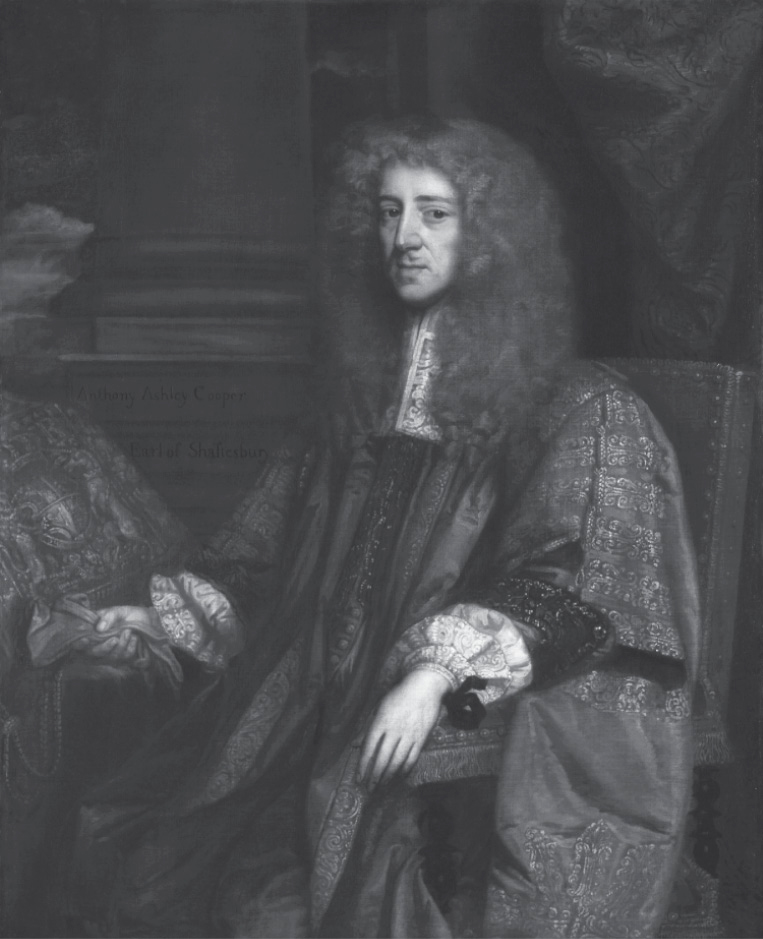
Figure 2.7 Sir Anthony Ashley Cooper (1621–1683).
Figure 2.7 Sir Anthony Ashley Cooper (1621–1683).
The meeting occurred because Lord Ashley, suffering from a liver cyst, visited Oxford to drink medicinal waters from a nearby spring. The doctor who normally provided the water became ill, Locke filled in for him, and the rest, as they say, was history. Ashley found Locke to be an intelligent and broadly educated gentleman as well as a skillful physician, and Locke found in Ashley a mature political mentor whose diverse interests and tolerant political attitudes meshed perfectly with his own. When Ashley invited his new young friend to move to London as his personal physician, Locke happily accepted. Soon after that Ashley’s cyst became dangerously inflamed and older doctors despaired of his life. More familiar with recent surgical techniques, Locke took the radical step of inserting a silver drainage tube into the cyst through an abdominal incision. Ashley recovered well, and soon after had Locke replace the silver tube with a gold one that remained in place for the rest of his life.
Locke became a political as well as medical advisor after Ashley became the leader of eight wealthy developers of the wild Carolina territory in America (named after Charles, Carolus in Latin, and encompassing modern North and South Carolina). Ashley’s role is reflected today in the names of the Ashley and Cooper Rivers that surround Charleston, South Carolina, the first and most important city in the new territory. Locke was entrusted with writing the legal code, or Fundamental Constitutions of Carolina. Very liberally by the standards of Locke’s time, if not by ours, the code granted freedom of worship to all groups who believed in God except for Roman Catholics (an aftermath of King Henry VIII’s separation of the Church of England from the Church of Rome). It also granted the democratic right to vote to all landowners of 50 acres or more. Property rights were strongly safeguarded, including the right to own slaves whose labor was essential to the Carolina economy from its earliest beginnings.16
Locke found London life stimulating in many other ways. Having recently moved there, Boyle founded an expanded version of his Oxford group, now called the Royal Society of London; it quickly became Britain’s most important scientific organization. As one of its earliest Fellows, Locke kept up with the most significant new ideas and became friends with important scientists, including Isaac Newton. He also developed the habit of meeting regularly with friends for informal discussions of diverse political, religious, and philosophical issues.
One of these meetings had momentous consequences when Locke and his friends discussed the vexing issue of differing moralities and religions. With equally sincere groups professing different and sometimes mutually exclusive beliefs, the question arose as to how one might rationally choose among them. After some inconclusive discussion, it occurred to Locke that “before we set ourselves upon enquiries of that nature it was necessary to examine our own abilities, and see what objects our understandings were or were not fitted to deal with.”17 Locke accordingly proposed to examine the nature of knowledge itself, and of the mind or “understanding” that acquires that knowledge, in order to discover exactly what it is possible to know and, just as important, not to know, with certainty. He optimistically thought he could resolve this preliminary issue in a page or two of analysis and then move on to resolving the original religious and moral questions. In fact, it took nearly two decades of reflection before he was satisfied, as his page or two expanded into his great book, An Essay Concerning Human Understanding.
Part of the Essay’s long delay occurred because Locke joined his patron Ashley, who had been elevated to the rank of Earl of Shaftesbury, in a political battle regarding the succession to the English throne. Charles II had no legitimate offspring, and under prevailing laws his younger brother James—a Catholic—would succeed. Fearing that a Catholic king would owe undue allegiance to a non-English power, the pope, Shaftesbury urged Parliament to pass a law to disqualify Catholics from the succession. An angered Charles insisted on his brother’s divine right to succeed him, and in the ensuing crisis Shaftesbury was arrested and imprisoned in the Tower of London. Although eventually freed he emerged a broken man, fleeing to Holland where he died soon thereafter. Locke himself had come under unfriendly surveillance by the king’s agents, so he too fled to Holland in 1684. He remained there for five years, assuming the false name Dr. van der Linden and moving frequently to avoid being traced.
Secretiveness was already part of Locke’s character. For years he had kept notes in secret codes and shorthand, and he sometimes used invisible ink in correspondence. A handsome bachelor, he had exchanged romantic letters with women he addressed as Scribelia and Philoclea, calling himself Atticus and Philander. And although his close friends knew he had fled to Holland for political reasons, he stated publicly (perhaps with a wink) that it had been mainly for the beer. Quietly, Locke made friends with several liberal Dutch scholars and, more importantly, found enough leisure time to complete the manuscript for An Essay Concerning Human Understanding, as well as two treatises on the theory of government.
Meanwhile in England, Charles II was succeeded by his Catholic brother James II, but after three years James was overthrown and replaced by his own Protestant daughter Mary and her Dutch husband, William of Orange. Locke returned to England openly and in triumph, as part of the new queen’s personal party. Back home under a friendly regime, he felt safe sending his recently completed manuscripts to a publisher. They appeared as books in 1690, and quickly made Locke the best known philosopher in England.
An Essay Concerning Human Understanding
Locke began this most famous of his works modestly by stating that although he himself could never be a master scientist like Boyle or Newton, for him “it is ambition enough to be employed as an under-labourer in clearing the ground a little, and removing some of the rubbish that lies in the way of knowledge.”18 Believing that the recent discoveries of such scientists represented the pinnacle of human knowledge, he saw their methods of systematic observation and experiment as models for how the human mind operates best.
As his starting point Locke invoked Aristotle’s conception of the inexperienced mind as a tabula rasa—a blank slate—or, in Locke’s terms, a “white paper void of all characters.” In answer to the question “How comes this blank slate to be furnished?” he replied: “in one word, from experience; in [which] all our knowledge is founded.”19 Locke saw the mind essentially as a receptacle for information from the outside world, and often a passive one. With a touch of sarcasm, he denied Descartes’s conception of the mind as constantly active: “I confess myself to have one of those dull souls, that doth not perceive itself always to contemplate ideas; nor can conceive it any more necessary for the soul always to think, than for the body always to move.”20 He further disputed Descartes’s notion of innate ideas, arguing that such things as infinity and perfection do not occur in inexperienced or enfeebled minds, but actually result as abstractions acquired only in minds that have already had a considerable amount of experience. They seemed to Locke, in fact, the very opposite of innate.
In terms of the kinds of experiences the mind has, Locke proposed there were just two: sensations of objects in the external world, and reflections of the mind’s own operations. These experiences produce representations or ideas in the mind that become recallable in the form of memories after leaving immediate consciousness. An inexperienced infant’s earliest sensations and reflections presumably produce the most basic simple ideas: notions such as redness, roundness, loudness, coldness, hardness, and sweetness from the basic senses; and of states such as wanting, seeing, liking, and disliking from inner reflections. With repeated experience, simple ideas get combined by the mind in varying ways to produce complex ideas. For example, redness, roundness, and sweetness may combine to produce the complex idea of an apple; the notions of an apple and desiring may combine to produce part of the still more complex idea of hunger.
Although some complex ideas may represent things that do not exist in reality, Locke insisted that all the simple components of such ideas must have been previously experienced concretely. For example, we can have the idea of a green horse without having seen such a creature, but not without previous experience of horses and greenness. Without a concrete basis in simple ideas, even the most obviously “true” of complex ideas are impossible.
Locke’s friend William Molyneux (1656–1696) provided a famous illustration of this point in the hypothetical case of a man blind from birth who had learned to distinguish a ball from a cube by the sense of touch. Molyneux asked whether, if suddenly granted vision, the man would be able to tell the two apart without touching them. Molyneux and Locke were certain the answer would be no, because the ideas created by the newly experienced visual sensations could not be parts of the complex ideas of a cube and a sphere until being connected with the older ideas based on touch. Their opinion has been generally confirmed in more recent times, as surgeons have been able to remove congenital cataracts and grant sight to patients who were blind from birth. Such patients quite literally had to learn how to see—a prolonged and sometimes difficult process.
After describing the basic nature of ideas, Locke turned his attention to the nature of knowledge, which he defined as “the perception of the connexion and agreement, or disagreement and repugnancy, of any of our ideas.”21 A very few such perceptions are immediate and irresistible, such as recognizing the difference (disagreement) between something black and something white, or between a circle and a triangle. Locke referred to this as intuitive knowledge. Less immediate but equally certain is demonstrative knowledge, exemplified by geometric or logical reasoning in which a stepwise series of deductions involving axioms results in a conclusion that is not obvious but definitely true. But for Locke the largest proportion of human knowledge was neither intuitive nor demonstrative, but rather sensitive knowledge, created by the particular patterns of sensory experiences people have.
Sensitive knowledge is questionable because any one person’s experience of the world is incomplete, and to a large extent random. Locke introduced the term association of ideas to denote the linking together or combining of ideas, and noted that although some combinations have “a natural correspondence and connexion with one another,” others, “not at all of kin,” come to be connected “wholly owing to chance or custom.”22 The first category of “natural” associations includes the redness and roundness of apples and (especially) the relationships defined in the scientific “laws” recently discovered by researchers such as Boyle and Newton. The second category includes all of one’s “accidentally” linked ideas, such as customs dictated by culture rather than nature, superstitions, and one’s idiosyncratically connected experiences. Although only the natural associations constitute truly valid knowledge, both kinds can seem equally compelling. For example, a child who is repeatedly told that goblins inhabit the dark may come to accept the association between darkness and goblins, just as strongly as the one between the redness and roundness of apples.
Locke did not specify exactly how ideas come to be associated. His examples, however, suggest the importance of the factors of contiguity, the experiencing of two or more ideas either simultaneously or in rapid succession, and the similarity of two or more experienced ideas. After Locke’s death, his successors introduced the terms law of association by contiguity and law of association by similarity to formalize these two principles.
Locke himself expanded on the best way to discover the natural associations and thus obtain the most valid sensitive knowledge. Echoing Galileo and Descartes, he distinguished between “primary” qualities inherent in perceived objects and “secondary” qualities imposed on objects by the senses. He declared that objects in the material world have the primary qualities of solidity, extension, figure, and mobility; that is, they are composed of solid and shaped particles moving about space and interacting with one another.
The secondary qualities are conscious impressions—such as sounds, colors, temperatures, tastes, and odors—that result when the primary qualities of the sensed objects interact with those of the sensory organs that perceive them. The sound of a bell and the taste of an apple, for example, reside as much in the perceiving ear and tongue as in the bell and apple. Ideas produced by secondary qualities have much less certainty than those from primary qualities. If you immerse one hand in cold water and the other in hot for a minute or so, then place both hands in tepid water, the tepid water “may produce the sensation of heat in one hand and cold in the other, whereas it is impossible that the same water. . . . should at the same time be both hot and cold.”23
Locke concluded, therefore, that “true” sensitive knowledge required the explanation of secondary qualities in terms of the more basic primary ones. A bucket of water’s “true” temperature lies not in secondary qualities of warmth or cold, but in the speed of vibration of its particles—which will seem fast to a hand whose own particles have been slowed down by prior insertion in icewater, but slow to the one previously speeded up by hot water. Explanations like this were similar to the ones coming from the great physical scientists whose work Locke admired so much.
Practical Implications of Locke’s Philosophy
Recall that Locke’s entire quest to explore the nature and limits of human knowledge was stimulated by a discussion about how to resolve moral, religious, and political disagreements. The essential message of An Essay Concerning Human Understanding—that most knowledge comes from experience but that no single person’s experience is sufficient to establish a complete and error-free understanding of the world—had obvious implications for that quest. Because no individual could claim absolute wisdom or exclusive access to truth, tolerance was needed on religious questions, and wide participation was desirable in the affairs of government.
Locke spelled out these implications in Two Treatises of Government, published at the same time as his Essay. Here he modified and elaborated on a theory earlier introduced by his countryman Thomas Hobbes (1588–1679) to account for the origins and purposes of civil government. Hobbes saw human beings as innately aggressive, self-centered, and predatory. Left on their own in the state of nature, people’s lives would inevitably be “solitary, poor, nasty, brutish and short.”24 Self-interest thus led our ancestors to establish a social contract, joining together in groups, with supreme authority invested in centralized powers to organize defenses against other groups and to curtail wanton aggression within themselves. For Hobbes, survival itself required absolute obedience to a centralized authority, and accordingly he supported the absolute powers of the monarchy, or of any other already established government.
Locke accepted the notion of a social contract, but he held a more positive view of basic human nature. His theory postulated an innate ability to learn (however imperfectly) from experience, and to profit from the combined experiences of groups of people. Scientific organizations, such as the Royal Society, provided a perfect example of the collective benefits of sharing experiences and information. Accordingly, Locke saw the establishment of the social contract as a rational choice, bringing real advantage to people by investing protective and regulatory functions in a centralized authority. Under normal circumstances, reason and concern for the common good dictate that citizens obey that authority.
Locke further argued, however, that governments could and sometimes did exceed the reasonable limits of their authority. He saw the contract as being reciprocal; if an authority grossly violated its subjects’ interests, those subjects had a “natural” right to be heard and, in extreme cases, to rebel and establish a new authority. Here was justification for the recent upheavals in England, as well as the philosophy of government later explicitly adopted by the founders of the fledgling United States. Their system of participatory democracy, with checks and balances among the executive, legislative, and judicial branches, were expressly designed to enshrine the values implicit in Locke’s analysis.
* * *
John Locke spent the final years of his life quietly, as a paying guest on the large estate of Sir Francis and Lady Damaris Cudworth Masham (1659–1708). Lady Masham, the daughter of the distinguished Cambridge philosopher Ralph Cudworth, was also an accomplished philosopher and the Philoclea of Locke’s earlier romantic correspondence. The details of their prior relationship are unknown, but while Locke had been in exile in Holland, Damaris Cudworth married Sir Francis Masham and the couple had a son. After Locke became a guest, they all lived harmoniously under the same roof, and the aging philosopher took an interest in the growing boy and his education. In 1693 Locke published Some Thoughts Concerning Education, a short work advocating education based on experience and scientific observation, as opposed to the memorization of Greek and Latin.
He also produced four moderately revised editions of his Essay. Shortly before his death in 1704 he composed his own epitaph, which stated: “He devoted his studies wholly to the pursuit of truth. Such you may learn from his writings, which will also tell you whatever else there is to be said about him more faithfully than the dubious eulogies of an epitaph.”25
During Locke’s final decade, Lady Masham anonymously published a book on the philosophy of religion, which praised Locke’s recommendations on education and pointed out that they were particularly overlooked in the education of most women. She also corresponded with several foreign philosophers, including Leibniz in Germany. She could not persuade her famous tenant to do the same, however, so as noted earlier, Locke died without responding to the brilliant commentator who would provide another pillar upon which modern psychology would eventually stand.