GOTTFRIED LEIBNIZ AND CONTINENTAL NATIVISM
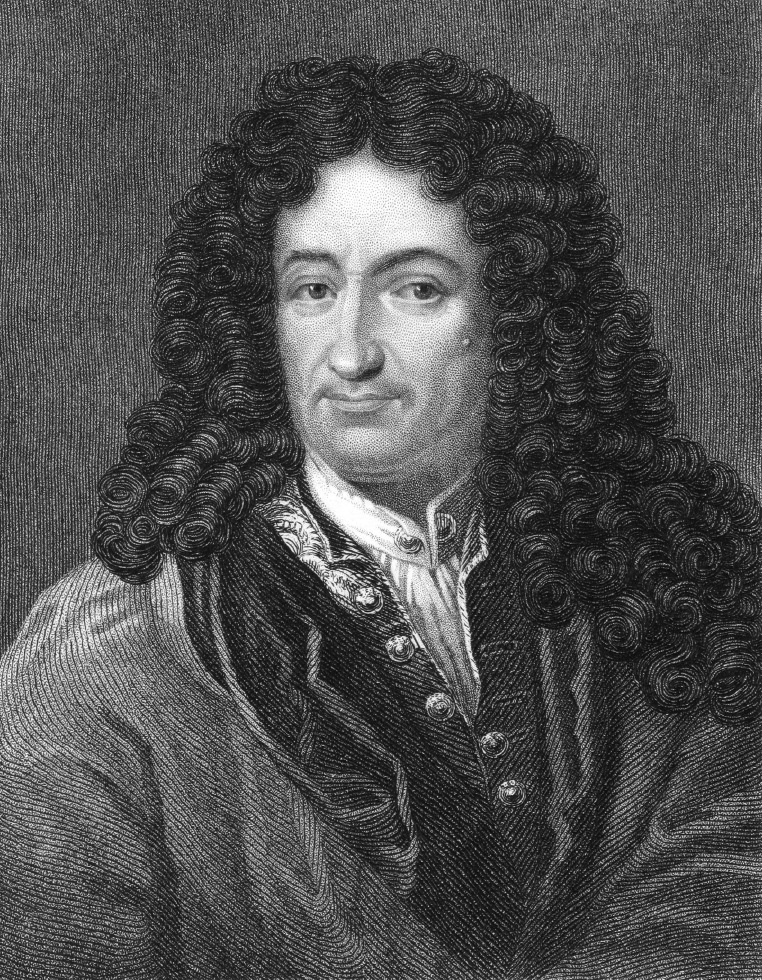
Figure 2.8 Gottfried Wilhelm Leibniz (1646–1716).
Figure 2.8 Gottfried Wilhelm Leibniz (1646–1716).
Gottfried Wilhelm Leibniz (1646–1716; Figure 2.8) was born in Leipzig, Germany, the son of a philosophy professor at the city’s famous university. As a true child prodigy, Gottfried mastered most of the contents of his father’s library by age 12, and at 14 was admitted to the University of Leipzig. After finishing the standard classical curriculum, by age 19 he had also completed all the requirements for a doctorate in law. Informed that he was too young to receive his formal degree and would have to wait another year, he left Leipzig for the smaller University of Altdorf, submitted a dissertation, and got his degree within six months. The impressed Altdorf authorities offered him a professorship, but Leibniz had had enough of university life. In an age when paid positions for intellectuals outside universities or the church were rare, he began his lifelong quest for work that would support him financially, while also satisfying his voracious intellectual appetite.
After working briefly in Nuremberg, Leibniz migrated to the city of Mainz, where, in the pattern of Descartes and Locke, a chance meeting changed his life. He impressed an important baron who worked for the Elector of Mainz. Much as Lord Ashley had taken to John Locke a few years earlier, the baron recognized Leibniz’s great promise and secured him a position as legal advisor to the Elector. Leibniz now began his lifelong career as a courtier, earning his keep by meeting the demands of a series of aristocratic patrons, while also trying to find time for his own interests.
Mathematical Discoveries in Paris
His early years of service for the Elector were probably the happiest of Leibniz’s life. He worked with full support on the development of a new method for teaching law, a cataloging system for libraries, and a system for reviewing new scholarly books. He also began studying the history and culture of China, a subject that would remain a lifelong interest. Best of all, in 1672 he was sent to Paris as a diplomatic envoy. He loved the city and made full use of its resources for his own projects, while also carrying on his official duties. He befriended many leading French mathematicians and philosophers, and through them gained access to Descartes’s unpublished as well as published works, which he studied intently.
Leibniz became deeply interested in mathematics and made three different, and very important, contributions to that field. The first was mechanical; he invented a mathematical calculating machine far superior to anything previously developed, a precursor of modern computers (see Chapter 14). His second contribution was the description and elaboration of binary arithmetic, the representation of all numbers with just ones and zeroes. Although this technique had no obvious practical significance in the 1670s, three centuries later it became the standard basis of calculation in electronic computers and ultimately had significant implications for the development of artificial intelligence.
Leibniz’s third great mathematical discovery, the infinitesimal calculus, did have immediate practical implications. Without knowing that Isaac Newton in England had privately and secretly developed the calculus a few years earlier, Leibniz conceived the idea independently and became the first person to publish on the subject. (Today the two men share credit for the great discovery.) The calculus represented a great advancement on Descartes’s analytical geometry, which was limited to a relatively small class of curves and shapes known as conic sections. Leibniz and Newton now provided a technique for subjecting many more kinds of shapes, curves, and continuously varying quantities to precise calculation, including the motions of pendulums, the vibrations of musical strings, and the orbits of planets.
The calculus worked by returning to a concept that had fascinated philosophers since Zeno in ancient Greece: infinitesimals. When a car starts from a standing stop and accelerates steadily from a speed of zero to 100, it passes through every intermediate speed but remains at each one for only an infinitesimal instant. At some point its speed has to be exactly 50, for example, but because of constant acceleration, that point in time is infinitely brief. Conventional mathematics could not deal with such an instant, because speed equals the distance traveled divided by the time elapsed, and here the time elapsed is zero; division by zero is not possible in standard arithmetic. Newton and Leibniz devised new methods that enabled mathematicians to calculate the sums of infinite series of such infinitesimals (the integral calculus), as well as to extract the properties of individual infinitesimal instants from given curves (the differential calculus).
Apart from its scientific and practical importance, for Leibniz the calculus suggested two general ideas that profoundly influenced his subsequent philosophy. First, the calculus dealt with variables undergoing constant and continuous change, and Leibniz would ever after see the linked phenomena of continuity and change as essential features of the world in general. Second, in a literal sense the infinitesimals employed in the calculus were mental “fictions” that could not be concretely experienced in reality, yet they figured as fundamental elements in mathematical equations that did mirror and predict concrete reality. Leibniz’s philosophy reflected these ideas by positing a universe undergoing constant development in stages that imperceptibly merge with each other, like those in a living organism. He would challenge the assertions of Descartes and Locke that the most fundamental elements of the physical world had to be concrete, extended—and lifeless—material particles in motion.
Leibniz’s productive sojourn in Paris ended all too soon, when his patrons died in 1676 and he was unable to find another position in the city. Reluctantly, he accepted a post as court councilor to the ruling family in the small north German state of Hanover. On his way there, he stopped in Amsterdam, where he had two significant experiences. First, he met and discussed philosophy with Benedict Spinoza (1632–1677), a brilliant Jewish scholar who had been excommunicated from his synagogue for promoting a view we now call pantheism—the notion that God is not an independent being who controls the universe but rather that God is the entire universe. Next he met Antonie van Leeuwenhoek (1632–1723), the lens grinder who developed the modern microscope, and who used it to show an impressed Leibniz that a drop of pond water contained a population of minute, swimming microorganisms. We shall see how these ideas later coalesced for Leibniz in a comprehensive vision of the entire cosmos. Before he fully developed such thoughts, however, he had to establish himself in Hanover.
Things briefly went well as Leibniz’s new patron, Duke Johann Friedrich, valued and respected his advice; but the Duke soon died and was succeeded by his much less intellectual younger brother, Ernst August. Fortunately for Leibniz the new Duke was married to Sophie the Countess Palatine (1630–1714), the youngest sister of Descartes’s philosophical confidante Princess Elizabeth of Bohemia. Sharing her sister’s intellectual inclinations, Sophie became Leibniz’s staunch friend and supporter and was joined in later years by her daughter Sophie Charlotte (1668–1705). This mother-daughter team (Figure 2.9) became the first audience for Leibniz’s philosophizing, and his letters to them, like those of Descartes to Elizabeth, provided the basis for much of his most important work.
Leibniz’s relations with his masculine superiors and contemporaries at Hanover were more mixed. Some of his contributions were valued, as when he promoted a public health system and fire-fighting service, street lighting, and the establishment of a state bank. As a legal advisor in later years, he assisted in negotiations concerning succession to the British throne. The shortage of Protestant heirs in England raised a strong possibility that the monarchy might eventually pass to Ernst August and Sophie’s eldest son Georg Ludwig, who was a great-grandson of England’s James I.
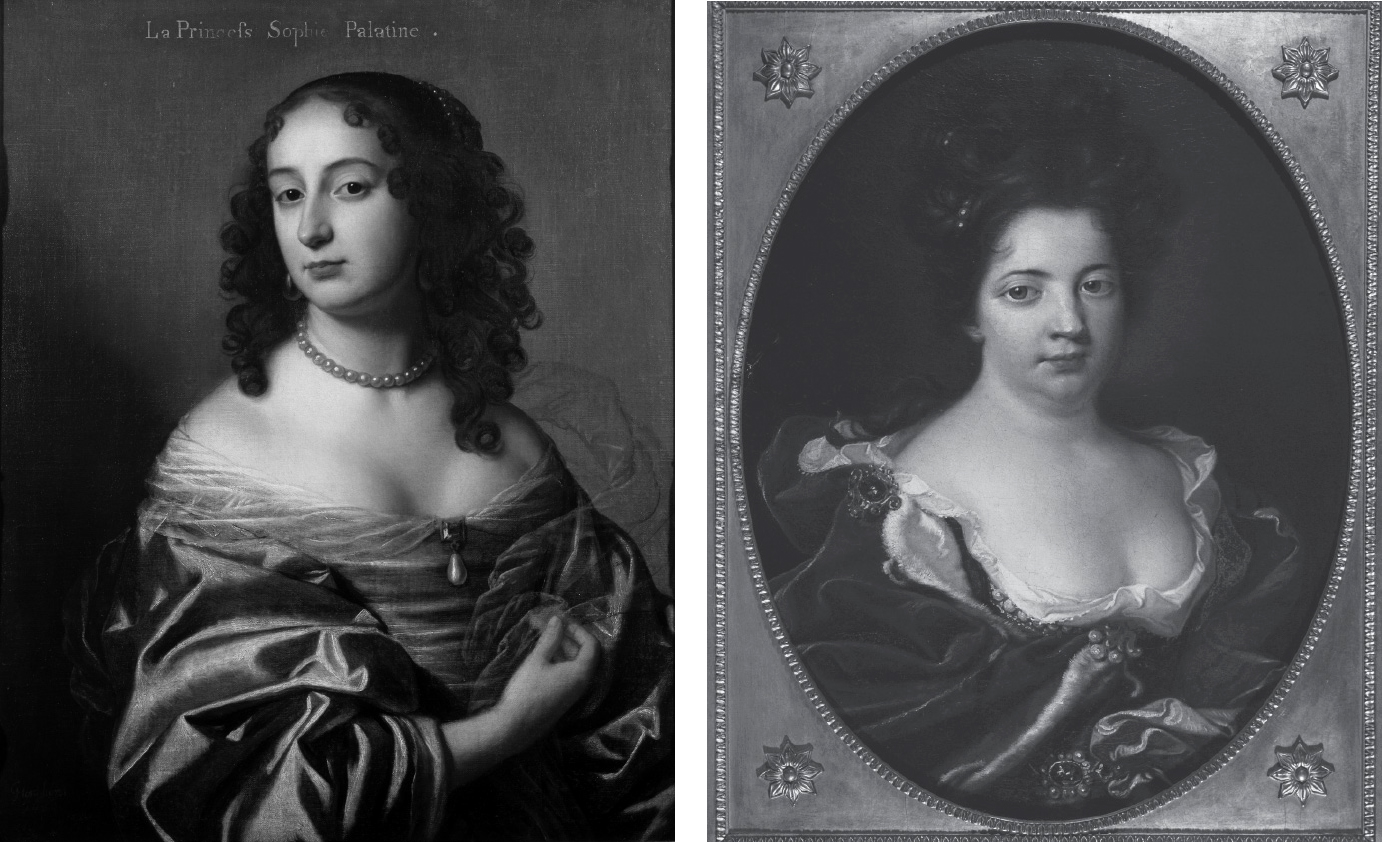
Figure 2.9 Sophie the Countess Palatine (1630–1714) on the left, and her daughter, Sophie Charlotte (1668–1705).
Leibniz also had some spectacular failures, including a plan to use windmill power to drain water from the ruling family’s mines. Promised a lifetime pension if it succeeded, Leibniz overestimated the wind speeds for the region and obsessively kept proposing newer and “improved” windmill designs until he became a major nuisance and the object of a satirical book, Foolish Wisdom and Wise Folly. Finally his exasperated patron insisted that, for his pension, he would have to abandon windmills and instead write an extended history of the House of Hanover’s family. This carried the fringe benefit for Leibniz of justifying travel to archives throughout Europe, but still the task hung over him like a black cloud for the rest of his life. He would produce nine volumes of the family history before he died, but these told only a fraction of the full story he intended to relate.
Typically dressing in ornate clothing and wearing a large black wig, Leibniz struck many who saw him in public as an outlandish, almost ridiculous character. In private, however, he was deeply contemplative as well as intellectually energetic, and is better represented without a wig, as in Figure 2.10. He undertook hundreds of activities both practical and visionary, and was sometimes naively bewildered when others did not share his enthusiasm. A recent biographer described him as “dominated by an unachievable ambition” to succeed in virtually every field of intellectual and practical activity:
The wonder is not that he failed so often, but that he achieved as much as he did. His successes were due to a rare combination of sheer hard work, a receptivity to the ideas of others, and supreme confidence in the fertility of his own mind. . . . On the other hand, his desire to produce monuments to his genius, which would be both complete and all his own work, made it impossible for him to finish anything.26
As part of his universal quest for knowledge, Leibniz conducted a vast correspondence. A staunch believer in the importance of information exchange, he revived his youthful interest in China and corresponded extensively with some Jesuit missionaries to that country. He published their replies in a volume titled Novissima Sinica (News from China). Remarkably for a person of his times, Leibniz was open-minded and not ethnocentric. He said Chinese customs “should not be judged by ours,”27 and that China and Europe had a good deal to teach each other; China was superior in the arts of civility and harmonious living, while Europe excelled in science and technology. He saw interesting connections between the two cultures, including the fact that Chinese hexagrams in the ancient Book of Changes were constructed of just two basic elements (the yin and yang), which bore significant similarity to the binary arithmetic he had invented. In general, he promoted openness and cultural sensitivity, and an awareness that non-European cultures could have valuable lessons to teach. In doing so he anticipated by three centuries the advent of scientific interest in non-Western psychologies and modern cultural psychology.
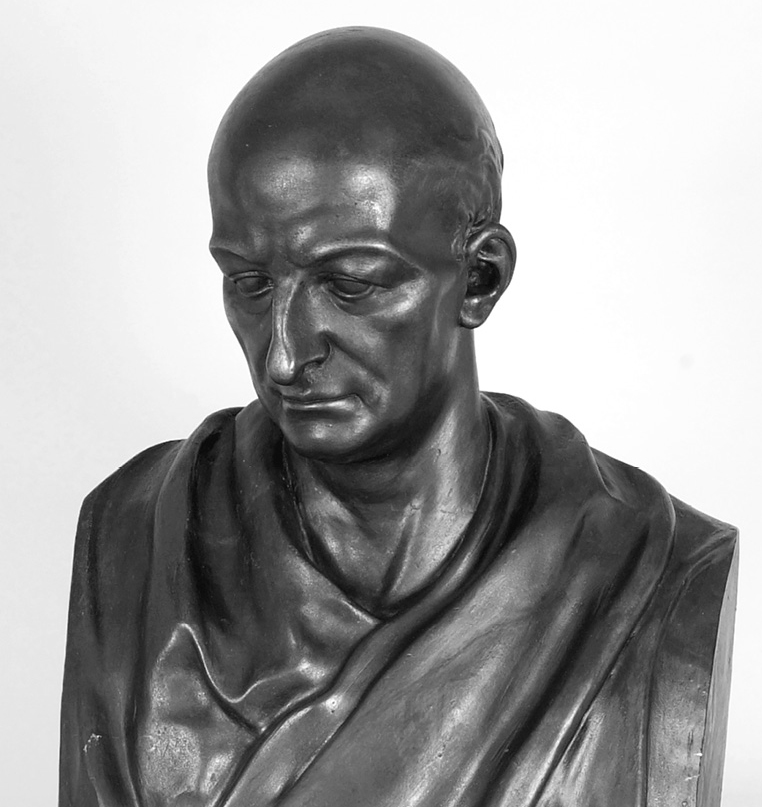
Figure 2.10 A bust of Leibniz without his wig.
Figure 2.10 A bust of Leibniz without his wig.
Most of Leibniz’s contemporaries saw only fragmentary evidence of the scope of his thought, and he was often ridiculed. One of his Hanoverian masters called him “an archeological find” likely to be mistaken for a clown by those unfamiliar with him.28 The French writer Voltaire satirized him as the ludicrous philosopher Pangloss in his popular novel Candide. Only in the years after Leibniz’s death did scholars begin to sift through his enormous correspondence and unpublished private papers, and to appreciate him fully. Therefore, the final two decades of Leibniz’s life were marked by significant but unrecognized intellectual achievement, as well as controversy and disappointment.
His relationships with intellectuals in Britain became particularly touchy after mathematicians there, using false evidence and questionable testimony from the secretive Newton, accused him of plagiarism in inventing the calculus. After trying to be conciliatory, Leibniz responded with some unseemly slanders of his own, and the result was an unfortunate and longstanding feud between English and continental mathematicians.*
Leibniz’s fall from grace in England was ironic, because in 1714 Georg Ludwig of Hanover (his final patron following the deaths of Ernst August and Sophie) in fact became King George I of England. Leibniz had helped negotiate this event and hoped to follow George to England as the official historian. Fearing that Leibniz’s presence in England could produce diplomatic disaster, George insisted that he remain home and finish the Hanover family history. Leibniz tried to acquiesce while carrying on with his philosophical writing, but he soon became ill and died at the age of 70. The younger Sophie had also predeceased him, and no one of importance attended his funeral. Another half-century would pass before publication of his manuscripts and private papers revealed the true scope of his genius, as well as the full dimensions of a philosophy of mind that set the stage for the emergence of scientific psychology in Germany.
The most important of Leibniz’s posthumously published psychological works was his extended response to Locke’s Essay, the “New Essays” on human understanding. This work reflected a general world view that Leibniz had developed, partly in reaction to Descartes’s philosophy but also conditioned by his mathematical background and his early experiences with Spinoza and van Leeuwenhoek in Amsterdam. He had previously communicated these ideas in his correspondence with the two Sophies, and in a short work published shortly after his death called The Monadology.
Like Descartes with his mechanical statues, Leibniz had made a crucial early observation that profoundly affected his later view of life and its place in the universe. The effect could not have been more different, however, for Leibniz’s observation was not of dead mechanisms but rather the teeming population of microorganisms within the drop of pond water he had viewed through van Leeuwenhoek’s microscope in Amsterdam. The image remained vivid in his memory when he wrote in The Monadology:
In the smallest particle of matter there is a world of creatures, living beings. . . . . Each portion of matter may be conceived as like a garden full of plants, and like a pond full of fishes. But each branch of every plant, each member of every animal, each drop of its liquid parts, is also some such garden or pond. . . . Thus there is nothing fallow, nothing sterile, nothing dead in the universe; no chaos, no confusion save in appearance.29
Simply stated, Leibniz conceived of the universe as a vast hierarchy of living organisms residing within other, larger organisms. In an implied rebuke to Descartes, he remarked that although a living body is “a kind of divine machine,” it “infinitely surpasses all artificial automata” because each of its component parts is not a piece of brass or other dead matter, but rather another living organism, which in turn contains other living parts ad infinitum.30
Leibniz further disagreed with Descartes’s (and Locke’s) assumption of a universe whose most fundamental or “ultimate” units are inanimate, material particles in motion and interaction with one another. The infinitesimal calculus clearly showed the value of assuming that any measurable material object is potentially divisible to infinity, and because of this Leibniz argued that one can never arrive at a tiny piece of extended matter and say “here is a real ultimate being.”31 Motion, detectable only as changes in the relative positions of nonultimate physical bodies, logically could not be ultimate either. For Leibniz, neither Descartes’s simple natures nor Locke’s primary qualities could be the most foundational elements from which the universe is constructed.
But while denying that matter in motion considered by itself could be ultimate, Leibniz did believe that “the force or proximate cause” of such motion might be.32 He concluded, therefore, that the ultimate units of the world had to be dynamic entities—energies and forces capable of causing the continuous yet lawful changes he had analyzed in the calculus. Furthermore, because those changes were not random but followed lawful patterns, their causes had to be directed or “purposive” in nature. In addition, in order to act purposively, an agent must have some awareness or perception of the effectiveness of its activity. For Leibniz, then, the ultimate components of the universe had to be energetic and purpose-laden entities with some capacity for awareness. He named them monads—a term derived from the Greek monos, meaning “unit.”
Leibniz also believed monads must differ in their capacities for conscious awareness, and proposed a hierarchy of four general classes. The most numerous class, bare monads, had only the faintest capacity for awareness, comparable to that of a person in deep, dreamless sleep. When clustered together in large quantities, the bare monads somehow formed the basis of the physical bodies of material objects.
One level higher in Leibniz’s hierarchy were sentient monads, with capacities for the conscious sensation and perception of material objects and for the memory of those experiences. When a sentient monad became joined to a physical body (an assemblage of bare monads), it became the dominant monad or soul of an animal. Higher still were rational monads, which could occupy assemblages of sentient monads to become the soul or mind of human beings. The consciousness of rational monads went well beyond simple perception to include a higher process Leibniz called apperception, in which an impression or idea is not simply “registered” in consciousness, but is further interpreted, studied and rationally analyzed in terms of underlying principles and laws. Apperception also involves the reflexivity, the subjective sense of “I-ness” or “self” that Descartes and Avicenna had noted. When we apperceive something, we quite literally and consciously “think about it” with full attention. In a general sense, Leibniz’s sentient and rational monads had mental capacities similar to those of Aristotle’s sensitive and rational souls.
Consistently with his microscopic vision in Amsterdam, Leibniz saw these besouled monads as nested hierarchically, lower ones within higher. And at the very top, he believed, was a single supreme monad, equated with God, whose purposes, perceptions, apperceptions, and even higher degrees of awareness controlled and contained everything else in the universe. Aware of and the cause of the purposes and activities of every single lower-order monad, this supreme soul understood and controlled everything but was itself apprehensible only incompletely, if at all, by the three lower classes of monads. Humans with their apperceptions may appreciate some of these supreme and comprehensive purposes, but only dimly and incompletely—roughly to the extent that a pet dog may partially but incompletely comprehend the purposes and motives of its human owner.
In sum, Leibniz’s universe was more an organism than a mechanism, composed of an infinitude of nested and hierarchically organized, soul-like substances called monads, with varying capacities for the apperception or perception of subordinate levels of monads. Each monad had its own innate purposes and destiny, but all were coordinated by the largely unknowable purposes and all-encompassing consciousness of the single, perfect, and supreme monad. The idea of the all-encompassing supreme monad owed a debt to Spinoza’s equation of “god” with the totality of nature, while also echoing Aristotle’s ancient notion of a purposeful “unmoved mover” as provider of the “final cause” of the creation and development of the universe.
Leibniz’s proposal of nonmaterial monads as the ultimate components of the material universe is not easy to grasp. It poses some of the same dilemmas as Descartes’s postulation of an immaterial soul interacting with a purely mechanistic physical body. Still, Leibniz was correct in his assertion that another nonmaterial entity, the infinitesimal, could be used in the mathematical analysis of many concrete physical problems. And if Leibniz, Locke, and Descartes could somehow view the state of physics today, in which atoms are believed to be composed of a multitude of subatomic particles and forces (such as quarks, hadrons, and baryons, held together by strong and weak forces but never directly or independently observable), Leibniz would likely be the least surprised of the three. He would also probably be least surprised by the enormous increase in the size of the observable universe today, including the countless microscopic discoveries of microbes, viruses, chromosomes, DNA, genes, and even beyond.
Leibniz’s visionary theorizing about the nature of the cosmos and humanity’s role within it was characteristic of his wide-ranging and highly imaginative intellect. The more practically minded Locke had not been concerned with such issues, aiming instead to understand the empirical world in a comprehensible mechanistic way, and to draw lessons from that for how best to manage practical and social affairs. Unsurprisingly then, Locke and his followers saw much of Leibniz’s approach as impractical, pie-in-the-sky imaginings, while Leibniz saw Locke’s approach as limited and incomplete. He expressed these reservations in his New Essays on Human Understanding.
A Nativistic Critique of Locke
Written in French because Leibniz lacked fluency in English, the Preface to New Essays on Human Understanding likened part of Leibniz’s difference from Locke to the much older one between Aristotle and Plato. After noting that Aristotle and Locke adopted the metaphor of the mind as a blank slate until experience impresses its sensations upon it, Leibniz allied himself with the more nativist doctrine of Plato: namely, that “the soul inherently contains the sources of various notions and doctrines, which external objects merely rouse up on suitable occasions.” 33
As examples of innate mental capacities, Leibniz cited the rules of arithmetic, the geometric axioms, and the rules of logic. Although we feel certain about their absolute correctness, such correctness is not proved by concrete experience but only instanced or demonstrated by it. Leibniz’s preferred metaphor for the mind was not a neutral, blank slate but rather a veined block of marble whose internal fault lines predispose it to be sculpted into some shapes more easily than others. Such shapes pre-exist in the marble, even though a sculptor’s work is required to expose and clarify them. For Leibniz, “ideas and truths are innate in us. . . . as inclinations, dispositions, tendencies, or natural potentialities, and not as actions.”34 Leibniz called all of these innate ideas and predispositions necessary truths; in his larger scheme, they were prime tools in the process of apperception as opposed to simple perception.*
Leibniz saw his ideas as not directly contradicting Locke but rather as filling in details on points the Englishman had left implicit or unspoken. He conceded that nonhuman animals, lacking a dominant rational monad with inherent necessary truths, may in fact function in much the way described by Locke. Lacking the innate necessary truths required for logical reasoning, animals cannot grasp the underlying reasons for the empirical regularities they perceive. Leibniz concluded, “what shows the existence of inner sources of necessary truths is also what distinguishes man from beast.”35
Leibniz also noted that Locke had proposed both sensations from the external world and subjective reflections on the mind’s own operations as the two sources of ideas, but had said little about the reflections. Self-awareness and other reflexive aspects of apperception that Leibniz emphasized were implicit in Locke’s notion of reflection. Further, Locke’s intuitive knowledge and demonstrative knowledge, with higher degrees of certainty than sensitive knowledge, depended on precisely those innate “necessary truths” that Leibniz proposed for rational monads. In several places Leibniz summarized Locke’s position as holding that there is nothing in the mind that was not first in the senses, to which he would simply add except the mind itself. Locke seemingly took for granted the mind’s own activity in processing its sensations, combining and minimizing a large number of important and interesting features under the general category of reflection. Leibniz chose to emphasize and elaborate on those features.
Another difference, however, was more difficult to reconcile. Locke had insisted that the mind is not constantly active and can sometimes be without thoughts, just as the body can sometimes be without movement. Leibniz argued that the mind is constantly active, even during such states as dreamless sleep. This conviction derived from his notion of monads as constantly active and striving entities with varying levels of awareness. His theoretical continuum of consciousness ranged from the clear and distinct apperceptions of rational monads, through the more mechanical and indistinct perceptions of sentient monads, and terminated in what he called minute perceptions in bare monads. While real, these minute perceptions never individually enter consciousness: “At every moment there is in us an infinity of perceptions, unaccompanied by awareness or reflection. . . .[Minute perceptions are] alterations of the soul. . . . of which we are unaware because these impressions are either too minute and too numerous, or else too unvarying, so that they are not sufficiently distinctive on their own.”36
Occasionally minute perceptions can rise to the level of full awareness, as when we shift our attention to a previously undetected background noise, but usually they are too vague and indistinct to be consciously perceived at all. The sound of an individual drop of ocean water is undetectable by itself, for example, but its reality is demonstrated when it combines with all the other drops constituting a wave to produce the roaring sound of the sea.
Leibniz described minute perceptions as “more effective in their results than has been recognized,” adding “that je ne sais quoi, those flavours, those images of sensible qualities, vivid in the aggregate but confused as to the parts.”37 For example, our sense of continuity as individual, distinctive selves is maintained by minute perceptions and unconscious memories of our previous states. Although some of them may sporadically rise to consciousness, most remain in a subconscious state.
In a brief but significant anticipation of his nineteenth-century successors, Leibniz also saw minute perceptions as playing a telling role in human motivation, when he wrote they “determine our behaviour in many situations without our thinking of them, and [thus] deceive the unsophisticated.”38 He likened them to “so many little springs trying to unwind and so driving our machine along,” and thus “we are never indifferent, even when we appear to be most so.” Even a seemingly random choice results from “these insensible stimuli, which, mingled with the actions of objects and our bodily interiors, make us find one direction of movement more comfortable than the other.”39 We shall see in Chapter 11 how Freud and others would later elaborate extensively on unconsciously motivated behavior; Leibniz was ahead of his time in calling attention to the possibility.
The differences between Locke and Leibniz arose largely because of their different purposes. Locke wanted to determine the limits of knowledge, and to establish rules for solving political and everyday practical problems. His primary position was that of an empiricist, focusing on the events of the external world and how to best predict, understand, and control them. The mind itself interested him only secondarily, as a passive recording instrument necessary for producing sensory knowledge. The more nativist Leibniz, by contrast, saw the active mind itself, with its central organizing principles and innate necessary truths, as a primary subject of interest in its own right.
Lockean vs. Leibnizean Traditions
The Lockean point of view has, in general, been particularly influential in the English-speaking countries where Locke was a founder of the psychological tradition called British associationism. After him, the Irish bishop George Berkeley (1685–1753) applied Locke’s association principles to the systematic analysis of visual depth perception, arguing that the ability to see things in three dimensions is not innate, but rather the result of learned associations between visual impressions of objects at different distances and sensations of muscular movements in the eyes and body as one moves toward or away from the objects. A generation later the Scotsman David Hume helped formalize the laws of association by contiguity and by similarity (mentioned earlier), and, more importantly, used them in a skeptical analysis of the concept of causality. We shall describe this analysis, and its momentous impact on the German philosopher Immanuel Kant, in Chapter 4. Hume’s contemporary David Hartley (1705–1757), a physician, argued that ideas are the subjective results of minute vibrations in specific locations of the brain that become interconnected, or associated with each other, by nerve networks. Here was another early attempt at neurophysiolology.
Later in the nineteenth century, father and son James Mill (1773–1836) and John Stuart Mill (1806–1873) claimed that the most important individual differences in personal character, conduct, and intellect result from associationistic principles—that is, from differences in experiences and associations, as opposed to genetic makeup. Others, notably Francis Galton (see Chapter 7), strongly disagreed, thus giving rise to the nature-nurture debate that has inspired so many psychological discussions and recent developments. In the early twentieth century many associationistic and Lockean ideas came together, although stripped of their “mentalistic” terminology, in the movement known as behaviorism (see Chapter 9). The behaviorist psychologists explained all learning as the acquisition and interconnection—association—of various neurological stimulus-response reflexes, emphasizing how people’s behavior can be conditioned by their experiences.
The Leibnizean tradition, with its focus on the properties and activities of the mind itself, has historically been more dominant in continental Europe. Immanuel Kant and Wilhelm Wundt in Germany, for example, adopted generally Leibnizean perspectives while establishing the very idea of psychology as an independent intellectual discipline (see Chapters 4 and 5). Leibniz’s ideas about unconscious influences on behavior are echoed in the theories of pioneering European hypnotists (see Chapter 10) and in Freud’s psychoanalysis (see Chapter 11). The Swiss psychologist Jean Piaget analyzed the growth of intelligence in children as an organic, biologically based sequence of developmental stages in an active mind—a conception following directly in the tradition of Leibniz (see Chapter 13). And near the end of the book we’ll return to Leibniz himself, detailing how his Parisian inventions of binary arithmetic and a mechanical calculating machine were important in the history of artificial intelligence and modern cognitive psychology (see Chapter 14).