
Trade-offs
So far, we have examined short-run trade-offs. In looking at our wings–pizza trade-off, we were essentially living in the moment. But both individuals and society as a whole must weigh the benefits available today (the short run) with those available tomorrow (the long run). In the short run, we make decisions that reflect our immediate or short-term wants, needs, or limitations. In the short run, consumers can partially adjust their behavior. In the long run, we make decisions that reflect our wants, needs, and limitations over a much longer time horizon. In the long run, consumers have time to fully adjust to market conditions.
Trade-offs
Many of life’s important decisions are about the long run. We must decide where to live, whether and whom to marry, whether and where to go to college, and what type of career to pursue. Getting these decisions right is far more important than simply deciding how many wings and pizzas to produce. For instance, the decision to save money requires giving up something you want to buy today for the benefit of having more money available in the future. Similarly, if you decide to go to a party tonight, you benefit today, while staying home to study creates a larger benefit at exam time. We are constantly making decisions that reflect this tension between today and tomorrow—eating a large piece of cake or a healthy snack, taking a nap or exercising at the gym, buying a jet ski or purchasing stocks in the stock market. Each of these decisions is a trade-off between the present and the future.
Opportunity Cost
XBOX OR PLAYSTATION?
In The Big Bang Theory, Sheldon wants to buy either a new Xbox or a new PlayStation. He explains to his girlfriend, Amy, over dinner that because each system has many advantages, it is hard to choose. Eventually, he settles on an Xbox, but after picking one up at the store, he begins to have second thoughts. He starts by recalling decisions from his past that in hindsight were poor choices: he bought a Betamax instead of a VHS player, an HD-DVD player instead of a Blu-ray player, and a Zune instead of an iPod. Sheldon puts the Xbox back, because he doesn’t want to experience regret.
Seeing that Sheldon is unable to choose, Amy intervenes and offers to buy him both systems! Problem solved, right? Not quite, because Sheldon only has one slot open on his entertainment system. Amy counters that she’ll buy him a new entertainment center, only to have Sheldon respond, “Which one?” because he knows he won’t be able to make that choice easily, either! Hours later, we see Sheldon and Amy lying on the floor while Sheldon is still deciding. Eventually the store closes and they are forced to come back another day.
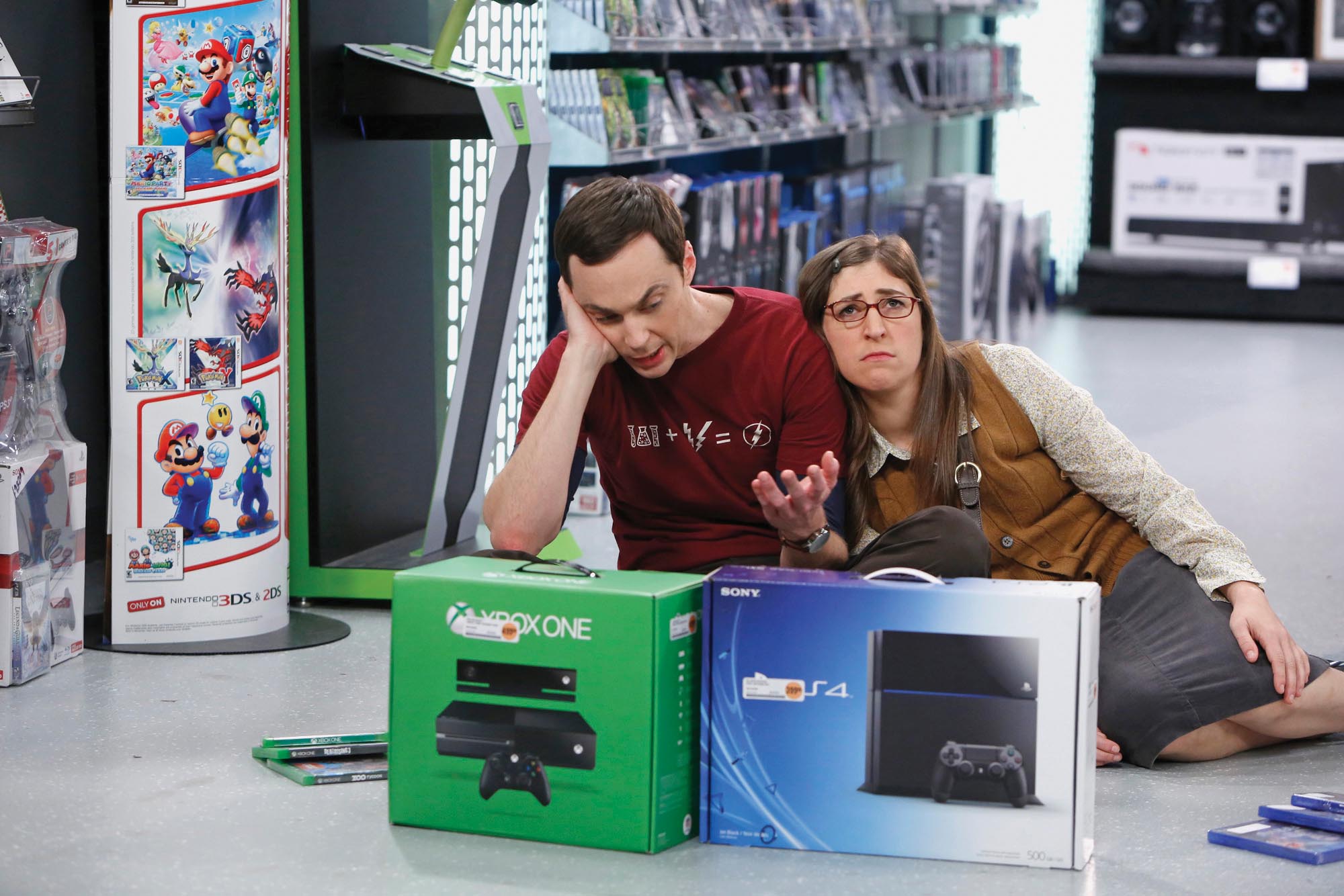
Sheldon and Amy sit on the floor of a store. Amy rolls her eyes in despair as Sheldon deliberates between an Xbox and a PlayStation.
We may not be as indecisive as Sheldon, but we face the same basic problem all the time. When you buy a new phone, rent a new apartment, buy a new outfit, go out to eat, or decide where to go to college, you give up your next-best option. The more important the decision and the better the alternatives, the harder the choice becomes. In those situations, the choice involves a high opportunity cost. If the choice is trivial or the second-best option isn’t appealing, the choices we make involve low opportunity costs.
 Opportunity Cost in The Big Bang Theory
We have seen that the trade-off between the present and the future is evident in the tension between what we consume now and what we plan to consume later. Any good that is produced for present consumption is a consumer good. These goods help to satisfy our needs or wants now. Food, entertainment, and clothing are all examples of consumer goods. Capital goods help in the production of other valuable goods and services in the future. Capital goods are everywhere. Roads, factories, trucks, and computers are all capital goods.
Education is a form of capital. The time you spend earning a college degree makes you more attractive to future employers. When you decide to go to college instead of working, you are investing in your human capital. Investment is the process of using resources to create or buy new capital.
Because we live in a world with scarce resources, every investment in capital goods has an opportunity cost of forgone consumer goods. For example, if you decide to buy a new laptop, you cannot use the money to travel over spring break. Similarly, a firm that decides to invest in a new factory to expand future production is unable to use that money to hire more workers now.
The decision between whether to consume or to invest has a significant impact on economic growth in the future, or long run. What happens when society chooses to produce many more consumer goods than capital goods? Figure 2.7a shows the result. When relatively few resources are invested in producing capital goods in the short run, very little new capital is created. Because new capital is a necessary ingredient for economic growth in the future, the long-run production possibilities curve expands only a small amount.
What happens when society chooses to plan for the future by producing more capital goods than consumer goods in the short run? Figure 2.7b shows the result. With investment in new capital, the long-run production possibilities curve expands outward much more.
Trade-offs
All societies face the trade-off between spending today and investing for tomorrow. Thailand and Peru are good examples of emerging global economies investing in the future. Over the last 20 years, the citizens of these countries have invested significantly more in capital goods than have the citizens of wealthier nations in North America and Europe. Not surprisingly, economic growth rates in Thailand and Peru are much higher than they are in more developed countries. Part of the difference in these investment rates can be explained by the fact that the United States and Europe already have large capital stocks per capita (per person) and therefore have less to gain from operating at point B in Figure 2.7b than developing countries do. Thailand clearly prefers point B at this stage of its economic development, but point B is not necessarily better than point A. Developing nations, such as Thailand, are sacrificing the present for a better future, while many developed countries, such as the United States, take a more balanced approach to weighing current needs against future growth. For Thai workers, this trade-off typically means longer work hours and higher savings rates than their U.S. counterparts can claim, despite far lower average salaries for the Thai workers. In contrast, U.S. workers have much more leisure time and more disposable (spendable) income, a combination that leads to much higher rates of consumption in the United States.

A group of 5 people taking a selfie while making silly faces and sticking out their tongues.

A baby wearing glasses and looking at an open book on its lap.
FIGURE 2.7
Investing in Capital Goods and Promoting Growth
(a) When a society chooses point A in the short run, very few capital goods are created. Because capital goods are needed to enhance future growth, the long-run PPF2 expands, but only slightly. (b) When a society chooses point B in the short run, many capital goods are created, and the long-run PPF2 expands significantly.
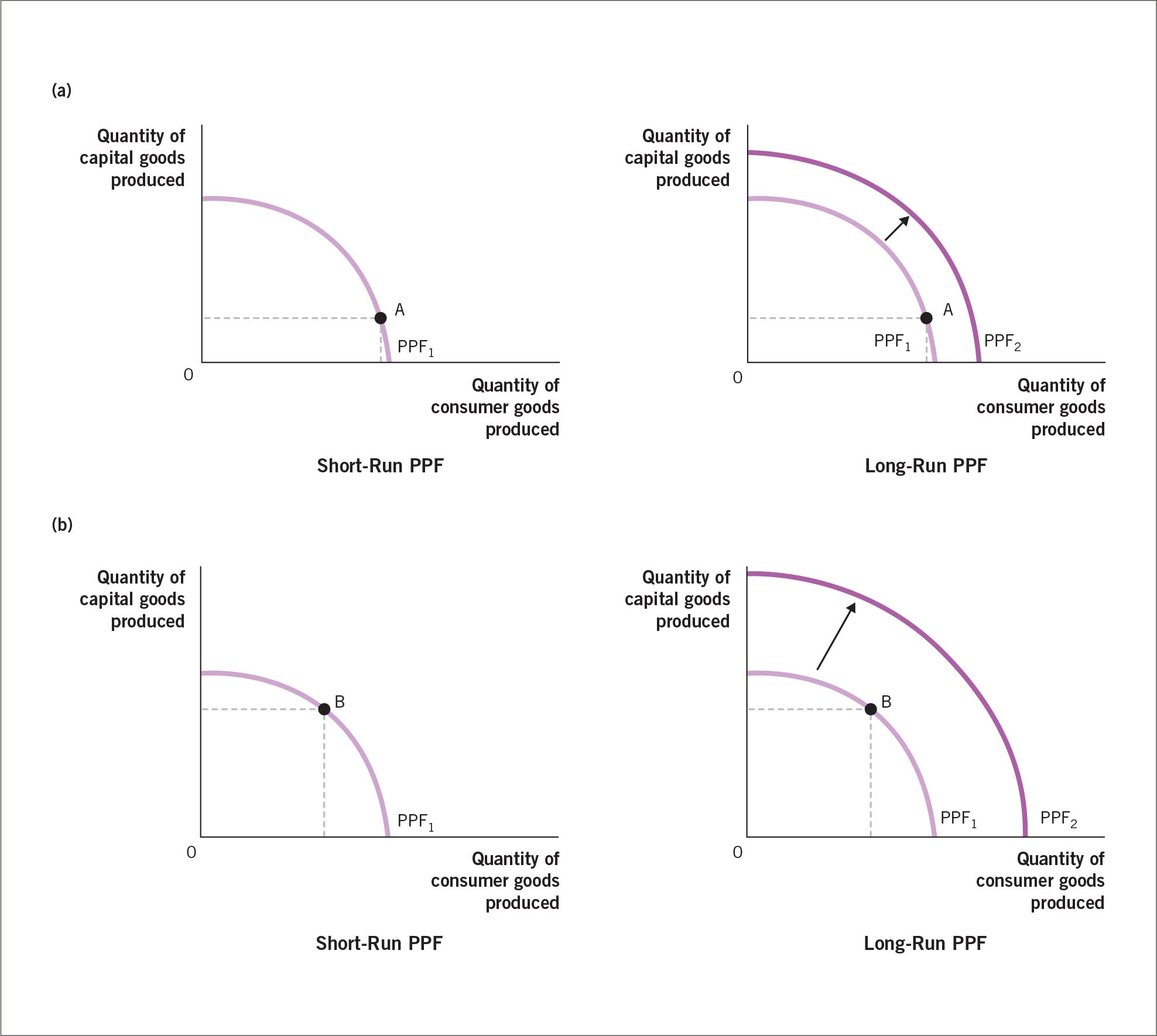
Four line graphs showing how the mix of present consumer goods and capital goods purchases affects the future production possibilities frontier. The x axis represents the quantity of consumer goods produced, and the y axis represents the quantity of capital goods produced. The first graph has a production possibilities frontier with point A located on the lower right corner of the curve; this graph is a short-run production possibilities frontier. The second graph also has the production possibilities frontier of the first graph, along with a second production possibilities frontier shifted slightly outwards; this graph is a long-run production possibilities frontier. The third graph has a production possibilities frontier with point B located in the middle of the curve; this graph is a short-run production possibilities frontier. The fourth graph also has the production possibilities frontier of the third graph, along with a second production possibilities frontier shifted dramatically outwards. This second production possibilities frontier has a larger shift than the shift of the second graph; this graph is a long-run production possibilities frontier.
The Trade-Off between the Short Run and the Long Run
CHEF
In this 2014 movie, Carl Casper is the longtime head chef of Gauloises, a Southern California restaurant. Carl wants to try out new menu ideas, but the owner insists that he stick to the old favorites Gauloises is known for. One day, Carl has had enough. After a Twitter fight with a renowned food critic escalates into a physical confrontation, Carl is free to pursue a new dream: serving home-style Cuban food out of a food truck! Restoring the old truck costs him a lot of time and money but gives him great joy. Eventually, through a social media campaign, Carl’s backstory and passion for cooking become widely known, and the truck becomes a destination for foodies. This time, the food critic raves about Carl’s food and offers to bankroll a new restaurant where Carl will have full control of the menu. As the film ends, Carl’s new restaurant is a success, and his personal relationships are restored, too.
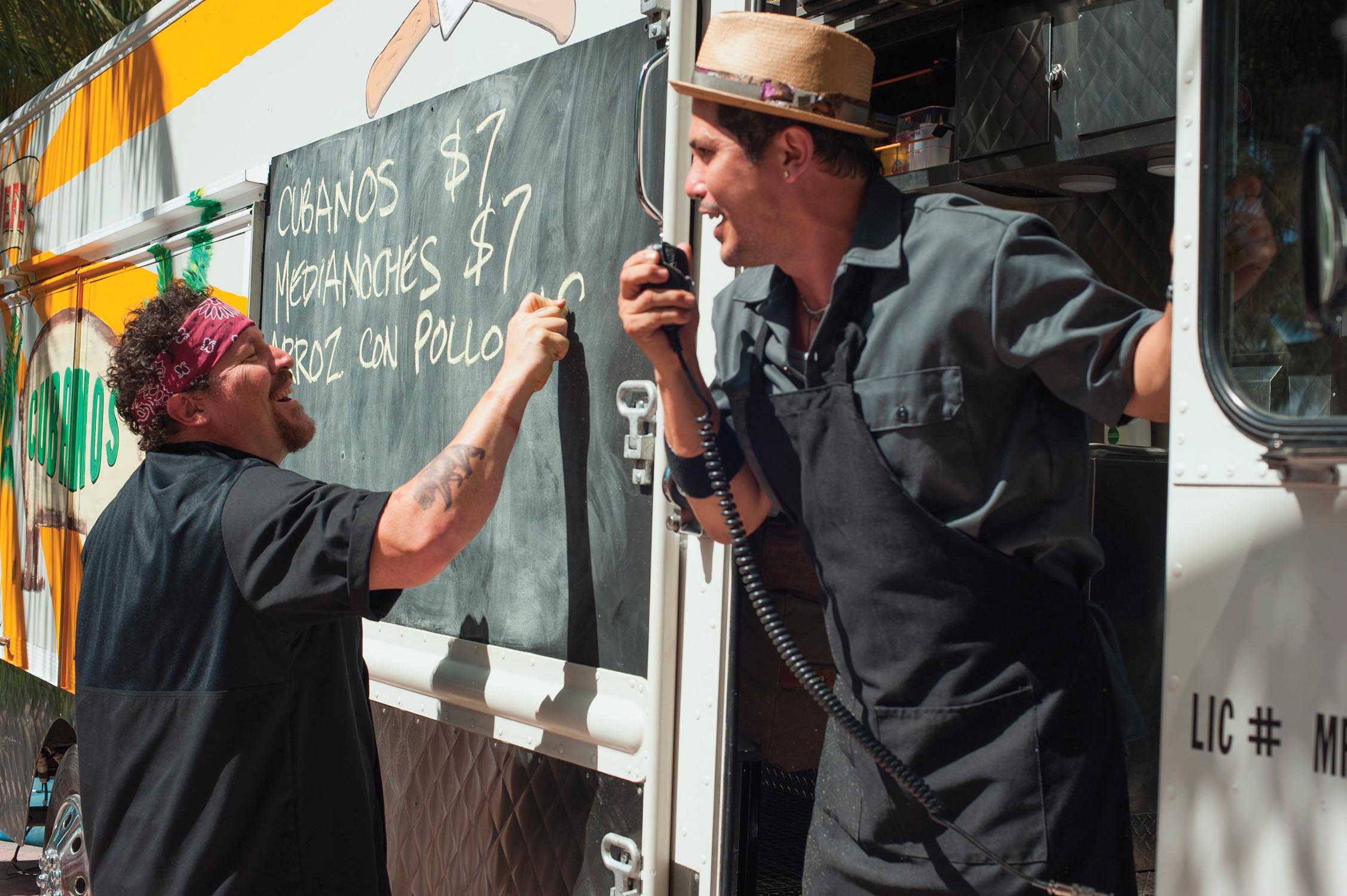
Carl writes prices on a blackboard as his friend Martin looks on.
The movie illustrates the trade-off between enjoying consumer goods in the short run and investing in capital goods in the long run. Carl’s choice to give up a secure, well-paying position and start over from scratch was not easy. Fixing up a used food truck and crisscrossing the country to boost his profile was an expensive and risky endeavor. However, the plan gave Carl artistic control over the food he served, and his creative talents allowed his venture to flourish. Investing in a food truck is like choosing point B in Figure 2.7b. Investing now will allow the production possibilities frontier to grow over time, affording Carl a better life in the long run.
Trade-Offs

A student reading a book, while sitting in between shelves of books at a library.
QUESTION: Your friend is fond of saying he will study later. He eventually does study, but he often doesn’t get quite the grades he had hoped for because he doesn’t study enough. Every time this happens, he says, “It’s only one exam.” What advice would you give him about trade-offs?
 ANSWER
 ANSWER:
Marginal thinking
Your friend doesn’t understand long-run trade-offs. You could start by reminding him that each decision has a consequence at the margin and also later in life. The marginal cost of not studying enough is a lower exam grade. To some extent, your friend’s reasoning is correct. How well he does on one exam over four years of college is almost irrelevant. The problem is that many poor exam scores have a cumulative effect over the semesters. If your friend graduates with a 2.5 GPA instead of a 3.5 GPA because he did not study enough, his employment prospects will be significantly diminished.
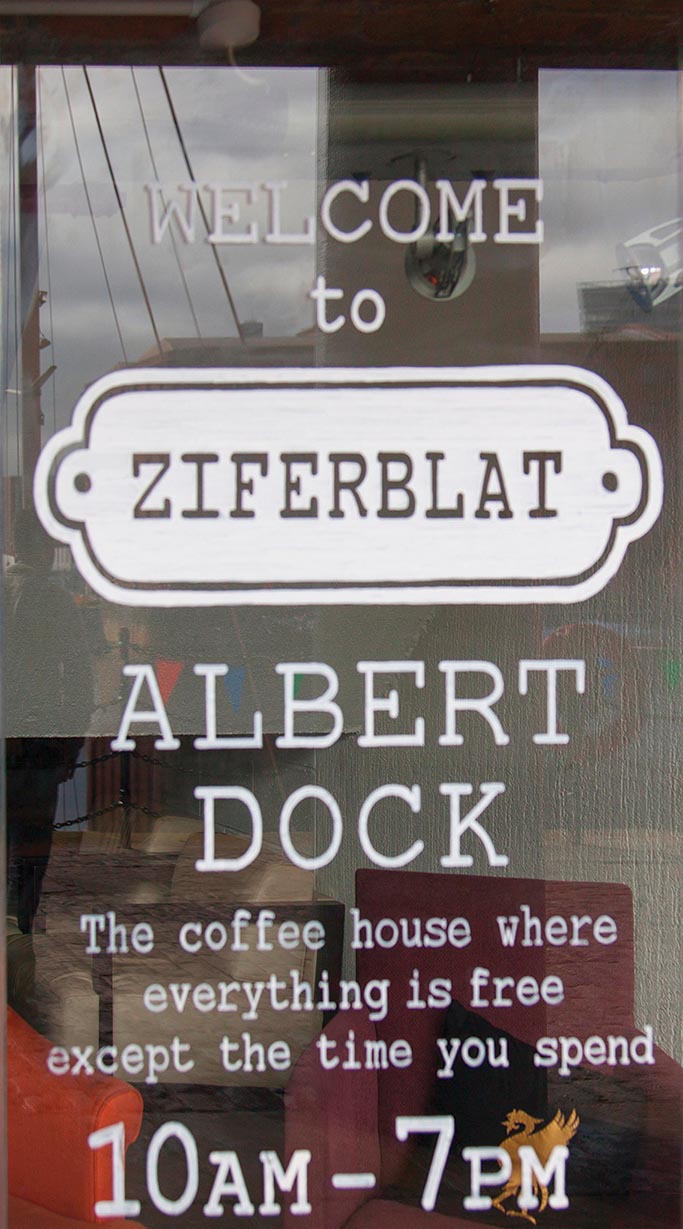
Writing on a glass window, which reads, Welcome to Ziferblat Albert Dock the coffee house where everything is free except the time you spend, 10 a m to 7 p m.
ZIFERBLAT CAFÉ UNDERSTANDS INCENTIVES
Incentives
Ziferblat is a small but growing café chain with locations in the UK and Eastern Europe. Their slogan is “Everything is free inside; except the time you spend.” Unlike most cafés, which charge for the items you order, Ziferblat charges 8 pence a minute (about $7.00 per hour), and everything (Wi-Fi, dozens of brands of tea and coffee, biscuits, and cakes) is included.
In most cafés the scarcest resource is table space. The reason is that once a customer purchases something, they are allowed to sit as long as they want. Ziferblat has solved the “squatting” problem that plagues other cafés by giving each customer a clock that charges them based on how long they stay. This nontraditional pricing structure creates an incentive to take time into account, by raising the cost of staying after you have finished your refreshment.
Ziferblat is a good example of voluntary trade. Customers can use Ziferblat for a quick bite or beverage and also use it as a shared office or meeting space. Ziferblat sets a price per minute that allows it to make a profit, and customers are willing to pay for the comforts provided. That’s a win-win exchange.