
Trade creates value
Markets bring trading partners together to create order out of chaos. Companies supply goods and services, and customers want to obtain the goods and services that companies supply. In a market economy, resources are allocated among households and firms with little or no government interference. Adam Smith, the founder of modern economics, described the dynamic best: “It is not from the benevolence of the butcher, the brewer, or the baker, that we expect our dinner, but from their regard to their own interest.” In other words, producers earn a living by selling the products consumers want. Consumers are also motivated by self-interest; they must decide how to use their money to select the goods they need or want the most. This process, which Adam Smith called the invisible hand, guides resources to their highest-valued use.
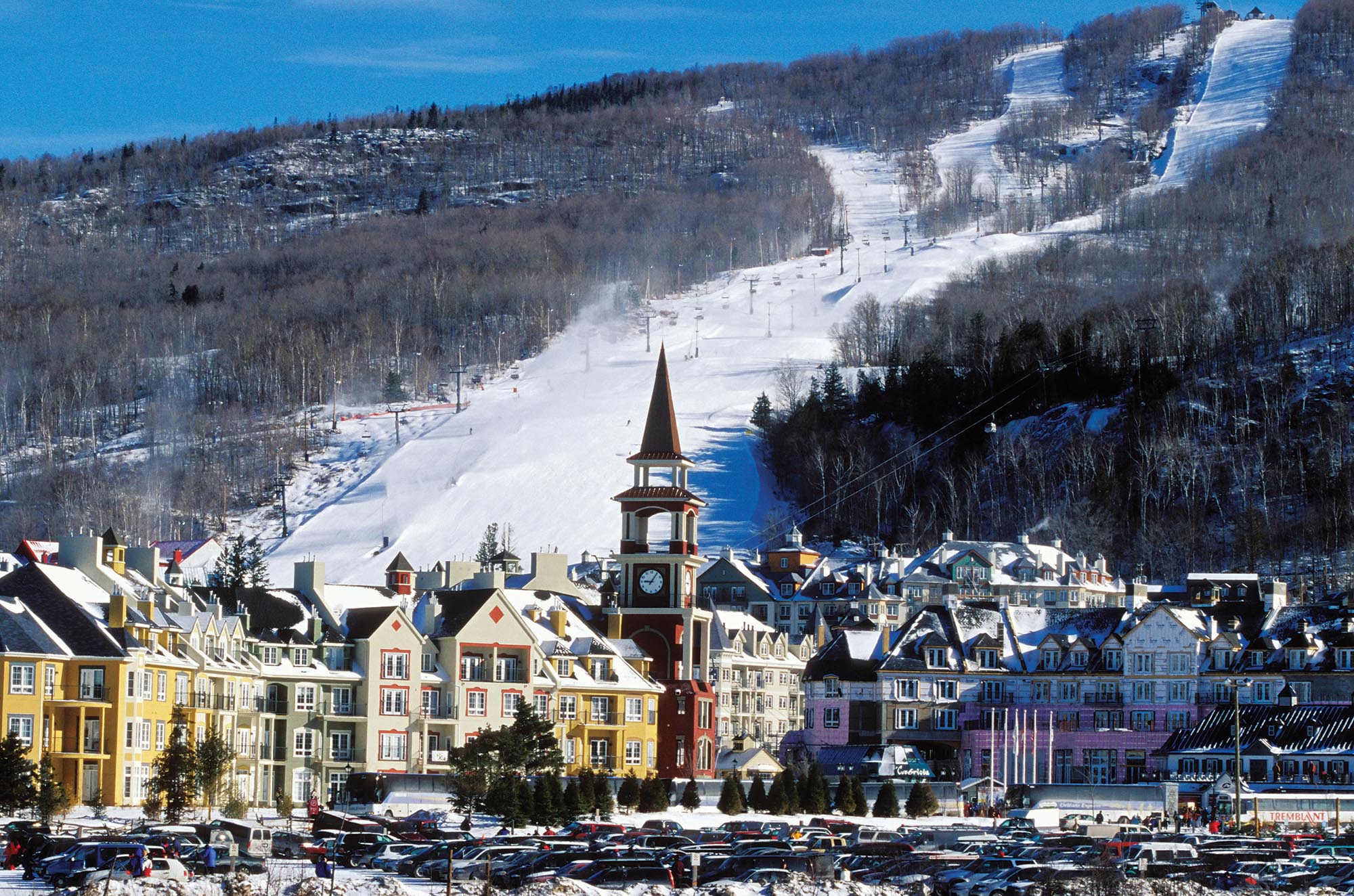
A small ski resort during peak season. The slope is covered in snow, and many cars crowd the parking lots of the resort.
The exchange of goods and services in a market economy happens through prices that are established in markets. Those prices change according to the level of demand for a product and how much is supplied. For instance, hotel rates near Disney World are reduced in the fall when demand is low, and they peak in March when spring break occurs. If spring break takes you to a ski resort instead, you will find lots of company and high prices. But if you are looking for an outdoor adventure during the summer, ski resorts have plenty of lodging available at great rates. Or take your average college town. It will have plenty of affordable hotel rooms available on a normal weekend. But on graduation weekend? Not so much.
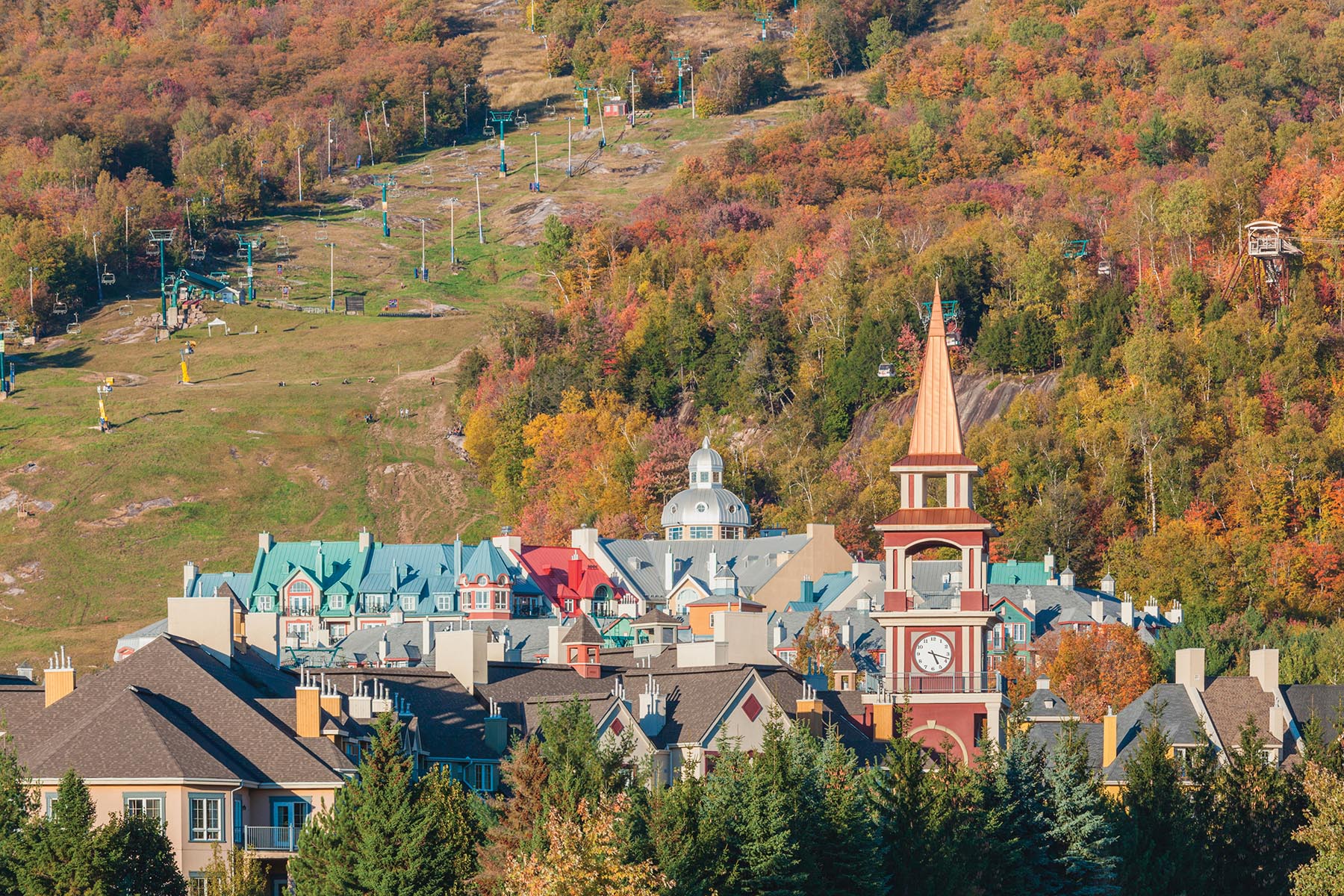
A small ski resort during off-season. The ski slope is free from snow and covered in grass. Some buses and cars are parked outside the resort.
Unexpected events can disrupt the normal pricing calculus. As COVID-19 swept the United States, Disney World shut down, ski resorts closed runs, and college graduations went virtual. Suddenly, hotels struggled to attract customers at regular, off-season prices. The story was the same in the restaurant and travel industries.
Why does all of this happen? Supply and demand tell the story. We begin our exploration of supply and demand by looking at where they interact—in markets. A firm’s degree of control over the market price is the distinguishing feature between competitive markets and imperfect markets.
Trade creates value
Buyers and sellers of a specific good or service come together to form a market. Formally, a market is a collection of buyers and sellers of a particular product or service. The buyers create the demand for the product, while the sellers produce the supply. The interaction of the buyers and sellers in a market establishes the price and the quantity produced of a particular good or the amount of a service offered.
Markets exist whenever goods and services are exchanged. Some markets are online, and others operate in traditional “brick and mortar” stores. Pike Place Market in Seattle is a collection of markets spread across 9 acres. For over a hundred years, it has brought together buyers and sellers of fresh, organic, and specialty foods. Because there is a large number of buyers and sellers for each type of product, we say that the markets at Pike Place are competitive. A competitive market is one in which there are so many buyers and sellers that each has only a small impact on the market price and output. In fact, the impact is so small that it is negligible.
At Pike Place Market, like other local markets, the goods sold by each vendor are similar. Because each buyer and seller is just one small part of the whole market, no single buyer or seller has any influence over the market price. These two characteristics—similar goods and many participants—create a highly competitive market in which the price and quantity sold of a good are determined by the market rather than by any one person or business.
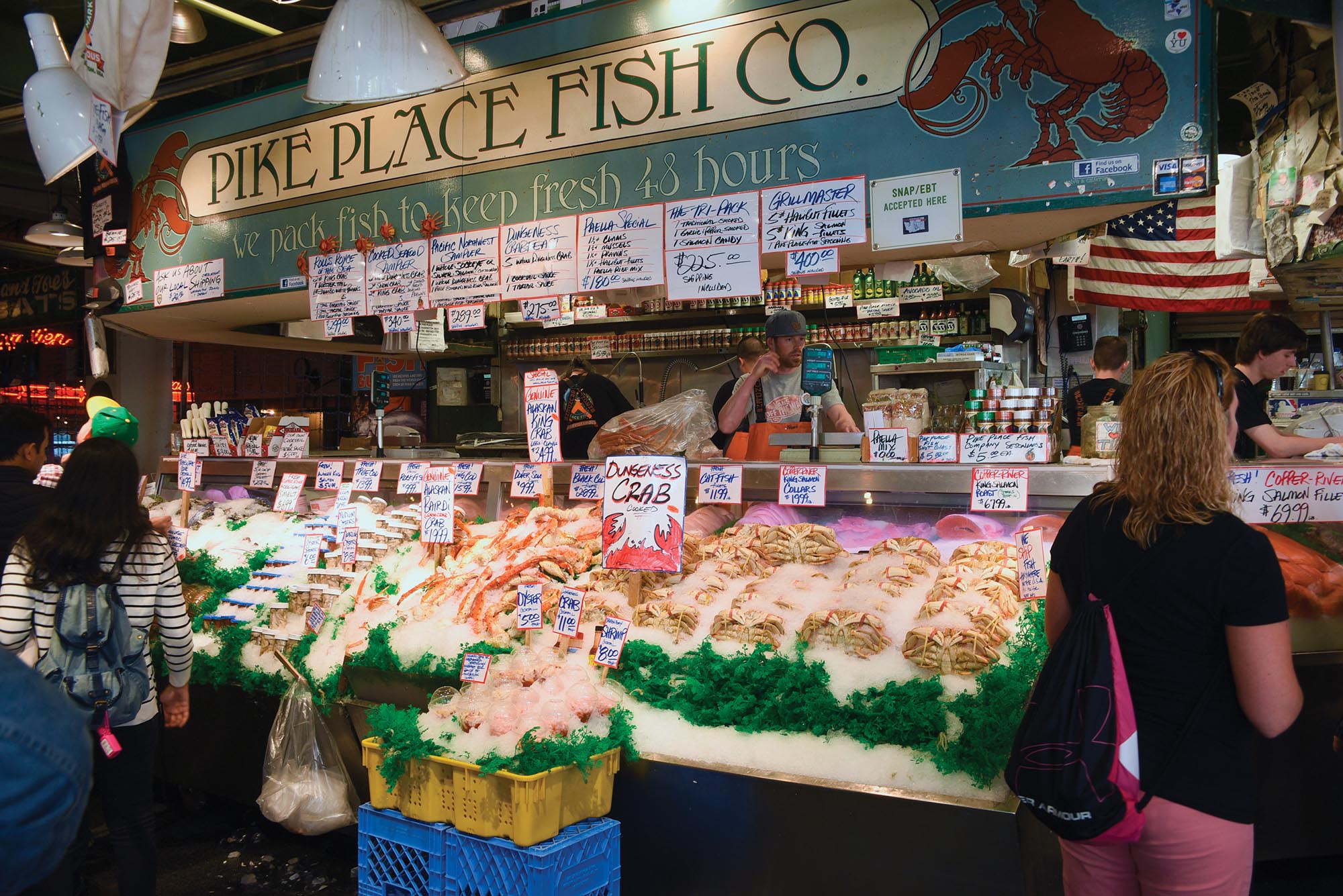
A fish vendor at Pike Place market. Various types of seafood are packed in ice and displayed in front of the counter. Workers are busy behind the counter.
To understand how competition works, let’s look at sales of salmon at Pike Place Market. On any given day, dozens of vendors sell salmon at this market. If a single vendor is absent or runs out of salmon, the quantity supplied that day will not change significantly—the remaining sellers will have no trouble filling the void. The same is true for those buying salmon. Customers will have no trouble finding salmon at the remaining vendors. Whether a particular salmon buyer decides to show up on a given day makes little difference when hundreds of buyers visit the market each day. No single buyer or seller has any appreciable influence on the price of salmon. As a result, the market for salmon at Pike Place Market is a competitive one.

People in red jumpsuits and safety harnesses leaning off the top of a tall building.
Markets are not always fully competitive. British economist Joan Robinson wrote that in imperfect competition, “a certain difficulty arises [because] the individual demand curve for the product of each of the firms . . . will depend to some extent upon the price policy of the others.”* Accordingly, we define these imperfect markets as markets in which either the buyer or the seller can influence the market price. For example, the CN Tower in Toronto affords an iconic view of the city. Not surprisingly, the cost of taking the elevator to the top of the building is not cheap. But many customers buy the tickets anyway, because they have decided that the view is worth the price. The managers of the CN Tower can set a high price for tickets because there is no other place in Toronto with such a great view. Once at the top, you can also take the EdgeWalk, a dizzying, hands-free trip around the top of the tower’s main pod, 116 stories above the ground. Of course, you’ll have to pay extra. From this example, we see that when sellers produce goods and services that are different from their competitors’, they gain some control, or leverage, over the price they charge. The more unusual the product being sold, the more control the seller has over the price. When a seller has some control over the price, we say that the market is imperfect. Specialized products, such as popular video games, front-row concert tickets, or dinner reservations at a trendy restaurant, give the seller substantial pricing power. Market power is a firm’s ability to influence the price of a good or service by exercising control over its demand, supply, or both.
In between the highly competitive environment at the Pike Place Market and markets characterized by a lack of competition, such as the CN Tower with its one-of-a-kind attraction, there are many other types of markets. Some, like the market for fast-food restaurants, are highly competitive but sell products that are not identical. Other businesses—for example, Comcast Cable—function like monopolies because they are the only provider of a service in a geographic area. A monopoly exists when a single company supplies the entire market for a particular good or service. We’ll talk a lot more about different market structures, such as monopoly, in later chapters. But even in imperfect markets, the forces of supply and demand significantly influence producer and consumer behavior. For the time being, we’ll keep our analysis focused on supply and demand in competitive markets.