A price floor creates a legally established minimum price for a good or service. The minimum wage law is an example of a price floor in the market for labor. Like price ceilings, price floors create many unintended effects that policymakers rarely acknowledge. However, unlike price ceilings, price floors result from the political pressure of suppliers to keep prices high. Most consumers prefer lower prices when they shop, so the idea of a law that keeps prices high may sound like a bad one to you. However, if you are selling a product or service, you might think that legislation to keep prices high is a very good idea. For instance, many states establish minimum prices for milk. As a result, milk prices are higher than they would be if supply and demand set the price.
PRACTICE WHAT YOU KNOW
Price Ceilings: Student Rental Apartments
Here is a question that often confuses students.
QUESTION: Imagine that a city council decides that the market price for student rental apartments is too high. It passes a law that establishes a rental price ceiling of $600 per month. The result of the price ceiling is a shortage. Which of the following has caused the shortage of apartments?
Both suppliers and demanders. Landlords will reduce the supply of apartments, and the demand from renters will increase.
A spike in demand from many students who want to rent cheap apartments.
The drop in supply caused by apartment owners pulling their units off the rental market and converting them into condos for sale.
The change in price as a result of the price ceiling set by the city council.
ANSWERANSWER:Many students think that markets are to blame when shortages (or surpluses) exist. The first reaction is to find the culpable party—either the supplier or the demander, or both. For this reason, many students believe that choice (a) is correct. But be careful. Supply and demand have not changed—they are exactly the same as they were before the price ceiling was implemented. What has changed is the quantity of apartments supplied at $600. This change in quantity supplied is represented by a movement along the existing supply curve. The same type of analysis applies to renters. The quantity demanded at $600 is much larger than it was when the price was not controlled. Therefore, the change in quantity demanded is represented by a movement along the demand curve.
The same logic applies to choices (b) and (c). Choice (b) states that there is a spike in student demand caused by the lower price. But price cannot cause a shift in the demand curve; it can only cause a movement along a curve. Likewise, choice (c) states that apartment owners supply fewer units for rent. The fact that fewer apartments are available at $600 per month would be represented by a movement along the apartment supply curve.
So we are left with choice (d), which is the correct answer. There is only one change in market conditions: the city council has passed a new price ceiling law. A binding price ceiling disrupts the market’s ability to reach equilibrium. Therefore, we can say that the change in the price as a result of the price ceiling has caused the shortage.
In this section, we follow the same progression that we did with price ceilings. We begin with a simple thought experiment. Once we understand how price floors work, we use supply and demand analysis to examine the short- and long-run implications for economic activity.
Understanding Price Floors
More information
A person in a handstand.
If you’re doing a handstand, you need the floor for support. A binding price floor keeps prices from falling.
To understand how price floors affect the market, let’s try a thought experiment. Suppose that a politician suggests we should encourage dairy farmers to produce more milk so that supplies will be plentiful and everyone will get enough calcium. To accomplish these goals, the government sets a price floor of $6 per gallon—about twice the price of a typical gallon of fat-free milk—to make production more attractive to milk producers. What repercussions should we expect?
First, more milk will be available for sale because the higher price will cause dairies to increase the quantity that they supply. At the same time, because consumers must pay more, the quantity demanded will fall. The result will be a surplus of milk. Because every gallon of milk that is produced but not sold hurts the dairies’ bottom line, sellers will want to lower their prices enough to get as many sales as possible before the milk goes bad. But the price floor will not allow the market to respond, and sellers will be stuck with milk that goes to waste. They will be tempted to offer illegal discounts in order to recoup some of their costs.
What happens next? Because the surplus cannot be resolved through lower prices, the government will try to help equalize the quantity supplied and the quantity demanded through other means. It can do so in one of two ways: by restricting the supply of the good or by stimulating additional demand. Both solutions are problematic. If production is restricted, dairy farmers will not be able to generate a profitable amount of milk. Likewise, stimulating additional demand is not as simple as it sounds. Let’s consider how these government programs work with other crops.
More information
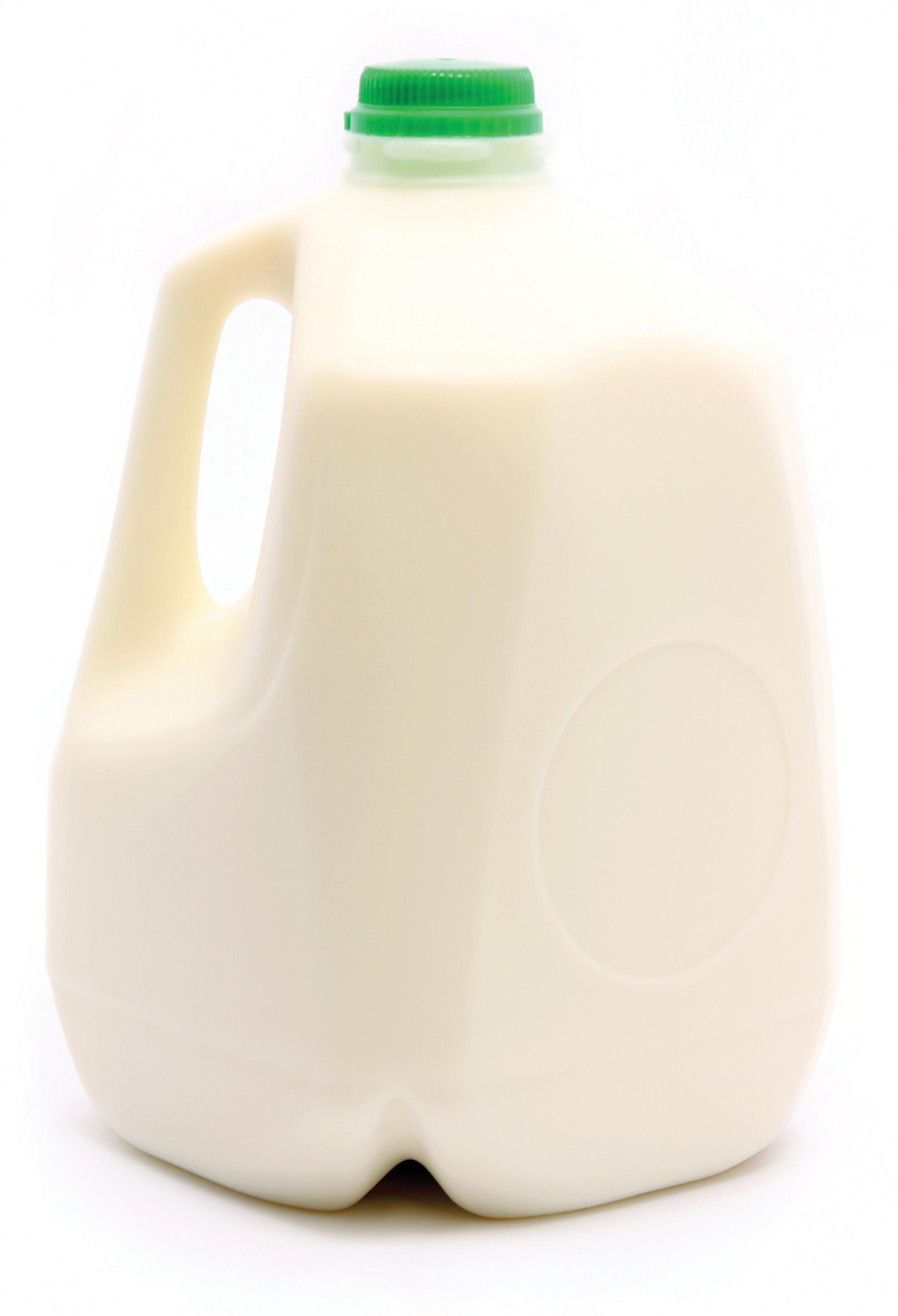
A gallon of milk.
Got milk? Maybe not, if there’s a price floor.
In many cases, the government purchases surplus agricultural production, most notably with corn, soybeans, cotton, and rice. Once the government buys the surplus production, it often sells the surplus below cost to developing countries to avoid wasting the crop. This strategy has the unintended consequence of making it cheaper for consumers in these developing nations to buy excess agricultural output from developed nations like the United States than to have local farmers grow the crop. International treaties ban the practice of dumping surplus production, but it continues under the guise of humanitarian aid. This practice makes little economic sense, but it continues to exist because it often makes political sense. Table 6.2 summarizes the result of our price floor thought experiment using milk.
The Effect of Price Floors
We have seen that price floors create unintended consequences. Now we will use the supply and demand model to analyze how price floors affect the market. We look at the short run first.
NONBINDING PRICE FLOORS
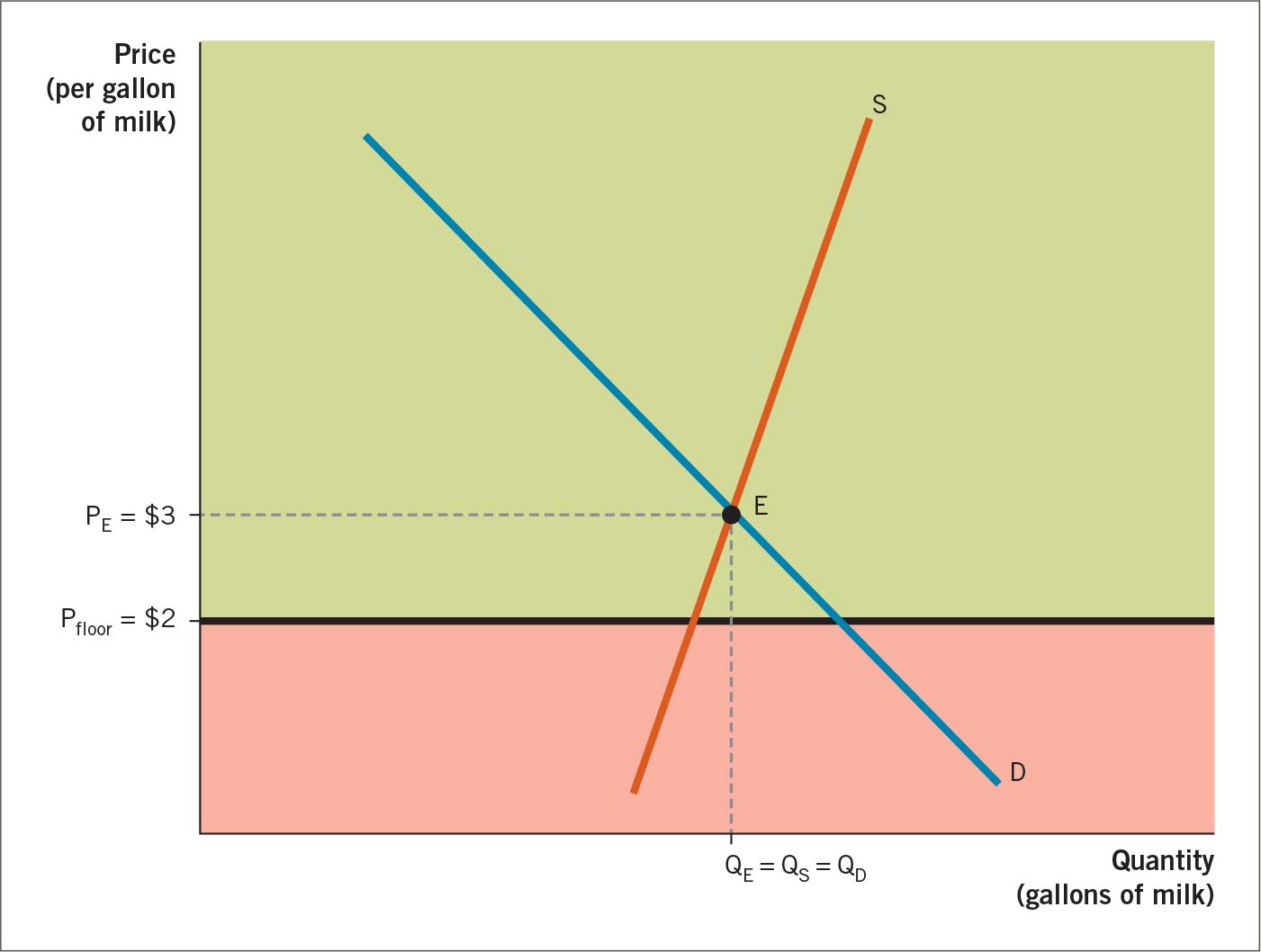
Like price ceilings, price floors can be binding or nonbinding. Figure 6.6 illustrates a nonbinding price floor of $2 per gallon on milk. As you can see, at $2 the price floor is below the equilibrium price (PE), so the price floor is nonbinding. Because the actual market price is above the legally established minimum price (Pfloor), the price floor does not prevent the market from reaching equilibrium at point E. Consequently, the price floor has no impact on the market. As long as the equilibrium price remains above the price floor, price is determined by supply and demand.
TABLE 6.2
A Price Floor on Milk
Question
Answer / Explanation
Result
Will the quantity of milk for sale change?
Consumers will purchase less because the price is higher (the law of demand), but producers will manufacture more (the law of supply). The net result will be a surplus of milk.
More information
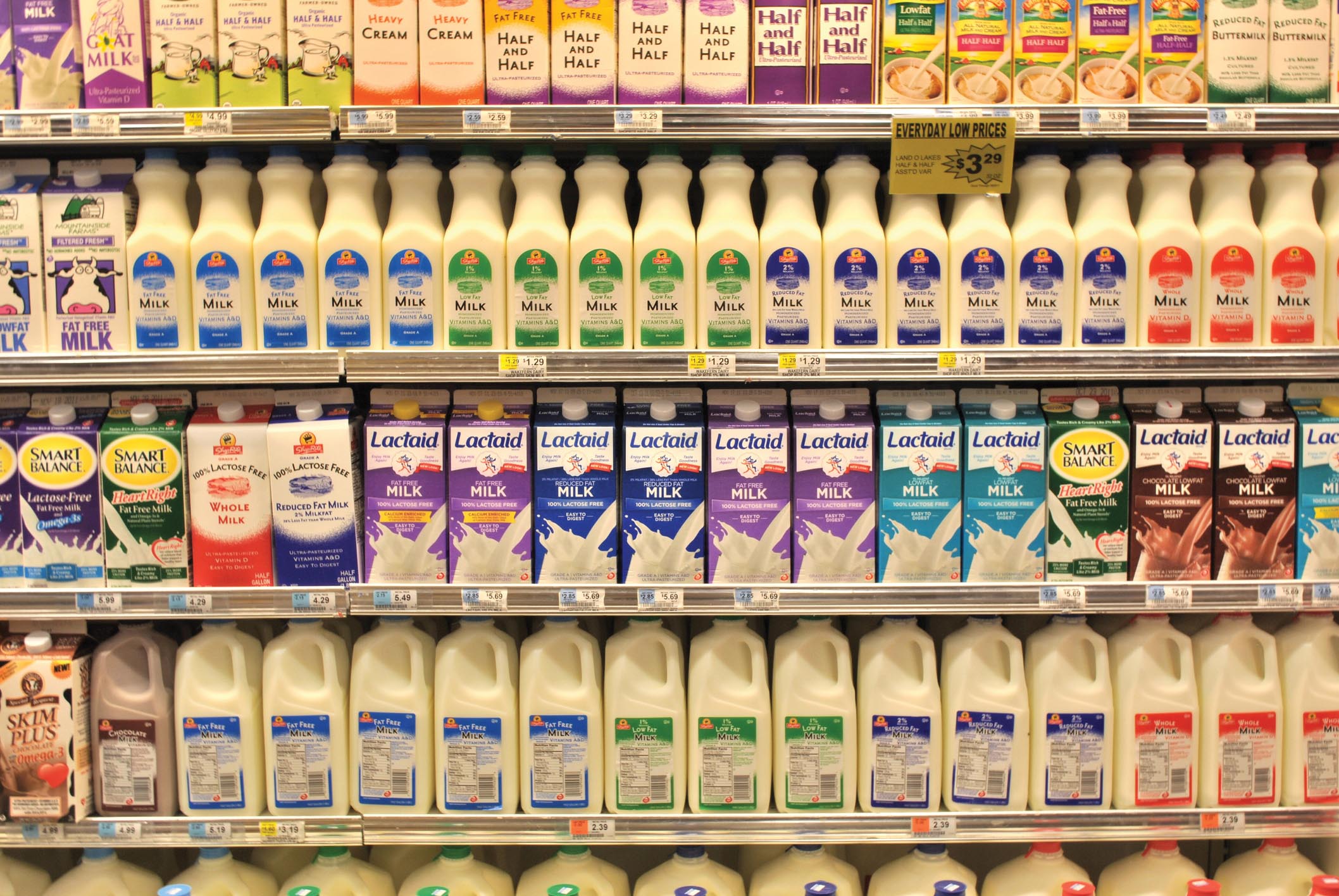
Supermarket shelves full of milk.
There will be a surplus of milk
Would producers sell below the price floor?
Yes. A surplus of milk would give sellers a strong incentive to undercut the price floor to avoid having to discard leftover milk.
More information
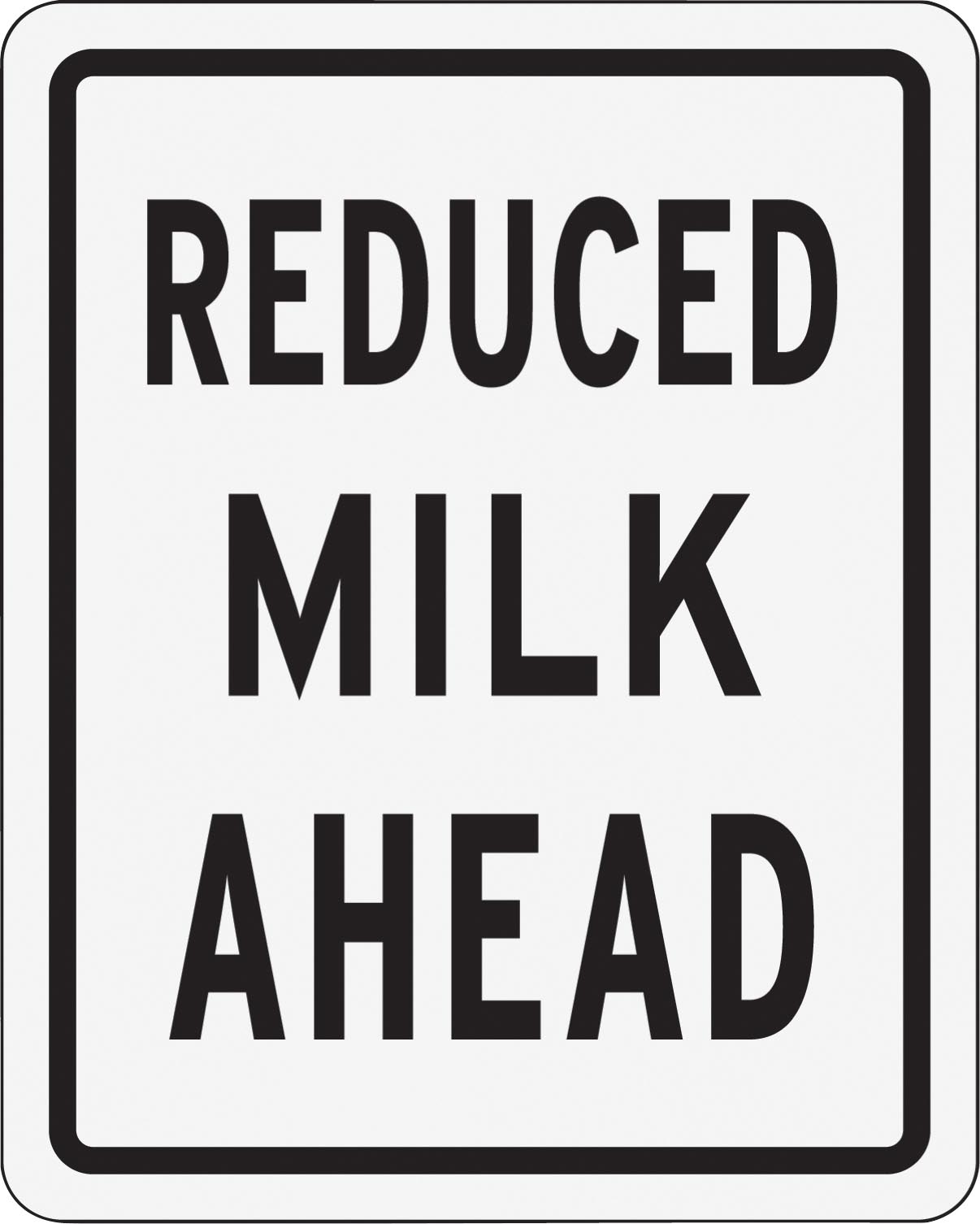
A sign saying REDUCED MILK AHEAD.
Illegal discounts will help reduce the milk surplus
Will dairy farmers be better off?
Not if they have trouble selling what they produce.
More information
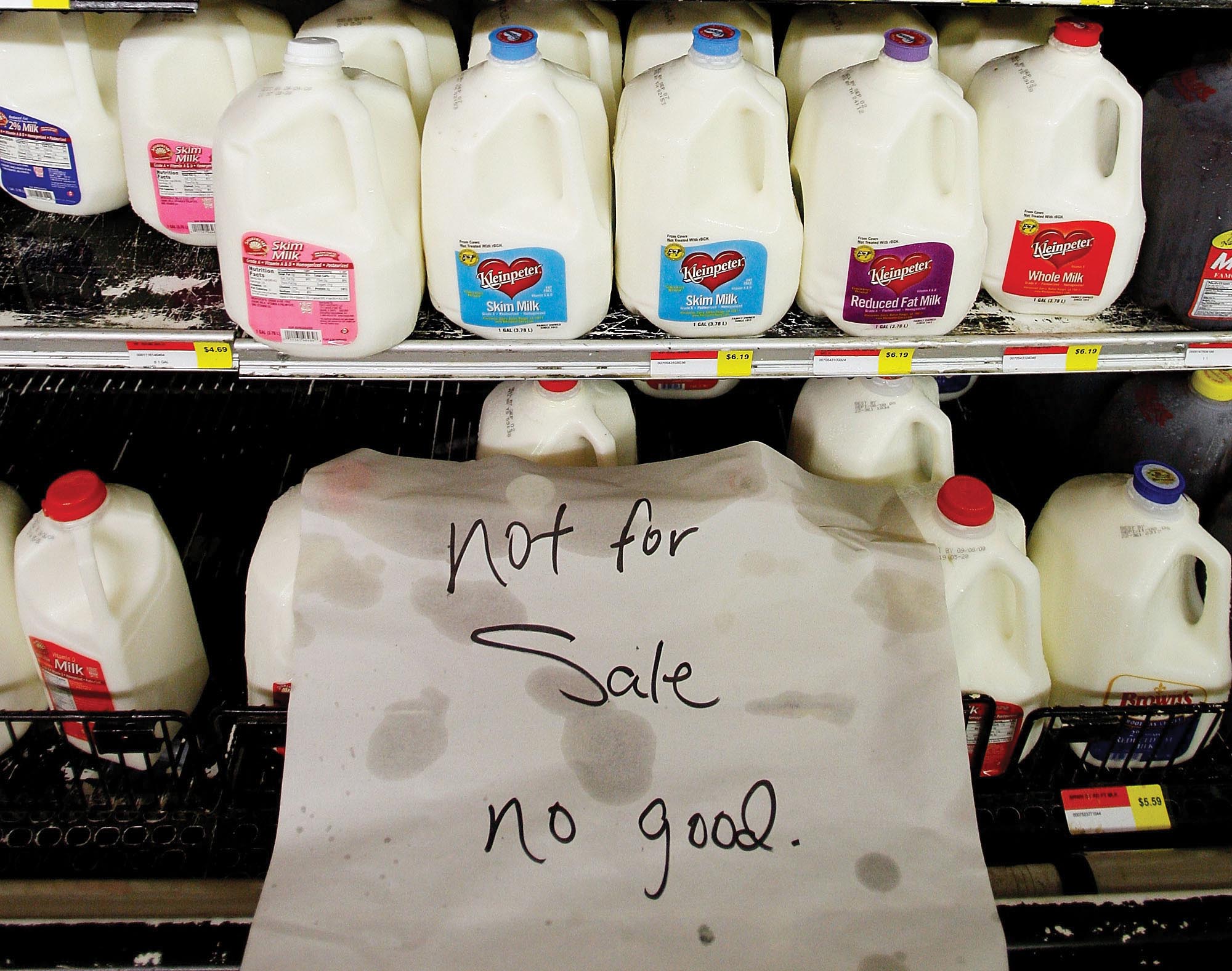
Milk with a sign saying NOT FOR SALE. NO GOOD.
There might be a lot of spoiled milk
FIGURE 6.6
A Nonbinding Price Floor
Under a nonbinding price floor, price is regulated by supply and demand. Because the price floor ($2) is below the equilibrium price ($3), the market will voluntarily charge more than the legal minimum. Therefore, this nonbinding price floor will have no effect on sales and purchases of milk.
More information
Supply and demand curves for milk, with a nonbinding price floor. On the y axis is price per gallon of milk, and on the x axis is the quantity in gallons of milk. The supply curve, S, is linear with a positive slope, and the demand curve, D, is linear with a negative slope. The supply and demand curves intersect at the equilibrium point E, where the equilibrium price, upper P subscript E, is 3 dollars, and the equilibrium quantity equals the quantity supplied which equals the quantity demanded. A price floor, upper P subscript floor, is set at 2 dollars. Since P floor is less than P E, the price floor is nonbinding.
More information
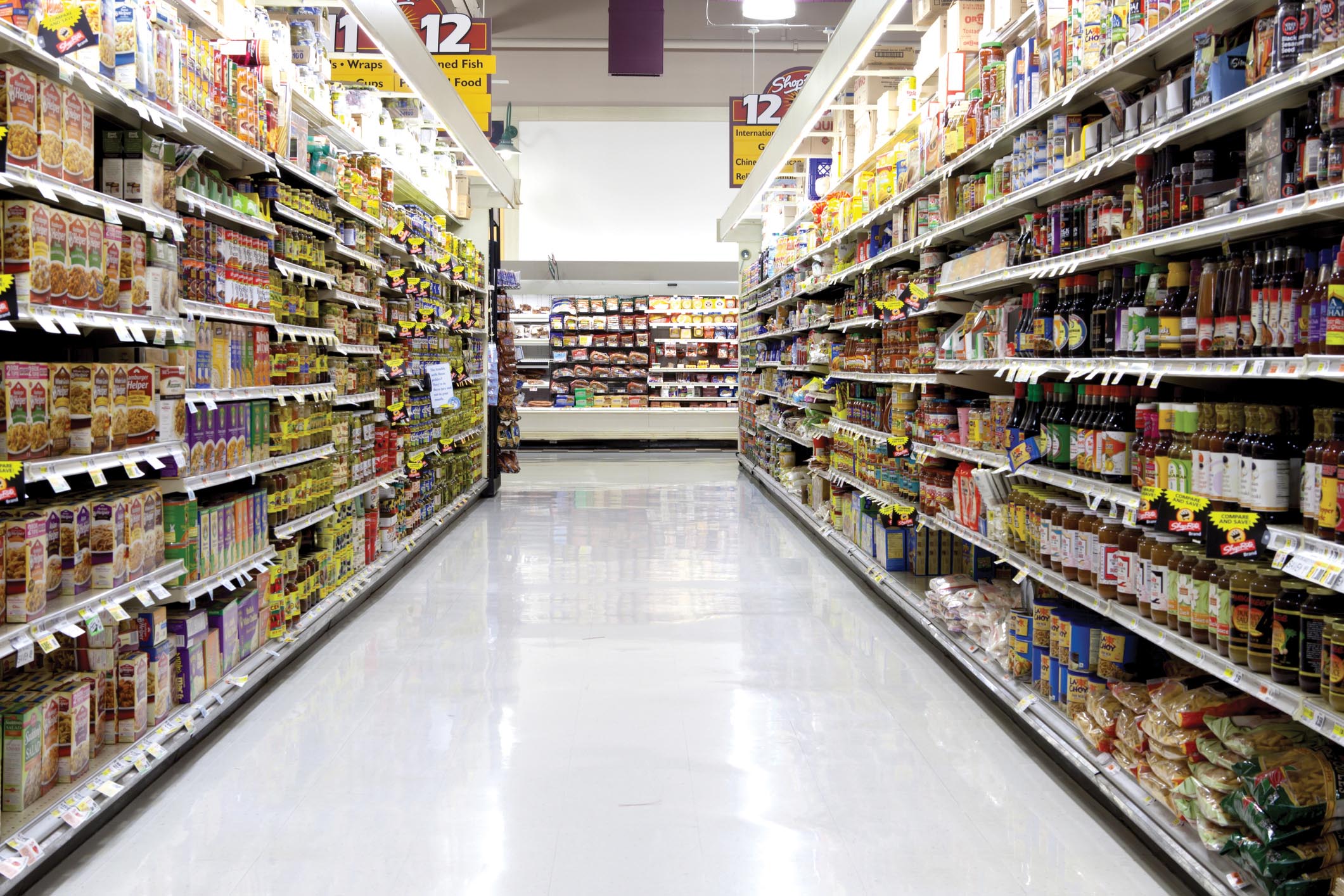
A grocery store aisle, where shelves on both sides are well stocked.
Full shelves signal a market at equilibrium.
Incentives
BINDING PRICE FLOORS
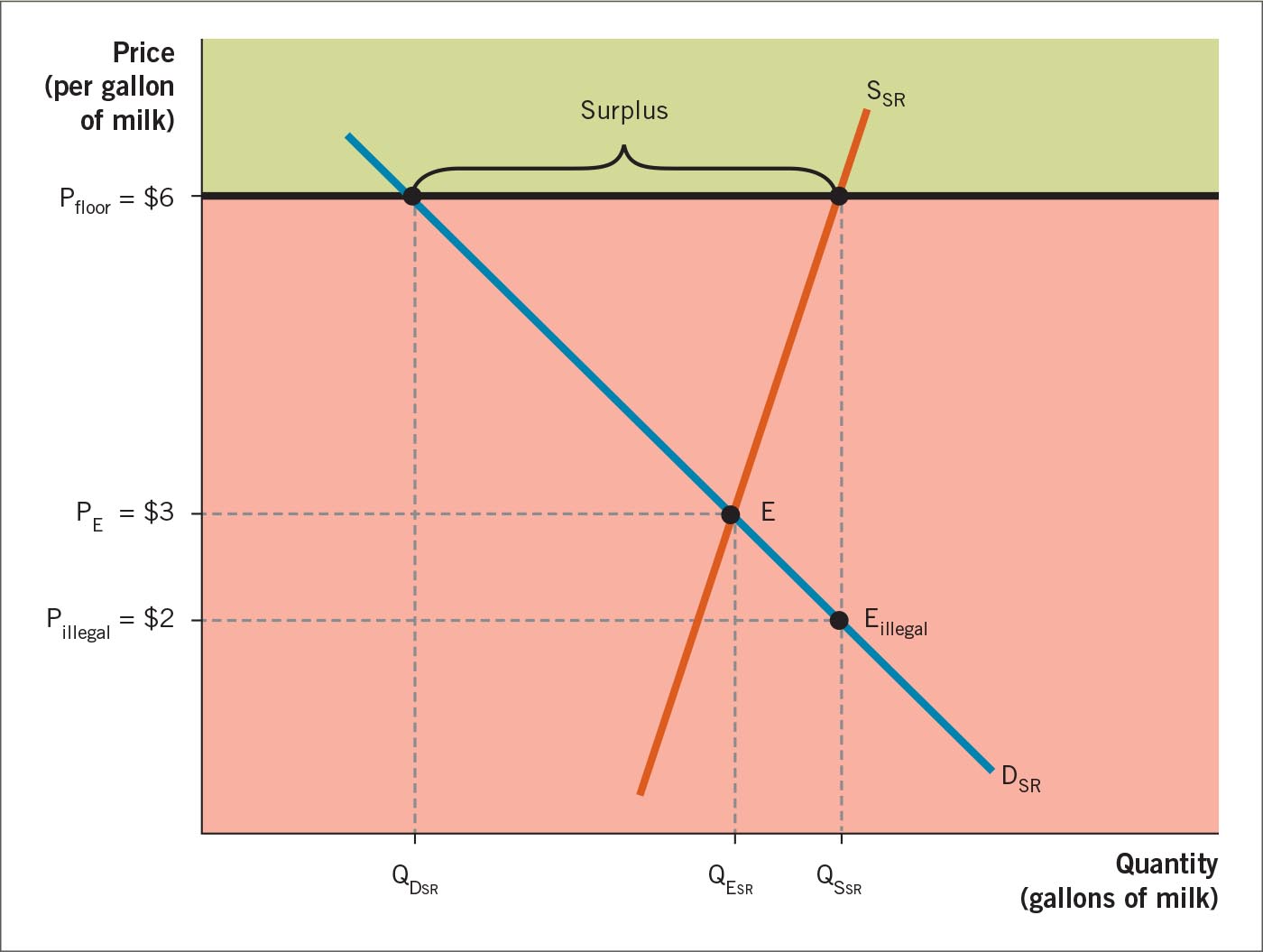
For a price floor to have an impact on the market, it must be set above the market equilibrium price. In that case, it is a binding price floor. With a binding price floor, the quantity supplied will exceed the quantity demanded. Figure 6.7 illustrates a binding price floor in the short run. Continuing our example of milk prices, at $6 per gallon the price floor is above the equilibrium price of $3. Market forces always attempt to restore the equilibrium between supply and demand at point E. So we know that there is downward pressure on the price. At a price floor of $6, we see that QSSR > QDSR. The difference between the quantity supplied and the quantity demanded is the surplus. Because the market’s price adjustment mechanism is not permitted to work, sellers find themselves holding unwanted inventories of milk. To eliminate the surplus, which will spoil unless it is sold, an illegal market may develop with prices substantially below the legislated price. At a price (Pillegal) of $2, this market eliminates the surplus that the price floor caused. However, the price floor has created two unintended consequences: a smaller demand for milk QDSR < QESR) and an illegal market to eliminate the glut.
FIGURE 6.7
A Binding Price Floor in the Short Run
A binding price floor creates a surplus, which has two unintended consequences: (1) a smaller quantity demanded than the equilibrium quantity (QDSR < QESR) and (2) a lower, illegal price to eliminate the glut of the product.
More information
A supply and demand graph titled A Binding Price Floor in the Short Run. On the y axis is price per gallon of milk, and on the x axis is the quantity in gallons of milk. The short term supply curve, upper S subscript S R, is linear with a positive slope, and the short term demand curve, upper D subscript S R, is linear with a negative slope. The equilibrium point, E, is at the equilibrium price, upper P subscript E, of 3 dollars, and the equilibrium quantity in the short run is upper Q subscript E subscript S R. A price floor, upper P subscript floor, is set at 6 dollars. Because the quantity supplied in the short run, upper Q subscript S subscript S R, is greater than the quantity demanded in the short run, upper Q subscript D subscript S R, there is a surplus. Due to the price floor, an illegal market appears and the market equilibrium adjusts to the point upper E subscript illegal. E subscript illegal is set at the illegal market price, upper P subscript illegal, of 2 dollars, and at that price the quantity demanded equals the quantity supplied in the short run, upper Q subscript S subscript S R.
Price Floors in the Long Run
Once price floor legislation is passed, it can be politically difficult to repeal. What happens if a binding price floor on milk stays in effect for a long time? To answer that question, we need to consider elasticity. We have already observed that in the short run, binding price ceilings cause shortages and that illegal markets follow.
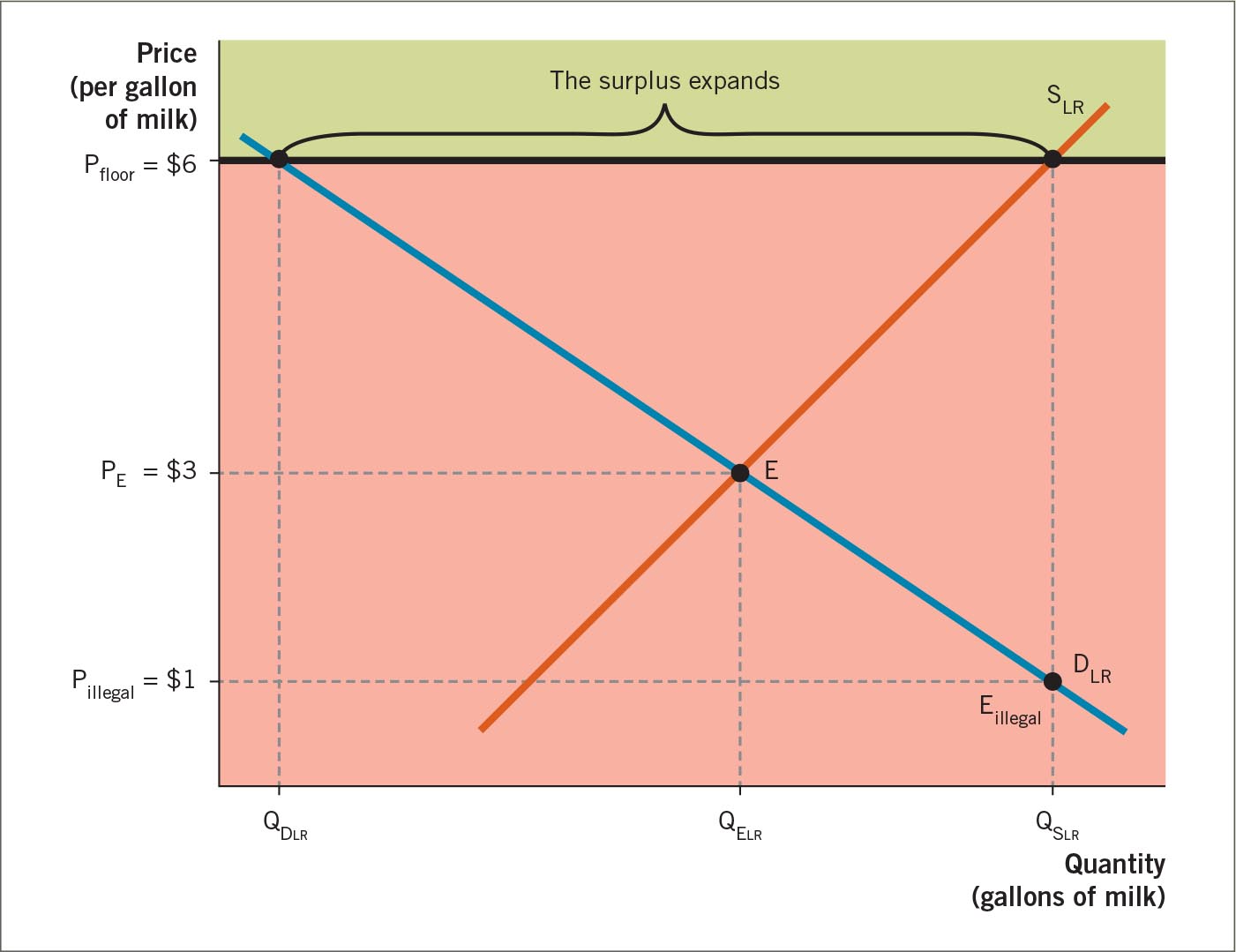
Figure 6.8 shows a price floor for milk that remains in place well past the short run. The long run gives consumers a chance to find milk substitutes—for example, products made from soy, rice, or almond that are not subject to the price floor—at lower prices. This added consumer flexibility makes the long-run demand for milk more elastic. As a result, the demand curve depicted in Figure 6.8 is more elastic than its short-run counterpart in Figure 6.7. The supply curve also becomes flatter (more elastic) because firms (dairy farms) are able to produce more milk by acquiring additional land and production facilities. Therefore, a price floor ($6) that remains in place over time causes the supply and demand curves to become more elastic, magnifying the surplus.
What happens to supply? In the long run, producers are more flexible and therefore supply is more elastic. The pool of potential milk producers rises as other closely related businesses retool their operations to supply more milk. The flatter supply curve in Figure 6.8 reflects this flexibility. As a result, QSLR expands and becomes much larger than it was in Figure 6.7. The increased elasticity on the part of both producers and consumers makes the surplus larger in the long run and magnifies the unintended consequences we observed in the short run.
FIGURE 6.8
The Effect of a Binding Price Floor in the Long Run
When a price floor is left in place over time, supply and demand both become more elastic. The result is a larger surplus (QSLR > QDLR) in the long run. Because sellers are unable to sell all that they produce at $6 per gallon, an illegal market develops to eliminate the glut of milk.
More information
A binding price floor on milk in the long run. On the y axis is price per gallon of milk, and on the x axis is the quantity in gallons of milk. The long term supply curve, upper S subscript L R, is linear with a positive slope that is less than in the short run supply curve. The long run demand curve, upper D subscript L R, is linear with a negative slope that is less than in the short run demand curve. The equilibrium point, E, is at the equilibrium price, upper P subscript E, of 3 dollars, and the equilibrium quantity in the long run is upper Q subscript E subscript L R. A price floor, upper P subscript Floor, is set at 6 dollars. Because the quantity supplied in the long run, upper Q subscript S subscript L R, is greater than the quantity demanded in the long run, upper Q subscript D subscript L R, there is a larger surplus in the long run. Because the slopes of the supply and demand curves are more elastic, the surplus expands. Due to the price floor, an illegal market appears and the market equilibrium adjusts to the point E subscript illegal. E subscript illegal is set at the illegal market price, P subscript illegal, of 1 dollar, and the quantity demanded equals the quantity supplied in the long run, upper Q subscript S subscript L R.
PRACTICE WHAT YOU KNOW
More information
A coffee cup topped with creamy foam. There is a spoon on a saucer. Surrounding the cup and saucer are coffee beans and a bag of Fair Trade coffee beans.
Would fair-trade coffee producers benefit from a price floor?
Price Floors: Fair-Trade Coffee
Fair-trade coffee is sold through organizations that purchase directly from growers. The coffee is usually sold for a higher price than standard coffee. The goal is to promote more humane working conditions for the coffee pickers and growers. Fair-trade coffee has become more popular but still accounts for a small portion of all coffee sales, in large part because it is substantially more expensive to produce.
QUESTION: Suppose that the price of a 1-pound bag of standard coffee is $8 and the price of a 1-pound bag of fair-trade coffee is $12. Congress decides to impose a price floor of $10 per pound on all 1-pound bags of coffee. What will most likely happen?
ANSWERANSWER:Fair-trade producers typically sell their product at a higher price than mass-produced coffee brands. Therefore, a $10 price floor is binding for inexpensive brands like Folgers but nonbinding for premium coffees, which include fair-trade sellers. The price floor will reduce the price disparity between fair-trade coffee and mass-produced coffee.
Opportunity cost
To see how the market will respond, consider a fair-trade coffee producer who charges $12 per pound and a mass-produced brand that sells for $8 per pound. A price floor of $10 reduces the difference between the price of fair-trade coffee and the inexpensive coffee brands, which now must sell for $10 instead of $8. The consumer’s opportunity cost of choosing fair-trade coffee is now lower. Therefore, some consumers of the inexpensive brands will opt for fair-trade coffee instead. As a result, fair-trade producers will benefit indirectly from the price floor. Thus, the answer to the question is that more people will buy fair-trade coffee because of this price floor policy.
CHALLENGE QUESTION: Suppose the price floor is set at $12. What will most likely happen?
ANSWERANSWER:
Now that the price floor is set at $12, the price differential between fair-trade and standard coffee no longer exists. Most consumers will switch to fair-trade coffee, since it’s a cost-free way to feel ethical. In the short run, this will result in a shortage of fair-trade coffee, as producers struggle to keep up with demand. However, in the long run, we would expect producers of fair-trade coffee to expand production.
ECONOMICSin theMEDIA
The Opportunity Cost of Higher Prices
Trade-offs
Incentives
College Humor created a short YouTube video, “Buy Food Ethically, Unless It’s Too Hard,” that illustrates the trade-offs people face when they make purchases at a local farmer’s market. The people in the video have the best of intentions: they want to save the environment, eat healthier, and support local growers. But they admit they don’t always buy at the farmer’s market, despite their stated intentions. One of the primary reasons they don’t go there as often as they would like to is the price. Each person is young and socially conscious, but prices matter to them as well, and that, combined with the inconvenience of going to the farmer’s market, means they rarely go. The video illustrates a very important point: prices matter, whether those prices are naturally set in the market or artificially set through price controls.
More information
A person choosing vegetables from a table of produce at an outdoor market.
 ANSWER
 ANSWER: Many students think that markets are to blame when shortages (or surpluses) exist. The first reaction is to find the culpable party—either the supplier or the demander, or both. For this reason, many students believe that choice (a) is correct. But be careful. Supply and demand have not changed—they are exactly the same as they were before the price ceiling was implemented. What has changed is the quantity of apartments supplied at $600. This change in quantity supplied is represented by a movement along the existing supply curve. The same type of analysis applies to renters. The quantity demanded at $600 is much larger than it was when the price was not controlled. Therefore, the change in quantity demanded is represented by a movement along the demand curve.