How similar or different are women and men in personality and behavioral variables, and what role does cultural context play in these patterns?
Many of the stereotyped sex/gender differences expressed in the books mentioned at the beginning of this chapter have to do with personality and behavior. Women supposedly want relationships, desire intimacy, and seek connection. Men supposedly want sex, are poor communicators, and are protective of their romantic partners. But in reality, how different or similar are women’s and men’s personalities? In this section, we’ll explore sex/gender similarities and differences in personality and behavior. As we present the research, it will be useful to think back to the four questions discussed above. Many of the findings vary according to other aspects of social identity such as the race or age of the participant as well as the sociocultural setting. Also, a combination of biological, social, and psychological factors probably contributes to these patterns.
Personality Traits
Researchers generally view personality as varying on five major dimensions, known as the Big Five: openness to new experiences, conscientiousness, extraversion, agreeableness, and neuroticism (e.g., the tendency toward anxiety and depression; Costa, Terracciano, & McCrae, 2001). Each dimension has many sub-dimensions. In a meta-analysis, researchers found sex/gender differences on several of the dimensions as well as on particular sub-dimensions (Feingold, 1994). The largest effects were for men outscoring women on measures of assertiveness (a sub-dimension of extraversion; d = 0.50), although some studies indicated that this was more true on paper-and-pencil personality assessments than in behavioral observations. There was also a large effect for women outscoring men on tender-mindedness (a sub-dimension of agreeableness; d = −.97) and a small effect for anxiety (a sub-dimension of neuroticism; d = −0.25 to −.28). However, these differences still imply a great deal of similarity. Even the largest effect mentioned represents an overlap of approximately 62%. Also, these differences are consistent with sex/gender stereotypes. Being tender-minded is part of the feminine stereotype, and being assertive is part of the masculine stereotype.
More recently, researchers have reviewed studies that examined the Big Five internationally. Data from 26 countries and over 23,000 people were used to test for sex/gender differences (Costa et al., 2001). Researchers found results similar to those described above. Women tended to be more agreeable, neurotic, and open to feelings. Interestingly, this study found that sex/gender differences were magnified in the United States and Europe and were less strong in countries with more traditional gender roles, such as those in East Asia and Africa. For example, in Japan there was no difference between women and men in neuroticism, and in Zimbabwe and Black South Africa there were no differences in neuroticism or agreeableness.
The authors suggested that one explanation for these findings is that personality is typically measured through self-report, and how people report their personality may depend on whom they compare themselves to (Costa et al., 2001). In countries with cultures that are heavily sex/gender segregated, women may compare themselves to other women, and men may compare themselves to other men. In more egalitarian countries, women and men probably compare themselves to both women and men. For example, if you’re a very agreeable woman in Zimbabwe but only compare yourself to other women who are just as agreeable as you are, you may rate yourself as less agreeable than you would if you compared yourself to the men in your community. This tendency would reduce or eliminate reported (but not actual) sex/gender differences.
Emotions
There are many stereotypes about gender and emotions. Women are generally perceived as “more emotional” than men—although the same level of emotion in a man is generally seen as passion or stress. For example, when researchers gave participants scenarios describing women and men in problematic, emotion-inducing experiences (e.g., having relationship problems, getting a bad medical diagnosis), women were described as “emotional” and men as “stressed” (Robinson & Johnson, 1997). Women are expected and encouraged to show traditionally feminine emotions such as sadness but aren’t encouraged to show anger—an emotion associated with masculinity. When women do show anger, they’re often punished—for example, with loss of status and influence (Brescoll & Uhlmann, 2008; Salerno & Peter-Hagene, 2015). Women and men have internalized these stereotypes, so when researchers ask participants to imagine their responses to hypothetical situations, gender differences are generally found (McCormick, MacArthur, Shields, & Dicicco, 2016). However, when asked to identify their emotional response close to the time when an actual event happened, gender differences are largely absent.
Also, there are differences in the expression of emotion—which isn’t surprising, given that what people express is influenced by what they consider appropriate for their gender. For example, women tend to cry more than men, although this is actually more true in Western countries that are affluent and democratic (such as the United States) than in non-Western countries (van Hemert, van de Vijver, & Vingerhoets, 2011).
Gender similarities and differences in emotion are also not consistent across the life span. For example, research on emotional expression in children has shown almost no differences. A meta-analysis of studies on emotion expression in children showed that, overall, there were small sex/gender differences (Chaplin & Aldao, 2013). Girls, as compared to boys, did show somewhat more internalizing emotions, such as anxiety and sadness, and more positive emotions, such as happiness. Furthermore, boys showed somewhat more externalizing emotions, such as anger. However, all the effect sizes were less than 0.1, which puts them in the very small to negligible range. In other words, similarity was more the rule than difference—this represents a 96% overlap. When the researchers looked at whether sex/gender differences in emotions changed with age, they found no differences in emotions in infancy, and any differences were only seen starting in pre-school.
Sexuality
Although we’ll talk more about sex and sexuality in Chapter 7, we’ll mention here that many people think men want sex and have sex more than women do. In one meta-analytic review, researchers explored sex/gender differences in sexual behavior based on data from 730 studies published between 1993 and 2007 with almost 1.5 million participants (Petersen & Hyde, 2010). The researchers identified some differences in sexual behavior; for example, men reported masturbating more than women (d = 0.53), having more relaxed attitudes toward casual sex (d = 0.45), and having more sexual partners (d = 0.36). However, even the largest difference here represents over a 76% overlap between scores. Small or negligible differences, and consequently large similarities, were found for frequency of intercourse, sexual satisfaction, and attitudes toward extramarital affairs.
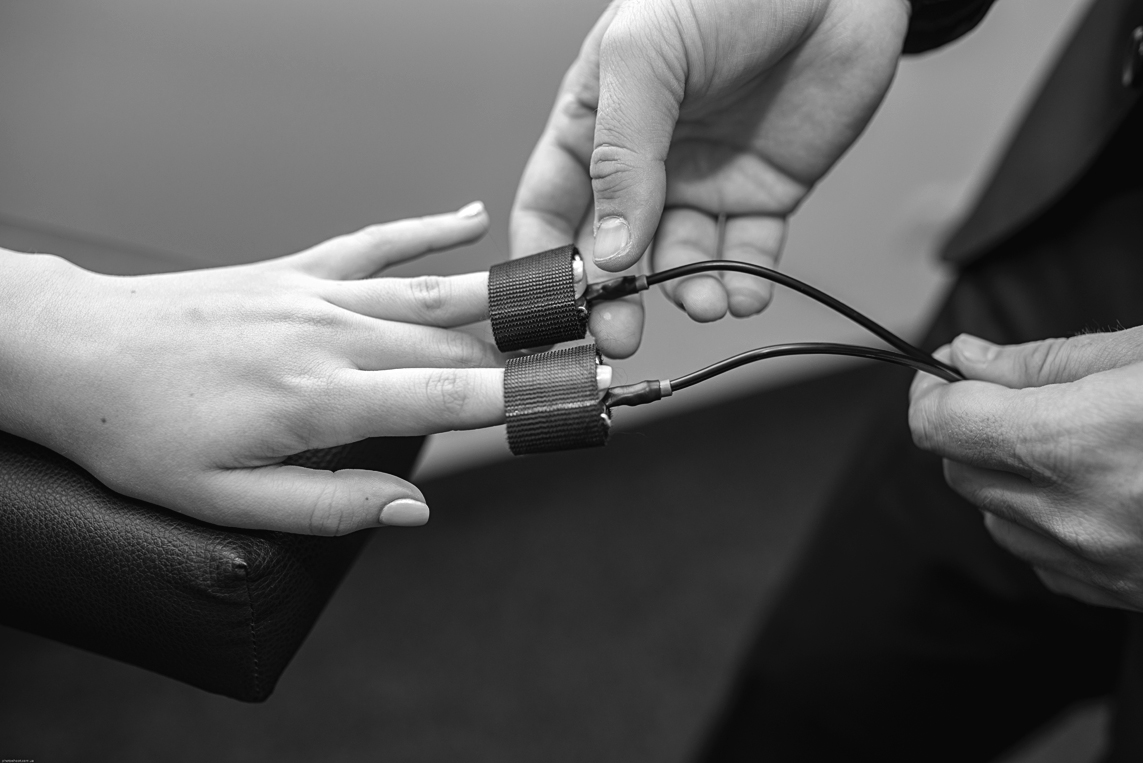
Interestingly, differences between women and men in studies on this topic may be exaggerated because when participants report their sexual behavior, they might over- or under-report in order to fit what they believe is expected of their sex/gender. In one study of predominately White participants, researchers tried to account for this phenomenon by asking randomly assigned participants to answer questions under one of three different conditions (Alexander & Fisher, 2003). In the bogus pipeline condition, participants were hooked up to what they thought was a lie detector and were told that the machine could identify lies, even if they wrote down their responses. (The device actually did nothing.) They were then left alone to answer the questions in private. In the anonymous condition, participants completed the survey privately and put their anonymous surveys in a locked box. In the exposure threat condition, they were told they would have to hand in their completed survey to a peer who would be able to see their responses.
When participants believe they’re answering questions about their sexual history while connected to a lie detector, they give responses that differ from those of participants who aren’t connected. Why would thinking you’re connected to a lie detector result in different reporting patterns than when completing an anonymous survey in which your responses can’t be attributed to you personally?
Do you suppose the different conditions produced different results? Indeed, they did. For example, women reported more masturbation and use of pornography when they thought they were hooked up to a lie detector. In fact, their answers didn’t differ from men’s in that condition (Alexander & Fisher, 2003). Also, women reported having had more sexual partners when they thought they were connected to a lie detector than they did in the exposure threat condition (4.4 vs. 2.6). Men’s results didn’t change as much, and in fact, in the bogus pipeline condition, women actually reported having had somewhat more sexual partners than did men (men reported 4), although that difference wasn’t statistically significant. In the exposure threat condition, women reported having had fewer sexual partners than men did (women: 2.6; men: 3.7). These results suggest that, particularly for research on sexual behavior, how researchers ask questions matters. As this study shows, women may be having much more sex than researchers might have thought; women have just been socialized not to admit it. Furthermore, the results of this study have been replicated in other research (Fisher, 2013). Moreover, the same approach has been used to show that when men think they’re being monitored by a lie detector, they report the use of illegal sexual assault strategies 6.5 times more often than under standard testing conditions (Strang & Peterson, 2016).
Aggression
Earlier in this chapter, we reviewed how differences in the use of indirect aggression between women and men vary by age. There are also theories about men being more likely than women to use physical aggression. One meta-analytic review showed moderate sex/gender differences in physical aggression based on self-report data (d = 0.59) and observational studies (d = 0.53). Peer-report data reflected a larger difference (d = 0.80—although this still represents a 69% overlap; Archer, 2004). Men also showed greater verbal aggression, but the effects were smaller (e.g., d = 0.19 for self-reports). Researchers noted that while the majority of women and men were similar in level of aggression, some men were highly aggressive, and their data influenced the overall results. Therefore, while there is some support for men showing more physical aggression, much of this can be accounted for by a small number of particularly aggressive men.
Self-Esteem
There is a common stereotype that young women lose self-esteem as they reach adolescence. This is the basis of books such as Reviving Ophelia (Pipher, 2005), which point to a crisis in young women’s self-esteem. However, the data don’t support such extreme assumptions. Results from one meta-analysis indicate that men do have slightly higher global self-esteem than women (d = 0.21; Kling, Hyde, Showers, & Buswell, 1999). Moreover, they indicate that differences in self-esteem are small in pre-adolescents (d = 0.16), grow in middle school (d= 0.22) and high school (d = 0.33), and decrease again in college and through adulthood (d = .18 in college, d = 0.10 between ages 23 and 59, and d = −0.03 for participants over 60). However, even at the height of the difference, the effects are small, and more than 85% of women and men overlapped in their scores. This meta-analysis also showed that differences were not seen in research samples of predominantly Black participants.
In another meta-analysis, researchers exploring domain-specific self-esteem found a more nuanced relationship (Gentile et al., 2009). For example, men scored higher than women in appearance-based self-esteem (d = 0.35) and athletic self-esteem (d = 0.41)—although this indicates around a 84% overlap. Women, however, scored higher than men in moral/ethical self-esteem (d = −0.38), and there were no differences in family, social acceptance, or academic self-esteem.
Finally, when people hear that women have lower self-esteem than men, the assumption is that women should raise their self-esteem to match that of men. However, overly high self-esteem can be related to poor adjustment. In one study, college students with higher self-esteem reported drinking more alcohol than those with lower self-esteem (Sharp & Getz, 1996). Negative consequences are especially likely when people with high but unstable self-esteem feel threatened. Then they may engage in negative behaviors such as bullying, sexual experimentation, or drug or alcohol use in order to protect their self-esteem (Baumeister, Campbell, Krueger, & Vohs, 2003; Stake & Eisele, 2010). Therefore, even if adolescent girls have somewhat lower self-esteem than boys, this may actually not be a crisis at all.
Helping and Morality
If you picture someone you consider to be a hero, what do you see? Chances are you picture a man, perhaps pulling someone out of a burning building. Given this likelihood, one might think that men are generally more helpful than women. However, as discussed previously, one study showed that men were only more likely to help when they were being observed and when they were helping women (Eagly & Crowly, 1986). The type of help can also matter. Other research has shown that women were more likely than men to provide emotional support, and that both women and men would rather turn to a woman than a man for emotional support (Eagly, 2009). Women are even more likely than men to donate a kidney to a relative (58% of donors are women), and many report seeing such a donation as part of their family obligation (Eagly, 2009). So both women and men have the potential for pro-social behavior, but rates are related to context, not just sex/gender.
Both women and men engage in pro-social behavior, but context matters in terms of who is more likely to help and when.
Some scholars have argued that women and men have fundamentally different senses of morality. In her book In a Different Voice, psychologist Carol Gilligan (1982) proposed that women base their judgments of morality on an ethic of care, thinking about how their actions will affect interpersonal relationships and the well-being of others. The ethic of care theoretically stands in contrast to men’s ethic of justice, in which moral judgments are based on abstract principles of right and wrong. Gilligan’s view, a perspective most aligned with cultural feminism, is that women and men are fundamentally different in their sense of morality. She argued that previous research had ignored women’s care orientation and had considered the highest levels of morality as those based on a justice orientation. While her work is valued for pointing out that caring for others is an important aspect of morality, the data don’t suggest that women and men differ much in their moral reasoning. In fact, studies have shown that both women and men use reasoning based on both justice and care when making moral judgments (Rothbart, Hanley, & Albert, 1986; Jaffee & Hyde, 2000).
your turn
Would a woman or a man be more likely to rescue a baby from a burning building? Who would be more likely to help an elderly person cross the street? Who would be more likely to comfort someone who’s upset? As you consider these questions, do your answers change depending on the kind of help being given and to whom? If so, why might that be?
Interests
Although sex/gender differences in intelligence and personality are small, differences in interests are larger. A popular way of classifying interests involves indicating whether a person is interested in people or things. One meta-analysis (Su, Rounds, & Armstrong, 2009) showed a large effect in which women were more interested in people and men were more interested in things (d = 0.93—a statistically large effect, but one that still represents over a 63% overlap in scores). For example, women were more interested in social tasks such as being involved in social causes, teaching, and helping others. Men were more interested in hands-on, practical tasks, including building and fixing things and working on cars. These interest differences tended to be stable across the life span starting around age 12 and have been found in research spanning many decades.
In sum, while there are some generally small differences in personality and behavior, most have a “now you see them; now you don’t” quality. In other words, they’re more likely to appear in situations where sex/gender stereotypes are activated. In everyday life, it’s hard to disentangle the cause of a sex/gender difference because we live in a world where gender stereotypes are constantly activated. Therefore, even a small difference can become magnified as people internalize gender stereotypes and act in ways to confirm them.