CHAPTER 1 Sociology and the Real World
A shiny black SUV pulls up in front of your home or workplace and suddenly you are under the spell of the Fab Five: Antoni, Bobby, Jonathan, Karamo, and Tan—a quintet of gay men skilled in culture, fashion, grooming, design, and cuisine. Their mission each week: to save a different sad sack from themselves. The Fab Five are there to get the nominees a much-needed pedicure, tweak their pasta salad recipe, redecorate their living room, take them to trapeze class, get them into a slimming pair of jeans, shave off that stubbly beard, perfect their “smoky eye,” and teach them how to overcome their fears or be a better parent. They have great chemistry and always succeed, raising champagne glasses in their hip loft at the end of each episode.
Each week, two contestants, one man and one woman, total strangers and completely naked, are dropped deep into the wilderness with almost no supplies to see if they can survive together for twenty-one days. In journeys across six continents, in such places as the Australian outback, the jungles of Belize, and the savannah of Namibia, these pairs of contestants are tested both physically and mentally, forced to discover what they’re truly made of. Will they “tap out” and ask to leave the competition early, or will they have the fortitude to prevail through whatever hardships their journey delivers? And perhaps most importantly, can these strangers forge the working partnership so essential to the act of survival, or will pride, fear, or some other human weakness undermine their success?
A group of single women and a group of single men live separately in luxurious, dormitory-style quarters, and interact only with a wall of opaque glass between them. All the women get a chance to meet all the men, and then they have ten days to choose a mate and agree to an engagement—all without ever seeing one another in person. Once engaged, they are finally allowed to see each other and must work together quickly to prepare for a wedding in three weeks. Some get right down to business (“Please put the snake back in the cage!” says Diamond, early in the process), while others worry about moving too fast (“It’s only been five days,” says Lauren, who has just gotten engaged. “I’ve had meals in my refrigerator longer than that. It’s crazy!”). The couples fly off to the Riviera Maya in Mexico, return to meet their future in-laws, and plan the wedding together, all in quick succession. After thirty-eight days, they arrive at the altar to reveal to their assembled family and friends whether they will go through with the planned nuptials. Only two couples ultimately take the plunge.
Is any of this real? Yes—kind of. It’s “reality television,” specifically Netflix’s Queer Eye, Discovery’s Naked and Afraid, and Netflix’s Love Is Blind. And there’s a lot more where those came from. Dancing with the Stars, The Voice, Top Chef, The Bachelor, and Real Housewives—as well as the show that started it all in 1992, MTV’s The Real World—are just a few of the more popular shows.
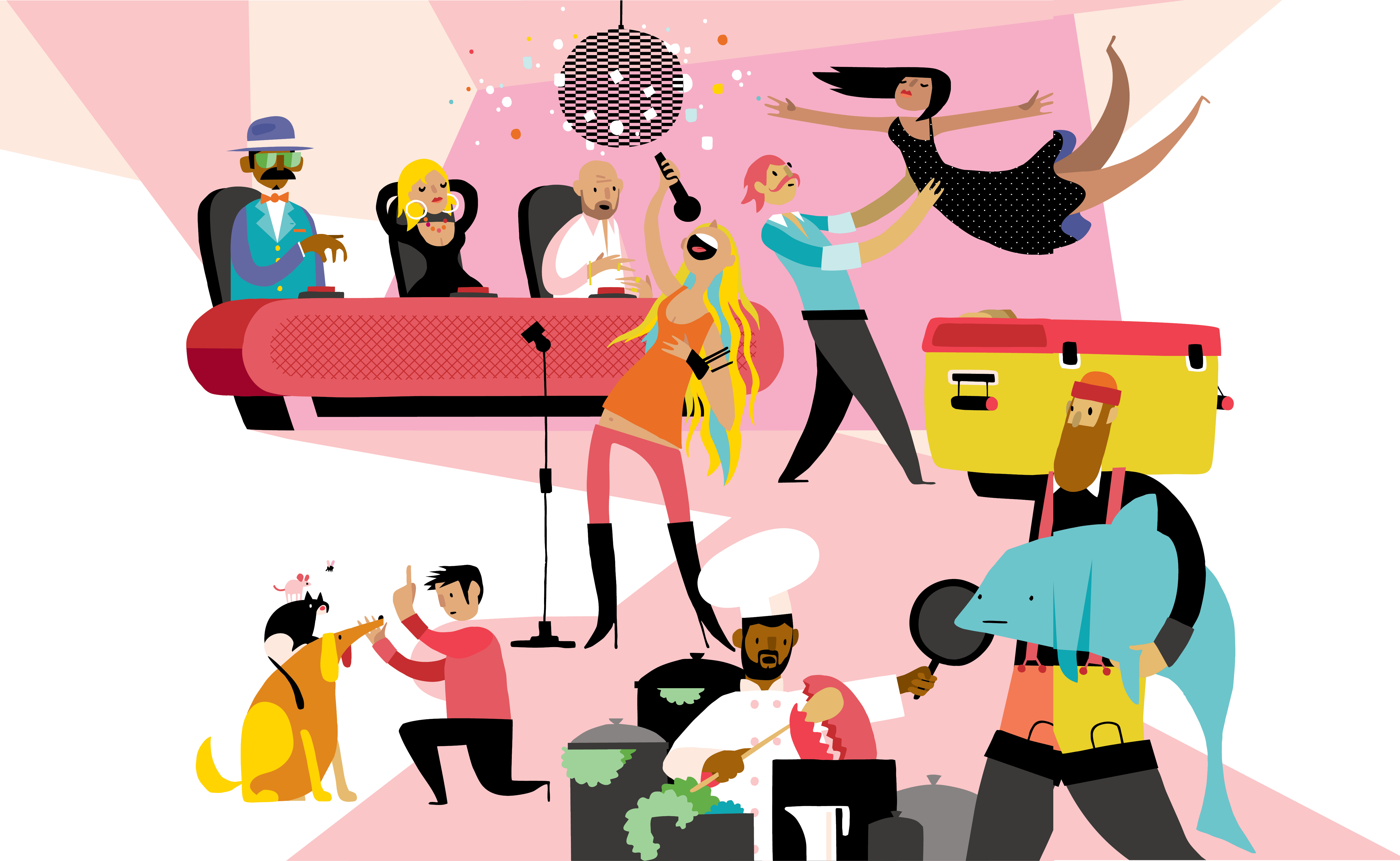
Some of the shows claim to follow real people through their everyday lives or on the job, while others impose bizarre conditions on participants, subject them to stylized competitions and gross-out stunts, or make their dreams come true. Millions tune in every week to see real people eat bugs, get fired, suffer romantic rejection, reveal their poor parenting, get branded as fat or ugly, cry over their misfortunes, or get voted out of the house or off the island—mortifying themselves on camera for the possibility of success, money, or fame.
Why are we so interested in these people? Because people are interesting! Because we are people, too. No matter how different we are from the folks on reality TV, we are part of the same society, and for that reason we are curious about how they live. We compare their lives with ours, wonder how common or unusual they or we are, and marvel that we are all part of the same, real world. We, too, may want to win competitions, date an attractive person, find a high-profile job, feel pretty or handsome, be part of an exclusive group, or have a lovely home and family. We may even want to be on a reality show ourselves.
How to Read This Chapter
You are embarking on a fascinating journey as you learn to see, think, and analyze yourself and the world around you from a sociological perspective. The tools presented here will help you build a foundation for new knowledge and insights into social life.
We will also share the story of the historical and intellectual development of the discipline of sociology. We want to show you how the ideas that shape sociology are linked and introduce you to the interesting men and women who came up with those ideas. Too often, theorists seem to be talking heads, icons of social analysis who experience neither life-altering calamities nor shifting professional fortunes. We want to overcome that perception. We believe that our individual experiences and historical contexts shape our thoughts and the professional worlds we choose to join. This is as true for Karl Marx as it is for Kerry Ferris, as true for Jane Addams as it is for Jill Stein—it’s true for all of us; your own experiences and cultural and historical contexts will shape your ideas and work. In fact, someday, someone may write a chapter about you!
As authors and teachers, we encourage you to develop some basic study techniques that will assist you in your success as a new student to sociology (and perhaps beyond). You may want to highlight portions of the text or take notes while you read. Mark passages you don’t understand, or keep a list of questions about any aspect of the chapter. Don’t hesitate to discuss those questions with your instructor or fellow students; those dialogues can be one of the most gratifying parts of the learning process. Finally, we recommend that you attend class regularly—whether you’re in a face-to-face classroom or online—as there is really no substitute for the shared experience of learning sociology with others.
We are excited to join you on this journey of discovery. Though you may know a lot about social life already, we hope to introduce you to even more—about yourself and the world around you—and to provide valuable tools for the future. We wouldn’t want you to miss a thing. So here is where we start.