LYNDA BARRYTHE SANCTUARY OF SCHOOL
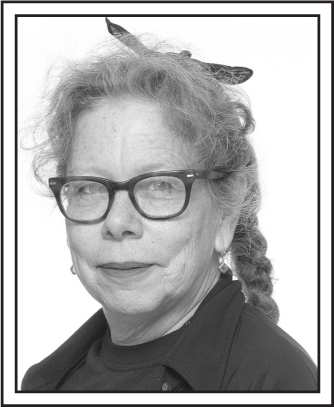
LYNDA BARRY (b. 1956) is a cartoonist, novelist, and teacher of writing. She was born in Wisconsin but spent most of her adolescence in Seattle, where she supported herself at age 16 as a janitor. As a student at Evergreen State College in Olympia, Washington, Barry began drawing Ernie Pook’s Comeek, the comic strip for which she is perhaps best known. Her first novel, Cruddy (2000), was about a teenager and her troubled family life “in the cruddiest part of town.” In “The Sanctuary of School,” which first appeared in the Education section of the New York Times in January 1992, Barry tells how she first discovered the therapeutic value of art—and of good teachers. This narrative about her early school days also carries a pointed message for those who would cut costs in the public school system by eliminating art from the curriculum. In 2019, Barry was the recipient of a MacArthur Fellows “Genius” Grant.

1I WAS SEVEN YEARS OLD the first time I snuck out of the house in the dark. It was winter and my parents had been fighting all night. They were short on money and long on relatives who kept “temporarily” moving into our house because they had nowhere else to go.
2My brother and I were used to giving up our bedroom. We slept on the couch, something we actually liked because it put us that much closer to the light of our lives, our television.
3At night when everyone was asleep, we lay on our pillows watching it with the sound off. We watched Steve Allen’s1 mouth moving. We watched Johnny Carson’s2 mouth moving. We watched movies filled with gangsters shooting machine guns into packed rooms, dying soldiers hurling a last grenade, and beautiful women crying at windows. Then the sign-off finally came and we tried to sleep.
4The morning I snuck out, I woke up filled with a panic about needing to get to school. The sun wasn’t quite up yet but my anxiety was so fierce that I just got dressed, walked quietly across the kitchen and let myself out the back door.
5It was quiet outside. Stars were still out. Nothing moved and no one was in the street. It was as if someone had turned the sound off on the world.
6I walked the alley, breaking thin ice over the puddles with my shoes. I didn’t know why I was walking to school in the dark. I didn’t think about it. All I knew was a feeling of panic, like the panic that strikes kids when they realize they are lost.
7That feeling eased the moment I turned the corner and saw the dark outline of my school at the top of the hill. My school was made up of about 15 nondescript portable classrooms set down on a fenced concrete lot in a rundown Seattle neighborhood, but it had the most beautiful view of the Cascade Mountains. You could see them from anywhere on the playfield and you could see them from the windows of my classroom—Room 2.
8I walked over to the monkey bars and hooked my arms around the cold metal. I stood for a long time just looking across Rainier Valley. The sky was beginning to whiten and I could hear a few birds.
9In a perfect world my absence at home would not have gone unnoticed. I would have had two parents in a panic to locate me, instead of two parents in a panic to locate an answer to the hard question of survival during a deep financial and emotional crisis.
10But in an overcrowded and unhappy home, it’s incredibly easy for any child to slip away. The high levels of frustration, depression, and anger in my house made my brother and me invisible. We were children with the sound turned off. And for us, as for the steadily increasing number of neglected children in this country, the only place where we could count on being noticed was at school.
11“Hey there, young lady. Did you forget to go home last night?” It was Mr. Gunderson, our janitor, whom we all loved. He was nice and he was funny and he was old with white hair, thick glasses and an unbelievable number of keys. I could hear them jingling as he walked across the playfield. I felt incredibly happy to see him.
12He let me push his wheeled garbage can between the different portables as he unlocked each room. He let me turn on the lights and raise the window shades and I saw my school slowly come to life. I saw Mrs. Holman, our school secretary, walk into the office without her orange lipstick on yet. She waved.
13I saw the fifth-grade teacher, Mr. Cunningham, walking under the breezeway eating a hard roll. He waved.
14And I saw my teacher, Mrs. Claire LeSane, walking toward us in a red coat and calling my name in a very happy and surprised way, and suddenly my throat got tight and my eyes stung and I ran toward her crying. It was something that surprised us both.
15It’s only thinking about it now, 28 years later, that I realize I was crying from relief. I was with my teacher, and in a while I was going to sit at my desk, with my crayons and pencils and books and classmates all around me, and for the next six hours I was going to enjoy a thoroughly secure, warm and stable world. It was a world I absolutely relied on. Without it, I don’t know where I would have gone that morning.
16Mrs. LeSane asked me what was wrong and when I said “Nothing,” she seemingly left it at that. But she asked me if I would carry her purse for her, an honor above all honors, and she asked if I wanted to come into Room 2 early and paint.
17She believed in the natural healing power of painting and drawing for troubled children. In the back of her room there was always a drawing table and an easel with plenty of supplies, and sometimes during the day she would come up to you for what seemed like no good reason and quietly ask if you wanted to go to the back table and “make some pictures for Mrs. LeSane.” We all had a chance at it—to sit apart from the class for a while to paint, draw and silently work out impossible problems on 11 × 17 sheets of newsprint.
18Drawing came to mean everything to me. At the back table in Room 2, I learned to build myself a life preserver that I could carry into my home.
When you tell a story, it should have a point (p. 133).
19We all know that a good education system saves lives, but the people of this country are still told that cutting the budget for public schools is necessary, that poor salaries for teachers are all we can manage and that art, music and all creative activities must be the first to go when times are lean.
20Before- and after-school programs are cut and we are told that public schools are not made for baby-sitting children. If parents are neglectful temporarily or permanently, for whatever reason, it’s certainly sad, but their unlucky children must fend for themselves. Or slip through the cracks. Or wander in a dark night alone.
21We are told in a thousand ways that not only are public schools not important, but that the children who attend them, the children who need them most, are not important either. We leave them to learn from the blind eye of a television, or to the mercy of “a thousand points of light”3 that can be as far away as stars.
22I was lucky. I had Mrs. LeSane. I had Mr. Gunderson. I had an abundance of art supplies. And I had a particular brand of neglect in my home that allowed me to slip away and get to them. But what about the rest of the kids who weren’t as lucky? What happened to them?
23By the time the bell rang that morning I had finished my drawing and Mrs. LeSane pinned it up on the special bulletin board she reserved for drawings from the back table. It was the same picture I always drew—a sun in the corner of a blue sky over a nice house with flowers all around it.
24Mrs. LeSane asked us to please stand, face the flag, place our right hands over our hearts and say the Pledge of Allegiance. Children across the country do it faithfully. I wonder now when the country will face its children and say a pledge right back.
FOR DISCUSSION
- As a seven-year-old leaving home in the dark in a fit of panic and anxiety, why did young Lynda Barry instinctively head for her school?
- Why does Barry say, “We were children with the sound turned off” (10)? Who fails to hear them?
- Barry always drew the same picture when she sat at the art table in the back of Mrs. LeSane’s classroom. What’s the significance of that picture? Explain.
- Why does Barry refer to the Pledge of Allegiance in the last paragraph of her essay?
STRATEGIES AND STRUCTURES
- Why does Barry begin her NARRATIVE with an account of watching television with her brother? Where else does she refer to watching TV? Why?
- Most of Barry’s narrative takes place at her school, which she pictures in some detail. Which of these physical details do you find most revealing, and how do they help to present the place as a “sanctuary”?
- Point out several places in her narrative where Barry characterizes Mrs. LeSane, Mr. Gunderson, and others through their gestures and bits of DIALOGUE. What do these small acts and brief words reveal about the people Barry is portraying?
- What does young Barry’s sense of panic and anxiety contribute to the PLOT of her narrative?
- Where and how does Barry’s narrative morph into an ARGUMENT about public schools in America? What’s the point of that argument, and where does she state it most directly?
WORDS AND FIGURES OF SPEECH
- Is Barry speaking literally or metaphorically (or both) when she refers to children who “wander in a dark night alone” (20)? How and how well does she pave the way for this statement at the end of her narrative?
- What does Barry mean when she says that the “points of light” in a child’s life can be “as far away as stars” (21)? How and where does the idea of “light” take on different implications during the course of her narrative?
- Barry characterizes her old school as a “sanctuary” instead of, for example, a “haven” or “safehouse.” Why do you think she chooses this term? Is it apt? Why or why not?
- Why does Barry refer to the “blind eye” of television (21)?
FOR WRITING
- In a few paragraphs, tell about a time when you found school to be a sanctuary, or the opposite. Be sure to DESCRIBE the physical place and what people said and did there.
- Write a narrative essay in which you use your experience at school to make a point about the importance of some aspect of the school curriculum that you fear may be changed or lost. If possible, expand your argument to include schools in general, not just your own.
Glossary
- Dialogue
- Direct speech, especially between two or more speakers in a NARRATIVE, quoted word for word.
- Plot
- The sequence of events in a story arranged in such a way as to have a beginning, middle, and end.
- Argument
- An argument makes a case or proves a point. It seeks to convince someone to act in a certain way or to believe in the truth or validity of a statement or CLAIM. According to traditional definitions of argumentation and persuasion, a writer can convince a reader in one of three ways: by appealing to reason, by appealing to the reader’s emotions, or by appealing to the reader’s sense of ethics.
- Narration
- One of the four PATTERNS OF WRITING. An account of actions and events that happen to someone or something in a particular place and time. Because narration is essentially storytelling, it is often used in fiction; however, it is also an important element in almost all writing and speaking. The opening of Lincoln’s Gettysburg Address, for example, is in the narrative mode: “Fourscore and seven years ago our fathers brought forth on this continent a new nation . . .”
- Description
- One of four PATTERNS. Description appeals to the senses: it tells how something looks, feels, sounds, smells, or tastes. An objective description focuses on verifiable facts and the observable physical details of a subject, whereas a subjective description conveys the writer’s thoughts and feelings about a subject, in addition to its physical characteristics. See Chapter 5 for further discussion of the descriptive mode.
- Dialogue
- Direct speech, especially between two or more speakers in a NARRATIVE, quoted word for word.
- Narration
- One of the four PATTERNS OF WRITING. An account of actions and events that happen to someone or something in a particular place and time. Because narration is essentially storytelling, it is often used in fiction; however, it is also an important element in almost all writing and speaking. The opening of Lincoln’s Gettysburg Address, for example, is in the narrative mode: “Fourscore and seven years ago our fathers brought forth on this continent a new nation . . .”
Endnotes
- American actor and musician (1921–2000) best known for his work on late-night television.Return to reference 1
- American comedian and television personality (1924–2005) who hosted The Tonight Show for thirty years.Return to reference 2
- In his inaugural address on January 20, 1989, President George H. W. Bush used this phrase to refer to “all the community organizations that are spread like stars throughout the Nation, doing good.”Return to reference 3