LIFE ON EARTH
The human story goes back to the origins of our universe, which scientists now think happened in the Big Bang some 13.8 billion years ago. In this mysterious moment, time, space, and energy somehow began. The universe started out hot (trillions of degrees), dense, and smaller than an atom. Ever since that initial moment, the universe has been cooling and expanding. It reached the immense size of a galaxy in a fraction of a second. Protons, neutrons, and electrons—the building blocks of all matter, including our bodies—appeared in the first few minutes. Within the first 300,000 years after the Big Bang, most of these building blocks had formed into atoms of hydrogen and helium. Gravity collected these atoms into stars, and the stars into galaxies such as the Milky Way, which includes our sun and billions of neighboring stars.
The sun and our solar system, Earth included, took shape about 4.6 billion years ago. Then, in a process for which no consensus explanation yet exists, life emerged on Earth about 3.8 billion years ago, perhaps in the hot thermal vents under the oceans. For most of its career, life on Earth was dull, lived by single-celled organisms sloshing about in the seas. Not until about 1.2 billion years ago were there multi-celled organisms, and no sizeable animals until about 600 million years ago. Living things climbed onto dry land to stay some 440 million years ago, and by 240 million years ago dinosaurs and small mammals walked Earth. New forms of life were appearing faster now, because life on land evolved in response to more variable conditions than in the sea.
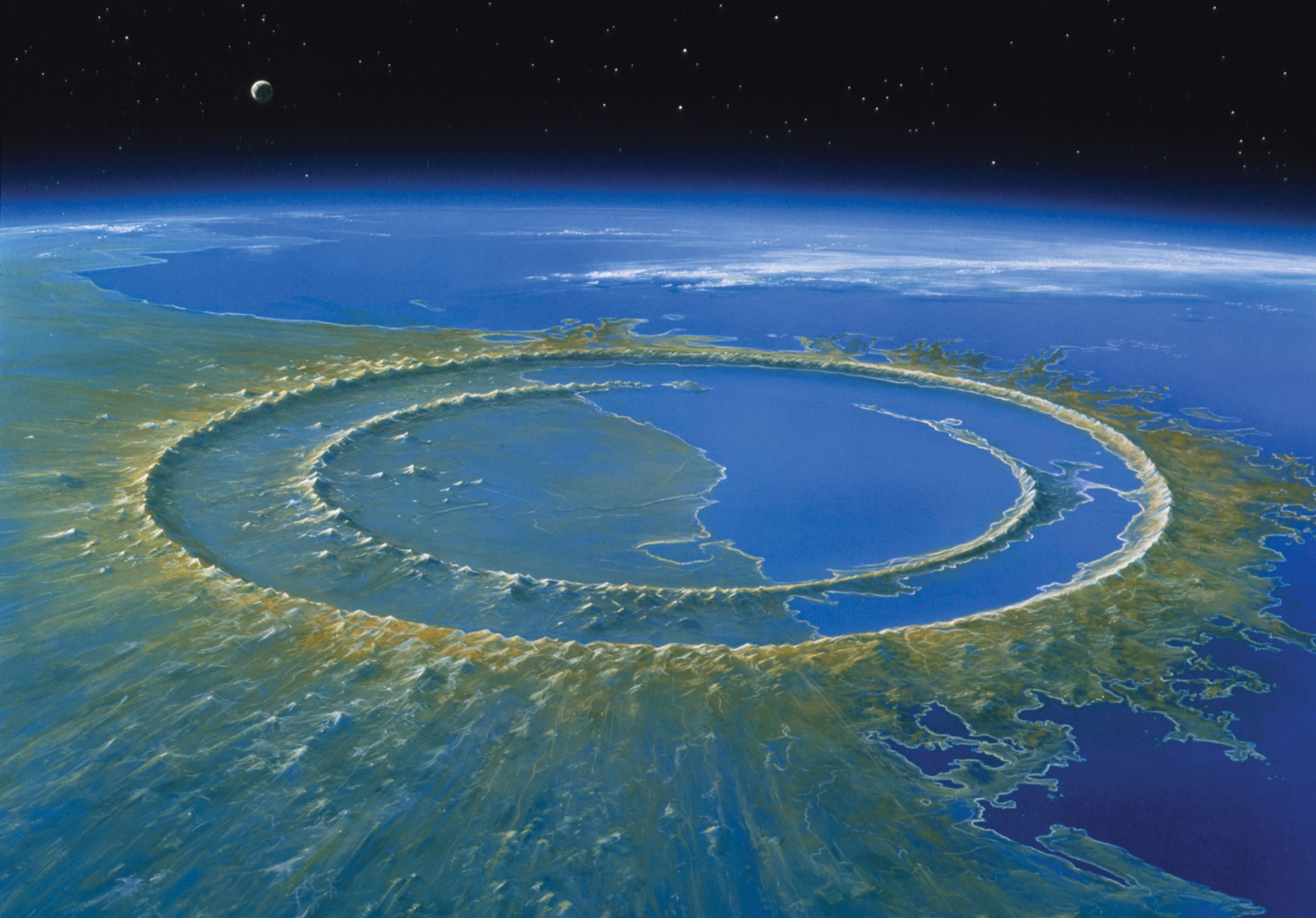
Life anywhere on Earth was risky business. Every now and then an asteroid, meteorite, or something else hurtling through space smashed into the planet. Volcanoes rumbled and belched forth fire and toxic gases. The continents slid here and there, slowly crunching into one another, opening and closing seas and raising mountain chains. As a result of these and other hazards, large proportions of life on Earth went extinct on five occasions. Whenever this happened, biological evolution took new directions. On the last such occasion, when an asteroid slammed into the northwestern Yucatán Peninsula in Mexico about 66 million years ago, the shock from its impact opened a crater the size of Belgium or Maryland. It ignited fires that consumed much of the planet’s vegetation, and it raised a veil of dust that blocked sunlight and chilled the Earth. All land animals bigger than a medium-sized dog went extinct, including all dinosaurs and most other reptiles. The meek inherited the Earth. Among the meek were small mammals, such as the ancient tree shrew that is our ancestor.
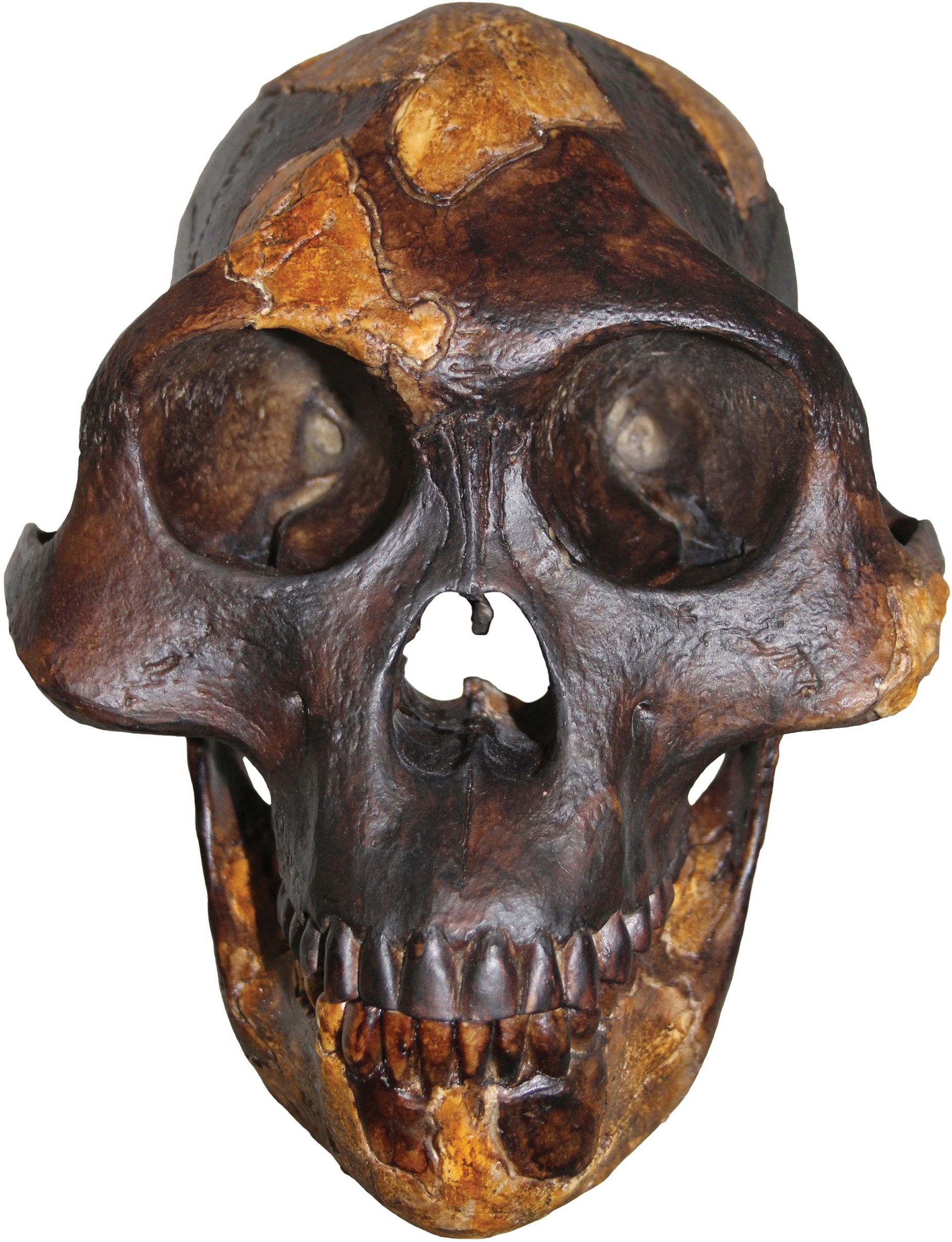
Within a few million years, there were many new kinds of mammals, creatures that couldn’t have gotten their start had dinosaurs still trodden the Earth. The first primates (the extended family of primates comprises all monkeys and apes, including humans) soon emerged. By 35 million years ago, creatures that looked like modern monkeys had evolved, and some 15 million years later, ancient apes appeared. From genetic evidence, it now seems that the last common ancestor of humans and chimpanzees lived around 7 to 5 million years ago. Although we still share 98.4 percent of our genetic material with chimps, even 1.6 percent can make quite a difference. The chimpanzee ancestors stayed in forest habitats and eventually evolved into the two modern chimpanzee species. Human ancestors adapted to changing climate and ecology by fleeing the forest for what was slowly becoming the East African savanna. This is now a land of plentiful grass, scarce water, and only occasional trees; but 5 million years ago, it was a mosaic of forest, shrubs, and grassland.
Glossary
- Big Bang
- The origin of our universe and the start of time, space, and energy. It occurred about 13.8 billion years ago, and the universe has been cooling and expanding since that time.