DOMESTICATION
While some Ice Age foragers and hunters of Eurasia made long strides toward settled life, others achieved something equally momentous: the partnership between humans and dogs. We call it the domestication of dogs; but if they could think about such things, dogs might see it as the domestication of humans. In any case, it was the first domestication in history, a mutual accommodation.
Domestication is a complicated subject, with two main parts: the domestication of animals and the domestication of plants. Together, they represent a major landmark in human history: the transition between finding one’s food and producing one’s food.
THE PROCESS OF DOMESTICATION
The domestication of plants involves the genetic modification of cultivated plants through human selection. People can cultivate (i.e., sow and harvest) wild plants. But when they consciously select certain seeds over others to sow in order to harvest more plants with desired characteristics, and do this consistently for many years, inducing genetic changes in the plants, the process is called domestication. In some cases of domestication, plants evolve that depend on humans for their propagation because their seeds don’t disperse on their own. A corn (maize) cob is one example, the result of genetic modification over thousands of years and now the world’s third most important food crop.
The domestication of animals also involves genetic modification through human actions. People can sometimes keep wild animals as pets, although it doesn’t work well for most adult animals. However, when people breed animals in order to achieve offspring with desired characteristics—for example, tameness or small size—and do this consistently across many generations, they are domesticating animals. They can create versions of animals that couldn’t survive without human aid, such as poodles.
DOGS: HUMANKIND’S FIRST FRIEND
Dogs evolved from wolves over thousands of years. Just how, when, and where this began is unclear. All specialists think it happened somewhere in Eurasia. The latest genetic evidence suggests it occurred between 32,000 and 20,000 years ago. Dog skulls show up at mammoth-hunter settlement sites by 15,000 years ago.
No matter how it began, the dog-human partnership was a mutually profitable one. Dogs provided people with hunting help, compensating for our poor sense of smell. Unlike wolves, dogs bark upon the approach of unexpected animals, which gave people warning against surprise attackers. And dogs offered loyal companionship, including furry warmth on cold Ice Age nights. In dire circumstances, people could also eat their dogs.
In return, people provided dogs with food (or hunting help, as the dogs might see it), and sometimes protection and shelter. Dogs with cooperative people got a more reliable food supply, including access to big game such as mammoths that dogs could scarcely hope to bag by themselves. Over time, a genetic selection occurred for dogs that worked well with humans—dogs that showed loyalty, accepted human commands, and could read human gestures and expressions. At the same time, a cultural selection took place for human groups that worked well with dogs, training, breeding, and protecting them, and eating them only in times of need. Some specialists suggest that the dog-human partnership worked so well, and began so early, that the canine-human team out-competed Neanderthals, who didn’t keep dogs. If so, “man’s best friend” was among the Neanderthals’ worst enemies.
By 14,000 years ago, people had grown fond enough of dogs to include them in human graves. Hunting peoples—especially those operating in forests, where sight is impeded and a good sense of smell is all the more useful—came to revere good hunting dogs. From Europe to Japan, some dogs were buried with full honors, which might consist of deer antlers, hunters’ tools, or colorful stones.
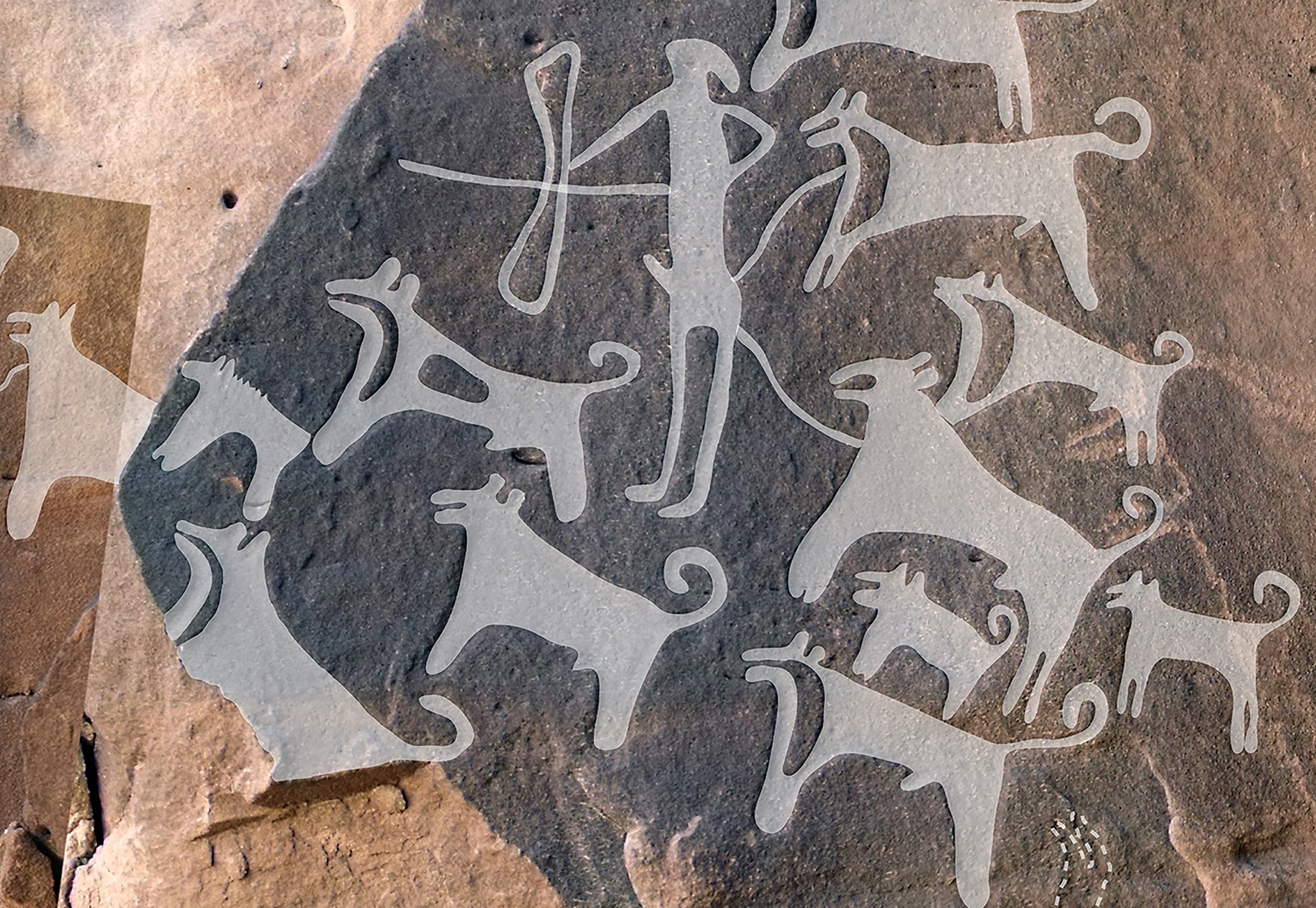
The dog-human team spread rapidly and became nearly universal. The Ainu, a people in Japan’s northernmost island of Hokkaido, even taught their dogs to catch salmon for them. When the first humans trekked into the Americas, their dogs trotted along too. Today, for every wolf on Earth, there are more than 3,000 dogs. For dogs, domestication has been a tremendous success. It’s been a success for humans too.
GRASSES
The domestication of dogs was the first of many. Dozens of animals and hundreds of plants proved susceptible to domestication. Almost all these domestications took place in remote times before written records, but archeologists can often tell the difference between wild and domesticated species from the remains of seeds and bones, and geneticists can tell wild and domestic species apart.
Like dogs, certain grasses—wild ancestors of cereals such as wheat, barley, rye, rice, and maize—in effect took advantage of human needs to become much more biologically successful, and much more prevalent over the face of the Earth. Those grasses with seeds that didn’t easily fly off the stalk were most likely to be gathered, stored, and then planted by humans. If we consider the process from the grasses’ point of view, humans became domesticated animals toiling away to increase the domain of grasses. Let’s look at some other crucial cases of domestication connected to the emergence of agriculture.
Glossary
- domestication
- The genetic modification of plants or animals through human selection or breeding. Domestication enables humans to produce food instead of searching for it.