One of the most important consequences of the discovery of the oceans and their winds, and the establishment of regular traffic linking the world’s shores, was a surge in biological globalization. This process reshuffled the continents’ flora and fauna, bringing both searing new epidemics and useful new food crops to many peoples. It changed the world’s demographic balance and altered political and economic fortunes. By and large, it eased life for millions in Eurasia and Africa, and ended it prematurely for millions in the Americas and Oceania. It provides an excellent example of the fact that in world history major consequences often flow from events in ways that no one intended or foresaw.
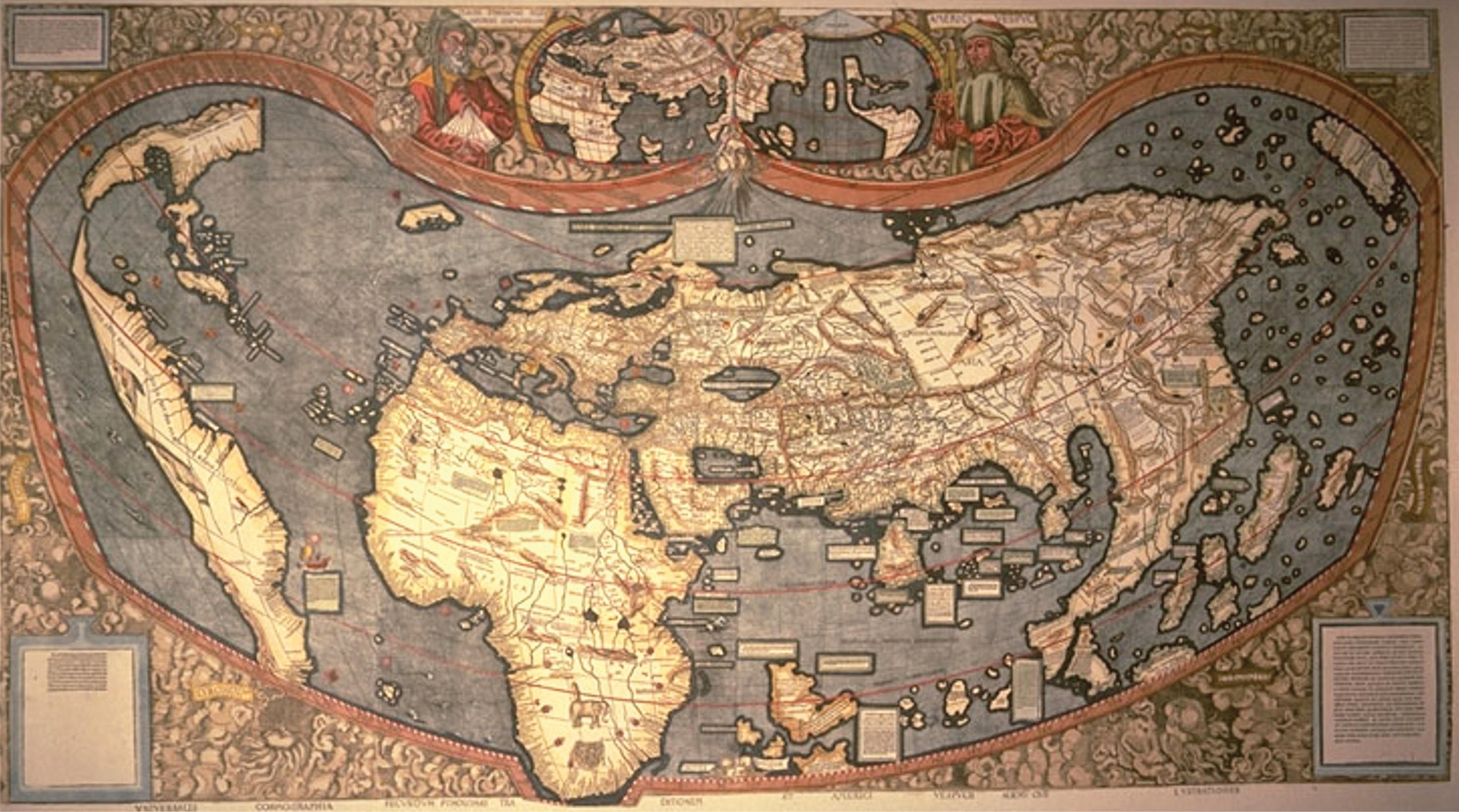
Waldseemüller World Map Created by German mapmaker Martin Waldseemüller in 1507, this map was the first to encompass the full Western Hemisphere. It was also the first—on the lower portion of South America—to mention the name “America.”
As earlier chapters have noted, over the centuries people moved plants, animals, and microbes around the world. Sometimes they did it on purpose, like the first settlers of North America who brought dogs with them, or the Polynesians who ferried crops and animals to uninhabited Pacific islands. Sometimes they did it by accident, like the anonymous people who brought the plague bacillus from northeast Africa to the Byzantine Empire in the time of Justinian. Biological exchange has long been an important part of history, with powerful effects on food supplies and disease burdens.
The pace of biological exchange sped up whenever web connections boosted trade and migration. It slowed down when webs withered. So, for example, when the Roman and Han Empires were at their height, and trans-Eurasian trade and travel reached a temporary peak along the Silk Roads, so did biological exchange. China acquired camels, donkeys, and grapes. Mediterranean peoples added cherries, apricots, and walnuts to their gardens and diets. When commerce quickened in the Arabian Sea after 800 CE, the exchange of crops among India, East Africa, and the Mediterranean picked up speed.
Biologically, as in other respects, the Americas had remained a realm apart from these Old World web exchanges. Aside from the import of the dog (from Siberia about 15,000 years ago) and the export of sweet potato (to Polynesia about 1,000 years ago), the American hemisphere before 1492 exchanged nothing consequential with the wider world. American plants and animals included many unknown elsewhere—tobacco, armadillos, and grizzly bears, for instance. Australia and New Zealand, even more isolated, each hosted flora and fauna—eucalyptus trees, kangaroos, and moas, for example—found nowhere else on Earth.
After the voyages of Columbus, mariners linked almost every nook and cranny of the humanly habitable Earth into a biologically interactive web. The world’s oceans no longer served to isolate ecosystems from one another. It became a world without biological borders, as plants, animals, and disease-causing pathogens scattered wherever ecological conditions permitted their spread. They went wherever people took them, and sometimes even further on their own.
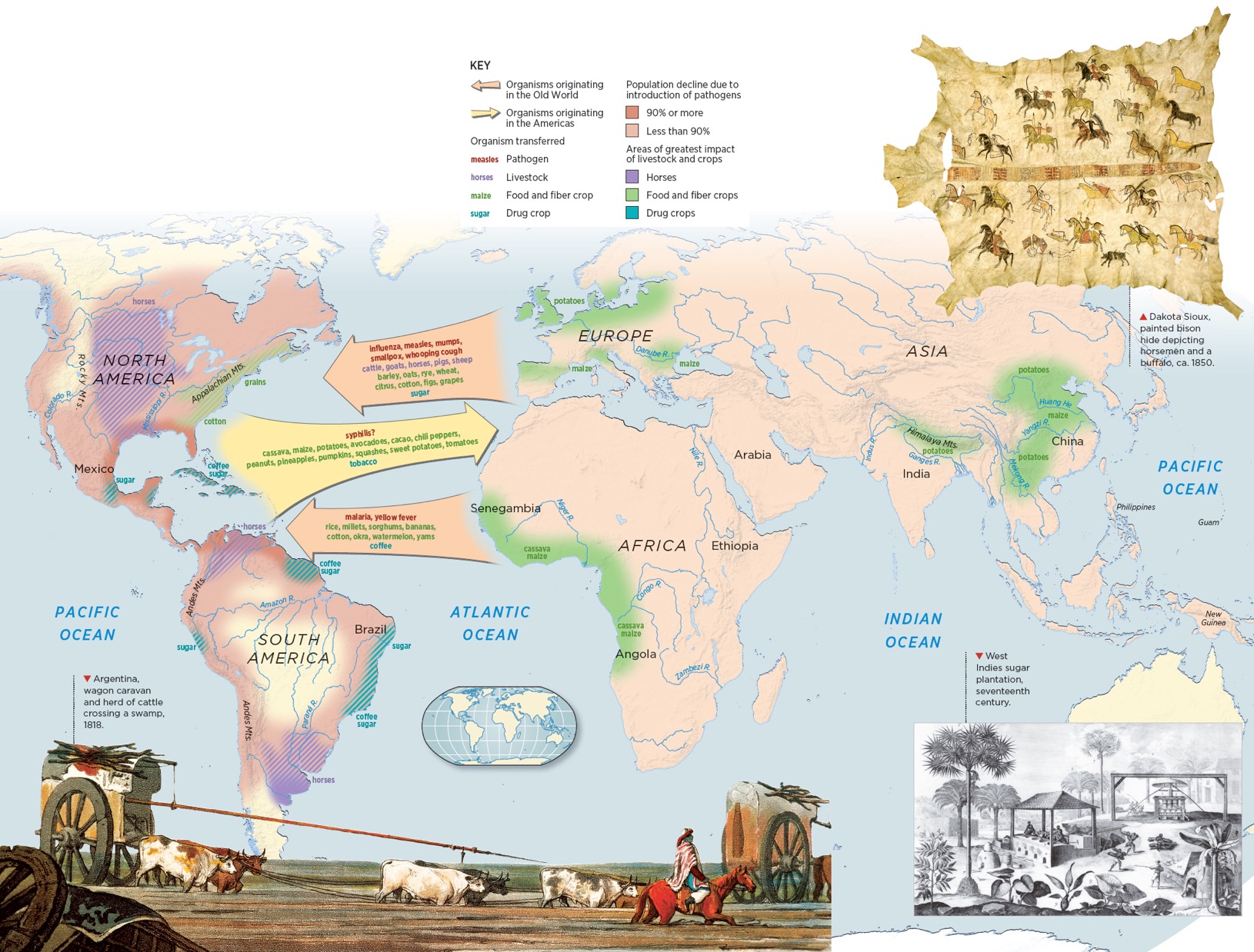
Columbus inaugurated regular exchanges across the Atlantic in 1492. On his second voyage, he deliberately brought a ship full of species new to the Americas and brought home to Spain some biological souvenirs. Over the next few centuries, his followers did the same in an ongoing process known to historians as the Columbian Exchange. The most conspicuous result was that Amerindians acquired hundreds of new plants and animals from Eurasia and Africa, as well as a dozen devastating diseases formerly unfamiliar to them. At first, between 1492 and 1700, the spread of diseases was the most important part of biological globalization, mainly because of their horrific impact on the peoples of the Americas.
DEADLY DISEASES
Upon arrival in the Americas, transatlantic travelers coughed and sneezed billions of deadly microbes into the air that Amerindians breathed. Among them were the pathogens (viruses, mainly) that cause smallpox, measles, mumps, whooping cough, and influenza. All of these had become fairly widespread in the Old World web. From West Africa to East Asia, they were usually endemic, childhood diseases, sometimes now called crowd diseases (discussed in Chapter 5), that killed huge numbers of small children. But in the Old World web, most adults were survivors, and either resistant or fully immune to most or all of these viral infections. In addition to the crowd diseases, the Columbian Exchange brought some lethal vector-borne African diseases to the Americas. The two deadliest were yellow fever and falciparum malaria (the worst form of malaria), both spread by mosquitos.
In the Americas in 1492, none of the 40 to 70 million people had any prior experience with, and therefore no acquired immunity to, any of these diseases. Their immune systems did not instantly “recognize” and neutralize the exotic pathogens. This vulnerability was compounded by the weakening of their nutrition and health by Atlantic European colonization—which, as we’ll see, included loss of farmlands, enslavement, and forced migration.
The cascade of unfamiliar pathogens brought suffering and death on the largest scale. Here is how one Amerindian, in Mexico, recalled it:
The illness was so dreadful that no one could walk or move. The sick were so utterly helpless that they could only lie on their beds like corpses, unable to move their limbs or even their heads. A great many died from this plague, and many others died of hunger. They would not get up to search for food, and everyone else was too sick to care for them, so they starved to death in their beds.
In many Amerindian communities, the social fabric dissolved under this onslaught. People lost all hope. Few wanted to bring children into a world such as theirs had become, dominated by sickness and pain, and few were healthy enough to do so.
The scale of epidemics and death was gigantic. Between 1492 and 1650, populations in the Americas fell by 70 to 95 percent in one of the two largest-scale demographic disasters in world history. (The other was the Black Death of the fourteenth century in the Old World web.) The sharp decline in population in the Americas had many consequences that we will meet repeatedly in the chapters ahead.
The Amerindians had little in the way of lethal infectious disease that transferred to Africa and Eurasia. The first migrants to arrive in North America had passed through northeastern Siberia and Alaska during an ice age. The brutal cold probably killed off some pathogens. And since they left Siberia when no animals but dogs had been domesticated, the human infections shared with herd animals (e.g., smallpox, measles, influenza) had not yet appeared. Thus the first Amerindians arrived relatively free from infection.
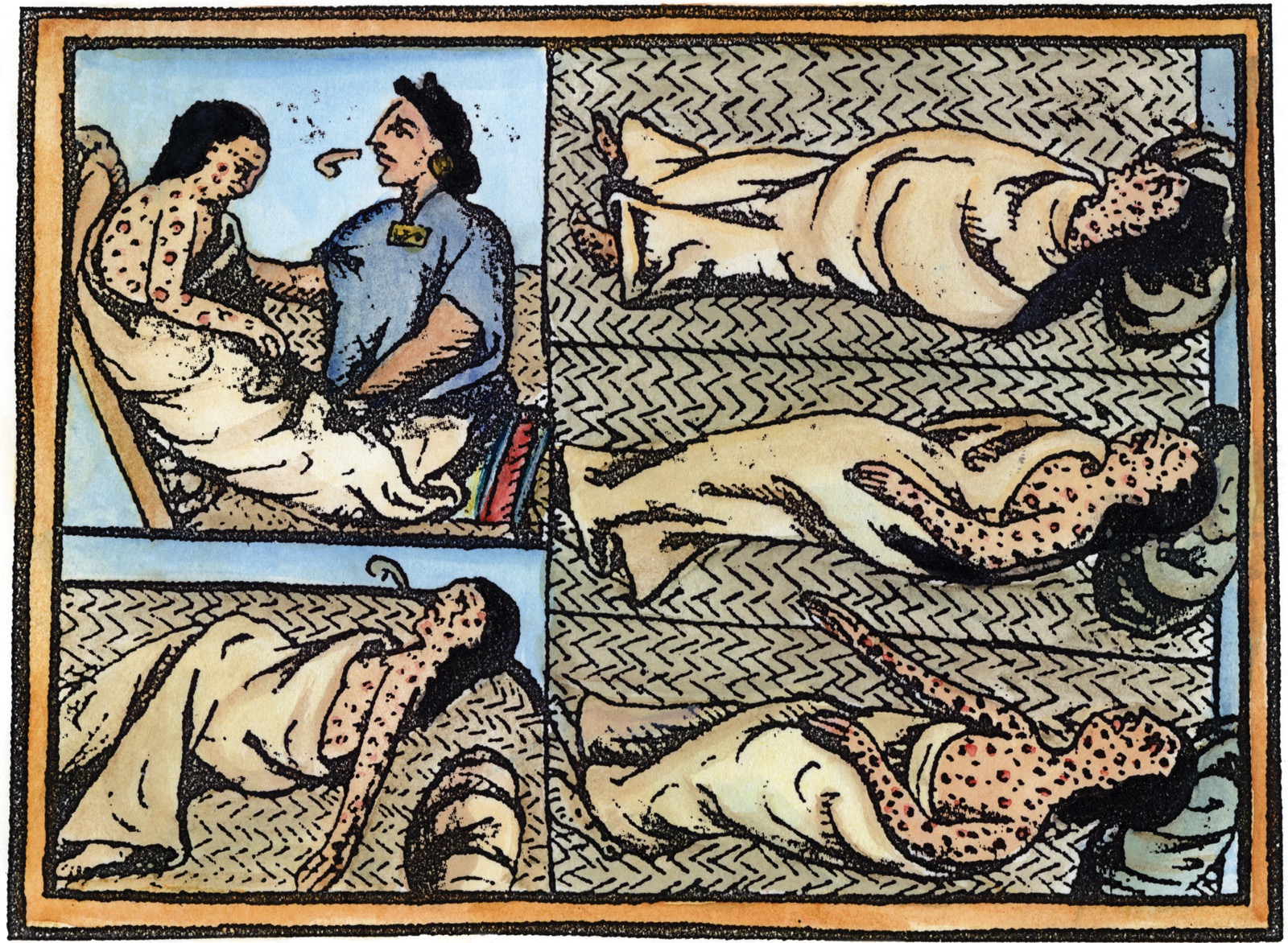
Epidemics in the Americas This illustration of Aztecs suffering and dying from the smallpox brought by Spanish colonists appears in the Florentine Codex, a Spanish missionary’s sixteenth-century treatise about the Spanish conquest of Mexico in 1519–1521.
Once in the Americas, Amerindians did not domesticate any herd animals other than alpacas and llamas, which seem, by chance, not to have hosted pathogens that evolved into agents of human disease. If Eurasia and Africa acquired any new diseases from the Americas at all (syphilis is the leading candidate, but the evidence is far from conclusive), they had trivial consequences. So, as regards disease, the Columbian Exchange was a notably one-sided affair.
The one-sidedness of the health consequences of the Columbian Exchange led Europeans who witnessed this devastation to see divine purpose at work. Francisco de Aguilar, who was present when Spaniards and their allies conquered the Aztec capital of Tenochtitlán, wrote: “When the Christians were exhausted from war, God saw fit to send the Indians smallpox, and there was a great pestilence in the city.” More than a century later in New England, John Winthrop, the first governor of the Massachusetts Bay Colony, saw the disaster as divine endorsement of the seizure of land: “For the natives, they are neere all dead of small Poxe, so as the Lord hathe cleared our title to what we possess.”
USEFUL ANIMALS
The Columbian Exchange was almost as one-sided with respect to domesticated animals. People transported turkeys and guinea pigs from the Americas to other continents, but nowhere did they become important. Alpacas and llamas never prospered outside their native Andes, although scattered populations do exist elsewhere. The Amerindians had little in the way of domesticated animals, and those they had did not travel well.
In contrast, Eurasian and African animal species flourished when transported to the Americas. Cattle, goats, sheep, pigs, and horses were the most important animal immigrants. They all found empty niche space in the Americas, especially cattle and horses on the vast grasslands of both North and South America. The new animals provided surviving Amerindians with new sources of hides, wool, and animal protein. Horses and oxen made plowing feasible in the Americas for the first time, allowed transportation through wheeled vehicles, and, together with donkeys and mules, provided a greater variety of pack animals. Animal-powered transport extended the potential of commerce and economic specialization, which over centuries raised overall production levels considerably.
In addition to economic growth, the new animals brought unwelcome frictions to the Americas. They munched and trampled crops, provoking quarrels between herders and farmers of the sort familiar in Africa and Eurasia but almost unknown in the Americas before 1492. In this respect, the Columbian Exchange helped make the Americas a bit more like the rest of the world, where such quarrels had long been routine.
In North America, the introduction of horses upset the political order. The Amerindians of the prairies, from Texas to Manitoba, acquired horses from newly Spanish Mexico in the seventeenth century, and some of them quickly mastered riding and horse breeding. On horseback, they became far more adept as bison hunters, solving any subsistence problems as long as the bison lasted. Moreover, those with horses easily inflicted military defeats on those without. Amerindian peoples such as the Sioux and Comanche eventually built considerable empires on the basis of mounted warfare, as Mongol and Malian horsemen had recently done in Asia and Africa. In this respect too, the Americas became less distinctive, more like the rest of the world, thanks to the Columbian Exchange and biological globalization.
KEY CROPS
The Columbian Exchange was more even-handed when it came to crops. The Eurasian staples of wheat, rye, barley, and rice flourished in the Americas. Some of the new crops could survive in cold and dry landscapes where the indigenous crops fared poorly: North Dakota and Saskatchewan do better growing wheat than maize. Others, such as rice, transplanted from both Asia and Africa, required heavy labor in order to produce bumper crops. Rice became a plantation crop in the Americas, worked mainly by imported African slave labor. Aside from grains, the Americas also acquired citrus fruits, grapes, and figs from Eurasia, and millets, sorghums, yams, bananas, okra, and watermelon from Africa. So the new crops extended the possibilities of American agriculture somewhat and allowed a more varied diet. But in many places they brought only a small improvement in nutrition, because people in the Americas already had maize or potatoes (or both) and plenty of fruits and vegetables.
New drug crops changed the Americas at least as profoundly as the new food crops. Sugar, originally from New Guinea but a commercial crop in South Asia, China, and the Mediterranean, came to Brazil and the Caribbean in the sixteenth and seventeenth centuries. Both a mild drug and a food, it became, as we shall see, the mainstay of a plantation economy based on African slave labor. Coffee, from Ethiopia and Arabia, also became a plantation crop in the eighteenth century. We will see the full importance of these crops in a later chapter when we encounter the plantation system in the Americas.
The Americas’ contributions to global cuisine included the staples maize, potatoes, sweet potatoes, and cassava, together with tomatoes, cacao, peanuts, pumpkins, squashes, pineapples, and a handful of other food crops. Some of these crops had revolutionary consequences in sizeable regions of Africa and Eurasia. Potatoes, for example, which nicely suited soil and climate conditions from Ireland to Russia, led to a spurt of population growth in northern Europe after 1730.
MAIZE This staple had a broader impact than potatoes. It did well in conditions as varied as those of southern Europe, southern and central China, and much of Africa. Maize allowed new lands to be brought under cultivation, because it prospered where grains and tubers would not. It soon undergirded population growth and famine resistance in China and southern Europe. But nowhere was it more influential than in Africa, where today it remains the single most important food crop. In the two centuries after 1550, maize became a staple in Atlantic Africa, from Angola to Senegambia. Different maize varieties suited the several different rainfall regimes in Africa and improved African peoples’ chances of surviving drought.
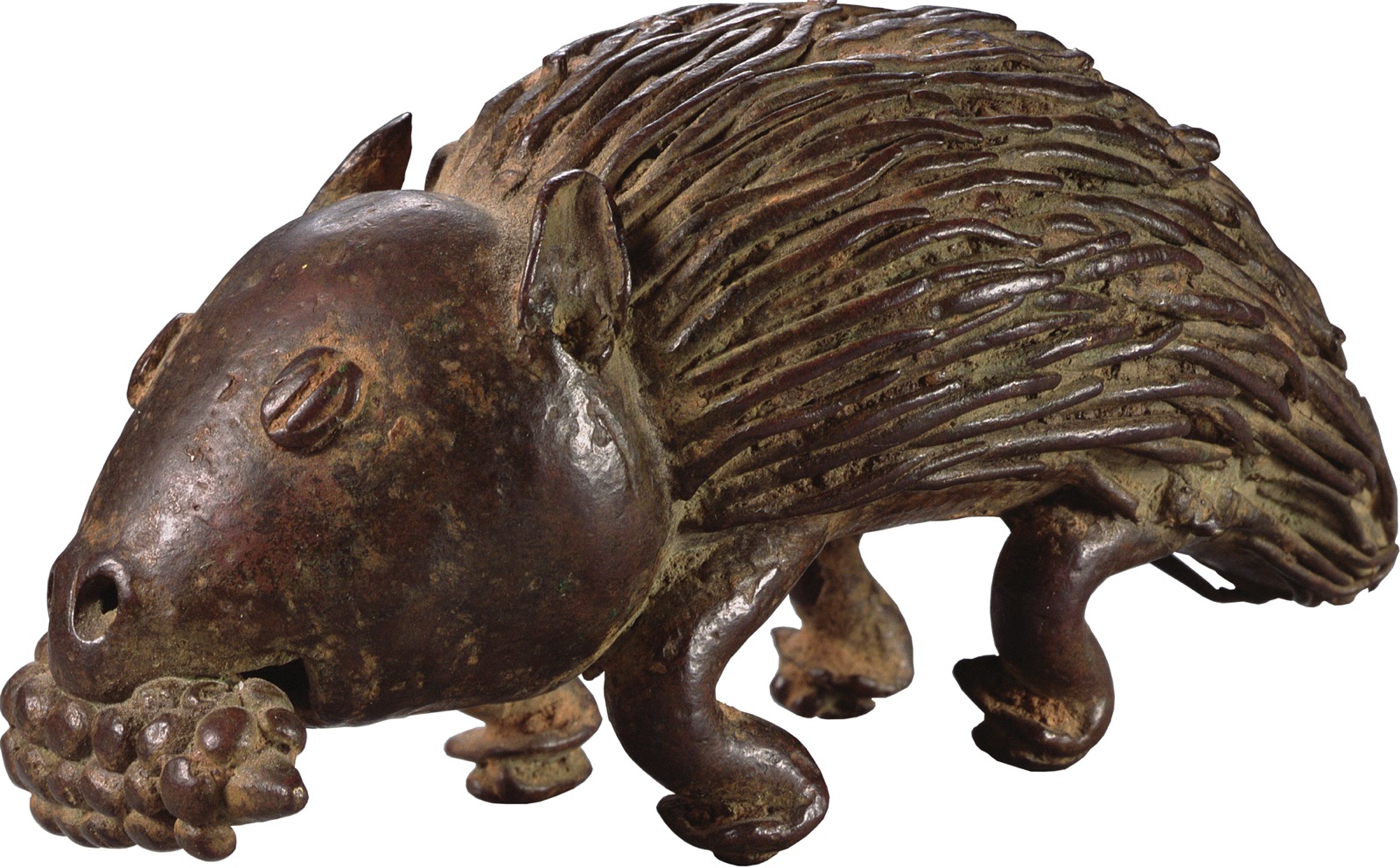
Maize in Africa This small brass statue, a porcupine making off with a maize cob, was used by the Akan people (in today’s country of Ghana) as a counterweight when weighing gold dust. It dates from the seventeenth or eighteenth century, by which time maize was well established in West Africa.
While maize helped feed generations of Africans, it had bleaker consequences too. Maize stores much better than millets, sorghums, or tubers, the traditional crops in most of Africa. It thus allowed chiefs and kings to maximize their power by centralizing the storage and distribution of food. In the West African forest zone, south of the Sahel, maize encouraged the formation of larger states than ever before. The Asante kingdom, for example, embarked on a program of military expansion after the 1670s, spearheaded by maize-eating armies that could carry their food with them on distant campaigns. Maize also served well as a portable food for merchant caravans, which contributed to commercialization in Atlantic Africa, including an expansion of existing slave trades. Slave traders could operate over longer distances if they, and their human property, had an easily portable food supply that stored well. Maize in Africa increased the practicality of the slave trade. As we shall see, it helped make slaving an intercontinental business, linking Europe, Africa, and the Americas.
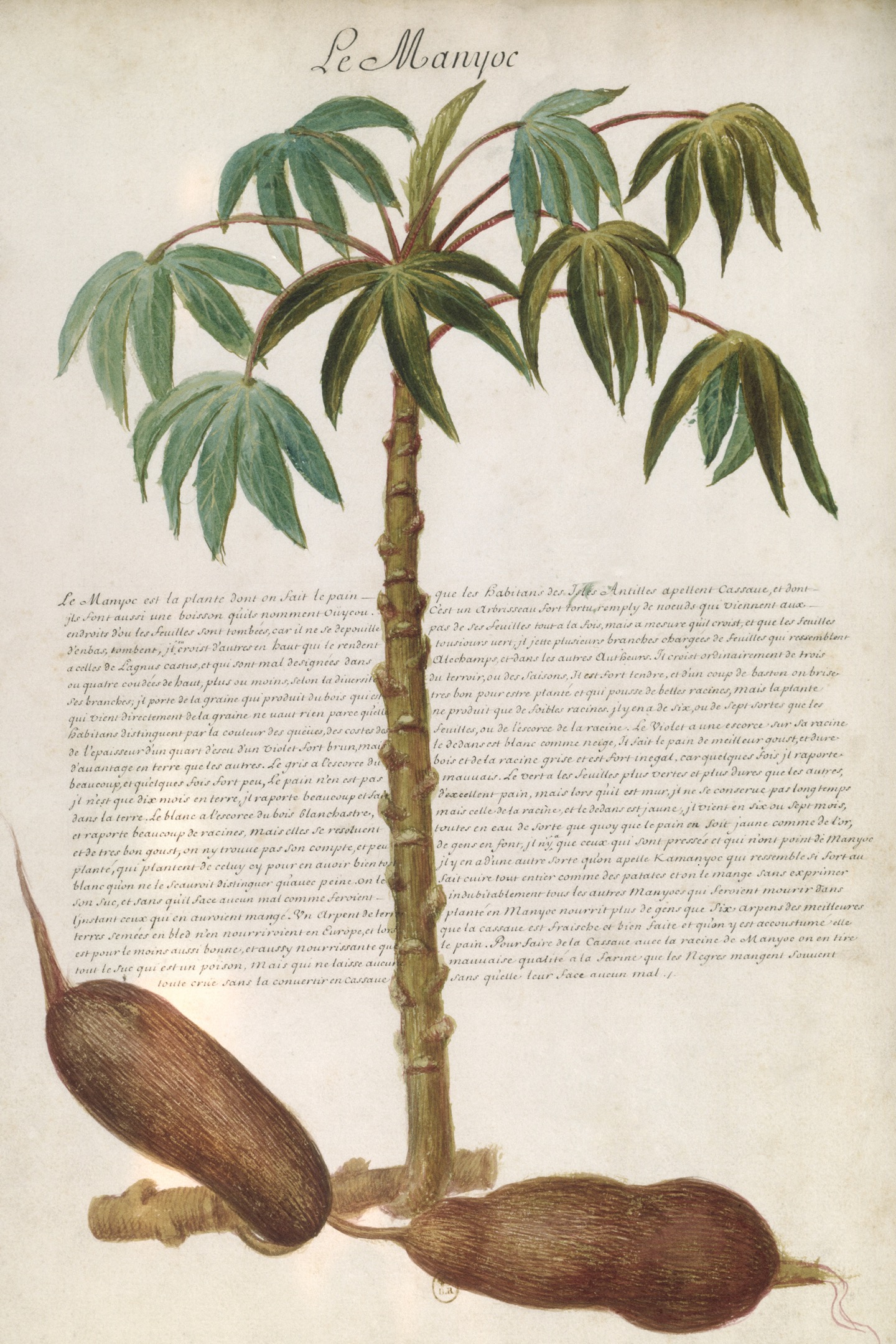
CASSAVA Also known as manioc, cassava was the Americas’ other great contribution to African agriculture. A native of Brazil, cassava is admirably suited to drought and poor soils, and resistant to many insect crop pests. It too did well in many parts of Africa, and like maize provided a portable, storable food that underlay state formation and expansion in West Africa and Angola. Cassava, like potatoes, need not be harvested at a particular season but may be left in the ground for weeks or more. So it is an ideal crop for people who might need to run away for their own safety and abandon their fields—for example, people routinely subject to slave raiding. In this respect, it had the opposite effect of maize: it helped peasantries to flee and survive slave raids, while maize helped slavers to conduct raids and wars.
The impact of American food crops on Africa was so great that it makes sense to think of African history, especially Atlantic African history, as divided into pre-Columbian and post-Columbian phases—as is normally done for the Americas. Maize, cassava, and a cornucopia of other crops from the Americas, including peanuts, pineapple, chili peppers, sweet potato, avocado, cacao, and a dozen others, gradually re-fashioned African cuisine and agriculture. This was the second time in African history that imported crops made a big difference—recall the impact of bananas, acquired from Southeast Asia, many centuries before.
African farmers took to the new American crops eagerly, seeing them as either useful additions or even replacements for their old ones. The greater variety of food crops provided a form of insurance against crop failure due to insect pests or bad weather. Maize had the further attraction that birds usually find it too much trouble to poke through the husks to get at the grain. Birds don’t bother with cassava either. Ripe millet and sorghum, in contrast, provide tempting targets for birds, and people must defend these crops day and night if they wish to enjoy a harvest. The American crops undergirded a slow expansion of farming, state making, and perhaps even population growth in Africa after 1650—despite the demographic effects of the transatlantic slave trade.
THE HUMAN WEB
The Columbian Exchange
1492-1800
The Columbian Exchange, 1492–1800
"THERE WAS THEN NO SICKNESS; THEY HAD NO ACHING BONES; THEY HAD THEN NO HIGH FEVER; THEY HAD THEN NO SMALLPOX; AT THAT TIME THE COURSE OF HUMANITY WAS ORDERLY. THE FOREIGNERS MADE IT OTHERWISE WHEN THEY ARRIVED HERE."
THE BOOK OF CHILAM BALAM OF CHUMAYEL, CA. 1530–1550
BETWEEN 1492 AND 1800, mariners tied together the shores of the Atlantic into an especially vibrant part of the emerging Global web. Their voyages created an Atlantic world, similar in many respects to the Indian Ocean world, another lively part of a larger web, built long before. But in one respect—the Columbian Exchange—the Atlantic world had no true parallels in world history.
The Columbian Exchange of plants, animals, and lethal pathogens was the biggest pulse of biological exchange in world history. Anytime that webs extended across vast distances, people—intentionally and accidentally—carried some species to new homes. When the Silk Roads opened, for example, China acquired grapes, sorghum, donkeys, and camels from Southwest Asia. But no other such episode approaches the Columbian Exchange which suddenly united biological communities that had been separate for 50 million years.
The impacts of the Columbian Exchange included drastic changes in population, agriculture, and the economies of the Americas, Africa, and Europe. For some people, such as Amerindians, the Columbian Exchange brought disaster in the form of new diseases. For others, such as southern Europeans or southern Africans, it brought a new, high-energy food crop: maize. The introduction of maize and cassava to African agriculture and diet was so important that for Atlantic Africa at least, it makes sense to think in terms of pre-Columbian and post-Columbian phases, just as scholars routinely do for the Americas.
Questions for Analysis
Based on this feature and your chapter reading, consider the following questions:
Why did some peoples suffer and some peoples benefit from the Columbian Exchange?
What regions within the Atlantic world felt the strongest impacts of the Columbian Exchange?
Cassava in Africa This illustration of the cassava plant appears in a French book about Caribbean plants from 1688. Originating in the Americas, cassava became an even more successful crop in West Africa and Angola, where it was well suited to the climate, soils, and the needs of farming communities.
BIOLOGICAL GLOBALIZATION IN THE PACIFIC
The Columbian Exchange was the largest-scale, fastest, and most important set of intercontinental biological transfers in world history. But it was only part of the surge in biological globalization that followed upon the navigational exploits of Columbus’s generation. A modest transpacific exchange resulted from traffic that followed Magellan’s voyages, at first affecting chiefly the Philippines. That exchange intensified in the wake of later sea captains’ travels throughout the world’s largest ocean. The Pacific islands themselves, rather than the ocean’s rim, felt the greatest effects, and as in the Americas the most striking result was sharp depopulation in the wake of repeated epidemics.
Guam, for example, in the seventeenth century became a Spanish outpost on the route between the Philippines and the Americas. Its indigenous population, the Chamorro, fell by about 90 percent within a century—mainly from the impact of smallpox, measles, tuberculosis, and other new diseases, although violence and loss of lands raised the Chamorros’ vulnerability to infections. Guam also acquired many new plants and animals, such as cattle, hogs, chickens, rice, citrus trees, and a Mexican shrub tree called Tangantangan. The latter grew quickly on Guam, especially in lands no longer farmed because of the population disaster.
Later on, other Pacific islands experienced similar biological disruptions when put into sustained contact with the wider world. In every case, the demographic consequences overshadowed all others. Population declines of roughly 90 percent befell many archipelagoes, primarily a result of newly introduced diseases. A similar grim history befell aboriginal Australians after 1788 when contact with the wider world became routine. But this was a story of the eighteenth and nineteenth centuries, one that belongs to a later chapter.
THE IMPACT OF BIOLOGICAL EXCHANGE
Taken together, the whirlwind of intercontinental biological exchange in the centuries between 1492 and 1800 brought astounding changes around the world. It led to long-lasting demographic catastrophes among peoples unfamiliar with the crowd diseases. In the Americas and Oceania, indigenous population size typically fell for about six or seven generations before bottoming out and beginning to recover. This rate of recovery was slow compared to the experience of Eurasian populations in the face of most epidemics. That is testimony to the terrible impact of multiple infections assaulting peoples in the Americas and Oceania in repeated hammer blows. It also reflects the significance of loss of the best lands, enslavement, and forced migration in escalating mortality and suppressing fertility. The population disasters were a part of biological globalization, but they were not just biological processes: they arose from the interaction of biological and social processes. They represent a penalty of isolation from the bigger webs of world history, a theme we have encountered before.
The surge in biological exchange eventually improved the quantity and reliability of food supplies almost everywhere. This process slowly reduced the frequency of starvation and the toll of epidemics (because well-fed people survive most diseases better than malnourished ones). The world’s population almost doubled between 1500 and 1800, from about 500 million to about 950 million, and a big reason was improved nutrition thanks to food-crop globalization.
One agreeable way of thinking about the whole (admittedly often grim) subject of biological globalization in the wake of Columbus is to contemplate food. Can you imagine Italian food without tomatoes? Or Polish cuisine without potatoes? What would the South African diet be without mealie maize, or West Africa’s without peanuts? Argentina’s without beef? New Zealand’s or southern China’s without sweet potatoes? What would Korean kimchi taste like without chili peppers? If we are what we eat, then the Columbian Exchange and biological globalization not only shaped empires and demography but also helped to make us what we are.
A worldwide exchange of plants, animals, and microbes that followed the discovery of the oceans and of which the Columbian Exchange was a part. It led to connections among ecosystems and a change of flora, fauna, and diseases across the world.
A disease originating in Africa that is transmitted by mosquitos and was particularly deadly in warm, humid, and populous locations. Malaria spread widely around the world, including to the Americas, as part of the Columbian Exchange.
A staple food crop indigenous to the Americas; also known as corn. Part of the Columbian Exchange, maize flourished in southern Europe, China, and western and southern Africa.
Native to Brazil, as part of the Columbian Exchange cassava (also called manioc) became a staple food in many parts of Africa. It is drought resistant, does well in poor soils, and remains edible even if left in the ground for long periods of time.
 The Columbian Exchange, 1492–1800