SIBERIA ABSORBED
Expansion of the Old World web proceeded by land as well as sea. One of the largest territorial expansions took place in Siberia. Nearly the size of South America, Siberia (now Russian territory) lies between the Arctic Ocean to the north and the steppe of Central Asia and Mongolia to the south. It is stunningly cold during its long winter. In 1500, most of it was tall forest or shrubby, coniferous, and often swampy forest called taiga. Getting around within Siberia was a challenge, and getting anything useful out of it was no easier. A strong motive would be required to tempt outsiders to tackle Siberia.
The people of Siberia, some of whose ancestors had been the first migrants to the Americas 15,000 to 20,000 years before, numbered only a few hundred thousand in 1500. They were divided into about a hundred linguistic groups, and most followed a variety of shamanistic religions. Some, in southern Siberia, were Buddhist or at least influenced by Buddhist beliefs acquired from Mongols, whose empire had included parts of southernmost Siberia. Siberians drew their living from the forest: fishing, hunting, trapping, and reindeer herding. In southern Siberia they also raised what crops they could in the brief growing season and traded occasionally with the steppe peoples to their south.
FUR: A LUCRATIVE EXPORT
The main thing outsiders wanted from Siberia was fur. Several million foxes, ermine, squirrels, and sables, all with thick pelts, wandered the woods and swamps. For centuries, a tiny proportion of those pelts were traded to China, the steppe peoples, or the Baltic lands and Russia. In the sixteenth century, as more people in those lands became more prosperous, demand for Siberian furs grew. Eventually this demand provoked a growing export trade, providing the motive for outsiders to try to control Siberia.
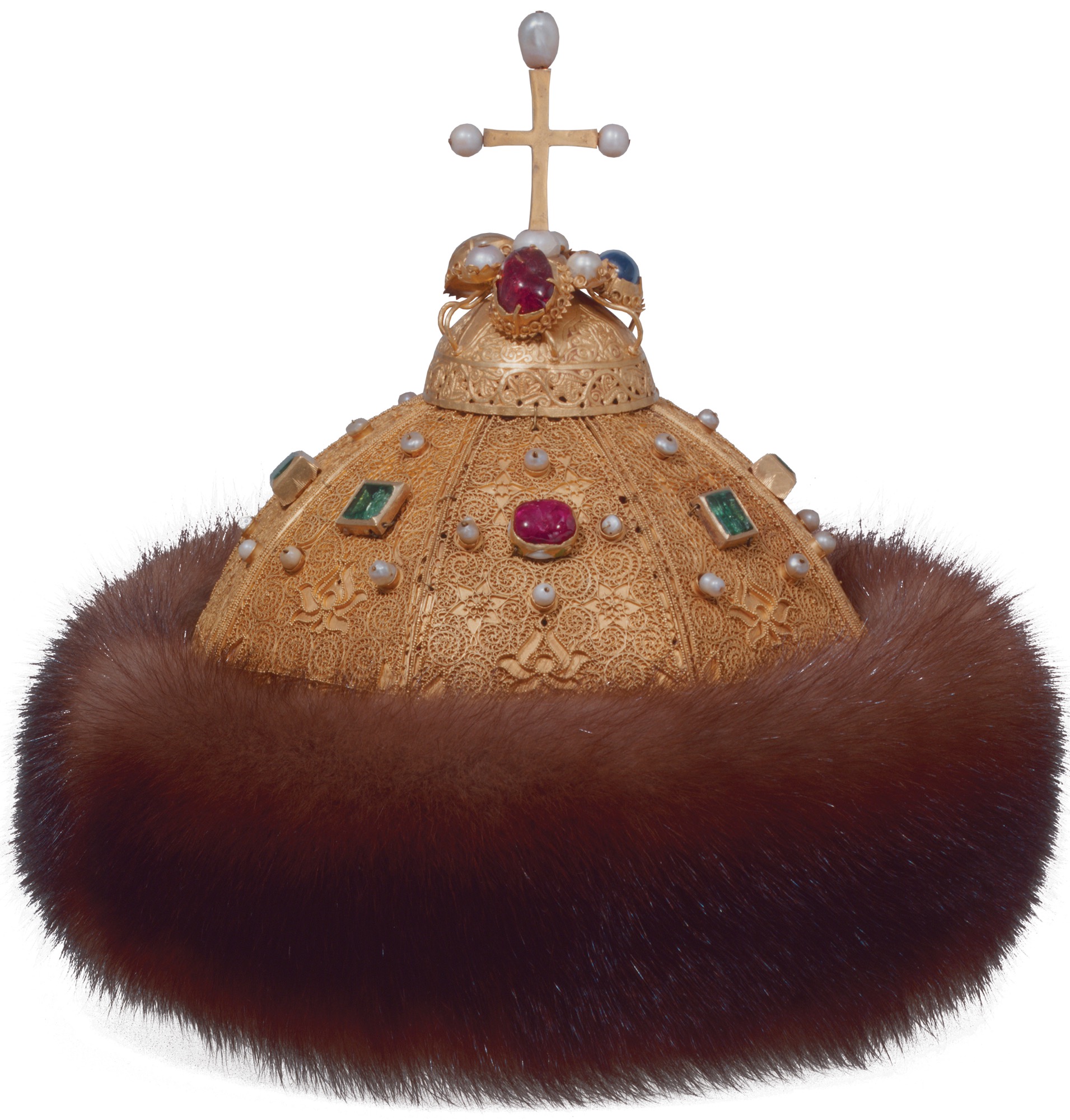
The outsiders who took this step were Russians and Cossacks. Russians were Slavic-speakers who in 1480 had won independence from the Mongol Golden Horde and formed a state called Muscovy, centered on Moscow. Muscovy grew as Mongol power waned, and its leaders aimed to “gather all the Russias” into a larger empire at the expense of neighbors. The aptly named Ivan the Terrible (r. 1553–1584 as Ivan IV) championed this enterprise, never missing an opportunity to flay or boil an enemy alive. By the late sixteenth century, Muscovy’s princes called themselves tsars (derived from the word Caesar), or emperors of Russia, and ruled 8 to 12 million people. Most of those were unfree peasants, called serfs, bound to landed estates and in effect owned by landlords.
Cossacks were mainly serfs (or their descendants) who managed to run away from their owners in what is now Russia and Ukraine. They settled in the river valleys of the steppes north and east of the Black Sea, forming their own self-governing communities beginning in the fifteenth and sixteenth centuries. They were roughly analogous to the escaped former slaves known as maroons in the plantation zone of the Americas. Cossacks lived by farming, raiding, and piracy on rivers and the Black Sea, or by hiring themselves out as mercenaries. In the sixteenth century, Cossacks were often enemies of the Russian state, but sometimes protectors of Russian frontiers against Tatar raiders from the steppe. At all times they were military specialists. Their population was probably no more than 100,000 in 1600.
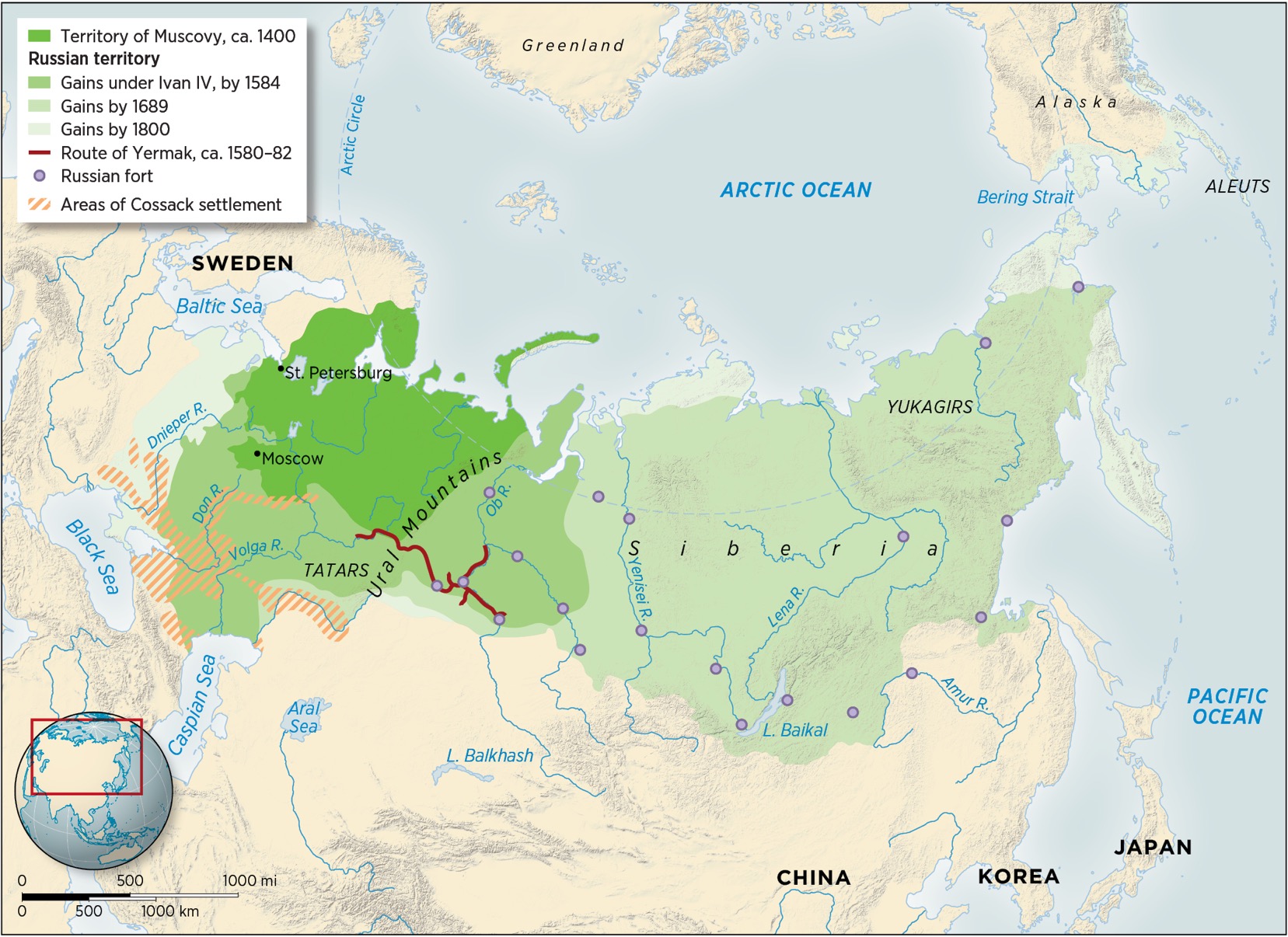
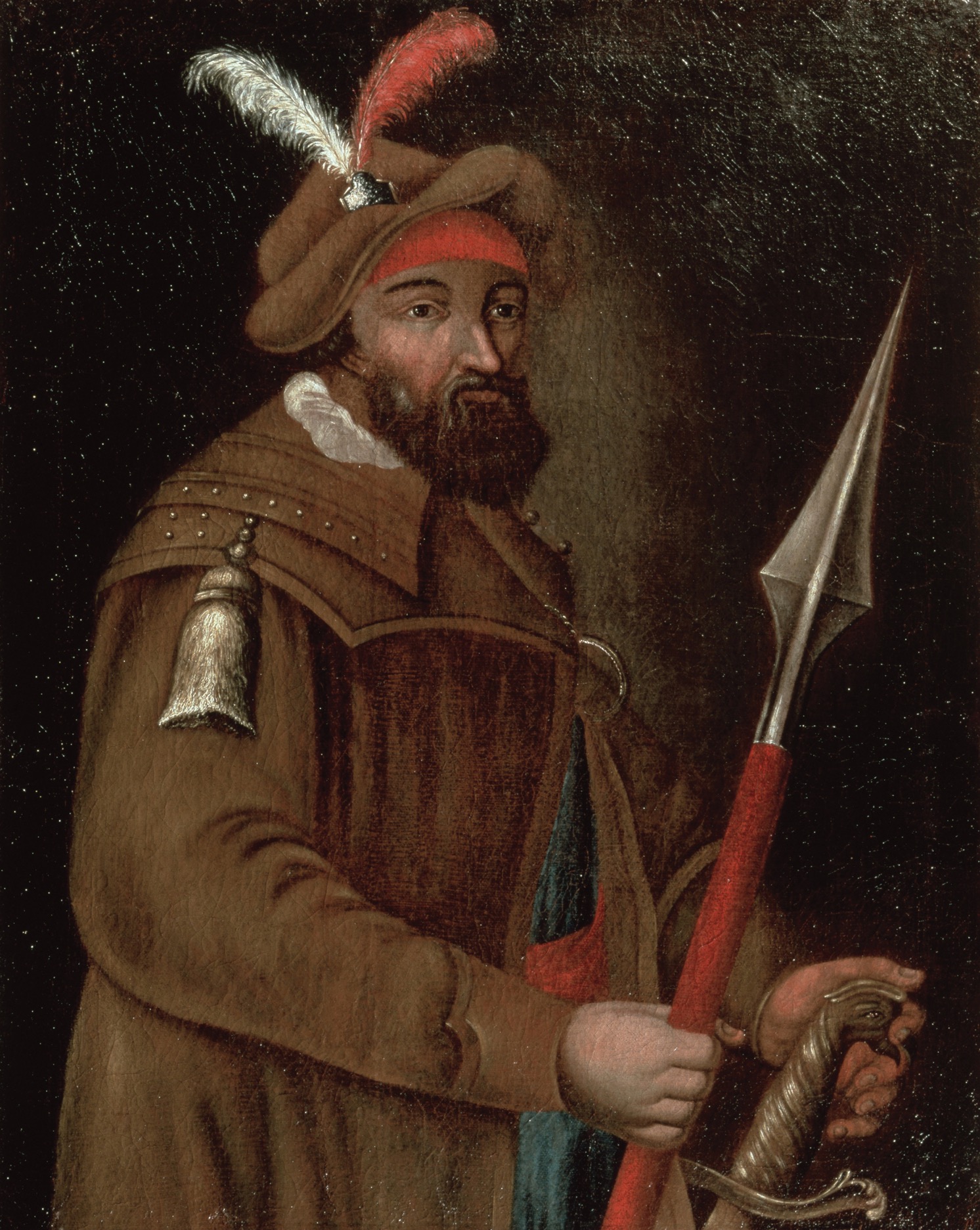
The spearhead of the process by which Siberia joined the Global web, and the Russian Empire, was a Cossack named Yermak. He was successful as a river pirate, but about 1580 he became the equivalent of a conquistador. It was not silver that drew him into Siberia, but fur. An entrepreneurial family with close ties to the tsars, the Stroganovs, hired Yermak to expand their fur trade from Siberia. To do so he had to battle through a Tatar khanate in southwestern Siberia, a legacy of Mongol rule. With a band of about 800—just a few more than the number of Spaniards Cortés led in his assault on Mexico—Yermak defeated the Tatars, thanks to guns and riverboats provided by the Stroganovs. Within a couple of years, Yermak and his roughnecks had reached the Ob River. They sent back enough furs to please the Stroganovs and Tsar Ivan, who—sensing a business opportunity—removed the price he had put on Yermak’s head and became his biggest supporter.
Yermak died in 1585 in a scrap with Tatars, but his success inspired a stream of Cossacks and Russians to flow into Siberia. By 1640, they had built wooden forts at key portages and river junctions across Siberia all the way to the Pacific shores. The conquest of Siberia paid handsome rewards for Russia. Soon one-tenth to one-third of the tsar’s revenues came from the sale of furs. Yermak became a hero in Russia, memorialized over time with postage stamps and public statues.
Like Spain’s conquistadores, Yermak and his successors enjoyed the advantages of living inside the world’s biggest web. They had the latest military technologies, thanks to the Stroganovs and the tsars. They knew how to build boats that could operate on Siberia’s rivers, and how to put small cannon on their boats. They knew the market price of trade goods—tobacco, alcohol, flour—as well as that of furs. At least some of them could read and write, enabling them to communicate and coordinate the actions of scattered parties over vast distances. And by virtue of childhood exposure, they carried immunities to the standard crowd diseases, which indigenous Siberians generally did not.
THE RUSSIFICATION OF SIBERIA
The Russian conquest carried hard consequences for the native populations of Siberia. In 1600, they numbered over 300,000 people, with 120 languages among them. Like Amerindians, many Siberians died from exposure to unfamiliar diseases. One group, the Yukaghirs in eastern Siberia, lost two-thirds of their population to disease, probably smallpox in the main. By 1700, the Yakut and Tunguz peoples had lost 80 percent of their population of a century before. As in the Americas, brutal treatment compounded the effects of diseases. Cossacks, following Yermak’s lead, demanded tribute in the form of furs from all adult males (an arrangement with no parallel in the North American fur trade). As the Siberian population fell, Cossacks and Russians required more tribute from each man. Many Siberians resisted Cossack and Russian demands, and countless ambushes, skirmishes, and battles resulted. The patriarch of Moscow, the top religious official of the Russian Orthodox Church, complained in 1662 that Russian men were neglecting their Christian duties, mistreating native Siberian women, even buying and selling them. In the end, a few thousand Cossacks and Russians subdued a few hundred thousand Siberians, over 5 million square miles of forest and taiga. Together, they trapped and skinned millions of sables, ermines, and foxes—and helped make the Russian tsars richer and more powerful than ever before.
Over time, Siberia entered the Global web and became increasingly Russian. Military and political control came first. Creole versions of Russian gradually developed and occasionally took the place of indigenous languages. Russian Orthodoxy joined the several forms of shamanism formerly practiced, creating blended religious practices as in the Americas. Siberia in the seventeenth and eighteenth centuries was creating new hybrid cultures, with ever stronger Russian components. By 1795, population surpassed 1 million, mostly Russian in language and culture. Many Siberian women took Russian (or Cossack) husbands, and their children often preferred the identity of their fathers, which conferred more advantages in life. And in later centuries, mainly after 1860, millions of Russians migrated to Siberia, swamping what remained of the indigenous peoples, their languages, and religion, so that Siberian culture became highly Russified.
Russians and Cossacks pushed farther eastward. Clashes with China led to a 1689 treaty that divided vast uncharted Siberian and East Asian spaces between the Russian and Chinese Empires. By 1730, Russians were seeking furs in Alaska. Within decades, they mobilized Alaskan natives—Aleuts, mainly—to hunt fur seals along the Pacific coast from the Aleutian Islands south to San Francisco Bay. These shores of North America, like Siberia, also joined the world’s web in part through Russian enterprise.
Glossary
- Yermak [yehr-MAHK]
- A Cossack who pioneered the expansion of the Russian fur trade into Siberia during the 1580s. His success also spearheaded the introduction of disease and practices of brutality that ultimately killed many native Siberians.