OCEANIA AND AUSTRALIA ENMESHED
Probably the most isolated peoples in the world in the years between 1500 and 1750 were those living on the continent of Australia and the islands of Remote Oceania. In Australia, as we have seen, people had arrived at least 50,000 years ago and learned to manage a challenging environment. The archeological evidence suggests that by 1750 they numbered 500,000 to 1 million. The islands of Remote Oceania acquired human population as early as 6,000 years ago in some cases and as recently as 750 years ago in others. The most populated archipelagoes, as of 1750, were Hawaii and New Caledonia, each with perhaps 400,000 people, Fiji with 150,000, and Tahiti and New Zealand, each with maybe 100,000. Taken together, the population of Australia plus all the Pacific Islands in 1750 came to less than 4 million people.
ANOTHER DISEASE DISASTER
Except for some island chains of Near Oceania (meaning New Guinea, the Bismarck Archipelago, and the Solomon Islands) where malaria lurked, Pacific islands, like Australia, harbored few infectious diseases. By global standards, people lived unusually healthy lives. That did not mean they lived especially long: droughts, storms, tsunamis, and other natural hazards took a considerable toll. The islanders’ minimal experience with infectious disease had long been a blessing, but in the late eighteenth century it became a curse.
In the 1760s, European mariners, especially British and French, began to sail the Pacific more frequently. They increasingly found commodities that, with their knowledge of distant markets, they could sell: sealskins, whale oil, sea cucumber (a delicacy in China), and sandalwood (a luxury in China). Sustained contact between Pacific Island populations and Europeans began between 1767 and 1778 in most cases, and in Australia in 1788.
In every case, the contact brought demographic catastrophe. Unfamiliar diseases had the same effect as in the Americas, Siberia, and among the Khoi of South Africa. The precise scale of these disasters is uncertain, but it appears that the Marquesas Islands were among the hardest hit, losing about 96 percent of their population between roughly 1770 and 1920. Small archipelagoes, where everyone was in regular contact with everyone else, allowed killer diseases to spread quickly. Epidemics hit again and again, sometimes killing a quarter or a third of an island’s people each time. As late as 1875, a measles outbreak in Fiji carried off one-third of all remaining Fijians.
Larger archipelagoes, with more dispersed populations, fared somewhat better but still suffered disastrous losses. New Zealand lost about half its Maori population between 1769 and 1870. Australia probably lost more than half of its Aboriginal people between 1788 and 1900. No one had much in the way of useful medicine to combat the epidemics.
Part of the demographic catastrophe, in the Pacific as in the Americas, resulted from falling birth rates. This too had something to do with disease. The arrival of European (and after 1780, American) sailors spurred a sex trade that spread venereal diseases far and wide from Hawaii to New Zealand. These infections made many women infertile. Sometimes women voluntarily took sailors as lovers while a ship anchored offshore, receiving gifts they valued and, as they saw it, enhancing their mana, or spiritual prestige, through sex with powerful strangers. Sometimes they did so under duress, compelled by fathers, brothers, or husbands to trade sex for iron nails, liquor, guns, or other items. In New Zealand by the 1820s, Maori clans fought wars to capture and enslave women. Their captors then sold these women’s favors to visiting sailors for guns to fight rival clans more effectively.
Just about everywhere in the Pacific, as in Siberia and the Americas, indigenous populations fell for about 150 years after the onset of first contact with the wider world. Then they stabilized and slowly began to grow. Despite this recovery, in many cases, most notably Australia, New Zealand, and Hawaii, immigrant peoples came to outnumber indigenous populations.
CHRISTIANITY AND TRADE GOODS
Contact with the wider world brought much more than disease and disaster to Oceania and Australia. Christianity was a popular import. Catholic and Protestant missionaries flocked to many Pacific islands, and although easily horrified by local attitudes to clothing (too little) and sex (too much), in time they proved highly successful in making converts. Missionaries had invisible allies in the murderous microbes they and others brought with them: everyone could see that newcomers suffered far less from disease, and many islanders concluded that the Christian God offered better protection than their own deities could. Missionaries had highly visible, if inadvertent, allies in the sailors and whalers who vividly illustrated some of Christianity’s seven deadly sins. Within a century of contact, almost all Pacific Islanders and Australian Aborigines had accepted Christianity, although they adapted their new religion to their own traditions and circumstances, as converts
normally do.
Trade goods and introduced plants and animals proved as popular as Christianity. European mariners brought such useful novelties as iron fishhooks and farming tools, guns, cattle, horses, goats, and sheep. Pacific peoples traded for these goods and increasingly worked specifically to get them. The new goods increased the economic potential of island (and Australian) landscapes.
AUSTRALIA
In Australia during the eighteenth century, the Aboriginal population of half a million to 1 million divided into roughly 250 groups, each with its own language. According to one of the first foreigners ever to meet them, Captain James Cook in 1770, “They may appear to some to be the most wretched people on earth, but in reality they are far happier than we Europeans. They live in a tranquility which is not disturbed by the inequality in condition: the earth and the sea of their own accord furnish them with all things necessary for life.” Cook may have failed to recognize social inequalities among Aboriginal Australians, which surely existed, even if muted by the standards Cook knew from his native Scotland. Protocols governed inter-group behavior, usually keeping conflict under control.
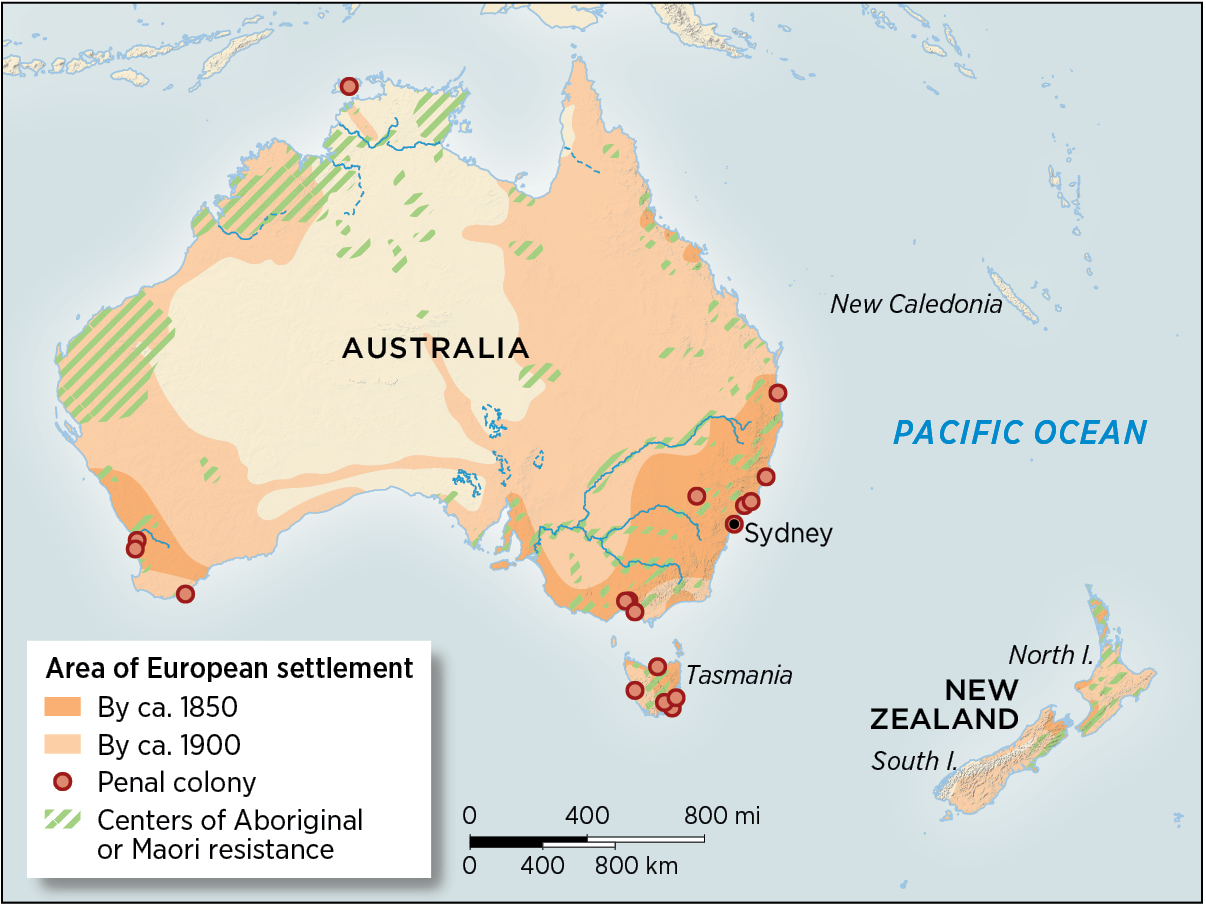
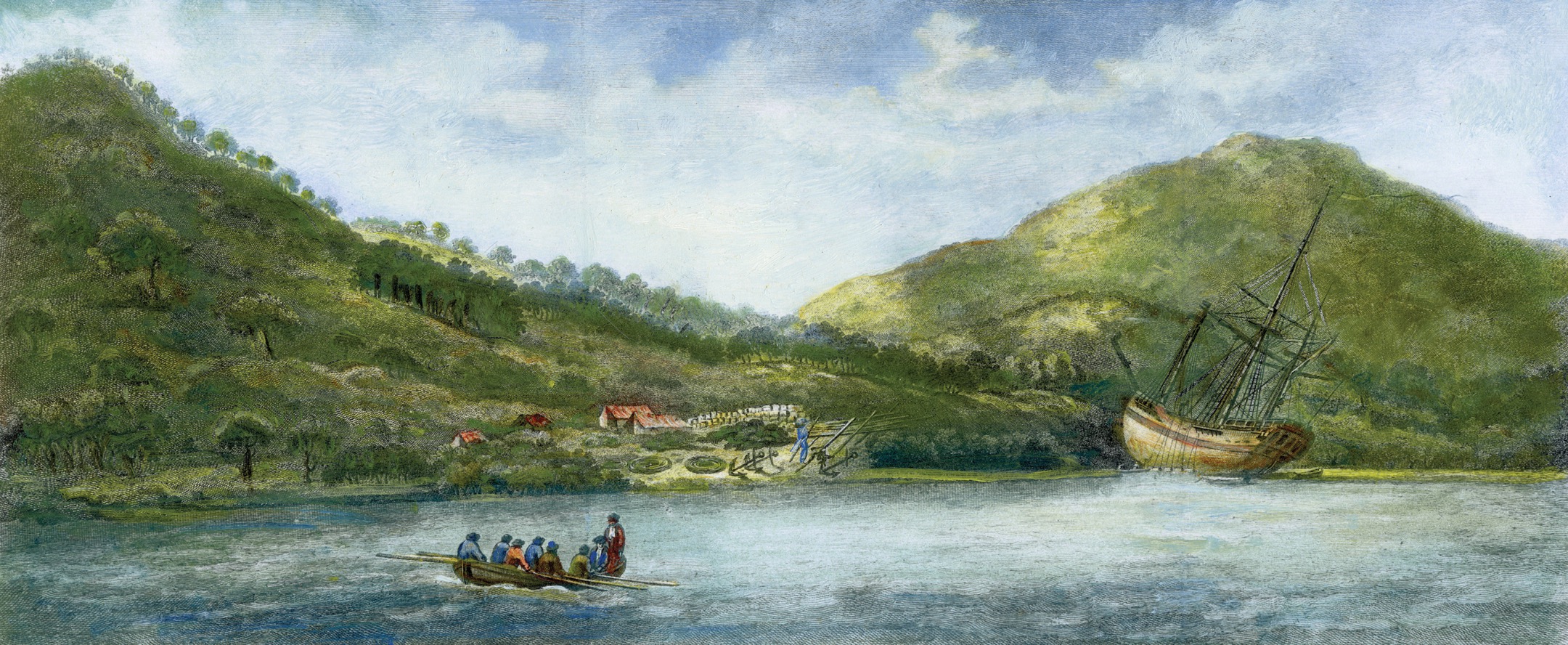
However, no protocols could protect Aboriginal Australians from what came their way in 1788: a fleet of 11 ships bearing more than 1,000 settlers backed by the British government. Most of the settlers were convicts. Transportation of convicts continued until 1868, totaling 160,000 in all, of whom about 15 percent were women. Once in Australia, a few were freed, and one rose to become a magistrate. Free migrants—mostly English, but one-quarter of them Irish—came in larger numbers by the 1820s, and population spilled out of the original settlements near Sydney onto the tablelands of the interior. Squatters, as Australians who helped themselves to land were called, pushed Aboriginals off the best lands, often violently.
Over the next century, skirmishes and wars between settlers and Aborigines claimed about 27,000 lives, 90 percent of them Aboriginal. The Aboriginal Australians fought with spears and shields; the newcomers had muskets and, soon, artillery. Scattered guerilla wars flared up now and again, but the tide flowed in favor of the settlers. As in Siberia, South Africa’s Cape, and the Americas, the toll of disease and advantages in military technology made the difference.
By 1850, the rising population of Euro-Australians outnumbered the falling one of Aboriginal Australians among the continent’s half million residents. Aborigines increasingly lived in the dryer or more tropical parts of the country that the immigrants did not want. Having lost the best lands, many Aborigines made their peace with the settlers and worked as cooks or stockmen (cowboys) on cattle or sheep stations (ranches). Aboriginal women often married (often informally) immigrant men, especially in the early years of settlement when European women were scarce. Australia now had sprawling wheat fields, millions of sheep and cattle, and a prosperous wool export trade. All this seemed right to most Euro-Australians: as one settler asked in 1845, “which has the better right—the savage, born in a country, which he runs over but can scarcely be said to occupy...or the civilized man, who comes to introduce into this...unproductive country, the industry which supports life...?” By 1850, the southern continent had undergone a radical transformation, similar in its broad outlines to the fate of the Americas and Siberia, if different in the particulars.
NEW ZEALAND
In New Zealand, the entry into the Global web also came suddenly and wrenchingly. As we’ve seen, Maori—Polynesians who settled New Zealand about 1250—lived as farmers, fishers, foragers, and hunters, in groups that since 1500 or so had become more competitive and often warlike. They had had no significant interactions with peoples from outside New Zealand and its neighboring small islands for many centuries. In 1642, the Dutch sea captain Abel Tasman sighted New Zealand, stayed for a few hours, and was driven away by Maori. In 1769, two European ships visited. Settlers began to dig in about 1800, at first living among, and more or less as, Maori. But by 1840 organized colonization was under way, and the pakeha (as people of European origin are termed in New Zealand) population ballooned to half a million by 1885. Maori population continued to fall due to introduced diseases and violence until about 1890.
As in the Americas, Siberia, and Australia, the local population in New Zealand alternately welcomed and resisted the settler presence. Some Maori went to work on sailing ships to see the wider world. Many more traded eagerly for exotic goods such as iron nails (useful as chisels for the Maori tradition of wood carving), blankets, and guns. Maori also adopted pig raising and potato farming, markedly improving their nutrition by making new animals and plants their own.
Maori took up firearms with both enthusiasm and desperation. Martial prowess had long been important to male Maori. Now their internal wars became deadlier. As in Africa during the time of the Atlantic slave trade, it often became necessary to acquire guns to defend oneself against others already equipped with them. In the early nineteenth century, Maori with guns terrorized Maori without guns, until the point came when all surviving Maori peoples had guns. In the process, 20,000 to 40,000 were killed in the so-called Musket Wars (1807–1845), and many thousand women and children captured and enslaved. Women captives, as noted above, could be put to use in the sex trade to acquire more guns. Maori also turned their weapons on visiting whalers and sealers. On one occasion in 1821, they captured six Americans and forced some to eat others (according to Joseph Price of Wilmington, Delaware, who survived this ordeal, his shipmates “tasted very much like roasted pork”).
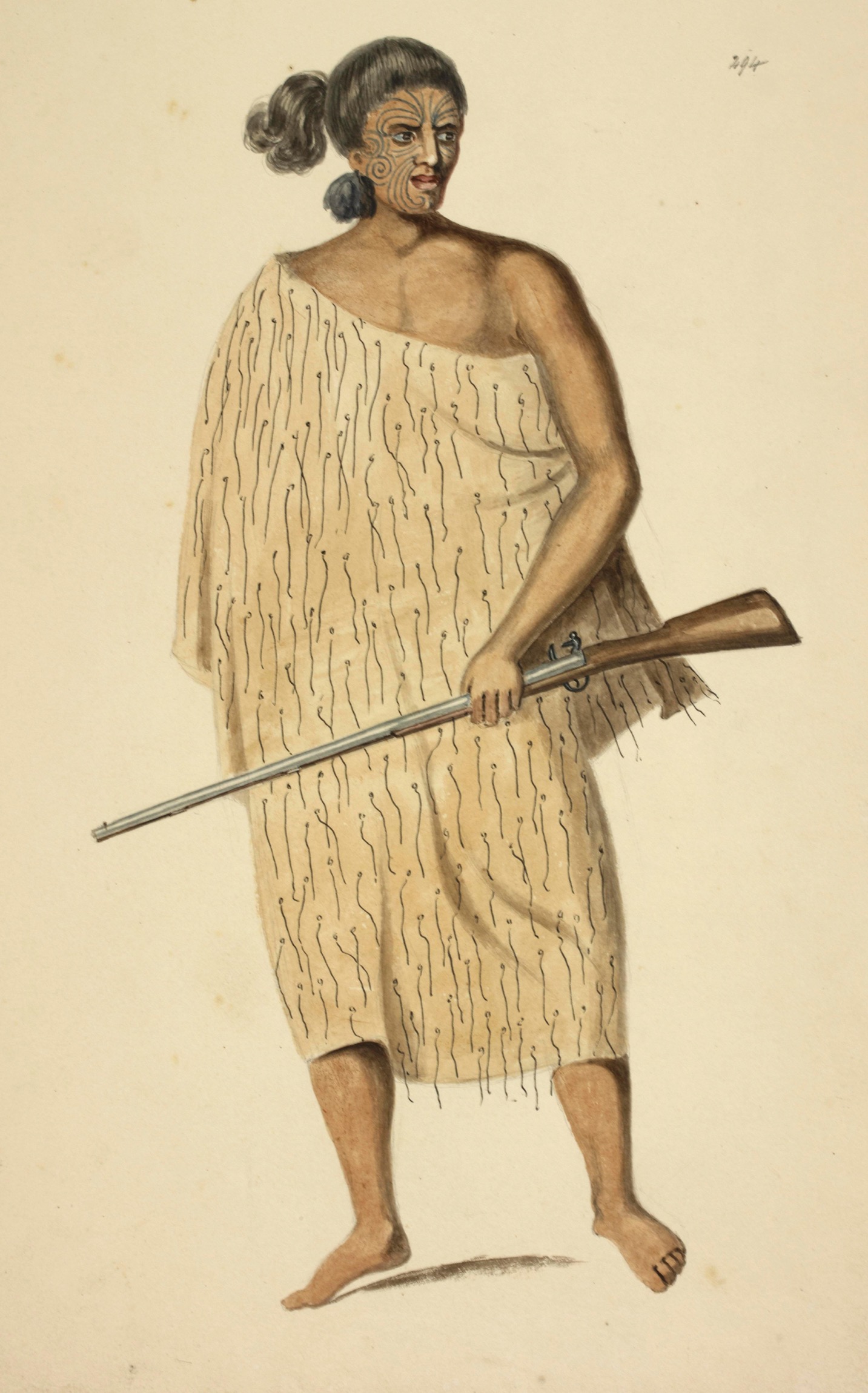
It comes as no surprise that Maori did not often welcome newcomers. For half a century after contact in 1769, Maori exposure to the wider world came mainly via two sorts of men: Australian convicts eager to shed their pasts and gamble on a rough life skinning seals on New Zealand’s shores, and sex-starved British, Australian, and American whalers.
But over time, as the newcomers came to include more and more missionaries and even families, Maori found more to welcome. They embraced Christianity with remarkable gusto from the 1830s. Missionaries’ Christian messages made sense to many Maori, who witnessed the conspicuous sinfulness of visiting whalers and sealers.
In 1840, in the Treaty of Waitangi, most Maori chiefs agreed to put down their weapons and become British subjects in return for guarantees of their land. Large-scale British settlement soon followed; and treaty or no treaty, Maori and pakeha engaged in intermittent land wars (1845–1872), which ultimately ended Maori independence and confirmed New Zealand’s future as a British settler colony. Epidemics, warfare, and dispossession: the entry of New Zealand into the Global web bore a family resemblance to the experience of Australia, Siberia, and the Americas.
HAWAII
Before contact, Hawaii’s roughly 400,000 people lived—mainly on a diet of taro, yams, sweet potatoes, and fish—in a handful of small and competitive kingdoms long isolated from the rest of the world. When Captain Cook and British sailors turned up in 1778, Hawaiian kings sought to exploit the opportunity presented by the strangers’ tools and weapons. One king, Kamehameha, scored a brilliant success when he murdered all but one of a ship’s crew and invited the sole survivor to instruct his warriors in the arts of using firearms and sailing European vessels. His soldiers learned well, and between the 1780s and 1810 he defeated all his rivals and unified Hawaii as a single monarchy. Unlike the chiefs of New Zealand’s rival clans, King Kamehameha managed to keep tight control over imported weaponry and thus could vault himself into supreme power over his fellow Hawaiians. He ruled as an autocrat, made a fortune on sandalwood exports, banned human sacrifice, and imposed peace.
Despite the peace, his subjects diminished in number. Whalers, traders, and sailors brought the same infections to Hawaii that ravaged the rest of the Pacific. Venereal disease, previously unknown, spread widely and lowered birth rates. The native Hawaiian population plunged to about 75,000 in 1850 and 40,000 in 1890. As this demographic catastrophe unfolded, many Hawaiians came to wonder whether their old ways were best and whether their familiar gods could still protect them.
After King Kamehameha died in 1819, missionaries arrived in force and met with much success. The most politically ambitious of the deceased king’s 22 wives, Ka‘ahumanu, adopted a Protestant faith. She served as regent for her son, King Kamehameha II, and did her best to suppress both Hawaiian religion and Catholicism until her death in 1832.
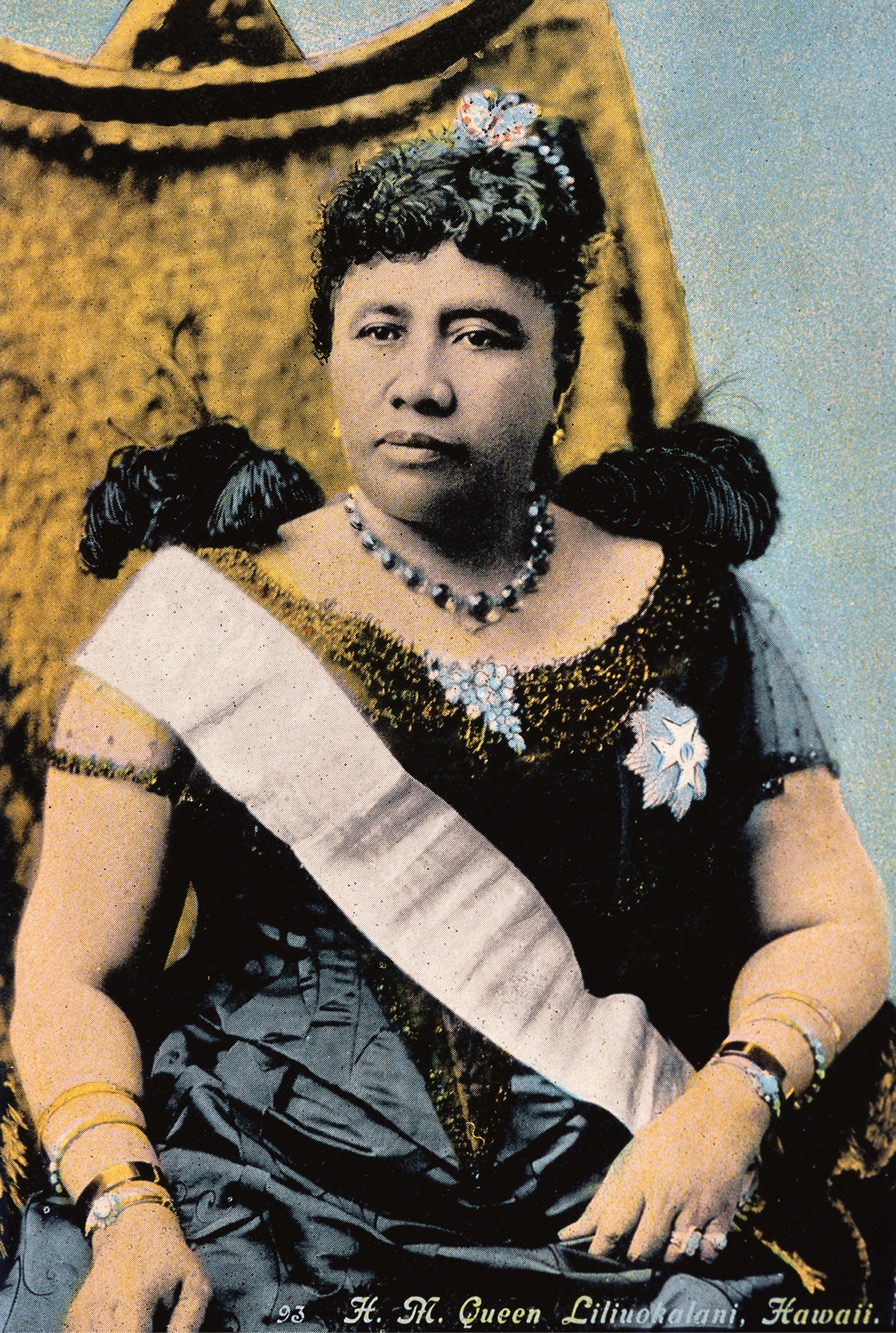
Settlers came late to Hawaii—mainly after 1850—but by 1870 they outnumbered Polynesian (native) Hawaiians. They brought cattle, sugarcane, and a new export economy that bound Hawaii mainly to U.S. markets. Sugarcane in particular required labor, which came in the form of nearly 50,000 Chinese and tens of thousands more Japanese, Koreans, Filipinos, and Portuguese. Hawaii too became a hybrid society and culture. Newspapers in Chinese appeared in 1881. The quintessential Hawaiian musical instrument, the ukulele, was first made about 1880 by Portuguese immigrants. In the 1890s, American businessmen resident in Hawaii deposed the reigning monarch, Queen Lili‘uokalani, and ended the Hawaiian monarchy. The United States annexed the islands in 1898.
Between the 1760s and 1850, the Global web ensnared the Pacific world from Australia to Hawaii. Formerly isolated peoples now found themselves in regular contact with the wider world, thanks to European mariners often seeking goods for Chinese, European, or U.S. markets. The roughly 4 million people affected entered a new epidemiological world full of dangerous new diseases. They entered a new cultural world dominated by European outlooks, languages, and Christianity, to which many Pacific peoples were strongly attracted. They also entered a political realm in which their small numbers, limited state organization, and stone- and wood-based military technologies put them at an acute disadvantage. Even those most determined to fight domination, such as New Zealand’s Maori, were vanquished.
Glossary
- King Kamehameha [kah-MAY-hah-MAY-hah] (r. 1782–1819)
- A ruler who unified Hawaii as a single kingdom by using imported military and sailing technology that he strictly controlled. His monarchy lasted a century.
- Treaty of Waitangi [weye-TANG-ee] (1840)
- A treaty in which the Maori of New Zealand agreed to become British subjects in exchange for land guarantees. British settlers soon broke this treaty, fought the Maori for land, and ended Maori independence.