INFORMATION FLOWS AND INTELLECTUAL FERMENTS
With the advent of oceanic voyaging, and the simultaneous quickening of commerce, information moved farther and faster than ever before. Although shipping had carried ideas and information around for millennia, the linking of formerly separate worlds after the 1490s enabled Confucian and Daoist thought to filter (faintly) into Europe, Christianity to take root in China, and Islam to reach Brazil and coastal South Carolina. Sometimes these exchanges were the work of elites operating at the highest rungs of society, such as the Jesuits who brought European cartography and cannon-making skills to the Ming imperial court in China. In other cases, they involved humbler folk, such as the enslaved West Africans who carried Islam to the Americas.
This swirl of new information from around the globe challenged existing systems of thought. In one important realm, astronomy, new and disruptive information also came from well beyond the far corners of the Earth. When glasses-makers in northern Europe invented telescopes, starting around 1608, it soon became possible to see the craters of the moon and the rings of Saturn. Heavenly bodies, it turned out, were rather different from what people had long imagined. By 1625 microscopes were also in use in northwestern Europe. Soon people could see all sorts of unexpected things, such as corpuscles in blood, crystals in frost, and cells in plant tissues (named cells because they reminded their discoverer of monastic quarters). Telescopes and microscopes, like the Americas and the coasts of Africa, furnished Europeans with unfamiliar observations in every realm from astronomy to zoology. Wherever it came from, new information often proved difficult to fit into prevailing religions and philosophies. That inspired great intellectual effort to resolve the new data with the old systems, sometimes convincing, sometimes not.
In this situation, the authority of existing intellectual traditions, religions included, weakened. New versions of truth had an opening. The odds of a new religion, a new wrinkle in moral philosophy, or a new paradigm in science attracting a following improved sharply. This intellectual and cultural ferment took place in several places around the world, but in Europe more than anywhere else. As we’ve seen, Atlantic Europeans were the ones who completed the linking up of the world’s shorelines through oceanic navigation and so came into possession of wider knowledge of the world sooner than others. And they were the ones who first developed the telescope and the microscope, bringing knowledge of worlds unknown to anyone else.
Two other developments, one global and one mainly European, helped create widespread intellectual ferment during these centuries. The first was faster urbanization. As we have seen at many points already, cities served as hothouses for ideas because people could interact so easily with so many others. Between 1500 and 1750, commerce (among other things) drove the growth of cities, especially port cities, almost everywhere. Here people could rub shoulders with strangers from other continents and exchange their understandings of medicine, metallurgy, morality, and everything else. Most of the time, no doubt, language barriers and preference for familiar ideas prevented meaningful exchange. But every now and then they did not. The second development was entirely new, and its impact for centuries focused within Europe: the printing press.
INFORMATION TECHNOLOGY: THE PRINTING PRESS
Around the years 1430–1450, a few people including Johannes Gutenberg, a goldsmith and gem cutter in the German town of Mainz, started work on casting metal type for use in printing. At that time printing involved the use of wood blocks, painstakingly carved by skilled woodworkers. Gutenberg gradually developed movable and reusable type, better ink, and a better press. His invention, one of the most consequential in world history and one of the first for whom we know the name of the primary inventor, made possible the ever-cheaper transmission of information.
Gutenberg was not the first to come up with moveable metal type. Chinese in the Song dynasty had used bronze plates to print paper money. Similar technology filtered into Korea in the thirteenth century. But metal type was not a useful advance over woodblock printing when writing in Chinese, because one needs to make thousands of characters to create a text. When Korea introduced an alphabet with only 24 letters in the 1430s, it made more sense to use moveable metal type. That led to a small flurry of publishing there. But literacy was rare in Korea, and some of the elite resisted the new alphabet, preferring the traditional Chinese characters. So even with moveable type, Korea experienced no revolution in reading, publishing, or the circulation of information: the prior invention of moveable metal type in East Asia had none of the consequences that Gutenberg’s did. Given the trans-Eurasian traffic in the wake of the Mongols, it’s conceivable that Gutenberg was inspired to experiment with casting type after hearing of the Korean innovation—but there is no evidence for that. This case is a reminder that it is not always the first invention of something that matters.
In Europe, conditions different from Korea’s led to an explosion in printing once Gutenberg had shown the way. By 1500, 236 towns in Europe had printing presses, and on those presses hundreds or thousands of copies of over 30,000 different books had been printed. This came to about 20 million books in all, in at least a dozen languages. Venice alone had 417 printers. The first presses using the Cyrillic (for Russian and some other Slavic languages) alphabet debuted in 1483, and in 1501 the first ones using Greek. Regular newspapers appeared by 1605, specializing in business news. The first women’s magazine started publication in 1693 (in England), and the first daily newspaper in 1702. By 1753, British readers bought 20,000 newspapers daily, each one probably read by several people. By 1800, European presses had released some 2 million different book titles.
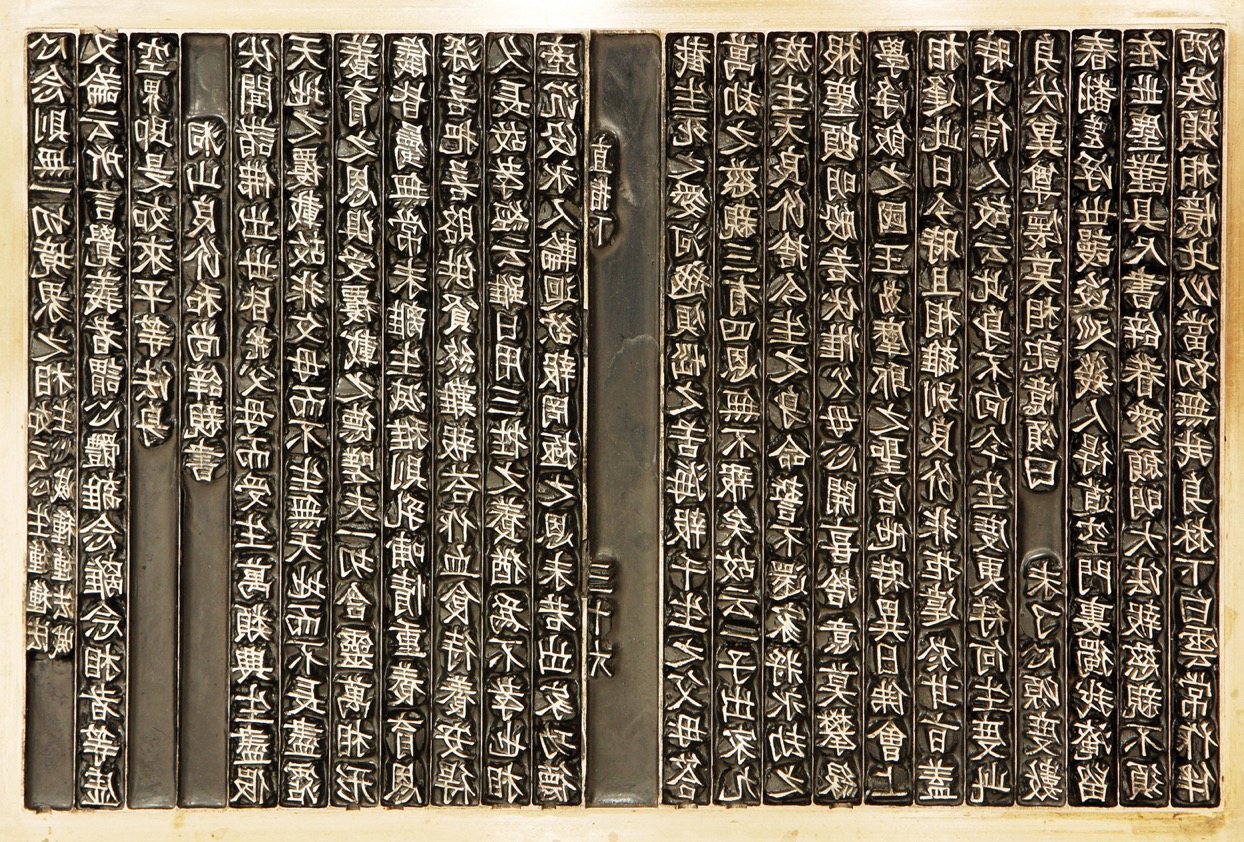
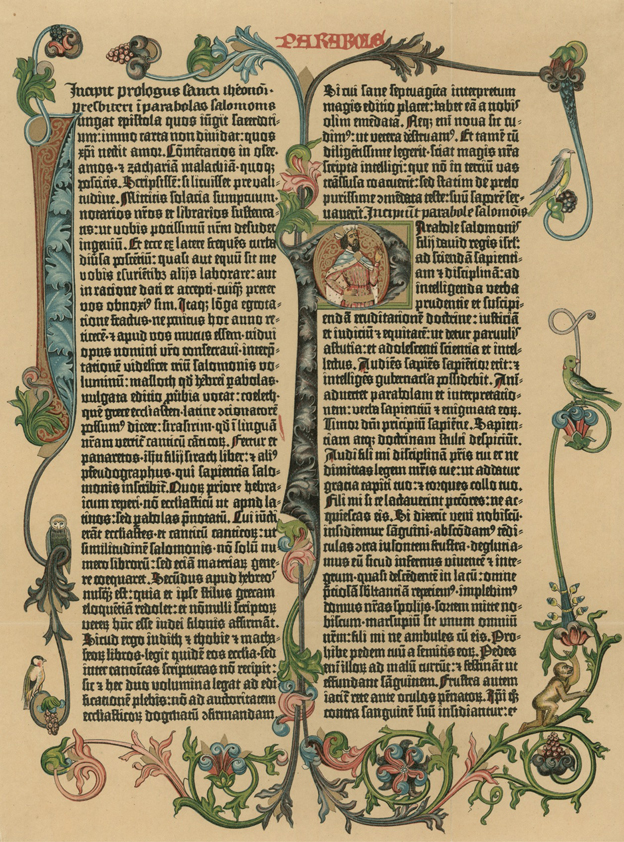
Europeans carried this new device overseas. (The typical press, made of wood, was 6 to 8 feet high and weighed several hundred pounds.) Spanish Mexico acquired a press by 1539, Portuguese Goa (where Anjirō studied) had one by the 1550s, and the Spanish Philippines by 1593. Jesuits brought one to Japan in 1590. The first in English North America was set up by Elizabeth Glover, a widow with five children, in 1638 upon her arrival in Massachusetts.
At first, even printed books were expensive. Gutenberg’s printed Bible, published in 1455, cost about a year’s wages for an ordinary laborer. But gradual improvements in the alloys of lead used, in the oil-based ink, and cheaper paper kept pushing the price of printed material downward. Cheaper books raised the demand for education: literacy rates began to climb.
In Gutenberg’s time, only 5 to 15 percent of adult Europeans could read. Two-thirds or more of those were male. By 1500, however, the literacy rate had begun to climb, and by 1650 it reached about 25 to 50 percent. In the Netherlands and Britain, and in New England too, it was slightly above 50 percent; in Sweden and Italy, just below 25 percent. The gender gap remained wide until the twentieth century. The market for books and pamphlets ranged from the Bible (easily the best seller) and texts of Christian instruction such as catechisms, to manuals of farming and mining and light entertainments of every sort.
Scribes and manuscripts did not disappear. They coexisted with print technology for a few centuries. Yet printing was truly revolutionary, lowering the costs of information while improving its accuracy by reducing copying errors.
For centuries, the printing revolution encompassed only Europe and European outposts. The great states of Asia preferred to rely on scribes and hand copying of texts. For written languages that used thousands of ideographic characters rather than alphabets, such as Chinese, moveable type did not seem an advantage. Muslim authorities until the eighteenth century generally thought that the sacred language of the Qur’an should only be copied by hand, that printing it would amount to desecration. In many settings, scribes and literate elites regarded printing as a challenge to their position. Rulers feared that printers would be harder to keep under watch and control than scribes—and they could not have been more correct. Printing made ideas harder to control.
Glossary
- printing press
- A device invented by Johannes Gutenberg in the mid-fifteenth century that involved the use of movable metal type. It allowed for easier, faster, and cheaper production and dissemination of written information.