SIKHISM IN INDIA: THE BIRTH OF A NEW RELIGION
New information and ideas from afar affected intellectual life in South Asia too, but not as disruptively as in lands to the west. The greatest departure came in the form of a new religion, now called Sikhism. It is a blend of Hindu and Islamic traditions with several innovative twists all its own.
Islam had first come to India in the eighth century. By the end of the tenth century it emerged a powerful political force, the religion of conquerors and rulers from Central Asia. Thereafter its followers jostled with India’s more numerous followers of Hinduism, sometimes congenially, sometimes violently. Some thinkers emphasized the compatible features of the two religions to try to achieve a synthesis. This became a little easier with the rise of Sufism within Islam. Sufi sheikhs acquired saint-like status and their tombs attracted worshippers, similar to the shrines of the many Hindu gods. In the fifteenth century, a few thinkers arose in northwestern India claiming that Hinduism and Islam were two approaches to the same sacred truth.
NANAK’S TEACHINGS
The most influential of these was Nanak (1469–1539). He was born into a Hindu family of a merchant caste near Lahore, in Punjab, in today’s Pakistan. He had a Muslim teacher, however, and showed keen interest as a youth in theology, philosophy, and poetry. He learned Sanskrit, the ancient language of the Hindu Vedas, as well as Arabic and Persian, giving him access to vast learning—not so different from his contemporary, Copernicus. His father tried to install him in positions as an accountant, his own line of work, but Nanak found keeping track of money tedious compared to the timeless questions of religion, righteousness, and truth. So, like Luther, he disappointed his father and sought elusive truths rather than a safe career. At age 27 he experienced a vision in which God told him that he, Nanak, was to be the prophet of the true religion. Nanak summarized his new message in the phrase “there is no Muslim, there is no Hindu.” He left a wife and children to begin a long journey that purportedly took him all over India, to Tibet and Arabia. Everywhere he discussed the big questions about truth, existence, reality, and divinity, refining his message as he went.
Nanak’s followers became known as Sikhs (“disciples” in the Punjabi language). They accepted his message that Hindusim and Islam are really one, and several other tenets that gave Sikhism a special character. Sikhs, like Muslims, accepted that there is but one God, the creator of all things. In contrast to most Indian religions, Sikhism held that God’s supreme creation is humankind, and other living creatures are lesser beings. So Sikhs have no problem with eating meat, which followers of other Indian religions often avoid. Sikhism did accept reincarnation, more or less along the lines of Hinduism’s principle of karma.
Nanak explicitly rejected the elaborate ceremonies of both Hinduism and Islam, just as Protestants scrapped much Catholic ritual. He preferred a more ascetic, personal, plain approach to God, without priests and their arcane knowledge. He regarded religious commitment as something one accepted as an adult, which Sikhs mark with a simple ceremony, rather than something one is born into—again, like some branches of Protestantism. Nanak rejected caste as well and preached an egalitarian creed in which the same moral codes applied to all regardless of birth, family, and status. He extended this to gender, claiming men and women were equal before God. Nanak also preached a strict pacifism, in line with some strains of Hindusim and a few sects of Protestantism. The parallels with Protestantism are not mere coincidence. Nanak and Luther both reacted against religions that seemed to them too ornate, remote, attentive to worldly concerns, and devoted to the self-interest of priests and officials.
THE DEVELOPMENT OF SIKHISM
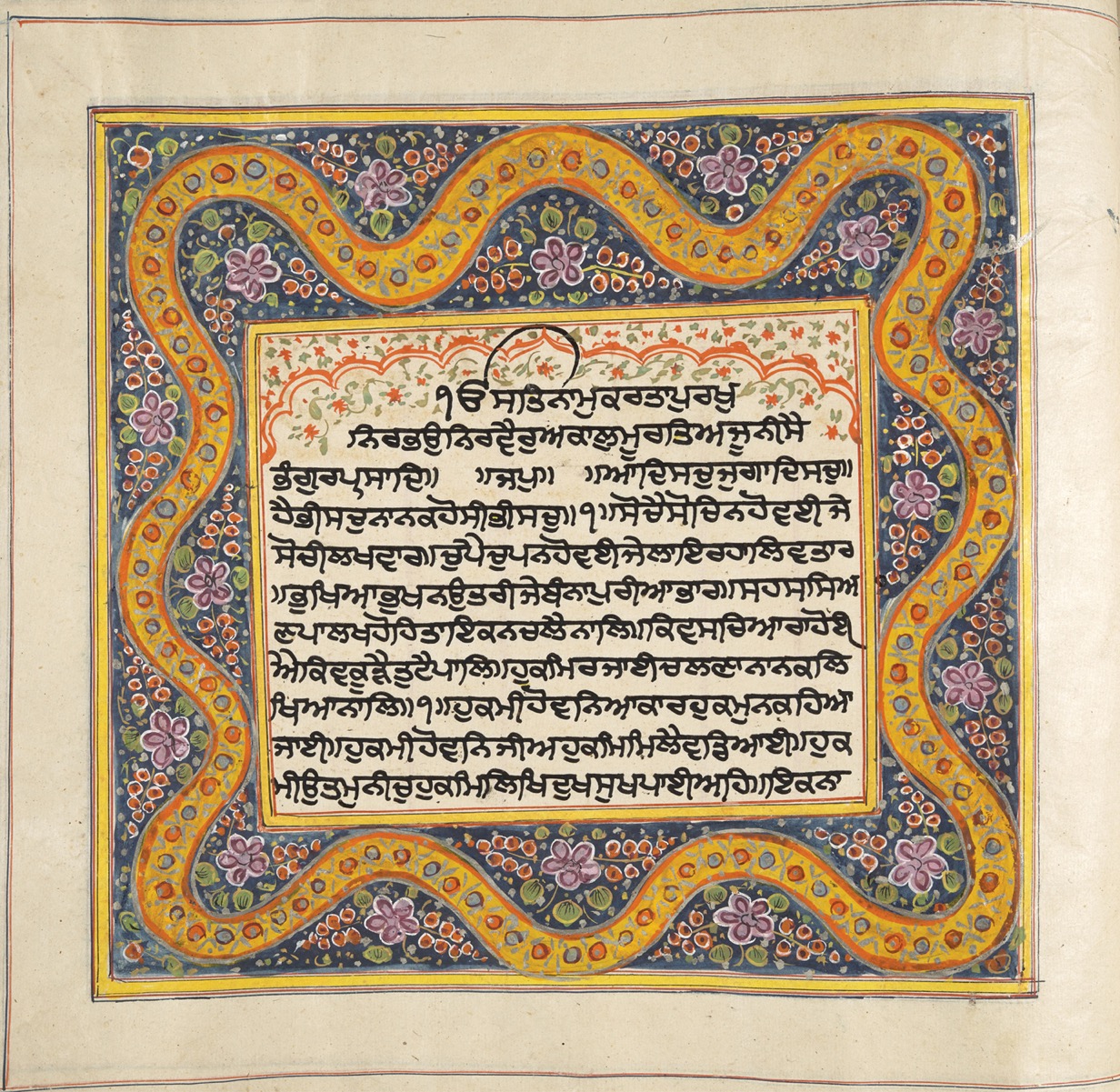
Nanak Guru (meaning “leader” to Sikhs) died in 1539, but his religion lived on. He left behind an enormous number of hymns, which with a few additions are collectively called the Adi Granth (meaning “the first book”), the scripture for Sikhs. It is written mainly in Punjabi, not Sanskrit, and so was accessible to most any literate person in Nanak’s part of India, rather as the translations of the Bible by Wycliffe and Luther made Christian scripture accessible to people who had not studied Latin, Greek, or Hebrew.
Subsequent gurus modified Nanak’s teachings, most notably in response to persecution of Sikhs by Muslim princes in the early seventeenth century. After one guru was tortured to death in 1606, his son, Guru Har Gobind, the sixth guru, abandoned pacifism and started a Sikh military tradition that survives to this day. Any Sikh male of any background could become a member of a warrior class, called singhs (“lions”). They became famous for their valor in battle, which ensured the survival of Sikhism against many threats. Soon Sikh warriors were working as mercenaries here and there throughout South Asia.
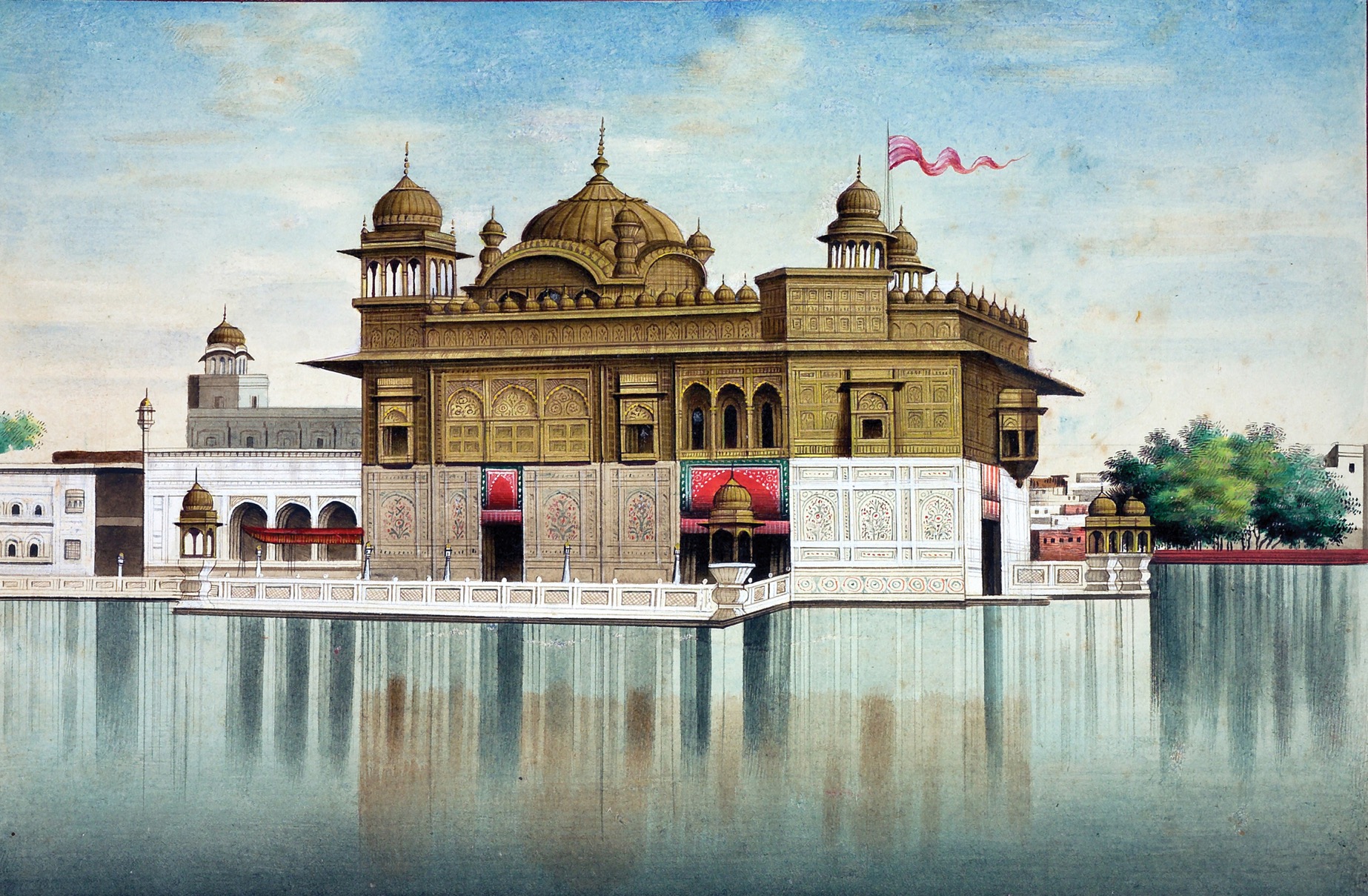
Sikhism survived and flourished in north India. It held special attraction for women and low-caste Hindus, for whom it promised some degree of liberation. It also appealed to cosmopolitan urban and merchant groups, who had some exposure to the diversity of religion in the Indian subcontinent and Indian Ocean world. It made a sufficiently good impression on the most powerful Muslim ruler of India, the Mughal emperor Akbar (r. 1556–1605), that he donated land for what would become the most important Sikh shrine, the Golden Temple in Amritsar, in the 1570s.
Ideas and information from the Americas or Oceania contributed nothing to the ferment from which Sikhism evolved. Instead, it represents an innovation favored by the tightening of the existing Old World web, rather than its expansion. Increased trade and urbanization created a social milieu in which Sikhism prospered. The constant frictions between Islam and Hindusim provided the spark that inspired Nanak to his quest for reconciliation.
Glossary
- Adi Granth [ah-dee GRAHNTH]
- The scripture of the Sikhs. Written in Punjabi, it is a collection of Nanak’s hymns, or teachings, as well as some additional hymns.
- Sikhism [SIHK-ihzm]
- A religion that developed in India in the sixteenth century based on the teachings of Nanak (1469–1538), who asserted that Hinduism and Islam were one and the same. Nanak rejected elaborate ceremony and the caste system, promoted pacifism, and stressed the importance of humankind over other living creatures and the equality of all people before God.