INTELLECTUAL UPHEAVAL: PARALLELS AND CONTRASTS
The entire process of intellectual upheaval in Eurasia was uneven in three main respects. First, as we have seen, it was geographically uneven, affecting Europe more than the rest of Eurasia, and within Europe some parts more than others. Part of the unevenness within Eurasia had to do with Europe’s political fragmentation and Atlantic Europe’s greater involvement in global circuits than anywhere else. Much of the unevenness within Europe had to do with local circumstances such as the fact that Calvin took refuge in Geneva rather than somewhere else.
Second, everywhere the intellectual upheaval affected cities and especially trading cities, more—or at least sooner—than the countryside. Remote mountain villages in Asia were less likely to be buffeted by the currents of Sikhism or neo-Confucianism than were the cities, where new ideas arrived more frequently and were likelier to win followers.
Third, intellectual upheaval was socially uneven. Although the religious transformations of the Reformation(s) and the conversion of Iran to Shi’ism rippled through all levels of society, and the spread of Sikhism touched the lower classes first and foremost, much of this turbulence shook only the elite. Chinese peasants, with the rarest of exceptions, did not know that Wang Yangming and his followers considered them equally as capable of moral perfection as the most learned Confucian scholar. Polish peasants remained entirely unaware that Copernicus was charting a new map of the heavens. English peasants did not know that Newton was formulating an elegantly precise mathematical account of the force of gravity. They and their counterparts, 90 percent of the population of Eurasia, had hungry children, sick babies, tired muscles, fickle weather, ravenous tax collectors, and a hundred other things on their minds every day. Although they worried about what might follow upon death, whether or not to do what priests told them to do, and even contemplated the mysteries of divinity, they generally could not spare much time for moral philosophy or mathematical equations.
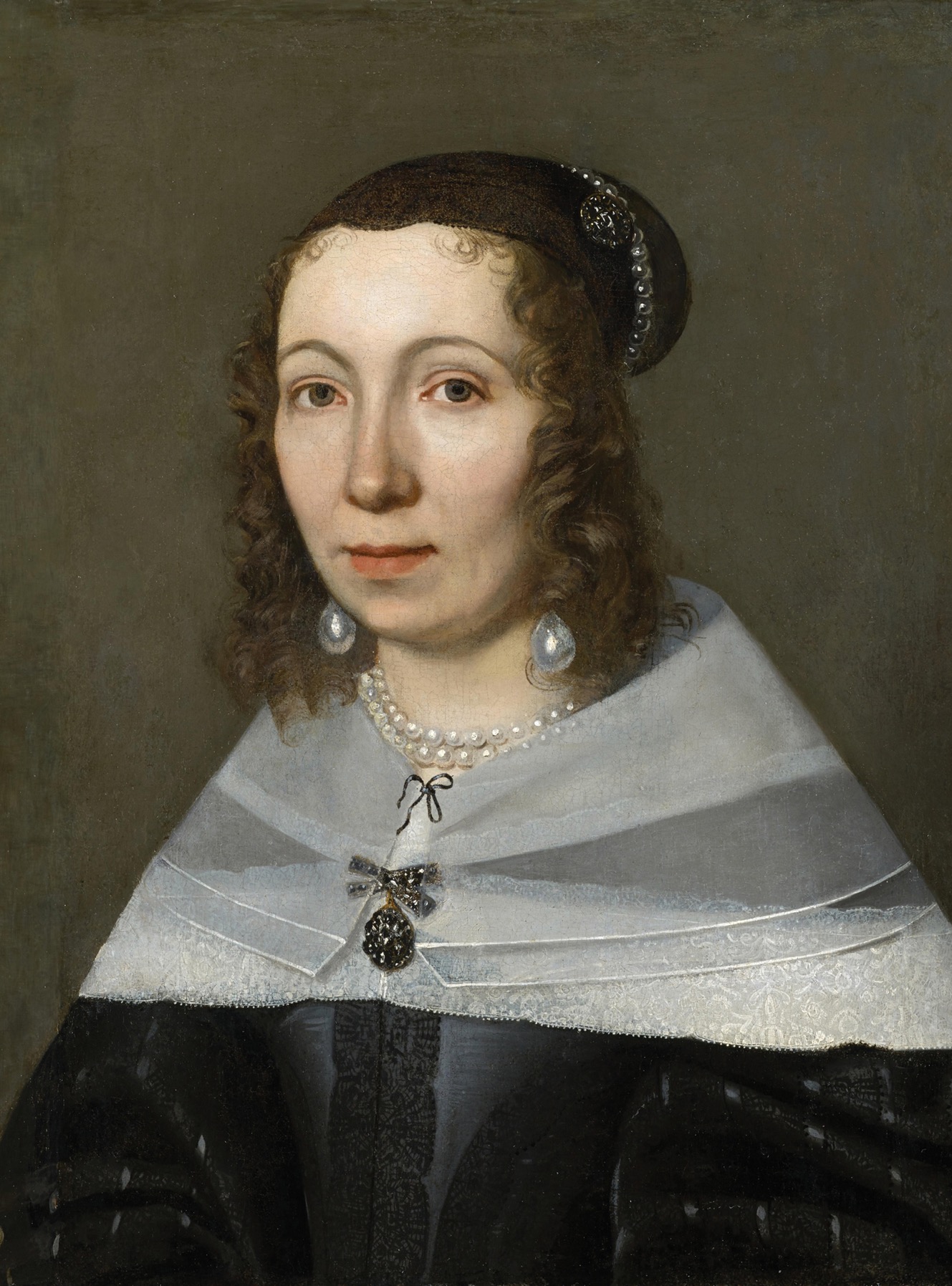
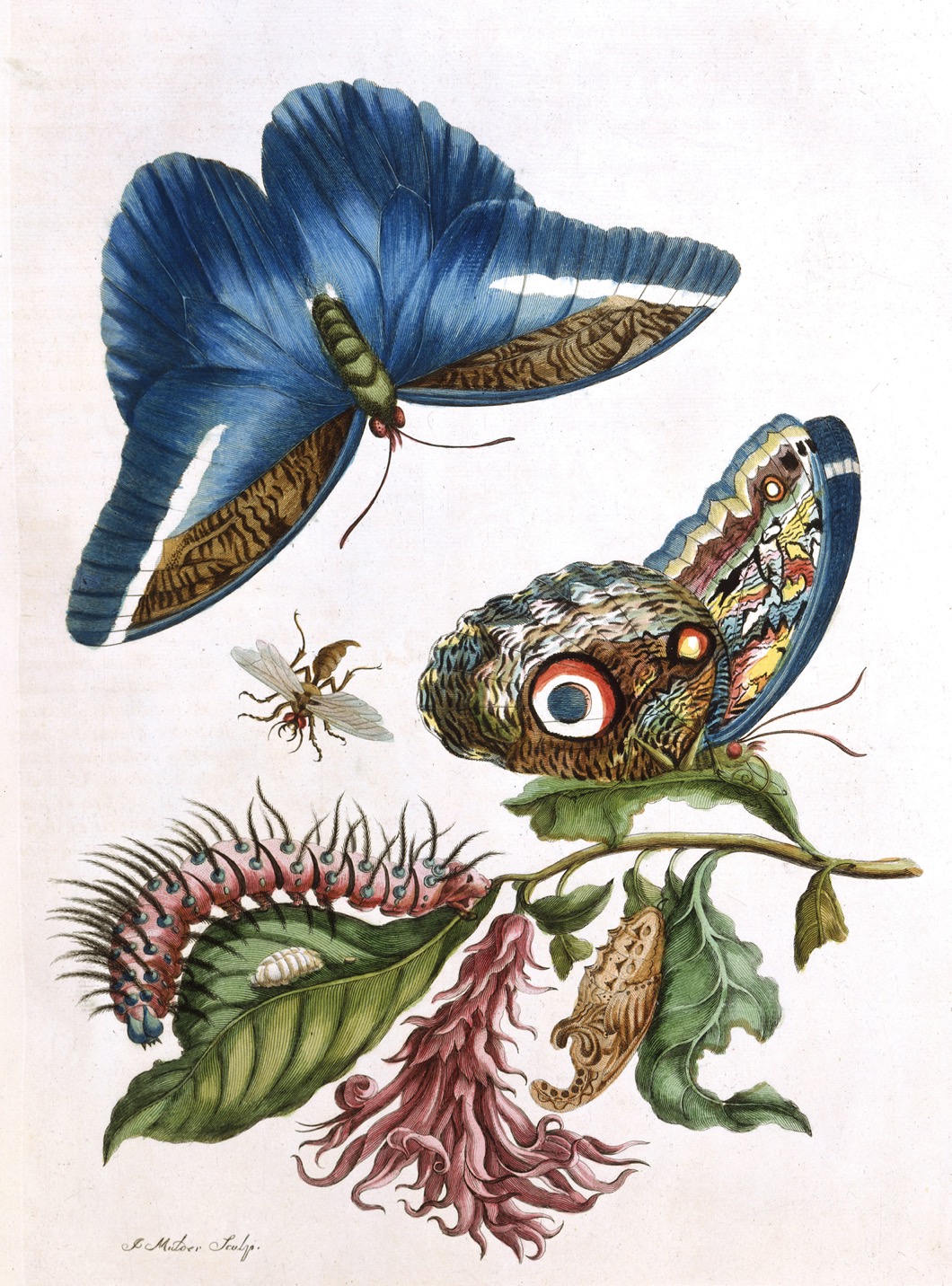
There is a fourth respect in which the intellectual and religious turbulence of these centuries was uneven, but consistently so across Eurasia. None of the great religious reformers, philosophers, or scientists mentioned in this chapter were women. Some European women did make contributions to scientific work, such as Margaret Cavendish (1623–1673), an English duchess who wrote poetry, plays, and several works on moral philosophy. She undertook scientific experiments and was once—controversially—permitted to attend a meeting of the Royal Society. Maria Sibylla Merian (1647–1717) was a German entomologist and botanist who published the first detailed work on caterpillars and their metamorphosis into butterflies. She also undertook a self-funded scientific expedition to South America and produced a landmark study of the insects of Surinam.
But the truth is none of them were anywhere near as influential as Copernicus, Galileo, Harvey, or Newton. No women in Iran, India, or China had anything like the impact on religion or philosophy of Mulla Sadra, Nanak, or Wang Yangming. We can be sure that some women were just as interested in truth, the heavens, health, alchemy, morality, divinity, as any man—as the record of more recent centuries shows. But fewer women than men could act upon an interest in these and other intellectual matters. Women were less likely to be able to read than were men, and in most places far less likely. They were much more likely to face discouragement from family and society if they showed inclination toward deep thinking. A French aristocrat, Martine Berterau, who published a book on mining engineering, was charged with witchcraft, as was her husband.
Women were often forbidden to be members of universities, madrasas, and academies. When in 1678 the University of Padua awarded a PhD to Elena Cornaro, a Venetian noblewoman, the university promptly revised its statutes to prevent women from taking degrees. The Swedish aristocrat Eva Ekeblad in 1748 was elected to the Swedish Royal Academy of Sciences for her successful distillation of alcohol from potatoes. But in 1751 she was demoted to honorary membership, on the principle that full academicians should be men. The rare exception was Laura Bassi, the second woman anywhere to earn a doctorate, which she did in 1732 at age 20 from the University of Bologna in Italy. That same year she was appointed there as a chaired professor of physics. She taught science for the next 45 years and conducted experiments in electricity—meanwhile bearing 12 children. But by and large, women could not and did not hold positions like Bassi’s; and whatever their inclinations and talents, they did not influence intellectual agendas and paths in major ways. So the religious schisms and revivals, the philosophical twists and turns, the Scientific Revolution—as well as all the efforts to suppress these novelties—were overwhelmingly the work of men.