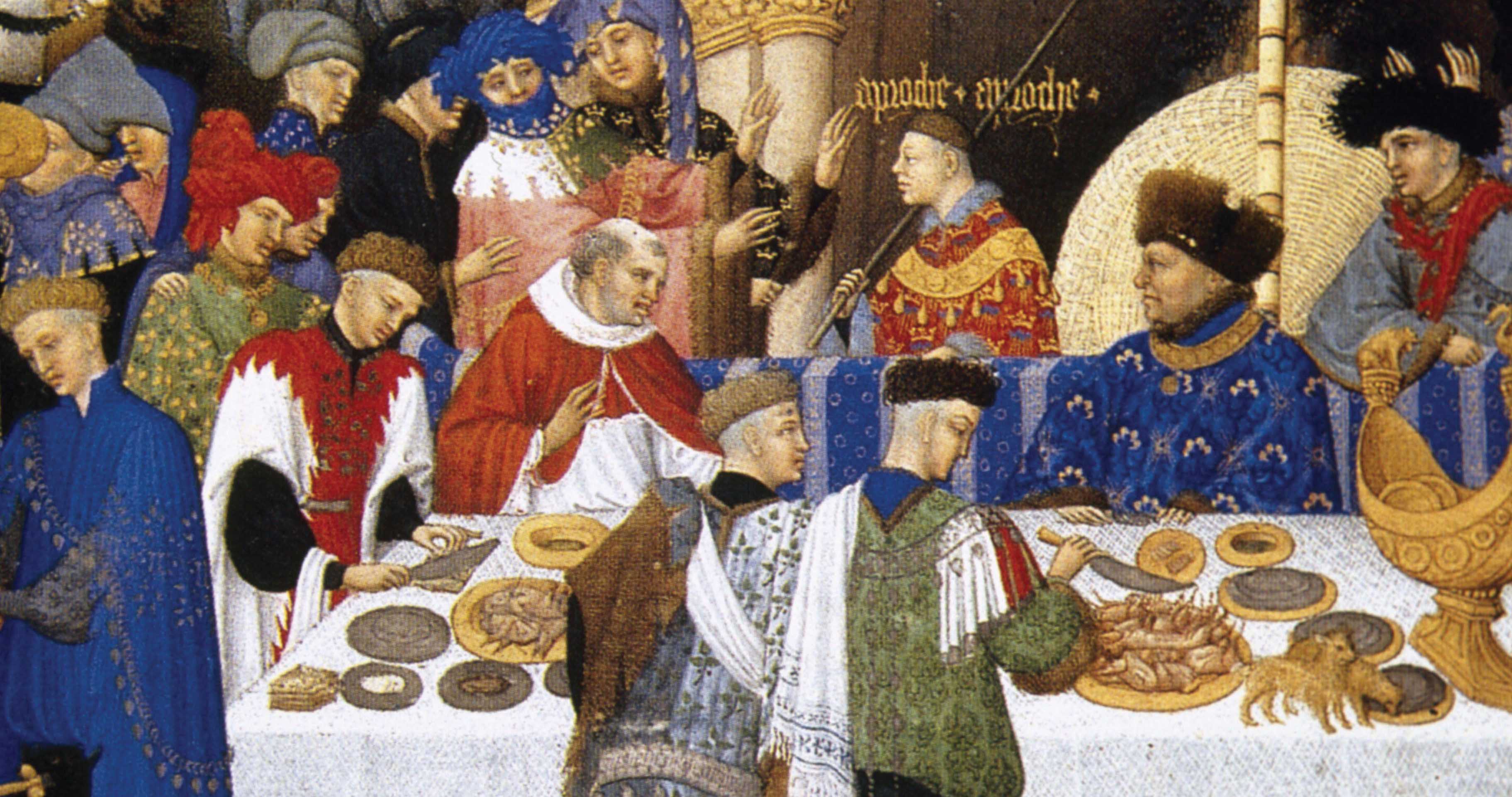
The Black Death altered Europe in profound ways and the surviving population was confronted by an array of new opportunities and challenges
Some of these developments were associated with a burgeoning artistic and cultural movement known as the Renaissance, which began in Italy.
This movement was characterized by a renewed appreciation of classical arts and the ancient Greek language, whose instruction was facilitated by the flight of Greek-speaking intellectuals from Byzantium, as the Ottoman Empire absorbed the remaining lands of the eastern Roman Empire.
Meanwhile, the competing territorial claims of Europe’s sovereign powers led to large-scale warfare and the development of new military tactics and technologies.
Even after the papacy’s return to Rome from Avignon, the failure of internal reform efforts led to the further decline of papal credibility. Consequently, a number of influential religious leaders sought more radical reforms.
CHRONOLOGY
1304–1374Lifetime of Petrarch
1351The Black Death at its most virulent in Europe
The English Parliament passes the Statute of Laborers
1377The papacy returns to Rome from Avignon
1378The Great Schism within the Roman Church begins
1381Rebellions culminate in the English Peasants’ Revolt
1414–1418The Council of Constance is convened to end the Great Schism
Jan Hus burned at the stake in 1415
1429–1431The career of Joan of Arc
1431–1449The Council of Basel fails to check papal power
1440Lorenzo Valla debunks the “Donation of Constantine”
1453The Hundred Years’ War ends
Constantinople falls to the Ottoman Turks
CORE OBJECTIVES
TRACE the economic and social effects of the Black Death.
EXPLAIN the relationship between the concepts of the Middle Ages and the Renaissance.
DESCRIBE the intellectual, cultural, and technological innovations of this era.
DEFINE the concept of national monarchy and summarize its implications.
UNDERSTAND the significance of the conciliar movement and its defeat by the papacy.
In June 1381, thousands of laborers from the English countryside rose up in rebellion against local authorities. Most were peasants or village artisans who were dismissed as ignorant by contemporary chroniclers. Yet the revolt was carefully coordinated. Plans were spread in coded messages circulated by word of mouth and by the followers of a renegade Oxford professor, John Wycliffe, who had called for the redistribution of Church property and taught that common people should be able to read the Bible in their own language.
The rebellion’s immediate catalyst had been a series of exorbitant taxes levied by Parliament for the support of the ongoing war with France. But its more fundamental cause was an epidemic that had occurred thirty years earlier. The Black Death had reduced the entire population of Europe by 40 to 60 percent and drastically altered the world of those who survived it. In this new world, workers were valuable and could stand up to those who paid them poorly or treated them like slaves. During that fateful summer of 1381, the workers of England even vowed to kill representatives of both the Church and the government—to kill (as they put it) all the lawyers—and destroy all the documents that had been used to keep them in subjugation. It was a revolution, and it partly succeeded. Although the leaders were eventually captured and executed, the rebellion had made the strength of the common people known to all.
The fourteenth century is often seen as a time of crisis in the history of Western civilizations: famine and plague cut fearful swaths through the population; war was a brutally recurrent fact of life; and the papacy spent seventy years in continuous exile from Italy, only to see its prestige decline further after its return to Rome. But this was also a time of extraordinary opportunity and achievement. The exhausted land of Europe recovered from centuries of overfarming. Workers gained the economic edge; and eventually, some even gained social and political power. Meanwhile, popular and intellectual movements sought to reform the Church. A host of intellectual, artistic, and scientific innovations contributed to all of these phenomena.
This era of rebirth and unrest has often been called by two different names: the later Middle Ages and the Renaissance. The latter term refers to an intellectual and artistic movement that began in northern Italy, where the citizens of warring city-states desperately sought new models of governance and cultural cohesion by looking back to the older civilizations of Greece and Rome. But these are not two separate historical periods; rather, these two terms reflect two different ways of looking back at an era that is considered to be the immediate precursor of modernity. To understand it, we need to study it holistically, and we need to begin with a survey of Western civilizations after the Black Death.
The epidemic of bubonic plague that ravaged Europe, Asia, and North Africa during the fourteenth century, killing one third to one half of the population.