AP® Skills & Processes
CONTINUITY AND CHANGE Describe how the Northern Wei “barbarians” managed to rule China for 150 years.
CONTINUITY AND CHANGE Describe how the Northern Wei “barbarians” managed to rule China for 150 years.
With the fall of the Han dynasty, China experienced a period of political disunity and a surge of new religious and cultural influences. In the first century CE, Han China was the largest state in the world, with as great a population as the Roman Empire had at its height. Its emperor extracted an annual income of millions of pounds of rice and bolts of cloth and conscripted millions of workers whose families paid tribute through their labor. Later Chinese regarded the end of the Han Empire as a disaster just as great as western Europeans regarded the end of the Roman Empire. In post-Han China, new influences arrived via the Silk Roads through contact with nomadic “barbarians” and the proselytizing of Buddhist monks, and new forms of Daoism responded to a changing society.
After the fall of the Han in 220 CE, several small kingdoms—at times as many as sixteen of them—competed for control. Civil wars raged for roughly three centuries, a time called the Six Dynasties period (220–589 CE), when no single state was able to conquer more than half of China’s territory. The most successful regime was that of the Tuoba, a people originally from Inner Mongolia. In 386 CE, the Tuoba founded the Northern Wei dynasty, which lasted 150 years and administered part of the Han territory. Although technically Mongolian “barbarians,” the Northern Wei had lived for generations within the Chinese orbit as tributary states.
The Northern Wei maintained many Chinese traditions of statecraft and court life: they taxed land and labor on the basis of a census, conferred official ranks and titles, practiced court rituals, preserved historical archives, and promoted classical learning and the use of classical Chinese for record keeping and political discourse. Though they were nomadic warriors, they adapted their large standing armies to city-based military technology, which required drafting huge numbers of workers to construct dikes, fortifications, canals, and walls.
Among the challenges facing the Northern Wei rulers was the need to consolidate authority over their own highly competitive nomadic people. One strategy was to make their own government more “Chinese.” Under Emperor Xiaowen (r. 471–499 CE), for example, the Tuoba royal family adopted the Chinese family name of Yuan and required all court officials to speak Chinese and wear Chinese clothing. However, the Tuoba warrior families resisted these policies. Xiaowen also rebuilt the old Han imperial capital of Luoyang based on classical architectural models dating from the Han dynasty and made it the seat of his government.
CAUSATION Why did the Wei seek stronger relations with the Han?
Wei rulers sought stronger relationships with the Han Chinese families of Luoyang that had not fled south. The Wei offered them political power as officials in the Wei bureaucracy and more land. For example, the Dowager Empress Fang (regent for Xiaowen 476–490 CE) attempted progressive land reforms that offered land to all young men—whether Han or Wei—who agreed to cultivate it. But even this plan failed to bridge the cultural divides between the “civilized” Han Chinese of Luoyang and the “barbarian” Tuoba Wei, because the latter showed no interest in farming.
Members of the Wei court supported Buddhist temples and monumental cave sites in an appeal to their Tuoba roots while also honoring Confucian traditions dating to the ancient Zhou period. Emperor Xiaowen’s death cut short his efforts to unify the north. Several decades of intense fighting among military rulers followed, leading ultimately to the downfall of the Northern Wei dynasty.
CONTINUITY AND CHANGE Explain the changes to Daoism during the era of self-doubt.
Daoism, a popular Chinese religion under the Han and a challenge to the Confucian state and its scholar-officials, lost its political edge and adapted to the new realities in this period of disunity. Two new traditions of Daoist thought flourished in this era of self-doubt. The first was organized and community oriented, and involved heavenly masters who as mortals guided local religious groups or parishes. Followers sought salvation through virtue, confession, and ceremonies, including a mystical initiation rite. A second Daoist tradition was more individualistic, attempting to reconcile Confucian classical learning with Daoist religious beliefs in the occult and magic. It used trance and meditation to control human physiology. Through such mental and physical efforts, a skilled practitioner could accumulate enough religious merit to prolong his life. The concept of religious merit and demerit in Daoist circles echoed the Buddhist notion of karmic retribution (the cosmic assessment of one’s acts in this life that determines one’s rebirth into a better or worse next life). For the Daoists, however, eternal life was the ultimate goal, and not the Buddhists’ ideal of release from the cycle of life, death, and rebirth.
Both the Roman Empire and the Han Empire had an extraordinary number of similarities. Initially, they knew little about each other. With 5,000 miles of steppes, mountains, and deserts separating the empires, their knowledge of each other was based on traded commodities. Although they arose at slightly different times (the Han Empire at the end of the third century BCE and the Roman Empire at the end of the first century BCE), they both lasted approximately 400 years and had the same population (around 60 million, together half of the entire world population). The rulers of both empires resided in capital cities that were the largest in the world (Rome and Chang’an, each at 1 million). Both rulers were thought to have godlike powers, aspired to domination of their known world, and commanded huge militaries. Moreover, both empires were so powerful and long-lasting that subsequent Chinese and western European rulers sought to revive them. In China the imperial system, in spite of periods of considerable turmoil and fragmentation (especially from 300 to 600 CE), lasted more than 2,000 years, from the establishment of the Qin dynasty in 221 BCE to the abdication of the last Qing emperor on February 12, 1912, when the Chinese republic came into existence. In contrast, in western Europe, while political leaders sought to revive the fallen Roman Empire and claimed to have done so first under Charlemagne and later under the Habsburgs as the Holy Roman Empire, these states were never true empires.
A variety of reasons exist for the endurance of China’s imperial system and the failure of western European leaders to revive anything that resembled the Roman Empire. Three reasons stand out. First, China and Rome emerged as empires in markedly different ways. Second, during their four centuries of existence, their ruling elites created different political institutions and were guided by different ideologies. Third, their collapses were notably different.
The Road to Empire
The short-lived Qin Empire (221–207 BCE) cleared the way for the Han Empire and created the institutional foundations and solidified the ideological bases for the Han and subsequent dynasties. The Qin arose after the Shang and Zhou dynasties, which were important states but far from being true empires. Although the rulers of the Zhou dynasty, founded in 1045 BCE, remained on the throne until the third century BCE, the Zhou ceased to be a dynamic and powerful state in the eighth century BCE, giving way to the Spring and Autumn period (722–481 BCE) and the Warring States period (403–221 BCE). The Warring States period was crucial in establishing the ideological foundations for China’s imperial history. During this long period China experienced constant warfare, in which the size of armies and the number of casualties skyrocketed. According to China scholar Yuri Pines, the carnage of warfare led all the major Chinese intellectuals and scholar-officials, including Confucius, Mencius, Laozi, Mo Di, and the Legalists, to “endorse the idea that a single savior-like person would bring about unity and peace.” These Axial Age philosophers in China created the ideological foundations for empire—foundations that compelled China’s ruling elites to return over and over again to imperial rule through an emperor.
In contrast, the Roman state emerged as the dominant city-state in the Italian Peninsula beginning in the fifth century BCE. Rome warred continuously with other city-states on the peninsula right down to the first century CE (against Etruscans, Samnites, Greeks in southern Italy, and Italian allies). Additionally, Rome warred against other groups in the Mediterranean, from the Carthaginians in North Africa and Spain to the Hellenistic successor kingdoms to the east. Nonetheless, Rome’s experience with warfare did not produce foundational philosophies. Moreover, its political ideology, drawn to some extent from the Greek city-states of the Axial Age, was based on republicanism. The empire emerged only at the end of the first century BCE.
Different Imperial Political Institutions and Ideologies
Geography was an important difference between Rome and Han China. The Roman Empire was not easy to govern territorially. Its ruler had to govern both sides of the Mediterranean Sea. In addition, Italy was a peninsula, Iberia was separated from northern Europe by the Pyrenees, and the British Isles were divided from mainland Europe by the English Channel. China had geographical barriers also. It was crisscrossed by rivers, mountains, and deserts that created diverse regional cultures. Thus, like the rulers of the Roman Empire, China’s ruling elites had to impose their will on disparate ethnic and linguistic groups. Ideology, handed down from the Warring States period, proved immensely crucial in solidifying this unity. Equally important, however, was the role of the scholar-gentry class, who insisted that a detailed knowledge of the classics was the only way to enter the ruling class. Moreover, China was more closely governed than its Roman counterpart. The central and local governments were staffed by around 130,000 individuals, of whom 20,500 worked for the central administration. The far-flung Chinese bureaucracy made the Roman Empire seem undergoverned. Rome was much more of a patchwork empire, governed in cooperation with local elites and nowhere as dependent on direct administration or a complex bureaucracy. Rome maintained its authority through its immense army and military coercion rather than ideological preeminence. Even considering Rome’s late third-century CE system of more than 100 provinces managed as twelve dioceses, Rome never developed the kinds of administrative institutions that existed in the Han Empire.
The Decline and Fall of the Roman and Han Empires
While both the Roman and Han Empires lasted four centuries, their overthrows were decidedly different. Both succumbed to nomadic pastoral peoples—the Goths overwhelming the Roman state and the northern steppe peoples bringing the Han to their knees. European nomads entered the Roman Empire and destroyed Rome’s power to rule in the west, while Christianity offered a degree of continuity. In the east, steppe peoples who invaded China did not destroy the Han imperial system but instead emulated it, even while maintaining their traditional political, social, and ideological practices in their homelands. Ultimately, western Europe and China diverged dramatically after the fall of the Roman and Han Empires. Europe ended up with many fledgling states and vernacular languages, but one God, one papacy, and one dominant religion. In contrast, China had many minor gods, but one emperor, one dominant language, and a long-lasting Confucian bureaucracy.
Questions for Analysis
Explore Further
Pines, Yuri, Envisioning Eternal Empire: Chinese Political Thought of the Warring States Era (2009).
Pines, Yuri, The Everlasting Empire: The Political Culture of Ancient China and Its Imperial Legacy (2012).
Rosenthal, Jean-Laurent, and R. Bin Wong, Before and Beyond Divergence: The Politics of Economic Change in Chinaand Europe (2011).
Scheidel, Walter (ed.), Rome and China: Comparative Perspectives on Ancient World Empires (2009).
Source: Yuri Pines, Envisioning Eternal Empire: Chinese Political Thought of the Warring States Era (Honolulu: University of Hawaii Press, 2009), p. 26 .
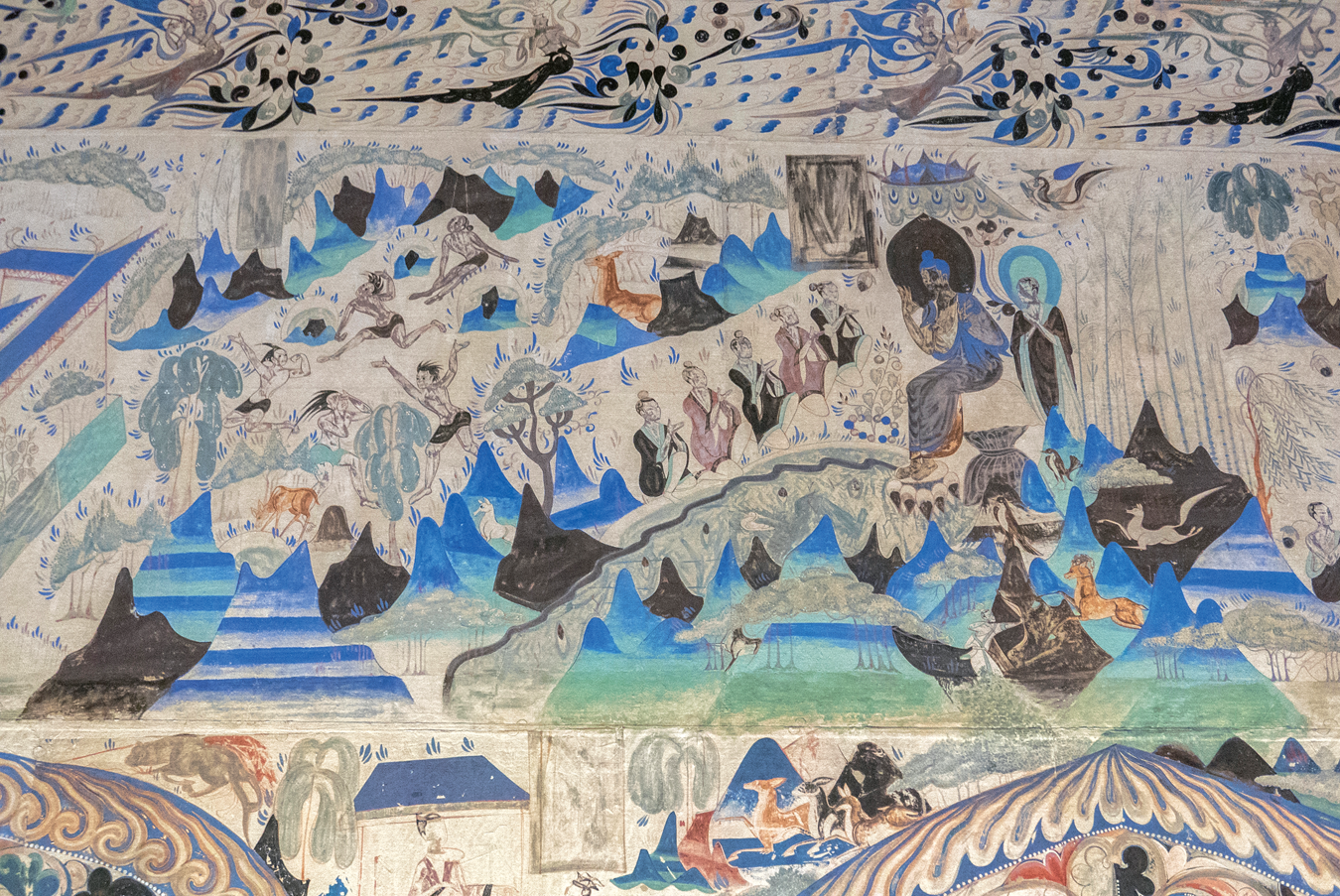
Buddhism’s universalizing message appealed to many people living in the fragmented Chinese empire. By the third and fourth centuries CE, travelers from central Asia who had converted to Buddhism had become frequent visitors in the streets and temples of the competing capitals: Chang’an, Luoyang, and Nanjing. Spreading the faith required intermediaries, endowed with texts and explanations, to convey its message. Kumarajiva (344–413 CE), a renowned Buddhist scholar and missionary, was the right man, in the right place, at the right time to spread Buddhism in China—where it already coexisted with other faiths.
Kumarajiva’s influence on Chinese Buddhist thought was critical. Not only did he translate previously unknown Buddhist texts into Chinese, but he also clarified Buddhist terms and philosophical concepts. He and his disciples established a Mahayana branch known as Madhyamika (Middle Way) Buddhism, which used irony and paradox to show that reason was limited. For example, they contended that all reality was transient because nothing remained unchanged over time. They sought enlightenment by means of transcendental visions and spurned experiences in the material world of sights and sounds.
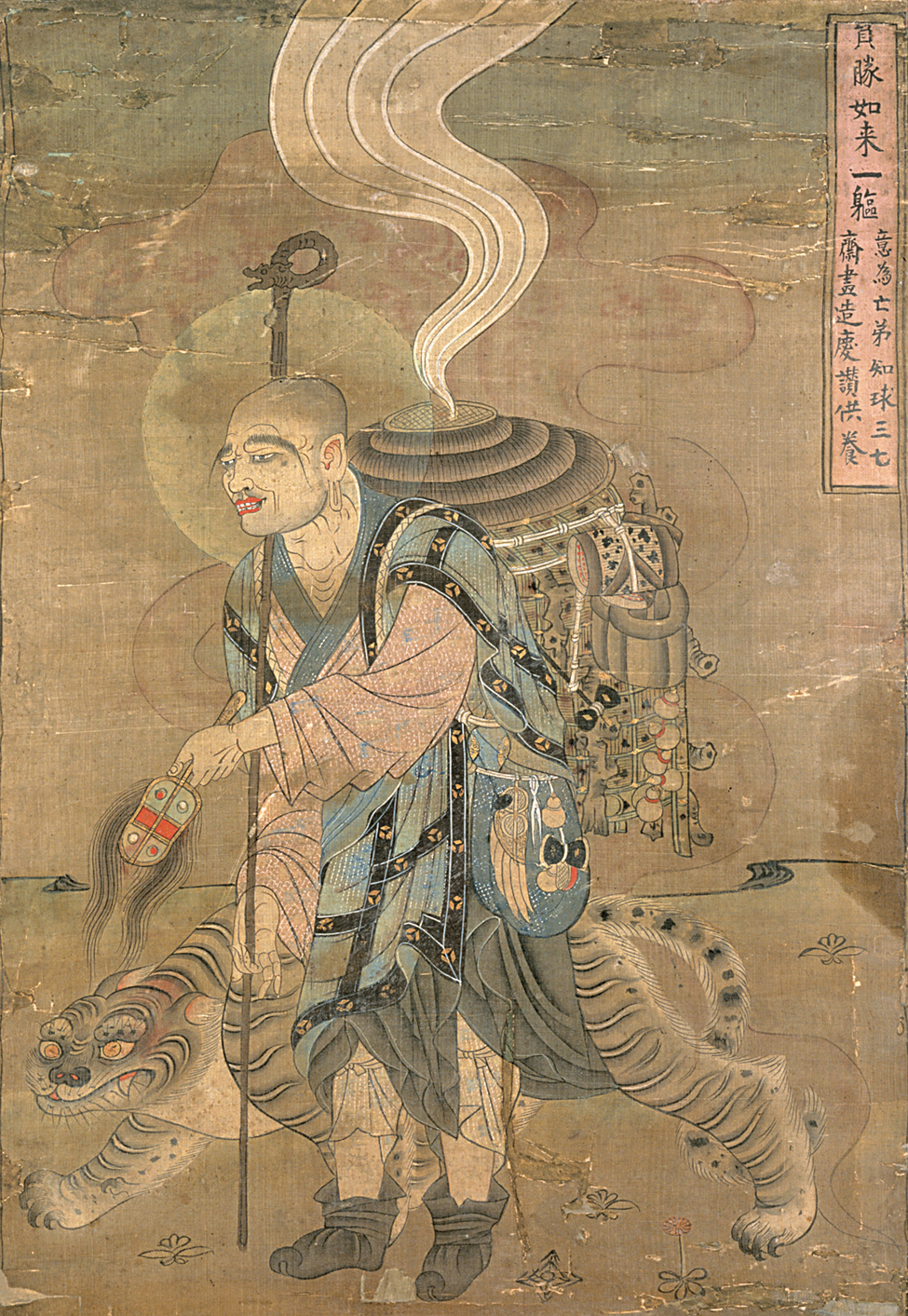
Kumarajiva represented the beginning of a profound cultural shift. After 300 CE, Buddhism began to expand in northwestern China, taking advantage of imperial disintegration and the decline of Daoism and state-sponsored Confucian classical learning. The Buddhists stressed devotional acts, such as daily prayers and mantras, which included seated meditations in solitude requiring mind and breath control, as well as the saving power of the Buddha and the saintly bodhisattvas who postponed their own salvation for the sake of others. They even encouraged the Chinese to join a new class—the clergy. The idea that persons could be defined by faith rather than kinship was not new in Chinese society, but it had special appeal in a time of serious crisis like that of the turbulent Six Dynasties period. In the south, the immigrants from the north found that membership in the Buddhist clergy and monastic orders offered a way to restore their lost prestige.
Even more important, in the northern states—now part Chinese, part “barbarian”—Buddhism provided legitimacy. With Buddhists holding prominent positions in government, medicine, and astronomy, the Wei ruling houses could espouse a philosophy that was just as legitimate as that of the Han Chinese. As a Tuoba who ruled at the height of the Northern Wei in the early sixth century CE, Emperor Xuanwu was an avid Buddhist who made Mahayana Buddhism the state religion during his reign.
CAUSATION Explain the expansion of Buddhism throughout China.
In 643 CE, the Chinese Buddhist Xuanzang brought back to Chang’an (then the world’s largest city) an entire library of Buddhist scriptures—527 boxes of writings and 192 birch-bark tablets—that he had collected on a pilgrimage to Buddhist holy sites in South Asia. He lodged them in the Great Wild Goose Pagoda and immediately began to translate every line into Chinese. Although the importation of these texts from India was profoundly important, Buddhism did not seek to be the same in all places and at all times. On the contrary, as the expression of a cosmic truth as timeless and varied as the world itself, Buddhism showed a high level of adaptability, easily absorbing the gods and the wisdom of every country it touched.
By 400 CE, China had more than 1,700 Buddhist monasteries and about 80,000 monks and nuns. By contrast, in 600 CE (after two centuries of monastic growth), Gaul and Italy—the two richest regions of western Europe—had, altogether, only 320 monasteries, many with fewer than 30 monks. Yet, in the two ends of Afro-Eurasia the principal bearers of the new religions were monks. Set apart from “worldly” affairs in their refuges, they enjoyed the pious support of royal courts and warriors whose lifestyles differed sharply from their own. Through their devoted faith in the divine and the support of secular rulers, these two universalizing religions—Buddhism and Christianity—would continue to grow, flourish, and revitalize themselves.